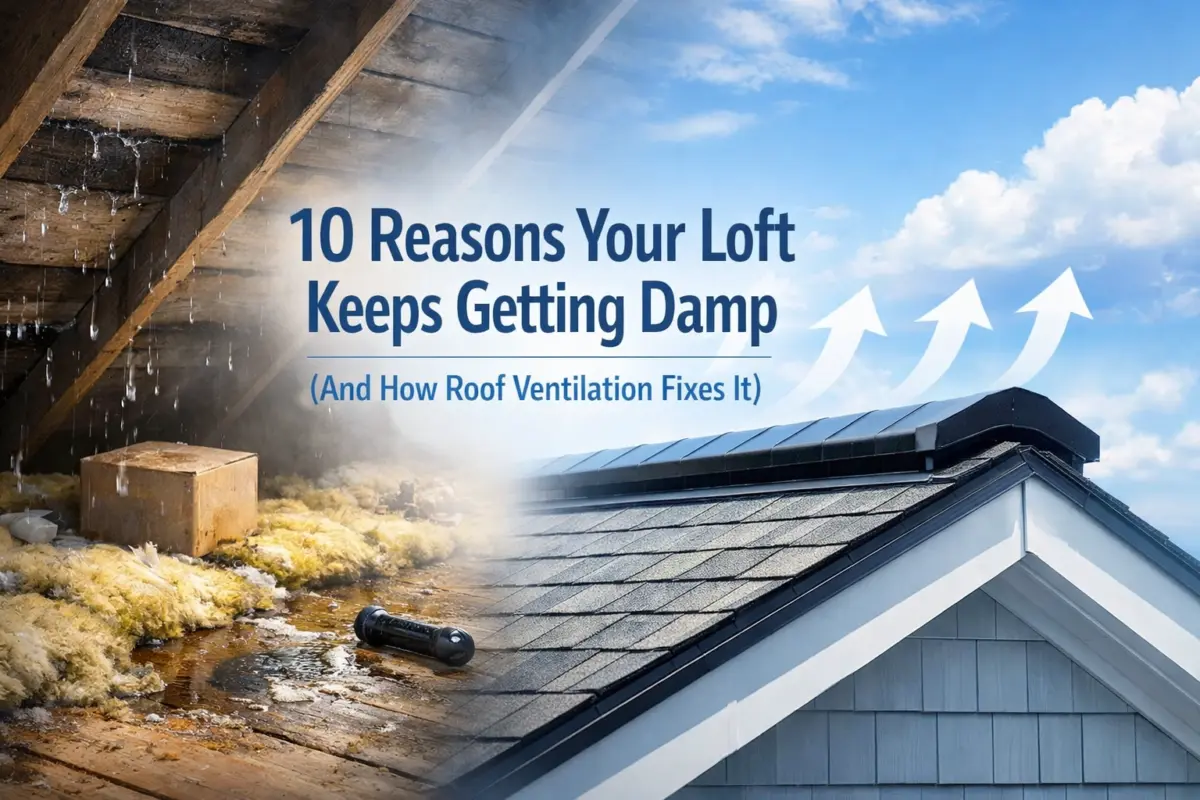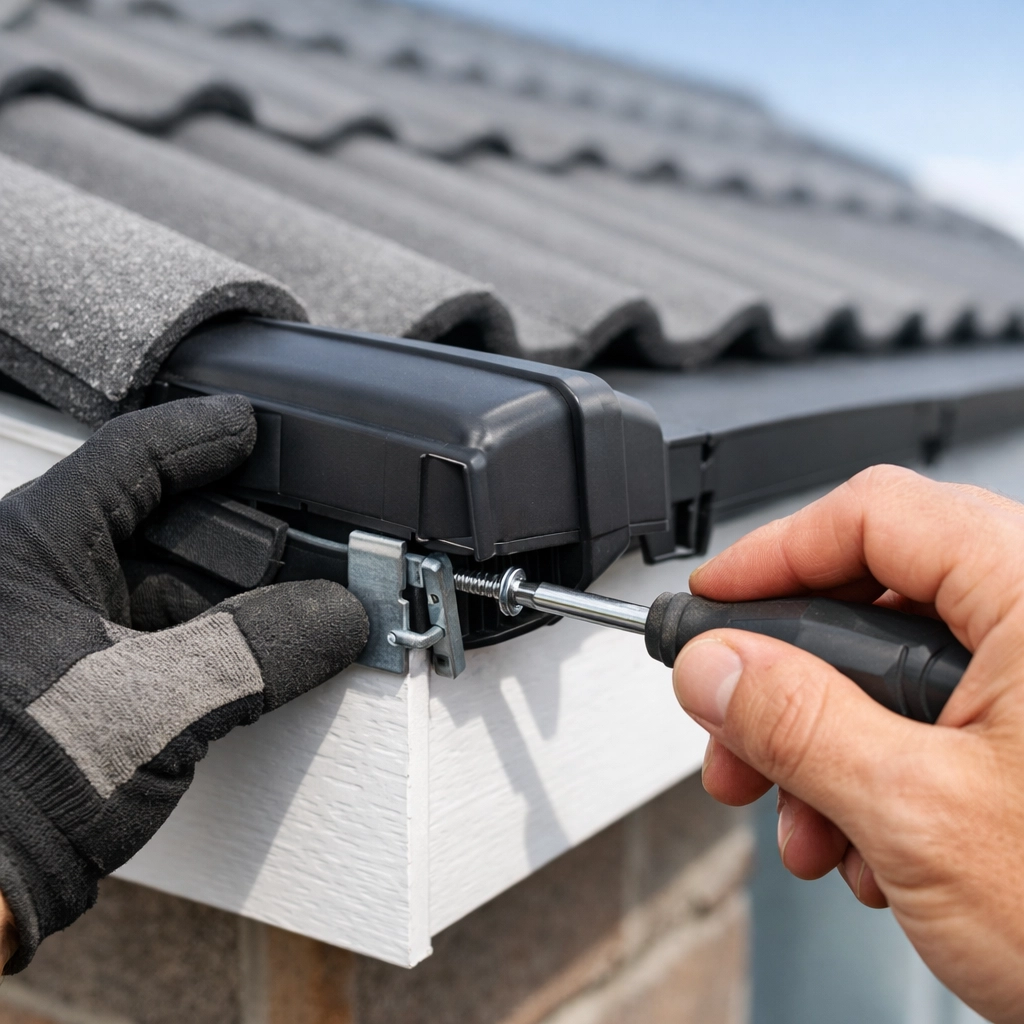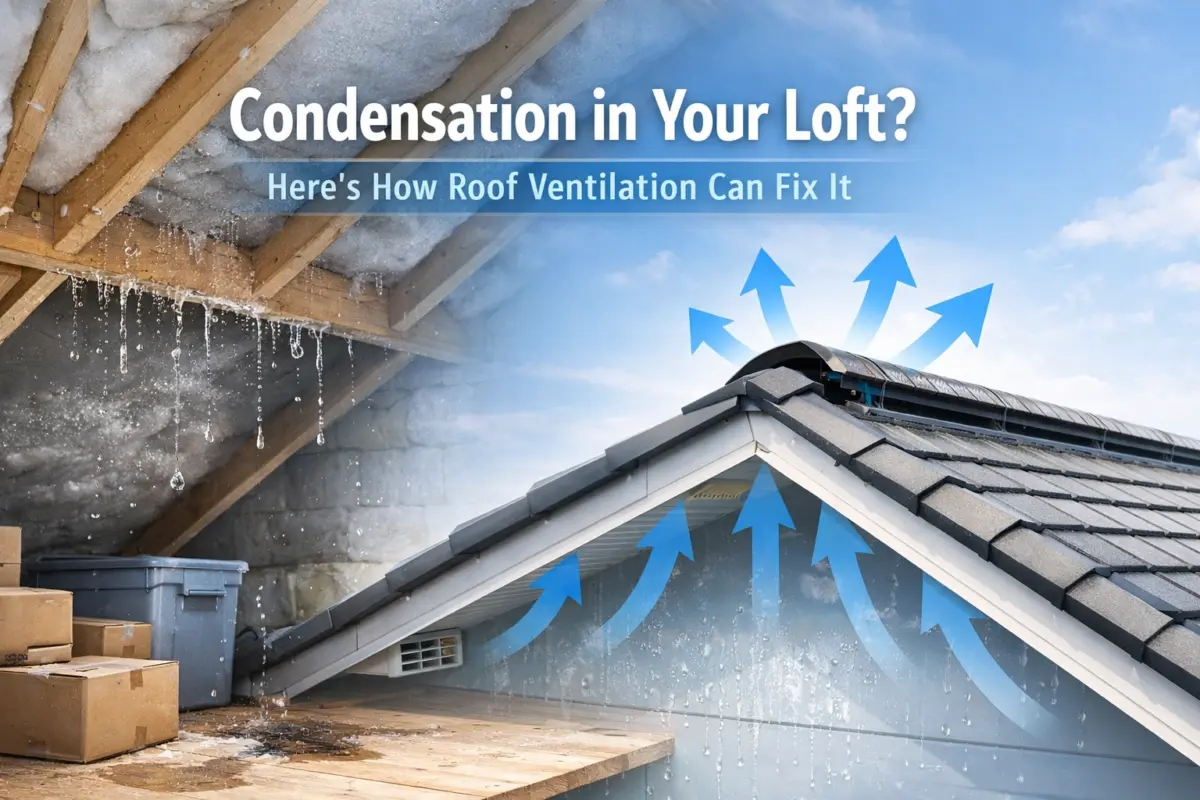
10 Reasons Your Loft Keeps Getting Damp (And How Roof Ventilation Fixes It)

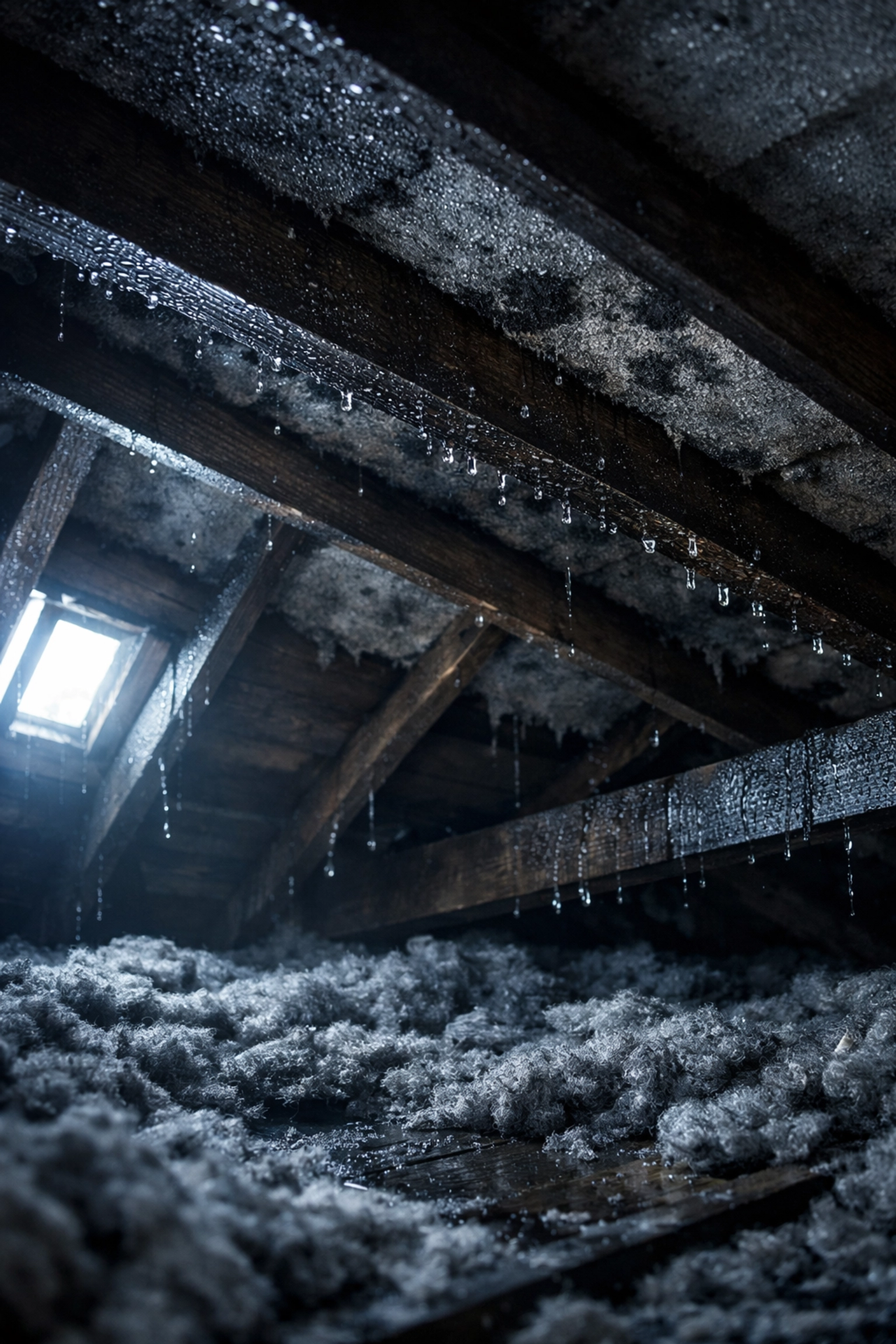
You've noticed the telltale signs. Water stains on the ceiling. That musty smell when you open the loft hatch. Black mould spreading across your timber. Your loft has a damp problem, and it's not going away on its own.

Here's the truth: most loft damp isn't caused by a leaking roof. It's caused by trapped moisture that has nowhere to escape. The warm, moist air from your home rises into your loft, hits cold surfaces, and condenses. Without proper ventilation, that moisture builds up day after day, creating the perfect environment for rot, mould, and structural damage.

The good news? Roof ventilation solves this problem at the source. Let's break down exactly why your loft keeps getting damp and how proper ventilation fixes it for good.

1. Your Roof Vents Are Blocked or Obstructed

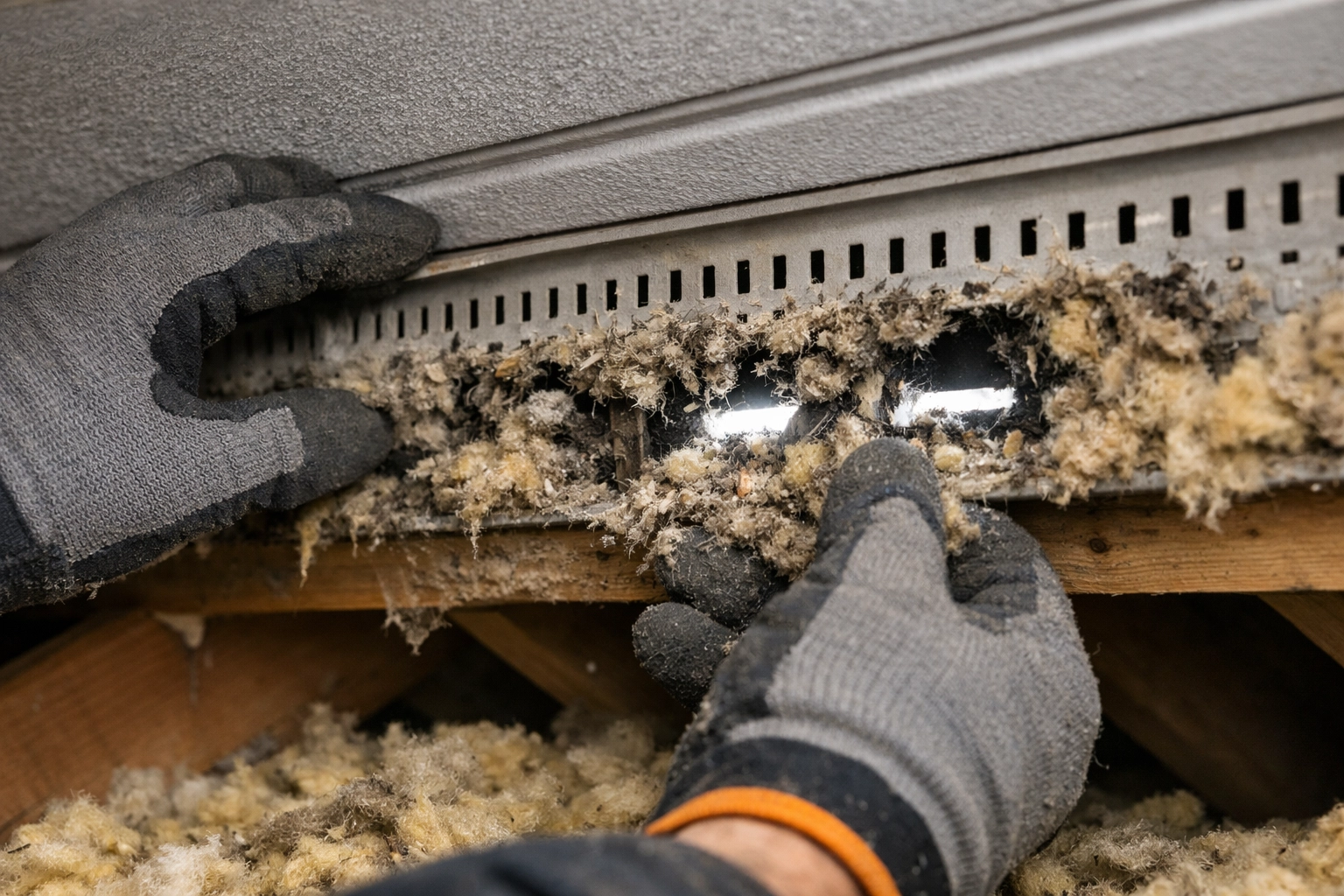
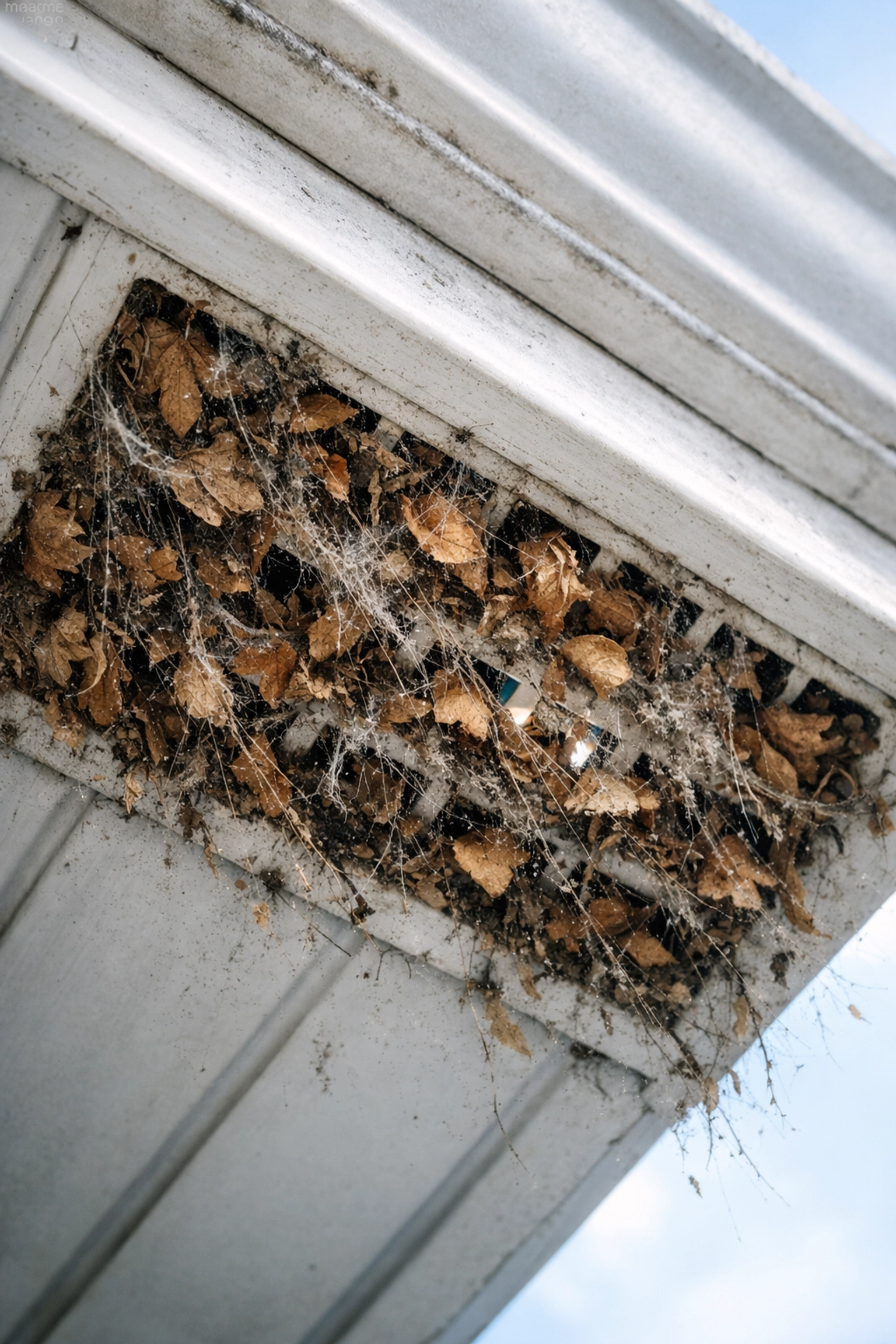
The most common cause of loft damp is blocked ventilation. Your roof should have vents at the eaves, ridge, or soffits that allow air to circulate. When these get blocked by debris, bird nests, or accumulated dust, humid air becomes trapped in your loft space.

Check your vents regularly. Clear any obstructions. If you can't remember the last time you inspected them, now's the time to do it.

2. You Don't Have Enough Ventilation in the First Place

Many older properties in Northern Ireland were built with inadequate roof ventilation. The building regulations have changed over the years, and what was acceptable in the 1970s doesn't meet modern standards.

Your loft needs continuous airflow to expel moisture. If your roof only has a few small vents, they simply can't move enough air to prevent condensation. Installing additional ridge vents, soffit vents, or tile vents creates the cross-ventilation your loft needs.

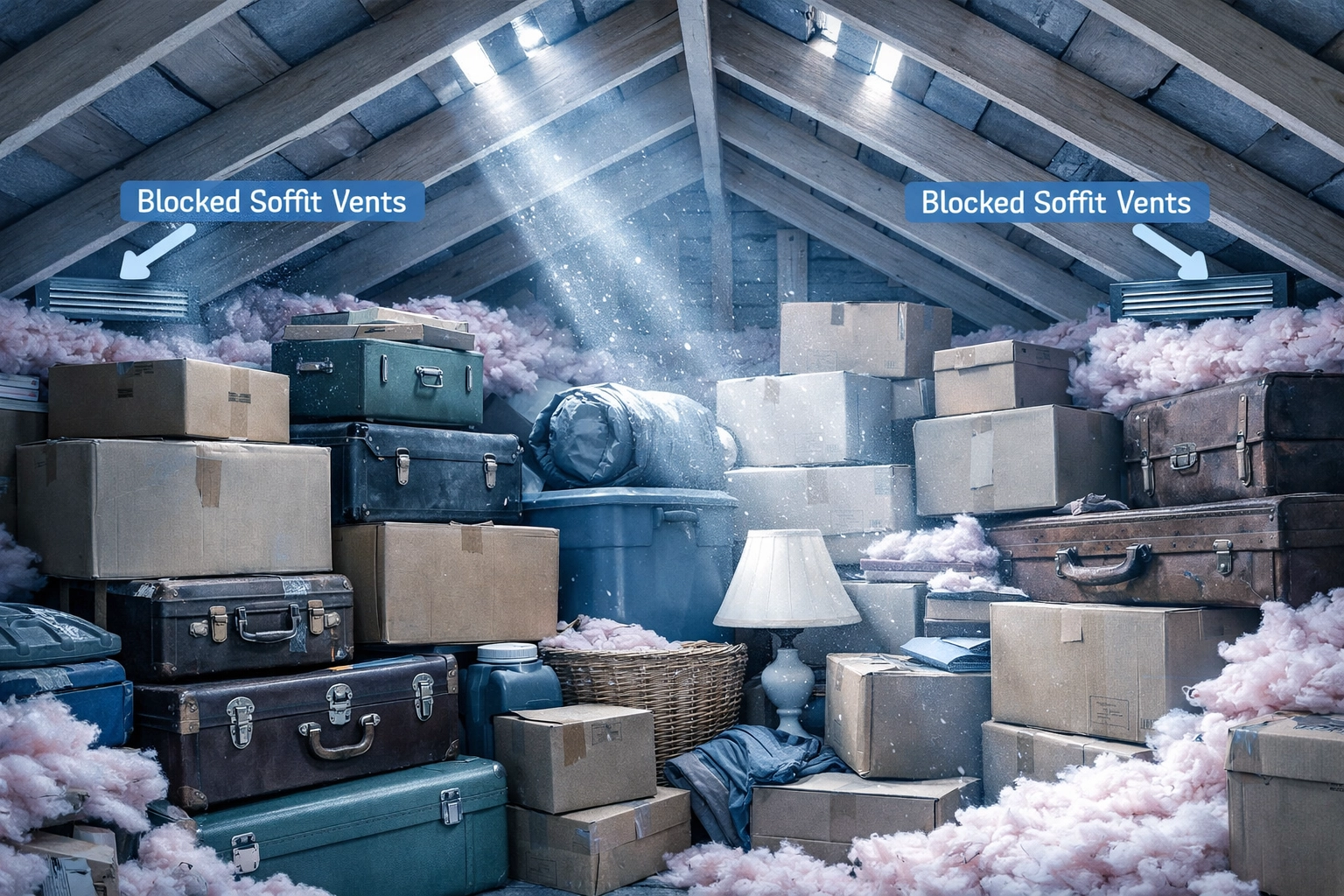
Blocked soffit vent clogged with leaves and debris preventing roof ventilation

3. Your Insulation Is Blocking Critical Airflow

You've done the right thing and insulated your loft to save on heating costs. But here's the problem: poorly installed insulation can block the very vents that prevent damp.

When insulation is pushed right up to the eaves, it blocks the airflow from soffit vents. When it covers the gaps around the edge of the loft, it stops air circulation completely. The solution isn't removing your insulation: it's installing it properly with ventilation channels that maintain airflow.

4. Household Moisture Has Nowhere to Go

Every time you cook, shower, or dry clothes indoors, you're releasing moisture into your home. That moisture rises. And without proper ventilation throughout your property, it ends up in your loft.

A family of four can produce up to 12 litres of water vapour per day. That's 12 litres trying to escape through your ceiling into an unventilated loft space. Install extractor fans in bathrooms and kitchens. Use them. And ensure your loft ventilation can handle the moisture load your household produces.

5. Your Loft Hatch Isn't Sealed Properly

Look at your loft hatch. Can you see daylight around the edges? Feel any drafts? Gaps around your loft hatch are a direct highway for warm, humid air to enter your loft.

The warm air from your heated rooms below rises through these gaps, enters the cold loft, and immediately condenses on cold surfaces. Seal your loft hatch with draught-proofing strips. Better yet, install a properly insulated loft hatch with an airtight seal.

6. Gaps Around Pipes and Water Tanks Let Moisture In

Every penetration through your ceiling is a potential moisture entry point. Pipes that go through to the loft. Water tanks with poorly sealed openings. Cable runs with gaps around them.

These aren't just minor issues: they're constant sources of moisture ingress. Seal every gap around pipes, tanks, and cables with appropriate fire-rated sealant. This simple step dramatically reduces the amount of humid air entering your loft.

7. Storage and Clutter Is Suffocating Your Loft

Using your loft for storage? You're not alone. But those boxes, suitcases, and Christmas decorations might be causing your damp problem.

Stored items block airflow, create dead air pockets, and prevent moisture from escaping. They cover vents, block air paths, and trap humid air against cold surfaces. Clear the clutter. Create clear pathways for air to circulate. If you must store items in your loft, ensure they don't obstruct ventilation routes.

Cluttered loft storage blocking ventilation and airflow causing damp problems

8. Your Boiler Is Releasing Steam Directly Into the Loft

If you have a combination boiler or condensing boiler in your loft, check its condensate pipe and flue termination. Poorly maintained boilers can release steam and condensation directly into your loft space.

This is particularly common with older boilers or those that haven't been serviced regularly. Have your boiler serviced annually. Ensure the condensate pipe drains properly and that the flue terminates outside, not into the loft.

9. External Water Ingress Is Making Condensation Worse

Here's where things get complicated. Sometimes you have both condensation and a genuine leak. Damaged roof tiles, cracked roof felt, or failing flashing can allow rainwater to enter your loft, which then mixes with condensation to create a serious damp problem.

Water stains, wet timber, and visible drips during rain are signs of external water ingress. This requires professional roof repair: condensation management alone won't fix it. If you suspect a leak, request a professional roof survey to identify the source.

10. There's Simply No Cross-Ventilation Happening

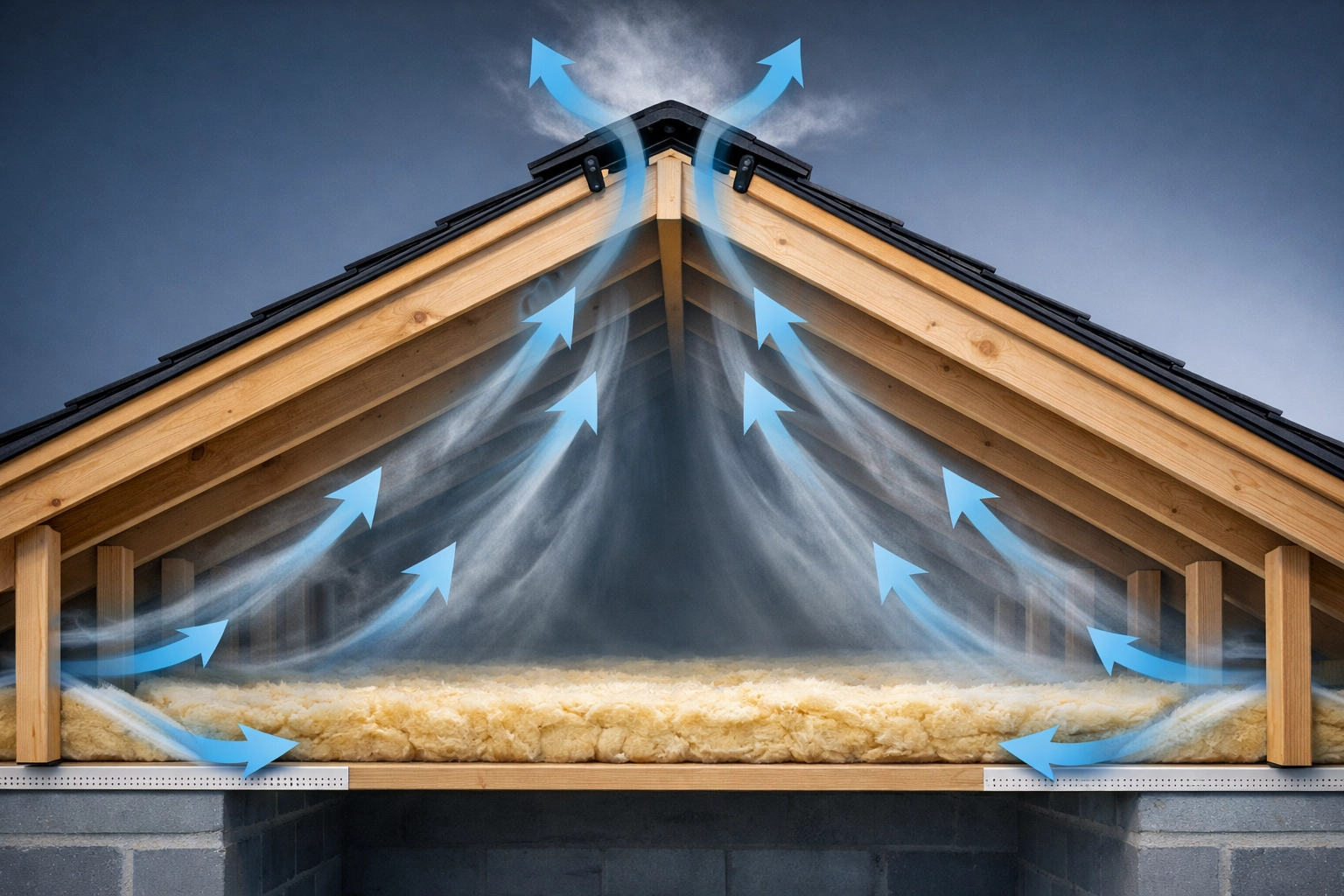
Ventilation isn't just about having vents: it's about creating airflow. Your loft needs both low-level vents (at the eaves or soffits) and high-level vents (at the ridge or gable ends) to create cross-ventilation.

Without this airflow pattern, humid air just sits in your loft with nowhere to go. The warm air rises, but it can't escape. Installing a combination of low and high-level vents creates a natural airflow that continuously expels moist air and draws in fresh, dry air.

How Proper Roof Ventilation Solves Loft Damp

Now you understand why your loft is damp. Here's how proper ventilation fixes it:

Continuous Air Movement: Functioning vents create constant airflow that removes humid air before it can condense on cold surfaces.

Temperature Regulation: Ventilation helps balance the temperature difference between your heated home and your cold loft, reducing the conditions that cause condensation.

Moisture Expulsion: High-level ridge vents allow warm, moist air to escape naturally, while low-level soffit vents draw in fresh air to replace it.

Prevention of Stagnant Air: With proper cross-ventilation, you eliminate the dead air pockets where moisture accumulates and mould thrives.

Long-Term Protection: Once installed correctly, roof ventilation works 24/7 to protect your property from damp, rot, and structural damage.

Advanced Construction & Roofing Roof Survey Service

Take Action Before the Damage Gets Worse

Loft damp doesn't improve with time. It gets worse. The longer moisture sits in your loft, the more damage it causes to your timber, insulation, and stored belongings. Mould spreads. Wood rots. Structural integrity weakens.

Request a professional inspection of your loft ventilation system. Identify exactly which of these 10 issues is affecting your property. And fix it properly the first time.

At Advanced Construction & Roofing, we've solved loft damp problems across Northern Ireland for over two decades. We assess your existing ventilation, identify the specific causes of your damp problem, and install the right ventilation solution for your property type and roof structure.

Don't wait until you're dealing with serious rot or structural damage. Contact our team today for a thorough roof ventilation assessment. We'll tell you exactly what needs fixing and how we'll fix it. No jargon. No overselling. Just honest advice from experienced professionals who understand Northern Ireland properties.

Call us now or visit our website to request your loft ventilation inspection. Your loft: and your peace of mind( will thank you.)

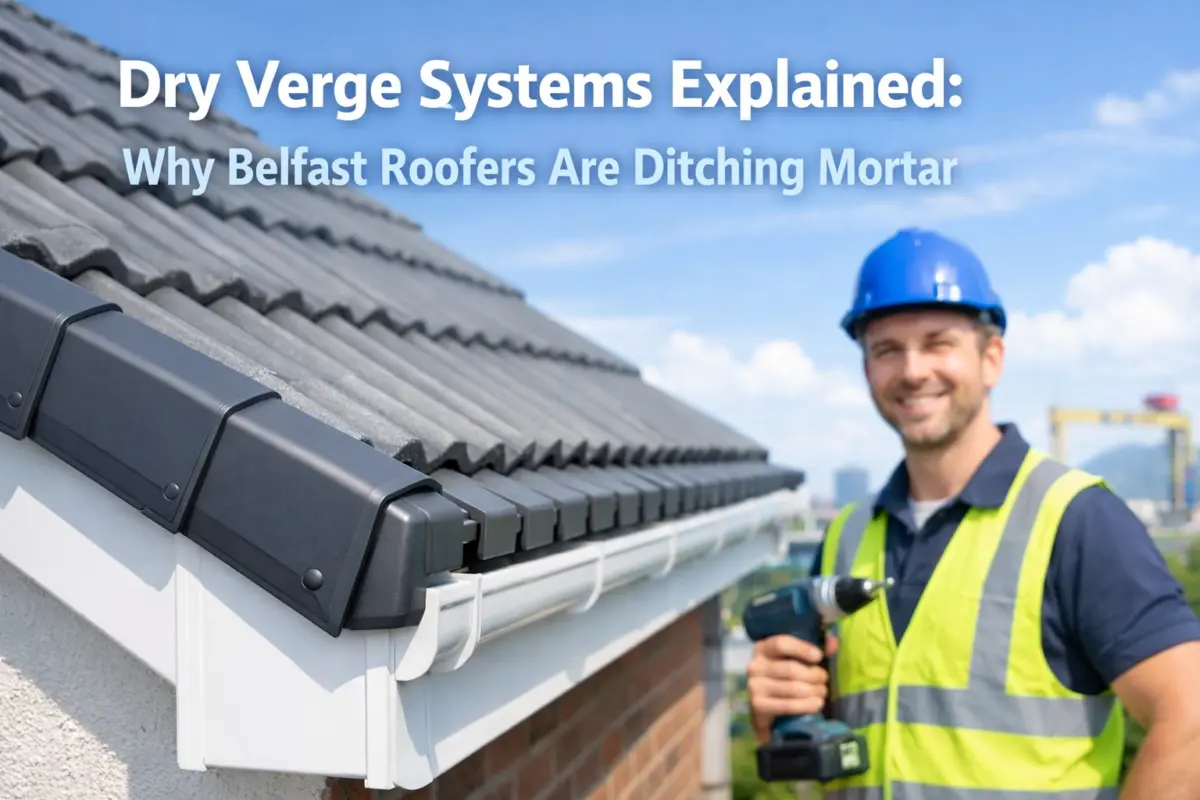
Dry Verge Systems Explained: Why Belfast Roofers Are Ditching Mortar

If you've ever looked at the gable end of your roof and noticed crumbling mortar or gaps where your verge tiles meet the edge, you're not alone. Traditional mortar verges are failing across Belfast and Northern Ireland: and there's a better solution that roofers are switching to in droves.

Dry verge systems are replacing old-school mortar, and for good reason. They last longer, perform better in our unpredictable weather, and require virtually zero maintenance. If you're planning a roof repair or replacement, understanding this shift could save you thousands in the long run.

Let's break down what dry verge systems actually are, why traditional mortar is becoming obsolete, and why this matters for your Belfast property.

What Exactly Is a Dry Verge System?

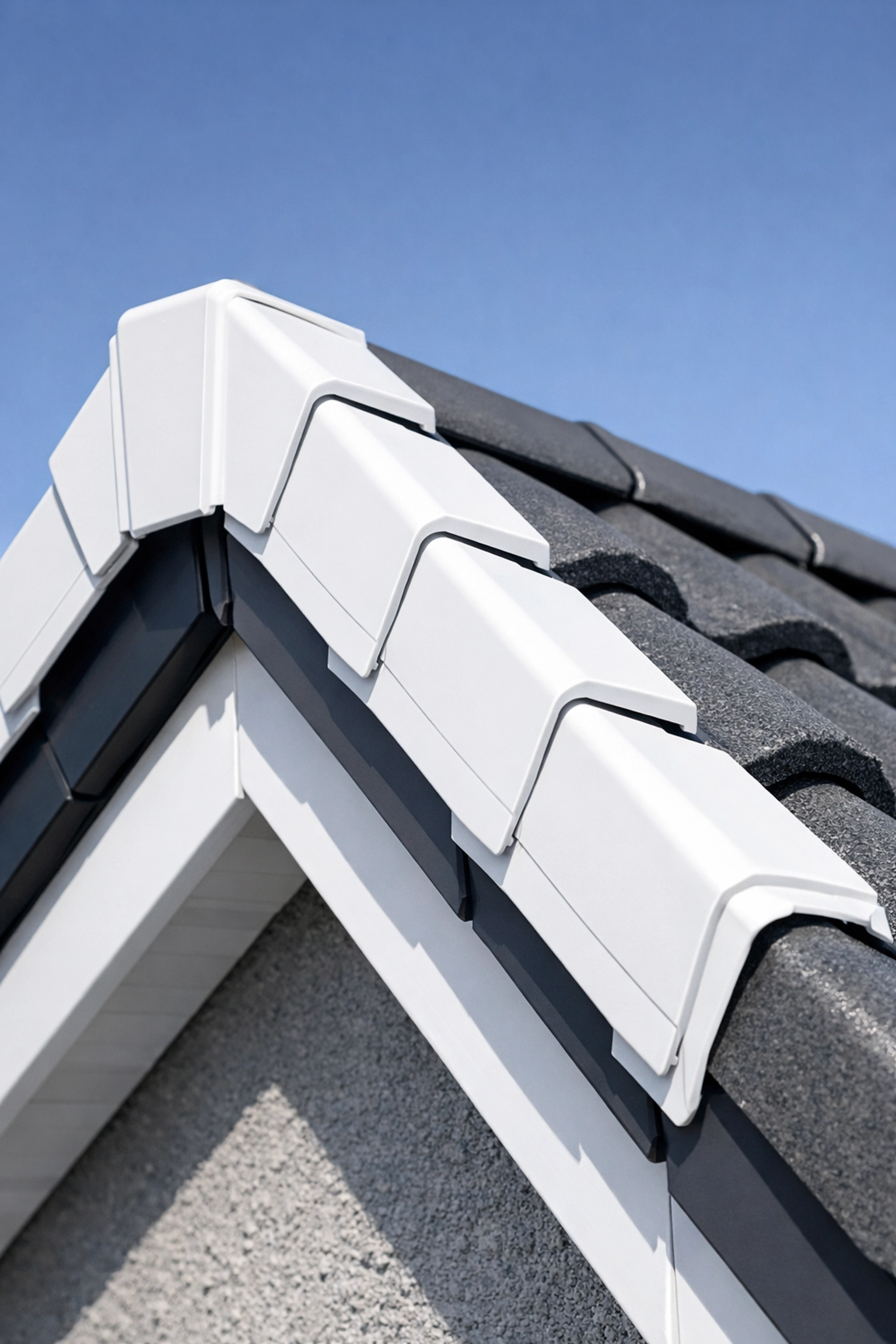
A dry verge system is a mechanical roofing solution that uses interlocking plastic caps to seal the edge of your roof tiles where they meet the gable end. Instead of bedding tiles in sand and cement mortar, these purpose-built caps clip securely over the edge tiles, creating a weatherproof seal without any wet materials.

The system typically includes:

  • End caps that fit over the final tile on each row
  • Universal clips that secure tiles mechanically to the fascia board
  • Drainage channels built into the design to direct water away from the gable wall
  • Ventilation gaps that allow air circulation into the roof space

Think of it as a modern, engineered replacement for the traditional mortar pointing you'd see on older roofs. The difference? It actually works long-term.

Modern dry verge system installed on roof tiles with interlocking plastic caps

Why Traditional Mortar Verges Keep Failing Belfast Homeowners

Belfast's weather doesn't do mortar any favors. Our combination of heavy rainfall, strong winds, and temperature fluctuations creates the perfect conditions for mortar deterioration. Here's what's happening on thousands of roofs across Northern Ireland right now:

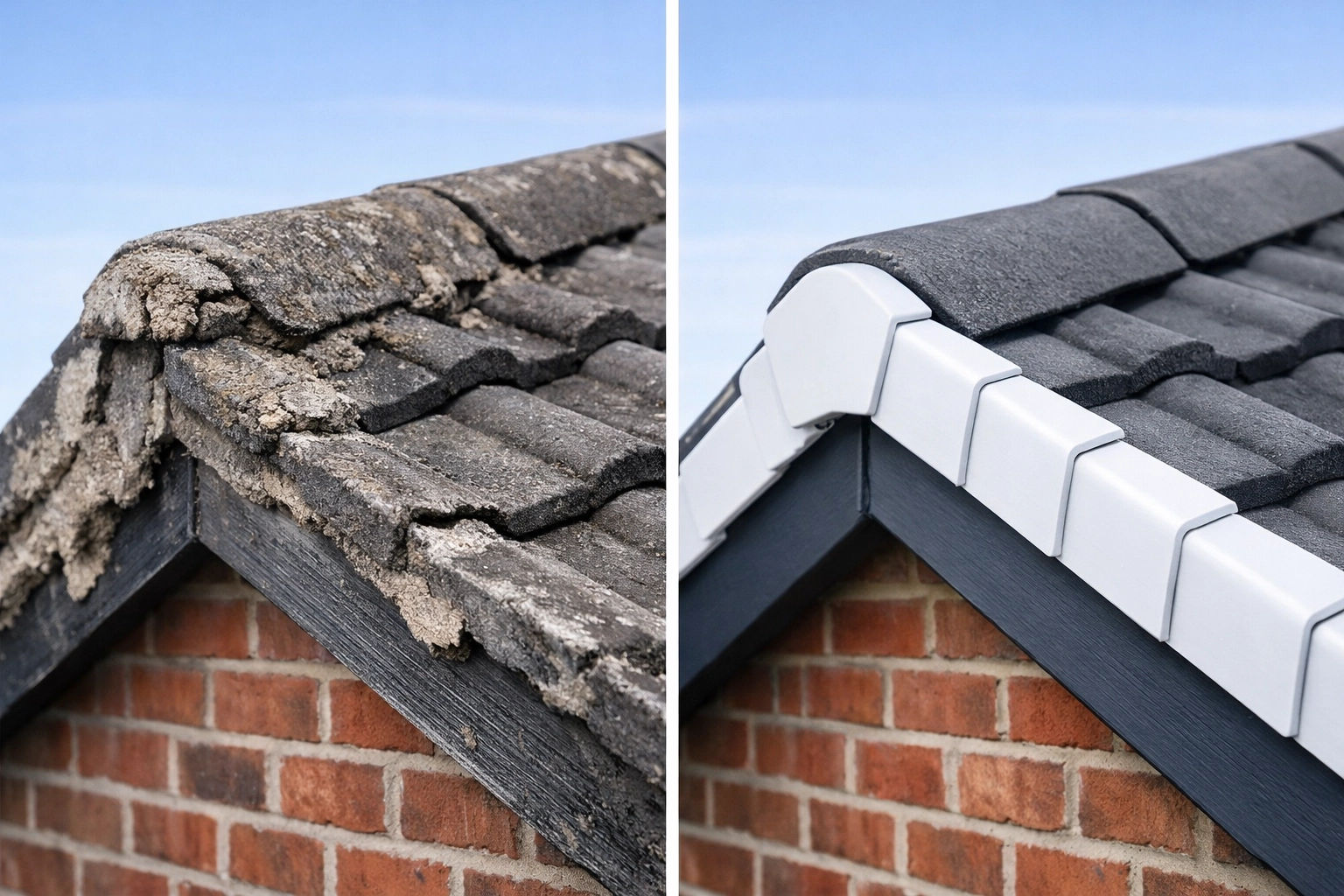
Thermal movement cracks the mortar. As temperatures swing from cold to warm, your roof materials expand and contract. Mortar is rigid and can't flex with this movement: so it cracks. Once those hairline fractures appear, water gets in and accelerates the breakdown.

Freeze-thaw cycles speed up deterioration. Water seeps into those cracks, freezes in winter, expands, and breaks the mortar apart from the inside. After a few harsh winters, you're looking at chunks of mortar falling off your roof entirely.

Mortar doesn't bond permanently to modern tiles. Older clay tiles had a rough surface that mortar could grip. Many modern concrete tiles have smoother finishes, which means the mortar bond is weaker from day one. Add wind uplift and driving rain, and you've got a verge that won't last five years.

Wind uplift literally rips mortar loose. Belfast and coastal areas experience significant wind loads. Traditional mortar provides no mechanical fixing: it relies purely on adhesion. When storm winds get underneath those verge tiles, the mortar simply can't hold them down.

The result? Frequent repointing, ongoing maintenance costs, and eventually, complete verge failure. Many Belfast homeowners find themselves paying for mortar repairs every 3-5 years. That's not a long-term solution: that's a recurring expense.

The Five Reasons Roofers Are Making the Switch

1. Durability That Actually Lasts

Dry verge systems are manufactured from UV-stabilized plastics designed to withstand decades of weather exposure. Most manufacturers offer guarantees of at least 10 years, but realistically, these systems last 20-30 years with minimal degradation.

Compare that to mortar verges that need repointing every few years. The math is simple: one installation versus multiple repair callouts. Dry verge systems eliminate the maintenance cycle entirely.

2. Weather Performance That Meets Building Standards

Here's something many Belfast homeowners don't realize: dry verge systems are now a building control requirement under BS 5534 for all new roofs. Why? Because they provide the only reliable protection against wind uplift in exposed locations.

The mechanical fixing system secures each tile independently. Even in severe storm conditions, your verge tiles stay exactly where they should be. No blown-off tiles, no emergency repairs after every weather event, no stress during storm season.

If you're in a coastal area or anywhere with regular high winds, this isn't optional: it's essential protection for your property.

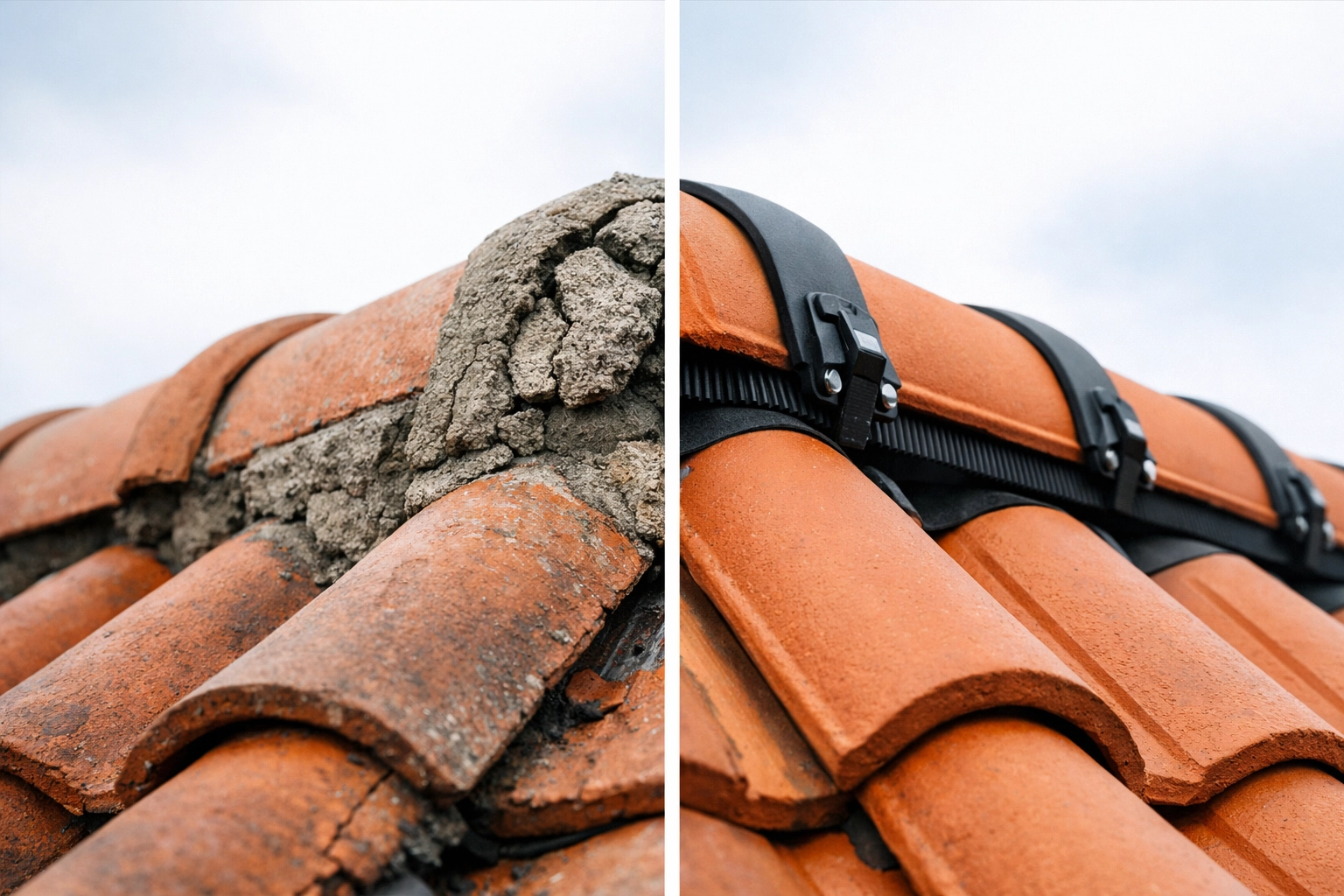
Comparison of cracked mortar verge vs new dry verge system on Belfast roof

3. Installation That Works in Any Weather

Traditional mortar can't be applied in temperatures below 4°C or during rain. In Belfast, that rules out installation for a significant portion of the year. Projects get delayed, scaffolding hire extends, and costs escalate.

Dry verge systems install in any weather conditions. Rain, cold, heat: it makes no difference. Your roofer can complete the work on schedule without weather-related delays. For commercial projects or time-sensitive repairs, this flexibility is invaluable.

4. Ventilation That Prevents Condensation Problems

This benefit surprises many homeowners, but it's crucial for roof health. Traditional mortar creates a sealed barrier along your verge that traps moisture inside the roof space. Over time, this contributes to condensation buildup, damp insulation, and timber rot.

Dry verge systems incorporate controlled ventilation gaps that allow air circulation without letting rain in. This airflow helps manage condensation naturally, protecting your roof structure and insulation from moisture damage.

We've written extensively about roof ventilation issues: if you're experiencing damp problems in your loft, poor ventilation is likely a contributing factor.

5. A Cleaner, More Professional Finish

Let's be honest: mortar verges often look rough. Even skilled roofers struggle to create perfectly uniform mortar pointing, and within months, weathering makes them look worse. Staining on render, uneven profiles, and visible cracks all detract from your property's appearance.

Dry verge systems provide a consistently neat, professional finish. The uniform caps create clean lines that enhance your roof's appearance rather than compromise it. For properties being marketed for sale, this modern finish can contribute to better first impressions and potentially higher valuations.

What About Listed Buildings and Conservation Areas?

Building regulations do make exceptions for listed properties and buildings in conservation areas, where traditional mortar verges may be required to maintain historical character. If your Belfast property falls into these categories, consult with your local planning authority before making changes.

For the vast majority of residential and commercial properties, however, dry verge systems are not only permitted: they're preferred by building control and insurance assessors.

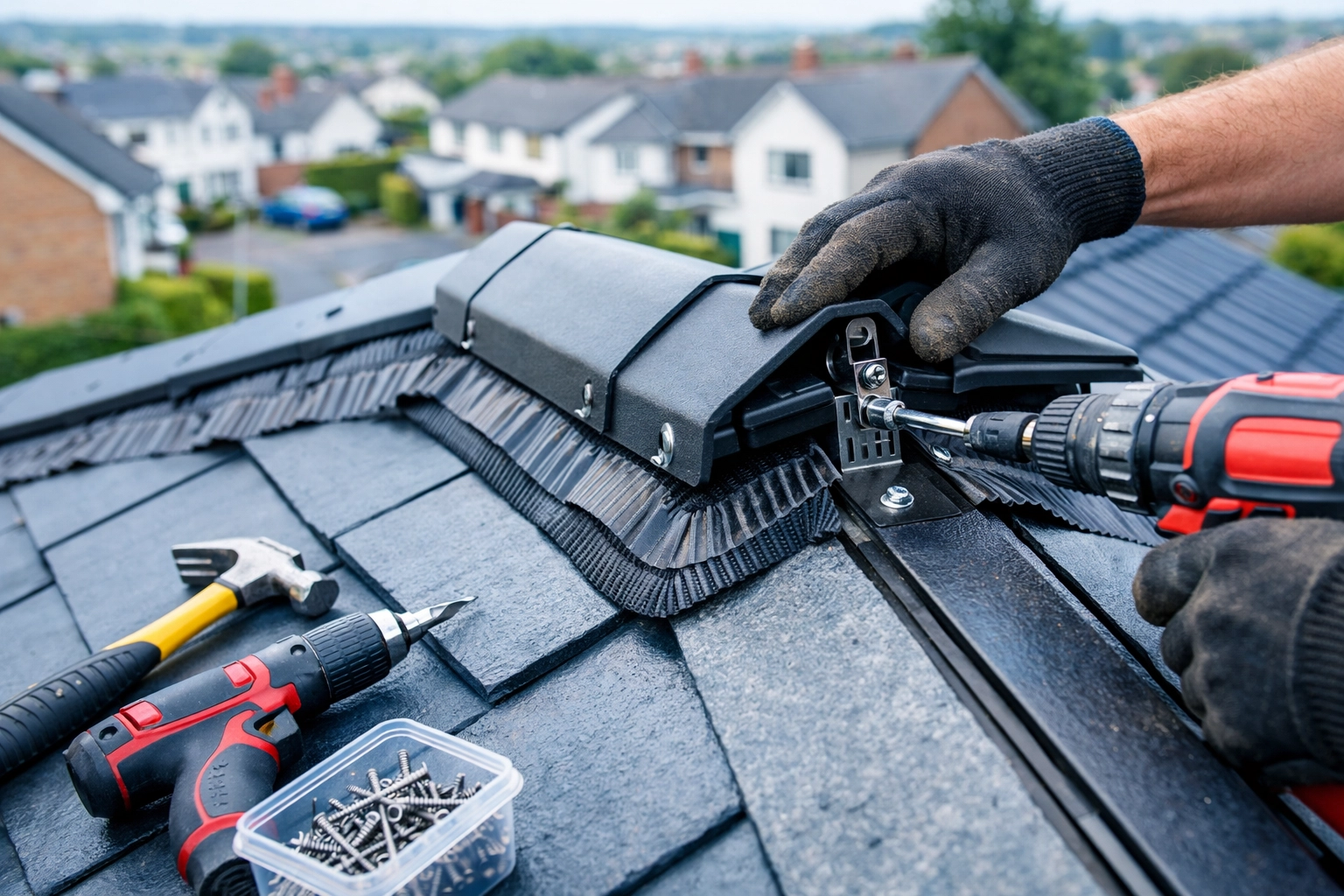
Roofer installing dry verge cap onto roof tile showing mechanical fixing system

The Cost Reality: Investment vs. Ongoing Expense

The upfront cost of dry verge systems is higher than traditional mortar. Expect to pay approximately 20-40% more for the initial installation. For many Belfast homeowners, this price difference causes hesitation.

But here's the full picture:

Traditional mortar verges require repointing every 3-5 years. Each repointing job involves scaffolding, labor, materials, and disruption. Over a 15-year period, you'll likely pay for 3-4 separate repair projects. Add those costs up, and the total exceeds the one-time investment in a dry verge system.

The dry verge system pays for itself through eliminated maintenance costs. Plus, you avoid the hassle of recurring repairs, the stress of storm damage, and the risk of more serious problems if mortar failure goes unaddressed.

When we conduct roofing surveys across Belfast, failed verges are one of the most common defects we identify. Homeowners who've already switched to dry verge systems consistently report satisfaction with the decision.

How to Know If Your Belfast Property Needs This Upgrade

Inspect your roof verges twice yearly. Look for these warning signs that indicate mortar failure:

  • Visible cracks in the mortar along the gable edge
  • Gaps appearing between the mortar and tiles
  • Loose or lifted verge tiles
  • Mortar chunks on the ground below your gutters
  • Staining or water marks on the gable wall render
  • Tiles that rattle or move when touched

If you spot any of these issues, don't wait for complete failure. Failed verges allow wind-driven rain directly into your roof structure, causing far more expensive damage to timber, insulation, and internal ceilings.

Request a professional roof inspection if you're uncertain about your verge condition. A qualified roofer can assess whether repair or full replacement makes more sense for your specific situation.

Making the Switch: What to Expect

A complete dry verge installation typically takes 1-2 days for an average Belfast semi-detached property. The process involves:

  1. Removing existing mortar and preparing the roof edge
  2. Installing support trays and clips along the fascia
  3. Fitting the interlocking caps over each tile course
  4. Sealing the ridge junction appropriately
  5. Final inspection and cleanup

Choose roofers with specific experience installing dry verge systems. While the concept is straightforward, proper installation requires attention to manufacturer specifications, especially regarding ventilation gaps and clip spacing.

Poor installation can compromise the system's weather performance and void manufacturer guarantees. Always verify that your roofer is certified to install the specific dry verge product they're recommending.

The Bottom Line for Belfast Homeowners

Dry verge systems represent genuine improvement over traditional mortar: this isn't just marketing hype. The technology solves real problems that Belfast homeowners face with our challenging weather conditions.

If you're replacing your roof, installing dry verge systems is a no-brainer. The small additional cost delivers decades of maintenance-free performance and superior protection.

If your existing mortar verges are failing, retrofitting dry verge systems makes financial sense. You'll eliminate ongoing repointing costs and protect your property from progressive water damage.

Contact Advanced Construction & Roofing for a professional assessment of your roof verges. We'll provide honest advice about whether your current mortar still has serviceable life or if upgrading to a dry verge system makes sense for your situation.

Our team has installed dry verge systems across hundreds of Belfast properties. We understand local weather challenges, building regulations, and the specific performance requirements your roof needs to meet.

Call us today for a free roof inspection. We'll evaluate your verges, explain your options clearly, and provide transparent pricing with no pressure. Your roof is too important to leave to chance: let's make sure it's protected properly for the long term.

Cold Roof Vs Warm Roof Ventilation: Which Is Better For Your Belfast Property?

If you're planning a roof project in Belfast, you've probably heard contractors throw around terms like "cold roof" and "warm roof." Here's the thing: this isn't just technical jargon. The ventilation strategy you choose directly impacts your heating bills, moisture problems, and how long your roof actually lasts.

Belfast's damp climate makes this decision even more critical. Get it wrong, and you could be dealing with condensation, mould growth, and rotting timbers within a few years. Get it right, and you'll have a roof that performs brilliantly for decades.

Let's break down exactly what these systems are, how they differ, and which one actually makes sense for your Northern Ireland property.

What Exactly Is a Cold Roof?

A cold roof system keeps the insulation at ceiling level: between the joists in your loft space. The void above the insulation stays cold (hence the name), and ventilation is built into the eaves and ridge to allow air to circulate through this space.

The theory sounds sensible: air flows through the void, carrying away any moisture that might accumulate. This should prevent condensation from forming on the underside of your roof deck.

In practice? It's trickier than it sounds, especially in Belfast.

Cold roofs require perfect vapor barriers and consistent ventilation to work properly. UK Building Regulations demand at least 50mm of clear ventilation space with effective cross-flow ventilation. But here's what actually happens: over time, ventilation pathways get blocked by insulation, bird nests, or debris. The vapor barrier gets punctured during maintenance work or cable installations.

When either of these protections fails, you get condensation. And in Belfast's damp climate, condensation turns into a serious problem fast.

Cold roof system cross-section showing insulation between joists and ventilation space above

What Makes a Warm Roof Different?

A warm roof takes a completely different approach. The insulation sits above the structural roof deck, keeping the entire roof structure warm and above the dew point temperature.

There's no cold void. No need for complex ventilation pathways. The roof deck, joists, and all structural elements stay at roughly the same temperature as the interior of your building.

This eliminates interstitial condensation almost entirely: moisture simply can't form because there's nowhere cold enough for it to condense.

From an installation perspective, warm roofs are more straightforward. The insulation creates a continuous thermal blanket with no gaps or cold spots. There are no thermal bridges through joists. No ventilation requirements to maintain over time.

For flat roofs especially, warm roof construction has become the go-to standard in modern building practice.

Cold Roof Vs Warm Roof: The Critical Differences

Let's compare these systems head-to-head:

Insulation placement: Cold roofs place insulation between joists at ceiling level. Warm roofs install insulation above the structural deck in a continuous layer.

Ventilation requirements: Cold roofs need extensive ventilation through the roof void. Warm roofs require no roof space ventilation.

Condensation risk: Cold roofs depend on perfect vapor control and ventilation: when either fails, condensation forms. Warm roofs keep everything above the dew point, virtually eliminating condensation risk.

Thermal performance: Cold roofs need around 200mm of mineral wool insulation to achieve good U-values. Warm roofs achieve the same performance with less material thickness thanks to continuous insulation with no thermal bridging.

Installation complexity: Cold roofs require careful vapor barrier installation and ventilation pathway design. Warm roofs offer simpler, more foolproof installation.

Long-term maintenance: Cold roofs need ongoing ventilation checks. Warm roofs require minimal maintenance attention.

Why Belfast's Climate Changes Everything

Advanced Construction & Roofing Roof Survey Service A professional roof inspector examines ceiling damage and insulation while taking notes. The image promotes Advanced Construction & Roofing's roof survey service, offering visual surveys, photo evidence, defect identification, and in-depth analysis for property owners. Contact details and a website link are included for booking a survey.

Belfast gets approximately 830mm of rainfall annually. Humidity levels stay consistently high, particularly during autumn and winter months. Temperatures hover around 4-7°C during winter, with damp conditions prevailing for extended periods.

This combination creates perfect conditions for condensation problems.

When warm, moist air from your heated interior meets cold surfaces in an inadequately ventilated roof void, moisture condenses immediately. In Belfast's climate, this happens constantly throughout the heating season.

Cold roofs struggle in these conditions because maintaining effective ventilation proves nearly impossible. Wind-driven rain can penetrate ventilation openings. High humidity means any ventilation failure leads to rapid moisture accumulation.

Warm roofs sidestep these problems entirely by eliminating cold surfaces where condensation can form.

What Are the Common Problems with Cold Roofs in Northern Ireland?

After 20 years of roof inspections across Belfast and surrounding areas, we've seen the same cold roof failures repeatedly:

Blocked ventilation pathways top the list. Insulation gets pushed into eaves during installation or upgrades, blocking air movement. Birds nest in ventilation gaps. Windblown debris accumulates over time.

Compromised vapor barriers come next. Every penetration for pipes, cables, or light fittings creates a potential vapor leak. One small gap allows warm, moist air into the roof void: and that's all it takes.

Insufficient cross-ventilation is another frequent issue. Many older properties have eaves ventilation but no ridge or high-level outlet. Air can't flow effectively without both inlet and outlet points.

The result? We regularly see timber decay, mould growth on sarking boards, and corroded roof fixings: all from condensation that shouldn't be there.

If you're concerned about existing roof problems, consider requesting a professional inspection through our roofing surveys service.

Warm roof construction with insulation layers installed above the roof deck

Why Do Warm Roofs Perform Better in Damp Climates?

Warm roofs solve Belfast's condensation challenges through simple physics: keep everything warm enough, and moisture can't condense.

The continuous insulation layer creates an unbroken thermal envelope. There are no cold spots, no thermal bridges through structural members, no temperature variations where condensation can form.

Energy efficiency improves dramatically. Without thermal bridging through joists, the same thermal performance requires less insulation thickness. Your heating system works less to maintain comfortable temperatures. Energy bills drop accordingly.

Installation reliability increases. There's no complex vapor barrier to install perfectly. No ventilation pathways to design and maintain. Fewer variables mean fewer opportunities for installation errors.

Long-term performance stays consistent. Unlike cold roofs where ventilation effectiveness degrades over time, warm roofs maintain their thermal and moisture management performance year after year with minimal maintenance.

For flat roof installations particularly, warm roof construction has become the industry standard precisely because it addresses moisture management so effectively.

Should You Choose Cold Roof or Warm Roof for Your Belfast Property?

For new builds and major renovations, warm roof construction wins decisively in Belfast's climate. The superior moisture control, better energy efficiency, and simpler installation make it the logical choice.

The higher initial material cost pays back through lower heating bills and virtually eliminated condensation maintenance issues.

For existing pitched roofs with accessible loft spaces, the decision gets more nuanced. If your current cold roof performs adequately with good ventilation and proper vapor control, upgrading may not be necessary. However, if you're experiencing condensation problems, timber decay, or planning significant insulation upgrades, converting to warm roof construction should be seriously considered.

For flat roofs specifically, warm roof design should be your default choice. The condensation risks with cold flat roofs in Belfast's climate simply don't justify the minimal cost savings.

Belfast rooftops with slate tiles in damp weather showing moisture and rain

What Should You Do Next?

If you're planning a roof project or dealing with existing condensation problems, get professional advice specific to your property.

Every building has unique characteristics: orientation, existing ventilation, internal moisture loads, structural considerations: that affect which approach works best.

Contact Advanced Construction & Roofing for a thorough assessment. We'll inspect your current roof condition, identify any existing moisture problems, and recommend the ventilation strategy that makes sense for your specific situation and budget.

Request a comprehensive roof survey if you're concerned about existing issues. Our detailed inspections identify condensation problems, ventilation failures, and structural concerns before they become expensive emergencies. Learn more about our Belfast roof survey and report service.

Don't guess about something this important. Roof ventilation affects your property's structural integrity, energy performance, and indoor air quality for decades. Make the decision based on professional assessment, not assumptions.

Call us today for an honest evaluation of your roof ventilation needs. We'll explain your options clearly, answer your questions directly, and recommend the solution that actually works for your Belfast property: not just the one that's easiest to install.

Your roof deserves better than a one-size-fits-all approach. Get it right the first time.

Looking For a Pre-Purchase Roof Survey? Here Are 10 Things You Should Know

Buying a property in Northern Ireland without a proper roof survey is like buying a car without checking under the bonnet. You might get lucky, or you might inherit a £15,000 problem. A pre-purchase roof survey isn't just about ticking boxes: it's about knowing exactly what you're getting into before you sign on the dotted line.

Here's what you absolutely need to know before commissioning that survey.

1. What's the Roof's History? Ask Before the Inspector Arrives

Before anyone sets foot on that roof, request the complete history from the seller. You need to know:

  • When was the roof installed?
  • What type of roofing material is it?
  • Are there any existing warranties, and are they transferable?
  • Have there been any repairs, and what were they for?
  • Has the roof ever leaked?

A 10-year-old roof in Belfast that's been regularly maintained is a completely different proposition from a 10-year-old roof that's been ignored. Get this information upfront. If the seller can't or won't provide it, that's a red flag before you've even started.

Roof inspector reviewing pre-purchase survey documents with homeowner in Northern Ireland

2. Does the Exterior Inspection Cover Everything That Matters?

The exterior roof surface tells most of the story, but only if your inspector knows what to look for. A proper Belfast roof survey should document:

For slate or tile roofs:

  • Cracked, slipped, or missing tiles
  • Broken or deteriorated slate
  • Ridge tile condition and mortar integrity
  • Lead flashing condition

For flat or pitched roofs with felt:

  • Surface bubbling or blistering
  • Felt tears or splits
  • Exposed nail heads or fixings
  • Granule loss on mineral felt

Your inspector should also check for sagging along ridge lines: a warning sign of potential structural issues that could cost thousands to rectify. In Northern Ireland's wet climate, even minor exterior damage accelerates quickly.

Request a comprehensive roofing survey that includes photographic evidence of every concern identified.

3. Why Do Flashing Failures Cost You the Most?

Here's what most homebuyers don't realize: the majority of roof leaks in Belfast properties don't start with the roofing material itself. They start at the flashing.

Flashing is the metal or lead material that seals the joints between your roof and chimneys, walls, skylights, and vents. When flashing fails, water finds its way into places it shouldn't be.

Your pre-purchase survey must examine:

  • Chimney flashing for lifting, cracking, or missing sections
  • Valley flashing where two roof planes meet
  • Rubber boots around pipe penetrations (these dry rot in our climate)
  • Parapet wall flashing
  • Skylight seals and caulking

Roof Inspection

Flashing repairs are technical work that requires proper expertise. A survey that glosses over flashing detail isn't worth the paper it's printed on.

4. What Do the Gutters Actually Tell You?

Your gutters aren't just there to catch rainwater: they're a diagnostic tool. A competent inspector examines gutters and downspouts for:

  • Debris buildup: Indicates maintenance neglect
  • Sagging or pulling away from fascia: Suggests long-term water management issues
  • Rust or corrosion: Tells you the system's remaining lifespan
  • Granule accumulation: Shows roof felt is deteriorating faster than it should

In Northern Ireland, where we see over 1,000mm of annual rainfall in many areas, functional guttering isn't optional: it's critical infrastructure. If the survey shows gutters aren't draining properly, water is pooling somewhere it shouldn't be, and that means damage you can't always see from ground level.

5. Can You Really Judge a Roof Without Checking the Attic?

No. You can't.

The attic space reveals problems that aren't visible from the exterior. Your inspector should be looking for:

  • Water stains on rafters or sheathing: Shows current or historical leaking
  • Wet or compressed insulation: Indicates active moisture problems
  • Mold or fungal growth: Suggests ventilation failures or persistent leaks
  • Daylight showing through the roof deck: Gaps that need immediate attention
  • Condensation patterns: Points to ventilation inadequacy

Belfast properties, particularly older ones, often have ventilation issues that create condensation problems. These mimic leak damage but require completely different solutions. An experienced inspector distinguishes between the two and documents findings with photos.

Close-up of damaged chimney flashing inspection showing corrosion and water penetration gaps

6. Why Is Proper Documentation Your Best Protection?

A verbal report isn't good enough. Period.

Your pre-purchase roof survey should include:

  • High-resolution photographs of every defect identified
  • Written descriptions with severity ratings
  • Estimated repair costs for each issue
  • Recommended priority order for addressing problems
  • Overall roof condition assessment with remaining lifespan estimate

This documentation serves multiple purposes. It gives you negotiating leverage with the seller. It provides a roadmap for prioritizing repairs after purchase. And if you're making an insurance claim down the line, it establishes the roof's pre-existing condition.

Professional documentation matters. Request it explicitly.

7. Should You Really Hire a Specialist Roof Surveyor?

Your general building surveyor might be excellent at what they do, but roof assessment requires specific expertise. Here's why specialist matters:

Safety considerations: Steep Belfast roofs in winter conditions require proper equipment and training. General surveyors often conduct ground-level or drone surveys that miss critical details.

Technical knowledge: Understanding the difference between acceptable wear and actionable defects requires roofing-specific experience. A generalist might flag normal aging as problems or overlook genuine concerns.

Access capability: Specialist roof surveyors have the equipment and insurance to safely access difficult roof areas that others can't reach.

Look for surveyors with relevant qualifications and specific roofing experience in Northern Ireland properties. Ask how many roof surveys they've conducted in the past year. Request references.

8. Does Weather Timing Actually Matter for Surveys?

It absolutely does, particularly in Northern Ireland where weather changes hourly.

Optimal survey timing:

  • Dry conditions allow safe roof access and accurate assessment
  • Recent rainfall helps identify active leaks more easily
  • Winter inspections reveal ice dam patterns and ventilation issues
  • Summer surveys show UV damage and heat-related deterioration

Avoid surveys during:

  • Active storms (safety risk, obscured visibility)
  • Frost or ice (safety risk, conceals problems)
  • Extreme heat (safety risk for inspectors)

If you're buying in winter, ensure the surveyor can conduct a thorough inspection despite weather limitations. Some defects simply can't be properly assessed in certain conditions: understand those limitations upfront.

9. How Do Insurance and Warranty Status Change Everything?

Two critical questions your survey should answer:

Is there a transferable warranty?

  • Many modern roofing systems come with 10-20 year guarantees
  • These warranties often transfer to new property owners
  • But they usually require maintaining specific conditions
  • Missing documentation voids most warranties

What's the insurance position?

  • Some roof conditions affect buildings insurance availability
  • Pre-existing damage may not be covered
  • Flat roof age limits exist with many insurers
  • Storm damage claims require establishing pre-storm condition

Advanced Construction & Roofing Roof Survey Service

Request that your surveyor explicitly addresses warranty status and insurance implications in their report. This information directly affects your purchase decision and ongoing costs.

10. Can Survey Results Actually Save You Money?

Here's the reality: a £300-500 pre-purchase roof survey can save you £15,000-30,000 in unexpected costs.

Survey results give you negotiating leverage:

  • Request the seller addresses major issues before completion
  • Negotiate a price reduction reflecting repair costs
  • Walk away from properties with fundamental problems
  • Plan repair budgets accurately before purchase

A survey that identifies a failing flat roof or compromised structural integrity isn't bad news: it's valuable information that protects your investment.

Consider this: properties in Belfast regularly sell with roof problems the buyer discovers only after moving in. Those buyers face emergency repairs, insurance complications, and unexpected costs that could have been avoided with proper pre-purchase assessment.

Ready to Commission Your Pre-Purchase Roof Survey?

Don't purchase a Northern Ireland property without understanding exactly what's above your head. A comprehensive roof survey conducted by qualified professionals gives you the information you need to make informed decisions.

At Advanced Construction & Roofing, we conduct detailed pre-purchase roof surveys across Belfast and Northern Ireland. Our reports include photographic evidence, written assessments, repair cost estimates, and clear recommendations.

Request your pre-purchase roof survey today. Contact us for a no-obligation quote and protect your property investment with professional expertise you can trust.