
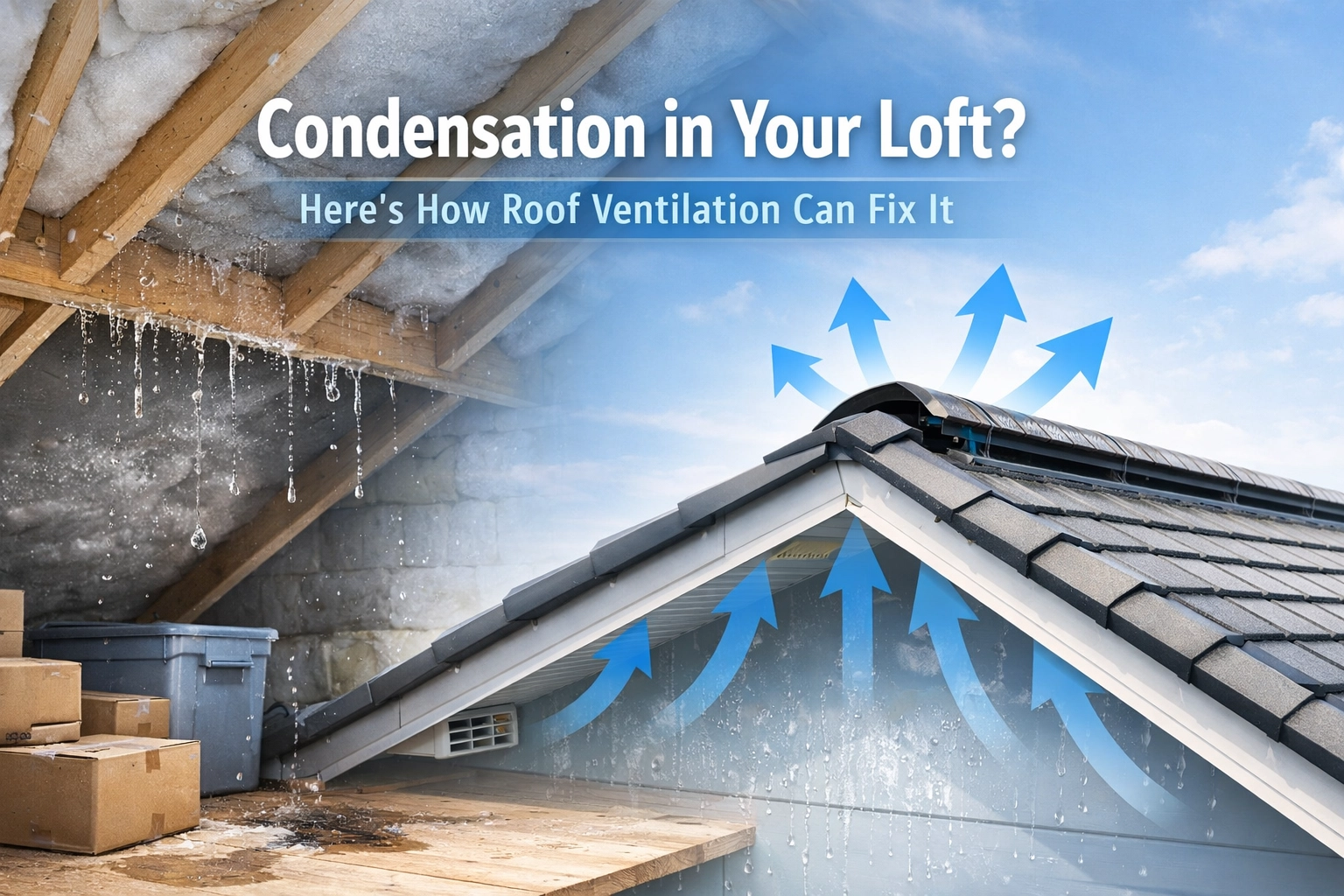

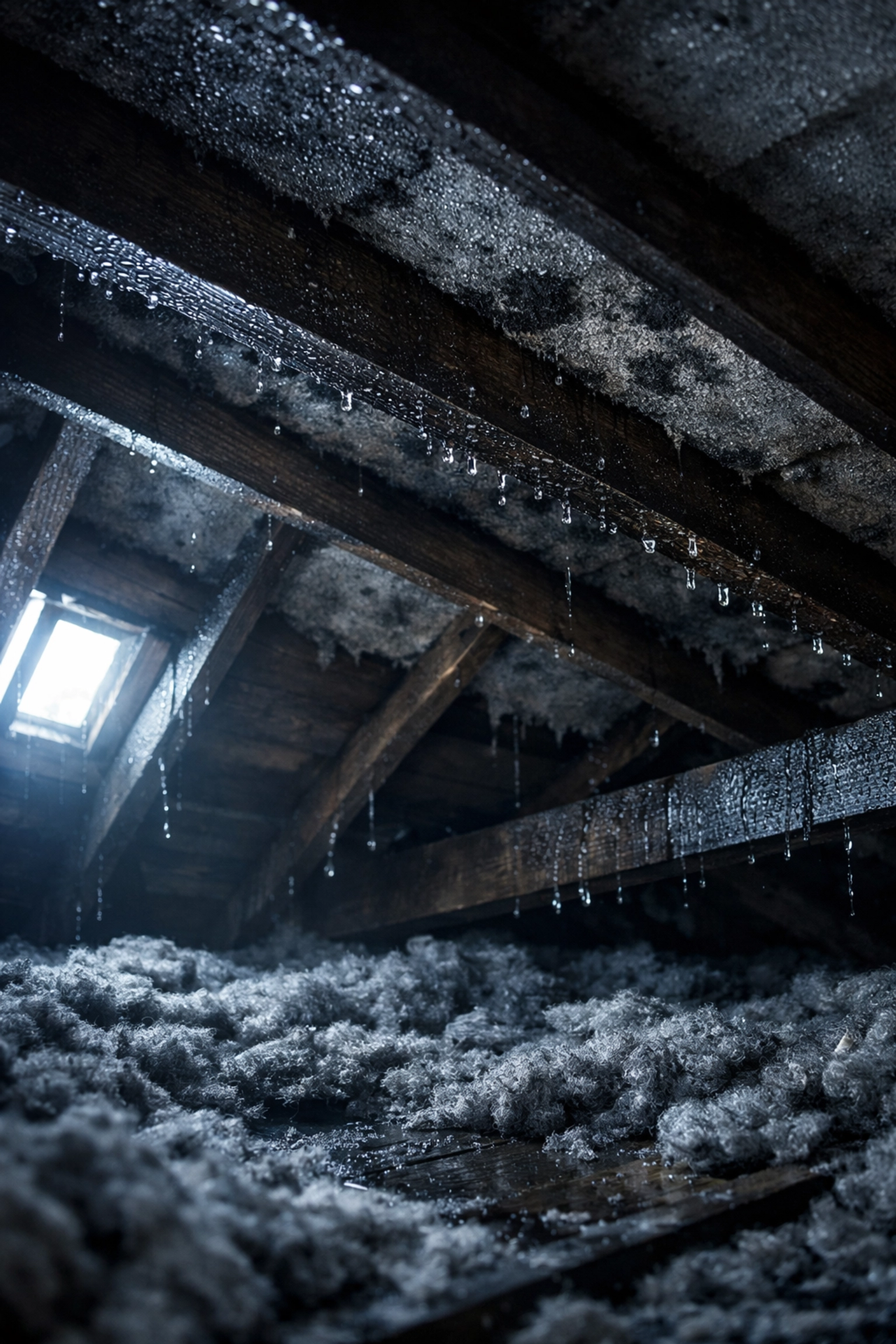
If you've climbed into your loft and discovered damp insulation, water droplets on the roof timbers, or even mould growing on the underside of your roof, you're dealing with condensation. It's one of the most common roofing issues we encounter across Northern Ireland, and the good news? Proper roof ventilation can solve it.
At Advanced Construction & Roofing, we've seen this problem hundreds of times. The damp Northern Ireland climate creates the perfect conditions for loft condensation, but with the right ventilation strategy, you can eliminate this issue for good.
Why Northern Ireland Homes Are Particularly Vulnerable
Northern Ireland's weather isn't doing your loft any favours. Our mild, damp climate means we're dealing with moisture-laden air almost year-round. Add to that our frequent rain, high humidity levels, and relatively cool temperatures, and you've got the perfect recipe for condensation problems.
Here's what's happening: warm, moist air from your living spaces rises into the loft. When it hits the cold surfaces of your roof: the tiles, felt, and timber: it cools rapidly. That moisture in the air then condenses into water droplets, just like your bathroom mirror after a hot shower.
During winter months, the temperature difference between your heated home and the cold roof space becomes even more extreme. This is why many homeowners first notice condensation issues when the weather turns cold.
What Exactly Is Happening in Your Loft?
Condensation occurs when warm air meets cold surfaces. Your home naturally produces moisture through everyday activities: cooking, showering, drying clothes, even breathing. This moisture-laden air needs somewhere to go.
Without adequate ventilation, that damp air becomes trapped in your loft space. As it accumulates, the moisture starts condensing on cold roof timbers, felt, and tiles. Over time, this persistent dampness leads to serious problems: rotting timber, damaged insulation, mould growth, and structural issues that can cost thousands to repair.
The solution isn't complicated: you need to get that moist air out and replace it with fresh, dry air. That's where proper roof ventilation comes in.
How Roof Ventilation Solves the Problem
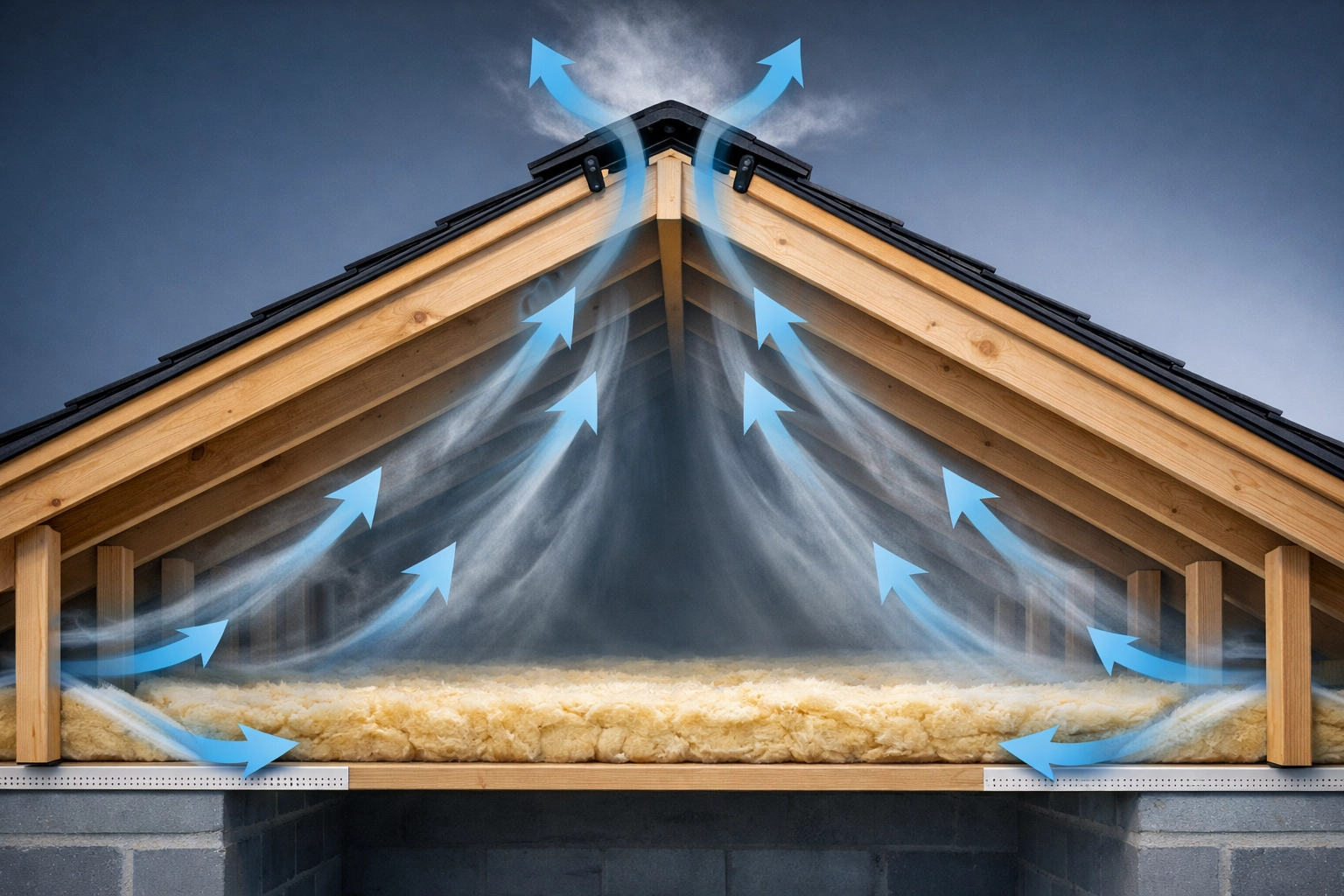
Proper ventilation creates continuous air circulation through your loft space. This constant airflow removes moisture-laden air before condensation can form. Think of it as giving your loft the ability to breathe.
The principle is straightforward: cool, fresh air enters through vents at the eaves (the lower edges of your roof), travels up through the loft space, and exits through vents at the ridge (the roof's peak). This creates a natural circulation that keeps air moving and prevents moisture build-up.
Studies show that effective ventilation resolves approximately 99.9% of loft condensation cases to an acceptable level. It's the most reliable long-term solution available: far more effective than simply adding more insulation or trying to seal everything up tight.
Types of Ventilation Solutions That Actually Work
Different homes need different ventilation approaches. Here's what we recommend based on years of experience working across Northern Ireland:
Ridge Vents
Ridge vents sit at the very peak of your roof, allowing warm air to escape naturally. As heat rises, these vents let it exit the loft space, taking moisture with it. Modern ridge vents are discreet, weather-resistant, and highly effective. They balance overall airflow throughout the entire roof structure.
Soffit Vents
Located under your eaves, soffit vents allow cool, fresh air to enter the loft space. They work in tandem with ridge vents to establish continuous circulation. Without soffit vents, you're only solving half the problem: you need that fresh air intake to maintain proper airflow.
Tile or Felt Lap Vents
These vents integrate directly into your roof covering. They're particularly useful when you can't install adequate soffit vents or need additional ventilation in specific areas. We often add these during roof repairs or refurbishment projects.
Mechanical Ventilation Systems
For homes with serious condensation issues, mechanical systems offer a more controlled solution. Heat Recovery Ventilation (MVHR) systems continuously extract moist air while bringing in filtered, dry air. They're energy-efficient and provide consistent results regardless of weather conditions.
Is Your Loft Ventilation Actually Working?
Many homes already have some ventilation installed, but it's not doing its job. Here's why:
Blocked Vents
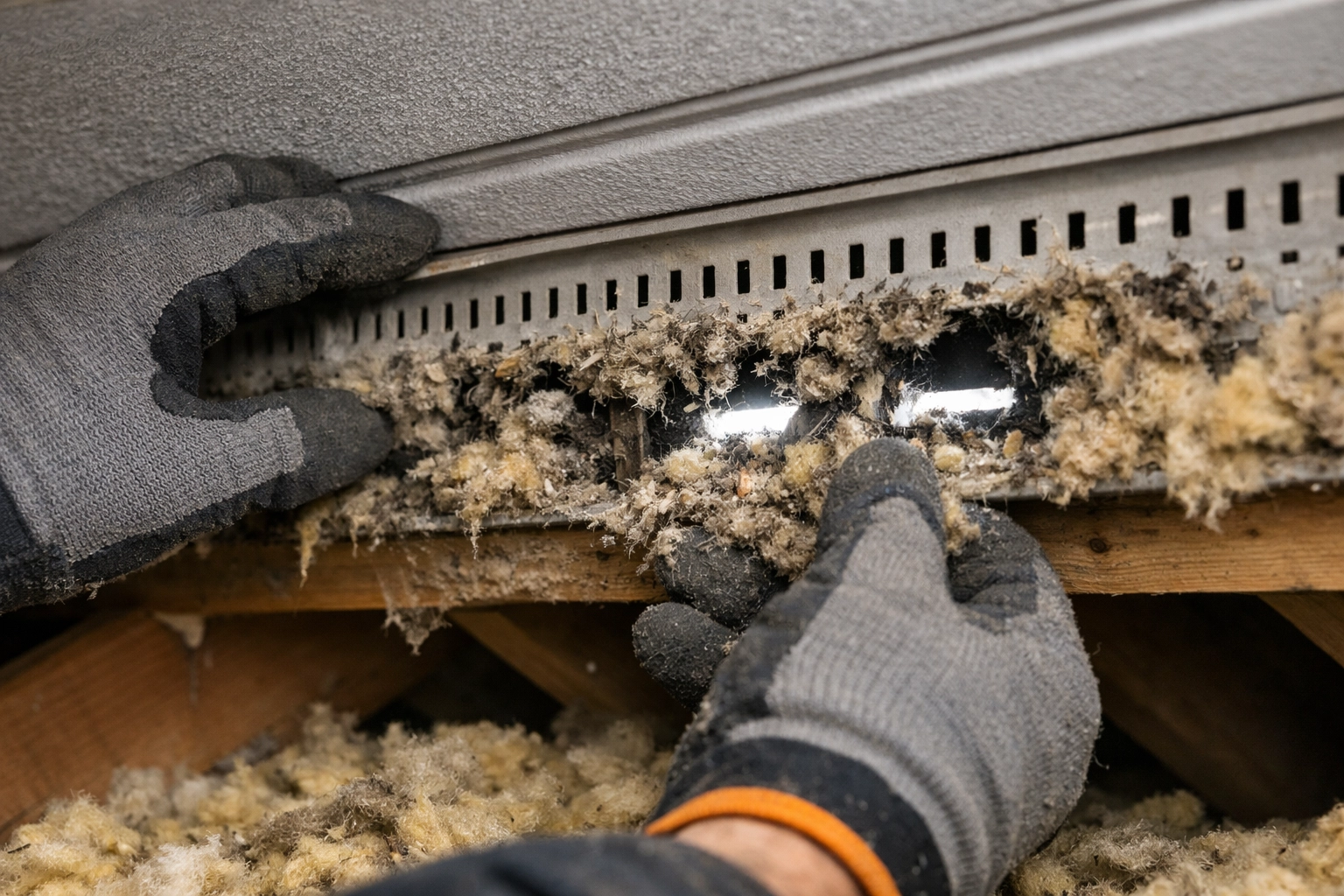
Insulation commonly blocks soffit vents and eaves. During loft insulation upgrades, installers sometimes push insulation right up to the eaves, completely blocking the ventilation pathway. Check your soffit vents: can you actually see daylight through them?
Insufficient Ventilation
Building regulations specify minimum ventilation requirements, but many older homes don't meet these standards. As homes become more energy-efficient and airtight, they actually need more ventilation to manage moisture levels.
Debris and Obstruction
Bird nests, dead leaves, dust, and general debris accumulate in vents over time. This gradually reduces airflow until ventilation becomes completely ineffective.
Poorly Designed Systems
Sometimes vents are installed in the wrong locations or in insufficient quantities. Ventilation needs to be strategically placed to create proper circulation patterns throughout the entire loft space.
Can You See These Warning Signs?
Recognise any of these issues in your home?
- Water droplets forming on roof timbers or felt
- Damp or wet insulation
- Black mould growing on wood or felt
- Musty, damp smell when you open the loft hatch
- Rotting timber in the loft space
- Rust on metal fixings or nails
- Ice formation on the underside of the roof in winter
These are all clear indicators that your loft ventilation isn't adequate for Northern Ireland's damp climate.

Getting Your Ventilation Right: The Implementation Process
Fixing loft condensation through improved ventilation requires a systematic approach:
Professional Assessment
Start with a thorough inspection of your existing ventilation and loft condition. We examine airflow patterns, check for obstructions, measure current ventilation levels, and identify the extent of any condensation damage.
Calculate Ventilation Requirements
Your loft needs specific ventilation levels based on its size and your roof design. Building regulations provide minimum standards, but Northern Ireland's climate often demands more ventilation than the bare minimum.
Install Appropriate Systems
We install the right combination of ridge vents, soffit vents, and additional ventilation to create proper circulation. This might include removing obstructions from existing vents, adding new ventilation points, or upgrading to mechanical systems.
Seal Loft Hatches Properly
Your loft hatch itself can be a major source of moisture entering the loft. We ensure hatches are properly sealed and insulated to prevent warm, humid air from unnecessarily entering the loft space.
Address Existing Damage
Any timber damaged by condensation needs treatment or replacement. Wet insulation must be removed and replaced once ventilation is improved and the loft has dried out.
What About During the Winter Months?
Some homeowners worry that ventilation will make their homes cold during winter. This is a common misconception. Proper loft ventilation affects only the loft space itself: not your living areas below.
Your insulation sits on the floor of the loft, creating a thermal barrier between your warm home and the cold loft space. The loft should actually be cold: that's normal and correct. What you don't want is for it to be damp.
Ventilation keeps the loft space at the same temperature as outside, preventing that crucial temperature difference that causes condensation. Your home stays warm and dry, while your loft stays properly ventilated and condensation-free.
The Long-Term Benefits of Proper Roof Ventilation
Investing in proper loft ventilation delivers benefits that extend far beyond solving condensation:
Protects Your Roof Structure
Condensation leads to rotting timber, damaged felt, and structural deterioration. Proper ventilation prevents this damage, extending your roof's lifespan by decades.
Maintains Insulation Performance
Wet insulation loses much of its thermal efficiency. By keeping your loft dry, ventilation ensures your insulation continues performing as designed, keeping energy bills lower.
Prevents Health Issues
Mould growth in lofts can affect air quality throughout your home, potentially causing respiratory problems and allergic reactions. Adequate ventilation eliminates the conditions mould needs to thrive.
Increases Property Value
A well-maintained, properly ventilated roof is a significant selling point. Conversely, condensation damage raises red flags during surveys and can derail property sales.
Take Action Before the Damage Gets Worse
Condensation damage doesn't improve on its own: it only gets worse. The moisture continues accumulating, the timber keeps rotting, and the repair costs keep climbing.
At Advanced Construction & Roofing, we've helped hundreds of Northern Ireland homeowners solve their condensation problems through proper roof ventilation. Our team understands the specific challenges our damp climate creates, and we design ventilation solutions that work reliably year-round.
Request a professional loft inspection today. We'll assess your current ventilation, identify any condensation damage, and provide clear recommendations for solving the problem permanently.
Contact us at Advanced Construction & Roofing to schedule your loft inspection. Don't wait until minor condensation becomes major structural damage: get your roof ventilation sorted now and protect your home for the long term.
Your loft should be dry, your timbers should be sound, and your home should be protected from Northern Ireland's damp climate. Proper roof ventilation makes all of this possible.