
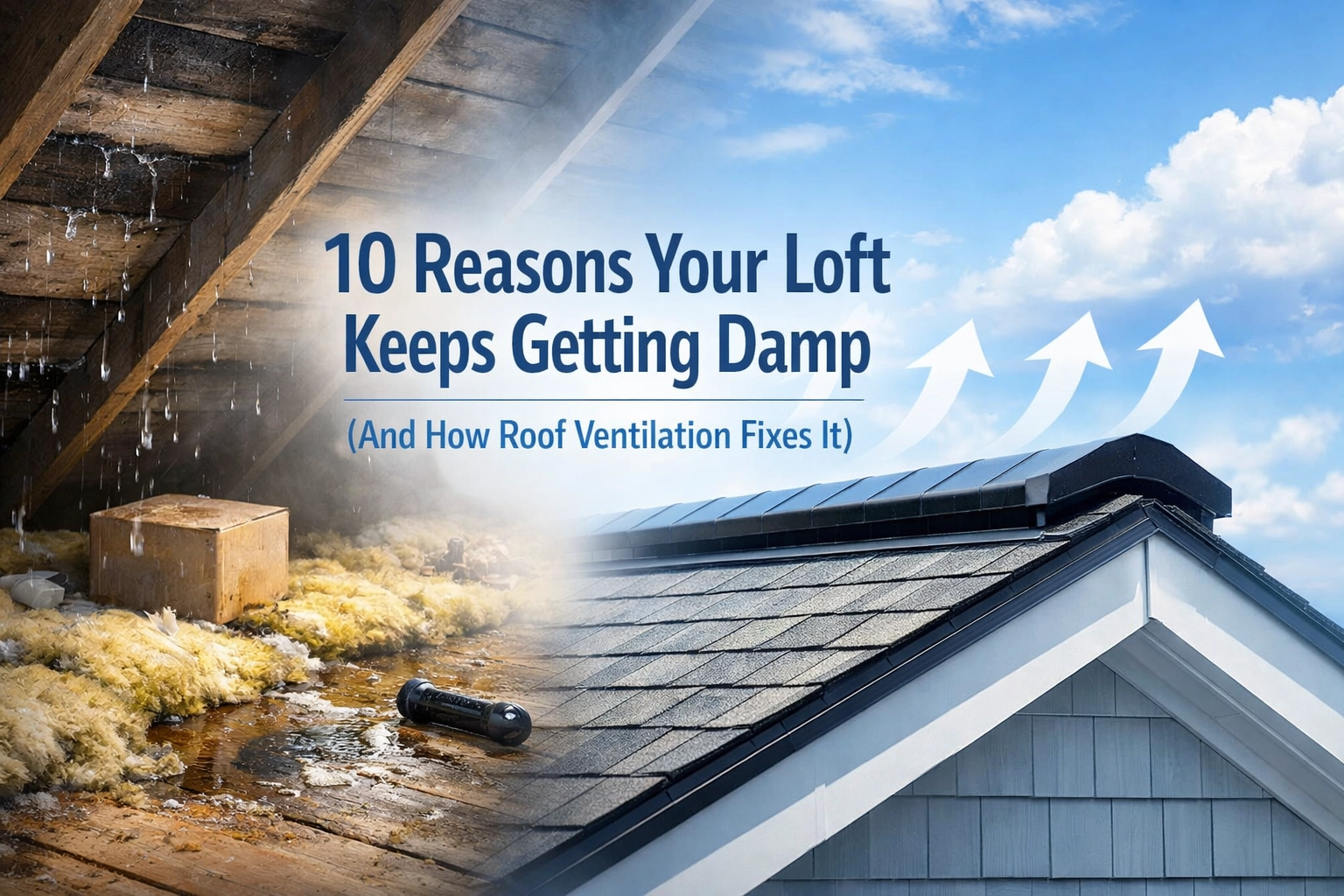

You've noticed the telltale signs. Water stains on the ceiling. That musty smell when you open the loft hatch. Black mould spreading across your timber. Your loft has a damp problem, and it's not going away on its own.
Here's the truth: most loft damp isn't caused by a leaking roof. It's caused by trapped moisture that has nowhere to escape. The warm, moist air from your home rises into your loft, hits cold surfaces, and condenses. Without proper ventilation, that moisture builds up day after day, creating the perfect environment for rot, mould, and structural damage.
The good news? Roof ventilation solves this problem at the source. Let's break down exactly why your loft keeps getting damp and how proper ventilation fixes it for good.
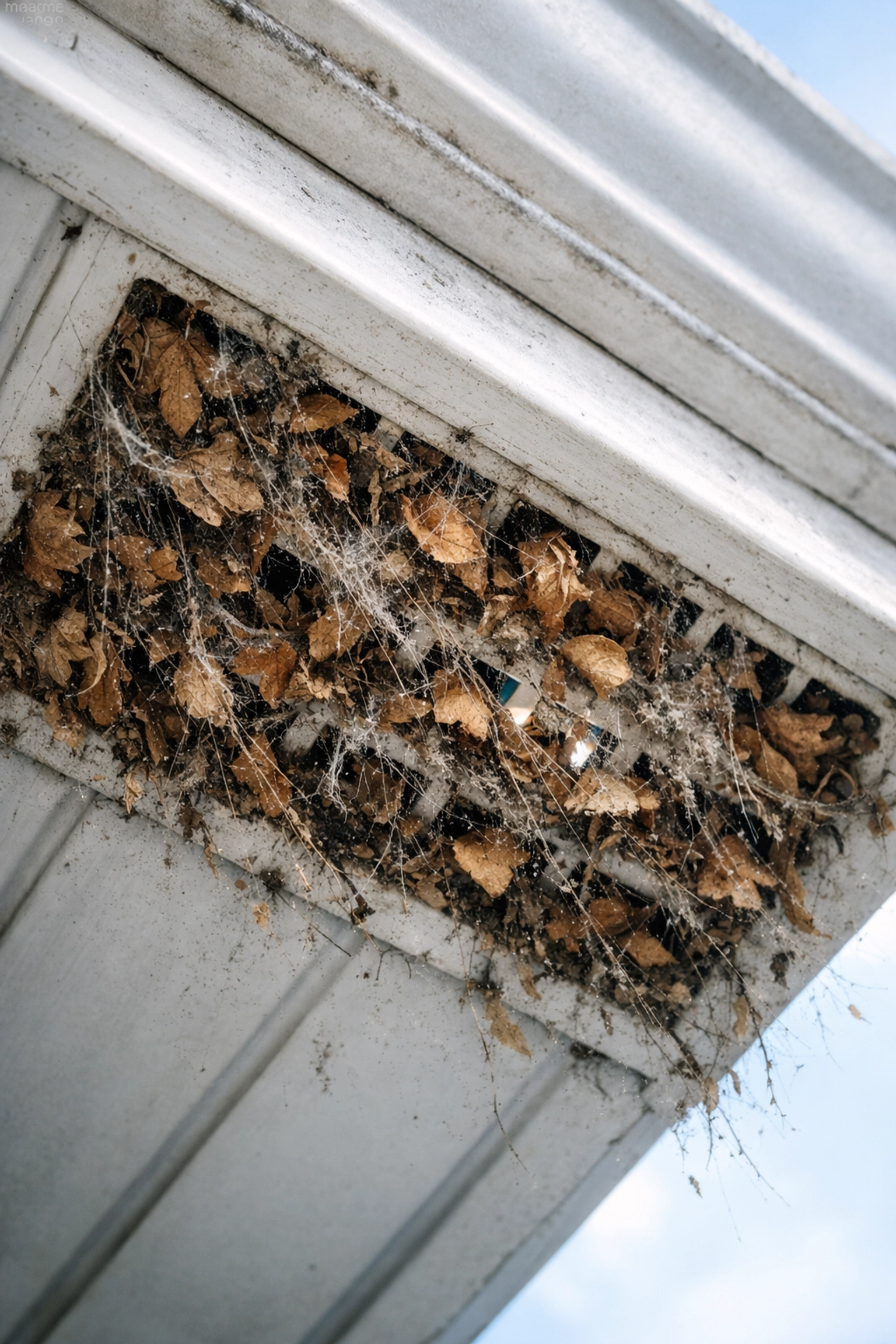
1. Your Roof Vents Are Blocked or Obstructed
The most common cause of loft damp is blocked ventilation. Your roof should have vents at the eaves, ridge, or soffits that allow air to circulate. When these get blocked by debris, bird nests, or accumulated dust, humid air becomes trapped in your loft space.
Check your vents regularly. Clear any obstructions. If you can't remember the last time you inspected them, now's the time to do it.
2. You Don't Have Enough Ventilation in the First Place
Many older properties in Northern Ireland were built with inadequate roof ventilation. The building regulations have changed over the years, and what was acceptable in the 1970s doesn't meet modern standards.
Your loft needs continuous airflow to expel moisture. If your roof only has a few small vents, they simply can't move enough air to prevent condensation. Installing additional ridge vents, soffit vents, or tile vents creates the cross-ventilation your loft needs.
3. Your Insulation Is Blocking Critical Airflow
You've done the right thing and insulated your loft to save on heating costs. But here's the problem: poorly installed insulation can block the very vents that prevent damp.
When insulation is pushed right up to the eaves, it blocks the airflow from soffit vents. When it covers the gaps around the edge of the loft, it stops air circulation completely. The solution isn't removing your insulation: it's installing it properly with ventilation channels that maintain airflow.
4. Household Moisture Has Nowhere to Go
Every time you cook, shower, or dry clothes indoors, you're releasing moisture into your home. That moisture rises. And without proper ventilation throughout your property, it ends up in your loft.
A family of four can produce up to 12 litres of water vapour per day. That's 12 litres trying to escape through your ceiling into an unventilated loft space. Install extractor fans in bathrooms and kitchens. Use them. And ensure your loft ventilation can handle the moisture load your household produces.
5. Your Loft Hatch Isn't Sealed Properly
Look at your loft hatch. Can you see daylight around the edges? Feel any drafts? Gaps around your loft hatch are a direct highway for warm, humid air to enter your loft.
The warm air from your heated rooms below rises through these gaps, enters the cold loft, and immediately condenses on cold surfaces. Seal your loft hatch with draught-proofing strips. Better yet, install a properly insulated loft hatch with an airtight seal.
6. Gaps Around Pipes and Water Tanks Let Moisture In
Every penetration through your ceiling is a potential moisture entry point. Pipes that go through to the loft. Water tanks with poorly sealed openings. Cable runs with gaps around them.
These aren't just minor issues: they're constant sources of moisture ingress. Seal every gap around pipes, tanks, and cables with appropriate fire-rated sealant. This simple step dramatically reduces the amount of humid air entering your loft.
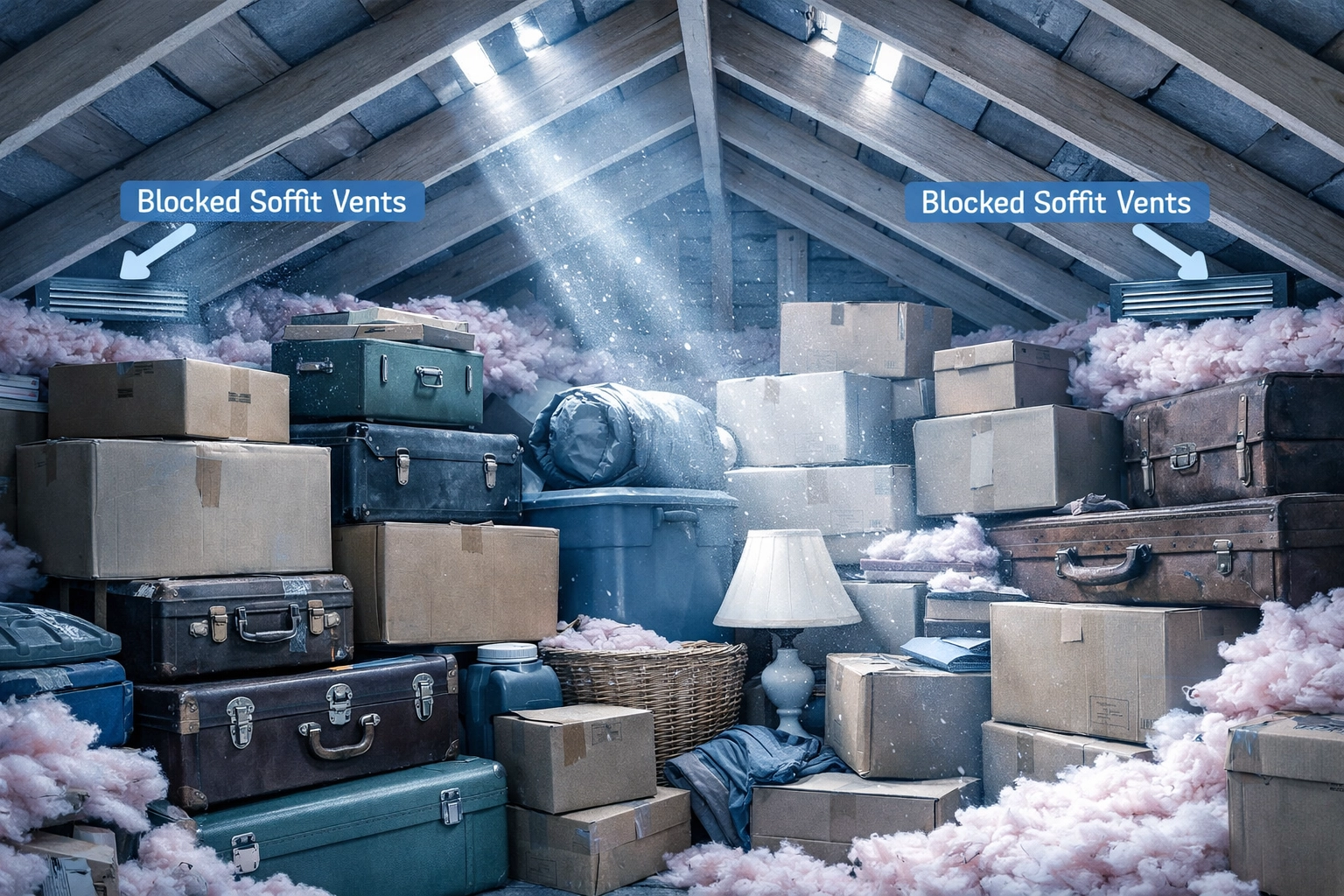
7. Storage and Clutter Is Suffocating Your Loft
Using your loft for storage? You're not alone. But those boxes, suitcases, and Christmas decorations might be causing your damp problem.
Stored items block airflow, create dead air pockets, and prevent moisture from escaping. They cover vents, block air paths, and trap humid air against cold surfaces. Clear the clutter. Create clear pathways for air to circulate. If you must store items in your loft, ensure they don't obstruct ventilation routes.
8. Your Boiler Is Releasing Steam Directly Into the Loft
If you have a combination boiler or condensing boiler in your loft, check its condensate pipe and flue termination. Poorly maintained boilers can release steam and condensation directly into your loft space.
This is particularly common with older boilers or those that haven't been serviced regularly. Have your boiler serviced annually. Ensure the condensate pipe drains properly and that the flue terminates outside, not into the loft.
9. External Water Ingress Is Making Condensation Worse
Here's where things get complicated. Sometimes you have both condensation and a genuine leak. Damaged roof tiles, cracked roof felt, or failing flashing can allow rainwater to enter your loft, which then mixes with condensation to create a serious damp problem.
Water stains, wet timber, and visible drips during rain are signs of external water ingress. This requires professional roof repair: condensation management alone won't fix it. If you suspect a leak, request a professional roof survey to identify the source.
10. There's Simply No Cross-Ventilation Happening
Ventilation isn't just about having vents: it's about creating airflow. Your loft needs both low-level vents (at the eaves or soffits) and high-level vents (at the ridge or gable ends) to create cross-ventilation.
Without this airflow pattern, humid air just sits in your loft with nowhere to go. The warm air rises, but it can't escape. Installing a combination of low and high-level vents creates a natural airflow that continuously expels moist air and draws in fresh, dry air.
How Proper Roof Ventilation Solves Loft Damp
Now you understand why your loft is damp. Here's how proper ventilation fixes it:
Continuous Air Movement: Functioning vents create constant airflow that removes humid air before it can condense on cold surfaces.
Temperature Regulation: Ventilation helps balance the temperature difference between your heated home and your cold loft, reducing the conditions that cause condensation.
Moisture Expulsion: High-level ridge vents allow warm, moist air to escape naturally, while low-level soffit vents draw in fresh air to replace it.
Prevention of Stagnant Air: With proper cross-ventilation, you eliminate the dead air pockets where moisture accumulates and mould thrives.
Long-Term Protection: Once installed correctly, roof ventilation works 24/7 to protect your property from damp, rot, and structural damage.

Take Action Before the Damage Gets Worse
Loft damp doesn't improve with time. It gets worse. The longer moisture sits in your loft, the more damage it causes to your timber, insulation, and stored belongings. Mould spreads. Wood rots. Structural integrity weakens.
Request a professional inspection of your loft ventilation system. Identify exactly which of these 10 issues is affecting your property. And fix it properly the first time.
At Advanced Construction & Roofing, we've solved loft damp problems across Northern Ireland for over two decades. We assess your existing ventilation, identify the specific causes of your damp problem, and install the right ventilation solution for your property type and roof structure.
Don't wait until you're dealing with serious rot or structural damage. Contact our team today for a thorough roof ventilation assessment. We'll tell you exactly what needs fixing and how we'll fix it. No jargon. No overselling. Just honest advice from experienced professionals who understand Northern Ireland properties.
Call us now or visit our website to request your loft ventilation inspection. Your loft: and your peace of mind( will thank you.)