Storm Damage Checklist: What to Do When Your Roof Starts Leaking Tonight

With over 25 years of roofing experience, Advanced Roofing Systems helps homeowners and businesses across Belfast, Bangor, Newtownards and Northern Ireland respond to storm damage safely and professionally.

A roof leak during an autumn or winter storm is stressful. Water may be coming through the ceiling, tiles may have shifted, or wind-driven rain may be entering around a chimney, rooflight or flat roof.

Do not panic. Do not climb onto the roof. Follow this checklist, make the property safe and contact a professional roofer as soon as possible.

1. Is everyone safe?

Your first priority is people, not the roof, furniture or flooring.

Leave the affected room immediately if:

  • The ceiling is sagging, cracking or making unusual noises.
  • Water is entering close to light fittings, sockets or electrical equipment.
  • You can see major structural damage.
  • A chimney, tree or large branch has struck the property.
  • Water is entering faster than you can safely contain it.

If you believe there is an immediate risk of collapse, fire or serious injury, leave the property and call 999.

If water is near electrical fittings, keep away. If you can safely access your consumer unit without entering a wet area, switch off power to the affected circuit or property. Never touch wet electrical equipment. Contact a qualified electrician if you are unsure.

Should you climb onto the roof during a storm?

No. Do not climb onto your roof during high winds, heavy rain, darkness or lightning.

A wet roof is slippery. Loose tiles can shift without warning. Ladders can move in strong winds, and emergency tarpaulin work can create a serious fall risk.

Do not attempt to inspect the roof from a ladder. Do not walk across a flat roof. Do not ask a family member, employee or unqualified person to “have a quick look”.

Wait for a professional inspection. Your safety comes first.

2. Contain the water inside

Once everyone is safe, act quickly to reduce damage.

What should you do while the roof is still leaking?

  • Place buckets, bowls or containers under active drips.
  • Move furniture, rugs, appliances and valuables away from the affected area.
  • Cover flooring with waterproof sheeting, plastic or bin bags where possible.
  • Move stock, equipment and paperwork away from water in commercial premises.
  • Close doors to contain water and limit access to the affected room.
  • Use towels to control spreading water, but do not place yourself under an unstable ceiling.

If the ceiling is bulging with water, keep people out of the room and contact a professional. Do not pierce the ceiling unless a suitably qualified professional has confirmed that it is safe to do so. A water-filled ceiling can fail suddenly, and electrical wiring may be hidden above it.

For businesses, isolate the affected area immediately. Put up warning signs, move staff and customers away from the leak, and protect stock or machinery only when it is safe.

3. Call an emergency roofer

A storm leak needs a proper diagnosis: not guesswork and not a temporary patch that hides the real problem.

Advanced Roofing Systems provides emergency roofing call-outs across Belfast, Bangor and Newtownards. We attend homes and business premises to assess storm damage, reduce further water ingress and explain the next steps clearly.

There are no call-out charges. We provide honest advice, free no-obligation quotes and insurance-backed guarantees.

When you call, provide:

  • Your full address and postcode.
  • Your contact number.
  • The room or area where water is entering.
  • Whether the leak is dripping, flowing or spreading.
  • Whether tiles, slates, flashing, gutters or roof sections appear damaged.
  • Any access restrictions, shared driveways or commercial site requirements.
  • Whether the building is occupied or needs urgent make-safe work.

Do not assume that a small internal stain means a small roof problem. Water can travel along rafters, insulation and ceilings before appearing away from the original entry point.

Emergency roof leak affecting a home during heavy rain

4. Document the damage for your insurer

Take photographs and short videos from a safe position before cleaning or moving damaged items.

Record:

  • The date and approximate time the leak began.
  • The weather conditions and any unusually strong winds.
  • Internal ceiling stains, damp walls and water on floors.
  • Damaged furniture, carpets, stock, machinery or equipment.
  • Visible debris, broken tiles or fallen branches from ground level.
  • Any temporary measures taken to protect the property.
  • The roofer’s report, photographs, quote and invoices.

Contact your insurer and ask for a claim reference. Check whether your policy requires you to use an approved contractor or obtain specific quotations before permanent work begins.

You should take reasonable steps to limit further damage, but do not authorise major permanent works until you understand your insurer’s requirements, unless there is an urgent safety issue.

Ask your roofer for a written report stating:

  • The likely cause of the leak.
  • The visible extent of the storm damage.
  • Any immediate risks.
  • Temporary make-safe work completed.
  • Recommended permanent repairs.
  • Whether further investigation or a full roof survey is required.

A clear report helps homeowners, property managers, insurers and commercial landlords make informed decisions.

5. Can the storm damage be repaired: or is replacement needed?

When can a storm-struck roof be repaired?

A roof may be suitable for repair when the damage is localised and the underlying structure remains sound.

Typical repair work may include:

  • Replacing broken or displaced slates and tiles.
  • Securing ridge or verge tiles.
  • Repairing leadwork around chimneys and abutments.
  • Replacing damaged flashing.
  • Repairing gutters, outlets and roofline components.
  • Completing targeted repairs to flat roof coverings.
  • Replacing damaged roof timbers in a limited area.

Request a professional assessment before agreeing to any work. A leak does not automatically mean you need a new roof.

When might a full roof replacement be necessary?

A full replacement or refurbishment may be appropriate when:

  • Large sections of the roof covering have failed.
  • The roof is old, brittle or already deteriorating.
  • Timbers, roof decking or structural elements are extensively damaged.
  • Previous repairs have created multiple weak points.
  • A flat roof covering has reached the end of its serviceable life.
  • Water has caused widespread rot, damp or insulation failure.
  • The cost of repeated repairs is no longer sensible.
  • The roof cannot provide reliable long-term protection.

Advanced Roofing Systems works with slate and tile roofing, EPDM flat roofing and liquid roofing systems.

We do not recommend replacement simply because a storm has occurred. We inspect the roof, explain what is genuinely required and provide a clear quote.

6. Arrange a professional roof survey after the storm

A temporary repair can stop the immediate leak, but it may not identify every defect.

Once conditions are safe, arrange a professional roof survey. A survey can identify displaced coverings, hidden water entry, damaged flashing, failing mortar, roofline defects and structural concerns.

Advanced Roofing Systems offers detailed inspections for homeowners, buyers, landlords, property managers and businesses. Our survey process can include visual inspection, photographic evidence, defect identification and in-depth analysis.

For properties where access is difficult or unsafe, ask about our drone survey option, available at £295 + VAT. Drone imagery can help inspect hard-to-reach areas without putting occupants or staff at risk.

Professional roofing survey showing internal ceiling damage and inspection evidence

A professional diagnosis gives you:

  • A clearer understanding of the storm damage.
  • Evidence to support an insurance claim.
  • A prioritised list of urgent and non-urgent work.
  • A reliable repair or replacement recommendation.
  • A written basis for comparing quotes.
  • Greater confidence that unnecessary work is not being proposed.

Do not accept a vague diagnosis. Request a detailed survey and a clear report.

What our customers say

“Excellent professional service from Advanced Construction & Roofing, very reliable, courteous, honest & competitively priced. Highly skilled & knowledgeable in all aspects of roofing. Would not hesitate in recommending them as their work is first class.”
: Christine McCappin

“Advanced Construction & Roofing provided a very courteous, professional and reliable service in replacing our 3 flat roofs. Charles Howard is very knowledgeable and kept us up to date with what was happening as the work progressed. I strongly recommend him to others seeking a trustworthy firm to replace or repair their roofs.”
: Mervyn Henry

“Advanced Construction & Roofing's staff were courteous and knowledgeable and carried out the work on my property with the minimum of disruption. The site was left impeccably clean and tidy on completion. I would recommend Advanced Construction & Roofing to anyone needing roof repair and will certainly use them again when I need similar work.”
: Sandra Bailie

Storm damage checklist: save this for tonight

  1. Move people away from sagging ceilings or dangerous areas.
  2. Keep away from water near electrics.
  3. Switch off power only if it is safe to do so.
  4. Catch and contain water with buckets and waterproof coverings.
  5. Move furniture, belongings, stock and equipment.
  6. Do not climb onto the roof during the storm.
  7. Photograph and record the damage safely.
  8. Contact your insurer and request a claim reference.
  9. Call a professional roofer for emergency assistance.
  10. Arrange a roof survey before agreeing to major permanent work.

Need emergency roof repair in Belfast or Bangor?

Call Advanced Roofing Systems as soon as it is safe.

Bangor office: 02891 071279
Belfast office: 02890 726126

We cover Belfast, Bangor, Newtownards and locations across Northern Ireland. We provide no call-out charges, free no-obligation quotes, insurance-backed guarantees and honest advice without upselling.

Call now. Make the property safe. Request a professional diagnosis.

Autumn Roof Maintenance Checklist: 7 Things Every Northern Ireland Homeowner Should Check Before Winter

As August draws to a close, now is the right time to prepare your roof for autumn and winter. Northern Ireland’s wet, windy weather can quickly expose small defects, turning a slipped slate or blocked gutter into serious water damage.

With over 25 years of roofing experience, Advanced Roofing Systems helps homeowners across Belfast, Bangor and Newtownards understand what their roof needs before winter arrives.

Start with the right diagnosis. Complete this checklist from the ground and inside your loft, then request professional roof surveys if you find anything concerning.

“Excellent professional service from Advanced Construction & Roofing: very reliable, courteous, honest and competitively priced. Highly skilled and knowledgeable in all aspects of roofing.”
: Christine McCappin, customer review

Why should you arrange a roof check before winter?

A roof does not need to be visibly collapsing to have a problem. Minor defects can allow wind-driven rain into the roof structure, loft insulation and ceilings. Once temperatures drop and storms become more frequent, repairs can also become more disruptive.

A professional roof survey can identify:

  • Slipped, cracked or missing slates and tiles
  • Blocked or damaged gutters and downpipes
  • Failed flashing, leadwork or chimney pointing
  • Loose ridge and verge tiles
  • Cracks, blisters or ponding on flat roof membranes
  • Moss and debris holding moisture against the roof
  • Loft condensation, damp and poor ventilation

Check early. Record what you find. Request advice before the weather deteriorates.

If you want a detailed inspection rather than a quick visual check, learn more about our professional roof surveys. Where appropriate, our drone roof survey is priced at £295 + VAT and provides clear visual evidence to support an honest report.

1. Are any slates or tiles slipped, cracked or missing?

Walk around your property on a dry day and inspect the roof from the ground. Use binoculars if necessary, but do not walk on the roof yourself.

Look for:

  • Slates or tiles sitting lower than the surrounding rows
  • Cracked, chipped or missing tiles
  • Gaps where daylight may enter
  • Tiles lying in gutters or on the ground
  • Uneven areas across the roof slope
  • Water staining on external walls below damaged sections

Even one slipped tile can allow rain into the underlay and roof timbers. Wind can then make the damage worse.

Do not assume that a small defect is harmless. Request a roof survey or repair assessment before the first serious autumn storms.

See our slate and tile roofing services for homes and businesses across Belfast, Bangor and Newtownards.

Slate roof and chimney showing areas that may require inspection

2. Are your gutters, downpipes and outlets clear?

Autumn leaves, moss and windblown debris can quickly block gutters. When water cannot drain properly, it may overflow onto fascias, brickwork and external walls.

Check for:

  • Gutters filled with leaves, moss or silt
  • Sagging sections or loose brackets
  • Cracked joints and leaking connections
  • Water marks below the gutter line
  • Downpipes pulling away from the wall
  • Standing water after rainfall
  • Blocked outlets on flat roofs, garages or extensions

Clean gutters after most leaves have fallen, then check them again during periods of heavy leaf fall. Make sure downpipes discharge water safely and that gullies are not covered by debris.

If gutters continue to overflow after cleaning, the problem may involve incorrect falls, damaged sections or a hidden blockage. Call for professional advice instead of repeatedly clearing the same symptom.

A roof survey can assess the roof drainage system as part of the wider inspection and identify whether water is entering from the roof, guttering or flashing.

3. Is the flashing and leadwork still watertight?

Flashing protects the vulnerable junctions where your roof meets a chimney, wall, roof window or extension. Leadwork can lift, split, crack or become detached over time.

From the ground, look for:

  • Lifted or curling lead
  • Cracks around chimney junctions
  • Gaps between flashing and brickwork
  • Temporary-looking patches
  • Dark staining below chimneys or wall abutments
  • Damaged seals around roof windows, vents and pipes

Do not attempt to repair leadwork from a ladder. The area may be difficult to access safely, and an incorrect repair can direct water further into the roof.

Arrange an inspection when you see damaged flashing, staining or a recurring leak. Advanced Roofing Systems provides chimney repairs and leadwork throughout Belfast, Bangor, Newtownards and surrounding areas.

Chimney and leadwork on a slate roof

“Advanced Construction & Roofing provided a very courteous, professional and reliable service in replacing our three flat roofs. Charles Howard is very knowledgeable and kept us up to date with what was happening as the work progressed.”
: Mervyn Henry, customer review

4. Are your ridge and verge tiles secure?

Ridge tiles run along the highest point of a pitched roof. Verge tiles protect the roof edges at the gable ends. Both areas are exposed to strong winds, making them particularly important before winter.

Check for:

  • Ridge tiles that look loose or uneven
  • Crumbling or missing mortar
  • Gaps along the roof edges
  • Loose or missing verge tiles
  • Mortar fragments in the gutters
  • Movement during windy weather

Older mortar bedding can deteriorate gradually. A ridge tile may appear secure but still be vulnerable to high winds.

If your roof has an older mortar system, ask whether repair, rebedding or a dry ridge or verge system is more suitable. The correct solution depends on the roof design and condition.

Do not wait for a ridge tile to fall. Request a roof survey and deal with movement early.

5. Is your flat roof membrane free from damage and standing water?

Flat roofs require particular attention before the wetter months. Check extensions, garages, porches, dormers and commercial flat roofs for signs of deterioration.

Look for:

  • Cracks or splits in the membrane
  • Blisters or bubbles
  • Loose edges and failing seals
  • Damaged rooflight details
  • Pooled water that remains after rainfall
  • Leaves and moss around drainage outlets
  • Damp patches on ceilings beneath the roof

Standing water can place additional stress on a membrane and may indicate blocked outlets, poor falls or a wider drainage issue. Do not cover the problem with another temporary patch without understanding the cause.

Advanced Roofing Systems installs and repairs EPDM flat roofing and liquid roofing systems for properties across Belfast, Bangor and Newtownards.

Inspect the membrane. Clear the outlets. Request a professional assessment when water continues to pond.

6. Has moss or debris built up on the roof?

Moss and debris can retain moisture against slates, tiles and membrane edges. Debris can also block valleys, gutters and flat roof outlets.

Check around:

  • Valleys and roof junctions
  • Chimneys and dormers
  • Roof windows and skylights
  • Flat roof edges and outlets
  • Gutters and downpipes
  • Areas beneath overhanging trees

Avoid aggressive scraping, pressure washing or walking across the roof. These actions can damage tiles, dislodge protective coatings and disturb flashing.

A professional can determine whether moss is simply surface growth or whether it is contributing to drainage and moisture problems. Ask for the cause to be assessed before paying for extensive cleaning or replacement work.

That is why Advanced Roofing Systems focuses on detailed roof surveys, clear reports and honest recommendations. We do not recommend work that is not genuinely required.

7. Is your loft dry, adequately ventilated and free from condensation?

A roof check is not complete until you inspect the loft. Choose a bright, dry day and use a torch. Never touch electrical wiring or enter an unsafe loft space.

Look for:

  • Damp patches on rafters or roof timbers
  • Dark staining, mould or signs of rot
  • Sagging underlay or areas holding water
  • Daylight showing through unexpected gaps
  • Wet or compressed insulation
  • Condensation on the underside of the roof
  • Blocked eaves or soffit vents
  • Insulation pushed into ventilation channels
  • Musty smells that return after airing

Condensation can look like a roof leak. If moisture appears without a clear point of entry from above, poor ventilation may be contributing to the problem. Loft insulation must be installed properly without blocking airflow at the eaves.

For more practical guidance, read our article on roof ventilation mistakes and damp attics.

Do not guess whether moisture is condensation or a leak. Request a professional roof survey and get the cause identified.

“The staff were courteous and knowledgeable and carried out the work on my property with the minimum of disruption. The site was left impeccably clean and tidy on completion.”
: Sandra Bailie, customer review

What should you do if you find a problem?

Take photographs from a safe position and note when you first noticed the issue. If water is entering your home, place a container beneath the drip and move furniture away from the affected area. Do not climb onto the roof during rain, strong winds or frost.

Then contact Advanced Roofing Systems. We can inspect the roof, explain the findings clearly and recommend the most appropriate next step.

Depending on the condition of your roof, that may be:

  • A minor slate or tile repair
  • Gutter or downpipe repairs
  • Chimney or leadwork repairs
  • Flat roof membrane repairs
  • Improved loft ventilation
  • A complete roof refurbishment or replacement

We provide:

  • Free, no-obligation quotes
  • No call-out charges
  • Detailed roof surveys and reports
  • Honest advice with no upselling
  • Insurance-backed guarantees
  • High-quality materials and workmanship

If your roof has already suffered storm damage or an active leak, use our emergency roofing call-out service.

Request your autumn roof survey in Belfast, Bangor or Newtownards

Do not wait for winter to reveal a problem. Request a professional roof survey now, while there is still time to complete any necessary repairs before the worst weather arrives.

Call our local offices:

Advanced Roofing Systems serves homeowners, landlords, property managers and businesses throughout Belfast, Bangor, Newtownards and across Northern Ireland.

Get the right information. Get an honest recommendation. Get your roof ready for winter.

EPDM Flat Roofing vs Felt: Which Is Better for Your Belfast Home?

With over 25 years of industry experience delivering expert roofing solutions across Belfast, Bangor, and Newtownards, the team at Advanced Construction & Roofing frequently speaks with homeowners facing a critical dilemma. When an old felt flat roof begins to leak, blister, or reach the end of its lifespan, property owners are left wondering: should I replace it with traditional felt, or upgrade to modern EPDM rubber roofing?

We believe every job should start with the right diagnosis. That is why we provide detailed, honest roofing surveys for homeowners, buyers, and property managers throughout Northern Ireland before any work begins. Today, we break down the exact differences between EPDM and felt roofing, examining durability, weather resistance in our local climate, maintenance requirements, and true long-term value: ensuring you receive clear, honest reporting with no upselling.


Why Are Belfast Homes Abandoning Traditional Felt?

If your property in Belfast, Bangor, or Newtownards features an ageing felt roof installed ten or fifteen years ago, you are likely familiar with the common failure points. Traditional bitumen felt relies on multiple overlapping layers and torch-on gas application during installation. Over time, exposure to ultraviolet light, fluctuating temperatures, and trapped moisture causes bitumen to oxidise, become brittle, and crack.

In Northern Ireland’s demanding climate: characterised by persistent rain, damp conditions, and rigorous freeze-thaw cycles: traditional felt is constantly tested. Standing water (ponding) on flat roofs accelerates blister formation along seams and laps, leading to sudden interior leaks.

"Our extension roof in Belfast was constantly leaking every time heavy rain hit. Advanced Construction & Roofing inspected the structure, showed us exactly why our old felt had failed at the joints, and installed a seamless EPDM system. We haven't had a single drop of water since." : Mark Henderson, Belfast Homeowner

Request a professional roof inspection today if your current flat roof shows signs of cracking, blistering, or water pooling. Call our expert team or contact us via our roofing services page to schedule your free, no-obligation survey.


What Is EPDM Flat Roofing and Why Is It the Modern Upgrade?

EPDM (Ethylene Propylene Diene Termonomer) is a durable, high-performance synthetic rubber membrane engineered specifically for flat roofing applications. Unlike traditional felt, EPDM is typically supplied in large, single-sheet membranes that cover an entire roof area with minimal or zero seams.

With over 25 years of industry experience, Advanced Construction & Roofing champions EPDM as the premier choice for residential extensions, garages, and commercial properties across Northern Ireland.

Professional gable end soffit and fascia installation on a traditional brick home in Belfast demonstrating weather-resistant exterior upgrades

How Does EPDM Perform in Northern Ireland’s Weather?

  • Superior Lifespan: While standard felt roofs typically last 10 to 15 years, a professionally installed EPDM rubber roof boasts an expected service life of 30 to 50+ years.
  • Freeze-Thaw Resistance: EPDM remains exceptionally flexible down to –45°C, resisting the cracking and splitting caused by winter frost in Belfast and surrounding areas.
  • Ponding Tolerance: EPDM tolerates standing water significantly better than felt, maintaining its structural integrity even when drainage is slow.
  • UV Stability: Inherent ultraviolet resistance prevents the membrane from degrading under constant sun exposure, requiring no special surface coatings or chippings.

"As a property manager handling multiple residential blocks in Bangor and Newtownards, durability is everything. Advanced Construction & Roofing replaced our failing felt flat roofs with EPDM systems, eliminating callbacks and giving our tenants complete peace of mind." : Sarah Fitzpatrick, Property Manager

Contact Advanced Construction & Roofing today to discuss your flat roof replacement. Request a free quotation and call our Belfast office for honest advice backed by decades of local expertise.


EPDM vs Felt: Head-to-Head Comparison

To help you make an informed decision, let’s compare both materials across key performance categories:

Feature EPDM Rubber Roofing Traditional Torch-On Felt
Expected Lifespan 30 – 50+ years 10 – 20 years
Seam Integrity Single seamless sheet (minimal joints) Multiple overlapping torch-on joints (potential failure points)
Weather & UV Resistance Excellent; highly flexible and UV stable Moderate; oxidises and becomes brittle over time
Freeze-Thaw Durability Withstands extreme temperature swings without cracking Prone to cracking and splitting under severe frost
Standing Water Handling High tolerance to ponding Vulnerable to blistering and leaks under pooled water
Installation Safety Cold-applied adhesives (no naked flame) Torch-on application requiring open gas flames
Maintenance Needs Very low; periodic visual checks Regular inspection of laps, joints, and surface dressings
Long-Term Value Outstanding lifetime cost efficiency Lower initial cost, higher replacement and repair frequency

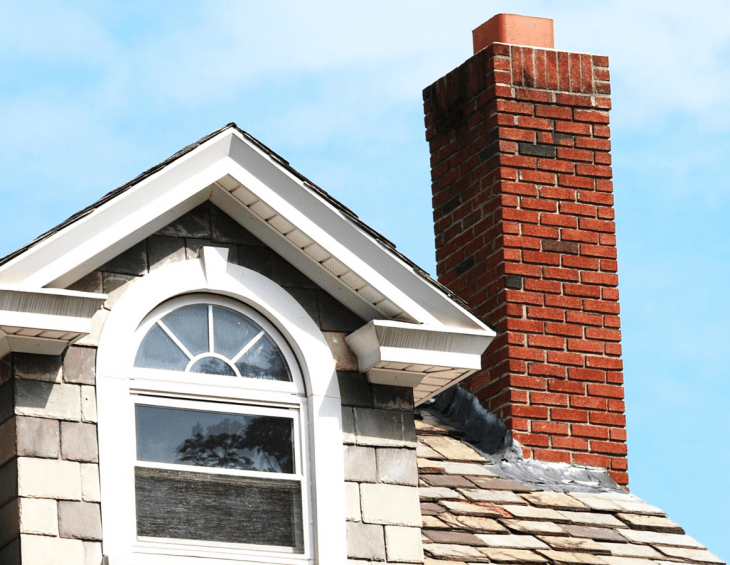
Close-up of brick chimney stack and lead flashing detailing on a slate roof, highlighting watertight seals and professional roofing maintenance


When Does Felt Still Make Sense?

At Advanced Construction & Roofing, we pride ourselves on honest reporting and no upselling. While EPDM is our primary recommendation for long-term reliability, we recognise that every property and budget is unique.

Felt can still serve as a viable short-term or budget-conscious solution under specific circumstances:

  • Short-term storage sheds or temporary structures where a 10-year lifespan is entirely sufficient.
  • Low-budget projects where immediate capital outlay must be kept to an absolute minimum, provided the system is installed by experienced professionals using multi-layer torch-on specifications.

However, for permanent residential living spaces, kitchens, extensions, and garages in Belfast, Bangor, and Newtownards, the frequency of repairs required for felt often outweighs any initial savings. Request our expert second opinion if you are unsure whether your roof requires a simple repair or a full replacement. Call our team to get straightforward guidance.


Why Choose Advanced Construction & Roofing?

Choosing the right contractor is just as important as choosing the right material. With over 25 years of industry experience, Advanced Construction & Roofing stands as a trusted leader in Belfast and across Northern Ireland.

We pride ourselves on:

  • ✔ Detailed, professional roof surveys before any work commences
  • ✔ Clear, honest reporting with zero upselling
  • ✔ Free, no-obligation quotes tailored to your property
  • ✔ No call-out charges for our local clients
  • ✔ Insurance-backed guarantees providing absolute peace of mind
  • ✔ High-quality materials and workmanship delivered by certified specialists

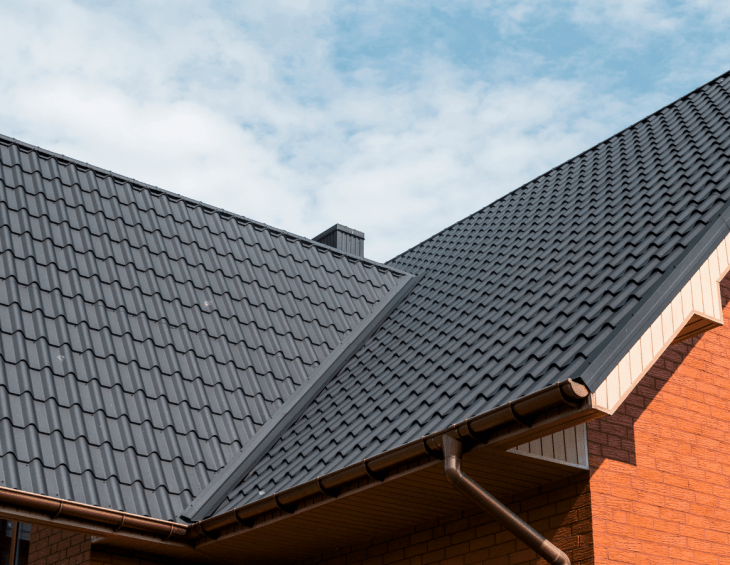
Professional installation of dark grey slate roofing with uniform alignment and expert craftsmanship across a residential roof pitch

"We had two different contractors tell us we needed a complete roof replacement. Advanced Construction & Roofing came out, surveyed the flat roof and slates, and told us honestly that a targeted repair and an EPDM overlay on our extension was all we needed. Their integrity is refreshing." : David McIlroy, Newtownards Homeowner

Call Advanced Construction & Roofing today at our Belfast headquarters. Request your comprehensive roof survey and contact our friendly team to secure a durable, weather-resistant flat roof that protects your home for decades to come.


Looking For a New Property? Here Are 10 Things You Should Know About Roof Surveys

Buying a home is the biggest investment you will ever make. Whether you are moving to a victorian terrace in Belfast, a semi-detached in Bangor, or a modern family home in Newtownards, you deserve to know exactly what you are buying. At Advanced Construction & Roofing, we have spent over 25 years ensuring that homebuyers across Northern Ireland don't get stuck with a "money pit" over their heads.

Request your professional roof survey today before you sign on the dotted line. Most buyers rely on a standard Homebuyer Report, but these often miss the critical, hidden details that only a specialist can find.

Here are 10 essential things you need to know about roof surveys before you buy your next property.

1. Why is a standard Homebuyer Report not enough?

Most general surveyors only look at the roof from the ground with binoculars. They don't climb ladders, and they certainly don't get a bird's-eye view of every tile. A specialized roof survey provides a deep-dive assessment that a general report simply cannot match. Contact our expert team to get a dedicated inspection that focuses 100% on the integrity of your roof.

2. How do drone roof inspections change the game?

At Advanced Construction & Roofing, we use state-of-the-art drone technology to capture high-definition imagery of every inch of the roof. Drones allow us to see chimney stacks, valley gutters, and ridge tiles that are otherwise impossible to reach safely. This is our key differentiator. We provide you with crystal-clear photo evidence of every defect, so you aren't just taking our word for it: you are seeing the proof for yourself.

Professional roof surveyor in Belfast using a tablet to review inspection data

3. What should you look for in chimneys and leadwork?

Chimneys are one of the most common sources of leaks in Northern Ireland homes. Over time, the mortar pointing can crumble and the lead flashing around the base can crack. Request a chimney inspection as part of your survey to ensure the brickwork is stable and the leadwork is watertight. Our 25+ years of experience means we know exactly where these systems fail and how to fix them correctly.

"Charles and his team provided a detailed report that saved us thousands on our house purchase in Bangor. They found leadwork issues the main surveyor missed completely." : Mark T., Bangor Homeowner

4. Are flat roofs a hidden risk?

If the property you are eyeing has an extension with a flat roof, you need a specialist to check it. Whether it is a traditional felt roof or a modern EPDM flat roofing system, these areas are prone to "ponding" water and membrane failure. Call us for a flat roof assessment to determine if the roof is reaching the end of its lifespan or if it was installed correctly in the first place.

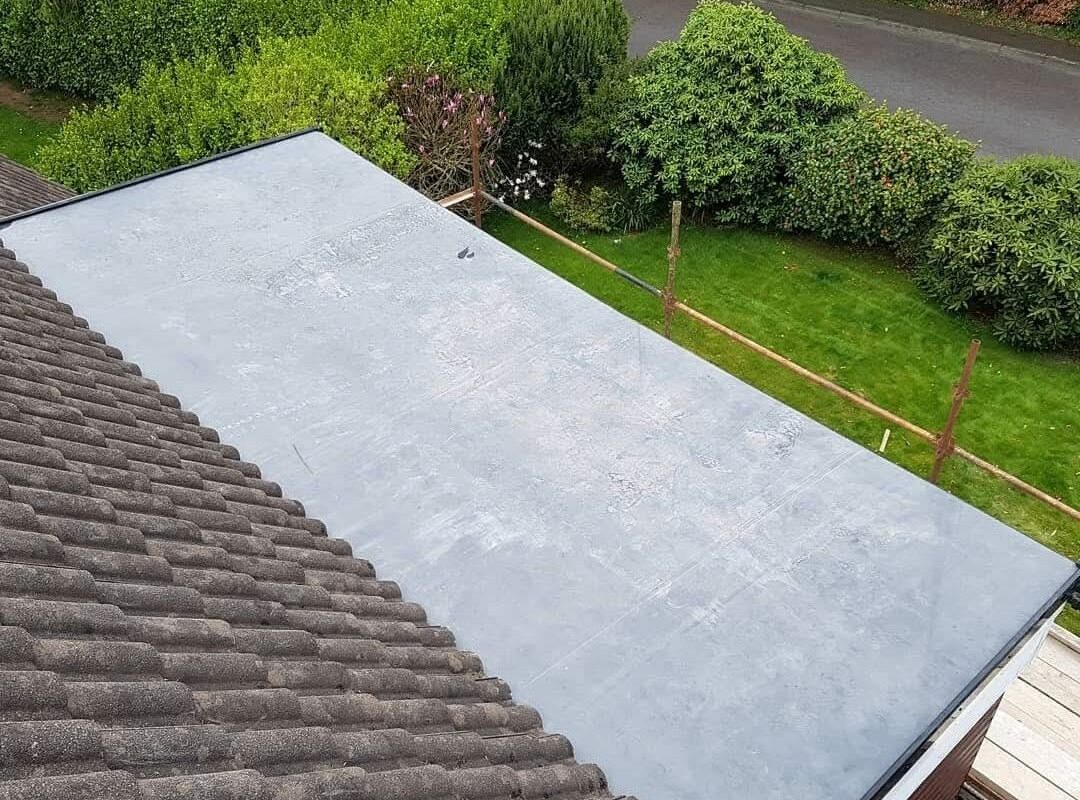
Expertly installed EPDM flat roof with a modern skylight in a Belfast residential area

5. Can slipped slates lead to structural damage?

A single slipped slate might look minor, but it is an open invitation for rainwater to rot your roof timbers. In the wet climate of Belfast and Newtownards, timber decay can happen fast. Contact Advanced Construction & Roofing to identify slipped or cracked slates that need immediate attention. We identify the small problems before they become structural nightmares.

6. What does internal water staining really mean?

Our surveys don't just stop at the exterior. We go inside the loft space to check for damp, mould, and daylight peaking through. If we find water staining on the rafters, it tells a story of long-term neglect. Request an internal roof inspection to confirm that the insulation is dry and the ventilation is working as it should.

Professional inspector examining internal ceiling damage and insulation for a roof survey

7. Is the guttering protecting the brickwork?

Faulty gutters dump water directly onto the walls of your home, leading to penetrating damp and foundation issues. During our surveys, we check the alignment and condition of all guttering and downpipes. Call for a free quote on any guttering repairs identified during your pre-purchase inspection.

8. Does the survey include an estimate of life expectancy?

You need to know if the roof will last another 20 years or if it needs replacing in 2. Our reports provide a clear, honest assessment of the roof's remaining lifespan. We provide the facts so you can plan your budget accordingly. Request a professional survey to get a definitive timeline on your potential new roof.

9. Why is our "No Upselling" policy important for you?

We pride ourselves on clear, honest reporting. We are not there to find problems just to sell you a new roof; we are there to give you the truth. If a roof only needs a minor repair, that is exactly what we will tell you. Contact us for honest advice that prioritizes your interests as a buyer.

Branded promotional card showing chimney leadwork and roof survey services

10. How can you use a roof survey to negotiate?

A detailed roof report is a powerful tool at the negotiating table. If we find £5,000 worth of necessary repairs, you can ask the seller to lower the price or fix the issues before the sale completes. Call Advanced Construction & Roofing to get the professional documentation you need to protect your bank balance.

Why Choose Advanced Construction & Roofing?

We have been serving Belfast, Bangor, and Newtownards for over two decades. Our reputation is built on transparency, quality, and local expertise.

  • 25+ Years Experience: We know every roof type in Northern Ireland.
  • Drone Inspections: We see what others miss.
  • No Upselling: Just honest, professional advice.
  • Insurance-Backed Guarantees: Complete peace of mind for every client.
  • Free, No-Obligation Quotes: Know your costs upfront with zero risk.

Request your pre-purchase roof survey today. Don't leave your biggest investment to chance. Call our team or contact us through our website to book your inspection and ensure your new home is safe, dry, and secure.