Dry Ridge vs Mortar Ridge: The Long-Term Savings Every Belfast Homeowner Needs to Know

You've seen it before. That crumbling line of cement running along the top of your neighbour's roof. The gaps where mortar has cracked and fallen away. The dark patches where water has started seeping in.

If you're a Belfast homeowner, this isn't just an eyesore, it's money draining from your bank account.

The choice between dry ridge and mortar ridge isn't just about aesthetics or following the latest roofing trends. It's a financial decision that will impact your household budget for the next 20 to 30 years. And in Belfast's notoriously damp climate, that decision matters more than you might think.

Let's break down the real numbers and show you exactly why dry ridge systems are saving Belfast homeowners hundreds of pounds over the long term.

Why Does Mortar Fail in Belfast's Climate?

Here's the uncomfortable truth about mortar ridges: they were never designed for Belfast weather.

Belfast experiences an average of 157 rainy days per year. That's nearly half the calendar spent with moisture attacking your roof. Add in our freeze-thaw cycles during winter months, and you've got a recipe for mortar destruction.

Here's what happens to mortar in our climate:

  • Water penetration: Rain seeps into tiny cracks in the mortar
  • Freezing expansion: When temperatures drop, that water freezes and expands
  • Cracking and crumbling: The expansion forces the cracks wider
  • Repeat cycle: Every freeze-thaw cycle makes the damage worse

This isn't a question of if your mortar ridge will fail, it's a question of when.

Most mortar ridges in Belfast start showing significant deterioration within 10 to 15 years. Some fail even sooner, especially on exposed properties or those facing the prevailing westerly winds.

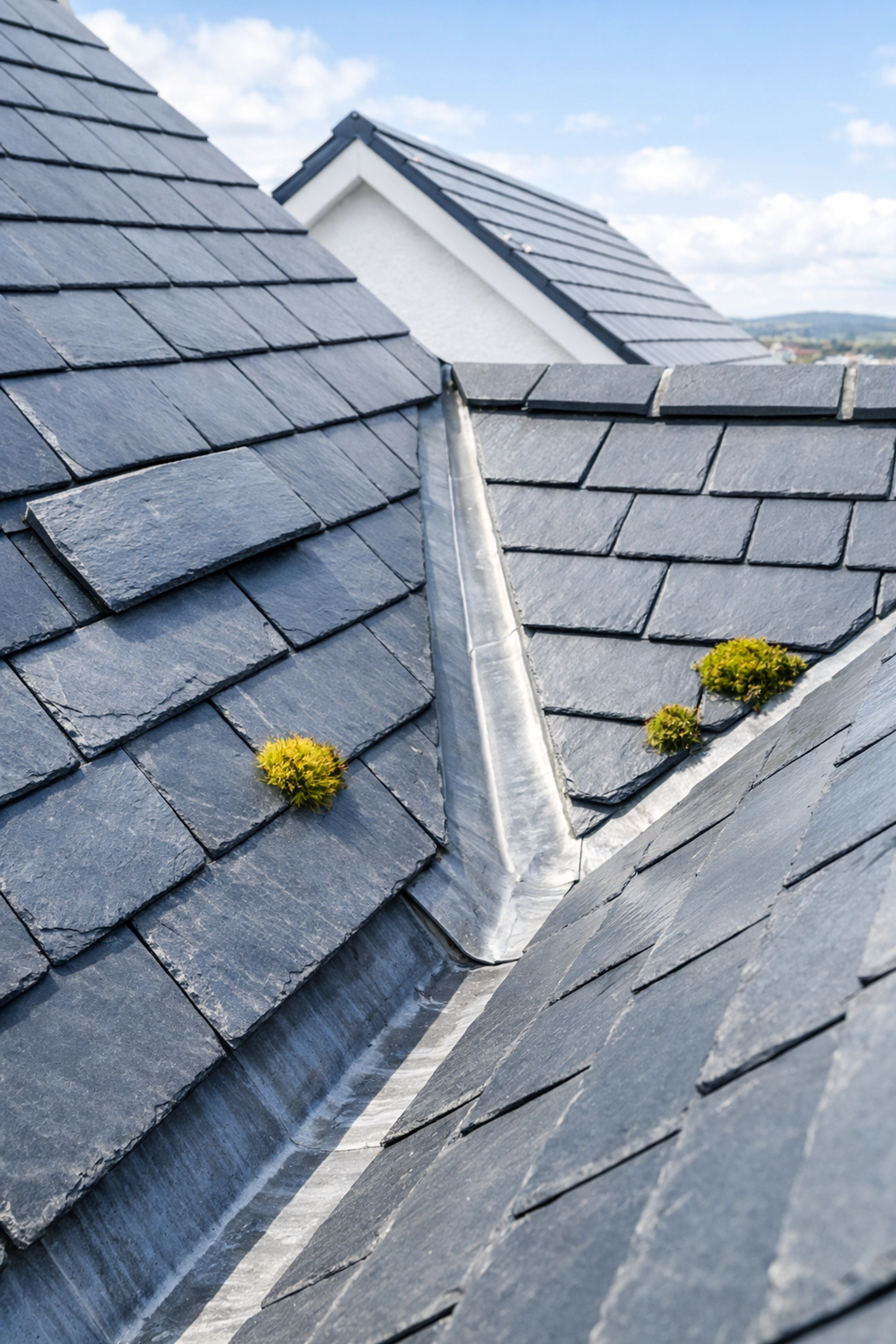
Close-up of a cracked and mossy mortar ridge on a Belfast slate roof showing signs of water damage and weathering.

The Hidden Costs of Mortar Ridge Maintenance

When you chose a mortar ridge (or inherited one when you bought your property), you didn't just pay for the initial installation. You signed up for ongoing maintenance costs that compound year after year.

Consider what mortar ridge ownership actually costs:

Mortar ridges require waterproofing recoating every other year to maintain their integrity. Skip this maintenance, and you're looking at cracked cement, loose tiles, and eventually water ingress into your roof space.

The installation time alone tells a story. Mortar bedding takes approximately 6 hours per 10 metres of ridge to install properly. That's labour-intensive work that you'll need to pay for again and again when repairs become necessary.

And repairs will become necessary.

Common mortar ridge repair scenarios Belfast homeowners face:

  • Repointing cracked sections (typically needed every 5-7 years)
  • Replacing fallen ridge tiles after storms
  • Emergency repairs when water starts coming through
  • Full ridge replacement when damage becomes too extensive

Each of these repairs means scaffolding costs, labour costs, and material costs. Each repair means time off work to let contractors in. Each repair means stress and inconvenience.

Dry Ridge: The Smarter Financial Investment

Now let's talk about the alternative that's transforming how Belfast homeowners think about their roofs.

Dry ridge systems use mechanical fixings instead of mortar. Stainless steel or aluminium clips secure your ridge tiles to the roof structure, creating a weatherproof seal without any cement involved.

The key word here? Maintenance-free.

Once a dry ridge system is installed, it requires no check-ups, no recoating, and no regular repairs. The mechanical fixings are designed to last the lifetime of your roof, typically 30 years or more.

Installation is also significantly faster. A dry ridge takes approximately 2.5 hours per 10 metres of ridge compared to 6 hours for mortar bedding. That's a substantial reduction in labour costs right from day one.

Advanced Construction & Roofing Roof Survey Service A professional roof inspector examines ceiling damage and insulation while taking notes. The image promotes Advanced Construction & Roofing's roof survey service, offering visual surveys, photo evidence, defect identification, and in-depth analysis for property owners. Contact details and a website link are included for booking a survey.

Breaking Down the Numbers: What Will You Actually Save?

Let's get specific about the financial benefits. Because when it comes to your household budget, vague promises don't pay the bills.

Over a 20-year period, dry ridge systems can save Belfast homeowners between £400 and £700 compared to mortar ridges.

Here's how that breaks down:

Cost Factor Mortar Ridge Dry Ridge
Initial installation Lower Higher
Biennial waterproofing Required Not needed
Repair frequency Every 5-7 years Rarely/never
Emergency storm repairs Common Uncommon
Total 20-year cost Higher Lower

Yes, the upfront cost of a dry ridge system is higher than traditional mortar. But that's where mortar's advantage ends.

Think of dry ridge as paying once, while mortar means paying forever.

The savings become even more significant when you factor in the indirect costs: time spent arranging repairs, potential damage to belongings if leaks occur, and the stress of dealing with roofing emergencies.

How Does Weather Durability Protect Your Wallet?

Belfast's weather doesn't just affect your morning commute: it actively attacks mortar ridges throughout the year.

Dry ridge systems are specifically engineered to handle what our climate throws at them:

The mechanical fixings are designed to flex with natural roof movement caused by temperature changes. Unlike rigid mortar, which cracks under stress, dry ridge components move with your roof structure.

High winds? Dry ridge fixings resist wind uplift far better than mortar, which can loosen over time. After major storms, mortar ridge homeowners often find themselves calling roofers for emergency repairs. Dry ridge homeowners typically don't.

Heavy rain? The design of dry ridge systems channels water away from vulnerable areas, preventing the pooling and penetration that damages mortar installations.

For more information about how wind resistance affects your roof, check out our guide on roof wind resistance in 2026.

Low-angle photo of a dry ridge system being installed on a Belfast home, highlighting secure mechanical fixings and modern roof durability.

When Might Mortar Still Make Sense?

We believe in giving you the complete picture, even when it doesn't favour the more modern solution.

Mortar ridges may still be appropriate in specific situations:

If your property is located in a conservation area with strict planning requirements, traditional mortar might be required to maintain the heritage appearance of your roof. Mortar offers a seamless, traditional aesthetic that some period properties demand.

If you're selling your property within the next few years and the current mortar ridge is in good condition, the cost of switching to dry ridge might not pay back before you sell.

However, for the vast majority of Belfast homeowners planning to stay in their properties long-term, dry ridge represents the smarter financial choice.

What Should You Do Next?

If you're concerned about your current ridge condition or you're planning a roof replacement, now is the time to consider your options carefully.

Request a professional roof survey to assess your current ridge condition and get an honest assessment of whether upgrading to dry ridge makes financial sense for your specific situation.

At Advanced Construction & Roofing, we've helped hundreds of Belfast homeowners make informed decisions about their roofing investments. We'll give you a straightforward assessment: no pressure, no obligation.

Contact us today for a comprehensive roof survey and find out exactly what state your ridge is in. We'll show you the evidence with detailed photos and explain your options in plain English.

Don't wait until water starts coming through your ceiling. Don't wait until emergency repairs cost you twice what planned maintenance would have. Take control of your roofing costs now.

Call Advanced Construction & Roofing today. Your future self; and your bank account: will thank you.

Roof Ventilation 101: A Beginner's Guide to Preventing Mould and Timber Rot

If you've ever noticed a musty smell in your attic or spotted dark patches creeping across your ceiling, there's a good chance your roof ventilation isn't doing its job. Here in Northern Ireland, our damp climate makes proper airflow absolutely critical for protecting your home from mould, mildew, and the dreaded timber rot that can compromise your entire roof structure.

The good news? Understanding roof ventilation isn't complicated. Once you grasp the basics, you'll know exactly what to look for and when to call in the professionals.

What Is Roof Ventilation and Why Does It Matter?

Roof ventilation is simply the system that allows fresh air to flow through your attic space, pushing out stale, moisture-laden air and replacing it with dry air from outside. Think of it as your roof's breathing system.

Without proper ventilation, moisture gets trapped. That moisture comes from everyday activities: cooking, showering, even breathing: and it rises up into your attic space. When it has nowhere to go, it condenses on cold surfaces like roof timbers and insulation. Over time, this creates the perfect environment for mould growth and wood decay.

In Belfast and across Northern Ireland, we see this problem constantly. Our wet winters and fluctuating temperatures mean attics are particularly vulnerable to condensation issues. A well-ventilated roof can last decades longer than a poorly ventilated one.

Well-ventilated attic in a Northern Ireland home showing soffit vents, ridge vent, and proper insulation for roof health.

How Does Roof Ventilation Actually Work?

The principle behind roof ventilation is beautifully simple: warm air rises.

As the air in your attic heats up, it naturally moves upward and escapes through exhaust vents positioned near the ridge of your roof. This creates a slight vacuum effect that draws cooler, drier air in through intake vents located lower down, typically in your soffits or fascias.

This continuous cycle keeps air moving, prevents moisture buildup, and maintains a healthy attic environment year-round.

The key to effective ventilation is balance. You need roughly equal amounts of intake and exhaust ventilation. If one side of the equation is off, the system won't work properly. Too much exhaust without enough intake? You'll create negative pressure that can actually draw moisture into your attic. Too much intake without enough exhaust? Hot, humid air stays trapped at the top.

The Two Main Components: Intake and Exhaust Vents

Intake Vents: Where Fresh Air Enters

Intake vents are positioned at the lowest point of your roof system to bring fresh air in. The most common types include:

Soffit Vents – These sit underneath your roof's overhang and are the most popular choice for Northern Ireland homes. They're discreet, effective, and work with natural airflow patterns.

Fascia Vents – A modern alternative for properties without traditional soffit overhangs. These are particularly useful for newer builds or homes that have had their soffits boxed in.

Drip Edge Vents – Ideal when soffits are narrow or completely closed off. These fit along the edge of your roof and provide a slim but effective air intake.

Exhaust Vents: Where Stale Air Escapes

Exhaust vents sit near the top of your roof to release warm, moist air. Your options include:

Ridge Vents – Installed along the entire peak of your roof, these provide excellent coverage and work purely through natural convection. They're virtually invisible from ground level and require no power or maintenance.

Box Vents (Static Vents) – These are the square or circular vents you'll see dotted across many roofs. They're passive, reliable, and cost-effective, though you'll typically need several to match the output of a single ridge vent.

Turbine Vents – These spinning metal vents use wind power to actively extract hot air. They work brilliantly in exposed areas of Northern Ireland where we get plenty of breeze.

Powered Attic Fans – For homes with complex rooflines or severe ventilation challenges, electric fans can rapidly remove hot, humid air. Solar-powered versions are increasingly popular for energy-conscious homeowners.

Advanced Construction & Roofing Roof Survey Service A professional roof inspector examines ceiling damage and insulation while taking notes. The image promotes Advanced Construction & Roofing's roof survey service, offering visual surveys, photo evidence, defect identification, and in-depth analysis for property owners. Contact details and a website link are included for booking a survey.

What Happens When Ventilation Fails?

Ignoring ventilation problems is one of the most expensive mistakes a homeowner can make. The damage starts small and invisible, but it compounds quickly.

Mould and Mildew Growth

Trapped moisture creates the humid conditions mould spores need to thrive. Once established, mould spreads rapidly across roof timbers, insulation, and even down into your living spaces. Beyond the structural damage, mould poses serious health risks: particularly for anyone with respiratory conditions or allergies.

Timber Rot and Structural Damage

Wood that stays damp will eventually rot. In roof spaces, this affects your rafters, joists, and roof decking. Timber rot compromises the structural integrity of your entire roof. What starts as a ventilation issue can escalate into a complete roof replacement if left unchecked.

Wet Insulation

Insulation loses its effectiveness when it gets damp. Wet insulation not only fails to keep your home warm but can also become a breeding ground for mould. You'll notice higher energy bills and a colder home long before you spot the visible damage.

Ice Dam Formation

While less common in Northern Ireland than in colder climates, ice dams can still form during harsh winters. Poor ventilation allows heat to escape through the roof, melting snow that then refreezes at the eaves. This ice buildup can force water under your tiles and into your roof space.

Warning Signs Your Roof Needs Better Ventilation

Don't wait for visible rot to take action. Watch for these early warning signs:

  • Musty or damp smells in your attic or upper floors
  • Visible condensation on the underside of your roof felt
  • Dark staining or discolouration on roof timbers
  • Peeling paint or bubbling wallpaper in upstairs rooms
  • Frost forming on nails or metal fixings in your attic during winter
  • Excessive heat buildup in your attic during summer
  • Mould spots appearing on ceilings or in corners of upstairs rooms

If you're noticing any of these issues, request a professional roof survey immediately. Early intervention prevents minor problems from becoming major expenses. Our team at Advanced Construction & Roofing offers comprehensive roof surveys across Belfast and Northern Ireland to identify ventilation issues before they cause lasting damage.

Close-up of a gloved hand pointing at condensation damage and timber staining in an attic, highlighting roof ventilation issues.

The Best Ventilation Setup for Northern Ireland Homes

For most properties in Belfast and throughout Northern Ireland, the ridge vent and soffit vent combination delivers the most reliable results.

This system works entirely through natural convection: no electricity, no moving parts, no maintenance headaches. Fresh air enters through the soffits, flows up through the attic space, and exits through the ridge vent. It's simple, effective, and perfectly suited to our climate.

Why does this combination work so well?

  • It provides balanced airflow across the entire roof space
  • It operates continuously, day and night, regardless of weather
  • It creates no noise and has no running costs
  • It requires minimal maintenance over its lifespan
  • It works with the natural physics of warm air rising

For older Belfast homes with limited soffit space or unusual roof configurations, alternative solutions like fascia vents or discrete tile vents may be more appropriate. Every roof is different, and the best solution depends on your specific property.

Take Action Now to Protect Your Home

Proper roof ventilation isn't a luxury: it's essential protection for one of your biggest investments. In Northern Ireland's damp climate, the difference between a well-ventilated roof and a poorly ventilated one can mean thousands of pounds in prevented repairs.

Here's what to do next:

  1. Check your attic for signs of condensation, mould, or damp timbers
  2. Look at your roof from outside: can you see any existing vents?
  3. Note any musty smells or unexplained dampness in upstairs rooms
  4. Book a professional roof survey to get expert assessment

At Advanced Construction & Roofing, we've helped hundreds of homeowners across Belfast and Northern Ireland solve ventilation problems before they become structural nightmares. Contact us today for honest advice and a clear assessment of your roof's ventilation needs.

The Homebuyer's Guide to Roof Surveys in Northern Ireland: What to Check Before You Buy

Buying a home in Northern Ireland is one of the biggest financial decisions you'll ever make. You'll check the kitchen, test the taps, and peer into every cupboard. But what about the roof over your head?

The roof is your property's first line of defence against Northern Ireland's unpredictable weather. Yet countless homebuyers skip a proper roof survey, only to discover costly problems months after moving in. Damp patches appearing on ceilings. Slipped slates causing leaks. Hidden timber rot that's been silently spreading for years.

This guide covers everything you need to know about roof surveys in Northern Ireland, what gets inspected, what to look for, and why this investment could save you thousands.

Why Should You Get a Roof Survey Before Buying?

Here's a fact that might surprise you: there's no legal requirement to have a survey before buying a property in Northern Ireland. However, just because it's not mandatory doesn't mean it's not essential.

A roof replacement in Belfast can cost anywhere from £5,000 to £15,000 or more, depending on the size and materials involved. Compare that to the cost of a proper roof survey, and the maths speaks for itself.

A roof survey helps you:

  • Identify existing damage before you commit to buying
  • Negotiate a fair price based on any repair work needed
  • Plan and budget for future maintenance
  • Avoid nasty surprises after you've handed over your deposit
  • Understand the true condition of your potential new home

Think of it as insurance against the unknown. You wouldn't buy a car without checking under the bonnet, so why treat your roof any differently?

Advanced Construction & Roofing Roof Survey Service A professional roof inspector examines ceiling damage and insulation while taking notes. The image promotes Advanced Construction & Roofing's roof survey service, offering visual surveys, photo evidence, defect identification, and in-depth analysis for property owners. Contact details and a website link are included for booking a survey.

What Types of Surveys Are Available in Northern Ireland?

Not all surveys are created equal. Understanding your options helps you choose the right level of inspection for your situation.

RICS Home Survey Level 2

The RICS Home Survey Level 2 (formerly called the HomeBuyer Report) is the most commonly used survey by buyers across Northern Ireland. This in-depth inspection typically takes one to two hours on-site and covers structural problems, damp, woodworm, rot, and issues that could affect the property's value.

The report uses a simple traffic light system:

  • Rating 3: Serious defects requiring urgent attention
  • Rating 2: Issues that need attention but aren't critical
  • Rating 1: No repairs required

This survey works well for most conventional properties in reasonable condition.

RICS Home Survey Level 3

For older, larger, or unusual properties, the Level 3 survey provides a more comprehensive assessment. This option includes detailed advice on repair options and explains the consequences of leaving problems untreated.

If you're buying a Victorian terrace in Belfast, a rural farmhouse, or any property with an unconventional construction, the Level 3 survey is worth the extra investment.

Specialist Roof Surveys

Here's something many homebuyers don't realise: most standard property surveys only give the roof a cursory glance from ground level. A surveyor standing in the garden won't spot cracked lead flashing, deteriorating ridge tiles, or moss damage hidden on the back slope.

A specialist roof survey goes further. Professional roofers will access the roof directly, inspect every component, and provide detailed photographic evidence of any issues found.

What Gets Inspected During a Roof Survey?

A thorough roof survey examines both the exterior and interior of your roofing system. Request a survey that covers all these key areas:

External Roof Inspection

  • Roof covering: Condition of slates, tiles, or flat roofing materials
  • Ridge and hip tiles: Checking for loose or cracked sections
  • Flashings: Lead work around chimneys, walls, and roof junctions
  • Gutters and downpipes: Blockages, damage, and proper alignment
  • Fascias and soffits: Signs of rot or deterioration
  • Chimney stacks: Pointing condition and structural integrity
  • Moss and algae: Build-up that could cause moisture retention

Internal Attic Inspection

  • Roof structure: Rafters, trusses, and supporting timbers
  • Signs of water ingress: Staining, damp patches, or active leaks
  • Insulation levels: Adequate coverage and condition
  • Ventilation: Proper airflow to prevent condensation
  • Party and gable walls: Condition where the roof meets walls
  • Water tanks: If present, their condition and insulation

Home inspector examines attic rafters and insulation during a Northern Ireland roof survey for homebuyers

What Red Flags Should You Watch For?

When reviewing a roof survey report, certain issues demand immediate attention. Call these out during price negotiations or factor them into your buying decision.

Serious Concerns (Rating 3 Issues)

Structural defects in the roof timbers could indicate major problems. Sagging ridge lines, spread rafters, or compromised trusses require professional assessment and potentially significant repair work.

Active water ingress is never something to ignore. If the survey reveals ongoing leaks, you need to understand the source and extent before proceeding.

Failed flat roofing on extensions or garages often needs complete replacement. Ask specifically about the age and type of any flat roof sections, as felt roofing typically lasts 10-15 years while EPDM rubber roofing can last 50 years or more.

Moderate Concerns (Rating 2 Issues)

Missing or slipped slates need addressing but aren't emergency repairs. Budget for these fixes within the first year of ownership.

Deteriorating pointing on ridge tiles or chimney stacks allows water penetration. Factor repointing costs into your negotiations.

Poor ventilation leading to condensation can cause timber rot over time. This is common in older Northern Ireland homes and often requires relatively straightforward improvements.

Roofer Roof Inspection in Rain A roofer conducts a detailed inspection of a leaking and damaged roof during heavy rain, identifying broken tiles, exposed timber, and visible moss. The technician is equipped with tools and assesses the extent of emergency repairs needed to prevent further water ingress.

Why Standard Surveys Often Miss Roof Problems

Most surveyors aren't roofers. They're generalists trained to assess properties overall, not specialists in roofing systems. A standard homebuyer survey typically examines the roof from ground level using binoculars, which simply isn't enough to spot many common issues.

Consider what ground-level observation can miss:

  • Cracked or porous slates that look fine from below
  • Failed sealant around roof lights and vents
  • Damaged lead work in hidden valleys
  • Moss damage on north-facing slopes
  • Blocked or deteriorating roof vents

For a complete picture, pair your standard homebuyer survey with a dedicated roof inspection from qualified professionals. The combined cost is still far less than discovering major roof problems after completion.

Drone Roof Surveys: A Modern Alternative

Technology has opened new possibilities for roof inspection. Drone-based surveys now offer high-resolution 4K images and video without the need for ladders or scaffolding.

These surveys typically cost under £200 and are conducted by CAA-certified pilots across Northern Ireland. Results arrive within 48 hours, and you don't even need to be present during the inspection.

Drone surveys work particularly well for:

  • Initial assessments before committing to a property
  • Properties with difficult roof access
  • Large or complex roof structures
  • Providing visual evidence to share with roofers or insurers

However, drone surveys have limitations. They can't assess internal attic conditions, test materials by touch, or identify problems hidden beneath the surface. For the most thorough assessment, combine aerial imaging with a traditional hands-on inspection.

How Much Should You Budget for a Roof Survey?

Investment in a proper roof survey varies depending on the property size and survey type:

  • Standard homebuyer survey with roof assessment: £350-£600
  • Specialist roof survey: £150-£300
  • Drone roof survey: £100-£200
  • Comprehensive Level 3 survey: £500-£1,000+

Compare these costs against potential repair bills. A full roof replacement in Belfast might set you back £8,000-£12,000. Even significant repairs like chimney repointing and leadwork can run into thousands.

The survey fee is a small price for peace of mind.

Take Action Before You Buy

Don't gamble on the roof over your head. Before exchanging contracts on any Northern Ireland property, take these steps:

  1. Request a Level 2 or Level 3 survey depending on the property type
  2. Commission a specialist roof survey for detailed assessment
  3. Review all findings carefully and ask questions about anything unclear
  4. Get repair quotes for any issues identified
  5. Negotiate the price based on necessary work

At Advanced Construction & Roofing, we've helped hundreds of homebuyers across Belfast and Northern Ireland understand exactly what they're purchasing. Our comprehensive roof survey service provides detailed reports with photographic evidence, clear explanations, and honest assessments.

Contact us today to arrange your pre-purchase roof survey. Call our team or visit adv-group.co.uk to book your inspection. Know what you're buying before you sign on the dotted line.

Are You Making These Common Roof Ventilation Mistakes? 5 Warning Signs of Condensation Damage

Let's be honest: when was the last time you thought about your roof ventilation? If you're like most Northern Ireland homeowners, the answer is probably "never." But here's the thing: poor roof ventilation is one of the leading causes of dampness, mould, and timber rot in homes across Belfast, Lisburn, and beyond.

Our wet climate means moisture is constantly battling to get into your home. Without proper ventilation, your roof space becomes a breeding ground for condensation problems that can cost thousands to repair. The good news? Most ventilation issues are preventable: if you know what to look for.

Why Does Roof Ventilation Matter So Much in Northern Ireland?

Think of your roof space like a set of lungs. It needs to breathe. Fresh air enters through intake vents (usually at the eaves or soffits), circulates through the loft, and exits through exhaust vents at the ridge or near the top of the roof.

When this system works properly, it:

  • Removes excess moisture before it condenses
  • Regulates temperature extremes
  • Prevents ice dams in winter
  • Extends the life of your roof timbers and insulation

Modern ventilation standards recommend one square foot of venting for every 300 square feet of attic floor space. Fall short of this, and you're inviting trouble.

In Northern Ireland, where we see an average of 157 rainy days per year, getting ventilation right isn't optional: it's essential.

The Most Common Roof Ventilation Mistakes We See

After years of inspecting roofs across Northern Ireland, our team has seen the same mistakes crop up again and again. Are you making any of these?

Blocked Intake Vents

This is the number one problem we encounter. Homeowners: or well-meaning insulation installers: accidentally cover soffit vents with loft insulation. The result? Air can't enter your roof space, and the entire ventilation system fails.

Check your soffit vents today. If you can't see daylight through them from inside your loft, they're probably blocked.

Roofer Roof Inspection in Rain A roofer conducts a detailed inspection of a leaking and damaged roof during heavy rain, identifying broken tiles, exposed timber, and visible moss. The technician is equipped with tools and assesses the extent of emergency repairs needed to prevent further water ingress.

Mixing Different Types of Exhaust Vents

Here's a mistake even some roofers make: installing both ridge vents and box vents (or tile vents) on the same roof. This seems like more ventilation would be better, right? Wrong.

Mixing vent types "short circuits" your system. Air takes the path of least resistance, so instead of flowing from intake to exhaust as designed, it simply circulates between the two exhaust points. Your soffit vents become useless.

Bathroom Fans Venting Into the Loft

This one causes serious damage. If your bathroom extractor fan vents directly into your roof space instead of outside, you're pumping warm, moisture-laden air straight into your loft every time someone showers.

We've seen roof timbers completely rotted through because of this single mistake. Always ensure extractor fans vent through the roof or wall to the outside.

Relying on Gable Vents Alone

Gable vents: those triangular or rectangular vents on the end walls of your roof: look the part but rarely provide adequate ventilation on their own. They force air through the path of greatest resistance, leaving the centre of your loft poorly ventilated.

For proper airflow, you need continuous ventilation from eaves to ridge, not just end-to-end.

Assuming Power Vents Are Working

Got a powered attic fan? When did you last check it's actually running? Faulty thermostats, motor failures, and bad wiring are common issues. Many homeowners assume their ventilation is fine because they have a fan installed: meanwhile, it hasn't worked in years.

5 Warning Signs of Condensation Damage You Can't Ignore

Condensation damage doesn't announce itself with a dramatic leak. It creeps in slowly, often going unnoticed until serious structural damage has occurred. Know these warning signs and act fast if you spot them.

1. Mould and Mildew Growth

Open your loft hatch and take a deep breath. Do you notice a musty, damp smell? That's your first clue.

Look at the underside of your roof felt, along the rafters, and on any stored items. Black spots, green patches, or fuzzy white growth are all signs of mould caused by excess moisture. Left unchecked, mould spreads rapidly and can affect your indoor air quality.

Attic roof timbers with black mould and mildew, showing condensation damage and poor ventilation in a NI home.

2. Wet or Dripping Roof Timbers

Climb into your loft on a cold morning. Are the rafters or roof timbers wet to the touch? Can you see water droplets forming on the underside of the roof felt?

This is condensation in action. The warm, moist air from your home rises into the cold loft space and condenses on cold surfaces. If this happens regularly, your timbers will eventually rot.

3. Sagging or Spongy Roof Decking

Press firmly on the boards or decking in your loft. Do they feel soft, spongy, or flex more than they should?

This is a serious warning sign. Prolonged moisture exposure weakens timber, compromising your roof's structural integrity. If you notice sagging boards, contact a professional immediately: this isn't a DIY fix.

4. Peeling Paint or Lifting Wallpaper on Upstairs Ceilings

Condensation damage doesn't stay in the loft. When moisture levels are high, it migrates downward into your living spaces.

Look for:

  • Paint bubbling or peeling on upstairs ceilings
  • Wallpaper lifting at the edges
  • Damp patches that come and go
  • Yellow or brown staining

These signs often indicate a ventilation problem, not a leak. Many homeowners waste money chasing phantom leaks when the real culprit is condensation. If you're unsure, book a professional roof survey to identify the true cause.

5. Ice Dams in Winter

During cold snaps, check your roof from outside. Do you see thick ridges of ice forming at the eaves while the rest of the roof is clear?

Ice dams form when heat escapes through a poorly ventilated roof, melting snow that then refreezes at the colder eaves. This trapped ice can force water back under your tiles or slates, causing leaks and damage to fascias and soffits.

Advanced Construction & Roofing Roof Survey Service A professional roof inspector examines ceiling damage and insulation while taking notes. The image promotes Advanced Construction & Roofing's roof survey service, offering visual surveys, photo evidence, defect identification, and in-depth analysis for property owners. Contact details and a website link are included for booking a survey.

How to Fix Roof Ventilation Problems

Spotted some warning signs? Here's what to do next.

Quick Fixes You Can Do Today

  • Clear blocked soffit vents by carefully pulling back insulation and installing vent guards
  • Check extractor fans are venting outside, not into the loft
  • Improve loft insulation (but keep it away from the eaves)
  • Open the loft hatch on dry days to improve air circulation temporarily

When to Call a Professional

Some ventilation issues require expert assessment and repair:

  • Installing additional ventilation (tile vents, ridge vents, or over-fascia vents)
  • Replacing failed mechanical ventilation systems
  • Repairing timber damage caused by condensation
  • Investigating recurring damp problems

Don't guess when it comes to structural issues. A professional roof survey gives you a clear picture of what's happening and what needs fixing. At Advanced Construction & Roofing, we provide detailed roof surveys across Belfast and Northern Ireland with photo evidence and honest recommendations.

Take Action Before Small Problems Become Big Bills

Roof ventilation problems don't fix themselves. Every day you ignore the warning signs, moisture continues its slow assault on your roof timbers, insulation, and home.

The average cost to repair timber rot caused by condensation damage? Between £2,000 and £8,000, depending on the extent. The cost of proper ventilation installation? A fraction of that.

Request a roof ventilation assessment today. Our experienced team will identify any issues, explain your options in plain English, and provide a transparent quote with no hidden surprises.

Contact Advanced Construction & Roofing to book your survey or call us directly. We've helped hundreds of Northern Ireland homeowners protect their properties from condensation damage( let us help you too.)