


Buying a property in Northern Ireland without a proper roof survey is like buying a car without checking under the bonnet. You might get lucky, or you might inherit a £15,000 problem. A pre-purchase roof survey isn't just about ticking boxes: it's about knowing exactly what you're getting into before you sign on the dotted line.
Here's what you absolutely need to know before commissioning that survey.
1. What's the Roof's History? Ask Before the Inspector Arrives
Before anyone sets foot on that roof, request the complete history from the seller. You need to know:
- When was the roof installed?
- What type of roofing material is it?
- Are there any existing warranties, and are they transferable?
- Have there been any repairs, and what were they for?
- Has the roof ever leaked?
A 10-year-old roof in Belfast that's been regularly maintained is a completely different proposition from a 10-year-old roof that's been ignored. Get this information upfront. If the seller can't or won't provide it, that's a red flag before you've even started.
2. Does the Exterior Inspection Cover Everything That Matters?
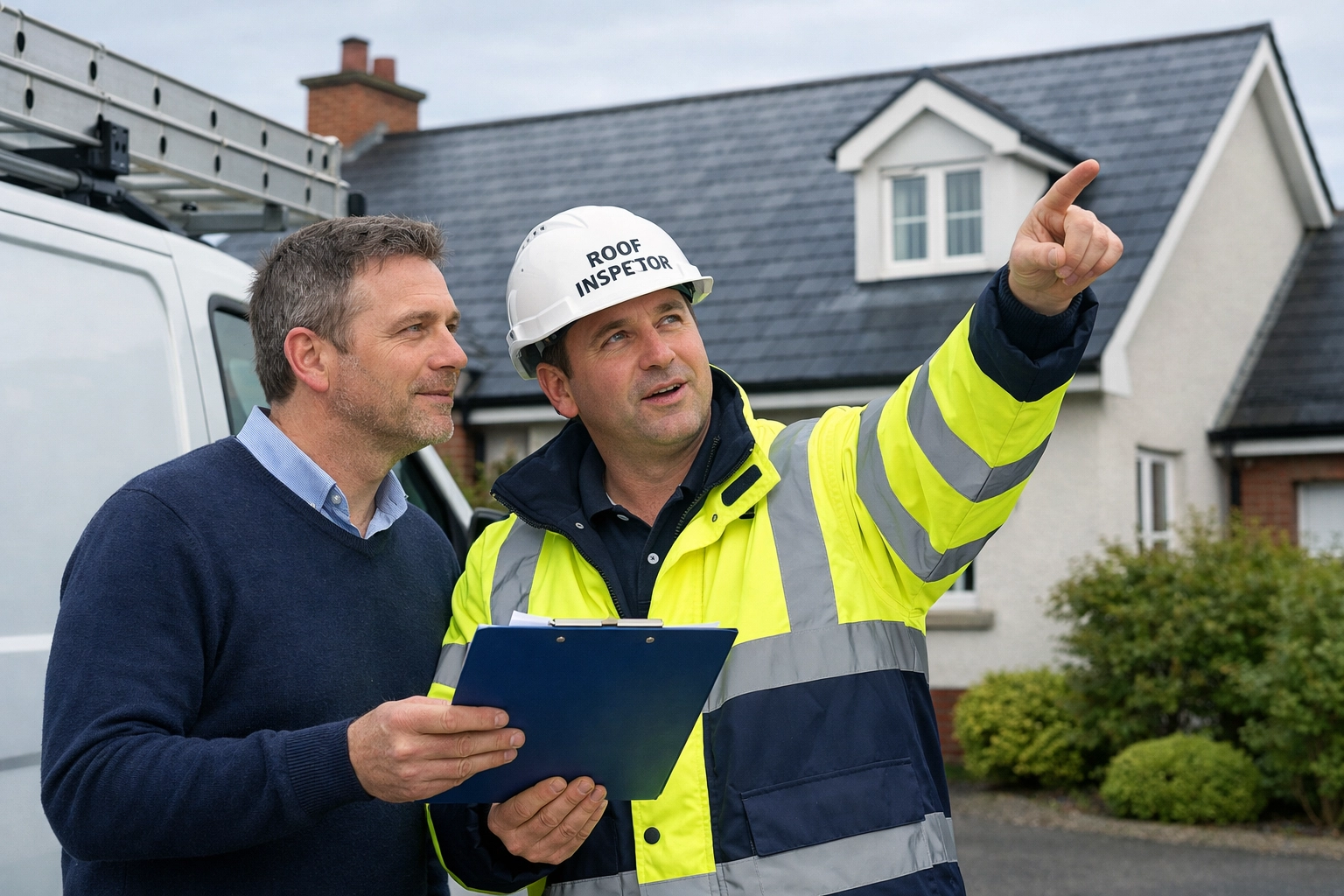
The exterior roof surface tells most of the story, but only if your inspector knows what to look for. A proper Belfast roof survey should document:
For slate or tile roofs:
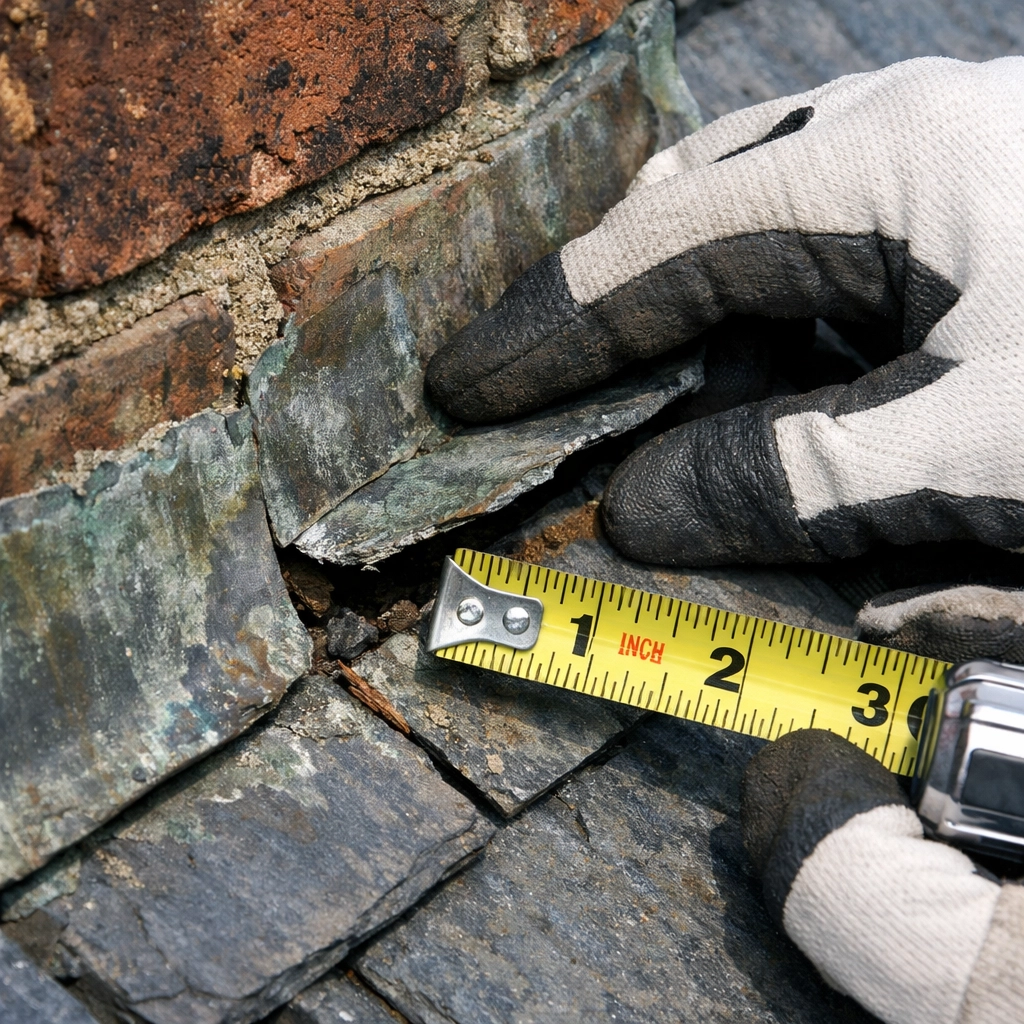
- Cracked, slipped, or missing tiles
- Broken or deteriorated slate
- Ridge tile condition and mortar integrity
- Lead flashing condition
For flat or pitched roofs with felt:
- Surface bubbling or blistering
- Felt tears or splits
- Exposed nail heads or fixings
- Granule loss on mineral felt
Your inspector should also check for sagging along ridge lines: a warning sign of potential structural issues that could cost thousands to rectify. In Northern Ireland's wet climate, even minor exterior damage accelerates quickly.
Request a comprehensive roofing survey that includes photographic evidence of every concern identified.
3. Why Do Flashing Failures Cost You the Most?
Here's what most homebuyers don't realize: the majority of roof leaks in Belfast properties don't start with the roofing material itself. They start at the flashing.
Flashing is the metal or lead material that seals the joints between your roof and chimneys, walls, skylights, and vents. When flashing fails, water finds its way into places it shouldn't be.
Your pre-purchase survey must examine:
- Chimney flashing for lifting, cracking, or missing sections
- Valley flashing where two roof planes meet
- Rubber boots around pipe penetrations (these dry rot in our climate)
- Parapet wall flashing
- Skylight seals and caulking

Flashing repairs are technical work that requires proper expertise. A survey that glosses over flashing detail isn't worth the paper it's printed on.
4. What Do the Gutters Actually Tell You?
Your gutters aren't just there to catch rainwater: they're a diagnostic tool. A competent inspector examines gutters and downspouts for:
- Debris buildup: Indicates maintenance neglect
- Sagging or pulling away from fascia: Suggests long-term water management issues
- Rust or corrosion: Tells you the system's remaining lifespan
- Granule accumulation: Shows roof felt is deteriorating faster than it should
In Northern Ireland, where we see over 1,000mm of annual rainfall in many areas, functional guttering isn't optional: it's critical infrastructure. If the survey shows gutters aren't draining properly, water is pooling somewhere it shouldn't be, and that means damage you can't always see from ground level.
5. Can You Really Judge a Roof Without Checking the Attic?
No. You can't.
The attic space reveals problems that aren't visible from the exterior. Your inspector should be looking for:
- Water stains on rafters or sheathing: Shows current or historical leaking
- Wet or compressed insulation: Indicates active moisture problems
- Mold or fungal growth: Suggests ventilation failures or persistent leaks
- Daylight showing through the roof deck: Gaps that need immediate attention
- Condensation patterns: Points to ventilation inadequacy
Belfast properties, particularly older ones, often have ventilation issues that create condensation problems. These mimic leak damage but require completely different solutions. An experienced inspector distinguishes between the two and documents findings with photos.
6. Why Is Proper Documentation Your Best Protection?
A verbal report isn't good enough. Period.
Your pre-purchase roof survey should include:
- High-resolution photographs of every defect identified
- Written descriptions with severity ratings
- Estimated repair costs for each issue
- Recommended priority order for addressing problems
- Overall roof condition assessment with remaining lifespan estimate
This documentation serves multiple purposes. It gives you negotiating leverage with the seller. It provides a roadmap for prioritizing repairs after purchase. And if you're making an insurance claim down the line, it establishes the roof's pre-existing condition.
Professional documentation matters. Request it explicitly.
7. Should You Really Hire a Specialist Roof Surveyor?
Your general building surveyor might be excellent at what they do, but roof assessment requires specific expertise. Here's why specialist matters:
Safety considerations: Steep Belfast roofs in winter conditions require proper equipment and training. General surveyors often conduct ground-level or drone surveys that miss critical details.
Technical knowledge: Understanding the difference between acceptable wear and actionable defects requires roofing-specific experience. A generalist might flag normal aging as problems or overlook genuine concerns.
Access capability: Specialist roof surveyors have the equipment and insurance to safely access difficult roof areas that others can't reach.
Look for surveyors with relevant qualifications and specific roofing experience in Northern Ireland properties. Ask how many roof surveys they've conducted in the past year. Request references.
8. Does Weather Timing Actually Matter for Surveys?
It absolutely does, particularly in Northern Ireland where weather changes hourly.
Optimal survey timing:
- Dry conditions allow safe roof access and accurate assessment
- Recent rainfall helps identify active leaks more easily
- Winter inspections reveal ice dam patterns and ventilation issues
- Summer surveys show UV damage and heat-related deterioration
Avoid surveys during:
- Active storms (safety risk, obscured visibility)
- Frost or ice (safety risk, conceals problems)
- Extreme heat (safety risk for inspectors)
If you're buying in winter, ensure the surveyor can conduct a thorough inspection despite weather limitations. Some defects simply can't be properly assessed in certain conditions: understand those limitations upfront.
9. How Do Insurance and Warranty Status Change Everything?
Two critical questions your survey should answer:
Is there a transferable warranty?
- Many modern roofing systems come with 10-20 year guarantees
- These warranties often transfer to new property owners
- But they usually require maintaining specific conditions
- Missing documentation voids most warranties
What's the insurance position?
- Some roof conditions affect buildings insurance availability
- Pre-existing damage may not be covered
- Flat roof age limits exist with many insurers
- Storm damage claims require establishing pre-storm condition

Request that your surveyor explicitly addresses warranty status and insurance implications in their report. This information directly affects your purchase decision and ongoing costs.
10. Can Survey Results Actually Save You Money?
Here's the reality: a £300-500 pre-purchase roof survey can save you £15,000-30,000 in unexpected costs.
Survey results give you negotiating leverage:
- Request the seller addresses major issues before completion
- Negotiate a price reduction reflecting repair costs
- Walk away from properties with fundamental problems
- Plan repair budgets accurately before purchase
A survey that identifies a failing flat roof or compromised structural integrity isn't bad news: it's valuable information that protects your investment.
Consider this: properties in Belfast regularly sell with roof problems the buyer discovers only after moving in. Those buyers face emergency repairs, insurance complications, and unexpected costs that could have been avoided with proper pre-purchase assessment.
Ready to Commission Your Pre-Purchase Roof Survey?
Don't purchase a Northern Ireland property without understanding exactly what's above your head. A comprehensive roof survey conducted by qualified professionals gives you the information you need to make informed decisions.
At Advanced Construction & Roofing, we conduct detailed pre-purchase roof surveys across Belfast and Northern Ireland. Our reports include photographic evidence, written assessments, repair cost estimates, and clear recommendations.
Request your pre-purchase roof survey today. Contact us for a no-obligation quote and protect your property investment with professional expertise you can trust.