Are You Making These Common Roof Ventilation Mistakes? 5 Warning Signs of Condensation Damage

Let's be honest: when was the last time you thought about your roof ventilation? If you're like most Northern Ireland homeowners, the answer is probably "never." But here's the thing: poor roof ventilation is one of the leading causes of dampness, mould, and timber rot in homes across Belfast, Lisburn, and beyond.

Our wet climate means moisture is constantly battling to get into your home. Without proper ventilation, your roof space becomes a breeding ground for condensation problems that can cost thousands to repair. The good news? Most ventilation issues are preventable: if you know what to look for.

Why Does Roof Ventilation Matter So Much in Northern Ireland?

Think of your roof space like a set of lungs. It needs to breathe. Fresh air enters through intake vents (usually at the eaves or soffits), circulates through the loft, and exits through exhaust vents at the ridge or near the top of the roof.

When this system works properly, it:

  • Removes excess moisture before it condenses
  • Regulates temperature extremes
  • Prevents ice dams in winter
  • Extends the life of your roof timbers and insulation

Modern ventilation standards recommend one square foot of venting for every 300 square feet of attic floor space. Fall short of this, and you're inviting trouble.

In Northern Ireland, where we see an average of 157 rainy days per year, getting ventilation right isn't optional: it's essential.

The Most Common Roof Ventilation Mistakes We See

After years of inspecting roofs across Northern Ireland, our team has seen the same mistakes crop up again and again. Are you making any of these?

Blocked Intake Vents

This is the number one problem we encounter. Homeowners: or well-meaning insulation installers: accidentally cover soffit vents with loft insulation. The result? Air can't enter your roof space, and the entire ventilation system fails.

Check your soffit vents today. If you can't see daylight through them from inside your loft, they're probably blocked.

Roofer Roof Inspection in Rain A roofer conducts a detailed inspection of a leaking and damaged roof during heavy rain, identifying broken tiles, exposed timber, and visible moss. The technician is equipped with tools and assesses the extent of emergency repairs needed to prevent further water ingress.

Mixing Different Types of Exhaust Vents

Here's a mistake even some roofers make: installing both ridge vents and box vents (or tile vents) on the same roof. This seems like more ventilation would be better, right? Wrong.

Mixing vent types "short circuits" your system. Air takes the path of least resistance, so instead of flowing from intake to exhaust as designed, it simply circulates between the two exhaust points. Your soffit vents become useless.

Bathroom Fans Venting Into the Loft

This one causes serious damage. If your bathroom extractor fan vents directly into your roof space instead of outside, you're pumping warm, moisture-laden air straight into your loft every time someone showers.

We've seen roof timbers completely rotted through because of this single mistake. Always ensure extractor fans vent through the roof or wall to the outside.

Relying on Gable Vents Alone

Gable vents: those triangular or rectangular vents on the end walls of your roof: look the part but rarely provide adequate ventilation on their own. They force air through the path of greatest resistance, leaving the centre of your loft poorly ventilated.

For proper airflow, you need continuous ventilation from eaves to ridge, not just end-to-end.

Assuming Power Vents Are Working

Got a powered attic fan? When did you last check it's actually running? Faulty thermostats, motor failures, and bad wiring are common issues. Many homeowners assume their ventilation is fine because they have a fan installed: meanwhile, it hasn't worked in years.

5 Warning Signs of Condensation Damage You Can't Ignore

Condensation damage doesn't announce itself with a dramatic leak. It creeps in slowly, often going unnoticed until serious structural damage has occurred. Know these warning signs and act fast if you spot them.

1. Mould and Mildew Growth

Open your loft hatch and take a deep breath. Do you notice a musty, damp smell? That's your first clue.

Look at the underside of your roof felt, along the rafters, and on any stored items. Black spots, green patches, or fuzzy white growth are all signs of mould caused by excess moisture. Left unchecked, mould spreads rapidly and can affect your indoor air quality.

Attic roof timbers with black mould and mildew, showing condensation damage and poor ventilation in a NI home.

2. Wet or Dripping Roof Timbers

Climb into your loft on a cold morning. Are the rafters or roof timbers wet to the touch? Can you see water droplets forming on the underside of the roof felt?

This is condensation in action. The warm, moist air from your home rises into the cold loft space and condenses on cold surfaces. If this happens regularly, your timbers will eventually rot.

3. Sagging or Spongy Roof Decking

Press firmly on the boards or decking in your loft. Do they feel soft, spongy, or flex more than they should?

This is a serious warning sign. Prolonged moisture exposure weakens timber, compromising your roof's structural integrity. If you notice sagging boards, contact a professional immediately: this isn't a DIY fix.

4. Peeling Paint or Lifting Wallpaper on Upstairs Ceilings

Condensation damage doesn't stay in the loft. When moisture levels are high, it migrates downward into your living spaces.

Look for:

  • Paint bubbling or peeling on upstairs ceilings
  • Wallpaper lifting at the edges
  • Damp patches that come and go
  • Yellow or brown staining

These signs often indicate a ventilation problem, not a leak. Many homeowners waste money chasing phantom leaks when the real culprit is condensation. If you're unsure, book a professional roof survey to identify the true cause.

5. Ice Dams in Winter

During cold snaps, check your roof from outside. Do you see thick ridges of ice forming at the eaves while the rest of the roof is clear?

Ice dams form when heat escapes through a poorly ventilated roof, melting snow that then refreezes at the colder eaves. This trapped ice can force water back under your tiles or slates, causing leaks and damage to fascias and soffits.

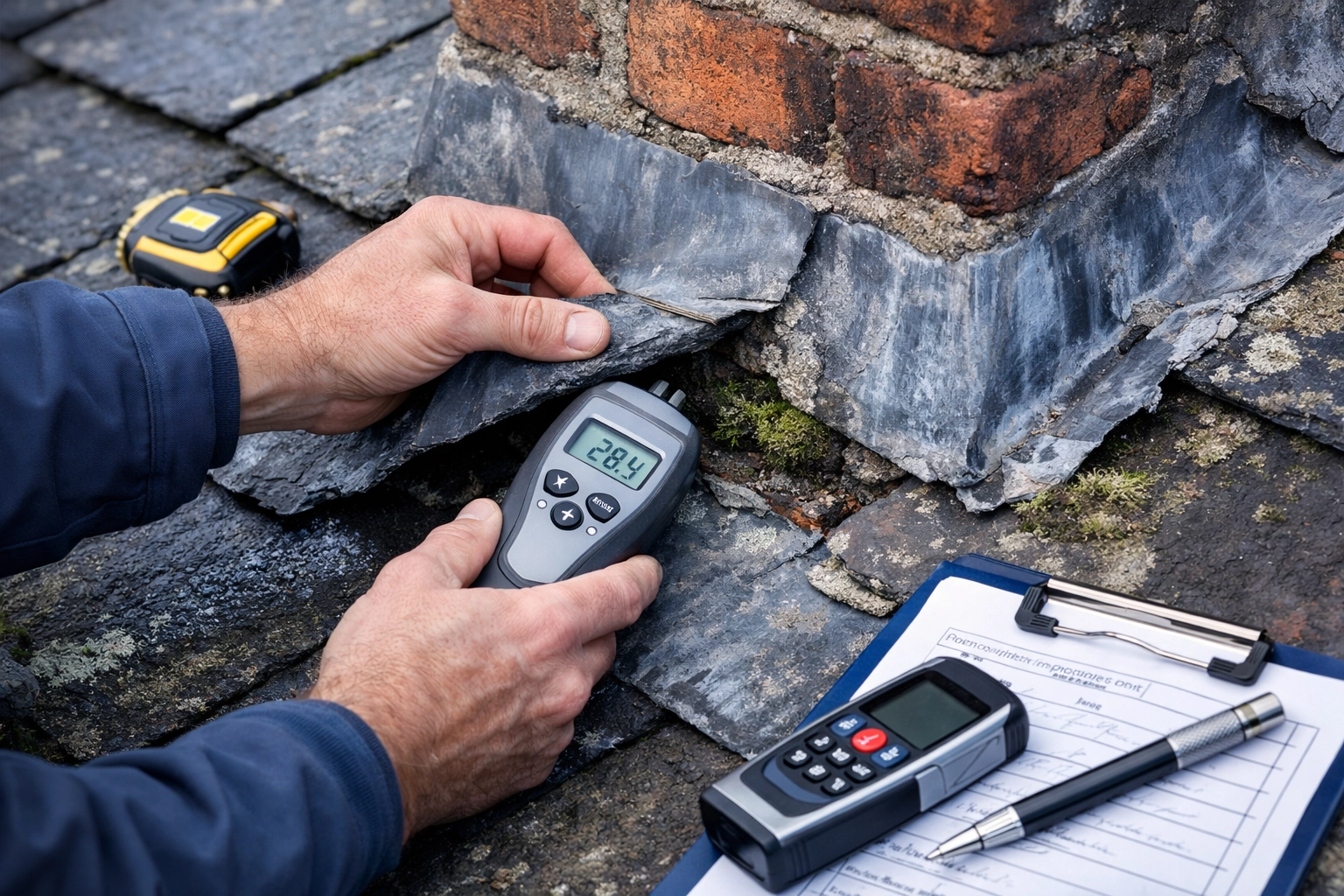
Advanced Construction & Roofing Roof Survey Service A professional roof inspector examines ceiling damage and insulation while taking notes. The image promotes Advanced Construction & Roofing's roof survey service, offering visual surveys, photo evidence, defect identification, and in-depth analysis for property owners. Contact details and a website link are included for booking a survey.

How to Fix Roof Ventilation Problems

Spotted some warning signs? Here's what to do next.

Quick Fixes You Can Do Today

  • Clear blocked soffit vents by carefully pulling back insulation and installing vent guards
  • Check extractor fans are venting outside, not into the loft
  • Improve loft insulation (but keep it away from the eaves)
  • Open the loft hatch on dry days to improve air circulation temporarily

When to Call a Professional

Some ventilation issues require expert assessment and repair:

  • Installing additional ventilation (tile vents, ridge vents, or over-fascia vents)
  • Replacing failed mechanical ventilation systems
  • Repairing timber damage caused by condensation
  • Investigating recurring damp problems

Don't guess when it comes to structural issues. A professional roof survey gives you a clear picture of what's happening and what needs fixing. At Advanced Construction & Roofing, we provide detailed roof surveys across Belfast and Northern Ireland with photo evidence and honest recommendations.

Take Action Before Small Problems Become Big Bills

Roof ventilation problems don't fix themselves. Every day you ignore the warning signs, moisture continues its slow assault on your roof timbers, insulation, and home.

The average cost to repair timber rot caused by condensation damage? Between £2,000 and £8,000, depending on the extent. The cost of proper ventilation installation? A fraction of that.

Request a roof ventilation assessment today. Our experienced team will identify any issues, explain your options in plain English, and provide a transparent quote with no hidden surprises.

Contact Advanced Construction & Roofing to book your survey or call us directly. We've helped hundreds of Northern Ireland homeowners protect their properties from condensation damage( let us help you too.)

Why Everyone in Northern Ireland Is Switching to Dry Verge Systems (And You Should Too)

If you've driven through any housing estate in Belfast, Lisburn, or Bangor recently, you've probably noticed something different about the newer roofs. Those clean, crisp edges running down the gable ends? That's the dry verge system everyone's talking about: and there's a very good reason why homeowners across Northern Ireland are making the switch.

Gone are the days of crumbling mortar and constant repairs. Dry verge systems have become the gold standard for protecting your roof's most vulnerable points, and honestly, once you understand why, you'll wonder why anyone still bothers with the old-fashioned method.

Let's break down exactly what's driving this roofing revolution and why your home might be next on the list.

What Exactly Is a Dry Verge System?

Before we dive into the benefits, let's get clear on what we're actually talking about.

The verge is where your roof tiles meet the gable end of your house: that sloped edge running from the guttering up to the ridge. Traditionally, roofers would bed these tiles in mortar (a "wet verge") to hold everything in place and seal the gaps.

A dry verge system takes a completely different approach. Instead of relying on mortar, it uses specially designed interlocking plastic or composite caps that mechanically clip onto your tiles and screw directly into the timber battens beneath. No mortar. No mess. No ongoing maintenance headaches.

Low-angle view of a home in Northern Ireland with modern dry verge caps securing roof edges for added weather protection

Why Traditional Mortar Verges Are Failing Northern Ireland Homes

Here's the uncomfortable truth about wet verges: they were never designed to handle what Northern Ireland's weather throws at them.

Mortar deteriorates. It's not a question of if: it's a question of when. Every freeze-thaw cycle, every driving rain storm, every gust of wind chips away at that mortar bedding. Within 10-15 years (often much sooner), you'll start seeing cracks. Then gaps. Then chunks falling off entirely.

And when that mortar fails, you're left with:

  • Exposed gaps where rain can penetrate into your roof space
  • Loose tiles that can lift or blow off in storms
  • Entry points for birds, insects, and rodents looking for a cosy spot to nest
  • Ongoing repair bills that add up year after year

Sound familiar? If you've already had to call out a roofer to re-point your verges, you know exactly how frustrating (and expensive) this cycle becomes.

The reality is that traditional mortar verges require constant attention and periodic repairs. In a climate like ours, that's simply not practical or cost-effective.

The Benefits of Switching to Dry Verge Systems

So what makes dry verge systems the smarter choice? Let's run through the key advantages that are convincing homeowners across Belfast, Derry, and beyond to make the switch.

Superior Storm Protection

Northern Ireland isn't exactly known for its gentle breezes. When Atlantic storms roll in, your roof takes a battering: and the verge is often the first point of failure.

Dry verge systems are mechanically fixed, meaning each cap unit interlocks with the next and screws directly into your roof structure. This creates a continuous, secure barrier that resists high wind forces far better than mortar ever could.

Traditional Northern Irish house with a secure dry verge system standing firm during stormy weather

The result? Your tiles stay exactly where they should be, even when the weather does its worst. If you've ever dealt with storm damage to your roof, you'll appreciate just how valuable that peace of mind is.

Zero Maintenance Required

This is the big one for most homeowners.

Once a dry verge system is installed correctly, it requires virtually no ongoing maintenance. There's no mortar to crack, crumble, or fall out. No periodic re-pointing. No emergency call-outs after every winter storm.

You install it once, and it does its job for decades. It's genuinely that simple.

Compare that to wet verges, which typically need attention every few years, and the long-term savings become obvious.

Complete Pest Prevention

Here's something many homeowners don't think about until it's too late: those gaps in failing mortar verges make perfect entry points for unwanted guests.

Birds love nesting in roof spaces. Wasps will happily set up home in any accessible void. And once they're in, getting them out becomes a whole separate problem.

Dry verge systems seal these gaps completely. The interlocking caps create a continuous barrier with no holes, cracks, or openings for pests to exploit. Your roof space stays exactly as it should: empty and undisturbed.

Improved Energy Efficiency

Those same gaps that let in pests? They're also letting in cold air and letting out your expensive heating.

A properly installed dry verge system eliminates drafts and improves your roof's overall thermal performance. While it won't transform your energy bills overnight, every little improvement helps: especially with heating costs where they are right now.

A Clean, Modern Appearance

Let's be honest: old mortar verges look tired. Stained, cracked, uneven: they age poorly and drag down your home's kerb appeal.

Dry verge systems, on the other hand, provide a clean, consistent finish that looks smart for years. Available in a range of colours to match your tiles, they give your roofline a crisp, professional appearance that genuinely improves how your property looks.

Side-by-side comparison of old cracked mortar verge and new dry verge system showing improved roof protection

If you're thinking about selling at any point, that visual upgrade matters more than you might think.

Why Northern Ireland Specifically Needs Dry Verge Systems

We've touched on this already, but it's worth emphasising: our local climate makes dry verge systems even more essential.

Northern Ireland experiences:

  • High rainfall throughout the year
  • Frequent strong winds, particularly in coastal and exposed areas
  • Regular freeze-thaw cycles during winter months
  • Salt-laden air in coastal regions that accelerates mortar deterioration

Traditional wet verges simply weren't designed for these conditions. They fail faster here than they would in drier, milder climates: which is exactly why so many local homeowners are proactively upgrading.

Whether you're in an exposed spot overlooking Belfast Lough or tucked into a housing development in Newry, the same principle applies. Dry verge systems handle Northern Ireland's weather better. Full stop.

What About the Cost?

Let's address the elephant in the room: dry verge systems do cost more upfront than traditional mortar bedding.

However, when you factor in the long-term savings on repairs, maintenance, and potential storm damage, the picture changes dramatically. Most homeowners find that dry verges pay for themselves within 5-10 years: and continue saving money for decades after that.

Think of it as an investment rather than an expense. You're paying a bit more now to avoid paying a lot more later.

If you're unsure about the current condition of your verges, booking a roof survey is the smart first step. A professional assessment will tell you exactly what you're dealing with and whether an upgrade makes sense for your property.

Is It Time to Make the Switch?

If your home still has traditional mortar verges, here are some signs it might be time to consider upgrading:

  • Visible cracks or gaps in the mortar bedding
  • Mortar debris in your gutters or around the base of your walls
  • Tiles that have shifted or appear loose along the gable edge
  • Evidence of birds or pests accessing your roof space
  • Damp patches appearing in your loft or upper rooms

Don't wait until a storm causes serious damage. Proactive upgrades are always cheaper than emergency repairs.

Ready to Upgrade Your Verges?

Dry verge systems have become the standard for good reason. They're more durable, more reliable, and more cost-effective over time than traditional mortar verges: especially here in Northern Ireland.

If you're ready to give your roof the protection it deserves, contact Advanced Construction & Roofing today. Our experienced team has helped hundreds of homeowners across Belfast and beyond upgrade to dry verge systems, and we'd be happy to assess your property and provide an honest, no-obligation quote.

Call us now or request a roof survey to find out exactly what your roof needs.

Dry Ridge vs Mortar Ridge: Which Is Better for Your Belfast Roof?

If you've ever looked up at your roof and noticed crumbling cement along the ridge line, you're not alone. Thousands of homeowners across Belfast and Northern Ireland are facing the same question: should I repair with mortar again, or is it time to switch to a dry ridge system?

It's a fair question. And honestly, the answer could save you hundreds of pounds in maintenance costs over the coming years: or it could preserve the character of your period home. Let's break down exactly what each system offers and help you decide which one makes sense for your property.

What's the Difference Between Dry Ridge and Mortar Ridge?

Before we get into the nitty-gritty, let's clarify what we're actually comparing here.

Mortar ridge is the traditional method. Your ridge tiles (the ones running along the peak of your roof) are bedded onto a sand and cement mixture. This mortar fills the gaps, holds everything in place, and creates that classic finished look you'll see on most older Belfast homes.

Dry ridge systems take a completely different approach. Instead of mortar, they use mechanical fixings: screws, clips, and specially designed roll-out systems: to secure ridge tiles to the roof structure. No cement involved.

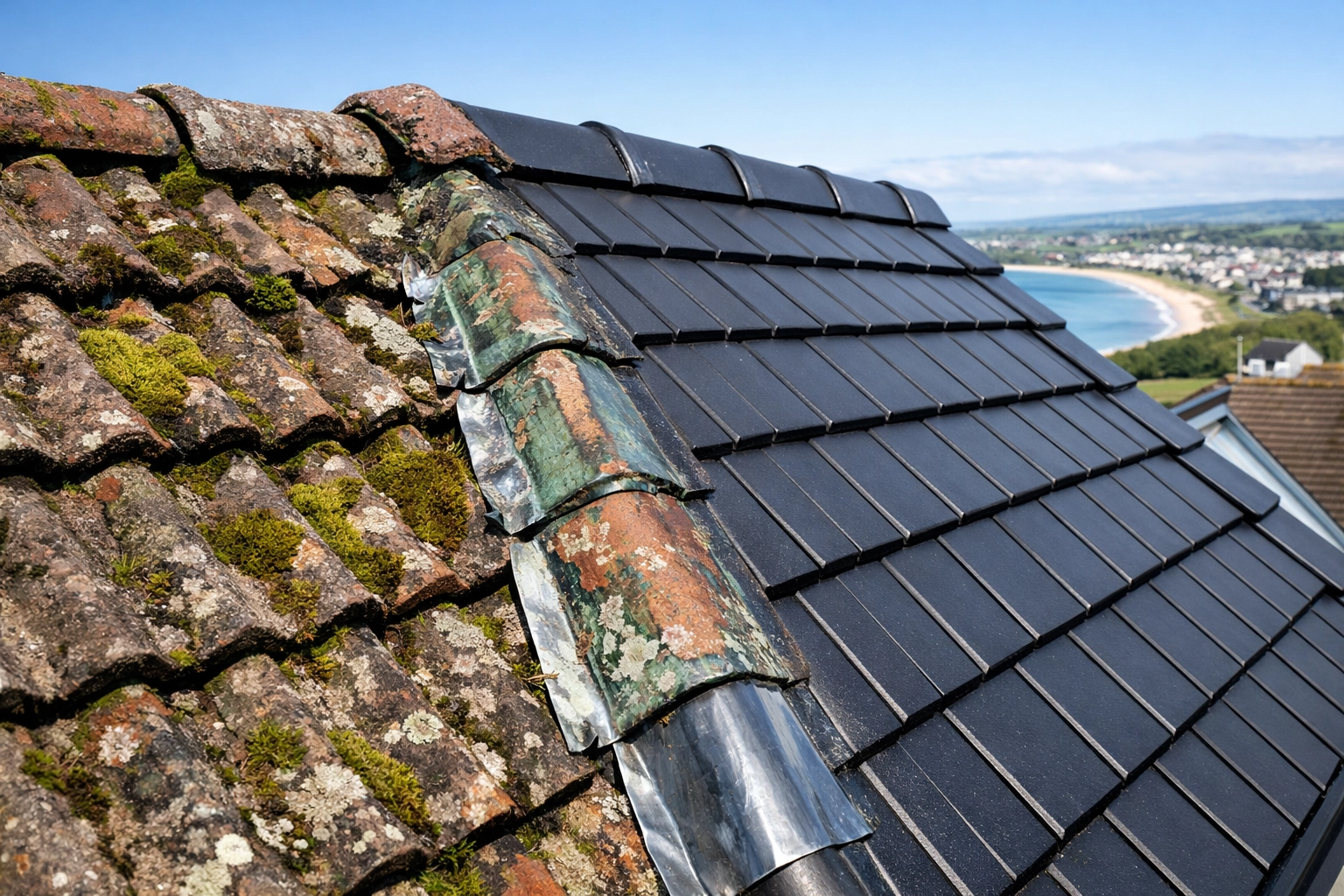
Close-up comparison of traditional mortar ridge and modern dry ridge roofing systems on Belfast home

Both methods have been used successfully for decades. But here's the thing: Belfast's weather doesn't play nice with every roofing solution. And that's where the real differences start to matter.

Why Belfast Weather Makes This Decision Important

Let's be honest about our climate. Belfast sees an average of 157 rainy days per year. We get coastal winds whipping in from the Irish Sea. Our winters bring frost, ice, and the occasional storm that makes national headlines.

This weather takes a toll on traditional mortar ridges. The constant cycle of wet and dry, freeze and thaw, causes mortar to crack, crumble, and eventually fail. You've probably seen it yourself: chunks of cement lying in gutters or scattered across driveways after a rough night of wind.

When mortar fails, water gets in. Water leads to timber rot, insulation damage, and the kind of problems that turn a simple ridge repair into a major roofing project.

The Case for Dry Ridge Systems in Northern Ireland

Here's why more and more Belfast homeowners are making the switch to dry ridge:

Superior Wind Resistance

Dry ridge systems can withstand wind speeds up to 100mph. That's not marketing fluff: it's a genuine engineering advantage. The mechanical fixings grip the roof structure directly, meaning your ridge tiles stay put even when Storm Éowyn decides to pay a visit.

Compare that to mortar, which relies on a cement bond that weakens over time. Once cracks appear, wind can work its way underneath and lift tiles clean off.

Better Ventilation (And Why That Matters)

One of the biggest hidden benefits of dry ridge is improved airflow. The system allows air to circulate beneath the ridge, which prevents moisture from building up in your roof space.

In Belfast's damp climate, this is crucial. Poor ventilation leads to:

  • Condensation buildup in the loft
  • Mould growth on timber and insulation
  • Structural decay that's expensive to repair

Dry ridge systems actively combat these problems. If you've ever noticed damp patches on your ceiling or a musty smell in your loft, poor ridge ventilation could be the culprit.

Advanced Construction & Roofing Roof Survey Service A professional roof inspector examines ceiling damage and insulation while taking notes. The image promotes Advanced Construction & Roofing's roof survey service, offering visual surveys, photo evidence, defect identification, and in-depth analysis for property owners. Contact details and a website link are included for booking a survey.

Dramatically Lower Maintenance

Here's a number that gets homeowners' attention: dry ridge systems are maintenance-free for an estimated 50 years.

Fifty years. Compare that to mortar ridges, which typically need repointing every 10-15 years: sometimes sooner in exposed locations. Over the lifetime of your roof, that's potentially three or four rounds of scaffolding, labour costs, and materials saved.

Flexibility That Prevents Damage

Your roof isn't static. It expands in summer heat. It contracts in winter cold. Traffic vibrations, settling foundations, and even heavy rainfall cause subtle movements.

Mortar is rigid. It doesn't flex. So when your roof moves, the mortar cracks.

Dry ridge systems accommodate this natural movement. The mechanical fixings allow slight adjustments without compromising the seal. No cracks. No gaps. No water ingress.

Faster Installation

Because dry ridge doesn't require mixing mortar, waiting for it to cure, or returning for touch-ups, installation is significantly quicker. For homeowners, that means less disruption, lower labour costs, and a faster return to normal life.

When Mortar Ridge Still Makes Sense

Now, I'm not going to tell you that dry ridge is perfect for every situation. It isn't.

If you own a period property or live in a conservation area, mortar ridge might be the better choice. Here's why:

Aesthetic Authenticity

There's no getting around it: mortar ridge has a traditional, sculpted appearance that suits Victorian terraces, Edwardian villas, and heritage buildings. Dry ridge systems look clean and modern, which isn't always what you want on a 120-year-old Belfast home.

For properties where character matters, mortar can be the right call. A skilled roofer can create beautiful, durable mortar work that complements your home's original features.

Conservation Area Requirements

Some conservation areas have strict guidelines about maintaining original building materials and methods. If your property falls under these regulations, you may need to stick with traditional mortar: or at least get approval before switching to a dry system.

Victorian red-brick Belfast house with traditional clay ridge tiles and period roof features

Proven Track Record

When applied correctly by an experienced roofer, mortar ridges can last for decades. The key phrase there is "applied correctly." Poor workmanship or cheap materials will fail quickly. Quality mortar work from a reputable contractor still has its place.

What Do Current Building Standards Say?

Here's something many homeowners don't realise: British standards now mandate mechanical fixings for roof ridges, verges, and hips.

This isn't just a recommendation. It's a requirement for new builds and major roof renovations. The construction industry has recognised that dry systems offer superior performance, particularly in exposed and windy locations like much of Northern Ireland.

If you're having significant roof work done, your contractor should be using dry ridge as standard. If they're not, ask them why.

Cost Comparison: What Will You Actually Pay?

Let's talk money, because that's often what tips the decision.

Dry ridge systems typically cost more upfront. The materials are pricier than sand and cement, and while installation is faster, the components themselves add to the bill.

However, when you factor in long-term maintenance, the picture changes:

Factor Dry Ridge Mortar Ridge
Initial installation Higher Lower
Maintenance frequency Minimal (50+ years) Every 10-15 years
Repair costs over 30 years Lower Significantly higher
Risk of water damage Reduced Higher

For most Belfast homeowners, dry ridge is the more economical choice over the life of the roof. You pay more today but save considerably over the next few decades.

Which Should You Choose for Your Belfast Home?

Here's the straight answer:

Choose dry ridge if:

  • You want minimal maintenance and long-term savings
  • Your property is exposed to wind and driving rain
  • You're having new roof work done anyway
  • You've experienced mortar failures in the past

Choose mortar ridge if:

  • You own a period property where aesthetics matter
  • You live in a conservation area with restrictions
  • Your existing mortar is in good condition and just needs minor repairs

Roofer Roof Inspection in Rain A roofer conducts a detailed inspection of a leaking and damaged roof during heavy rain, identifying broken tiles, exposed timber, and visible moss. The technician is equipped with tools and assesses the extent of emergency repairs needed to prevent further water ingress.

Not Sure What Your Roof Needs? Get a Professional Assessment

The best way to know what's right for your property is to have a qualified roofer inspect your current ridge line. They can assess the condition of existing mortar, check for signs of water ingress, and recommend the most appropriate solution.

At Advanced Construction & Roofing, we've helped hundreds of Belfast homeowners make this exact decision. We'll give you honest advice based on what your roof actually needs: not what makes us the most money.

Request a roof survey today and get clarity on whether dry ridge or mortar is the right choice for your home. We'll provide a detailed report, clear photos of any issues, and a straightforward quote for the work involved.

Your roof protects everything underneath it. Make sure the ridge is doing its job properly. Contact Advanced Construction & Roofing to discuss your options with a local expert who understands Belfast's unique roofing challenges.

Storm Ready: How to Prepare Your Roof for Northern Ireland's Winter Weather

Winter in Northern Ireland doesn't mess about. Between the howling Atlantic winds, relentless rain, and the occasional snow dump, your roof takes an absolute battering from November through March. The question isn't whether the storms will come: it's whether your roof is ready when they do.

Every year, we get calls from homeowners across Belfast, Lisburn, and Bangor who ignored the warning signs. A loose tile here, a blocked gutter there. Then one stormy night, they wake up to water pouring through the ceiling. Don't let that be you.

Here's the good news: preparing your roof for winter isn't complicated. With a bit of planning and the right professional support, you can protect your home and avoid those dreaded emergency repair bills.

Why Does Winter Hit Northern Ireland Roofs So Hard?

Our climate is uniquely challenging for roofing systems. We don't get the extreme cold of Scandinavia or the heavy snowfall of the Scottish Highlands. Instead, we get something arguably worse: a relentless combination of wind-driven rain, temperature fluctuations, and damp conditions that find every weakness in your roof.

The main culprits include:

  • Strong westerly winds that lift tiles and damage ridge systems
  • Persistent rainfall that exploits even the smallest gaps
  • Freeze-thaw cycles that crack mortar and expand existing damage
  • Blocked gutters that cause water to back up under tiles

The worst part? Most winter roof damage starts small. A hairline crack, a slightly lifted tile, a bit of moss growth. Left unchecked through autumn, these minor issues become major emergencies when the storms roll in.

Check for Loose or Damaged Tiles Before It's Too Late

Your tiles are the first line of defence against Northern Ireland's weather. One loose tile might not seem like a big deal in September, but come January, it's an open invitation for water ingress.

Walk around your property and look up. You're checking for:

  • Tiles that appear lifted, cracked, or out of alignment
  • Missing tiles or visible gaps in coverage
  • Ridge tiles that look loose or have crumbling mortar
  • Damaged or corroded flashing around chimneys and vents

Roofer Roof Inspection in Rain

Can't see clearly from ground level? That's where most homeowners get caught out. Many roof problems aren't visible from the street: they require a proper inspection from someone who knows what they're looking for.

If you spot anything concerning, don't attempt DIY repairs on a roof, especially as we head into the wetter months. The risks simply aren't worth it. Call a professional and get it sorted properly before winter arrives.

Clean Your Gutters: Seriously, Do It Now

We know it's not glamorous advice. But if we could only give Northern Ireland homeowners one piece of winter prep advice, it would be this: clean your gutters before the storms hit.

Blocked gutters cause a cascade of problems. When rainwater can't flow freely, it backs up. That backed-up water finds its way under your tiles, into your fascias, and eventually into your home. In freezing conditions, that trapped water becomes ice, expanding and causing even more damage.

Here's what happens when gutters fail:

  • Water overflows and saturates external walls
  • Ice dams form, forcing water under roof coverings
  • Fascia boards rot and become unstable
  • Foundation damage from water pooling at ground level

Clear out leaves, moss, and debris from all gutters and downspouts. Check that water flows freely through the entire system. If your gutters are damaged, sagging, or pulling away from the fascia, get them repaired or replaced now: not in the middle of a January downpour.

Homeowner clearing autumn leaves from house gutters in Northern Ireland to prepare for winter storms

Inspect Your Attic for Warning Signs

Your attic tells the story of your roof's health. Before winter sets in, grab a torch and have a look around up there. You're checking for signs of existing problems that will only get worse in bad weather.

Look for these red flags:

  • Water stains on rafters or insulation – indicates leaks that need addressing
  • Daylight visible through the roof – obvious gaps that need sealing
  • Damp or musty smells – suggests moisture problems and poor ventilation
  • Mould or mildew growth – a sign of condensation issues

Proper attic insulation and ventilation aren't just about energy efficiency. They prevent the temperature fluctuations that cause condensation, ice dams, and premature roof deterioration. If your attic feels excessively hot in summer or shows signs of moisture problems, the insulation and ventilation likely need attention.

Trim Back Overhanging Branches

Take a look at any trees near your property. Are branches hanging over your roof? During winter storms, those branches become a serious threat.

Heavy rain, ice, and wind can weigh down branches until they snap. If they land on your roof, you're looking at damaged tiles at minimum: and potentially much worse. Even without breaking, branches constantly scraping against your roof surface cause gradual damage to tiles and protective coatings.

Request a tree surgeon to trim back any branches within two metres of your roof line. It's a small investment that prevents potentially thousands of pounds in storm damage repairs.

Book a Professional Roof Survey Before Winter

Here's the thing about roof problems: by the time you notice them inside your home, significant damage has already occurred. Water stains on your ceiling mean water has already penetrated your roof covering, your underlay, your insulation, and your plasterboard.

Advanced Construction & Roofing Roof Survey Service

A professional roof survey catches problems before they become emergencies. Our experienced surveyors identify issues you'd never spot from ground level: hairline cracks, deteriorating mortar, failing seals, blocked ventilation, and early signs of structural movement.

At Advanced Construction & Roofing, we've been helping Belfast homeowners protect their properties for years. Our comprehensive roof surveys include detailed photo evidence, defect identification, and clear recommendations for any work needed.

Don't wait until you're dealing with storm damage. Book a roof survey now and head into winter with confidence.

Create Your Winter Emergency Kit

Even with the best preparation, Northern Ireland weather can surprise us. Having supplies ready for urgent temporary repairs makes a real difference when the unexpected happens.

Keep these items accessible:

  • Heavy-duty tarpaulin for covering damaged areas
  • Roofing cement for emergency sealing
  • A bucket and towels for managing internal leaks
  • Torch with fresh batteries for attic inspections
  • Contact details for a reliable local roofer

Emergency Roofing Repair

Speaking of reliable roofers: don't wait until disaster strikes to find one. Research local roofing companies now, check their reviews, and save their contact information. When you're dealing with water pouring through your ceiling at 2 AM, you don't want to be frantically searching Google for help.

If you're unsure what to look for when choosing a roofer, we've put together a guide to help you avoid common mistakes.

What If Storm Damage Has Already Occurred?

If you're reading this after a storm has already damaged your roof, don't panic: but do act quickly. Delaying repairs allows water ingress to cause secondary damage to insulation, electrics, and interior finishes.

Take these immediate steps:

  1. Document the damage with photos for insurance purposes
  2. Place containers to catch any dripping water inside
  3. If safe to do so, cover external damage with tarpaulin
  4. Contact your insurance company to report the claim
  5. Call a reputable local roofer for professional assessment

Avoid the temptation to accept quotes from door-to-door traders who appear after storms. Unfortunately, these situations attract unscrupulous operators looking to take advantage. Stick with established local companies who'll still be around if problems arise later.

For more guidance, read our article on mistakes to avoid after roof storm damage.

Get Storm Ready Today

Northern Ireland winters aren't getting any gentler. The time to prepare your roof is now: not when the first November storm is battering your windows.

Your action plan:

  • Inspect tiles and ridge systems for damage
  • Clear all gutters and downspouts
  • Check your attic for warning signs
  • Trim overhanging branches
  • Book a professional roof survey

At Advanced Construction & Roofing, we help homeowners across Belfast, Lisburn, Bangor, and throughout Northern Ireland prepare their homes for whatever winter throws at us. Our team provides honest assessments, clear recommendations, and quality workmanship you can trust.

Contact us today to arrange your pre-winter roof survey. Call the team or visit adv-group.co.uk to get started. Don't wait for the storms( be ready for them.)