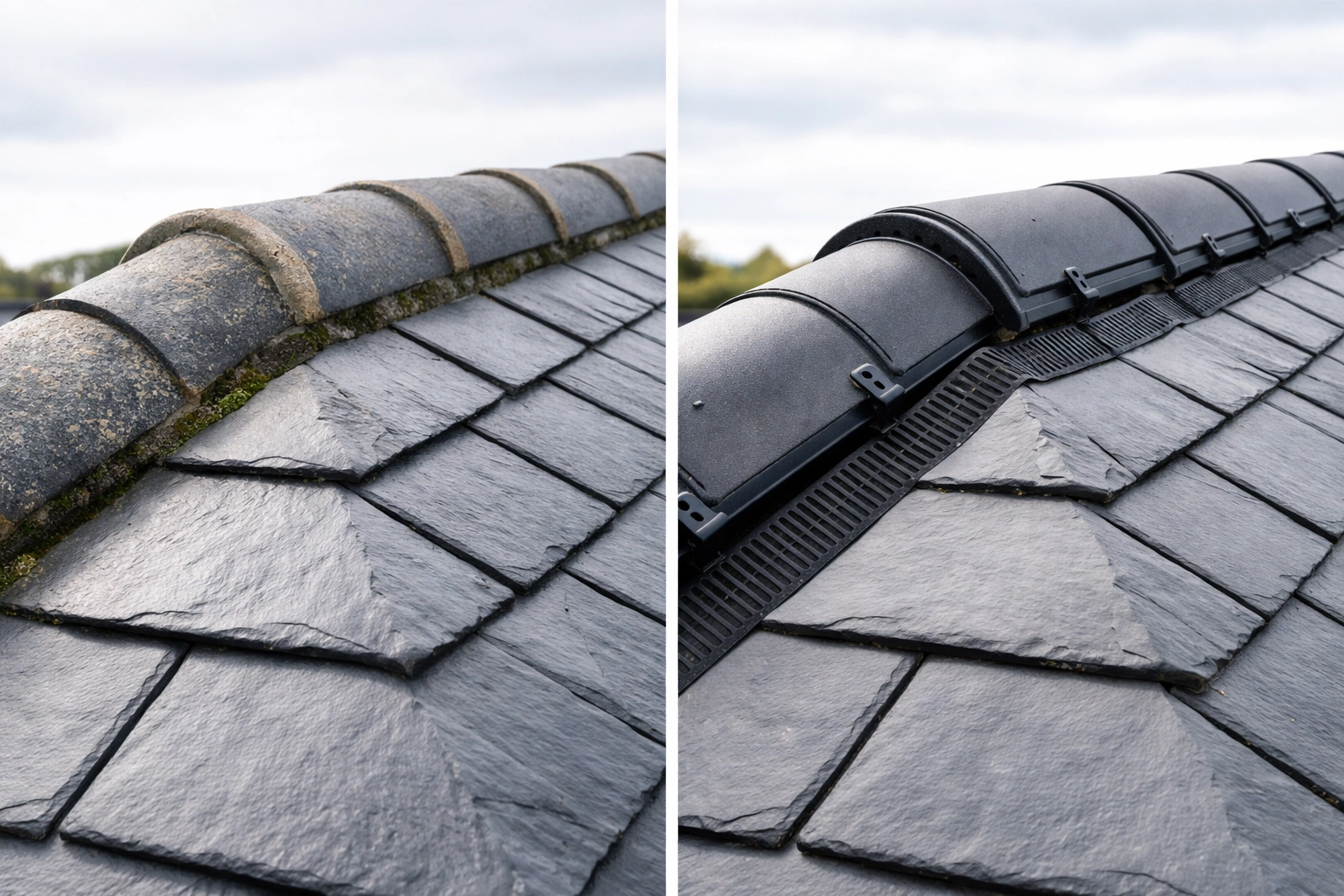
7 Mistakes You're Making After Roof Storm Damage (And How to Fix Them)

Storm damage to your roof is stressful. There's no way around it.

You're standing in your home in Belfast, watching water drip through the ceiling, wondering how bad the damage really is. Your mind races through questions: Will insurance cover this? How much is this going to cost? Who can I trust to fix it properly?

Here's the truth: the decisions you make in the hours and days after storm damage can cost you thousands of pounds or save you from a nightmare down the road.

At Advanced Construction & Roofing, we've spent over 25 years helping homeowners across Belfast and Northern Ireland recover from storm damage. We've seen every mistake in the book. And we've helped countless families avoid the pitfalls that turn a manageable repair into a financial disaster.

Let's walk through the seven most common mistakes homeowners make after roof storm damage: and exactly how to fix them.


Mistake #1: Failing to Document the Damage Properly

This is the mistake that comes back to bite you hardest.

After a storm rips through Belfast, your first instinct is to call someone: anyone: to get the problem sorted. But before you pick up the phone, grab your phone and start taking photos.

Emergency Roofing Repair A man sits at a kitchen table reading a newspaper while water pours from the ceiling, indicating a severe roof leak. The Advanced Construction & Roofing logo and contact details are displayed, highlighting emergency roofing repair services.

Why this matters: Insurance companies require evidence. Without clear, time-stamped photos of the damage, your claim can be disputed, delayed, or outright denied.

How to fix it:

  • Take photos from multiple angles: inside and outside your property
  • Capture close-ups of damaged tiles, flashing, and gutters
  • Document any water damage to ceilings, walls, or belongings
  • Note the date, time, and weather conditions
  • Don't clean up or move anything until you've documented everything

This documentation is your lifeline when dealing with insurers. Take it seriously.


Mistake #2: Waiting Too Long to Report the Damage

We get it. You're overwhelmed. You think you'll "get around to it" once things calm down.

Don't wait.

Most insurance policies in Northern Ireland have strict time limits for reporting storm damage. Miss that window, and you could lose your right to claim entirely.

How to fix it:

  • Contact your insurance company within 24-48 hours of the storm
  • Provide all your documentation immediately
  • Keep records of every conversation: names, dates, reference numbers
  • Follow up in writing to create a paper trail

Pro tip: Many insurers will want their own assessor to visit. Don't let this delay you from getting a professional roofing contractor to assess the damage independently.


Mistake #3: Accepting the First Insurance Settlement Without Question

Here's something most homeowners don't realise: the first offer from your insurance company is often not the final offer.

Insurance adjusters are trained to minimise payouts. They're not trying to cheat you: but they're not working for you either.

How to fix it:

  • Get an independent assessment from a qualified roofing contractor before accepting any settlement
  • Compare the insurance estimate with professional repair quotes
  • Challenge the settlement if it doesn't cover necessary repairs
  • Consider hiring a loss assessor if the damage is extensive

At Advanced Construction & Roofing, we handle insurance work regularly. We know what repairs actually cost in Belfast, and we can provide detailed assessments that support your claim. Request a free quote and let us help you get the settlement you deserve.


Mistake #4: Hiring the Wrong Contractor

After a major storm, Belfast gets flooded with roofers. Some are legitimate. Many are not.

These "storm chasers" knock on doors, offer too-good-to-be-true prices, and disappear the moment something goes wrong. We've seen homeowners left with botched repairs, voided warranties, and no recourse.

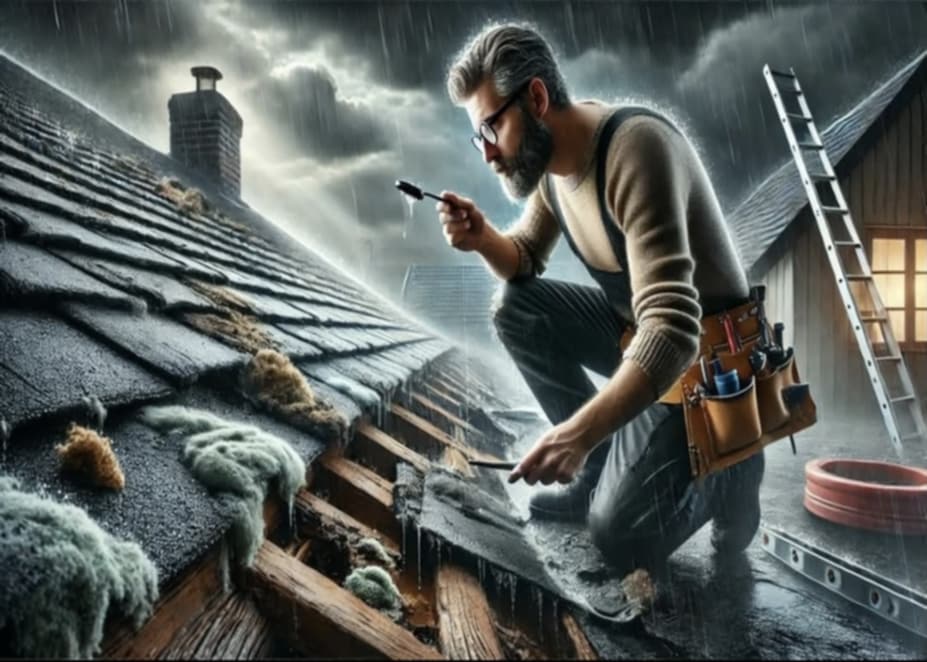
Roofer Roof Inspection in Rain A roofer conducts a detailed inspection of a leaking and damaged roof during heavy rain, identifying broken tiles, exposed timber, and visible moss. The technician is equipped with tools and assesses the extent of emergency repairs needed to prevent further water ingress.

How to fix it:

  • Verify credentials. Are they licensed? Insured? Do they have a physical address in Northern Ireland?
  • Check their track record. Look for reviews, ask for references, check how long they've been in business
  • Get everything in writing. Detailed quotes, timelines, warranty information
  • Avoid pressure tactics. Any contractor pushing you to sign immediately is a red flag

With over 25 years of experience serving homeowners across Belfast and NI, Advanced Construction & Roofing has built our reputation on honest work and transparent pricing. We're not going anywhere: and we stand behind every job we complete.


Mistake #5: Relying on Temporary Fixes

A tarp over the hole. Some sealant around the flashing. A bucket in the attic.

These temporary measures might stop the immediate leak, but they're not solutions. They're band-aids on a broken bone.

Why this is dangerous:

  • Tarps fail in subsequent storms, often making damage worse
  • Sealants mask underlying problems without fixing them
  • Water continues to penetrate, causing hidden structural damage
  • Mould and rot develop behind walls where you can't see them

How to fix it:

  • Use temporary measures only as a short-term emergency response
  • Schedule permanent repairs as quickly as possible
  • Have a professional identify the root cause of leaks: not just the visible symptoms
  • Address underlying issues like damaged felt, compromised timber, or failed flashing

Don't let a quick fix today become a major expense tomorrow.


Mistake #6: Skipping a Professional Roof Inspection

"It doesn't look that bad from the ground."

We hear this constantly. And it's almost always wrong.

Storm damage is often invisible from street level. Missing tiles, cracked flashing, lifted membranes, compromised pointing: these problems hide in plain sight until they cause serious water ingress.

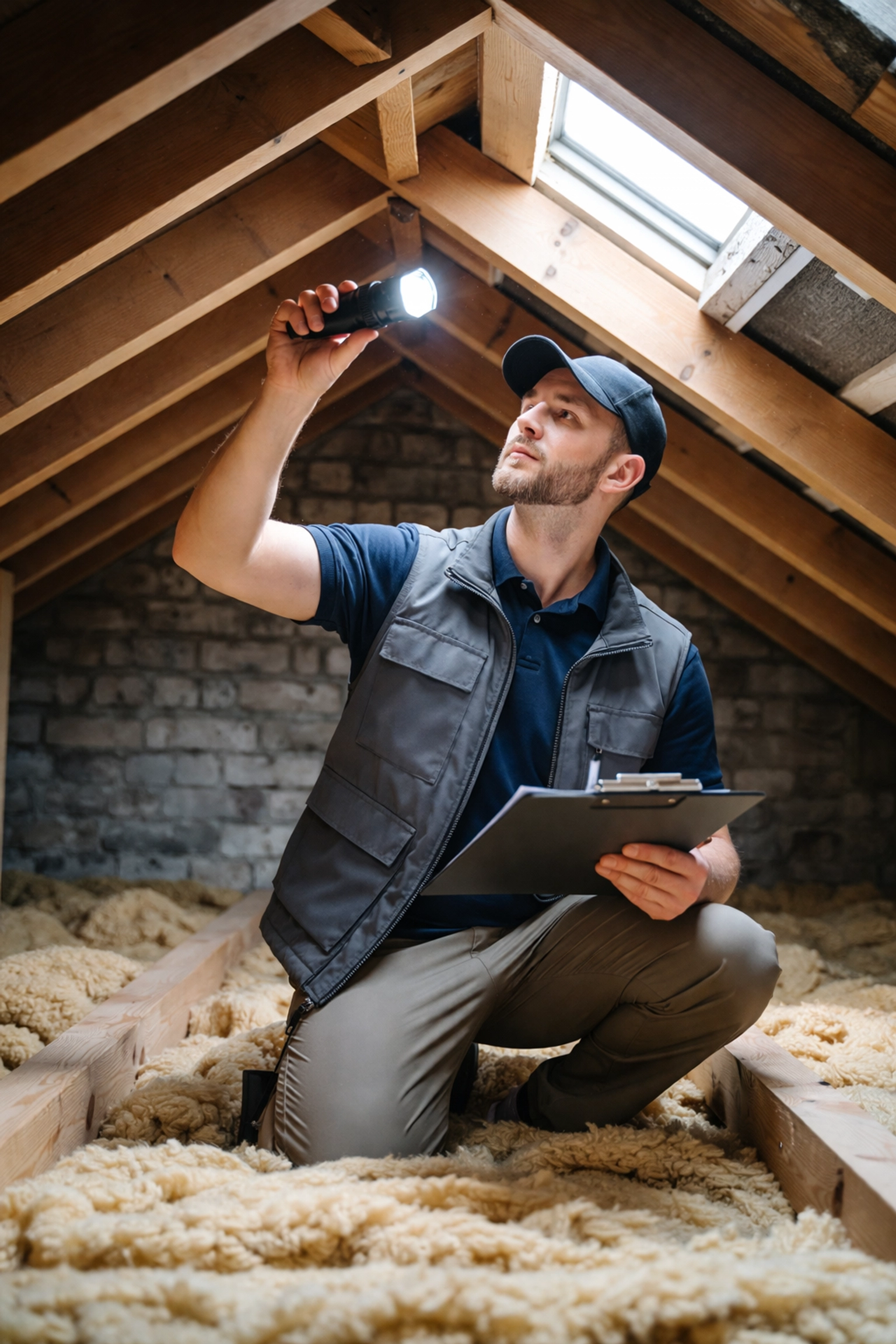
Advanced Construction & Roofing Roof Survey Service A professional roof inspector examines ceiling damage and insulation while taking notes. The image promotes Advanced Construction & Roofing's roof survey service, offering visual surveys, photo evidence, defect identification, and in-depth analysis for property owners. Contact details and a website link are included for booking a survey.

How to fix it:

  • Request a professional roof survey after any significant storm
  • Check both exterior and interior spaces: attic, ceilings, walls
  • Look for signs of water ingress, even if they seem unrelated to the storm
  • Don't attempt to inspect the roof yourself: it's dangerous and you'll miss things

A proper roof survey identifies problems before they escalate. It gives you a clear picture of what needs repair, what can wait, and what your insurance should cover.

Call Advanced Construction & Roofing for a free roof assessment. We'll tell you exactly what you're dealing with: no surprises, no hidden costs.


Mistake #7: Demanding a Full Replacement When Repairs Will Do

This might seem counterintuitive, but hear us out.

Some homeowners assume storm damage means they need an entirely new roof. They push for a full replacement, expecting insurance to cover it.

The reality: Unless your roof has sustained catastrophic, widespread damage, insurance companies won't approve a full replacement claim. Pushing for one can actually delay your repairs and complicate your claim.

How to fix it:

  • Get an honest professional assessment of the damage scope
  • Trust your contractor's recommendation on repair vs. replacement
  • Understand what your insurance policy actually covers
  • Focus on restoring your roof to pre-storm condition, not upgrading it

At Advanced Construction & Roofing, we give you the honest answer: even if it means a smaller job for us. If repairs will solve the problem properly, that's what we'll recommend. Your trust matters more than a bigger invoice.


Don't Let Storm Damage Become a Disaster

Storm damage is stressful enough without making costly mistakes that compound the problem.

Here's what you should do right now:

  1. Document all visible damage thoroughly
  2. Report the damage to your insurance company immediately
  3. Contact a trusted, experienced roofing contractor for an independent assessment

At Advanced Construction & Roofing, we've helped homeowners across Belfast and Northern Ireland navigate storm damage for over 25 years. We handle insurance work, provide detailed documentation to support your claim, and deliver repairs that last.

Request your free quote today. Call us or visit adv-group.co.uk to schedule your assessment.

Don't wait for the next storm to find out what you missed.

Looking For a Roofer After Storm Damage? Here Are 10 Things You Should Know

Storm damage doesn't wait for a convenient time. One minute you're watching the weather forecast, the next you're staring at water dripping through your ceiling wondering what to do next.

If you're a homeowner in Belfast or anywhere across Northern Ireland dealing with storm damage right now, take a breath. You're not alone, and you're in the right place.

At Advanced Construction & Roofing, we've been helping families just like yours recover from storm damage for over 25 years. We know how stressful this situation is. That's why we've put together this guide, so you know exactly what to look for, what questions to ask, and how to avoid the cowboys who prey on desperate homeowners.

Here are 10 things you absolutely need to know before hiring a roofer after storm damage.


1. Document Everything Before You Touch Anything

This is the most important step, and it's the one most people skip.

Before you move debris, before you start cleaning up, before you do anything, grab your phone and start recording. Take photos and videos of every single area of damage you can safely access. Get wide shots and close-ups. Capture the mess.

Why? Because your insurance company will want proof. And the more evidence you have, the smoother your claim will go.

Save receipts for everything, even if you've had to pay someone to remove a fallen tree or cover a hole temporarily. These costs are often recoverable through your insurance.

Emergency Roofing Repair A man sits at a kitchen table reading a newspaper while water pours from the ceiling, indicating a severe roof leak. The Advanced Construction & Roofing logo and contact details are displayed, highlighting emergency roofing repair services.


2. Safety Comes First, Always

We understand the urge to climb up and assess the damage yourself. Please don't.

After a storm, your roof structure may be compromised in ways you can't see from the ground. Wet surfaces are slippery. Damaged areas can collapse without warning. And if power lines are down or there's any chance of a gas leak, you're putting yourself in serious danger.

Call a professional. That's what we're here for. We offer emergency call-outs across Belfast and Northern Ireland, and we can be on-site quickly to secure your property and prevent further damage.


3. Know What Visible Damage Looks Like

You don't need to be a roofing expert to spot the obvious signs of storm damage. Here's what to look for from ground level:

  • Missing, curled, or cracked slates/tiles
  • Dents or holes from hail or flying debris
  • Damaged or missing flashing around chimneys and vents
  • Gutters hanging off or completely torn away
  • Ridge tiles displaced or missing

If you can see any of these from the ground, there's likely more damage you can't see. Request a professional inspection immediately.


4. Hidden Damage Is More Common Than You Think

Here's the thing about storm damage: the worst of it is often invisible.

Wind and hail can compromise your roof's integrity without leaving obvious external signs. Water can seep through tiny gaps and cause damage to your insulation, timber, and ceilings over weeks or months.

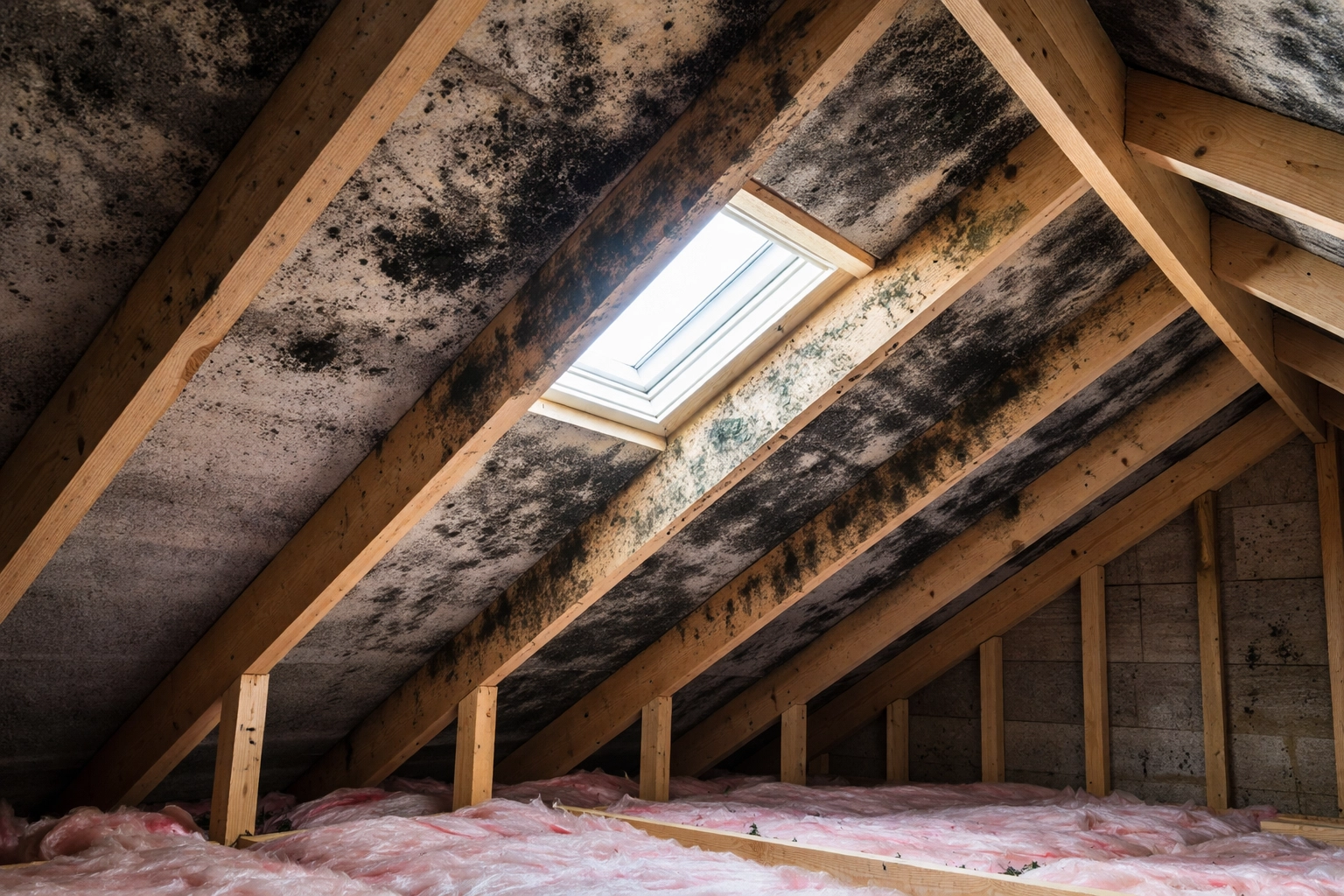
Check your attic. Look for water spots on the underside of the roof, damp insulation, or any signs of moisture. Check your ceilings for stains or bubbling paint. These are warning signs that water is getting in somewhere.

Advanced Construction & Roofing Roof Survey Service A professional roof inspector examines ceiling damage and insulation while taking notes. The image promotes Advanced Construction & Roofing's roof survey service, offering visual surveys, photo evidence, defect identification, and in-depth analysis for property owners. Contact details and a website link are included for booking a survey.

If you're unsure, book a professional roof survey with us. We'll give you a comprehensive report with photos and recommendations: no guesswork involved.


5. Check Your Insurance Coverage Before You Commit

Before you agree to any repairs, contact your insurance company.

Many homeowners don't realise that storm damage is often covered under their home insurance policy. But here's the catch: you need to follow their process. That usually means:

  • Reporting the damage promptly
  • Getting authorisation before major repairs
  • Using approved contractors (or getting quotes approved)
  • Providing documentation (those photos you took in step 1)

Ask your insurer these questions:

  • Is storm damage covered under my policy?
  • Do I need to get multiple quotes?
  • Is there a preferred contractor list?
  • What's my excess?

A reputable roofer will understand this process and work with you and your insurer to make the claim as smooth as possible.


6. Look for Local Reputation and Real Reviews

After a big storm, you'll suddenly see "roofers" appearing out of nowhere. Vans with no signage. Door knockers with too-good-to-be-true quotes. Lads who "just happened to be in the area."

Be very, very careful.

These storm chasers take your money, do a bodge job (or no job at all), and disappear. You're left with a worse problem than you started with and no way to contact them.

Here's what to look for instead:

  • A local company with a physical presence in Belfast or Northern Ireland
  • Verified reviews on Google, Facebook, or Checkatrade
  • Years of experience: not months
  • Clear contact details and a proper website
  • Membership of trade bodies or manufacturer certifications

At Advanced Construction & Roofing, we've been serving Northern Ireland for over 25 years. Our reputation is built on honest work and happy customers. Check our reviews: we're proud of every single one.


7. Demand a Fast Response: 48 Hours Maximum

When your roof is damaged, every hour counts. Water ingress can turn a minor repair into a major rebuild if left unchecked.

You need a roofer who can respond fast.

At Advanced Construction & Roofing, we offer 48-hour emergency response times across Belfast and the surrounding areas. When you call us, we answer. When you need us, we're there.

Don't settle for a roofer who can't see you for two weeks. By then, the damage could be ten times worse.


8. Expect a Comprehensive Inspection: Not a Quick Glance

A proper post-storm inspection isn't a five-minute job. Any roofer worth their salt will check:

  • Roof tiles/slates and their fixings
  • Roof felt and underlay
  • Decking and timber structure
  • Insulation condition
  • Ventilation systems
  • Flashing around chimneys, vents, and skylights
  • Gutters, downpipes, and drainage
  • Fascias and soffits

If a roofer gives you a quote after spending two minutes on your roof, walk away. They haven't done their job properly, and their quote is probably missing something important.

Roofer Roof Inspection in Rain A roofer conducts a detailed inspection of a leaking and damaged roof during heavy rain, identifying broken tiles, exposed timber, and visible moss. The technician is equipped with tools and assesses the extent of emergency repairs needed to prevent further water ingress.

Learn more about what a professional roof survey involves.


9. Insist on Transparency: No Hidden Costs

Before any work begins, you should have a clear, written quote that includes:

  • Itemised breakdown of all work
  • Material specifications
  • Labour costs
  • Timeline for completion
  • Payment terms
  • Warranty information

If a roofer won't give you this in writing, find someone who will.

We believe in complete transparency. You'll know exactly what you're paying for, when the work will be done, and what guarantees you're getting. No surprises, no hidden charges, no nonsense.


10. Emergency Call-Outs Can Save You Thousands

Here's the reality: fast action after storm damage can save you thousands of pounds.

A small leak left for a week can destroy ceilings, damage electrics, ruin insulation, and even compromise structural timber. What could have been a £500 repair becomes a £5,000 rebuild.

That's why we offer emergency call-outs across Belfast and Northern Ireland.

When you call Advanced Construction & Roofing, we'll get to you fast, secure your property, prevent further damage, and give you an honest assessment of what needs doing. We work with your insurance company. We provide full documentation. And we stand behind our work with proper warranties.


What Should You Do Right Now?

If you're dealing with storm damage in Belfast or anywhere in Northern Ireland, here's your action plan:

  1. Document everything with photos and videos
  2. Stay safe: don't climb on your roof
  3. Contact your insurance company to report the damage
  4. Call a reputable local roofer for an emergency inspection

Need help right now? Contact Advanced Construction & Roofing today. We offer emergency call-outs, 48-hour response times, and over 25 years of experience protecting Northern Ireland homes.

Call us or visit adv-group.co.uk to book your emergency inspection.

Don't let storm damage turn into a disaster. Get the right help, get it fast, and get your home protected.

Does Roof Wind Resistance Really Matter in 2026? Here's the Truth

Let's be honest. If you live in Northern Ireland, you know the wind. You've felt your house shake during a January storm. You've heard tiles rattle at 3am and wondered if your roof was about to become your neighbour's problem.

So does roof wind resistance really matter in 2026?

Short answer: Absolutely. More than ever.

Here's the truth about why it matters, what's changed, and what you can do to protect your Belfast home from the next big blow.


Northern Ireland Weather: It's Not Getting Any Calmer

Anyone who's lived through a Northern Ireland winter knows the score. We're exposed to Atlantic weather systems that barrel in from the west, bringing sustained winds and sudden gusts that can catch even the sturdiest buildings off guard.

And here's what the data tells us: extreme weather events are increasing. We're seeing more named storms, more intense rainfall, and wind speeds that would have been considered unusual a decade ago.

Your roof isn't just sitting up there looking pretty. It's your first line of defence against everything the Irish Sea throws at us. If it can't handle wind forces, you're in trouble.

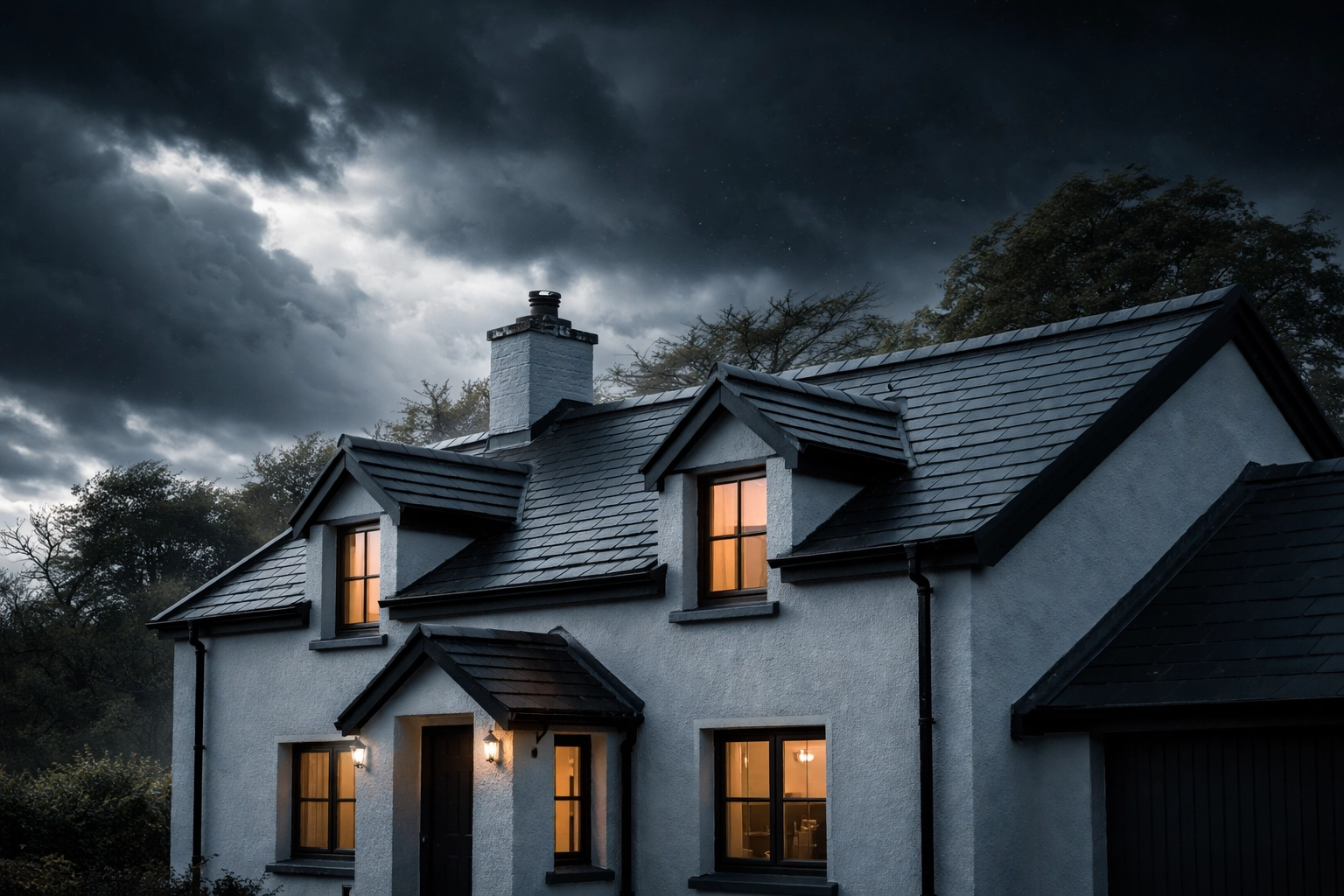
Belfast house roof with storm clouds and heavy rain, illustrating wind resistance challenges.


What Actually Happens When Your Roof Can't Handle Wind?

This isn't about a few loose tiles. When a roof fails to resist wind properly, three major problems hit you all at once:

  1. Your home's contents get exposed to the elements. Water damage, ruined furniture, damaged electrics: it adds up fast.

  2. Roof materials become dangerous projectiles. A flying tile or sheet of felt can smash windows, damage cars, and injure people. You could be liable.

  3. Your building's structural integrity gets compromised. Once wind gets under your roof covering, it creates uplift pressure that tries to literally tear your roof off the structure.

This isn't scare tactics. This is physics. Wind travels up your walls, over any edges, and across your roof surface. That creates suction. And if your roof isn't properly secured with the right materials and installation methods, that suction wins.


Why 2026 Is Different: Building Standards Have Caught Up

Here's the good news. The roofing industry has evolved massively in recent years.

Building codes now demand high-performance roof systems that can withstand stricter requirements. Insurance companies are paying closer attention to roof specifications. And homeowners like you are asking smarter questions before signing off on any roofing work.

The materials available in 2026 are genuinely better than what was being installed even ten years ago:

  • Standing seam metal roofing is surging in popularity because of its exceptional wind resistance and longevity
  • Stone-coated steel offers similar benefits with a more traditional look
  • Modern architectural asphalt shingles feature improved wind resistance ratings and stronger sealant technology

But here's the catch: the best materials in the world won't save you if they're installed wrong.

Roofer Roof Inspection in Rain


Quality Materials + Professional Installation = Actual Wind Resistance

This is where we need to talk straight with you.

Wind resistance isn't just about buying expensive materials. It's about how those materials are specified, how they're fixed, and who's doing the work.

Consider what actually influences whether your roof survives a storm:

  • Building width and roof pitch – affects how wind flows across your property
  • Overhang size – larger overhangs catch more wind uplift
  • Framing spacing – determines how loads are distributed
  • Fastener quantity and placement – this is where most "cowboy" installations fail
  • Correct installation technique – no shortcuts, no bodged fixes

You can buy the most wind-resistant tiles on the market. But if they're fixed with too few nails, in the wrong positions, by someone who learned roofing from YouTube videos last Tuesday? Your roof will fail.

This is exactly why experience matters. At Advanced Construction & Roofing, we've been doing this for over 25 years in Belfast and across Northern Ireland. We've seen what happens when roofs are installed properly: and what happens when they're not.


How Do You Know If Your Current Roof Is Wind-Resistant?

Good question. Most homeowners have no idea what condition their roof is actually in.

Here are warning signs that your roof might be vulnerable to wind damage:

  • Tiles that look lifted, cracked, or out of alignment
  • Ridge tiles that have shifted or show gaps
  • Flashing that's pulled away from walls or chimneys
  • Previous repairs that look patchy or inconsistent
  • Your roof is over 20 years old and hasn't been inspected

If any of these sound familiar, you need a professional roof survey. Not a quick glance from the street. A proper inspection that identifies defects, assesses fixings, and gives you a clear picture of what needs attention.

We offer comprehensive roof surveys across Belfast that include photo evidence, defect identification, and detailed analysis. It's the only way to know for certain whether your roof can handle what's coming.

Advanced Construction & Roofing Roof Survey Service


What Should You Do Right Now?

If you're reading this in January 2026, storm season isn't over. Far from it. Here's your action plan:

1. Get a roof survey booked.
Don't wait until you've got water coming through your ceiling. A professional survey costs a fraction of emergency repair work: and it gives you peace of mind. Book your Belfast roof survey here.

2. Ask the right questions before any roofing work.
When you get quotes, ask about wind resistance ratings. Ask about fixing specifications. Ask how long they've been in business. If the roofer can't answer confidently, walk away.

3. Don't choose on price alone.
The cheapest quote often means corners cut on materials, fixings, or labour. And when the next storm hits, that cheap roof becomes a very expensive problem.

4. Work with a company that understands Northern Ireland conditions.
Generic roofing advice from companies based in England doesn't account for our specific weather challenges. You need roofers who know Belfast, know our climate, and have decades of local experience.


The Bottom Line on Roof Wind Resistance

Does roof wind resistance matter in 2026? It matters more than it ever has.

Northern Ireland weather isn't getting gentler. Building standards are getting stricter. And the difference between a roof that holds and a roof that fails comes down to two things: quality materials and professional installation.

At Advanced Construction & Roofing, we've spent over 25 years protecting Belfast homes and businesses from everything our climate throws at them. We know what works. We know what fails. And we're straight with you about what your property needs.

Want to know if your roof is ready for the next storm?

Request a professional roof survey today. Call us, contact us through our website at adv-group.co.uk, or fill in our online form.

Don't wait for the wind to make the decision for you.

10 Reasons Your Roof Repair Keeps Failing (And How to Fix It)

You've had your roof "fixed" twice already this year. Maybe three times. Yet here you are, bucket in the hallway, damp patches spreading across the ceiling, and another roofer's number in your hand.

Sound familiar?

If your roof repair keeps failing, you're not alone. Across Belfast and Northern Ireland, we see homeowners trapped in an endless cycle of patch jobs that never quite solve the problem. The frustrating truth? Most roof repairs fail because they treat symptoms, not causes.

Let's break down exactly why this happens, and more importantly, how to fix it for good.


Why Do Roof Repairs Keep Failing?

Before we dive into the reasons, understand this: a failing repair isn't always about bad luck. It's usually about bad diagnosis, bad materials, or bad workmanship. Sometimes all three.

Here are the 10 most common reasons your roof repair isn't holding up.


1. The Root Cause Was Never Identified

This is the number one reason repairs fail. A roofer spots a crack, patches it, and leaves. But that crack was caused by something else, maybe poor ventilation, structural movement, or water travelling from a completely different area.

How to fix it: Don't accept a quick patch job. Request a proper inspection that identifies why the damage occurred, not just where it appeared.

Roofer Roof Inspection in Rain A roofer conducts a detailed inspection of a leaking and damaged roof during heavy rain, identifying broken tiles, exposed timber, and visible moss. The technician is equipped with tools and assesses the extent of emergency repairs needed to prevent further water ingress.


2. Poor Quality Materials Were Used

Cheap materials fail. It's that simple.

Subpar roofing materials are prone to punctures, tears, and premature deterioration. That budget felt or bargain-bin sealant might save you £50 today, but it'll cost you hundreds when it fails in 18 months.

How to fix it: Always ask what materials are being used. Reputable contractors use products from established manufacturers with proper quality control. If your roofer can't tell you the brand and specification, walk away.


3. Incorrect Installation Techniques

Even good materials fail when installed incorrectly. Misaligned slates, inadequate sealing, incorrect nail placement, these rookie errors compromise your entire roof structure.

Common installation mistakes include:

  • Insufficient adhesives
  • Inconsistent heat-sealing on flat roofs
  • Shingles not aligned to manufacturer guidelines
  • Nails placed too high or too low

How to fix it: Hire experienced contractors who follow manufacturer guidelines and building codes. Ask about their process. Professionals won't mind explaining their methods.


4. Flashing Failures

Flashing, the metal strips that seal joints around chimneys, vents, and walls, is where most leaks originate. Yet it's often the most neglected part of a repair.

We regularly see flashing "repairs" where someone's just slapped caulk over the problem. Caulk is not flashing. It's a temporary bodge that will fail within months.

How to fix it: Insist on proper flashing materials, correctly installed. Flashing should be integrated with your roof system, not stuck on as an afterthought.

Close-up of failed roof flashing installation around a Belfast chimney showing gaps and damaged sealant.


5. Layered Shingles Creating Hidden Problems

Here's a shortcut that always backfires: installing new shingles directly over old ones.

Multiple roof layers add weight, shorten your roof's lifespan, and make leak detection nearly impossible. Water travels between layers, appearing meters away from the actual entry point.

How to fix it: Remove old layers completely before installing new materials. Yes, it costs more upfront. But it prevents the nightmare of chasing phantom leaks for years.


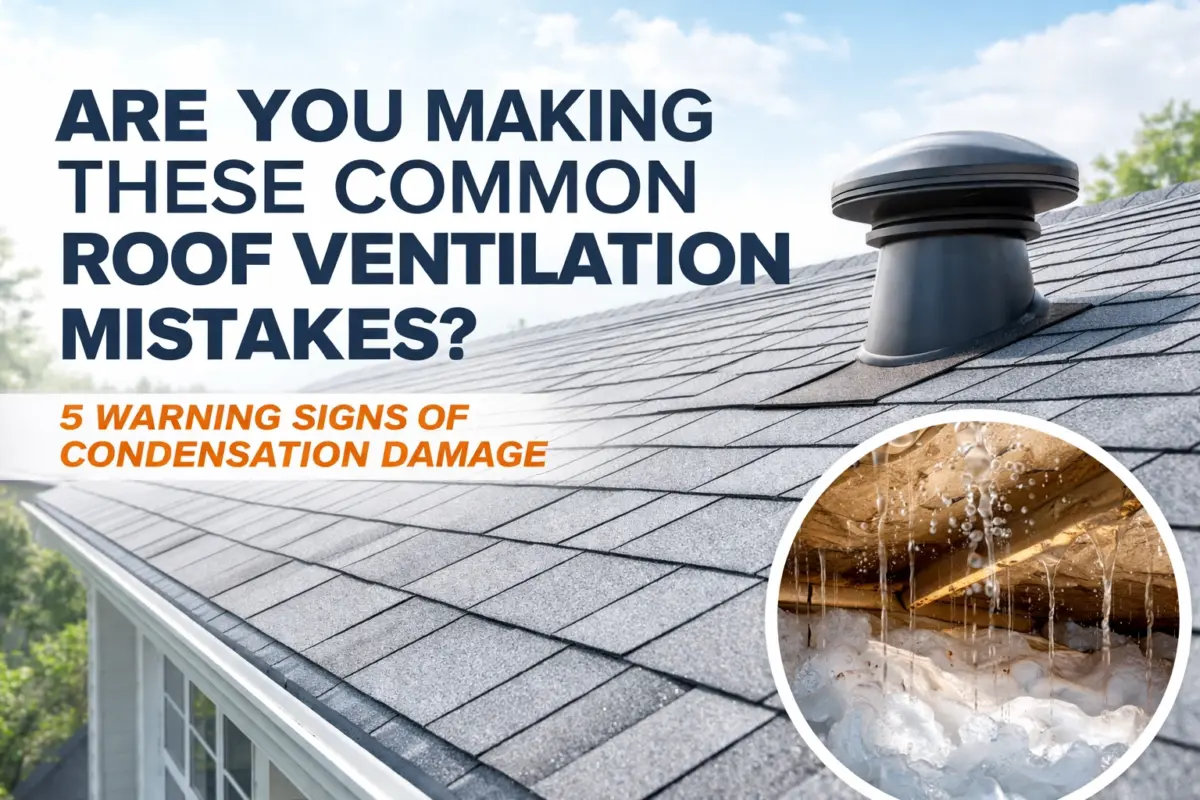
6. Inadequate Ventilation and Insulation

Your attic's ventilation directly affects your roof's lifespan. Poor ventilation causes condensation, which leads to:

  • Sheathing deterioration
  • Mould growth
  • Curled or buckled shingles
  • Frost damage in winter

How to fix it: Check that ventilation is balanced between intake and exhaust. Ensure soffit vents aren't blocked by paint overspray or insulation. Verify your insulation is properly installed and rated for your property.


7. Drainage Problems Causing Recurring Damage

Water that doesn't drain properly will find somewhere to go: usually into your property.

Inefficient drainage causes ponding water on flat roofs, which encourages mould growth, rusts metallic components, and accelerates material breakdown. On pitched roofs, blocked gutters force water back under tiles.

How to fix it: Drainage must be designed as part of your roofing system, not added as an afterthought. Clear gutters regularly and ensure downpipes are flowing freely.

Advanced Construction & Roofing Roof Survey Service A professional roof inspector examines ceiling damage and insulation while taking notes. The image promotes Advanced Construction & Roofing's roof survey service, offering visual surveys, photo evidence, defect identification, and in-depth analysis for property owners. Contact details and a website link are included for booking a survey.


8. Environmental Damage Going Unaddressed

Northern Ireland's weather is brutal on roofs. High winds, driving rain, hail, falling debris, and extreme temperature shifts all weaken roofing materials over time.

A repair might fix today's damage, but if underlying weather-related deterioration isn't addressed, you'll be calling again next storm season.

How to fix it: Schedule regular professional inspections: especially after severe weather. Proactive maintenance catches problems before they become expensive failures.


9. Manufacturer Defects in Materials

Sometimes the materials themselves are the problem. Certain shingle products have been subject to class action lawsuits due to premature deterioration. Budget products from unknown manufacturers often lack proper quality testing.

How to fix it: Request documentation of the exact materials being used: brand, type, and specification. If there's any doubt about quality, consult with a licensed roofing professional before proceeding.


10. No Ongoing Maintenance Programme

Here's the uncomfortable truth: even good repairs fail without maintenance.

Small problems escalate into major failures when ignored. A loose tile becomes a leak. A blocked gutter becomes water damage. A minor crack becomes structural rot.

How to fix it: Implement a regular maintenance programme. This doesn't mean expensive annual overhauls: just periodic professional inspections to catch issues early.


How to Break the Cycle: Start With a Proper Survey

If you've read this far, you're probably nodding along. You've experienced at least three or four of these issues firsthand.

So how do you actually break the cycle?

You start with a proper professional survey.

Not a quick look from a ladder. Not a free quote that's really just a sales pitch. A genuine, thorough inspection that identifies the root cause of your roofing problems.

At Advanced Construction & Roofing, our £295 Roof Survey includes:

  • Visual inspection of all accessible roof areas
  • Photo evidence documenting every defect found
  • Detailed analysis identifying root causes, not just symptoms
  • Written report with prioritised recommendations
  • Honest assessment of what needs fixing now versus what can wait

This isn't a sales tactic to upsell you on work. It's a diagnostic tool that tells you exactly what's wrong and why your previous repairs failed.


Our Commitment to Quality Materials

We've been in the roofing business across Belfast and Northern Ireland for over 25 years. In that time, we've learned that quality materials aren't optional: they're essential.

Every repair and installation we complete uses products from reputable manufacturers with proven track records. We'll tell you exactly what we're using and why.

Because cheap repairs aren't cheap. They're just expensive repairs you haven't paid for yet.


Stop Patching. Start Fixing.

If your roof repair keeps failing, stop throwing money at temporary solutions. Get a proper diagnosis first.

Call Advanced Construction & Roofing today to book your professional roof survey. Let's find out what's really going wrong: and fix it once, properly.

Book Your £295 Roof Survey