EPDM Vs Felt Flat Roofing: Which Is Better For Your Belfast Property?

If you own a property in Belfast with a flat roof, you've probably asked yourself this question at least once: should I go with EPDM or stick with traditional felt?

It's a fair question. Both materials have been used on flat roofs across Northern Ireland for decades. But here's the thing: Belfast's weather doesn't play nice with every roofing material. Our damp climate, frequent rain, and those annoying freeze-thaw cycles during winter can absolutely destroy the wrong roof.

So let's break it down. No jargon. No confusing technical terms. Just the honest truth about which flat roofing material will actually protect your Belfast home or commercial property for the long haul.

What Exactly Is Felt Roofing?

Felt roofing (also called bitumen felt) has been the traditional choice for flat roofs in the UK for generations. It's made from layers of bitumen-saturated material, typically applied in two or three layers with hot or cold adhesive.

You've seen felt roofs everywhere in Belfast: on extensions, garages, sheds, and older commercial buildings. It's familiar. It's what your dad probably had on his garage.

But familiar doesn't always mean best.

Traditional felt flat roof on a Belfast extension, showing visible seams and typical weathering

What Is EPDM Roofing?

EPDM stands for Ethylene Propylene Diene Monomer. Don't worry about remembering that: just know it's a type of synthetic rubber membrane.

EPDM comes in large, seamless sheets that are bonded directly to your roof deck. Because it arrives in bigger rolls, there are far fewer joints and seams than traditional felt. And fewer seams means fewer potential leak points.

It's been used in commercial roofing for over 50 years, but it's now become increasingly popular for domestic properties across Belfast and Northern Ireland.

Durability: How Long Will Each Roof Actually Last?

Here's where the difference becomes crystal clear.

Felt roofing typically lasts 10–20 years. Some cheaper installations might only give you 5–10 years before problems start appearing. That's not great when you're paying good money for a roof.

EPDM roofing lasts 40–50 years. That's not a typo. A properly installed EPDM roof can protect your Belfast property for four to five decades with minimal maintenance.

Think about that for a second. You could replace a felt roof three or four times in the same period that one EPDM roof keeps doing its job.

Factor Felt Roofing EPDM Roofing
Lifespan 10–20 years 40–50 years
Seam vulnerability High Low
UV resistance Requires treatment Built-in
Cold weather flexibility Poor Excellent

Belfast Weather: Why It Matters More Than You Think

Let's be honest: Belfast isn't exactly known for Mediterranean sunshine. Our maritime climate throws everything at your roof: heavy rain, standing water, frost, freeze-thaw cycles, and the occasional storm that makes you question your life choices.

This is where EPDM pulls way ahead.

Closeup of heavy rain on an EPDM flat roof in Belfast, demonstrating superior water resistance

Rain and Standing Water

Flat roofs are notorious for ponding: that's when water pools on your roof instead of draining properly. EPDM tolerates standing water significantly better than felt. Felt roofs are vulnerable to standing water and prone to blistering, which accelerates degradation.

In a city where it rains more than 150 days a year, that's a massive advantage.

Freeze-Thaw Cycles

Belfast winters bring constant temperature fluctuations. Water gets into small cracks, freezes, expands, and causes damage. Felt becomes brittle in cold weather, making it susceptible to cracking during these cycles.

EPDM maintains excellent flexibility down to -40°C. It expands and contracts naturally with temperature changes without cracking or splitting. That natural elasticity is exactly what Belfast properties need.

UV Resistance

Even with our famously overcast skies, UV degradation is still a factor over time. EPDM has inherent UV resistance built into the material: no additional surface treatments required throughout its entire lifespan.

Felt, on the other hand, requires ongoing surface protection because unprotected bitumen degrades when exposed to UV rays.

Installation Differences: Why Seams Matter

One of the biggest reasons flat roofs fail is seam failure. Every joint in your roof is a potential weak point where water can get in.

Felt roofing requires multiple layers and many seams. Each seam is a potential leak waiting to happen, especially under thermal stress from Belfast's temperature fluctuations.

EPDM comes in much larger rolls, meaning fewer seams in the finished roof. Some smaller flat roofs can be covered with a single sheet: no seams at all. That's a huge advantage for long-term waterproofing.

Roofer installing seamless EPDM membrane on a flat roof, ensuring long-lasting waterproofing

Maintenance: What Will You Need to Do?

Nobody wants to spend their weekends worrying about their roof. Here's the reality:

Felt roofing demands regular inspections and repairs to prevent leaks and cracks. You'll need to check it at least twice a year, and after any significant storms. Small problems become big problems quickly if left unattended.

EPDM requires very low maintenance. An annual visual check and keeping it clear of debris is usually all that's needed. The material is designed to look after itself.

Cost: The Real Numbers

Let's talk money. Because we know that's what matters.

Felt roofing costs less upfront. There's no getting around it: felt is cheaper to install initially. If you're working with a tight budget and need a roof sorted quickly, felt gets the job done.

But EPDM offers better long-term value. When you factor in:

  • Longer lifespan (40–50 years vs 10–20 years)
  • Lower maintenance costs
  • Fewer repairs over time
  • Better energy efficiency

The maths changes dramatically. You could easily spend more on felt roof replacements and repairs over 40 years than you would on a single EPDM installation.

When Should You Choose Felt?

Felt roofing still makes sense in certain situations:

  • Very tight budgets where upfront cost is the only priority
  • Buildings with limited expected lifespan (if you're demolishing in 5 years, why spend more?)
  • Small outbuildings like garden sheds or basic garages
  • Temporary solutions while planning a more permanent roof

If any of these apply to you, felt might be the practical choice. We install both options at Advanced Construction & Roofing, and we'll always give you honest advice about what's right for your specific situation.

When Should You Choose EPDM?

For most Belfast properties, EPDM is the smarter choice. Consider EPDM if:

  • You want a roof that lasts 40+ years
  • Your property has drainage challenges or areas where water pools
  • You prefer minimal ongoing maintenance
  • You're thinking about long-term value over upfront cost
  • You want insurance-backed guarantees for peace of mind

Speaking of guarantees: all our EPDM installations come with comprehensive insurance-backed guarantees. That means your investment is protected even if something unexpected happens down the line.

Not Sure Which Option Is Right For You?

Here's the honest truth: every property is different. The condition of your existing roof deck, the size of the area, drainage considerations, and your budget all play a role in the decision.

That's why we always recommend starting with a proper roof survey. We'll inspect your current flat roof, identify any underlying issues, and give you a clear recommendation based on what we find: not what makes us the most money.

Request a roof survey in Belfast and get honest advice from our team with over 25 years of experience in flat roofing across Northern Ireland.

The Bottom Line

If you're looking for a flat roof solution that can handle Belfast's demanding climate, EPDM is the better choice for most properties. It lasts longer, handles our weather better, requires less maintenance, and offers superior long-term value.

But we understand that every situation is unique. Whether you need EPDM, felt, or want to discuss other options, Advanced Construction & Roofing provides both services with the same commitment to quality workmanship.

Call us today to discuss your flat roofing project. We'll give you a straight answer about what your property actually needs: no pressure, no upselling, just honest advice from Belfast's trusted roofing experts.

EPDM Vs Felt Flat Roofing: Which Is Better For Your Belfast Property?

If you own a property in Belfast with a flat roof, you've probably asked yourself this question at least once: should I go with EPDM or stick with traditional felt?

It's a fair question. Both materials have been used on flat roofs across Northern Ireland for decades. But here's the thing: Belfast's weather doesn't play nice with every roofing material. Our damp climate, frequent rain, and those annoying freeze-thaw cycles during winter can absolutely destroy the wrong roof.

So let's break it down. No jargon. No confusing technical terms. Just the honest truth about which flat roofing material will actually protect your Belfast home or commercial property for the long haul.

What Exactly Is Felt Roofing?

Felt roofing (also called bitumen felt) has been the traditional choice for flat roofs in the UK for generations. It's made from layers of bitumen-saturated material, typically applied in two or three layers with hot or cold adhesive.

You've seen felt roofs everywhere in Belfast: on extensions, garages, sheds, and older commercial buildings. It's familiar. It's what your dad probably had on his garage.

But familiar doesn't always mean best.

Traditional felt flat roof on a Belfast extension, showing visible seams and typical weathering

What Is EPDM Roofing?

EPDM stands for Ethylene Propylene Diene Monomer. Don't worry about remembering that: just know it's a type of synthetic rubber membrane.

EPDM comes in large, seamless sheets that are bonded directly to your roof deck. Because it arrives in bigger rolls, there are far fewer joints and seams than traditional felt. And fewer seams means fewer potential leak points.

It's been used in commercial roofing for over 50 years, but it's now become increasingly popular for domestic properties across Belfast and Northern Ireland.

Durability: How Long Will Each Roof Actually Last?

Here's where the difference becomes crystal clear.

Felt roofing typically lasts 10–20 years. Some cheaper installations might only give you 5–10 years before problems start appearing. That's not great when you're paying good money for a roof.

EPDM roofing lasts 40–50 years. That's not a typo. A properly installed EPDM roof can protect your Belfast property for four to five decades with minimal maintenance.

Think about that for a second. You could replace a felt roof three or four times in the same period that one EPDM roof keeps doing its job.

Factor Felt Roofing EPDM Roofing
Lifespan 10–20 years 40–50 years
Seam vulnerability High Low
UV resistance Requires treatment Built-in
Cold weather flexibility Poor Excellent

Belfast Weather: Why It Matters More Than You Think

Let's be honest: Belfast isn't exactly known for Mediterranean sunshine. Our maritime climate throws everything at your roof: heavy rain, standing water, frost, freeze-thaw cycles, and the occasional storm that makes you question your life choices.

This is where EPDM pulls way ahead.

Closeup of heavy rain on an EPDM flat roof in Belfast, demonstrating superior water resistance

Rain and Standing Water

Flat roofs are notorious for ponding: that's when water pools on your roof instead of draining properly. EPDM tolerates standing water significantly better than felt. Felt roofs are vulnerable to standing water and prone to blistering, which accelerates degradation.

In a city where it rains more than 150 days a year, that's a massive advantage.

Freeze-Thaw Cycles

Belfast winters bring constant temperature fluctuations. Water gets into small cracks, freezes, expands, and causes damage. Felt becomes brittle in cold weather, making it susceptible to cracking during these cycles.

EPDM maintains excellent flexibility down to -40°C. It expands and contracts naturally with temperature changes without cracking or splitting. That natural elasticity is exactly what Belfast properties need.

UV Resistance

Even with our famously overcast skies, UV degradation is still a factor over time. EPDM has inherent UV resistance built into the material: no additional surface treatments required throughout its entire lifespan.

Felt, on the other hand, requires ongoing surface protection because unprotected bitumen degrades when exposed to UV rays.

Installation Differences: Why Seams Matter

One of the biggest reasons flat roofs fail is seam failure. Every joint in your roof is a potential weak point where water can get in.

Felt roofing requires multiple layers and many seams. Each seam is a potential leak waiting to happen, especially under thermal stress from Belfast's temperature fluctuations.

EPDM comes in much larger rolls, meaning fewer seams in the finished roof. Some smaller flat roofs can be covered with a single sheet: no seams at all. That's a huge advantage for long-term waterproofing.

Roofer installing seamless EPDM membrane on a flat roof, ensuring long-lasting waterproofing

Maintenance: What Will You Need to Do?

Nobody wants to spend their weekends worrying about their roof. Here's the reality:

Felt roofing demands regular inspections and repairs to prevent leaks and cracks. You'll need to check it at least twice a year, and after any significant storms. Small problems become big problems quickly if left unattended.

EPDM requires very low maintenance. An annual visual check and keeping it clear of debris is usually all that's needed. The material is designed to look after itself.

Cost: The Real Numbers

Let's talk money. Because we know that's what matters.

Felt roofing costs less upfront. There's no getting around it: felt is cheaper to install initially. If you're working with a tight budget and need a roof sorted quickly, felt gets the job done.

But EPDM offers better long-term value. When you factor in:

  • Longer lifespan (40–50 years vs 10–20 years)
  • Lower maintenance costs
  • Fewer repairs over time
  • Better energy efficiency

The maths changes dramatically. You could easily spend more on felt roof replacements and repairs over 40 years than you would on a single EPDM installation.

When Should You Choose Felt?

Felt roofing still makes sense in certain situations:

  • Very tight budgets where upfront cost is the only priority
  • Buildings with limited expected lifespan (if you're demolishing in 5 years, why spend more?)
  • Small outbuildings like garden sheds or basic garages
  • Temporary solutions while planning a more permanent roof

If any of these apply to you, felt might be the practical choice. We install both options at Advanced Construction & Roofing, and we'll always give you honest advice about what's right for your specific situation.

When Should You Choose EPDM?

For most Belfast properties, EPDM is the smarter choice. Consider EPDM if:

  • You want a roof that lasts 40+ years
  • Your property has drainage challenges or areas where water pools
  • You prefer minimal ongoing maintenance
  • You're thinking about long-term value over upfront cost
  • You want insurance-backed guarantees for peace of mind

Speaking of guarantees: all our EPDM installations come with comprehensive insurance-backed guarantees. That means your investment is protected even if something unexpected happens down the line.

Not Sure Which Option Is Right For You?

Here's the honest truth: every property is different. The condition of your existing roof deck, the size of the area, drainage considerations, and your budget all play a role in the decision.

That's why we always recommend starting with a proper roof survey. We'll inspect your current flat roof, identify any underlying issues, and give you a clear recommendation based on what we find: not what makes us the most money.

Request a roof survey in Belfast and get honest advice from our team with over 25 years of experience in flat roofing across Northern Ireland.

The Bottom Line

If you're looking for a flat roof solution that can handle Belfast's demanding climate, EPDM is the better choice for most properties. It lasts longer, handles our weather better, requires less maintenance, and offers superior long-term value.

But we understand that every situation is unique. Whether you need EPDM, felt, or want to discuss other options, Advanced Construction & Roofing provides both services with the same commitment to quality workmanship.

Call us today to discuss your flat roofing project. We'll give you a straight answer about what your property actually needs: no pressure, no upselling, just honest advice from Belfast's trusted roofing experts.

Looking For a Roofer After Storm Damage? Here Are 10 Things You Should Know

Storm damage doesn't wait for a convenient time. One minute you're watching the weather forecast, the next you're staring at water dripping through your ceiling wondering what to do next.

If you're a homeowner in Belfast or anywhere across Northern Ireland dealing with storm damage right now, take a breath. You're not alone, and you're in the right place.

At Advanced Construction & Roofing, we've been helping families just like yours recover from storm damage for over 25 years. We know how stressful this situation is. That's why we've put together this guide, so you know exactly what to look for, what questions to ask, and how to avoid the cowboys who prey on desperate homeowners.

Here are 10 things you absolutely need to know before hiring a roofer after storm damage.


1. Document Everything Before You Touch Anything

This is the most important step, and it's the one most people skip.

Before you move debris, before you start cleaning up, before you do anything, grab your phone and start recording. Take photos and videos of every single area of damage you can safely access. Get wide shots and close-ups. Capture the mess.

Why? Because your insurance company will want proof. And the more evidence you have, the smoother your claim will go.

Save receipts for everything, even if you've had to pay someone to remove a fallen tree or cover a hole temporarily. These costs are often recoverable through your insurance.

Emergency Roofing Repair A man sits at a kitchen table reading a newspaper while water pours from the ceiling, indicating a severe roof leak. The Advanced Construction & Roofing logo and contact details are displayed, highlighting emergency roofing repair services.


2. Safety Comes First, Always

We understand the urge to climb up and assess the damage yourself. Please don't.

After a storm, your roof structure may be compromised in ways you can't see from the ground. Wet surfaces are slippery. Damaged areas can collapse without warning. And if power lines are down or there's any chance of a gas leak, you're putting yourself in serious danger.

Call a professional. That's what we're here for. We offer emergency call-outs across Belfast and Northern Ireland, and we can be on-site quickly to secure your property and prevent further damage.


3. Know What Visible Damage Looks Like

You don't need to be a roofing expert to spot the obvious signs of storm damage. Here's what to look for from ground level:

  • Missing, curled, or cracked slates/tiles
  • Dents or holes from hail or flying debris
  • Damaged or missing flashing around chimneys and vents
  • Gutters hanging off or completely torn away
  • Ridge tiles displaced or missing

If you can see any of these from the ground, there's likely more damage you can't see. Request a professional inspection immediately.


4. Hidden Damage Is More Common Than You Think

Here's the thing about storm damage: the worst of it is often invisible.

Wind and hail can compromise your roof's integrity without leaving obvious external signs. Water can seep through tiny gaps and cause damage to your insulation, timber, and ceilings over weeks or months.

Check your attic. Look for water spots on the underside of the roof, damp insulation, or any signs of moisture. Check your ceilings for stains or bubbling paint. These are warning signs that water is getting in somewhere.

Advanced Construction & Roofing Roof Survey Service A professional roof inspector examines ceiling damage and insulation while taking notes. The image promotes Advanced Construction & Roofing's roof survey service, offering visual surveys, photo evidence, defect identification, and in-depth analysis for property owners. Contact details and a website link are included for booking a survey.

If you're unsure, book a professional roof survey with us. We'll give you a comprehensive report with photos and recommendations: no guesswork involved.


5. Check Your Insurance Coverage Before You Commit

Before you agree to any repairs, contact your insurance company.

Many homeowners don't realise that storm damage is often covered under their home insurance policy. But here's the catch: you need to follow their process. That usually means:

  • Reporting the damage promptly
  • Getting authorisation before major repairs
  • Using approved contractors (or getting quotes approved)
  • Providing documentation (those photos you took in step 1)

Ask your insurer these questions:

  • Is storm damage covered under my policy?
  • Do I need to get multiple quotes?
  • Is there a preferred contractor list?
  • What's my excess?

A reputable roofer will understand this process and work with you and your insurer to make the claim as smooth as possible.


6. Look for Local Reputation and Real Reviews

After a big storm, you'll suddenly see "roofers" appearing out of nowhere. Vans with no signage. Door knockers with too-good-to-be-true quotes. Lads who "just happened to be in the area."

Be very, very careful.

These storm chasers take your money, do a bodge job (or no job at all), and disappear. You're left with a worse problem than you started with and no way to contact them.

Here's what to look for instead:

  • A local company with a physical presence in Belfast or Northern Ireland
  • Verified reviews on Google, Facebook, or Checkatrade
  • Years of experience: not months
  • Clear contact details and a proper website
  • Membership of trade bodies or manufacturer certifications

At Advanced Construction & Roofing, we've been serving Northern Ireland for over 25 years. Our reputation is built on honest work and happy customers. Check our reviews: we're proud of every single one.


7. Demand a Fast Response: 48 Hours Maximum

When your roof is damaged, every hour counts. Water ingress can turn a minor repair into a major rebuild if left unchecked.

You need a roofer who can respond fast.

At Advanced Construction & Roofing, we offer 48-hour emergency response times across Belfast and the surrounding areas. When you call us, we answer. When you need us, we're there.

Don't settle for a roofer who can't see you for two weeks. By then, the damage could be ten times worse.


8. Expect a Comprehensive Inspection: Not a Quick Glance

A proper post-storm inspection isn't a five-minute job. Any roofer worth their salt will check:

  • Roof tiles/slates and their fixings
  • Roof felt and underlay
  • Decking and timber structure
  • Insulation condition
  • Ventilation systems
  • Flashing around chimneys, vents, and skylights
  • Gutters, downpipes, and drainage
  • Fascias and soffits

If a roofer gives you a quote after spending two minutes on your roof, walk away. They haven't done their job properly, and their quote is probably missing something important.

Roofer Roof Inspection in Rain A roofer conducts a detailed inspection of a leaking and damaged roof during heavy rain, identifying broken tiles, exposed timber, and visible moss. The technician is equipped with tools and assesses the extent of emergency repairs needed to prevent further water ingress.

Learn more about what a professional roof survey involves.


9. Insist on Transparency: No Hidden Costs

Before any work begins, you should have a clear, written quote that includes:

  • Itemised breakdown of all work
  • Material specifications
  • Labour costs
  • Timeline for completion
  • Payment terms
  • Warranty information

If a roofer won't give you this in writing, find someone who will.

We believe in complete transparency. You'll know exactly what you're paying for, when the work will be done, and what guarantees you're getting. No surprises, no hidden charges, no nonsense.


10. Emergency Call-Outs Can Save You Thousands

Here's the reality: fast action after storm damage can save you thousands of pounds.

A small leak left for a week can destroy ceilings, damage electrics, ruin insulation, and even compromise structural timber. What could have been a £500 repair becomes a £5,000 rebuild.

That's why we offer emergency call-outs across Belfast and Northern Ireland.

When you call Advanced Construction & Roofing, we'll get to you fast, secure your property, prevent further damage, and give you an honest assessment of what needs doing. We work with your insurance company. We provide full documentation. And we stand behind our work with proper warranties.


What Should You Do Right Now?

If you're dealing with storm damage in Belfast or anywhere in Northern Ireland, here's your action plan:

  1. Document everything with photos and videos
  2. Stay safe: don't climb on your roof
  3. Contact your insurance company to report the damage
  4. Call a reputable local roofer for an emergency inspection

Need help right now? Contact Advanced Construction & Roofing today. We offer emergency call-outs, 48-hour response times, and over 25 years of experience protecting Northern Ireland homes.

Call us or visit adv-group.co.uk to book your emergency inspection.

Don't let storm damage turn into a disaster. Get the right help, get it fast, and get your home protected.

Does Roof Wind Resistance Really Matter in 2026? Here's the Truth

Let's be honest. If you live in Northern Ireland, you know the wind. You've felt your house shake during a January storm. You've heard tiles rattle at 3am and wondered if your roof was about to become your neighbour's problem.

So does roof wind resistance really matter in 2026?

Short answer: Absolutely. More than ever.

Here's the truth about why it matters, what's changed, and what you can do to protect your Belfast home from the next big blow.


Northern Ireland Weather: It's Not Getting Any Calmer

Anyone who's lived through a Northern Ireland winter knows the score. We're exposed to Atlantic weather systems that barrel in from the west, bringing sustained winds and sudden gusts that can catch even the sturdiest buildings off guard.

And here's what the data tells us: extreme weather events are increasing. We're seeing more named storms, more intense rainfall, and wind speeds that would have been considered unusual a decade ago.

Your roof isn't just sitting up there looking pretty. It's your first line of defence against everything the Irish Sea throws at us. If it can't handle wind forces, you're in trouble.

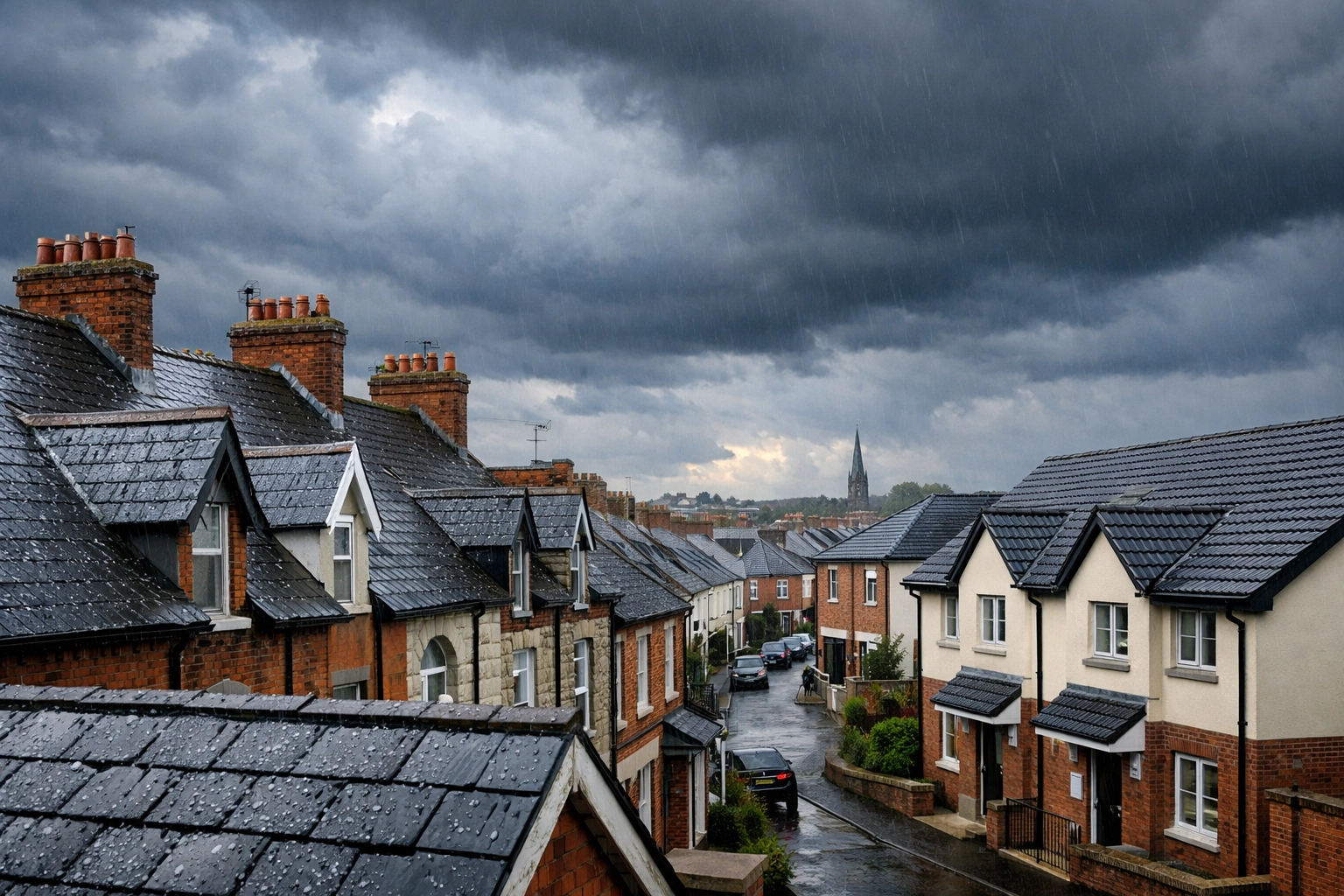
Belfast house roof with storm clouds and heavy rain, illustrating wind resistance challenges.


What Actually Happens When Your Roof Can't Handle Wind?

This isn't about a few loose tiles. When a roof fails to resist wind properly, three major problems hit you all at once:

  1. Your home's contents get exposed to the elements. Water damage, ruined furniture, damaged electrics: it adds up fast.

  2. Roof materials become dangerous projectiles. A flying tile or sheet of felt can smash windows, damage cars, and injure people. You could be liable.

  3. Your building's structural integrity gets compromised. Once wind gets under your roof covering, it creates uplift pressure that tries to literally tear your roof off the structure.

This isn't scare tactics. This is physics. Wind travels up your walls, over any edges, and across your roof surface. That creates suction. And if your roof isn't properly secured with the right materials and installation methods, that suction wins.


Why 2026 Is Different: Building Standards Have Caught Up

Here's the good news. The roofing industry has evolved massively in recent years.

Building codes now demand high-performance roof systems that can withstand stricter requirements. Insurance companies are paying closer attention to roof specifications. And homeowners like you are asking smarter questions before signing off on any roofing work.

The materials available in 2026 are genuinely better than what was being installed even ten years ago:

  • Standing seam metal roofing is surging in popularity because of its exceptional wind resistance and longevity
  • Stone-coated steel offers similar benefits with a more traditional look
  • Modern architectural asphalt shingles feature improved wind resistance ratings and stronger sealant technology

But here's the catch: the best materials in the world won't save you if they're installed wrong.

Roofer Roof Inspection in Rain


Quality Materials + Professional Installation = Actual Wind Resistance

This is where we need to talk straight with you.

Wind resistance isn't just about buying expensive materials. It's about how those materials are specified, how they're fixed, and who's doing the work.

Consider what actually influences whether your roof survives a storm:

  • Building width and roof pitch – affects how wind flows across your property
  • Overhang size – larger overhangs catch more wind uplift
  • Framing spacing – determines how loads are distributed
  • Fastener quantity and placement – this is where most "cowboy" installations fail
  • Correct installation technique – no shortcuts, no bodged fixes

You can buy the most wind-resistant tiles on the market. But if they're fixed with too few nails, in the wrong positions, by someone who learned roofing from YouTube videos last Tuesday? Your roof will fail.

This is exactly why experience matters. At Advanced Construction & Roofing, we've been doing this for over 25 years in Belfast and across Northern Ireland. We've seen what happens when roofs are installed properly: and what happens when they're not.


How Do You Know If Your Current Roof Is Wind-Resistant?

Good question. Most homeowners have no idea what condition their roof is actually in.

Here are warning signs that your roof might be vulnerable to wind damage:

  • Tiles that look lifted, cracked, or out of alignment
  • Ridge tiles that have shifted or show gaps
  • Flashing that's pulled away from walls or chimneys
  • Previous repairs that look patchy or inconsistent
  • Your roof is over 20 years old and hasn't been inspected

If any of these sound familiar, you need a professional roof survey. Not a quick glance from the street. A proper inspection that identifies defects, assesses fixings, and gives you a clear picture of what needs attention.

We offer comprehensive roof surveys across Belfast that include photo evidence, defect identification, and detailed analysis. It's the only way to know for certain whether your roof can handle what's coming.

Advanced Construction & Roofing Roof Survey Service


What Should You Do Right Now?

If you're reading this in January 2026, storm season isn't over. Far from it. Here's your action plan:

1. Get a roof survey booked.
Don't wait until you've got water coming through your ceiling. A professional survey costs a fraction of emergency repair work: and it gives you peace of mind. Book your Belfast roof survey here.

2. Ask the right questions before any roofing work.
When you get quotes, ask about wind resistance ratings. Ask about fixing specifications. Ask how long they've been in business. If the roofer can't answer confidently, walk away.

3. Don't choose on price alone.
The cheapest quote often means corners cut on materials, fixings, or labour. And when the next storm hits, that cheap roof becomes a very expensive problem.

4. Work with a company that understands Northern Ireland conditions.
Generic roofing advice from companies based in England doesn't account for our specific weather challenges. You need roofers who know Belfast, know our climate, and have decades of local experience.


The Bottom Line on Roof Wind Resistance

Does roof wind resistance matter in 2026? It matters more than it ever has.

Northern Ireland weather isn't getting gentler. Building standards are getting stricter. And the difference between a roof that holds and a roof that fails comes down to two things: quality materials and professional installation.

At Advanced Construction & Roofing, we've spent over 25 years protecting Belfast homes and businesses from everything our climate throws at them. We know what works. We know what fails. And we're straight with you about what your property needs.

Want to know if your roof is ready for the next storm?

Request a professional roof survey today. Call us, contact us through our website at adv-group.co.uk, or fill in our online form.

Don't wait for the wind to make the decision for you.