
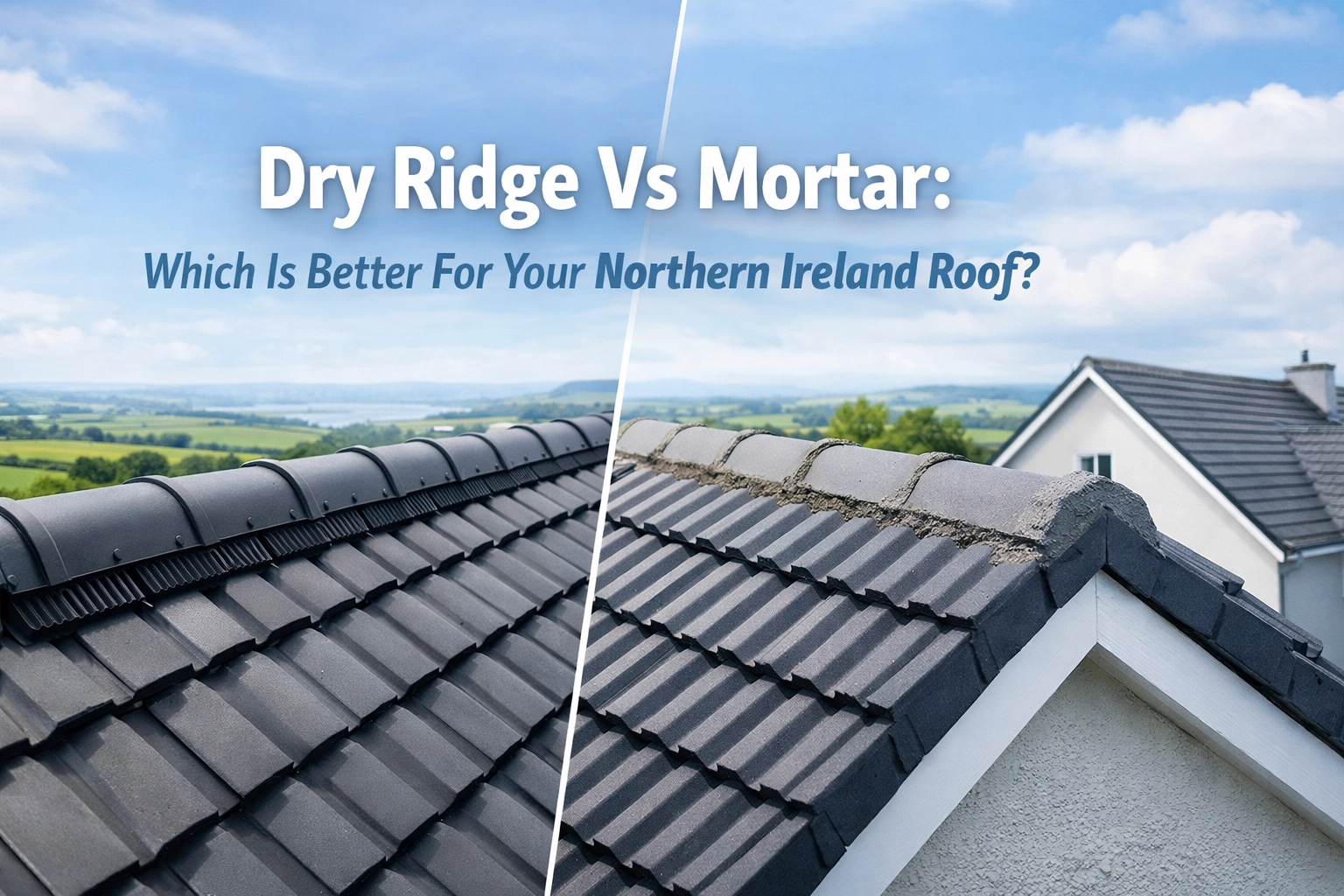

Your roof ridge is more important than you think. It's the first line of defence against Northern Ireland's brutal weather, heavy rain, freezing winters, and those howling winds that seem to arrive out of nowhere. But here's the thing: the way your ridge is fixed makes all the difference between a roof that lasts decades and one that needs constant repairs.
So, dry ridge or mortar? Let's break it down and find out which system actually works for your Northern Ireland property.
What's the Difference Between Dry Ridge and Mortar Ridge?
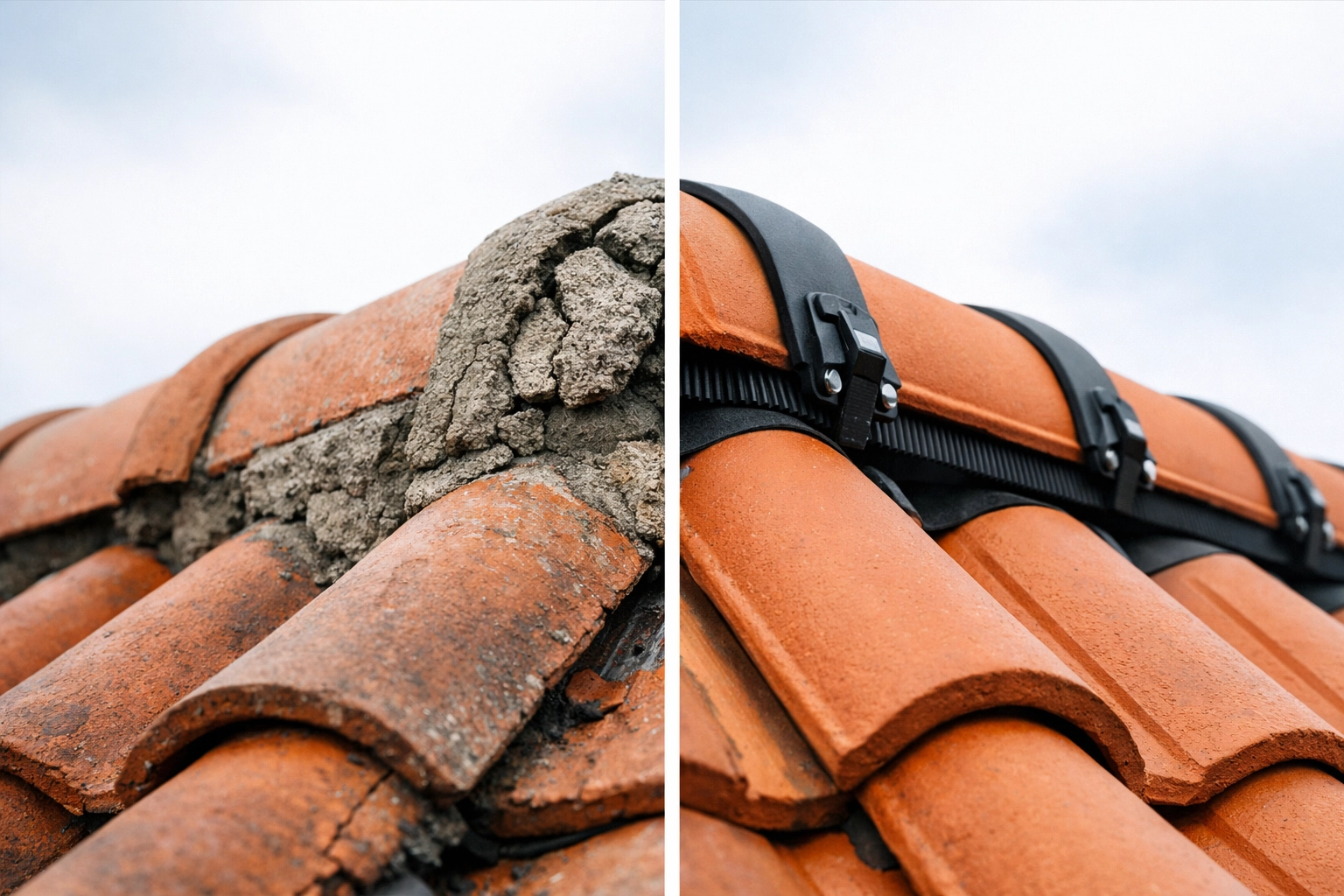
Traditional mortar ridge systems use cement-based mortar to bed ridge tiles onto the roof. It's been the standard approach for generations, mix up some mortar, bed the tiles, and call it a day. Simple, right?
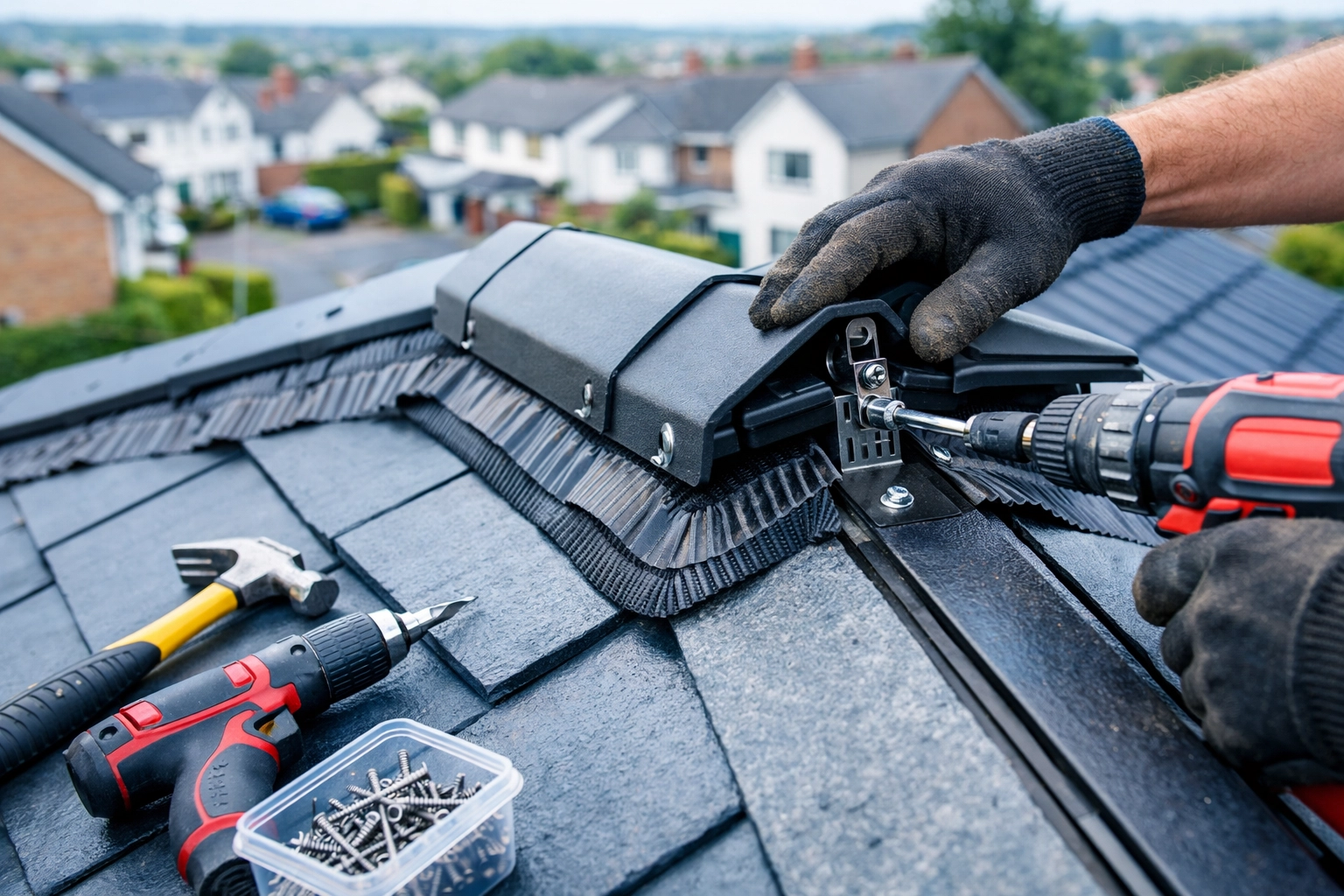
Dry ridge systems take a completely different approach. They use mechanical fixings, clips, screws, and brackets, to secure ridge tiles without any mortar at all. Each tile is individually fixed to the roof structure, creating a secure, weatherproof seal.
The key difference? One relies on cement that's exposed to the elements 24/7, while the other uses purpose-built mechanical components designed specifically for roof performance.
Why Northern Ireland's Weather Destroys Mortar Ridge Systems
Let's be honest about Northern Ireland's climate, it's tough on buildings. Rain, wind, frost, and temperature swings are standard fare. And mortar ridge systems simply aren't built to handle this constant assault.
Freeze-thaw damage is the biggest culprit. Water seeps into tiny cracks in the mortar during wet weather. When temperatures drop overnight (which happens regularly here), that water freezes and expands. The mortar cracks. Then it rains again, more water gets in, and the cycle repeats. Within a few years, you're looking at crumbling mortar and loose ridge tiles.
Heavy rainfall accelerates erosion. Northern Ireland gets an average of 150+ rainy days per year in some areas. That constant exposure wears down mortar gradually but relentlessly. What starts as minor weathering becomes serious deterioration, gaps form, water penetrates, and suddenly you're dealing with damp in the loft.
Wind damage is another major concern. When mortar begins to fail, ridge tiles become loose. A strong gust during a storm can lift or dislodge tiles completely. We've seen plenty of properties where tiles have blown off during winter storms, leaving the roof structure exposed to the elements.
How Dry Ridge Systems Handle Northern Ireland's Climate
Dry ridge systems were designed specifically to solve the problems that plague mortar systems. Here's why they perform so much better in our local conditions:
Mechanical fixings don't deteriorate. Screws and clips made from stainless steel or UV-resistant materials don't crack, erode, or crumble. They're not affected by freeze-thaw cycles or heavy rain. Once installed correctly, they maintain their strength year after year.
Superior wind resistance is built into the design. Each ridge tile is individually secured to the roof structure with multiple fixings. During storms, the mechanical attachment keeps tiles firmly in place, no risk of them lifting or blowing off. This is particularly important in exposed locations across Northern Ireland where wind speeds regularly exceed 50mph.
Built-in ventilation provides an often-overlooked benefit. Dry ridge systems incorporate small gaps that allow air to circulate along the ridge line. This prevents moisture accumulation in the loft space, reducing condensation and damp issues, common problems in Northern Ireland's humid climate.
Weather seals work in conjunction with mechanical fixings to create a complete weatherproofing system. These seals flex with temperature changes and building movement, maintaining their effectiveness without cracking like mortar does.
The True Cost Comparison: Initial vs Long-Term
"But dry ridge costs more upfront." We hear this all the time. And yes, materials for dry ridge systems typically cost more initially than a bag of mortar. But that's only part of the story.
Installation labour is actually lower with dry ridge systems. A skilled roofer can install dry ridge significantly faster than bedding ridge tiles in mortar. No mixing mortar, no waiting for setting times, no weather delays because mortar can't be applied in frost or rain. Faster installation means lower labour costs.
Maintenance requirements tell the real story. Mortar ridge systems need inspection and repair every few years in Northern Ireland's climate. You're looking at:
- Regular inspections to check for cracking
- Repointing work to fill gaps and cracks
- Eventual full re-bedding when mortar fails completely
- Potential water damage repairs if problems aren't caught early
Dry ridge systems? Fit them properly once, and they require virtually no maintenance. No regular repairs, no repointing, no re-bedding. Over a 20-30 year period, the total cost of ownership is significantly lower.
Maintenance Reality: What You Actually Need to Do
With mortar ridge, expect to inspect annually. Look for cracks, gaps, or loose tiles. Budget for repointing work every 3-5 years in exposed locations, possibly every 5-8 years in more sheltered areas. Plan for full re-bedding work every 15-20 years, potentially sooner in harsh conditions.
With dry ridge, your maintenance is minimal. A visual inspection during regular roof maintenance is sufficient: just check that fixings remain secure and tiles haven't shifted. That's it. No repointing, no re-bedding, no regular repair costs.
The difference in maintenance hassle alone makes dry ridge worth considering, even before you factor in the cost savings.
When Should You Actually Use Mortar Ridge?
Look, dry ridge isn't always the answer for every property. There are specific situations where mortar ridge makes sense:
Conservation areas and listed buildings often require traditional building methods for visual consistency and heritage preservation. Planning regulations may mandate mortar ridge to maintain the property's historical character.
Aesthetic preferences matter too. Some property owners prefer the traditional appearance of mortar bedding, particularly on older properties where dry ridge systems might look out of place.
Very sheltered locations with minimal weather exposure might not benefit as dramatically from dry ridge systems. If your property sits in a protected hollow with limited wind exposure and you're willing to maintain mortar regularly, traditional bedding could work adequately.
That said, even in these situations, modern roofing surveys often recommend dry ridge for superior long-term performance.
Which System Should You Choose for Your Property?
Consider these factors when making your decision:
Choose dry ridge if:
- Your property is exposed to wind and weather
- You want minimal maintenance requirements
- Long-term cost savings matter more than initial expense
- You value reliability and performance over traditional appearance
- Your roof experiences freeze-thaw conditions regularly
Consider mortar ridge if:
- Your property is listed or in a conservation area
- Traditional aesthetics are a priority
- Your roof is in an extremely sheltered location
- You're willing to commit to regular maintenance
- Planning regulations require traditional building methods
For most Northern Ireland properties, dry ridge is the better choice. The performance benefits, reduced maintenance, and long-term cost savings outweigh the higher initial material cost.
Making the Right Decision for Your Roof
Your roof ridge protects your entire property from Northern Ireland's weather. Choose a system that's designed to handle what our climate throws at it: not one that worked decades ago before better options existed.
Request a professional assessment of your current ridge system. Look for cracks, loose tiles, or signs of water penetration. If your mortar ridge shows deterioration, don't wait for it to fail completely.
Get specific advice for your property's location and exposure. A roof in Ballycastle faces different conditions than one in Lisburn. Professional roofers understand these local variations and can recommend the right solution.
Consider the full picture: not just initial costs, but long-term performance, maintenance requirements, and total cost of ownership over decades.
At Advanced Construction & Roofing, we've installed both mortar and dry ridge systems across Northern Ireland for over two decades. We've seen which systems perform and which ones create problems. Contact us for honest advice about what works best for your specific property and circumstances.
Call us today for a roof inspection and find out which ridge system will protect your property for years to come. Your roof deserves better than constant repairs: give it the system that's actually designed for Northern Ireland's weather.