
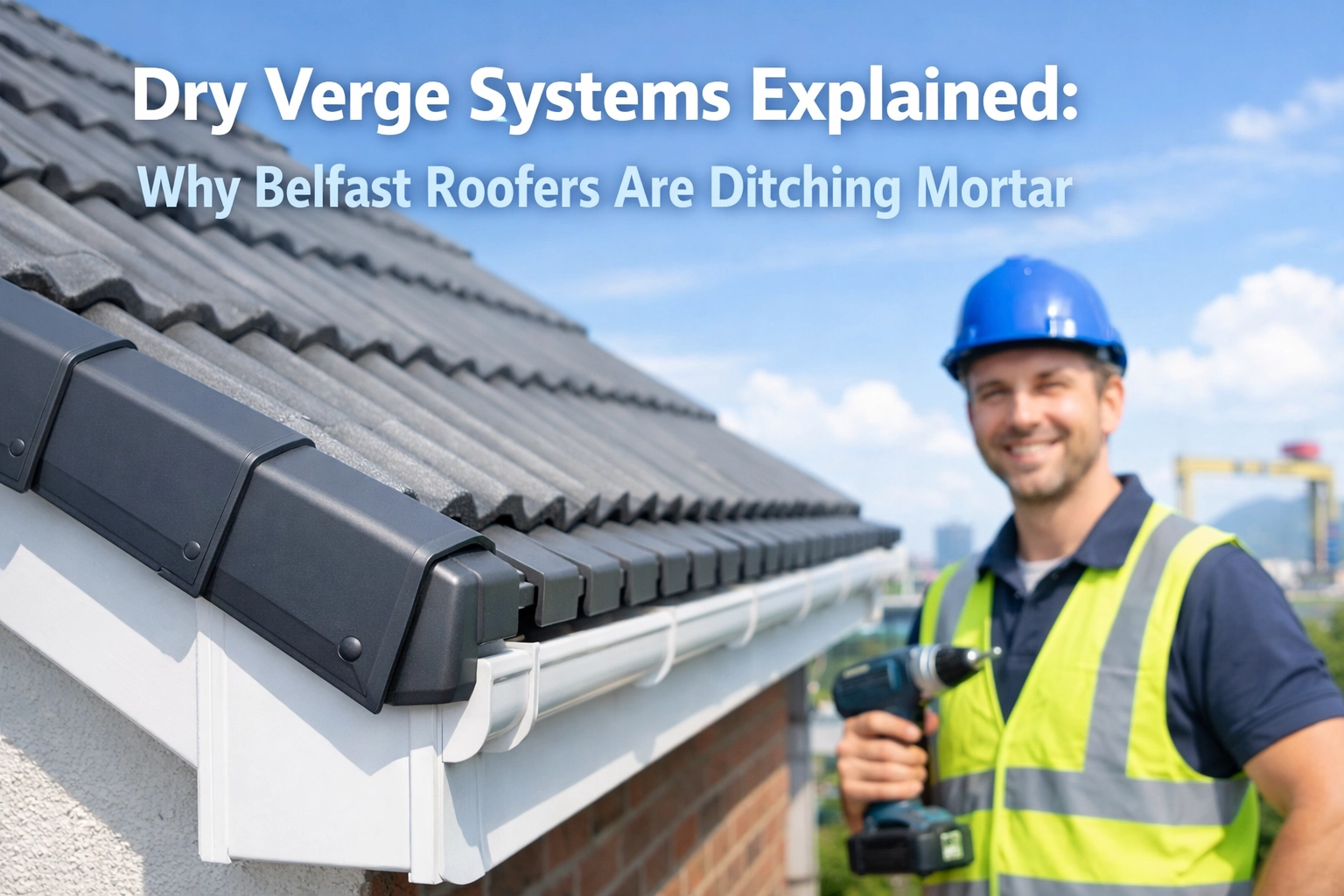

If you've ever looked at the gable end of your roof and noticed crumbling mortar or gaps where your verge tiles meet the edge, you're not alone. Traditional mortar verges are failing across Belfast and Northern Ireland: and there's a better solution that roofers are switching to in droves.
Dry verge systems are replacing old-school mortar, and for good reason. They last longer, perform better in our unpredictable weather, and require virtually zero maintenance. If you're planning a roof repair or replacement, understanding this shift could save you thousands in the long run.
Let's break down what dry verge systems actually are, why traditional mortar is becoming obsolete, and why this matters for your Belfast property.
What Exactly Is a Dry Verge System?
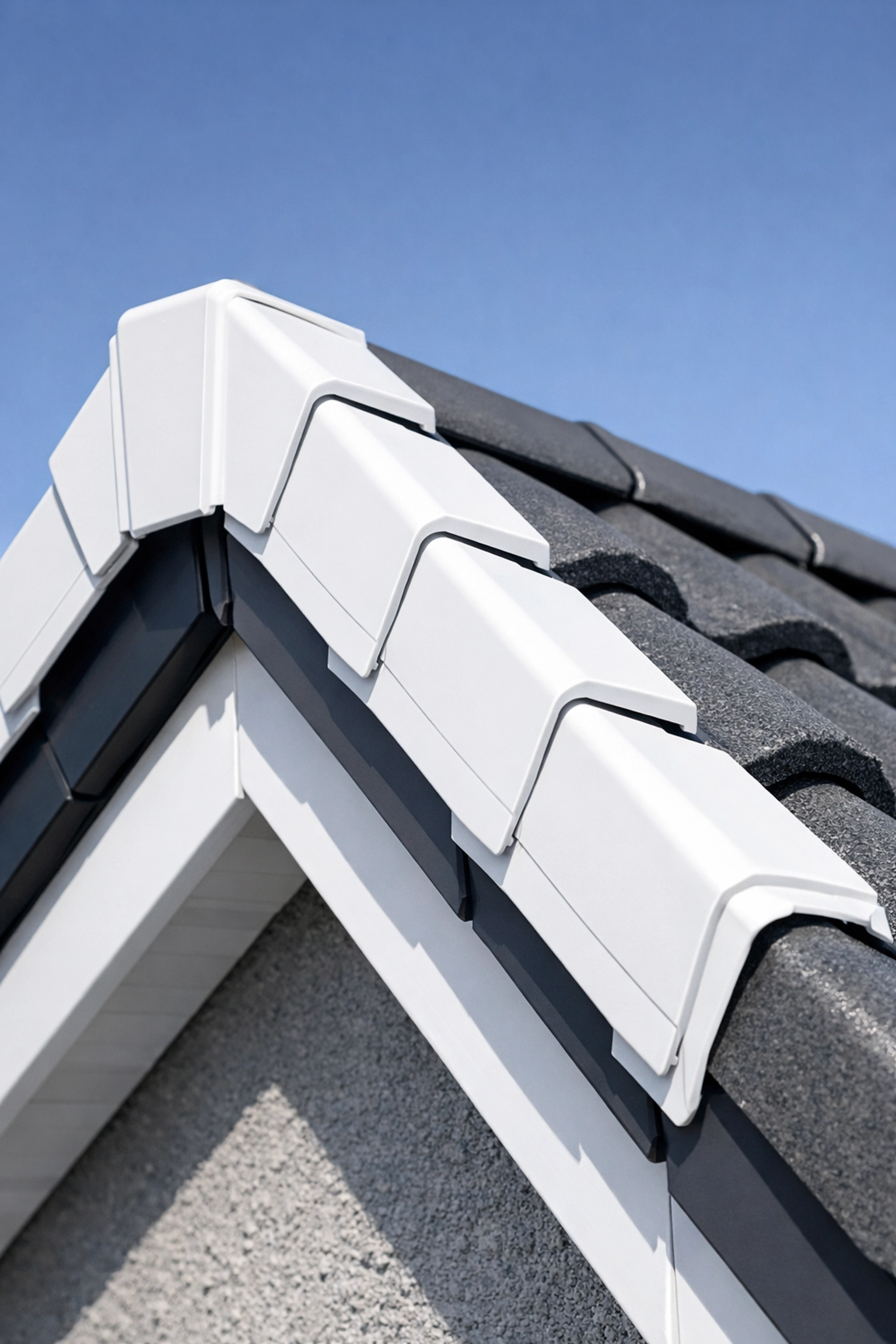
A dry verge system is a mechanical roofing solution that uses interlocking plastic caps to seal the edge of your roof tiles where they meet the gable end. Instead of bedding tiles in sand and cement mortar, these purpose-built caps clip securely over the edge tiles, creating a weatherproof seal without any wet materials.
The system typically includes:
- End caps that fit over the final tile on each row
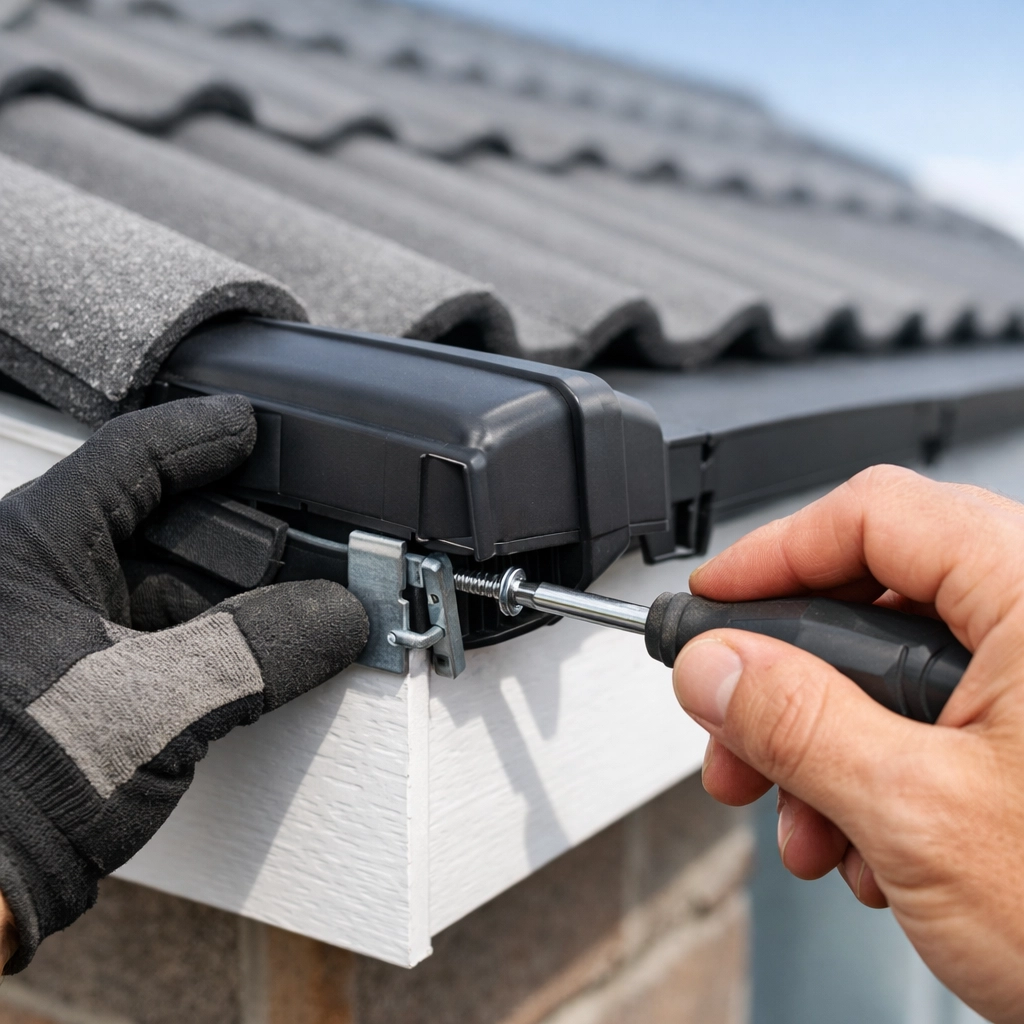
- Universal clips that secure tiles mechanically to the fascia board
- Drainage channels built into the design to direct water away from the gable wall
- Ventilation gaps that allow air circulation into the roof space
Think of it as a modern, engineered replacement for the traditional mortar pointing you'd see on older roofs. The difference? It actually works long-term.
Why Traditional Mortar Verges Keep Failing Belfast Homeowners
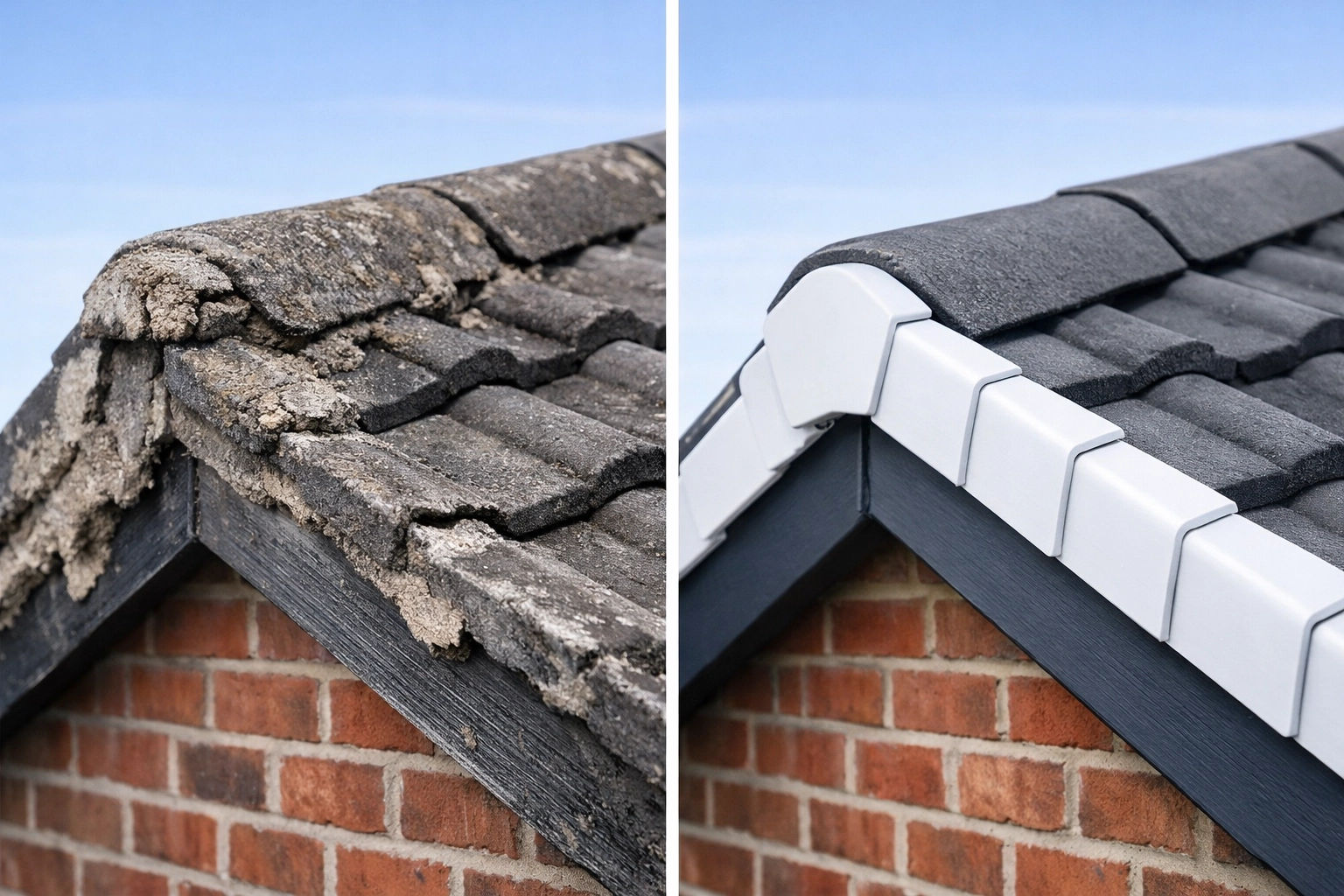
Belfast's weather doesn't do mortar any favors. Our combination of heavy rainfall, strong winds, and temperature fluctuations creates the perfect conditions for mortar deterioration. Here's what's happening on thousands of roofs across Northern Ireland right now:
Thermal movement cracks the mortar. As temperatures swing from cold to warm, your roof materials expand and contract. Mortar is rigid and can't flex with this movement: so it cracks. Once those hairline fractures appear, water gets in and accelerates the breakdown.
Freeze-thaw cycles speed up deterioration. Water seeps into those cracks, freezes in winter, expands, and breaks the mortar apart from the inside. After a few harsh winters, you're looking at chunks of mortar falling off your roof entirely.
Mortar doesn't bond permanently to modern tiles. Older clay tiles had a rough surface that mortar could grip. Many modern concrete tiles have smoother finishes, which means the mortar bond is weaker from day one. Add wind uplift and driving rain, and you've got a verge that won't last five years.
Wind uplift literally rips mortar loose. Belfast and coastal areas experience significant wind loads. Traditional mortar provides no mechanical fixing: it relies purely on adhesion. When storm winds get underneath those verge tiles, the mortar simply can't hold them down.
The result? Frequent repointing, ongoing maintenance costs, and eventually, complete verge failure. Many Belfast homeowners find themselves paying for mortar repairs every 3-5 years. That's not a long-term solution: that's a recurring expense.
The Five Reasons Roofers Are Making the Switch
1. Durability That Actually Lasts
Dry verge systems are manufactured from UV-stabilized plastics designed to withstand decades of weather exposure. Most manufacturers offer guarantees of at least 10 years, but realistically, these systems last 20-30 years with minimal degradation.
Compare that to mortar verges that need repointing every few years. The math is simple: one installation versus multiple repair callouts. Dry verge systems eliminate the maintenance cycle entirely.
2. Weather Performance That Meets Building Standards
Here's something many Belfast homeowners don't realize: dry verge systems are now a building control requirement under BS 5534 for all new roofs. Why? Because they provide the only reliable protection against wind uplift in exposed locations.
The mechanical fixing system secures each tile independently. Even in severe storm conditions, your verge tiles stay exactly where they should be. No blown-off tiles, no emergency repairs after every weather event, no stress during storm season.
If you're in a coastal area or anywhere with regular high winds, this isn't optional: it's essential protection for your property.
3. Installation That Works in Any Weather
Traditional mortar can't be applied in temperatures below 4°C or during rain. In Belfast, that rules out installation for a significant portion of the year. Projects get delayed, scaffolding hire extends, and costs escalate.
Dry verge systems install in any weather conditions. Rain, cold, heat: it makes no difference. Your roofer can complete the work on schedule without weather-related delays. For commercial projects or time-sensitive repairs, this flexibility is invaluable.
4. Ventilation That Prevents Condensation Problems
This benefit surprises many homeowners, but it's crucial for roof health. Traditional mortar creates a sealed barrier along your verge that traps moisture inside the roof space. Over time, this contributes to condensation buildup, damp insulation, and timber rot.
Dry verge systems incorporate controlled ventilation gaps that allow air circulation without letting rain in. This airflow helps manage condensation naturally, protecting your roof structure and insulation from moisture damage.
We've written extensively about roof ventilation issues: if you're experiencing damp problems in your loft, poor ventilation is likely a contributing factor.
5. A Cleaner, More Professional Finish
Let's be honest: mortar verges often look rough. Even skilled roofers struggle to create perfectly uniform mortar pointing, and within months, weathering makes them look worse. Staining on render, uneven profiles, and visible cracks all detract from your property's appearance.
Dry verge systems provide a consistently neat, professional finish. The uniform caps create clean lines that enhance your roof's appearance rather than compromise it. For properties being marketed for sale, this modern finish can contribute to better first impressions and potentially higher valuations.
What About Listed Buildings and Conservation Areas?
Building regulations do make exceptions for listed properties and buildings in conservation areas, where traditional mortar verges may be required to maintain historical character. If your Belfast property falls into these categories, consult with your local planning authority before making changes.
For the vast majority of residential and commercial properties, however, dry verge systems are not only permitted: they're preferred by building control and insurance assessors.
The Cost Reality: Investment vs. Ongoing Expense
The upfront cost of dry verge systems is higher than traditional mortar. Expect to pay approximately 20-40% more for the initial installation. For many Belfast homeowners, this price difference causes hesitation.
But here's the full picture:
Traditional mortar verges require repointing every 3-5 years. Each repointing job involves scaffolding, labor, materials, and disruption. Over a 15-year period, you'll likely pay for 3-4 separate repair projects. Add those costs up, and the total exceeds the one-time investment in a dry verge system.
The dry verge system pays for itself through eliminated maintenance costs. Plus, you avoid the hassle of recurring repairs, the stress of storm damage, and the risk of more serious problems if mortar failure goes unaddressed.
When we conduct roofing surveys across Belfast, failed verges are one of the most common defects we identify. Homeowners who've already switched to dry verge systems consistently report satisfaction with the decision.
How to Know If Your Belfast Property Needs This Upgrade
Inspect your roof verges twice yearly. Look for these warning signs that indicate mortar failure:
- Visible cracks in the mortar along the gable edge
- Gaps appearing between the mortar and tiles
- Loose or lifted verge tiles
- Mortar chunks on the ground below your gutters
- Staining or water marks on the gable wall render
- Tiles that rattle or move when touched
If you spot any of these issues, don't wait for complete failure. Failed verges allow wind-driven rain directly into your roof structure, causing far more expensive damage to timber, insulation, and internal ceilings.
Request a professional roof inspection if you're uncertain about your verge condition. A qualified roofer can assess whether repair or full replacement makes more sense for your specific situation.
Making the Switch: What to Expect
A complete dry verge installation typically takes 1-2 days for an average Belfast semi-detached property. The process involves:
- Removing existing mortar and preparing the roof edge
- Installing support trays and clips along the fascia
- Fitting the interlocking caps over each tile course
- Sealing the ridge junction appropriately
- Final inspection and cleanup
Choose roofers with specific experience installing dry verge systems. While the concept is straightforward, proper installation requires attention to manufacturer specifications, especially regarding ventilation gaps and clip spacing.
Poor installation can compromise the system's weather performance and void manufacturer guarantees. Always verify that your roofer is certified to install the specific dry verge product they're recommending.
The Bottom Line for Belfast Homeowners
Dry verge systems represent genuine improvement over traditional mortar: this isn't just marketing hype. The technology solves real problems that Belfast homeowners face with our challenging weather conditions.
If you're replacing your roof, installing dry verge systems is a no-brainer. The small additional cost delivers decades of maintenance-free performance and superior protection.
If your existing mortar verges are failing, retrofitting dry verge systems makes financial sense. You'll eliminate ongoing repointing costs and protect your property from progressive water damage.
Contact Advanced Construction & Roofing for a professional assessment of your roof verges. We'll provide honest advice about whether your current mortar still has serviceable life or if upgrading to a dry verge system makes sense for your situation.
Our team has installed dry verge systems across hundreds of Belfast properties. We understand local weather challenges, building regulations, and the specific performance requirements your roof needs to meet.
Call us today for a free roof inspection. We'll evaluate your verges, explain your options clearly, and provide transparent pricing with no pressure. Your roof is too important to leave to chance: let's make sure it's protected properly for the long term.