


If you're planning a roof project in Belfast, you've probably heard contractors throw around terms like "cold roof" and "warm roof." Here's the thing: this isn't just technical jargon. The ventilation strategy you choose directly impacts your heating bills, moisture problems, and how long your roof actually lasts.
Belfast's damp climate makes this decision even more critical. Get it wrong, and you could be dealing with condensation, mould growth, and rotting timbers within a few years. Get it right, and you'll have a roof that performs brilliantly for decades.
Let's break down exactly what these systems are, how they differ, and which one actually makes sense for your Northern Ireland property.
What Exactly Is a Cold Roof?
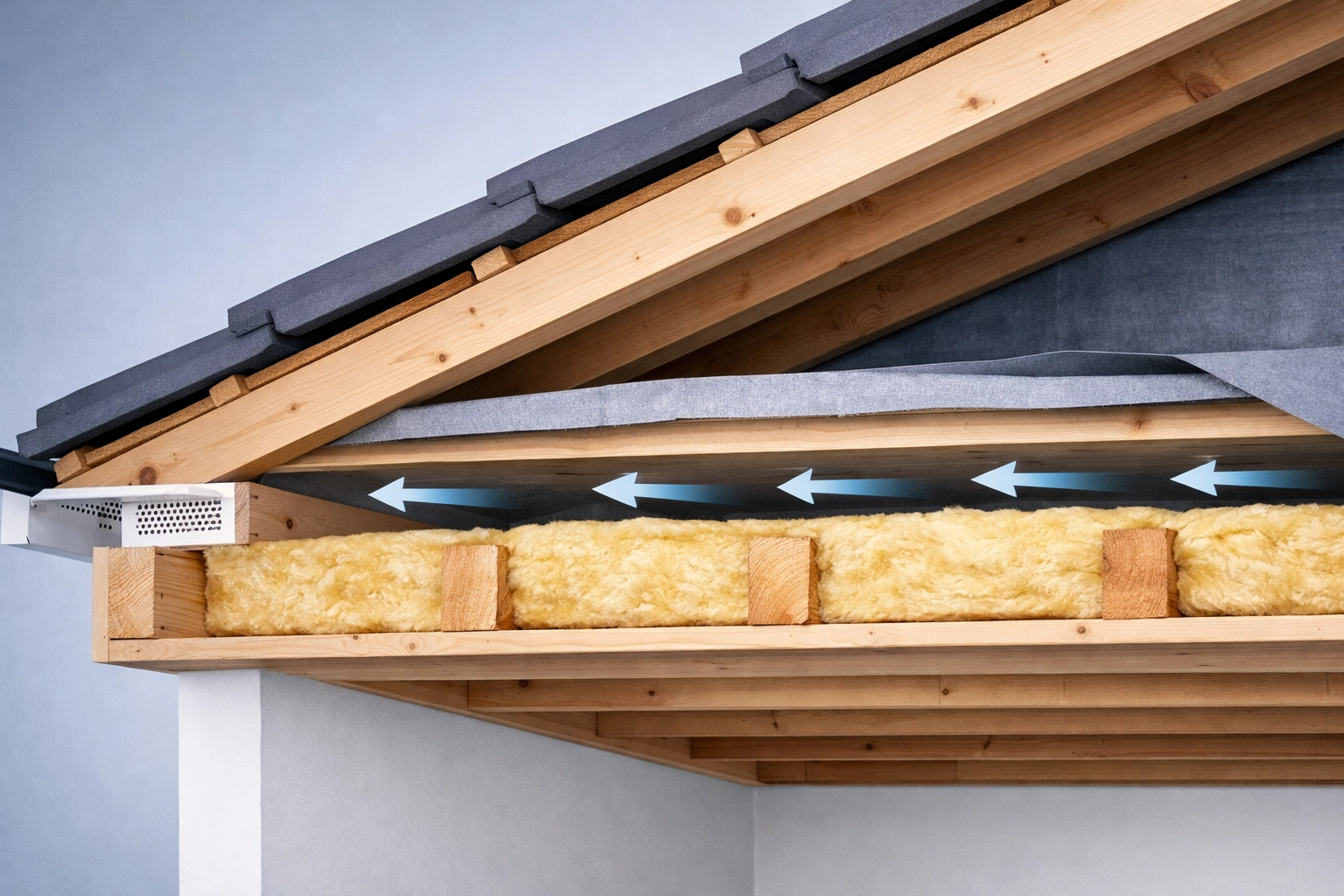
A cold roof system keeps the insulation at ceiling level: between the joists in your loft space. The void above the insulation stays cold (hence the name), and ventilation is built into the eaves and ridge to allow air to circulate through this space.
The theory sounds sensible: air flows through the void, carrying away any moisture that might accumulate. This should prevent condensation from forming on the underside of your roof deck.
In practice? It's trickier than it sounds, especially in Belfast.
Cold roofs require perfect vapor barriers and consistent ventilation to work properly. UK Building Regulations demand at least 50mm of clear ventilation space with effective cross-flow ventilation. But here's what actually happens: over time, ventilation pathways get blocked by insulation, bird nests, or debris. The vapor barrier gets punctured during maintenance work or cable installations.
When either of these protections fails, you get condensation. And in Belfast's damp climate, condensation turns into a serious problem fast.
What Makes a Warm Roof Different?
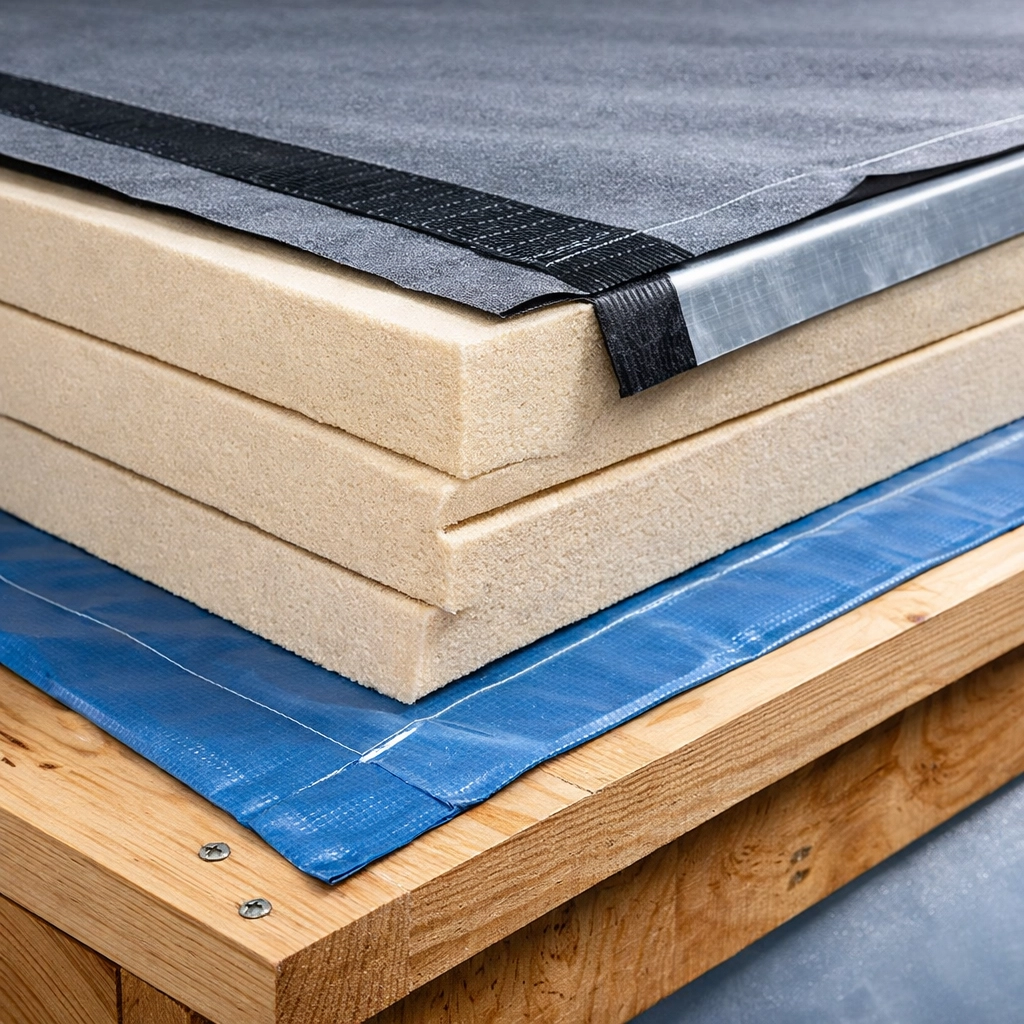
A warm roof takes a completely different approach. The insulation sits above the structural roof deck, keeping the entire roof structure warm and above the dew point temperature.
There's no cold void. No need for complex ventilation pathways. The roof deck, joists, and all structural elements stay at roughly the same temperature as the interior of your building.
This eliminates interstitial condensation almost entirely: moisture simply can't form because there's nowhere cold enough for it to condense.
From an installation perspective, warm roofs are more straightforward. The insulation creates a continuous thermal blanket with no gaps or cold spots. There are no thermal bridges through joists. No ventilation requirements to maintain over time.
For flat roofs especially, warm roof construction has become the go-to standard in modern building practice.
Cold Roof Vs Warm Roof: The Critical Differences
Let's compare these systems head-to-head:
Insulation placement: Cold roofs place insulation between joists at ceiling level. Warm roofs install insulation above the structural deck in a continuous layer.
Ventilation requirements: Cold roofs need extensive ventilation through the roof void. Warm roofs require no roof space ventilation.
Condensation risk: Cold roofs depend on perfect vapor control and ventilation: when either fails, condensation forms. Warm roofs keep everything above the dew point, virtually eliminating condensation risk.
Thermal performance: Cold roofs need around 200mm of mineral wool insulation to achieve good U-values. Warm roofs achieve the same performance with less material thickness thanks to continuous insulation with no thermal bridging.
Installation complexity: Cold roofs require careful vapor barrier installation and ventilation pathway design. Warm roofs offer simpler, more foolproof installation.
Long-term maintenance: Cold roofs need ongoing ventilation checks. Warm roofs require minimal maintenance attention.
Why Belfast's Climate Changes Everything

Belfast gets approximately 830mm of rainfall annually. Humidity levels stay consistently high, particularly during autumn and winter months. Temperatures hover around 4-7°C during winter, with damp conditions prevailing for extended periods.
This combination creates perfect conditions for condensation problems.
When warm, moist air from your heated interior meets cold surfaces in an inadequately ventilated roof void, moisture condenses immediately. In Belfast's climate, this happens constantly throughout the heating season.
Cold roofs struggle in these conditions because maintaining effective ventilation proves nearly impossible. Wind-driven rain can penetrate ventilation openings. High humidity means any ventilation failure leads to rapid moisture accumulation.
Warm roofs sidestep these problems entirely by eliminating cold surfaces where condensation can form.
What Are the Common Problems with Cold Roofs in Northern Ireland?
After 20 years of roof inspections across Belfast and surrounding areas, we've seen the same cold roof failures repeatedly:
Blocked ventilation pathways top the list. Insulation gets pushed into eaves during installation or upgrades, blocking air movement. Birds nest in ventilation gaps. Windblown debris accumulates over time.
Compromised vapor barriers come next. Every penetration for pipes, cables, or light fittings creates a potential vapor leak. One small gap allows warm, moist air into the roof void: and that's all it takes.
Insufficient cross-ventilation is another frequent issue. Many older properties have eaves ventilation but no ridge or high-level outlet. Air can't flow effectively without both inlet and outlet points.
The result? We regularly see timber decay, mould growth on sarking boards, and corroded roof fixings: all from condensation that shouldn't be there.
If you're concerned about existing roof problems, consider requesting a professional inspection through our roofing surveys service.
Why Do Warm Roofs Perform Better in Damp Climates?
Warm roofs solve Belfast's condensation challenges through simple physics: keep everything warm enough, and moisture can't condense.
The continuous insulation layer creates an unbroken thermal envelope. There are no cold spots, no thermal bridges through structural members, no temperature variations where condensation can form.
Energy efficiency improves dramatically. Without thermal bridging through joists, the same thermal performance requires less insulation thickness. Your heating system works less to maintain comfortable temperatures. Energy bills drop accordingly.
Installation reliability increases. There's no complex vapor barrier to install perfectly. No ventilation pathways to design and maintain. Fewer variables mean fewer opportunities for installation errors.
Long-term performance stays consistent. Unlike cold roofs where ventilation effectiveness degrades over time, warm roofs maintain their thermal and moisture management performance year after year with minimal maintenance.
For flat roof installations particularly, warm roof construction has become the industry standard precisely because it addresses moisture management so effectively.
Should You Choose Cold Roof or Warm Roof for Your Belfast Property?
For new builds and major renovations, warm roof construction wins decisively in Belfast's climate. The superior moisture control, better energy efficiency, and simpler installation make it the logical choice.
The higher initial material cost pays back through lower heating bills and virtually eliminated condensation maintenance issues.
For existing pitched roofs with accessible loft spaces, the decision gets more nuanced. If your current cold roof performs adequately with good ventilation and proper vapor control, upgrading may not be necessary. However, if you're experiencing condensation problems, timber decay, or planning significant insulation upgrades, converting to warm roof construction should be seriously considered.
For flat roofs specifically, warm roof design should be your default choice. The condensation risks with cold flat roofs in Belfast's climate simply don't justify the minimal cost savings.

What Should You Do Next?
If you're planning a roof project or dealing with existing condensation problems, get professional advice specific to your property.
Every building has unique characteristics: orientation, existing ventilation, internal moisture loads, structural considerations: that affect which approach works best.
Contact Advanced Construction & Roofing for a thorough assessment. We'll inspect your current roof condition, identify any existing moisture problems, and recommend the ventilation strategy that makes sense for your specific situation and budget.
Request a comprehensive roof survey if you're concerned about existing issues. Our detailed inspections identify condensation problems, ventilation failures, and structural concerns before they become expensive emergencies. Learn more about our Belfast roof survey and report service.
Don't guess about something this important. Roof ventilation affects your property's structural integrity, energy performance, and indoor air quality for decades. Make the decision based on professional assessment, not assumptions.
Call us today for an honest evaluation of your roof ventilation needs. We'll explain your options clearly, answer your questions directly, and recommend the solution that actually works for your Belfast property: not just the one that's easiest to install.
Your roof deserves better than a one-size-fits-all approach. Get it right the first time.