
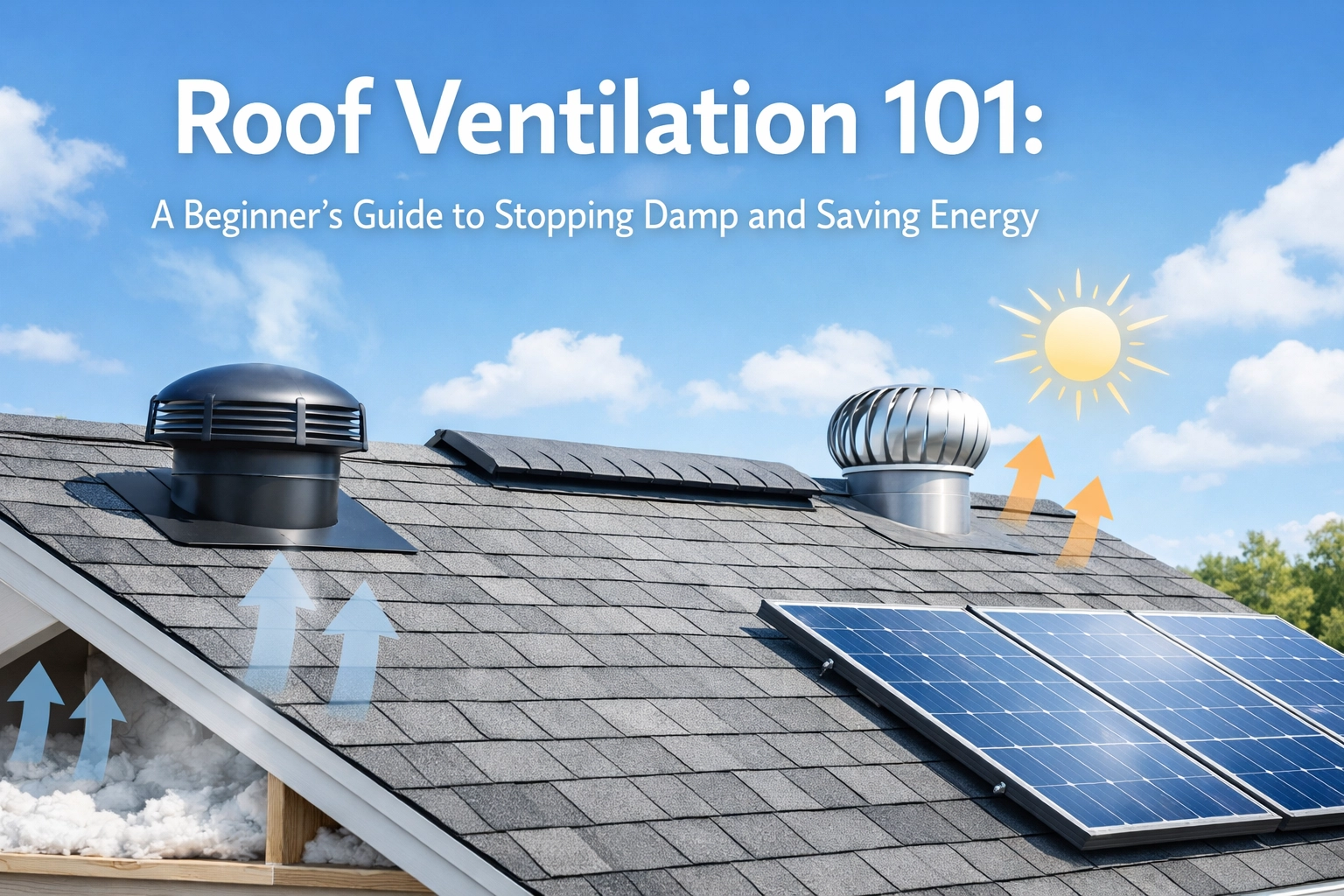

Your roof is doing more than just keeping rain out. It's managing a complex system of airflow that directly impacts your energy bills, your home's structural integrity, and your family's health. Yet roof ventilation is one of the most misunderstood aspects of home maintenance.
Proper roof ventilation creates a balanced system where fresh air enters your attic while hot, stale air and moisture escape. Without this balance, you're looking at mold growth, wood rot, sky-high energy costs, and a roof that won't last as long as it should.
This guide breaks down everything you need to know about roof ventilation: from how it works to which system is right for your home.
What Exactly Is Roof Ventilation?
Roof ventilation is a continuous exchange of air in your attic space. Fresh air enters through intake vents at the lower sections of your roof, while hot, moisture-laden air exits through exhaust vents near the peak.
Think of it like your home breathing. When your attic can't breathe properly, problems accumulate fast:
- Trapped moisture leads to mold and mildew
- Heat buildup forces your air conditioning to work overtime
- Condensation rots timber and damages insulation
- Ice dams form in winter, causing leaks and structural damage
- Your roof materials deteriorate faster than they should
The solution isn't just adding more vents: it's creating the right balance between intake and exhaust.
How Does Roof Ventilation Actually Work?
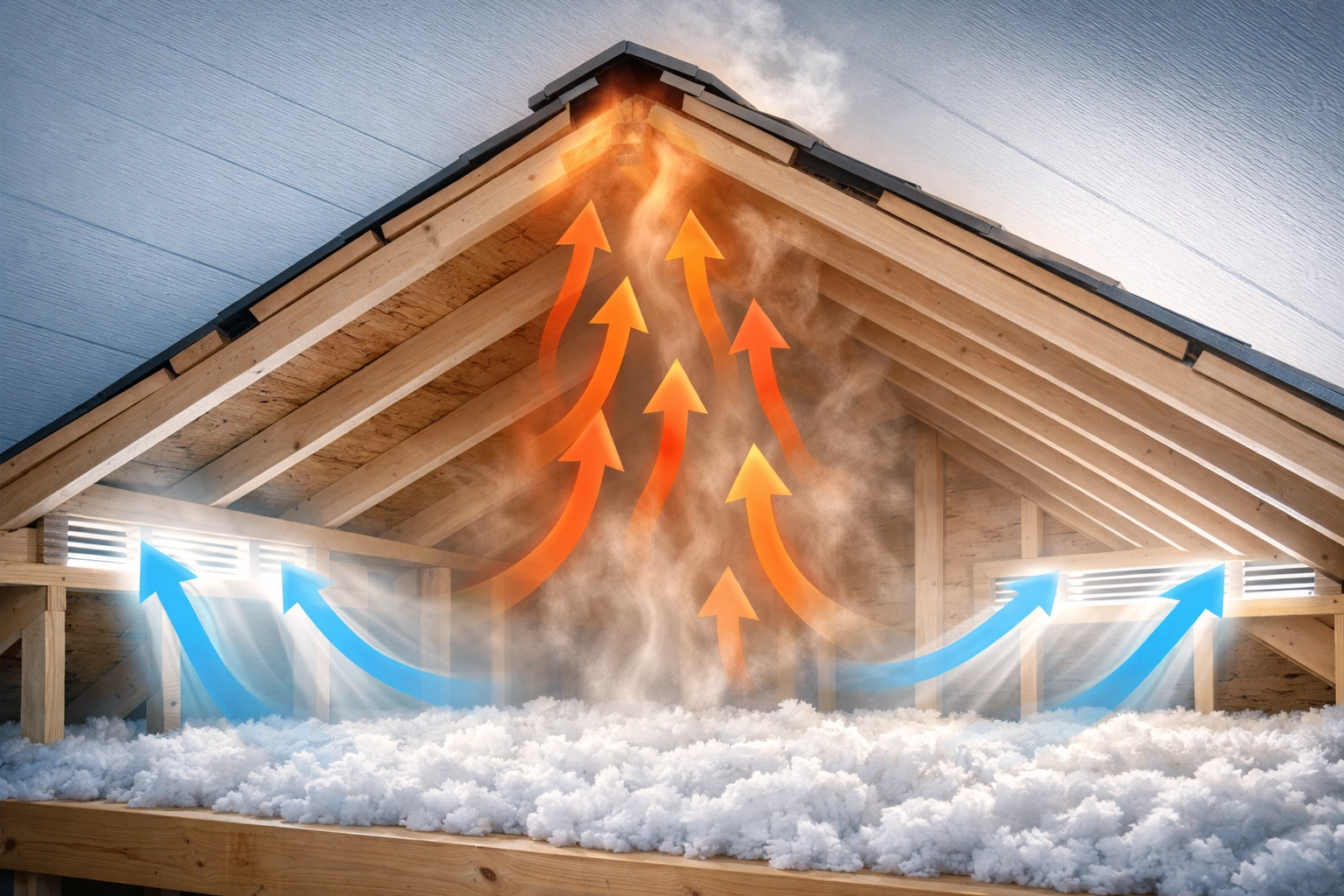
Effective roof ventilation relies on a simple principle: hot air rises, and cool air sinks.
Your ventilation system uses this natural convection to create continuous airflow:
Intake vents are positioned at the lowest points of your roof: typically in the soffits or fascia. These vents pull fresh, cooler air into the attic space from outside.
Exhaust vents sit at or near the roof's peak. As hot air naturally rises, these vents allow it to escape, pulling fresh air in through the intake vents below.
This creates a steady flow that keeps your attic temperature regulated and moisture levels controlled. But here's the critical part: you need roughly equal amounts of intake and exhaust ventilation.
Too many intake vents without enough exhaust? The hot air has nowhere to go. Too many exhaust vents without adequate intake? The system can't pull enough fresh air through to create proper circulation.
Balance is everything.
What Are the Main Types of Roof Vents?
Understanding your options helps you make informed decisions about what's best for your home.
Intake Vents: Where Fresh Air Enters
Soffit vents are the most common intake option. These vents run along the underside of your roof's overhang, providing consistent fresh air entry all along the eaves. They're effective, affordable, and work with most roof designs.
Drip edge vents offer an alternative when you have narrow or closed soffits. These vents install along the roof's edge, allowing air intake without requiring soffit modifications.
Fascia vents enable air intake for homes without traditional soffit overhangs. They install directly into the fascia board, creating intake points where soffits aren't available.
Exhaust Vents: Where Hot Air Escapes
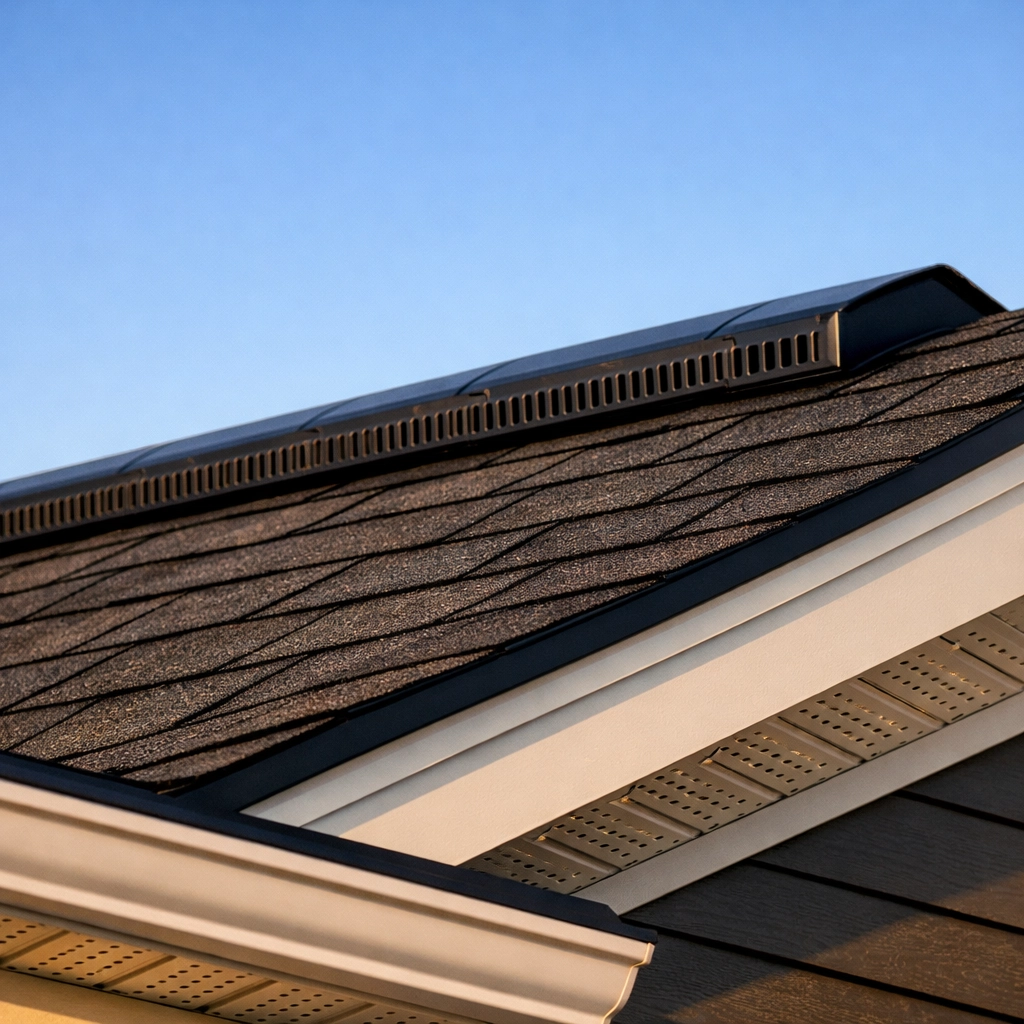
Ridge vents run along the entire peak of your roof. They're the most effective exhaust option for residential homes because they provide continuous ventilation along the hottest part of your attic. They blend seamlessly with your roofline and require minimal maintenance.
Box vents (also called static vents) are passive vents installed near the ridge. While effective, you typically need multiple units to match the coverage of a single ridge vent.
Turbine vents use wind power to spin and actively extract hot air. They're efficient when there's adequate wind but can be noisy and require occasional maintenance to prevent squeaking.
Powered attic fans actively remove hot air using electricity. They're useful for complex rooflines or homes with ventilation challenges, but they add to your energy costs.
Solar attic fans provide the benefits of powered fans without the electricity cost. They're environmentally friendly but depend on adequate sunlight to function properly.
Why Does Roof Ventilation Matter for Stopping Damp?
Moisture is your roof's enemy. Every day, normal household activities: cooking, showering, laundry: generate water vapor that rises into your attic.
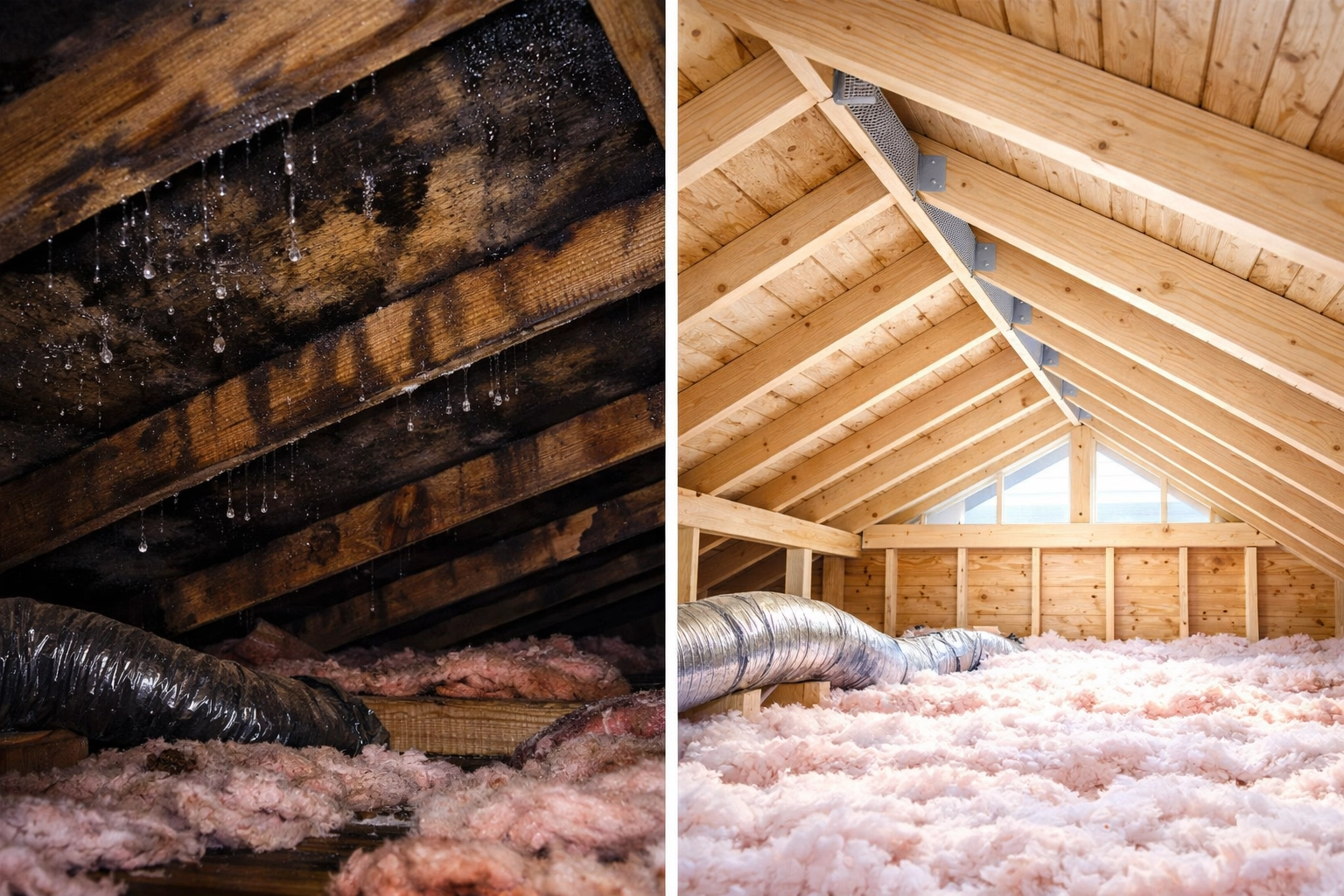
Without proper ventilation, this moisture gets trapped. The result? Condensation forms on cold surfaces, timber begins to rot, insulation loses effectiveness, and mold takes hold.
You might see the damage first in your ceiling: water stains, peeling paint, or that unmistakable musty smell. But by the time these signs appear, the problem has often been developing for months.
Proper roof ventilation prevents this by:
- Allowing moisture-laden air to escape before condensation forms
- Maintaining consistent temperatures that prevent condensation on cold surfaces
- Keeping timber dry and structurally sound
- Protecting your insulation's thermal performance
- Creating an environment where mold and mildew can't thrive
Request a professional roof survey if you notice any signs of moisture damage. Early detection prevents costly repairs down the line.
How Does Roof Ventilation Save You Money on Energy?
Your attic temperature directly impacts your energy bills: especially during summer months.
Without adequate ventilation, your attic can reach temperatures of 150°F or higher on hot days. This superheated air radiates down through your ceiling, forcing your air conditioning system to work significantly harder to maintain comfortable temperatures.
Proper roof ventilation reduces this heat buildup dramatically. Fresh air entering through intake vents stays cooler than the trapped attic air, while exhaust vents allow the hottest air to escape. This continuous exchange keeps attic temperatures much closer to outdoor temperatures.
The benefits extend beyond summer:
- Your air conditioning system runs less frequently
- Your HVAC equipment lasts longer due to reduced strain
- Your home maintains more consistent temperatures throughout
- You use less energy overall, reducing monthly utility costs
In winter, ventilation helps prevent ice dams by maintaining consistent attic temperatures. This prevents the freeze-thaw cycle that causes ice to build up along your roof's edge, potentially causing leaks and damage.
What's the Best Ventilation System for Your Home?
For most residential homes, ridge vents paired with continuous soffit vents provide the most effective ventilation system.
This combination offers several advantages:
Natural airflow: The system works with physics, not against it, creating reliable ventilation without mechanical parts or electricity.
Comprehensive coverage: Ridge vents run the entire length of your roof peak, providing consistent exhaust along the hottest area of your attic.
Low maintenance: With no moving parts, this system requires minimal upkeep once properly installed.
Aesthetic appeal: Ridge vents blend seamlessly with your roofline, maintaining your home's appearance while providing superior ventilation.
Cost-effective: While installation requires professional expertise, the long-term benefits far outweigh the initial investment.
Other ventilation combinations work for specific situations: homes with complex rooflines might benefit from supplemental box vents, while properties with ventilation challenges might need powered fans: but the ridge-and-soffit combination remains the gold standard for reliable roof ventilation.
Is Your Current Ventilation System Working Properly?
Many homeowners don't realize their ventilation is inadequate until problems develop. Call Advanced Construction & Roofing to assess your current system if you're experiencing:
- Excessive heat in upper-floor rooms during summer
- Ice dams forming along your roof edge in winter
- Musty odors in your attic or upper floors
- Visible moisture, condensation, or frost in your attic
- Higher-than-expected energy bills
- Mold or mildew growth in attic spaces
Professional assessment identifies ventilation issues before they cause serious damage. Our experienced team can evaluate your current system, calculate proper ventilation requirements based on your attic size, and recommend solutions tailored to your specific home.
Contact us today for a comprehensive roof survey. We'll provide honest assessment, transparent pricing, and expert installation that protects your home for years to come.
Don't wait for damp damage or energy bills to force your hand. Proper roof ventilation is an investment that pays dividends in comfort, energy savings, and peace of mind.
Visit adv-group.co.uk or call us directly to schedule your roof ventilation assessment. Your roof: and your wallet( will thank you.)