
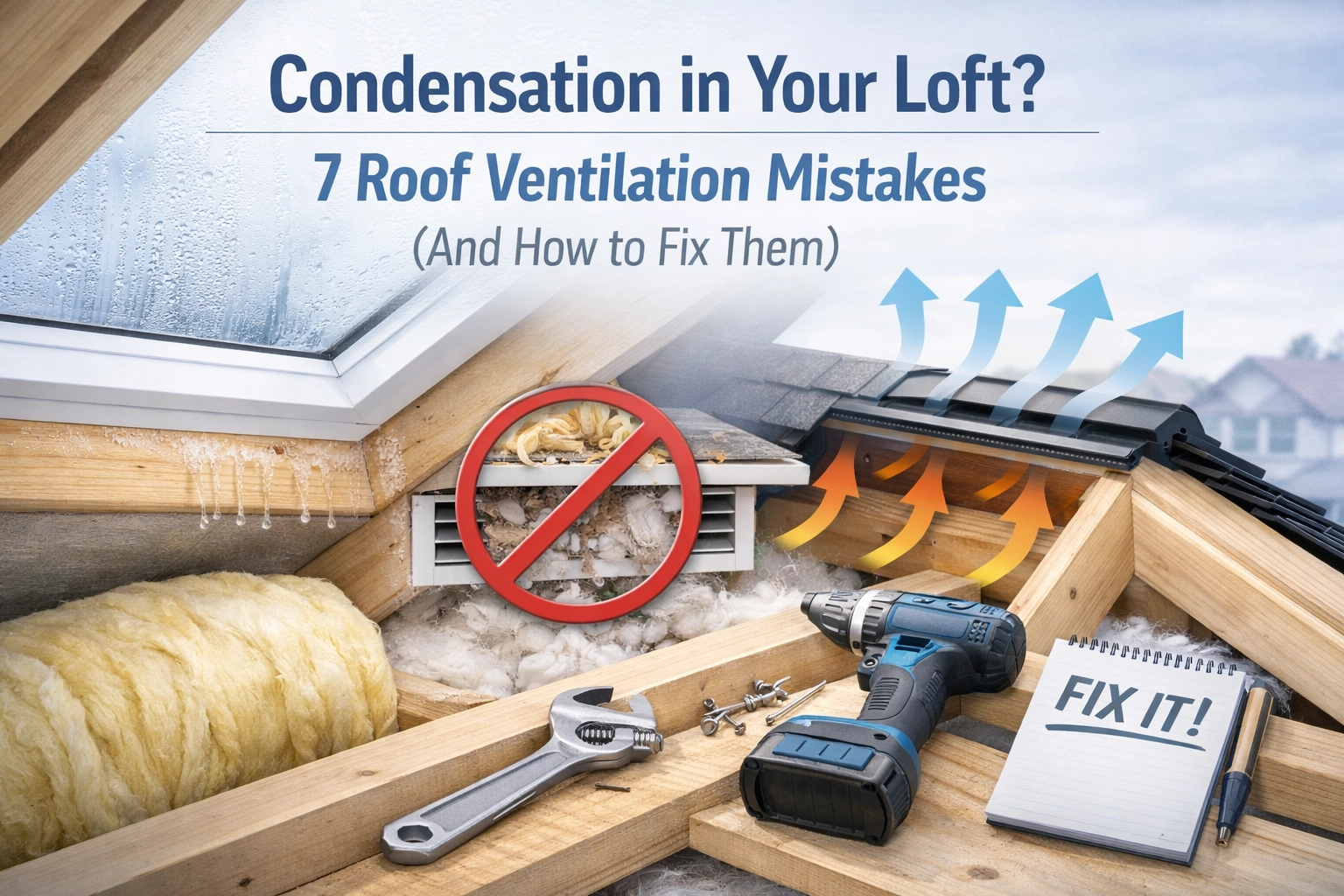

Noticed damp patches on your ceiling? Spotted water droplets forming on the underside of your roof? You're likely dealing with loft condensation: and poor roof ventilation is almost always the culprit.
In Northern Ireland's damp climate, condensation problems affect thousands of homes every year. The issue happens when warm, moist air from your living spaces rises into a cold loft space, hitting cold surfaces and turning into water. Left unchecked, this leads to rotting timbers, damaged insulation, mould growth, and expensive repair bills.
The good news? Most loft condensation issues stem from preventable roof ventilation mistakes. Here are the seven most common errors we see at Advanced Construction & Roofing: and exactly how to fix them.
Mistake #1: Insulation Blocking Your Vent Pathways
This is the number one ventilation mistake we encounter.
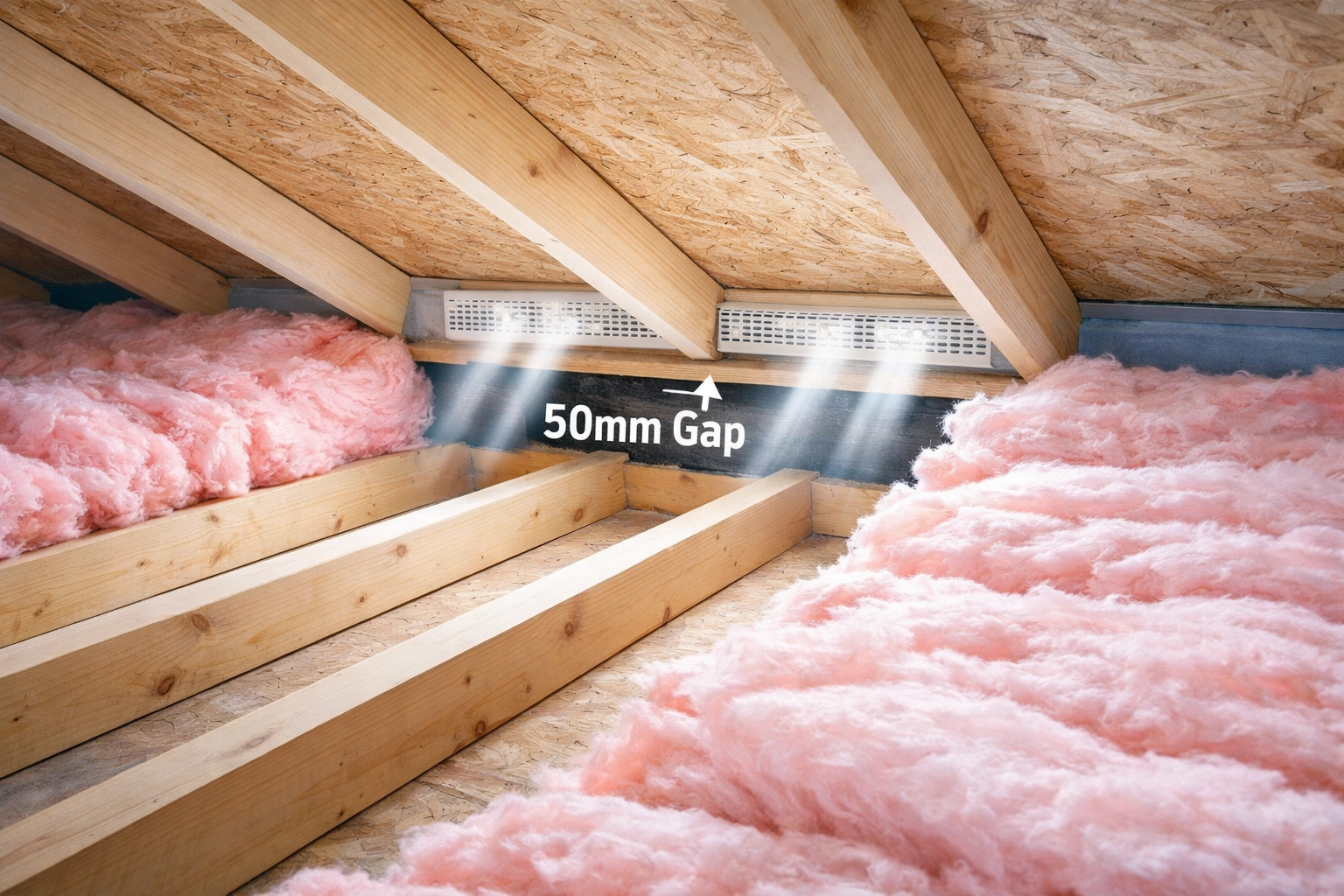
When homeowners add extra loft insulation to save energy (a smart move), they often push it right into the eaves: the corners where your roof meets the loft floor. This blocks the crucial airflow pathway that allows fresh air to enter through soffit vents and circulate through your loft space.
How to Fix It:
Pull back your insulation to create at least a 50mm gap at the eaves. You can install proprietary eaves ventilation trays or simply use cardboard baffles to hold insulation back while maintaining airflow. This simple adjustment restores the circulation your roof ventilation system needs to function properly.
Mistake #2: Debris and Items Obstructing Your Vents
Your loft might have perfectly good ventilation: you just can't see it anymore under years of dust, cobwebs, and stored belongings.
Roof vents, soffit vents, ridge vents, and corner vents all become blocked over time. Boxes stacked against walls, Christmas decorations piled in corners, and general dust accumulation prevent air from flowing where it needs to go.
How to Fix It:
Conduct a thorough loft inspection. Clear away stored items from around the perimeter. Use a vacuum to remove dust and debris from visible vents. Check that external soffit vents haven't been painted over or blocked by bird nests. This maintenance takes an hour but can solve years of condensation problems.
Can't access your loft safely? Contact Advanced Construction & Roofing for a professional roof survey. We'll assess your ventilation system and identify any blockages affecting your roof's performance.
Mistake #3: Inadequate Ventilation for Modern Homes
Here's what many homeowners don't realise: your home's ventilation needs have changed.
Older homes were built with ventilation levels suited to draughty windows, uninsulated walls, and naturally leaky building envelopes. When you upgrade to double glazing, add cavity wall insulation, and seal draughts: your home becomes airtight. That's excellent for energy efficiency, but terrible for loft ventilation.
Your once-warm loft space now stays much colder because less heat escapes through walls and windows. The original ventilation, adequate twenty years ago, can't handle the moisture load your household produces today.
How to Fix It:
Add supplementary roof ventilation. Options include:
- Ridge vents running along your roof peak for continuous airflow
- Tile vents integrated into your existing roof tiles
- Gable end vents on properties with suitable wall space
- Mechanical extraction for severe cases
Advanced Construction & Roofing specialises in assessing ventilation requirements for Northern Ireland homes. We calculate the precise ventilation your property needs based on loft size, insulation levels, and household moisture production.
Mistake #4: Poor Loft Boarding Installation
Converting your loft into storage space makes practical sense: until it creates condensation problems.
When loft boarding sits directly on top of insulation, it compresses the material and traps warm air beneath it. This makes your loft space colder and more prone to condensation. The trapped moisture has nowhere to go, leading to damp boarding, rotting joists, and damaged stored items.
How to Fix It:
Ensure at least 50mm clearance between the underside of loft boarding and the insulation below. Use loft boarding legs or raised loft flooring systems that create an air gap. This allows air to circulate around and through the insulation while maintaining storage capacity.
If you've already boarded your loft without this clearance, you'll need to lift the boards and retrofit a raised system. It's extra work now, but prevents thousands in damage later.
Mistake #5: Missing or Insufficient Ridge Ventilation
The ridge of your roof: the highest point where two slopes meet: is where warm air naturally accumulates. Without proper ventilation here, that warm air has nowhere to escape.
Many older homes in Northern Ireland have no ridge ventilation whatsoever. Others have ridge tiles with inadequate ventilation gaps that don't provide sufficient airflow for modern insulation standards.
How to Fix It:
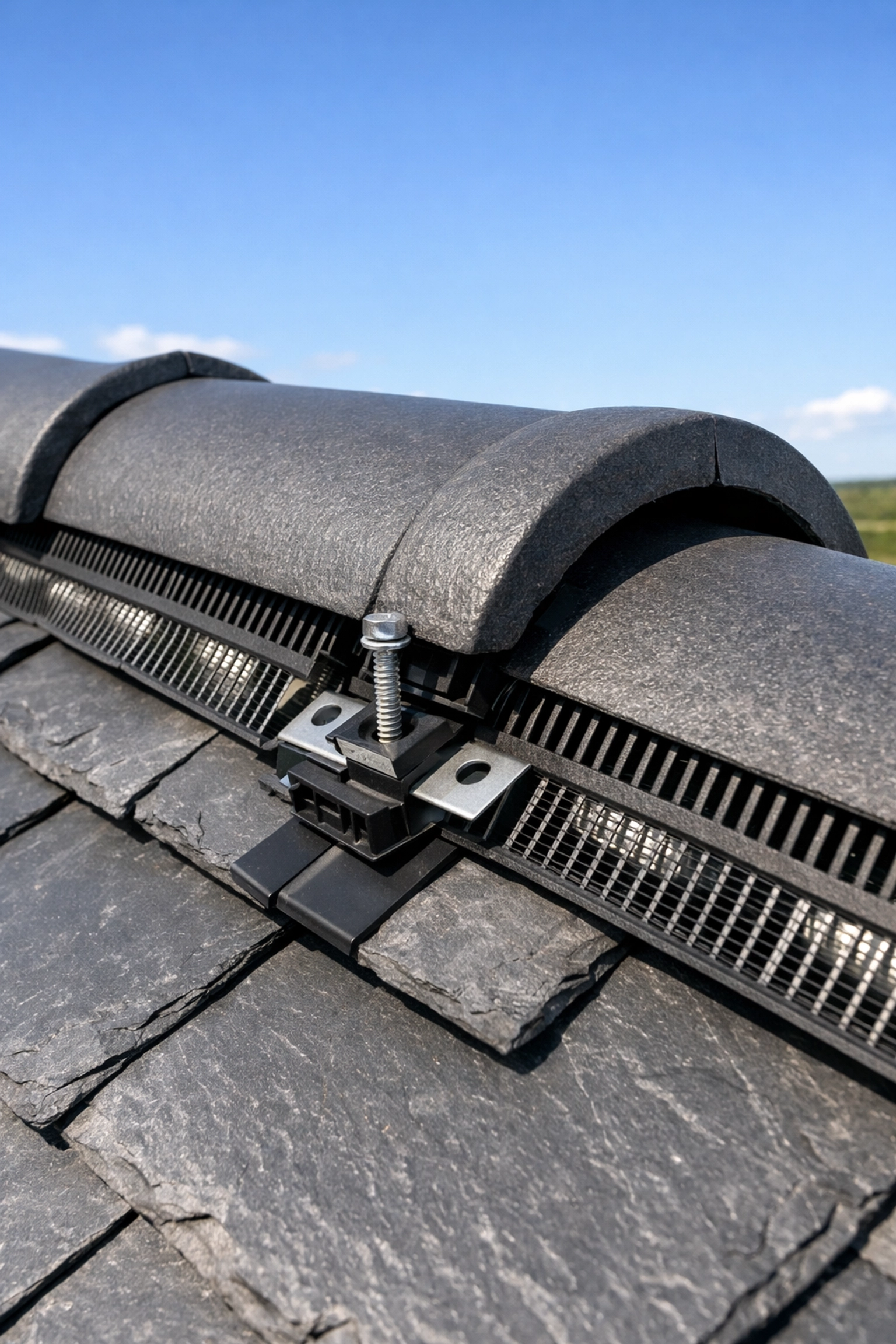
Install a continuous ridge ventilation system. Dry ridge systems, which we specialise in at Advanced Construction & Roofing, provide excellent ventilation while protecting against weather penetration. These systems replace traditional mortar ridge tiles with mechanically fixed units featuring built-in ventilation channels.
Dry ridge ventilation offers:
- Continuous airflow along the entire roof ridge
- Weather-tight protection against Northern Ireland's driving rain
- Low maintenance compared to mortar ridge systems
- Improved roof performance in all weather conditions
Request a roof survey to determine if your ridge ventilation meets current standards.
Mistake #6: Blocked or Absent Soffit Ventilation
Roof ventilation works on a simple principle: cool air enters at the lowest point (soffits), warms as it rises, and exits at the highest point (ridge). Without adequate soffit ventilation, this circulation never starts.
Common soffit problems include:
- Painted over vents from exterior decorating work
- Solid soffits with no ventilation installed
- Undersized vents insufficient for loft volume
- Bird nests blocking airflow from outside
How to Fix It:
Install continuous soffit vents or upgrade existing ones to larger sizes. For solid soffits, retrofit circular ventilation discs at regular intervals. Ensure you have equivalent ventilation areas at both soffit level (air intake) and ridge level (air exhaust) for balanced airflow.
Calculate 10,000mm² of ventilation per metre run of eaves as a general rule. Your specific requirements depend on roof pitch, loft size, and insulation levels.
Mistake #7: Ignoring Moisture Sources Below the Loft
Even perfect roof ventilation can't overcome excessive moisture generation within your home.
Condensation happens when you produce more moisture than your ventilation system can handle. Common culprits include:
- Bathroom steam without proper extraction
- Cooking without extractor fans or open windows
- Drying laundry indoors without adequate ventilation
- Gaps around loft hatches allowing moist air to escape upward
- Recessed light fittings creating pathways for warm air
How to Fix It:
Address moisture at source. Install and actually use kitchen and bathroom extractor fans. Open windows after showering. Dry laundry outside or in a vented utility room. Seal gaps around loft hatches with draught-proofing strip. Fit sealed covers over recessed lights.
For homes with persistent moisture problems, consider a mechanical ventilation with heat recovery (MVHR) system. These systems continuously extract moist air while bringing in filtered, dry air: all while recovering heat energy to maintain comfort and efficiency.

When to Call the Professionals
Some roof ventilation problems require professional assessment and installation. Contact Advanced Construction & Roofing if you're experiencing:
- Persistent condensation despite clearing blockages
- Visible mould growth on timbers or insulation
- Rotting roof timbers or structural concerns
- Large-scale ventilation upgrades requiring multiple vent types
- Complex roof configurations where ventilation pathways aren't clear
We provide comprehensive roof surveys across Northern Ireland, identifying ventilation deficiencies and recommending cost-effective solutions. Our team has extensive experience with condensation problems specific to Northern Ireland's climate and housing stock.
Take Action Before Condensation Causes Serious Damage
Loft condensation doesn't fix itself: it gets progressively worse until you address the underlying ventilation problems. Rotting timbers, collapsed insulation, and mould growth all develop silently above your ceiling until visible damage appears below.
The best time to fix ventilation problems was yesterday. The second best time is today.
Check your loft for the seven mistakes outlined above. Clear blockages, pull back insulation from eaves, and ensure air can flow freely from soffit to ridge. For problems beyond DIY solutions, professional help prevents expensive damage down the line.
Advanced Construction & Roofing brings decades of experience solving condensation and roof ventilation challenges across Northern Ireland. We understand the specific problems our climate creates and the solutions that work long-term.
Ready to solve your loft condensation problems? Visit Advanced Construction & Roofing or call us directly for a professional roof survey and ventilation assessment. We'll identify exactly what's causing your condensation and provide practical, cost-effective solutions that protect your home for years to come.
Don't wait until water damage forces emergency repairs. Contact us today and breathe easier knowing your roof ventilation is working exactly as it should.