
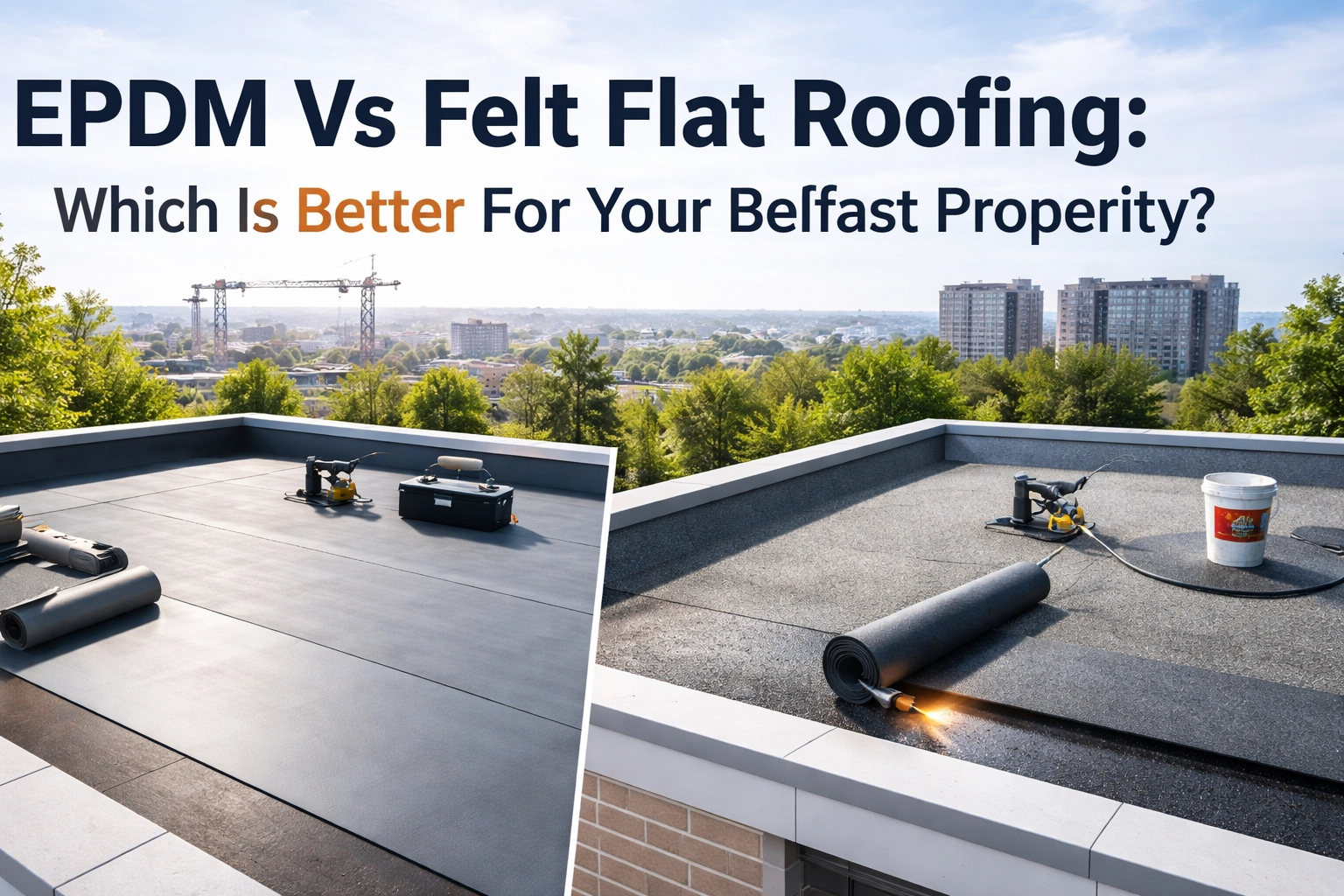

If you own a property in Belfast with a flat roof, you've probably asked yourself this question at least once: should I go with EPDM or stick with traditional felt?
It's a fair question. Both materials have been used on flat roofs across Northern Ireland for decades. But here's the thing: Belfast's weather doesn't play nice with every roofing material. Our damp climate, frequent rain, and those annoying freeze-thaw cycles during winter can absolutely destroy the wrong roof.
So let's break it down. No jargon. No confusing technical terms. Just the honest truth about which flat roofing material will actually protect your Belfast home or commercial property for the long haul.
What Exactly Is Felt Roofing?
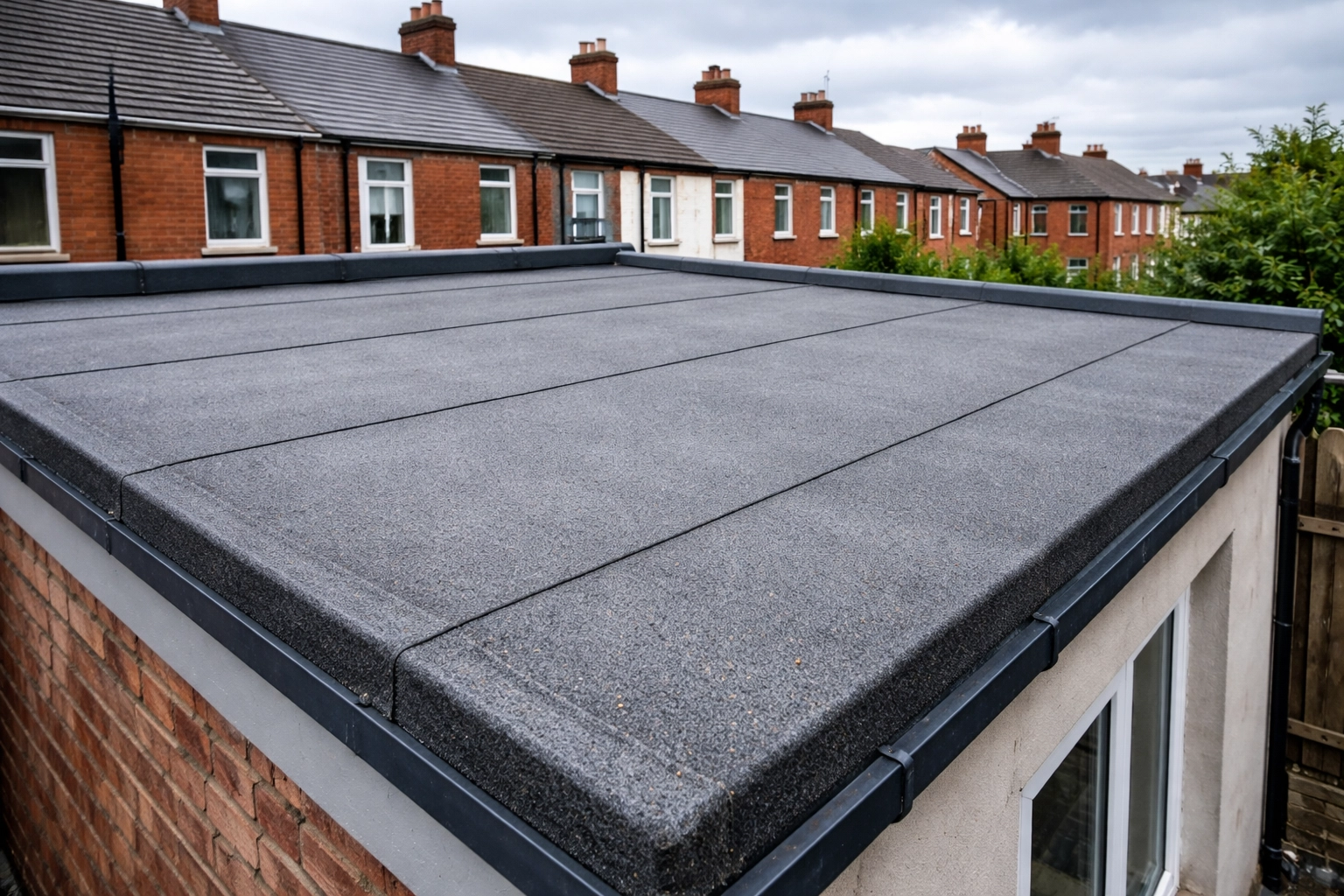
Felt roofing (also called bitumen felt) has been the traditional choice for flat roofs in the UK for generations. It's made from layers of bitumen-saturated material, typically applied in two or three layers with hot or cold adhesive.
You've seen felt roofs everywhere in Belfast: on extensions, garages, sheds, and older commercial buildings. It's familiar. It's what your dad probably had on his garage.
But familiar doesn't always mean best.
What Is EPDM Roofing?
EPDM stands for Ethylene Propylene Diene Monomer. Don't worry about remembering that: just know it's a type of synthetic rubber membrane.
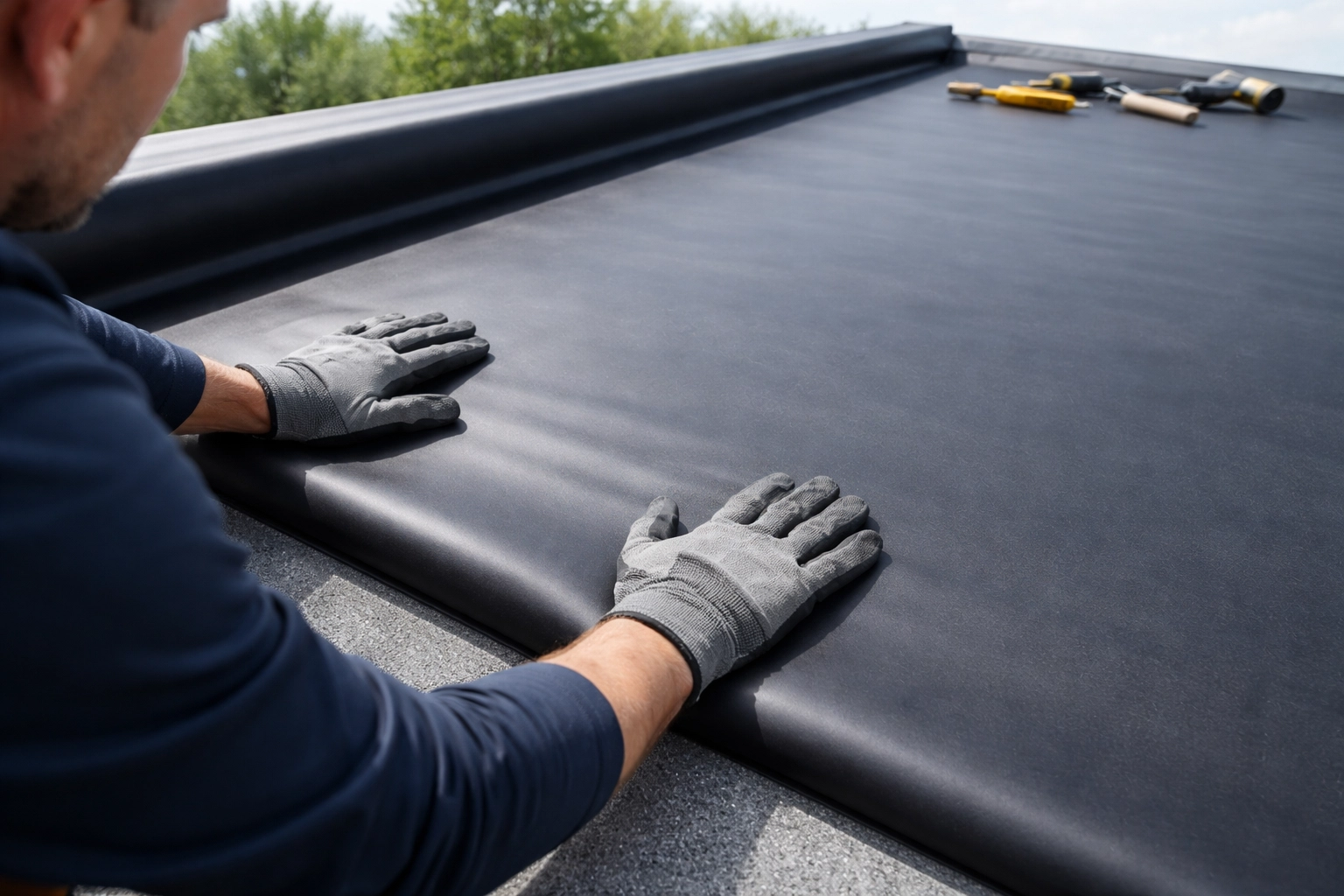
EPDM comes in large, seamless sheets that are bonded directly to your roof deck. Because it arrives in bigger rolls, there are far fewer joints and seams than traditional felt. And fewer seams means fewer potential leak points.
It's been used in commercial roofing for over 50 years, but it's now become increasingly popular for domestic properties across Belfast and Northern Ireland.
Durability: How Long Will Each Roof Actually Last?
Here's where the difference becomes crystal clear.
Felt roofing typically lasts 10–20 years. Some cheaper installations might only give you 5–10 years before problems start appearing. That's not great when you're paying good money for a roof.
EPDM roofing lasts 40–50 years. That's not a typo. A properly installed EPDM roof can protect your Belfast property for four to five decades with minimal maintenance.
Think about that for a second. You could replace a felt roof three or four times in the same period that one EPDM roof keeps doing its job.
| Factor | Felt Roofing | EPDM Roofing |
|---|---|---|
| Lifespan | 10–20 years | 40–50 years |
| Seam vulnerability | High | Low |
| UV resistance | Requires treatment | Built-in |
| Cold weather flexibility | Poor | Excellent |
Belfast Weather: Why It Matters More Than You Think
Let's be honest: Belfast isn't exactly known for Mediterranean sunshine. Our maritime climate throws everything at your roof: heavy rain, standing water, frost, freeze-thaw cycles, and the occasional storm that makes you question your life choices.
This is where EPDM pulls way ahead.

Rain and Standing Water
Flat roofs are notorious for ponding: that's when water pools on your roof instead of draining properly. EPDM tolerates standing water significantly better than felt. Felt roofs are vulnerable to standing water and prone to blistering, which accelerates degradation.
In a city where it rains more than 150 days a year, that's a massive advantage.
Freeze-Thaw Cycles
Belfast winters bring constant temperature fluctuations. Water gets into small cracks, freezes, expands, and causes damage. Felt becomes brittle in cold weather, making it susceptible to cracking during these cycles.
EPDM maintains excellent flexibility down to -40°C. It expands and contracts naturally with temperature changes without cracking or splitting. That natural elasticity is exactly what Belfast properties need.
UV Resistance
Even with our famously overcast skies, UV degradation is still a factor over time. EPDM has inherent UV resistance built into the material: no additional surface treatments required throughout its entire lifespan.
Felt, on the other hand, requires ongoing surface protection because unprotected bitumen degrades when exposed to UV rays.
Installation Differences: Why Seams Matter
One of the biggest reasons flat roofs fail is seam failure. Every joint in your roof is a potential weak point where water can get in.
Felt roofing requires multiple layers and many seams. Each seam is a potential leak waiting to happen, especially under thermal stress from Belfast's temperature fluctuations.
EPDM comes in much larger rolls, meaning fewer seams in the finished roof. Some smaller flat roofs can be covered with a single sheet: no seams at all. That's a huge advantage for long-term waterproofing.
Maintenance: What Will You Need to Do?
Nobody wants to spend their weekends worrying about their roof. Here's the reality:
Felt roofing demands regular inspections and repairs to prevent leaks and cracks. You'll need to check it at least twice a year, and after any significant storms. Small problems become big problems quickly if left unattended.
EPDM requires very low maintenance. An annual visual check and keeping it clear of debris is usually all that's needed. The material is designed to look after itself.
Cost: The Real Numbers
Let's talk money. Because we know that's what matters.
Felt roofing costs less upfront. There's no getting around it: felt is cheaper to install initially. If you're working with a tight budget and need a roof sorted quickly, felt gets the job done.
But EPDM offers better long-term value. When you factor in:
- Longer lifespan (40–50 years vs 10–20 years)
- Lower maintenance costs
- Fewer repairs over time
- Better energy efficiency
The maths changes dramatically. You could easily spend more on felt roof replacements and repairs over 40 years than you would on a single EPDM installation.
When Should You Choose Felt?
Felt roofing still makes sense in certain situations:
- Very tight budgets where upfront cost is the only priority
- Buildings with limited expected lifespan (if you're demolishing in 5 years, why spend more?)
- Small outbuildings like garden sheds or basic garages
- Temporary solutions while planning a more permanent roof
If any of these apply to you, felt might be the practical choice. We install both options at Advanced Construction & Roofing, and we'll always give you honest advice about what's right for your specific situation.
When Should You Choose EPDM?
For most Belfast properties, EPDM is the smarter choice. Consider EPDM if:
- You want a roof that lasts 40+ years
- Your property has drainage challenges or areas where water pools
- You prefer minimal ongoing maintenance
- You're thinking about long-term value over upfront cost
- You want insurance-backed guarantees for peace of mind
Speaking of guarantees: all our EPDM installations come with comprehensive insurance-backed guarantees. That means your investment is protected even if something unexpected happens down the line.
Not Sure Which Option Is Right For You?
Here's the honest truth: every property is different. The condition of your existing roof deck, the size of the area, drainage considerations, and your budget all play a role in the decision.
That's why we always recommend starting with a proper roof survey. We'll inspect your current flat roof, identify any underlying issues, and give you a clear recommendation based on what we find: not what makes us the most money.
Request a roof survey in Belfast and get honest advice from our team with over 25 years of experience in flat roofing across Northern Ireland.
The Bottom Line
If you're looking for a flat roof solution that can handle Belfast's demanding climate, EPDM is the better choice for most properties. It lasts longer, handles our weather better, requires less maintenance, and offers superior long-term value.
But we understand that every situation is unique. Whether you need EPDM, felt, or want to discuss other options, Advanced Construction & Roofing provides both services with the same commitment to quality workmanship.
Call us today to discuss your flat roofing project. We'll give you a straight answer about what your property actually needs: no pressure, no upselling, just honest advice from Belfast's trusted roofing experts.