
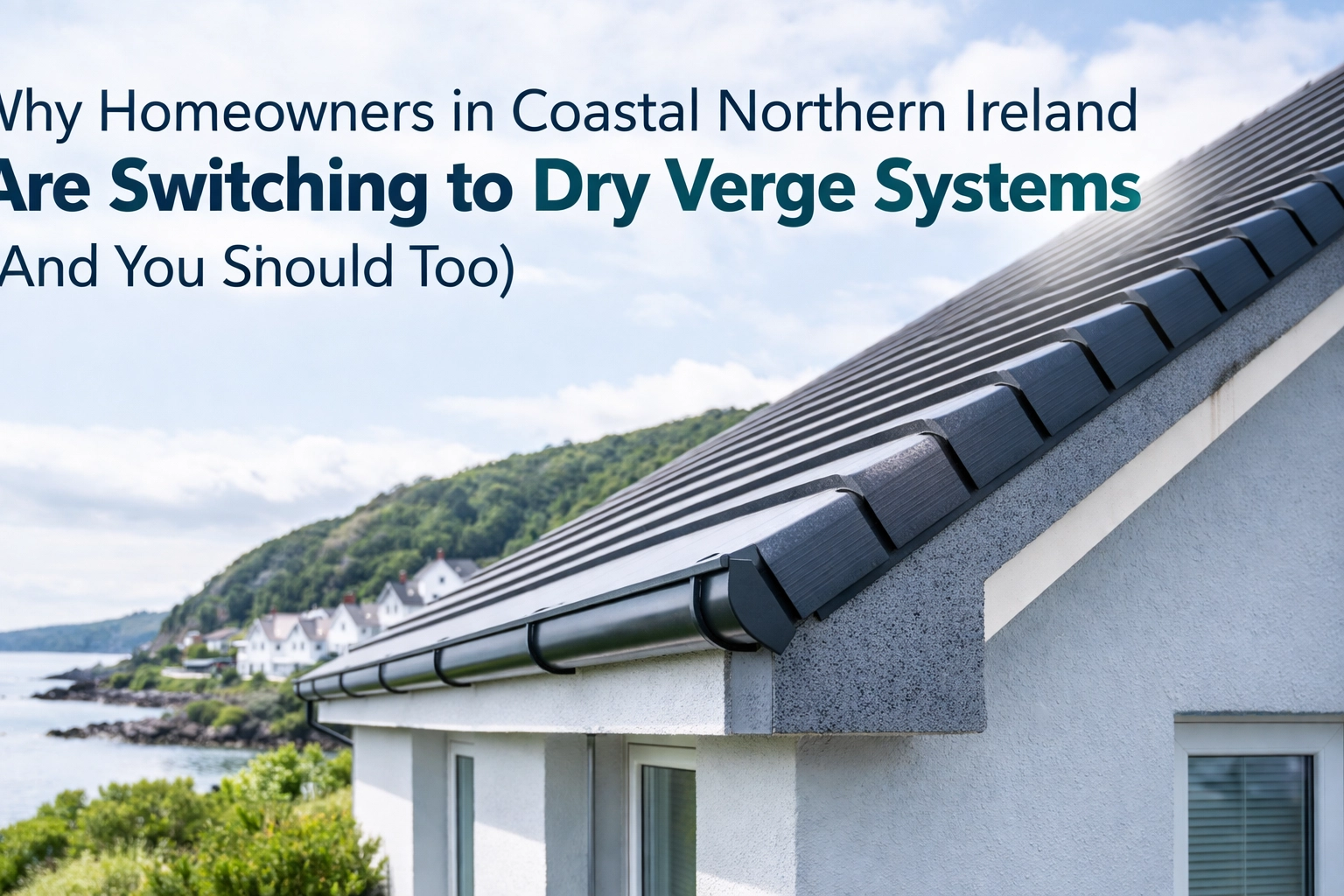

Living on the stunning coastline of Northern Ireland comes with its perks. The views across Belfast Lough from Bangor. The morning walks along Strangford shores near Newtownards. The fresh sea air that makes everything feel alive.
But here's what nobody tells you when you buy a coastal property: that same beautiful sea air is slowly destroying your roof.
Homeowners across Bangor, Newtownards, Donaghadee, and the entire Ards Peninsula are discovering the hard way that traditional mortar verges simply cannot handle coastal conditions. The good news? There's a solution that's rapidly becoming the gold standard for coastal roof protection in Northern Ireland.
It's called a dry verge system. And if you haven't made the switch yet, you're likely paying for it in repairs you don't even know you need.
What's Actually Happening to Your Traditional Verge?
Let's get straight to it. Your verge is the edge of your roof where the tiles meet the gable wall. On most older properties across Northern Ireland, this junction is sealed with mortar: a sand and cement mix that's been used for generations.
The problem? Mortar was never designed to withstand coastal conditions.
Here's what's happening to traditional verges on homes in Bangor, Newtownards, and surrounding coastal areas right now:
Salt air corrosion. The salt carried in coastal winds is corrosive. It eats away at mortar bonds, causing them to weaken and crumble years before they would inland. That "normal wear and tear" you've been told about? It's accelerated dramatically when you live within a few miles of the coast.
Wind uplift damage. Coastal Northern Ireland experiences some of the strongest winds in the UK. When those gusts hit your roof edge, they create uplift pressure that mortar simply cannot resist. One strong storm can dislodge tiles that have been sitting securely for years.
Freeze-thaw destruction. Mortar absorbs moisture. In our Northern Irish climate, that moisture freezes, expands, and cracks the mortar from the inside out. Combine this with salt saturation, and you've got a recipe for rapid deterioration.
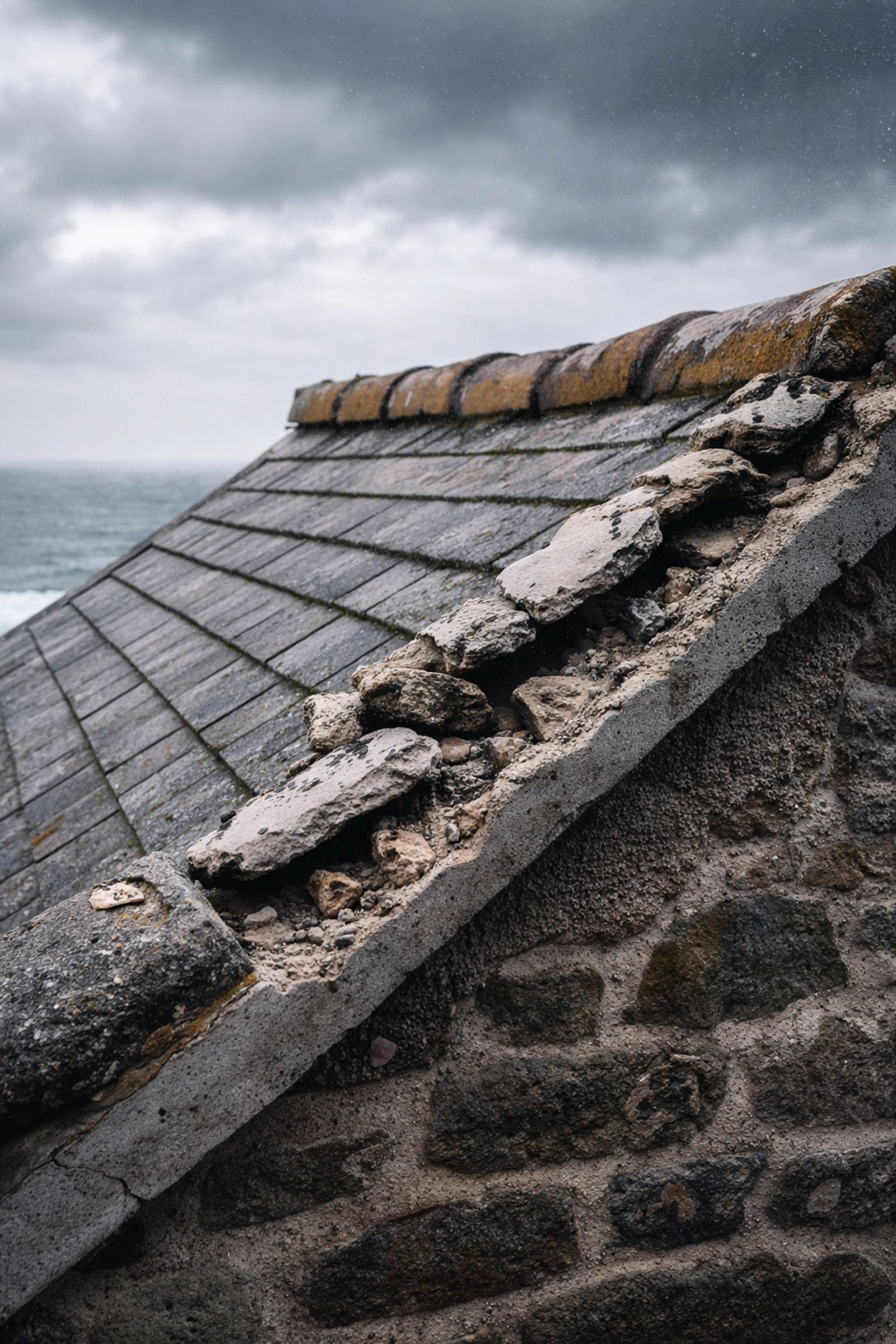
The result? Cracked mortar, loose tiles, water ingress, and expensive repair bills that seem to come around every few years.
Sound familiar?
What Exactly Is a Dry Verge System?
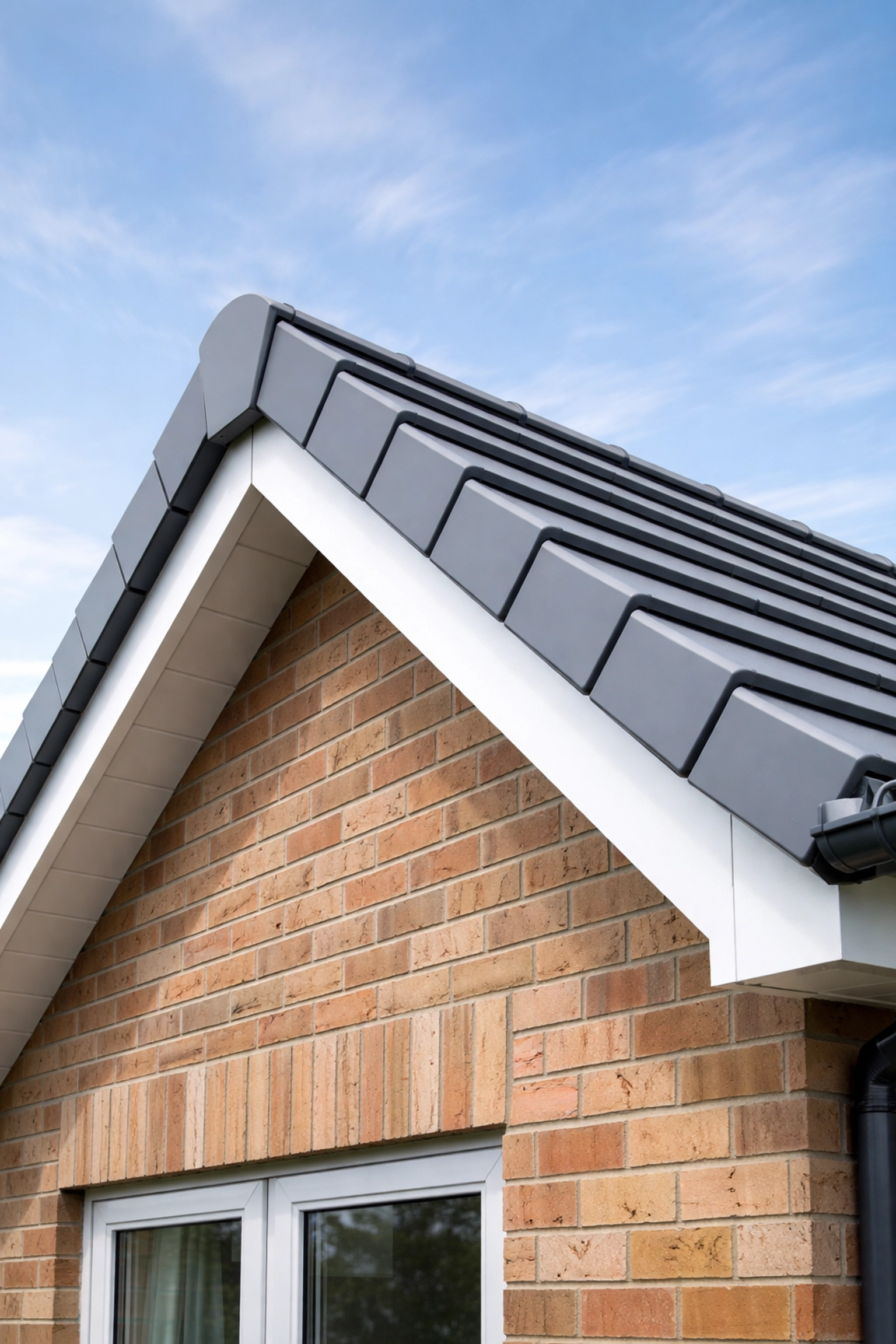
A dry verge system does exactly what the name suggests: it secures your roof edge without using mortar. Instead, it uses mechanically fixed plastic or composite units that interlock with your tiles and screw directly into your roof structure.
No mortar. No cement. No crumbling.
Each dry verge unit clips onto the edge of your roof tile and connects to the next unit, creating a continuous, weatherproof barrier along your entire gable edge. The system includes:
- Interlocking verge caps that secure each tile mechanically
- Weather bars that prevent wind-driven rain from penetrating
- Drainage channels that direct water away from your gable wall
- Secure fixings that anchor the system to your roof battens
The entire system is designed to withstand UV exposure, extreme temperatures, heavy rain, and: crucially for coastal properties: high winds and salt air.
Why Coastal Homeowners in Bangor and Newtownards Are Making the Switch
Walk down any residential street in Bangor or Newtownards and you'll notice something. More and more roofs sport the clean, uniform lines of dry verge systems. This isn't a coincidence: it's homeowners getting smart about coastal roof protection.

Superior Wind Resistance
This is the big one for coastal properties. Dry verge systems mechanically lock your tiles in place. Unlike mortar, which relies on adhesion that weakens over time, dry verge units physically grip each tile and secure it to your roof structure.
When those winter storms roll in off the Irish Sea, your tiles stay exactly where they should be. No uplift. No displacement. No emergency calls to roofers.
Want to understand more about why wind resistance matters for Northern Ireland properties? Check out our detailed guide on roof wind resistance.
Complete Weather Sealing
Traditional mortar verges develop gaps and cracks that allow water penetration. Even small openings let moisture into your roof space, leading to damp, timber rot, and eventually structural damage.
Dry verge systems are engineered with integrated weather bars and drainage channels that actively manage water. Rain hits the verge, runs down the drainage channel, and exits away from your gable wall. No penetration. No damp patches appearing on your bedroom ceiling.
Zero Maintenance Required
Here's a number that gets coastal homeowners' attention: zero.
That's how much maintenance a properly installed dry verge system requires. No repointing every few years. No patching cracked mortar after every storm. No calling out roofers to fix what the winter weather has undone.
Once installed, dry verge systems simply work. Year after year. Storm after storm.
Compare that to traditional mortar verges on coastal properties, which typically need attention every 3-5 years. Over a 20-year period, you could spend thousands on mortar repairs: or nothing at all with dry verge.
Clean, Professional Appearance
Let's be honest: crumbling mortar verges look terrible. Those grey, patchy edges with visible cracks and missing sections don't do your property any favours.
Dry verge systems provide a clean, uniform finish that actually improves your home's kerb appeal. Available in colours to match your existing roof, they give your property that well-maintained look that buyers notice.
The Hidden Costs of Sticking with Traditional Verges
Still thinking mortar is "good enough"? Consider what coastal homeowners in Northern Ireland are actually paying:
Regular repointing: £200-£500 every 3-5 years to repair crumbling mortar
Emergency storm repairs: £300-£800 when tiles become dislodged in high winds
Water damage remediation: £1,000+ when moisture penetration causes interior damage
Increased insurance premiums: Some insurers charge more for properties with known roof vulnerabilities
Reduced property value: Surveyors flag deteriorating verges, affecting sale prices
Add these up over a decade, and you're looking at potentially £3,000-£5,000 in avoidable costs: far more than the one-time investment in a dry verge system.
If you're unsure about your current roof condition, a professional roof survey can identify exactly what state your verges are in and whether you're at risk.
What to Expect from Dry Verge Installation
Installing a dry verge system on a typical semi-detached property in Bangor or Newtownards usually takes one day. Here's the process:
- Assessment – Your existing verge condition is evaluated
- Removal – Old mortar is carefully stripped away
- Preparation – Battens are checked and any damaged components replaced
- Installation – Dry verge units are fitted tile by tile, mechanically secured
- Finishing – Ridge connection is completed and entire system checked
The work can be carried out in most weather conditions: another advantage over mortar, which requires dry days to cure properly.

Is Your Coastal Property Ready for the Switch?
If you own a property in Bangor, Newtownards, Donaghadee, Holywood, or anywhere along the North Down and Ards coastline, dry verge installation should be on your radar.
Ask yourself these questions:
- Have you had mortar repairs done in the last five years?
- Do you notice cracking or gaps in your current verge?
- Have tiles shifted or lifted during recent storms?
- Are there damp patches appearing on upper floor walls?
If you answered yes to any of these, your verges are telling you something. And the longer you wait, the more you'll spend on temporary fixes that don't address the underlying problem.
Take Action Today
Coastal living in Northern Ireland shouldn't mean constant roof repairs. Dry verge systems offer the permanent, maintenance-free solution that properties in Bangor, Newtownards, and across the Ards Peninsula deserve.
At Advanced Construction & Roofing, we've been installing dry verge systems on coastal properties throughout Northern Ireland for years. We understand the specific challenges that salt air, high winds, and our unpredictable climate present: and we know how to solve them.
Request a free roof assessment today. We'll inspect your current verges, provide an honest evaluation of their condition, and give you a clear quote for dry verge installation.
Contact Advanced Construction & Roofing now and join the growing number of coastal homeowners who've made the switch to dry verge protection. Your roof: and your wallet( will thank you.)