
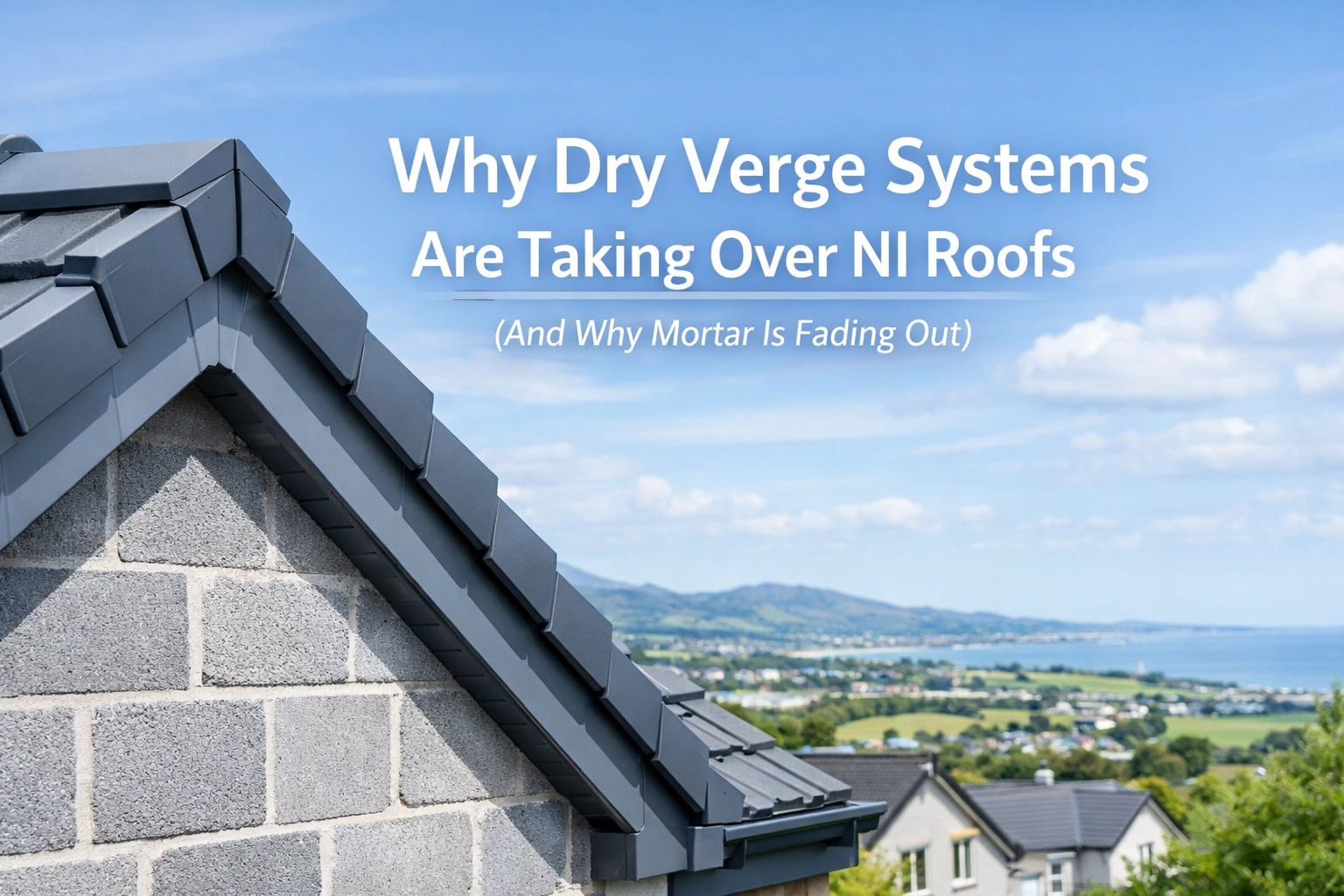

For decades, the standard finish for roof edges across Northern Ireland was "wet verge": a simple mixture of sand and cement. You see it everywhere from the terraced streets of Belfast to the coastal homes of Bangor. However, as any homeowner who has dealt with crumbling mortar knows, traditional methods often struggle to stand up to the unique challenges of the NI climate.
At Advanced Construction & Roofing, we are seeing a massive shift. Homeowners are moving away from high-maintenance mortar and choosing dry verge systems. These systems are designed to offer a mechanical fix that provides better protection, cleaner aesthetics, and a much longer lifespan.
If you are tired of seeing cracked cement on your roofline or finding chunks of mortar in your gutters after a storm, it is time to understand why the dry verge is the future of Northern Ireland roofing.
What Is a Dry Verge System?
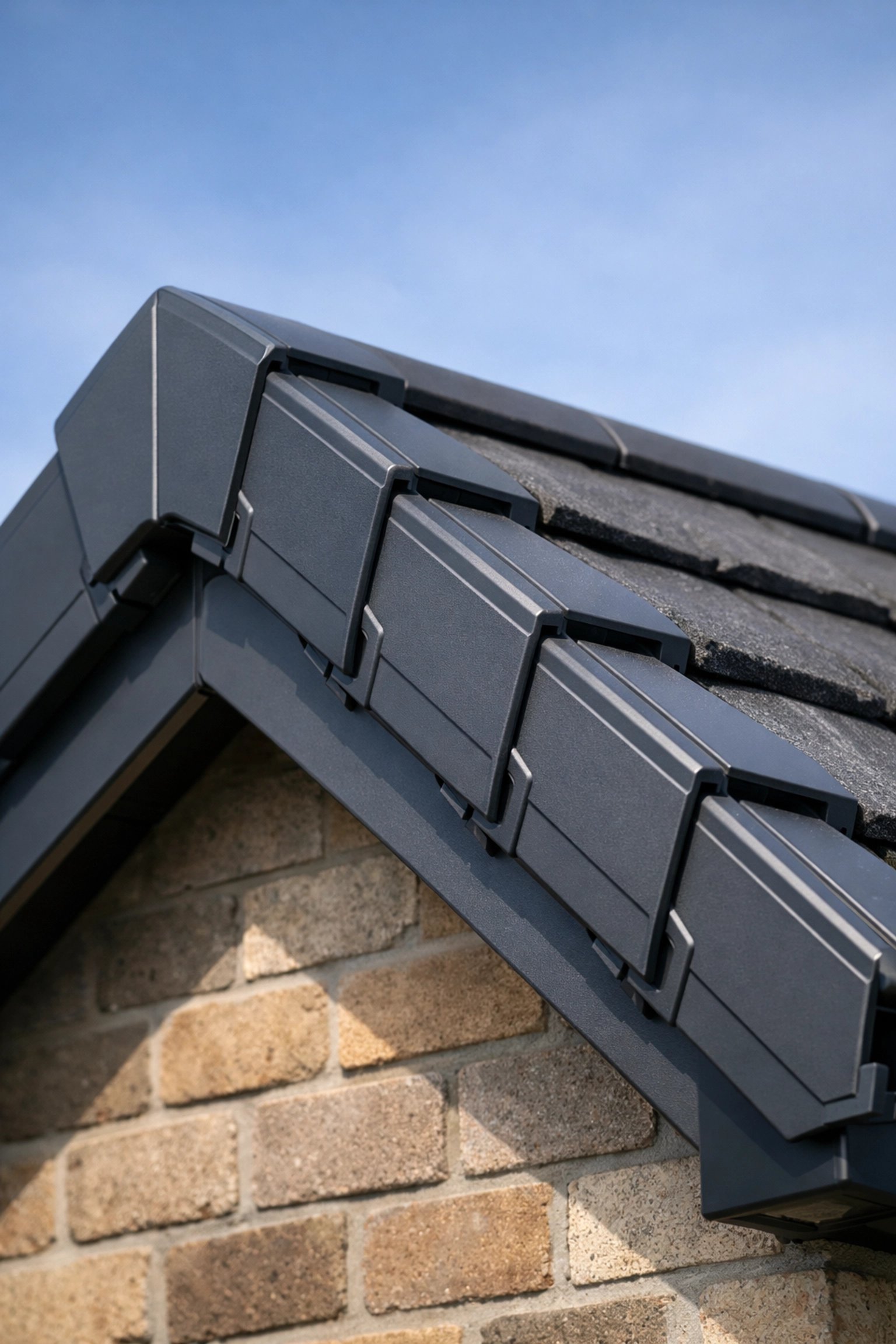
A dry verge system is a modern roofing solution that uses interlocking plastic caps to secure the edge of your roof tiles. Unlike traditional methods that rely on wet mortar to seal the "verge" (the outer edge of your roof), dry verge systems are mechanically fixed. This means they are screwed and clipped directly into the roof structure.
By eliminating the need for cement, you eliminate the weakest link in your roof’s defense. These systems are specifically engineered to provide a robust, weatherproof seal that moves with your house, rather than cracking against it.
Why Is Traditional Mortar Fading Out?
The decline of mortar-based roofing isn't a trend; it's a response to performance failure. In Northern Ireland, our weather is characterized by high humidity, frequent rainfall, and intense wind speeds. Traditional mortar is simply not built for this environment.
The Freeze-Thaw Cycle: Mortar is porous. It absorbs water. When temperatures drop in the winter: a common occurrence in places like Lisburn and Newtownards: that water freezes and expands. This causes the mortar to crack and crumble. Over time, the bond between the tiles and the roof weakens, leading to loose tiles and potential leaks.
Lack of Flexibility: Houses naturally settle and move over time. Because mortar is rigid, it cannot accommodate this movement. It cracks under pressure, requiring regular "repointing" (repairing the cement) every 5 to 10 years.
Poor Wind Resistance: During an Atlantic storm, the edges of your roof are under immense pressure. If your mortar is already weakened by the freeze-thaw cycle, the wind can easily get under the tiles and lift them off. This leads to costly emergency repairs.
How Do Dry Verge Systems Protect Your NI Home?
When we install a dry verge system at Advanced Construction & Roofing, we are providing more than just a cosmetic upgrade. We are installing a defense system tailored for the Northern Irish landscape.
1. Superior Storm Protection
Northern Ireland’s frequent gales make roof security a top priority. Dry verge units are mechanically fixed with screws and high-strength clips. This ensures that even in the highest winds, your tiles remain firmly in place. While mortar often acts as the first point of failure during a storm, a dry verge system acts as a shield.
2. Zero Maintenance Requirements
One of the biggest benefits is the "fit and forget" nature of the system. Once installed, there is no mortar to crack, fall out, or deteriorate. You won’t need to hire a roofer every few years to repoint your gables. This saves you significant money and stress over the lifespan of your roof.
3. Total Pest Prevention
Gaps in old mortar are an open invitation for birds, wasps, and mice. These pests can enter your roof space, damage your insulation, and create noise disturbances. Dry verge systems use a continuous, interlocking design that seals these gaps completely. Request a survey if you suspect pests are entering through your roofline; we can identify the entry points and seal them permanently.
4. Improved Energy Efficiency
A crumbling roof edge allows cold air to whistle into your attic and heat to escape your home. By providing a tighter, more consistent seal, dry verge systems help reduce drafts. This small improvement in thermal performance contributes to a more comfortable home and lower heating bills during the cold NI winters.

Why Northern Ireland Specifically Needs This Upgrade
If you live in a coastal area like Holywood or Carrickfergus, you are dealing with salt-laden air. Salt is incredibly corrosive to traditional building materials, accelerating the breakdown of cement. Advanced Construction & Roofing recommends dry verge systems for these areas because the high-grade plastic components are entirely resistant to salt corrosion and UV damage.
Furthermore, the speed of installation is a major factor. Traditional mortar work requires dry, stable weather to set properly. In Northern Ireland, finding a 48-hour dry window can be difficult. Dry verge systems can be installed in almost any weather condition, meaning your project won't be delayed by our unpredictable rain.
Is It a Good Investment?
We believe in transparency when it comes to pricing. While a dry verge system has a higher upfront cost than a bucket of mortar, the long-term economics are clear:
- Faster Installation: Dry verge systems are installed up to 50% faster than traditional mortar methods. This reduces labor costs on the day of installation.
- No Repair Costs: You eliminate the need for repointing every few years.
- Increased Property Value: A modern, clean-looking roofline adds significant curb appeal and reassures potential buyers that the home has been well-maintained.
- Avoid Emergency Call-Outs: By securing your tiles mechanically, you drastically reduce the risk of storm damage that leads to expensive emergency repairs.
Most homeowners in the Belfast area find that their dry verge system pays for itself within 5 to 10 years simply by eliminating the maintenance cycle of mortar.

Why Choose Advanced Construction & Roofing?
With years of experience serving the Northern Ireland community, Advanced Construction & Roofing has established itself as a leader in modern roofing solutions. We don't just "slap on" a plastic cap; we ensure the underlying structure is sound and that the system is integrated perfectly with your existing tiles.
- We Lead with Experience: We have successfully completed hundreds of dry verge installations across Belfast, Bangor, and beyond.
- We Guarantee Quality: Every installation is performed by our highly trained technicians who understand the specific requirements of NI building regulations.
- We Prioritize Honesty: If your roof isn't suitable for a dry verge system, we will tell you. We provide honest, no-nonsense advice to ensure you get the best result for your property.
"The team from Advanced Construction & Roofing replaced our old, crumbling mortar with a grey dry verge system. Not only does the house look ten times better, but we also didn't lose a single tile during the last big storm. Best investment we've made in the house." : T. Miller, Belfast
The Professional Roof Survey Service
If you aren't sure about the state of your current roof edge, don't wait for the next storm to find out. We offer a comprehensive Roof Survey Service that takes the guesswork out of maintenance.
Our surveys include:
- Visual inspections of all verges and ridges.
- Detailed photo evidence of any defects.
- Identification of pest entry points.
- A clear, fixed-price quote for any necessary upgrades.

Take Action Before the Next Storm
Don't let a severe roof leak catch you off guard. Traditional mortar is a temporary fix for a permanent problem. By upgrading to a dry verge system, you are choosing durability, safety, and a maintenance-free future for your home.
Call Advanced Construction & Roofing today to discuss your options. Whether you are in Belfast, Lisburn, or anywhere in between, we are ready to help you secure your home.
- Visit our website: https://adv-group.co.uk
- Request a Quote: Contact us via our online form for a rapid response.
- Book a Survey: Get a professional assessment of your roof’s health today.
Protect your home. Prevent the repairs. Choose a Dry Verge System.