
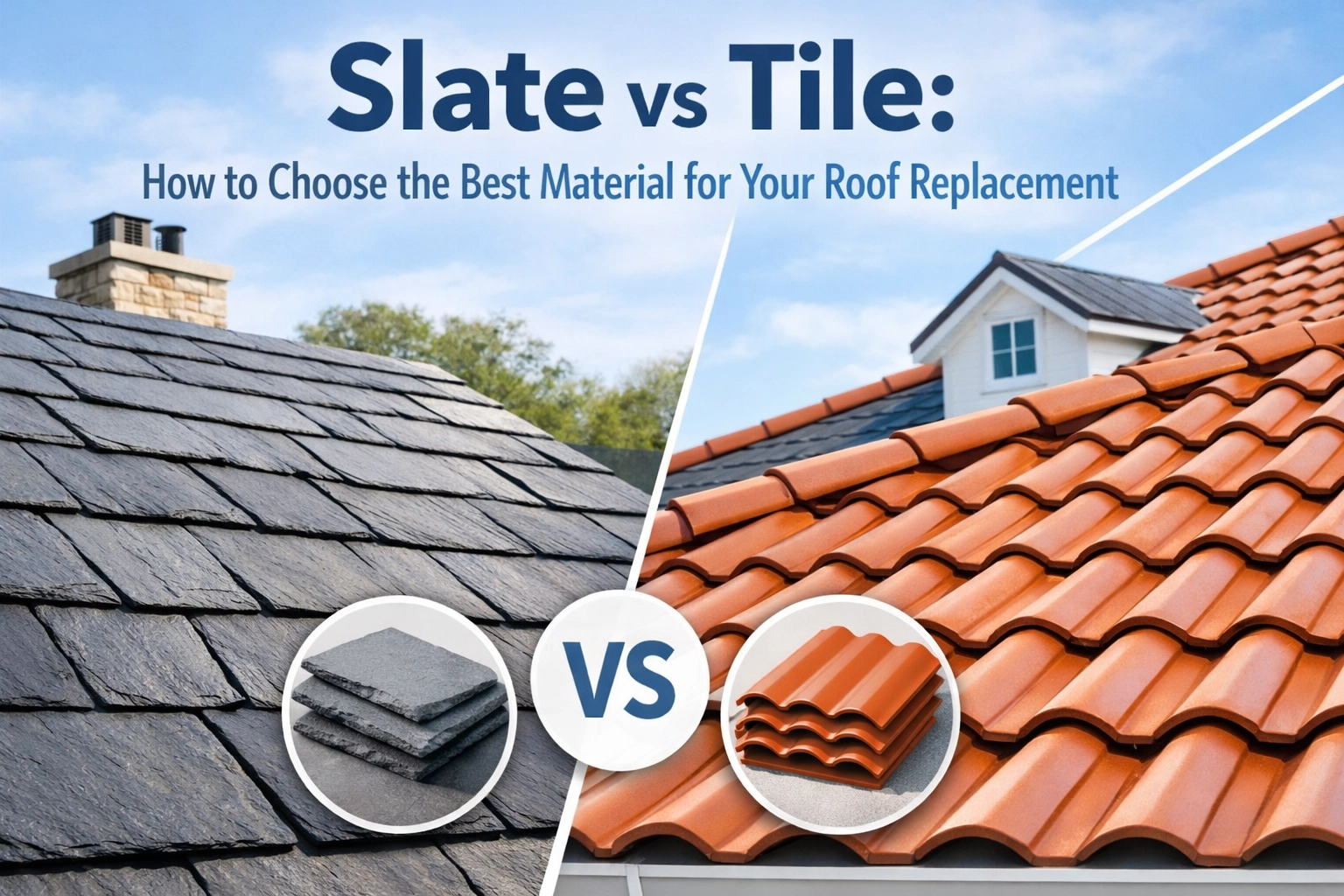

Replacing your roof is one of the biggest investments you'll make in your property. Get it right, and you'll enjoy decades of protection and curb appeal. Get it wrong, and you're looking at costly repairs, weather damage, and a roof that doesn't suit your home or budget.
The choice between slate and tile roofing often leaves homeowners in Belfast and across Northern Ireland scratching their heads. Both materials have stood the test of time on properties throughout the UK, but they serve different needs, budgets, and architectural styles.
Let's break down exactly what you need to know to make the right choice for your roof replacement.
Understanding Slate Roofing: The Premium Option
Natural slate has roofed buildings across Ireland and the UK for centuries. This natural stone material splits into thin sheets, creating that distinctive, elegant appearance you'll see on period properties and high-end homes throughout Belfast.
Slate delivers unmatched longevity. With proper installation and maintenance, a slate roof will last well over 100 years: often outlasting the building itself. You'll find Victorian-era slate roofs in Belfast that still perform perfectly after 150 years.
The material comes from quarries, primarily in Wales and Spain, though Irish slate was historically common. Each slate tile is a piece of natural stone, meaning no two roofs look exactly alike. The subtle color variations and texture create a premium aesthetic that's hard to replicate.
Understanding Tile Roofing: The Versatile Alternative
Roof tiles come in two main types: clay and concrete. Both have been used extensively across Northern Ireland, offering homeowners more flexibility in design, color, and price point than slate.
Clay tiles deliver that classic terracotta look you'll see on Mediterranean-style properties, though modern clay tiles come in various colors. Concrete tiles offer even more versatility, manufactured in dozens of profiles, textures, and finishes to suit any architectural style.
Tile roofing typically lasts 50 to 70 years: shorter than slate but still a solid long-term investment. The material has evolved significantly, with modern manufacturing producing tiles that perform exceptionally well in Northern Ireland's challenging climate.
What Will Your Roof Replacement Actually Cost?
Budget matters, and there's no point pretending otherwise. The cost difference between slate and tile is significant, and you need those numbers upfront.
Slate roofing costs £15–£30 per square foot to install. For an average Belfast home, you're looking at £15,000–£40,000+ depending on roof size and complexity. That's a substantial investment, no question about it.
Tile roofing costs £10–£20 per square foot to install. The same Belfast home might cost £10,000–£25,000 to re-roof with quality tiles. That's roughly 30–40% less than slate for the initial installation.
But here's what those numbers don't tell you: lifetime cost calculations change the picture. If your slate roof lasts 100+ years and your tile roof needs replacement after 60 years, the slate effectively costs less per year of service. You'll likely never replace a properly installed slate roof during your ownership: or your children's ownership.
Tile replacement isn't a distant concern either. At the 50-70 year mark, you or future owners will face another £10,000–£25,000 replacement project.
How Long Will Each Material Actually Last?
Durability isn't just about lifespan: it's about performance throughout that lifespan. Both materials can last decades, but they age differently.
Slate roofs require minimal intervention for a century or more. The stone doesn't degrade, rot, or deteriorate in ways that affect performance. Individual slates may crack or slip from fixings over time, but the material itself remains sound. Belfast's Victorian terraces prove this: many still wear their original slate roofs.
Tile roofs deliver 50-70 years of reliable service when properly installed and maintained. Concrete tiles may show some surface wear in harsh weather, and clay tiles can crack under severe frost cycles, but modern manufacturing has significantly improved durability.
The catch? Installation quality matters enormously for both materials. A poorly installed slate roof won't reach 100 years, and a badly fitted tile roof might fail in 30. This is why choosing experienced roofers matters as much as choosing materials.
Weight Considerations: Will Your Roof Structure Cope?
Here's something many homeowners don't consider until they're mid-project: both slate and tile are heavy materials that may require structural assessment.
Natural slate weighs approximately 7.8 lbs per square foot. That's substantial, but most traditionally built Belfast homes were designed to carry slate, so existing structures often cope fine.
Tile weighs 9.6–15.2 lbs per square foot, with clay tiles being roughly 50% heavier than concrete options. This extra weight can be a concern for extensions, conversions, or older buildings where structural capacity isn't certain.
Before committing to either material, request a structural survey. A qualified surveyor will assess whether your roof timbers, walls, and foundations can safely carry the load. Reinforcement is possible but adds cost: sometimes enough to change your material decision.
We've worked on countless Belfast properties where structural limitations ruled out certain materials. Better to know upfront than discover mid-installation that you've got a problem.

How Does Northern Ireland's Climate Affect Your Choice?
Belfast weather doesn't mess about. We face freeze-thaw cycles, heavy rain, strong winds, and everything in between. Your roofing material needs to handle these conditions year after year.
Slate performs exceptionally well in cold, wet climates. The dense stone absorbs minimal water, so freeze-thaw damage is rare. When temperatures plummet and water expands in porous materials, slate simply doesn't have enough absorbed moisture to cause problems. This makes slate ideal for Northern Ireland's climate.
Tile handles our weather differently. Clay tiles perform well but can crack in severe frost if water penetrates them. Concrete tiles are more vulnerable to moisture absorption, which can lead to frost damage over time. Modern tiles incorporate better water resistance, but they'll never match slate's impermeability.
Both materials handle wind well when properly fixed. The key is using appropriate fixings for your location: coastal properties in County Down need different specifications than sheltered Belfast suburbs.
What About Roof Pitch Requirements?
Your roof's angle affects which materials you can use. Some roofs simply aren't suitable for certain materials, regardless of preference.
Slate performs best on roofs with pitches above 20 degrees. You can install slate on shallower pitches with additional waterproofing measures, but it's not ideal. Many Belfast terraces and Victorian properties have steep pitches specifically designed for slate.
Tile works on pitches as low as 15 degrees, giving you more flexibility. This matters for extensions, single-story additions, or modern architectural designs with shallower roof angles.
If your existing roof has a low pitch, tile might be your only practical option between these two materials. Alternatively, you might need to consider flat roofing solutions like EPDM or liquid roofing systems.
Which Material Suits Your Property's Style?
Aesthetics matter. Your roof makes up roughly 40% of your property's visible exterior, so it needs to suit the building.
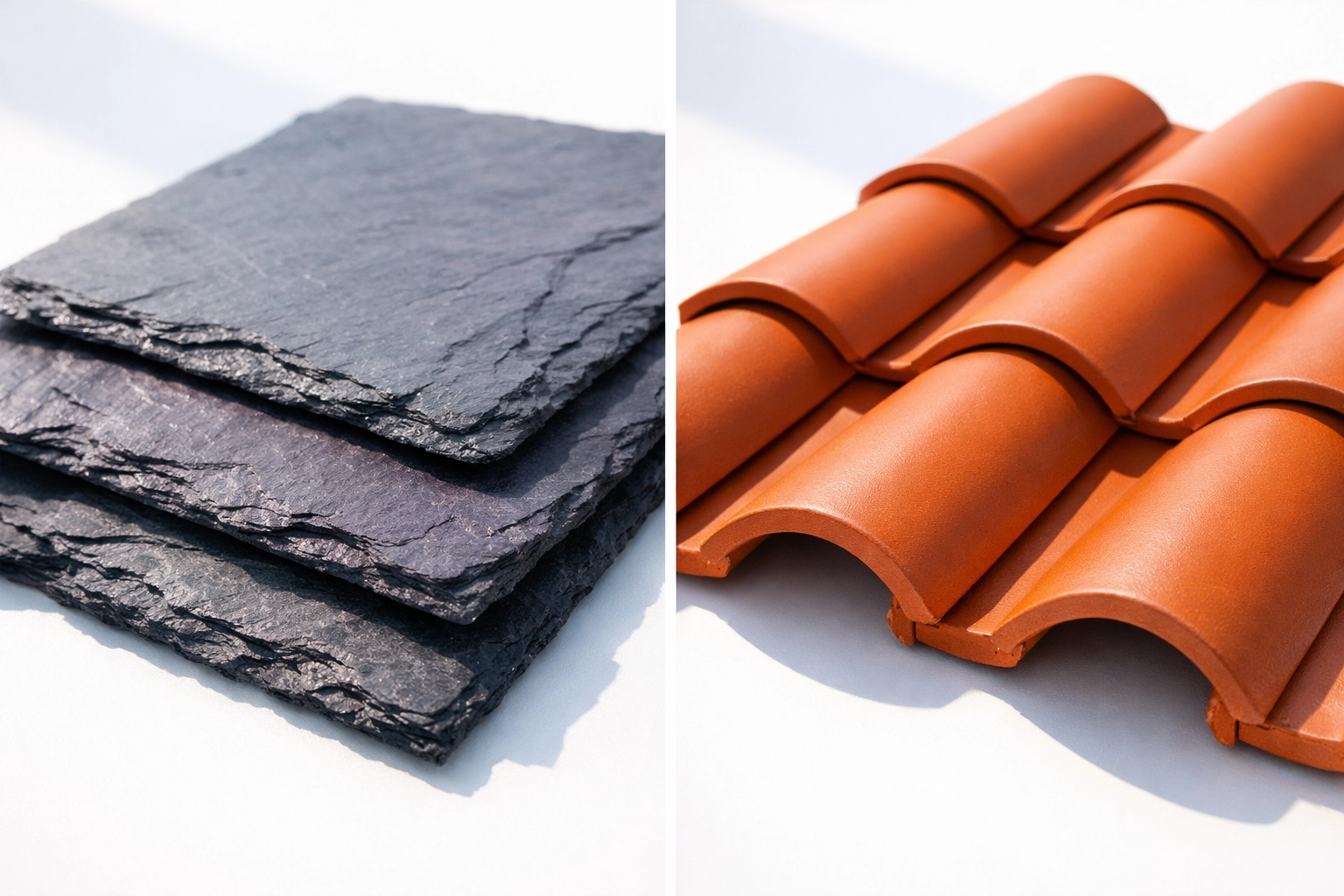
Slate delivers timeless, elegant appearance that suits period properties, traditional builds, and upmarket contemporary designs. The natural stone has subtle color variations: from dark grey to purple-tinged Welsh slate or green-tinged alternatives. Belfast's Georgian and Victorian architecture looks right with slate because that's what was originally specified.
Tile offers far more design versatility. You'll find tiles in red, brown, grey, black, and various blended finishes. Profiles range from flat and sleek to deep and chunky. Want a Mediterranean look? Clay tiles deliver. Prefer modern minimalism? Smooth concrete tiles work perfectly.
Consider your property's architectural style, your street's character, and planning requirements. Conservation areas in Belfast may restrict your choices, and some developments have covenants specifying roofing materials.
What Maintenance Will You Actually Need?
Both materials are marketed as "low maintenance," but what does that actually mean in practice?
Slate requires minimal ongoing maintenance. Annual inspections to check for slipped or cracked slates, gutter cleaning, and occasional individual slate replacement is typically all you need. The material doesn't degrade, so there's no painting, treating, or surface maintenance. Budget for inspection and minor repairs rather than major maintenance.
Tile needs slightly more attention. Concrete tiles can accumulate moss and algae in Belfast's damp climate, requiring periodic cleaning. Individual tiles may crack and need replacement, particularly in exposed locations. Clay tiles are more maintenance-free but cost more initially. Plan for inspection, cleaning, and occasional tile replacement.
Neither material requires the regular painting and treatment that timber roofing demands, so both genuinely offer low maintenance compared to other options.
Making Your Decision: Which Material Is Right for You?
You've got the information: now let's make this decision practical.
Choose slate if you:
- Want the longest possible lifespan with minimal maintenance
- Own a period property where slate suits the architecture
- Can afford the higher upfront investment
- Have adequate roof structure to carry the weight
- Value the premium, natural aesthetic
- Plan long-term ownership where lifetime costs matter
Choose tile if you:
- Need to manage initial installation costs
- Want more design flexibility and color options
- Have a lower-pitch roof that suits tile better
- Prefer the appearance of tile for your property style
- Don't mind replacing the roof again in 50-70 years
- Need faster installation with lower labor costs
There's no wrong choice here: only the wrong choice for your specific situation, budget, and property.
Get Expert Guidance for Your Roof Replacement
Choosing materials is just the first step. Proper installation determines whether your new roof delivers its full potential lifespan and performance.
At Advanced Construction & Roofing, we've installed both slate and tile roofs across Belfast and throughout Northern Ireland for years. We'll assess your property's structure, discuss your budget honestly, and recommend materials that genuinely suit your needs: not just what's easiest for us to install.
Request a free survey and quotation. We'll visit your property, assess your existing roof, discuss your options, and provide clear, transparent pricing for both slate and tile solutions. No pressure, no surprises, just honest advice from experienced professionals.
Contact Advanced Construction & Roofing today at https://adv-group.co.uk to discuss your roof replacement. Let's make sure your investment delivers decades of reliable protection and lasting value.