


Belfast is a city built on history. From the tree-lined streets of the Malone Road to the red-brick terraces of East Belfast, Victorian and Edwardian properties define our neighbourhoods. These homes were built to last: but their roofs? After 100+ years of Belfast weather, they're often telling a different story.
If you own one of these character-filled properties, understanding what's happening above your head isn't just useful knowledge. It's essential for protecting your investment and keeping your family safe.
At Advanced Construction & Roofing, we've spent over 25 years working on Belfast's oldest and most challenging roofs. We've seen it all: from minor slate slips to complete timber failures. Here's what every owner of an older Belfast home needs to know.
Why Are Victorian and Edwardian Roofs Different?
Properties built between 1837 and 1914 were constructed using materials and methods that differ dramatically from modern building practices. Most roofs from this era feature:
- Natural Welsh or Scottish slate rather than modern concrete tiles
- Lime mortar instead of cement-based products
- Timber battens and rafters cut from old-growth wood
- Lead flashings around chimneys and valleys
- Cast iron guttering and downpipes
These materials have incredible longevity when properly maintained. The problem? Most haven't been properly maintained. Decades of quick fixes, bodged repairs, and general neglect have left many Belfast period homes with roofing problems waiting to happen.

The Most Common Slate Roof Problems We See in Belfast
Nail Failure: The Silent Roof Killer
Here's something most homeowners don't realise: the nails holding your slates in place are often the first thing to fail.
Original Victorian roofs used iron nails. After a century of Belfast's damp climate, these nails corrode, weaken, and eventually give way. When they do, slates start slipping.
The tricky part? A slipped slate doesn't always cause an immediate leak. It might lodge in your guttering or behind a chimney stack. You won't notice anything wrong: until one stormy night when water suddenly appears on your ceiling.
What to watch for:
- Slates appearing in your garden after windy weather
- Visible gaps or misaligned slates when you look up at your roof
- Slates sitting in your gutters
Frost Damage and Surface Deterioration
Belfast winters aren't extreme, but they're consistently damp and cold. This combination is brutal on older slate.
Water seeps into tiny cracks and pores in the slate surface. When temperatures drop, that water freezes and expands. Over time, this freeze-thaw cycle breaks down the slate from within. Mosses and lichens make this worse by trapping moisture against the slate surface.
You'll notice this as:
- Flaking or delaminating slates
- White powdery deposits on slate surfaces
- Slates that look pitted or rough compared to their neighbours
Flashing Failures Around Chimneys
Water doesn't always enter your roof through obvious holes. The most common entry point? Failed flashings.
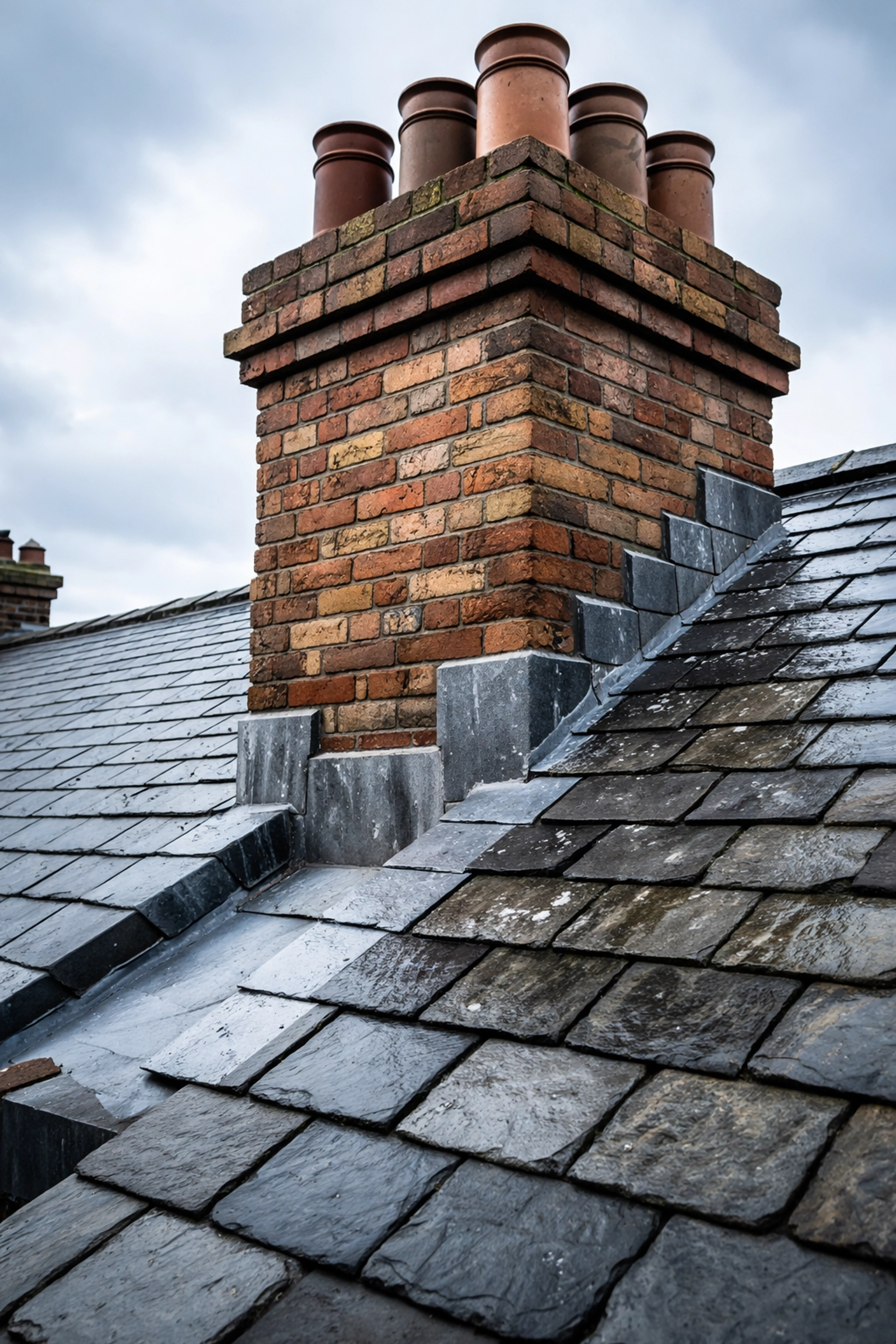
The lead flashings around your chimney stack, where your roof meets walls, and in valleys between roof sections all deteriorate over time. Atmospheric pollution, thermal movement, and simple age cause cracks, lifts, and gaps.
Here's the frustrating reality: water that enters through a flashing failure at your chimney can travel several metres along timbers and felt before dripping onto your ceiling somewhere completely different. Finding the actual source requires experience and expertise.
The Hidden Crisis: Aging Roof Timbers
While everyone focuses on slates and tiles, the real story in many older Belfast homes is happening underneath. Your roof timbers might be in serious trouble.
Victorian and Edwardian roof timbers were typically cut from old-growth softwood: dense, resinous, and incredibly durable. But 100+ years of exposure to moisture, woodworm, and poor ventilation takes its toll.
Signs Your Roof Timbers Need Attention
Inside your loft, look for:
- Visible fungal growth or white/brown patches on wood
- Soft, spongy timber when pressed
- Small holes with fine sawdust (woodworm activity)
- Sagging or bowing roof lines visible from outside
- A musty, damp smell in your loft space
From outside, watch for:
- Roof lines that aren't straight
- Sections of roof that appear to be dipping
- Chimney stacks that seem to be leaning
The good news? Historic timber is often more durable than modern alternatives. When we find damaged sections, we prefer to splice in new timber rather than wholesale replacement: preserving as much original material as possible while ensuring structural integrity.
Repair or Replace? Making the Right Decision
This is the question we answer most often for Belfast homeowners. Here's our honest guidance after 25+ years in the trade:
When Repair Makes Sense
- A few slipped or broken slates with no underlying damage
- Localised flashing failures
- Minor timber repairs needed
- Overall roof structure is sound
When Replacement Is the Better Investment
- Nail failure is widespread (slates slipping across the entire roof)
- Significant timber decay requiring major structural work
- Multiple previous repairs have created a patchwork of problems
- Repair costs approach 60-70% of replacement costs
Our philosophy is simple: we'll always recommend the most cost-effective long-term solution. Sometimes that's a repair. Sometimes honest advice means telling you a full replacement will save money over the next decade.
For more guidance on why repairs sometimes fail, read our article on 10 reasons your roof repair keeps failing.

Why Annual Inspections Are Non-Negotiable for Period Properties
You service your car annually. You get your boiler checked every year. Your roof deserves the same attention: especially on a Victorian or Edwardian property.
We recommend inspecting your roof at least once a year, ideally when clearing your gutters in autumn. A quick visual check from ground level can catch obvious problems, but a professional inspection reveals issues invisible to untrained eyes.
A proper roof survey includes:
- Assessment of slate condition across the entire roof
- Inspection of all flashings, valleys, and junctions
- Examination of chimney pointing and flaunching
- Internal loft inspection for timber condition and ventilation
- Photographic documentation of any defects found
- Clear recommendations with priority ratings
Not sure if you need a professional survey? Our guide on whether you really need a roofing survey covers everything you need to know.
What Makes Working on Period Properties Different?
Not every roofer has the skills to work on Victorian and Edwardian roofs. These properties demand:
- Knowledge of traditional materials and how they behave
- Sourcing reclaimed slates that match originals in size, thickness, and colour
- Understanding lime mortar and why cement pointing causes problems
- Respect for original craftsmanship and conservation principles
At Advanced Construction & Roofing, our team has specific experience with Belfast's period properties. We understand that your home isn't just a building: it's a piece of the city's heritage.
Take Action Before Small Problems Become Big Ones
Here's the bottom line: older Belfast homes have roofs that need more attention, not less. The good news is that with proper care, a Victorian slate roof can last another century.
The bad news? Ignored problems accelerate. A slipped slate becomes a rotten batten. A rotten batten becomes a damaged rafter. A damaged rafter becomes a structural emergency.
Request a professional roof survey today. Our comprehensive Belfast roof survey service gives you complete clarity on your roof's condition, with honest recommendations and no pressure.
Call Advanced Construction & Roofing on the number at the top of this page, or fill out our online contact form. With over 25 years of experience on Belfast's most demanding roofs, we'll give you the straight answers your period property deserves.