


If you're buying a house in Belfast, Bangor, or Newtownards, the roof probably isn't the first thing on your mind. But here's the reality: your roof is one of the most expensive parts of your property to replace, and ignoring it can cost you thousands down the line.
A proper roof survey tells you exactly what you're dealing with: before you sign on the dotted line, before water starts dripping into your bedroom, and before a small repair turns into a full replacement job.
This guide walks you through everything you need to know about roof surveys in Northern Ireland, what we look for, and why getting one could save you serious money and stress.
What Actually Is a Roof Survey?
A roof survey is a full inspection of your roofing system: not just a quick glance from the ground. It examines the visible surface (tiles, slates, membrane), the structure beneath (timbers, decking), and all the surrounding features like gutters, chimneys, flashing, and ventilation.
Think of it as a health check for your roof. We're not just looking for obvious damage: we're identifying early warning signs that could lead to bigger problems if left unchecked.
Here's what a comprehensive roof survey covers:
- Condition of tiles, slates, or flat roof membrane
- Structural integrity of timbers and roof deck
- Leadwork around chimneys, pipes, and skylights
- Soffits, fascias, and bargeboards
- Guttering and drainage systems
- Ventilation and moisture management
- Signs of rot, damp, or insulation issues
For flat roofs, we may take core samples: small sections extracted from the roof: to check what's happening beneath the surface. This tells us the roof deck material, whether moisture is trapped inside, and if the membrane is failing.

Why Do You Need a Roof Survey?
For Buyers
If you're buying a property in Belfast, Bangor, or Newtownards, a roof survey gives you serious negotiating power. Finding out the roof needs £8,000 worth of work after you've bought the house is a nightmare scenario you can avoid.
A survey tells you:
- Whether the roof needs immediate work
- If repairs can wait a few years
- What the likely replacement cost will be
- If there are hidden structural issues
Armed with this information, you can negotiate the sale price, ask the seller to fix issues before completion, or budget properly for upcoming work.
For Sellers
If you're selling, getting a roof survey done before listing your property shows buyers you're transparent and have nothing to hide. It can actually speed up the sale process because buyers won't need to request their own survey, and you can address any issues proactively.
For Existing Homeowners
Even if you're not buying or selling, a roof survey is smart maintenance. Northern Ireland weather is brutal on roofs: wind, rain, temperature swings: and catching problems early always costs less than emergency repairs.
Request a survey if you notice:
- Leaks or damp patches inside
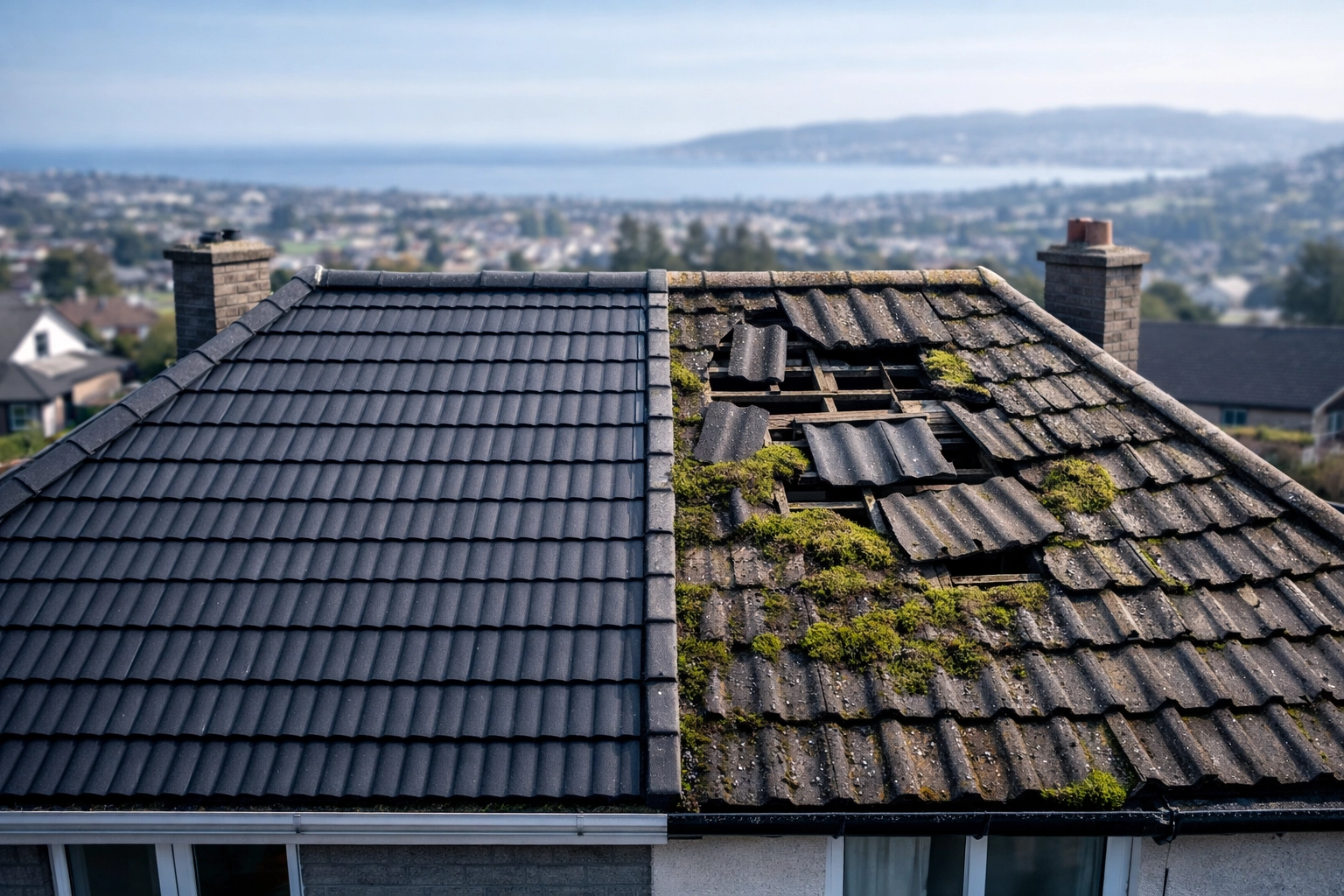
- Missing or slipped tiles
- Sagging rooflines
- Excessive moss growth
- Poor ventilation or condensation issues
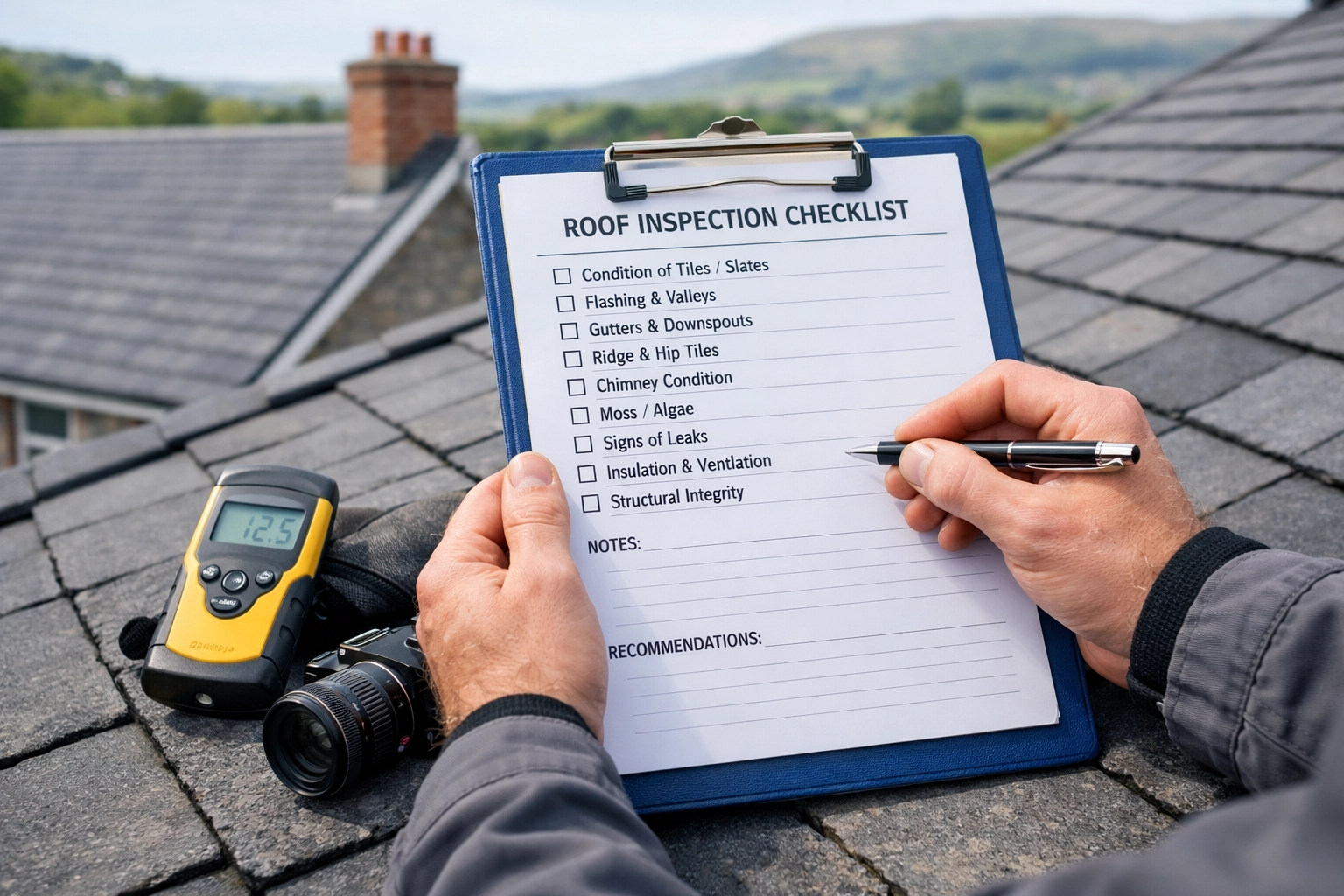
What We Look For During a Roof Survey
When we carry out a roof survey across Belfast, Bangor, and Newtownards, here's what we're checking in detail:
1. Tiles, Slates, and Roof Covering
We inspect for cracked, slipped, or missing tiles. Even a few missing tiles can let water in, which leads to timber rot and structural damage. We also check if tiles are securely fixed or if the battens beneath are deteriorating.
For flat roofs, we assess the membrane condition, looking for blistering, splits, or areas where water is pooling.
2. Leadwork and Flashing
Leadwork around chimneys, skylights, and abutments is critical. If the lead flashing is cracked, torn, or poorly installed, water will track in: especially during wind-driven rain, which we get plenty of in Northern Ireland.
We check:
- Lead condition and secure fixing
- Mortar pointing around chimneys
- Seal integrity around pipes and vents
3. Structural Integrity
We assess the roof structure from inside (where possible) and outside. This includes checking for:
- Sagging or uneven rooflines (a sign of failing rafters or roof spread)
- Timber rot or beetle infestation
- Signs of previous repairs that may have been done incorrectly
If we spot structural concerns, we'll recommend a more detailed structural survey.
4. Gutters, Soffits, and Fascias
Gutters that are blocked, sagging, or leaking cause water to overflow and damage walls, soffits, and foundations. We check:
- Secure attachment of gutters
- Debris accumulation
- Water pooling or leaks at joints
- Condition of soffits and fascias for rot or deterioration
5. Ventilation and Moisture Management
Poor ventilation leads to condensation, which rots timbers and ruins insulation. We check soffit vents, ridge vents, and exhaust vents to ensure proper airflow.
For flat roofs, trapped moisture is a common issue. Core samples help us identify if moisture has penetrated the roof build-up, which can lead to premature failure.

What Makes Northern Ireland Different?
Northern Ireland's weather is tough on roofs. We get heavy rain, strong coastal winds (especially in Bangor and Newtownards), and rapid temperature changes that cause materials to expand and contract.
Storm damage is a regular issue. After storms, use binoculars to inspect your roof from the ground for slipped, cracked, or missing slates and tiles. Replacing individual tiles quickly prevents water getting in and causing much bigger problems.
We often use drone or roof camera photography during surveys to give you a clear view of your roof's condition without the need for scaffolding. This is especially useful for higher or more complex roofs.
Planning Permission in Northern Ireland
Generally, you don't need planning permission to replace your roof in Northern Ireland: unless you're changing the roof's shape, height, or material. However, if your property is listed or in a conservation area, special rules apply.
When we carry out a survey, we'll advise if any work would require planning permission or listed building consent.
Questions to Ask Your Roof Surveyor
When booking a roof survey in Belfast, Bangor, or Newtownards, ask these questions:
- What is the current condition of my roof? Get a clear, honest answer: not a sales pitch.
- Do I need a full replacement, or will repairs suffice? Replacing a whole roof is expensive. If repairs will buy you another 5–10 years, that's worth knowing.
- What materials do you recommend, and why? We'll explain the pros and cons of slate, tile, or flat roof membranes based on your property.
- What are the lifespans and costs? Understanding what you're paying for and how long it will last helps you make informed decisions.
- Do I need planning permission? We'll advise based on your property and the work required.
- Will you provide a written report with photos? A detailed written report is essential, especially if you're buying a property or claiming on insurance.
When Should You Get a Roof Survey?
Before buying a property: Always. It's one of the best investments you can make during the buying process.
Before selling: Get ahead of buyer concerns and demonstrate transparency.
After a storm: If you've had high winds or heavy rain and suspect damage, book a survey quickly to assess and prevent further issues.
Every 5–10 years: Regular inspections catch small problems before they become expensive emergencies.
If you notice warning signs: Leaks, damp patches, moss growth, sagging, or poor ventilation all warrant a professional inspection.
What Happens After the Survey?
Once we've completed your roof survey, we provide a detailed written report with photos, defect identification, and our recommendations. This report will clearly outline:
- Issues found and their severity
- Recommended repairs or replacement work
- Estimated costs
- Urgency of work (immediate, short-term, or long-term)
If repairs are needed, we'll provide a transparent quote with no hidden costs. If the roof is in good condition, we'll tell you that too: our job is to give you honest, professional advice, not to sell you work you don't need.
Get Your Roof Survey Booked
If you're in Belfast, Bangor, or Newtownards and need a professional roof survey, we're here to help. Whether you're buying, selling, or just want to check your roof's condition, we'll give you clear answers and honest recommendations.
Contact Advanced Construction & Roofing today: https://adv-group.co.uk
A roof survey isn't just paperwork; it's peace of mind. And in Northern Ireland's weather, that's worth its weight in gold.