Does Roof Wind Resistance Really Matter in 2026? Here's the Truth

Let's be honest. If you live in Northern Ireland, you know the wind. You've felt your house shake during a January storm. You've heard tiles rattle at 3am and wondered if your roof was about to become your neighbour's problem.

So does roof wind resistance really matter in 2026?

Short answer: Absolutely. More than ever.

Here's the truth about why it matters, what's changed, and what you can do to protect your Belfast home from the next big blow.


Northern Ireland Weather: It's Not Getting Any Calmer

Anyone who's lived through a Northern Ireland winter knows the score. We're exposed to Atlantic weather systems that barrel in from the west, bringing sustained winds and sudden gusts that can catch even the sturdiest buildings off guard.

And here's what the data tells us: extreme weather events are increasing. We're seeing more named storms, more intense rainfall, and wind speeds that would have been considered unusual a decade ago.

Your roof isn't just sitting up there looking pretty. It's your first line of defence against everything the Irish Sea throws at us. If it can't handle wind forces, you're in trouble.

Belfast house roof with storm clouds and heavy rain, illustrating wind resistance challenges.


What Actually Happens When Your Roof Can't Handle Wind?

This isn't about a few loose tiles. When a roof fails to resist wind properly, three major problems hit you all at once:

  1. Your home's contents get exposed to the elements. Water damage, ruined furniture, damaged electrics: it adds up fast.

  2. Roof materials become dangerous projectiles. A flying tile or sheet of felt can smash windows, damage cars, and injure people. You could be liable.

  3. Your building's structural integrity gets compromised. Once wind gets under your roof covering, it creates uplift pressure that tries to literally tear your roof off the structure.

This isn't scare tactics. This is physics. Wind travels up your walls, over any edges, and across your roof surface. That creates suction. And if your roof isn't properly secured with the right materials and installation methods, that suction wins.


Why 2026 Is Different: Building Standards Have Caught Up

Here's the good news. The roofing industry has evolved massively in recent years.

Building codes now demand high-performance roof systems that can withstand stricter requirements. Insurance companies are paying closer attention to roof specifications. And homeowners like you are asking smarter questions before signing off on any roofing work.

The materials available in 2026 are genuinely better than what was being installed even ten years ago:

  • Standing seam metal roofing is surging in popularity because of its exceptional wind resistance and longevity
  • Stone-coated steel offers similar benefits with a more traditional look
  • Modern architectural asphalt shingles feature improved wind resistance ratings and stronger sealant technology

But here's the catch: the best materials in the world won't save you if they're installed wrong.

Roofer Roof Inspection in Rain


Quality Materials + Professional Installation = Actual Wind Resistance

This is where we need to talk straight with you.

Wind resistance isn't just about buying expensive materials. It's about how those materials are specified, how they're fixed, and who's doing the work.

Consider what actually influences whether your roof survives a storm:

  • Building width and roof pitch – affects how wind flows across your property
  • Overhang size – larger overhangs catch more wind uplift
  • Framing spacing – determines how loads are distributed
  • Fastener quantity and placement – this is where most "cowboy" installations fail
  • Correct installation technique – no shortcuts, no bodged fixes

You can buy the most wind-resistant tiles on the market. But if they're fixed with too few nails, in the wrong positions, by someone who learned roofing from YouTube videos last Tuesday? Your roof will fail.

This is exactly why experience matters. At Advanced Construction & Roofing, we've been doing this for over 25 years in Belfast and across Northern Ireland. We've seen what happens when roofs are installed properly: and what happens when they're not.


How Do You Know If Your Current Roof Is Wind-Resistant?

Good question. Most homeowners have no idea what condition their roof is actually in.

Here are warning signs that your roof might be vulnerable to wind damage:

  • Tiles that look lifted, cracked, or out of alignment
  • Ridge tiles that have shifted or show gaps
  • Flashing that's pulled away from walls or chimneys
  • Previous repairs that look patchy or inconsistent
  • Your roof is over 20 years old and hasn't been inspected

If any of these sound familiar, you need a professional roof survey. Not a quick glance from the street. A proper inspection that identifies defects, assesses fixings, and gives you a clear picture of what needs attention.

We offer comprehensive roof surveys across Belfast that include photo evidence, defect identification, and detailed analysis. It's the only way to know for certain whether your roof can handle what's coming.

Advanced Construction & Roofing Roof Survey Service


What Should You Do Right Now?

If you're reading this in January 2026, storm season isn't over. Far from it. Here's your action plan:

1. Get a roof survey booked.
Don't wait until you've got water coming through your ceiling. A professional survey costs a fraction of emergency repair work: and it gives you peace of mind. Book your Belfast roof survey here.

2. Ask the right questions before any roofing work.
When you get quotes, ask about wind resistance ratings. Ask about fixing specifications. Ask how long they've been in business. If the roofer can't answer confidently, walk away.

3. Don't choose on price alone.
The cheapest quote often means corners cut on materials, fixings, or labour. And when the next storm hits, that cheap roof becomes a very expensive problem.

4. Work with a company that understands Northern Ireland conditions.
Generic roofing advice from companies based in England doesn't account for our specific weather challenges. You need roofers who know Belfast, know our climate, and have decades of local experience.


The Bottom Line on Roof Wind Resistance

Does roof wind resistance matter in 2026? It matters more than it ever has.

Northern Ireland weather isn't getting gentler. Building standards are getting stricter. And the difference between a roof that holds and a roof that fails comes down to two things: quality materials and professional installation.

At Advanced Construction & Roofing, we've spent over 25 years protecting Belfast homes and businesses from everything our climate throws at them. We know what works. We know what fails. And we're straight with you about what your property needs.

Want to know if your roof is ready for the next storm?

Request a professional roof survey today. Call us, contact us through our website at adv-group.co.uk, or fill in our online form.

Don't wait for the wind to make the decision for you.

10 Reasons Your Roof Repair Keeps Failing (And How to Fix It)

You've had your roof "fixed" twice already this year. Maybe three times. Yet here you are, bucket in the hallway, damp patches spreading across the ceiling, and another roofer's number in your hand.

Sound familiar?

If your roof repair keeps failing, you're not alone. Across Belfast and Northern Ireland, we see homeowners trapped in an endless cycle of patch jobs that never quite solve the problem. The frustrating truth? Most roof repairs fail because they treat symptoms, not causes.

Let's break down exactly why this happens, and more importantly, how to fix it for good.


Why Do Roof Repairs Keep Failing?

Before we dive into the reasons, understand this: a failing repair isn't always about bad luck. It's usually about bad diagnosis, bad materials, or bad workmanship. Sometimes all three.

Here are the 10 most common reasons your roof repair isn't holding up.


1. The Root Cause Was Never Identified

This is the number one reason repairs fail. A roofer spots a crack, patches it, and leaves. But that crack was caused by something else, maybe poor ventilation, structural movement, or water travelling from a completely different area.

How to fix it: Don't accept a quick patch job. Request a proper inspection that identifies why the damage occurred, not just where it appeared.

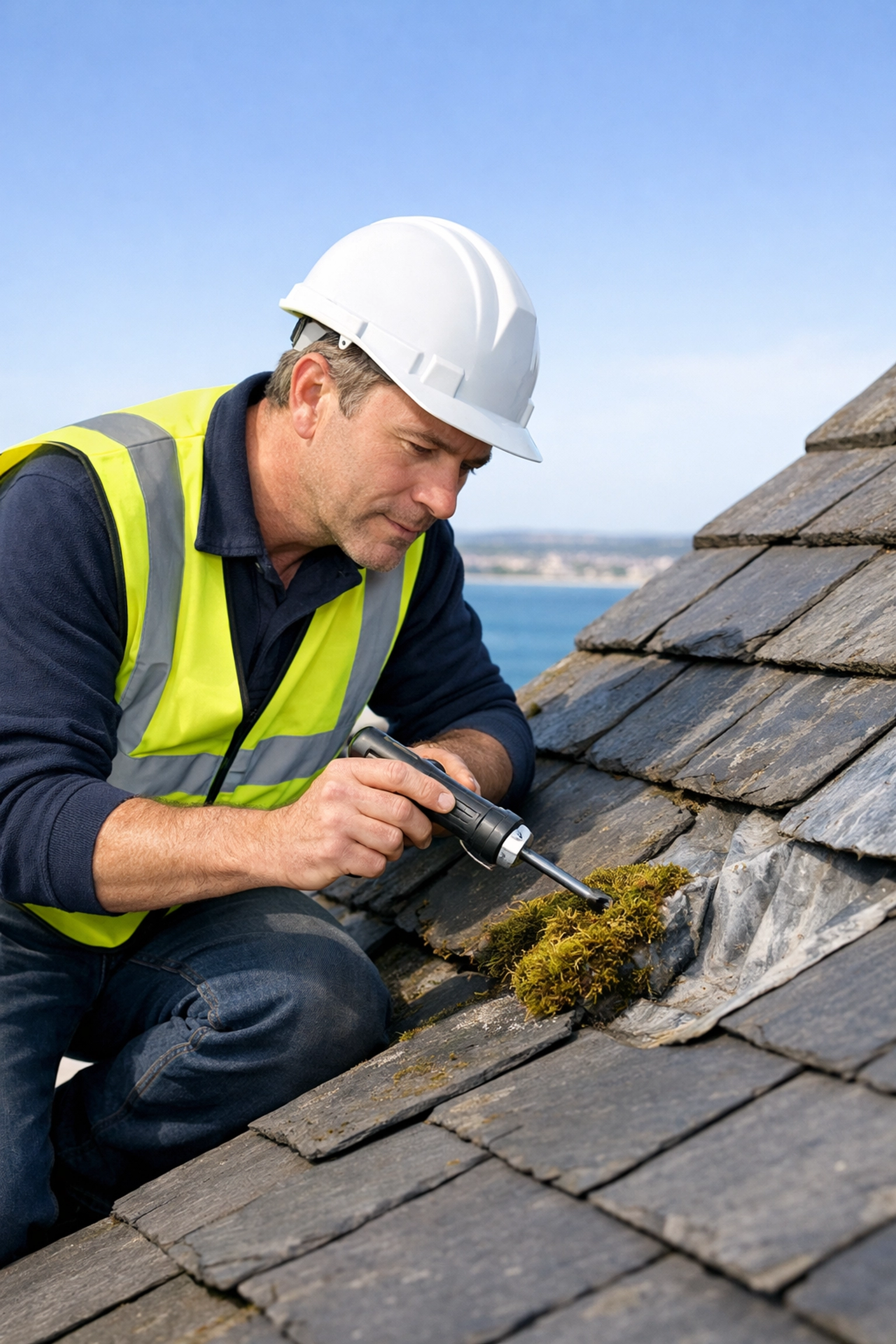
Roofer Roof Inspection in Rain A roofer conducts a detailed inspection of a leaking and damaged roof during heavy rain, identifying broken tiles, exposed timber, and visible moss. The technician is equipped with tools and assesses the extent of emergency repairs needed to prevent further water ingress.


2. Poor Quality Materials Were Used

Cheap materials fail. It's that simple.

Subpar roofing materials are prone to punctures, tears, and premature deterioration. That budget felt or bargain-bin sealant might save you £50 today, but it'll cost you hundreds when it fails in 18 months.

How to fix it: Always ask what materials are being used. Reputable contractors use products from established manufacturers with proper quality control. If your roofer can't tell you the brand and specification, walk away.


3. Incorrect Installation Techniques

Even good materials fail when installed incorrectly. Misaligned slates, inadequate sealing, incorrect nail placement, these rookie errors compromise your entire roof structure.

Common installation mistakes include:

  • Insufficient adhesives
  • Inconsistent heat-sealing on flat roofs
  • Shingles not aligned to manufacturer guidelines
  • Nails placed too high or too low

How to fix it: Hire experienced contractors who follow manufacturer guidelines and building codes. Ask about their process. Professionals won't mind explaining their methods.


4. Flashing Failures

Flashing, the metal strips that seal joints around chimneys, vents, and walls, is where most leaks originate. Yet it's often the most neglected part of a repair.

We regularly see flashing "repairs" where someone's just slapped caulk over the problem. Caulk is not flashing. It's a temporary bodge that will fail within months.

How to fix it: Insist on proper flashing materials, correctly installed. Flashing should be integrated with your roof system, not stuck on as an afterthought.

Close-up of failed roof flashing installation around a Belfast chimney showing gaps and damaged sealant.


5. Layered Shingles Creating Hidden Problems

Here's a shortcut that always backfires: installing new shingles directly over old ones.

Multiple roof layers add weight, shorten your roof's lifespan, and make leak detection nearly impossible. Water travels between layers, appearing meters away from the actual entry point.

How to fix it: Remove old layers completely before installing new materials. Yes, it costs more upfront. But it prevents the nightmare of chasing phantom leaks for years.


6. Inadequate Ventilation and Insulation

Your attic's ventilation directly affects your roof's lifespan. Poor ventilation causes condensation, which leads to:

  • Sheathing deterioration
  • Mould growth
  • Curled or buckled shingles
  • Frost damage in winter

How to fix it: Check that ventilation is balanced between intake and exhaust. Ensure soffit vents aren't blocked by paint overspray or insulation. Verify your insulation is properly installed and rated for your property.


7. Drainage Problems Causing Recurring Damage

Water that doesn't drain properly will find somewhere to go: usually into your property.

Inefficient drainage causes ponding water on flat roofs, which encourages mould growth, rusts metallic components, and accelerates material breakdown. On pitched roofs, blocked gutters force water back under tiles.

How to fix it: Drainage must be designed as part of your roofing system, not added as an afterthought. Clear gutters regularly and ensure downpipes are flowing freely.

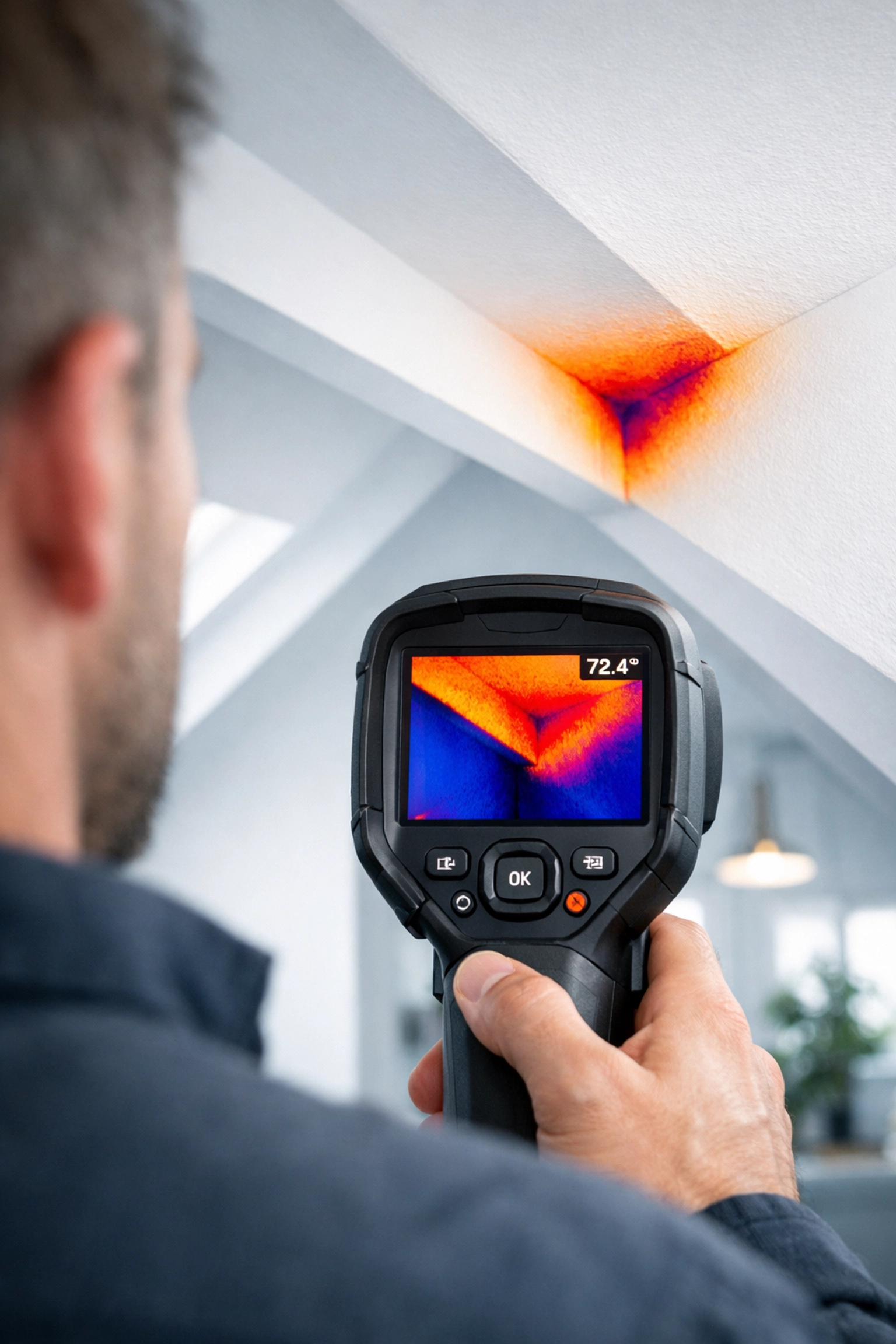
Advanced Construction & Roofing Roof Survey Service A professional roof inspector examines ceiling damage and insulation while taking notes. The image promotes Advanced Construction & Roofing's roof survey service, offering visual surveys, photo evidence, defect identification, and in-depth analysis for property owners. Contact details and a website link are included for booking a survey.


8. Environmental Damage Going Unaddressed

Northern Ireland's weather is brutal on roofs. High winds, driving rain, hail, falling debris, and extreme temperature shifts all weaken roofing materials over time.

A repair might fix today's damage, but if underlying weather-related deterioration isn't addressed, you'll be calling again next storm season.

How to fix it: Schedule regular professional inspections: especially after severe weather. Proactive maintenance catches problems before they become expensive failures.


9. Manufacturer Defects in Materials

Sometimes the materials themselves are the problem. Certain shingle products have been subject to class action lawsuits due to premature deterioration. Budget products from unknown manufacturers often lack proper quality testing.

How to fix it: Request documentation of the exact materials being used: brand, type, and specification. If there's any doubt about quality, consult with a licensed roofing professional before proceeding.


10. No Ongoing Maintenance Programme

Here's the uncomfortable truth: even good repairs fail without maintenance.

Small problems escalate into major failures when ignored. A loose tile becomes a leak. A blocked gutter becomes water damage. A minor crack becomes structural rot.

How to fix it: Implement a regular maintenance programme. This doesn't mean expensive annual overhauls: just periodic professional inspections to catch issues early.


How to Break the Cycle: Start With a Proper Survey

If you've read this far, you're probably nodding along. You've experienced at least three or four of these issues firsthand.

So how do you actually break the cycle?

You start with a proper professional survey.

Not a quick look from a ladder. Not a free quote that's really just a sales pitch. A genuine, thorough inspection that identifies the root cause of your roofing problems.

At Advanced Construction & Roofing, our £295 Roof Survey includes:

  • Visual inspection of all accessible roof areas
  • Photo evidence documenting every defect found
  • Detailed analysis identifying root causes, not just symptoms
  • Written report with prioritised recommendations
  • Honest assessment of what needs fixing now versus what can wait

This isn't a sales tactic to upsell you on work. It's a diagnostic tool that tells you exactly what's wrong and why your previous repairs failed.


Our Commitment to Quality Materials

We've been in the roofing business across Belfast and Northern Ireland for over 25 years. In that time, we've learned that quality materials aren't optional: they're essential.

Every repair and installation we complete uses products from reputable manufacturers with proven track records. We'll tell you exactly what we're using and why.

Because cheap repairs aren't cheap. They're just expensive repairs you haven't paid for yet.


Stop Patching. Start Fixing.

If your roof repair keeps failing, stop throwing money at temporary solutions. Get a proper diagnosis first.

Call Advanced Construction & Roofing today to book your professional roof survey. Let's find out what's really going wrong: and fix it once, properly.

Book Your £295 Roof Survey

EPDM Vs Felt Flat Roofing: Which Is Better For Your Belfast Property?

If you own a property in Belfast with a flat roof, you've probably asked yourself this question at least once: should I go with EPDM or stick with traditional felt?

It's a fair question. Both materials have been used on flat roofs across Northern Ireland for decades. But here's the thing: Belfast's weather doesn't play nice with every roofing material. Our damp climate, frequent rain, and those annoying freeze-thaw cycles during winter can absolutely destroy the wrong roof.

So let's break it down. No jargon. No confusing technical terms. Just the honest truth about which flat roofing material will actually protect your Belfast home or commercial property for the long haul.

What Exactly Is Felt Roofing?

Felt roofing (also called bitumen felt) has been the traditional choice for flat roofs in the UK for generations. It's made from layers of bitumen-saturated material, typically applied in two or three layers with hot or cold adhesive.

You've seen felt roofs everywhere in Belfast: on extensions, garages, sheds, and older commercial buildings. It's familiar. It's what your dad probably had on his garage.

But familiar doesn't always mean best.

Traditional felt flat roof on a Belfast extension, showing visible seams and typical weathering

What Is EPDM Roofing?

EPDM stands for Ethylene Propylene Diene Monomer. Don't worry about remembering that: just know it's a type of synthetic rubber membrane.

EPDM comes in large, seamless sheets that are bonded directly to your roof deck. Because it arrives in bigger rolls, there are far fewer joints and seams than traditional felt. And fewer seams means fewer potential leak points.

It's been used in commercial roofing for over 50 years, but it's now become increasingly popular for domestic properties across Belfast and Northern Ireland.

Durability: How Long Will Each Roof Actually Last?

Here's where the difference becomes crystal clear.

Felt roofing typically lasts 10–20 years. Some cheaper installations might only give you 5–10 years before problems start appearing. That's not great when you're paying good money for a roof.

EPDM roofing lasts 40–50 years. That's not a typo. A properly installed EPDM roof can protect your Belfast property for four to five decades with minimal maintenance.

Think about that for a second. You could replace a felt roof three or four times in the same period that one EPDM roof keeps doing its job.

Factor Felt Roofing EPDM Roofing
Lifespan 10–20 years 40–50 years
Seam vulnerability High Low
UV resistance Requires treatment Built-in
Cold weather flexibility Poor Excellent

Belfast Weather: Why It Matters More Than You Think

Let's be honest: Belfast isn't exactly known for Mediterranean sunshine. Our maritime climate throws everything at your roof: heavy rain, standing water, frost, freeze-thaw cycles, and the occasional storm that makes you question your life choices.

This is where EPDM pulls way ahead.

Closeup of heavy rain on an EPDM flat roof in Belfast, demonstrating superior water resistance

Rain and Standing Water

Flat roofs are notorious for ponding: that's when water pools on your roof instead of draining properly. EPDM tolerates standing water significantly better than felt. Felt roofs are vulnerable to standing water and prone to blistering, which accelerates degradation.

In a city where it rains more than 150 days a year, that's a massive advantage.

Freeze-Thaw Cycles

Belfast winters bring constant temperature fluctuations. Water gets into small cracks, freezes, expands, and causes damage. Felt becomes brittle in cold weather, making it susceptible to cracking during these cycles.

EPDM maintains excellent flexibility down to -40°C. It expands and contracts naturally with temperature changes without cracking or splitting. That natural elasticity is exactly what Belfast properties need.

UV Resistance

Even with our famously overcast skies, UV degradation is still a factor over time. EPDM has inherent UV resistance built into the material: no additional surface treatments required throughout its entire lifespan.

Felt, on the other hand, requires ongoing surface protection because unprotected bitumen degrades when exposed to UV rays.

Installation Differences: Why Seams Matter

One of the biggest reasons flat roofs fail is seam failure. Every joint in your roof is a potential weak point where water can get in.

Felt roofing requires multiple layers and many seams. Each seam is a potential leak waiting to happen, especially under thermal stress from Belfast's temperature fluctuations.

EPDM comes in much larger rolls, meaning fewer seams in the finished roof. Some smaller flat roofs can be covered with a single sheet: no seams at all. That's a huge advantage for long-term waterproofing.

Roofer installing seamless EPDM membrane on a flat roof, ensuring long-lasting waterproofing

Maintenance: What Will You Need to Do?

Nobody wants to spend their weekends worrying about their roof. Here's the reality:

Felt roofing demands regular inspections and repairs to prevent leaks and cracks. You'll need to check it at least twice a year, and after any significant storms. Small problems become big problems quickly if left unattended.

EPDM requires very low maintenance. An annual visual check and keeping it clear of debris is usually all that's needed. The material is designed to look after itself.

Cost: The Real Numbers

Let's talk money. Because we know that's what matters.

Felt roofing costs less upfront. There's no getting around it: felt is cheaper to install initially. If you're working with a tight budget and need a roof sorted quickly, felt gets the job done.

But EPDM offers better long-term value. When you factor in:

  • Longer lifespan (40–50 years vs 10–20 years)
  • Lower maintenance costs
  • Fewer repairs over time
  • Better energy efficiency

The maths changes dramatically. You could easily spend more on felt roof replacements and repairs over 40 years than you would on a single EPDM installation.

When Should You Choose Felt?

Felt roofing still makes sense in certain situations:

  • Very tight budgets where upfront cost is the only priority
  • Buildings with limited expected lifespan (if you're demolishing in 5 years, why spend more?)
  • Small outbuildings like garden sheds or basic garages
  • Temporary solutions while planning a more permanent roof

If any of these apply to you, felt might be the practical choice. We install both options at Advanced Construction & Roofing, and we'll always give you honest advice about what's right for your specific situation.

When Should You Choose EPDM?

For most Belfast properties, EPDM is the smarter choice. Consider EPDM if:

  • You want a roof that lasts 40+ years
  • Your property has drainage challenges or areas where water pools
  • You prefer minimal ongoing maintenance
  • You're thinking about long-term value over upfront cost
  • You want insurance-backed guarantees for peace of mind

Speaking of guarantees: all our EPDM installations come with comprehensive insurance-backed guarantees. That means your investment is protected even if something unexpected happens down the line.

Not Sure Which Option Is Right For You?

Here's the honest truth: every property is different. The condition of your existing roof deck, the size of the area, drainage considerations, and your budget all play a role in the decision.

That's why we always recommend starting with a proper roof survey. We'll inspect your current flat roof, identify any underlying issues, and give you a clear recommendation based on what we find: not what makes us the most money.

Request a roof survey in Belfast and get honest advice from our team with over 25 years of experience in flat roofing across Northern Ireland.

The Bottom Line

If you're looking for a flat roof solution that can handle Belfast's demanding climate, EPDM is the better choice for most properties. It lasts longer, handles our weather better, requires less maintenance, and offers superior long-term value.

But we understand that every situation is unique. Whether you need EPDM, felt, or want to discuss other options, Advanced Construction & Roofing provides both services with the same commitment to quality workmanship.

Call us today to discuss your flat roofing project. We'll give you a straight answer about what your property actually needs: no pressure, no upselling, just honest advice from Belfast's trusted roofing experts.

EPDM Vs Felt Flat Roofing: Which Is Better For Your Belfast Property?

If you own a property in Belfast with a flat roof, you've probably asked yourself this question at least once: should I go with EPDM or stick with traditional felt?

It's a fair question. Both materials have been used on flat roofs across Northern Ireland for decades. But here's the thing: Belfast's weather doesn't play nice with every roofing material. Our damp climate, frequent rain, and those annoying freeze-thaw cycles during winter can absolutely destroy the wrong roof.

So let's break it down. No jargon. No confusing technical terms. Just the honest truth about which flat roofing material will actually protect your Belfast home or commercial property for the long haul.

What Exactly Is Felt Roofing?

Felt roofing (also called bitumen felt) has been the traditional choice for flat roofs in the UK for generations. It's made from layers of bitumen-saturated material, typically applied in two or three layers with hot or cold adhesive.

You've seen felt roofs everywhere in Belfast: on extensions, garages, sheds, and older commercial buildings. It's familiar. It's what your dad probably had on his garage.

But familiar doesn't always mean best.

Traditional felt flat roof on a Belfast extension, showing visible seams and typical weathering

What Is EPDM Roofing?

EPDM stands for Ethylene Propylene Diene Monomer. Don't worry about remembering that: just know it's a type of synthetic rubber membrane.

EPDM comes in large, seamless sheets that are bonded directly to your roof deck. Because it arrives in bigger rolls, there are far fewer joints and seams than traditional felt. And fewer seams means fewer potential leak points.

It's been used in commercial roofing for over 50 years, but it's now become increasingly popular for domestic properties across Belfast and Northern Ireland.

Durability: How Long Will Each Roof Actually Last?

Here's where the difference becomes crystal clear.

Felt roofing typically lasts 10–20 years. Some cheaper installations might only give you 5–10 years before problems start appearing. That's not great when you're paying good money for a roof.

EPDM roofing lasts 40–50 years. That's not a typo. A properly installed EPDM roof can protect your Belfast property for four to five decades with minimal maintenance.

Think about that for a second. You could replace a felt roof three or four times in the same period that one EPDM roof keeps doing its job.

Factor Felt Roofing EPDM Roofing
Lifespan 10–20 years 40–50 years
Seam vulnerability High Low
UV resistance Requires treatment Built-in
Cold weather flexibility Poor Excellent

Belfast Weather: Why It Matters More Than You Think

Let's be honest: Belfast isn't exactly known for Mediterranean sunshine. Our maritime climate throws everything at your roof: heavy rain, standing water, frost, freeze-thaw cycles, and the occasional storm that makes you question your life choices.

This is where EPDM pulls way ahead.

Closeup of heavy rain on an EPDM flat roof in Belfast, demonstrating superior water resistance

Rain and Standing Water

Flat roofs are notorious for ponding: that's when water pools on your roof instead of draining properly. EPDM tolerates standing water significantly better than felt. Felt roofs are vulnerable to standing water and prone to blistering, which accelerates degradation.

In a city where it rains more than 150 days a year, that's a massive advantage.

Freeze-Thaw Cycles

Belfast winters bring constant temperature fluctuations. Water gets into small cracks, freezes, expands, and causes damage. Felt becomes brittle in cold weather, making it susceptible to cracking during these cycles.

EPDM maintains excellent flexibility down to -40°C. It expands and contracts naturally with temperature changes without cracking or splitting. That natural elasticity is exactly what Belfast properties need.

UV Resistance

Even with our famously overcast skies, UV degradation is still a factor over time. EPDM has inherent UV resistance built into the material: no additional surface treatments required throughout its entire lifespan.

Felt, on the other hand, requires ongoing surface protection because unprotected bitumen degrades when exposed to UV rays.

Installation Differences: Why Seams Matter

One of the biggest reasons flat roofs fail is seam failure. Every joint in your roof is a potential weak point where water can get in.

Felt roofing requires multiple layers and many seams. Each seam is a potential leak waiting to happen, especially under thermal stress from Belfast's temperature fluctuations.

EPDM comes in much larger rolls, meaning fewer seams in the finished roof. Some smaller flat roofs can be covered with a single sheet: no seams at all. That's a huge advantage for long-term waterproofing.

Roofer installing seamless EPDM membrane on a flat roof, ensuring long-lasting waterproofing

Maintenance: What Will You Need to Do?

Nobody wants to spend their weekends worrying about their roof. Here's the reality:

Felt roofing demands regular inspections and repairs to prevent leaks and cracks. You'll need to check it at least twice a year, and after any significant storms. Small problems become big problems quickly if left unattended.

EPDM requires very low maintenance. An annual visual check and keeping it clear of debris is usually all that's needed. The material is designed to look after itself.

Cost: The Real Numbers

Let's talk money. Because we know that's what matters.

Felt roofing costs less upfront. There's no getting around it: felt is cheaper to install initially. If you're working with a tight budget and need a roof sorted quickly, felt gets the job done.

But EPDM offers better long-term value. When you factor in:

  • Longer lifespan (40–50 years vs 10–20 years)
  • Lower maintenance costs
  • Fewer repairs over time
  • Better energy efficiency

The maths changes dramatically. You could easily spend more on felt roof replacements and repairs over 40 years than you would on a single EPDM installation.

When Should You Choose Felt?

Felt roofing still makes sense in certain situations:

  • Very tight budgets where upfront cost is the only priority
  • Buildings with limited expected lifespan (if you're demolishing in 5 years, why spend more?)
  • Small outbuildings like garden sheds or basic garages
  • Temporary solutions while planning a more permanent roof

If any of these apply to you, felt might be the practical choice. We install both options at Advanced Construction & Roofing, and we'll always give you honest advice about what's right for your specific situation.

When Should You Choose EPDM?

For most Belfast properties, EPDM is the smarter choice. Consider EPDM if:

  • You want a roof that lasts 40+ years
  • Your property has drainage challenges or areas where water pools
  • You prefer minimal ongoing maintenance
  • You're thinking about long-term value over upfront cost
  • You want insurance-backed guarantees for peace of mind

Speaking of guarantees: all our EPDM installations come with comprehensive insurance-backed guarantees. That means your investment is protected even if something unexpected happens down the line.

Not Sure Which Option Is Right For You?

Here's the honest truth: every property is different. The condition of your existing roof deck, the size of the area, drainage considerations, and your budget all play a role in the decision.

That's why we always recommend starting with a proper roof survey. We'll inspect your current flat roof, identify any underlying issues, and give you a clear recommendation based on what we find: not what makes us the most money.

Request a roof survey in Belfast and get honest advice from our team with over 25 years of experience in flat roofing across Northern Ireland.

The Bottom Line

If you're looking for a flat roof solution that can handle Belfast's demanding climate, EPDM is the better choice for most properties. It lasts longer, handles our weather better, requires less maintenance, and offers superior long-term value.

But we understand that every situation is unique. Whether you need EPDM, felt, or want to discuss other options, Advanced Construction & Roofing provides both services with the same commitment to quality workmanship.

Call us today to discuss your flat roofing project. We'll give you a straight answer about what your property actually needs: no pressure, no upselling, just honest advice from Belfast's trusted roofing experts.