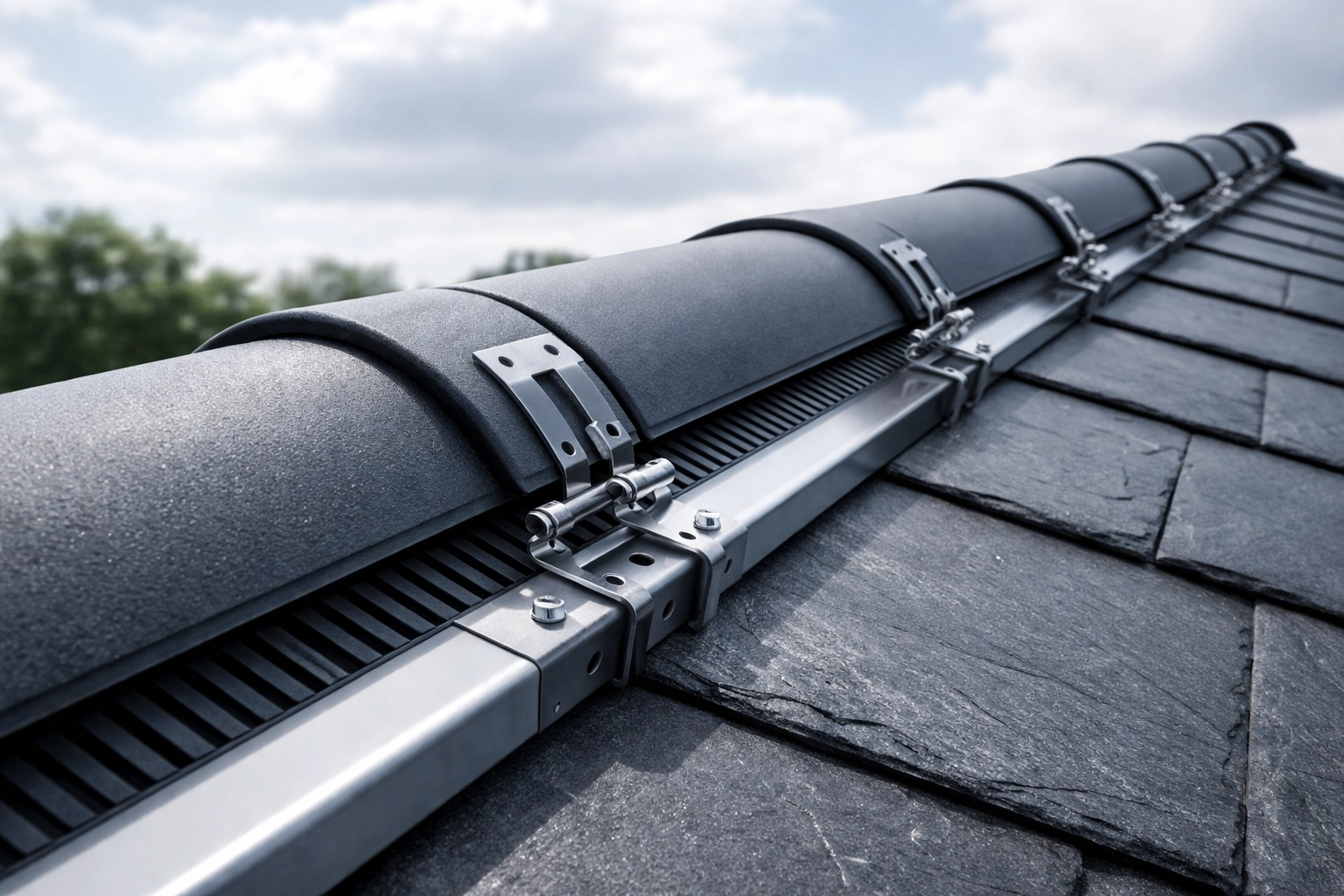
Mortgage Survey vs Roof Survey: What Your Lender's Valuation Won't Tell You

You've found your dream home in Northern Ireland. The mortgage is approved, the valuation came back fine, and you're ready to sign on the dotted line. But here's the uncomfortable truth that could save you thousands: that mortgage valuation wasn't done for you.

It was done for the bank.

And when it comes to the roof over your head: quite literally the most important part of any property: a standard mortgage valuation tells you almost nothing. Understanding this distinction before you buy could be the difference between a wise investment and a money pit.

What Is a Mortgage Valuation? (And Who Is It Really For?)

Let's be clear about something right from the start. A mortgage valuation exists to protect the lender, not you. The bank wants to know one thing: if you stop paying your mortgage, can they sell the property and recover their money?

That's it. That's the entire purpose.

A mortgage valuation is a light-touch assessment. It's relatively cursory and brief. In some cases, the surveyor won't even visit the property: they'll conduct research online and use comparable sales data to estimate value. When they do visit, they typically won't lift carpets, inspect loft spaces, or look beyond easily observable issues.

The surveyor spends maybe 15 to 30 minutes walking through. They're checking boxes for the lender's loan-to-value criteria. They're not there to tell you about the cracked ridge tiles, the failing lead flashing, or the condensation damage slowly rotting the timber in your loft.

The mortgage valuation provides you with no guarantee about the property's actual condition.

Advanced Construction & Roofing Roof Survey Service A professional roof inspector examines ceiling damage and insulation while taking notes. The image promotes Advanced Construction & Roofing's roof survey service, offering visual surveys, photo evidence, defect identification, and in-depth analysis for property owners. Contact details and a website link are included for booking a survey.

What Will a Mortgage Valuation Miss?

Here's what keeps us busy at Advanced Construction & Roofing: homeowners who bought a property thinking everything was fine, only to discover expensive roof problems within months of moving in.

A mortgage valuation will not identify:

  • Roof leaks or water ingress points
  • Damaged or missing ridge tiles
  • Failing mortar joints
  • Blocked or inadequate ventilation
  • Condensation damage in the loft space
  • Rotten roof timbers
  • Defective flashing around chimneys and dormers
  • Deteriorating flat roof membranes
  • Hidden structural issues in the roof framework

These aren't minor cosmetic concerns. A single undetected roof leak can cause thousands of pounds in damage to ceilings, insulation, electrics, and structural timbers. And because the mortgage valuation didn't flag it, you have no comeback against anyone.

The property is now your problem.

What Is a Specialist Roof Survey?

A specialist roof survey is a comprehensive inspection carried out specifically to assess the condition of the roof and identify any defects, damage, or areas of concern. Unlike a mortgage valuation, this survey is conducted entirely for your benefit.

At Advanced Construction & Roofing, our roof survey service includes:

  • Visual inspection of all external roof surfaces
  • Internal loft inspection for ventilation, insulation, and timber condition
  • Photo evidence documenting every defect found
  • Detailed written report explaining issues and recommended repairs
  • Cost estimates so you know exactly what you're dealing with

We climb up. We get into the loft. We look at what others don't bother checking. Because that's where the expensive surprises hide.

Homebuyers in a modern kitchen review property paperwork and listings, emphasising the importance of roof surveys before purchasing.

Why Do Hidden Roof Problems Cost So Much?

Let's talk real numbers. Here's what we regularly see when homebuyers skip the roof survey:

Scenario 1: Failed Ridge Tiles
A buyer purchases a 1970s semi-detached in Belfast. Six months later, water starts coming through the bedroom ceiling during heavy rain. The old mortar ridge has cracked and lifted. Repair cost: £1,200 to £2,500 depending on the extent.

Scenario 2: Condensation Damage
A young couple buys a bungalow in Lisburn. They notice a musty smell in the spare room. Investigation reveals the roof has inadequate ventilation, leading to severe condensation. The loft insulation is soaked, and the timber rafters show early signs of rot. Repair cost: £3,000 to £8,000.

Scenario 3: Flat Roof Failure
A family moves into a property with a flat-roofed extension in Bangor. Within the first winter, water pools and breaches the old felt covering. The entire flat roof needs replacing. Repair cost: £4,000 to £7,000.

Every one of these issues would have been flagged by a proper roof survey. Every one was missed by the mortgage valuation.

Request a Belfast roof survey before you commit to a purchase. It's the smartest investment you'll make.

When Do You Absolutely Need a Roof Survey?

Always. That's the honest answer. But if you need convincing, here are the situations where skipping a roof survey is genuinely reckless:

The property is older than 20 years
Roofs have a lifespan. Tiles crack, mortar fails, flashings deteriorate. The older the property, the higher the risk of hidden defects.

The property has a flat roof or extension
Flat roofs are notorious for problems. They require specialist assessment to determine remaining lifespan and current condition.

You can see visible issues from ground level
Missing tiles, sagging gutters, moss growth, or staining on external walls? These are warning signs. Get a professional up there immediately.

The property has been empty for a period
Vacant properties deteriorate faster. Without heating and ventilation, condensation problems accelerate. Leaks go unnoticed and cause extensive damage.

You're buying in a coastal or exposed area
Properties in coastal Northern Ireland face harsher weather conditions. Wind-driven rain finds every weakness. Wind resistance matters more than you might think.

Roofer Roof Inspection in Rain A roofer conducts a detailed inspection of a leaking and damaged roof during heavy rain, identifying broken tiles, exposed timber, and visible moss. The technician is equipped with tools and assesses the extent of emergency repairs needed to prevent further water ingress.

How Much Does a Roof Survey Cost vs What It Saves?

A professional roof survey typically costs between £150 and £350 depending on the property size and complexity. Compare that to:

  • Average roof repair costs: £500 to £3,000
  • Full roof replacement: £5,000 to £15,000+
  • Water damage repairs to ceilings and interiors: £1,000 to £5,000
  • Timber rot remediation: £2,000 to £10,000

The maths is simple. A roof survey pays for itself many times over if it uncovers even one significant issue. And if the survey comes back clean? You've bought peace of mind and negotiating power.

Can You Use a Roof Survey to Negotiate the Price?

Absolutely. This is one of the most powerful tools buyers overlook.

When our roof survey identifies defects, you receive a detailed report with cost estimates for repairs. You can then:

  1. Request a price reduction equivalent to repair costs
  2. Ask the seller to complete repairs before completion
  3. Walk away if the issues are too severe

Sellers expect negotiation. A professional survey gives you the evidence to back up your position. You're not guessing: you have documented proof from qualified roofing specialists.

What Should You Do Right Now?

If you're in the process of buying a property in Northern Ireland, here's your action plan:

  1. Don't rely on the mortgage valuation. Understand it's for the lender's benefit, not yours.

  2. Book a specialist roof survey before you exchange contracts. Contact Advanced Construction & Roofing to arrange an inspection.

  3. Review the survey report carefully. Ask questions if anything is unclear.

  4. Use the findings to negotiate. A survey isn't just about finding problems: it's about protecting your investment.

  5. Factor repair costs into your budget. Know what you're taking on before you commit.

With over 30 years of experience in the Northern Ireland construction and roofing industry, Advanced Construction & Roofing has helped thousands of homebuyers make informed decisions. We've seen what happens when people skip the survey. We've repaired the damage. We'd rather help you avoid it entirely.

Contact us today to book your pre-purchase roof survey. It's the call that could save you thousands.

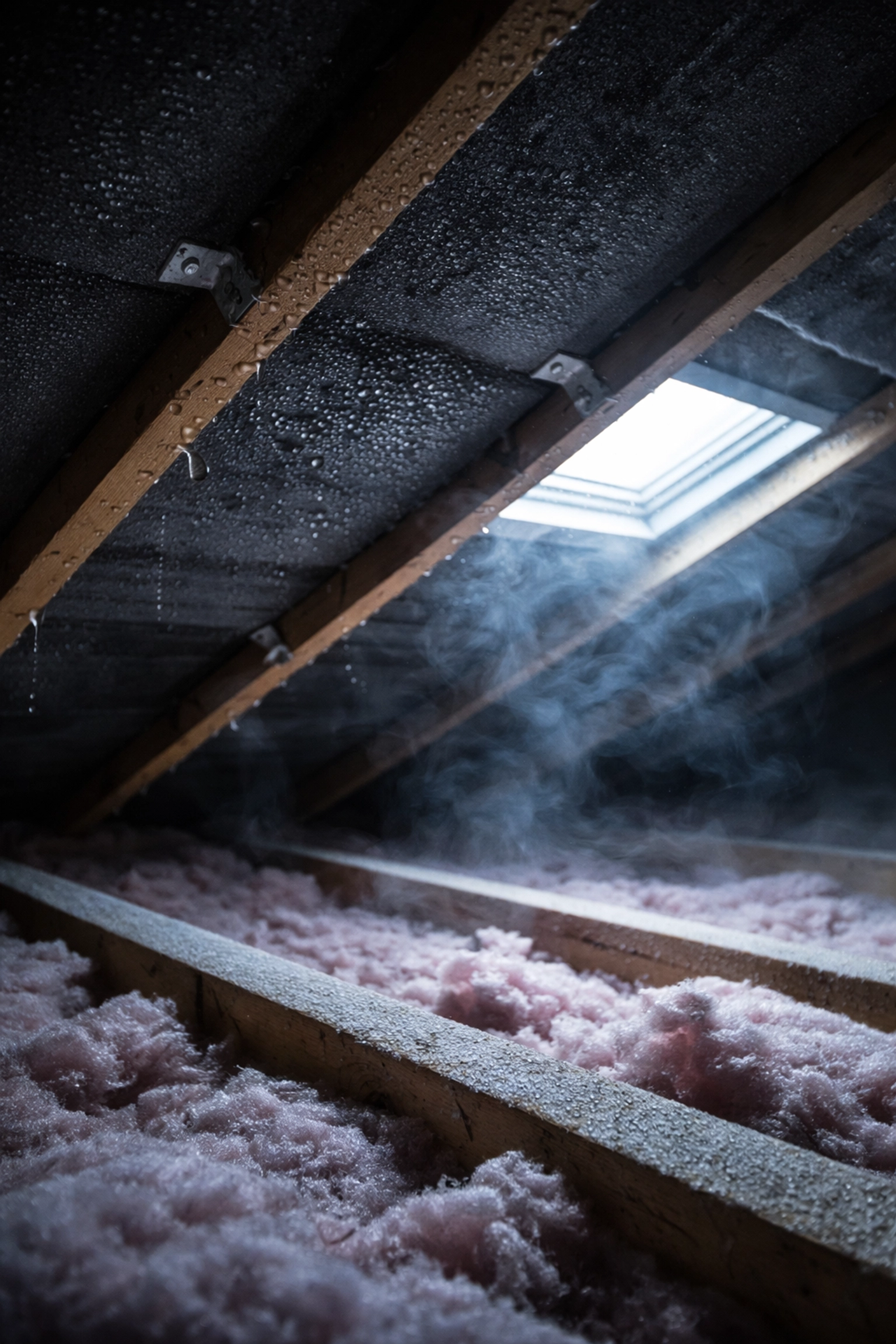
Condensation or Roof Leak? The Simple Trick to Diagnose Your Loft Problem Right Now

You've spotted damp patches in your loft. Water stains are spreading across the ceiling. Something's clearly wrong: but what exactly?

Here's the problem: misdiagnosing your loft issue can cost you hundreds of pounds in unnecessary repairs. Treating condensation like a leak means paying for roof work you don't need. Dismissing a leak as "just condensation" allows water damage to destroy your timbers, insulation, and eventually your ceilings.

The good news? There's a simple trick Northern Ireland homeowners can use to diagnose the problem right now: without calling anyone or climbing onto the roof.

The Simple Trick: Check the Weather, Then Check Your Loft

The most reliable way to diagnose your loft problem is timing. Grab your phone, check the weather forecast, and observe your loft on two different types of days.

Day One: During or After Rainfall

Head into your loft during or immediately after heavy rain. Look for:

  • Active dripping or water streaming down rafters
  • Wet patches that appear suddenly
  • Water trails leading from a specific point on the roof

If dampness appears during rain, you likely have a leak.

Day Two: A Cold, Dry Morning

Check your loft on a cold winter morning when there's been no rain for at least 24 hours. Look for:

  • Widespread dampness across multiple surfaces
  • Water droplets forming on cold surfaces like roof felt or metal fixings
  • A general clammy, humid feeling throughout the space

If dampness appears without rain: especially during cold weather: you're dealing with condensation.

This timing trick works because leaks and condensation behave completely differently. Leaks need water to enter from outside. Condensation forms when warm, moist air from your home meets cold surfaces in your loft space.

Roofer Roof Inspection in Rain A roofer conducts a detailed inspection of a leaking and damaged roof during heavy rain, identifying broken tiles, exposed timber, and visible moss. The technician is equipped with tools and assesses the extent of emergency repairs needed to prevent further water ingress.

How to Spot a Roof Leak: The Telltale Signs

Roof leaks leave distinctive evidence. Here's what to look for:

Localised water damage. Leaks create concentrated wet patches rather than widespread dampness. You'll often see water staining in one specific area, not across your entire loft.

Water trails down rafters. Look closely at your roof timbers. Water from a leak typically runs down the underside of rafters, leaving visible streaks or tide marks.

A traceable source. Most leaks originate from damaged slates, cracked flashing, deteriorated vent boots, or failed pointing around chimneys. You can often trace the water back to a specific entry point.

Wet insulation in patches. If your loft insulation is soaking wet in one area but bone dry elsewhere, a leak is almost certainly the culprit.

Timing linked to rainfall. The dampness gets worse during storms and improves during dry spells. This weather correlation is the strongest indicator of a leak.

How to Spot Condensation: The Warning Signs

Condensation problems look and behave differently:

Widespread dampness. Rather than concentrated patches, condensation affects larger areas. You might notice dampness across multiple rafters, on the underside of roof felt, or throughout your insulation.

No obvious entry point. You won't find a hole, crack, or damaged tile causing the problem. The moisture simply accumulates from within.

Worst during cold weather. Condensation issues peak in winter when the temperature difference between your warm home and cold loft is greatest: regardless of rainfall.

Mould growth. Black mould spots appearing on timber, felt, or stored items suggest ongoing condensation problems. Leaks don't typically cause the same pattern of mould growth.

Poor ventilation clues. Check for blocked soffit vents, missing tile vents, or inadequate airflow. If your loft feels stuffy and humid, ventilation is likely the issue.

Loft interior showing condensation droplets on roofing felt and timbers, highlighting ventilation issues in Belfast homes.

The Touch Test: A Quick Confirmation

Still unsure? Try the touch test.

Carefully touch the damp area with your hand:

  • Truly wet and dripping = likely a leak
  • Cold and clammy but not actively wet = likely condensation

This simple test takes seconds and provides immediate feedback about what you're dealing with.

Why Correct Diagnosis Matters: The Cost Difference

Here's where getting this right really pays off. The repair costs for leaks and condensation problems differ dramatically.

Typical Leak Repair Costs

  • Replacing a few slipped or broken slates: £80–£200
  • Re-pointing ridge tiles: £150–£400
  • Flashing repairs around chimneys: £150–£350
  • More extensive roof repairs: £500–£2,000+

Leak repairs involve fixing a specific problem: finding the entry point and sealing it. Once done properly, the issue is resolved.

Typical Condensation Solution Costs

  • Improving loft ventilation (tile vents, soffit vents): £200–£600
  • Installing or upgrading extractor fans: £150–£400
  • Adding vapour barriers: £300–£800
  • Addressing insulation issues: £200–£1,000+

Condensation problems require improving airflow and reducing moisture entering your loft space. It's about changing conditions rather than fixing a single fault.

The Real Cost of Misdiagnosis

Treat condensation as a leak, and you'll pay a roofer to inspect and potentially repair something that isn't broken. Meanwhile, the condensation continues damaging your timbers.

Treat a leak as condensation, and water keeps entering your roof space. Timber rot sets in. Insulation becomes waterlogged and useless. Eventually, you're facing repairs ten times more expensive than catching the leak early.

Emergency Roofing Repair A man sits at a kitchen table reading a newspaper while water pours from the ceiling, indicating a severe roof leak. The Advanced Construction & Roofing logo and contact details are displayed, highlighting emergency roofing repair services.

What To Do Once You've Diagnosed the Problem

If You Have a Leak

Act quickly. Roof leaks don't fix themselves, and water damage accelerates over time.

  1. Place containers under active drips to protect your ceiling below
  2. Move stored items away from wet areas
  3. Take photos of the damage and any visible entry points
  4. Call a professional roofer for inspection and repair

Don't attempt roof repairs yourself unless you have proper training and equipment. Working at height is dangerous, and DIY fixes often create bigger problems. If you're unsure about the extent of damage, request a professional roof survey to get a clear picture before committing to repairs.

If You Have Condensation

Improve ventilation and reduce moisture. Start with these steps:

  1. Check that soffit vents and tile vents aren't blocked
  2. Ensure bathroom and kitchen extractor fans vent outside: not into the loft
  3. Keep the loft hatch properly sealed to prevent warm air rising
  4. Consider adding more ventilation if your loft has inadequate airflow

For persistent condensation problems, a detailed roof survey can identify exactly where ventilation improvements are needed.

Advanced Construction & Roofing Roof Survey Service A professional roof inspector examines ceiling damage and insulation while taking notes. The image promotes Advanced Construction & Roofing's roof survey service, offering visual surveys, photo evidence, defect identification, and in-depth analysis for property owners. Contact details and a website link are included for booking a survey.

When You Need Professional Help

Some situations require expert diagnosis:

  • You've done the timing test but results are unclear
  • You suspect both a leak AND condensation
  • Damage is extensive or affecting structural timbers
  • You're buying a property and need certainty

Advanced Construction & Roofing provides comprehensive roof surveys across Belfast and Northern Ireland. We'll identify exactly what's causing your loft problems, provide photographic evidence, and recommend the most cost-effective solution.

Don't guess. Don't pay for repairs you don't need. Get a proper diagnosis first.

Take Action Today

Grab your phone. Check tomorrow's weather forecast. Then check your loft on the right day.

Rainy day = check for leak signs. Cold dry morning = check for condensation.

This simple trick could save you hundreds of pounds and months of unnecessary worry. And if you need professional confirmation or expert repairs, contact Advanced Construction & Roofing for honest advice and transparent pricing.

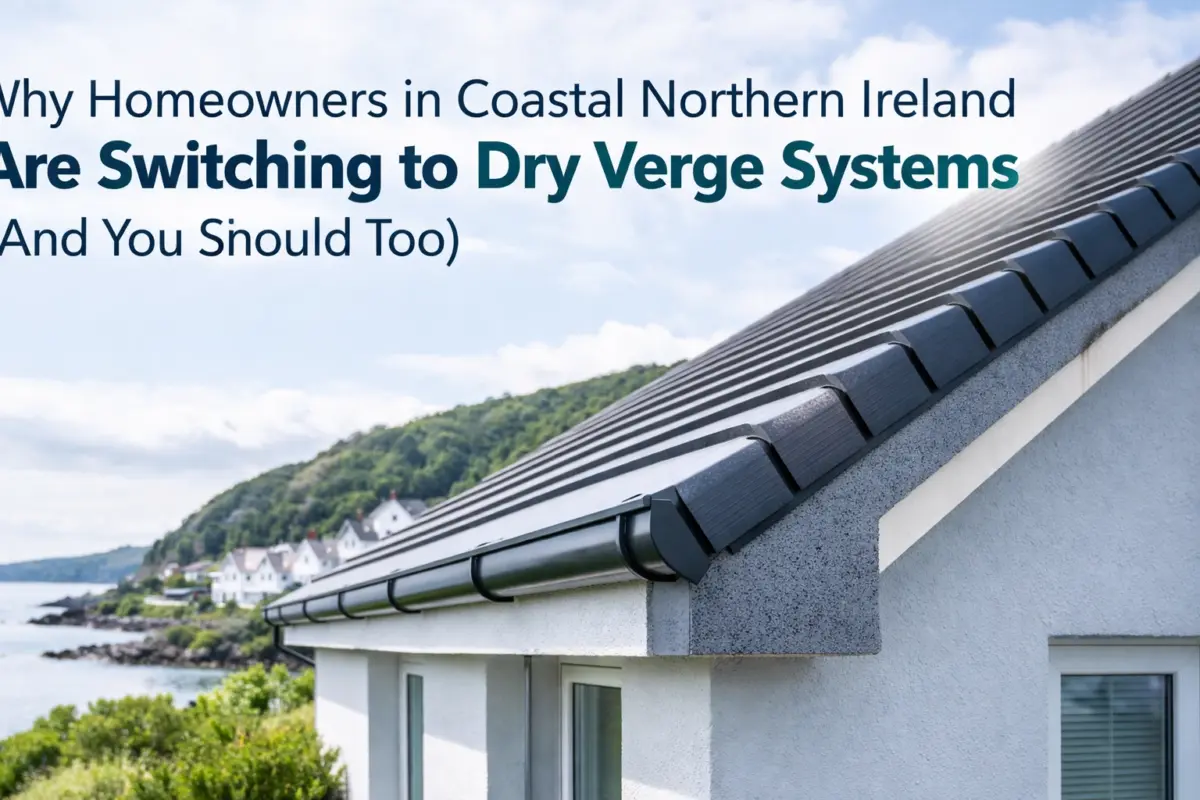
Why Homeowners in Coastal Northern Ireland Are Switching to Dry Verge Systems (And You Should Too)

Living on the stunning coastline of Northern Ireland comes with its perks. The views across Belfast Lough from Bangor. The morning walks along Strangford shores near Newtownards. The fresh sea air that makes everything feel alive.

But here's what nobody tells you when you buy a coastal property: that same beautiful sea air is slowly destroying your roof.

Homeowners across Bangor, Newtownards, Donaghadee, and the entire Ards Peninsula are discovering the hard way that traditional mortar verges simply cannot handle coastal conditions. The good news? There's a solution that's rapidly becoming the gold standard for coastal roof protection in Northern Ireland.

It's called a dry verge system. And if you haven't made the switch yet, you're likely paying for it in repairs you don't even know you need.

What's Actually Happening to Your Traditional Verge?

Let's get straight to it. Your verge is the edge of your roof where the tiles meet the gable wall. On most older properties across Northern Ireland, this junction is sealed with mortar: a sand and cement mix that's been used for generations.

The problem? Mortar was never designed to withstand coastal conditions.

Here's what's happening to traditional verges on homes in Bangor, Newtownards, and surrounding coastal areas right now:

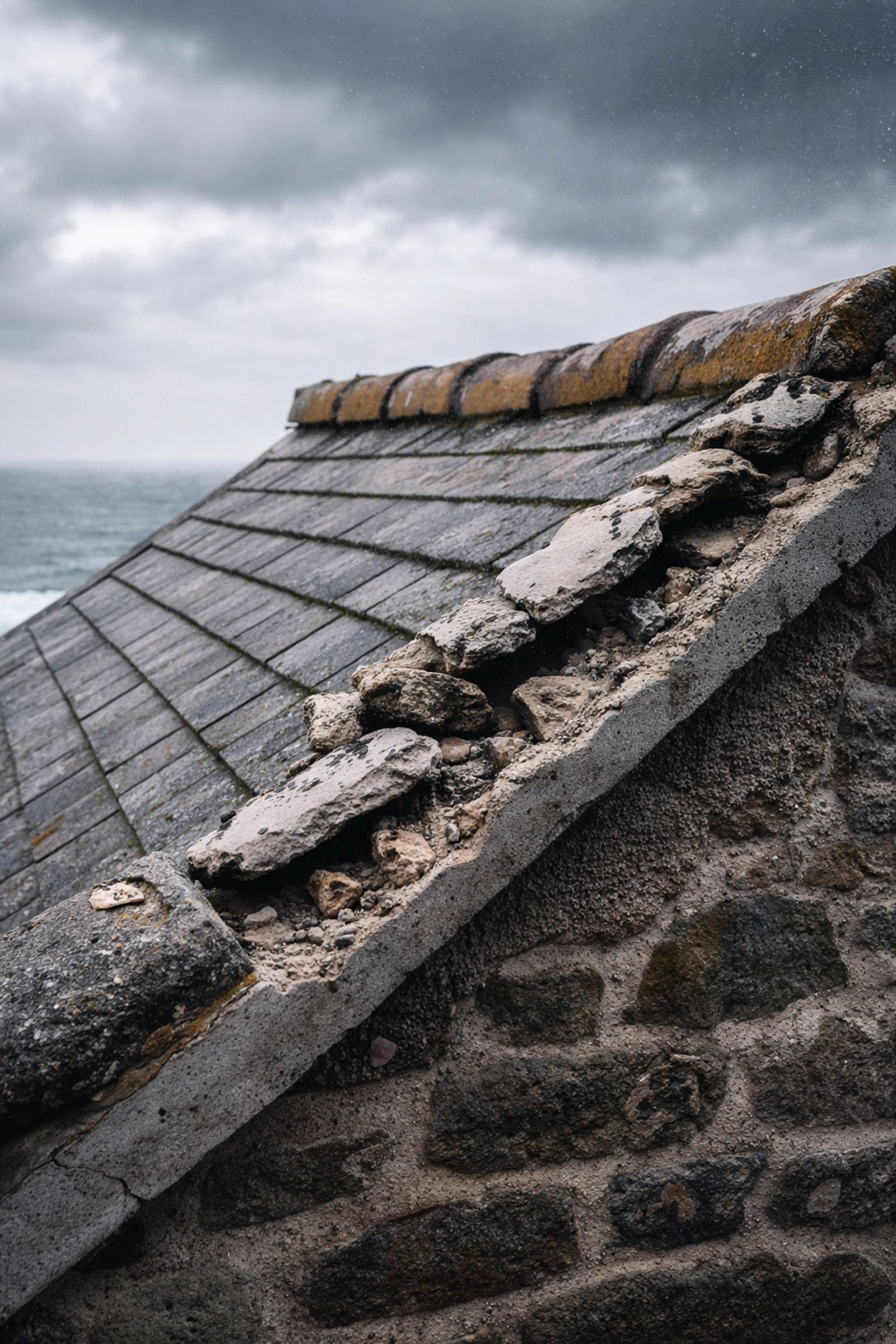
Salt air corrosion. The salt carried in coastal winds is corrosive. It eats away at mortar bonds, causing them to weaken and crumble years before they would inland. That "normal wear and tear" you've been told about? It's accelerated dramatically when you live within a few miles of the coast.

Wind uplift damage. Coastal Northern Ireland experiences some of the strongest winds in the UK. When those gusts hit your roof edge, they create uplift pressure that mortar simply cannot resist. One strong storm can dislodge tiles that have been sitting securely for years.

Freeze-thaw destruction. Mortar absorbs moisture. In our Northern Irish climate, that moisture freezes, expands, and cracks the mortar from the inside out. Combine this with salt saturation, and you've got a recipe for rapid deterioration.

Weathered coastal house roof with crumbling mortar verge showing damage from salt air and wind in Northern Ireland

The result? Cracked mortar, loose tiles, water ingress, and expensive repair bills that seem to come around every few years.

Sound familiar?

What Exactly Is a Dry Verge System?

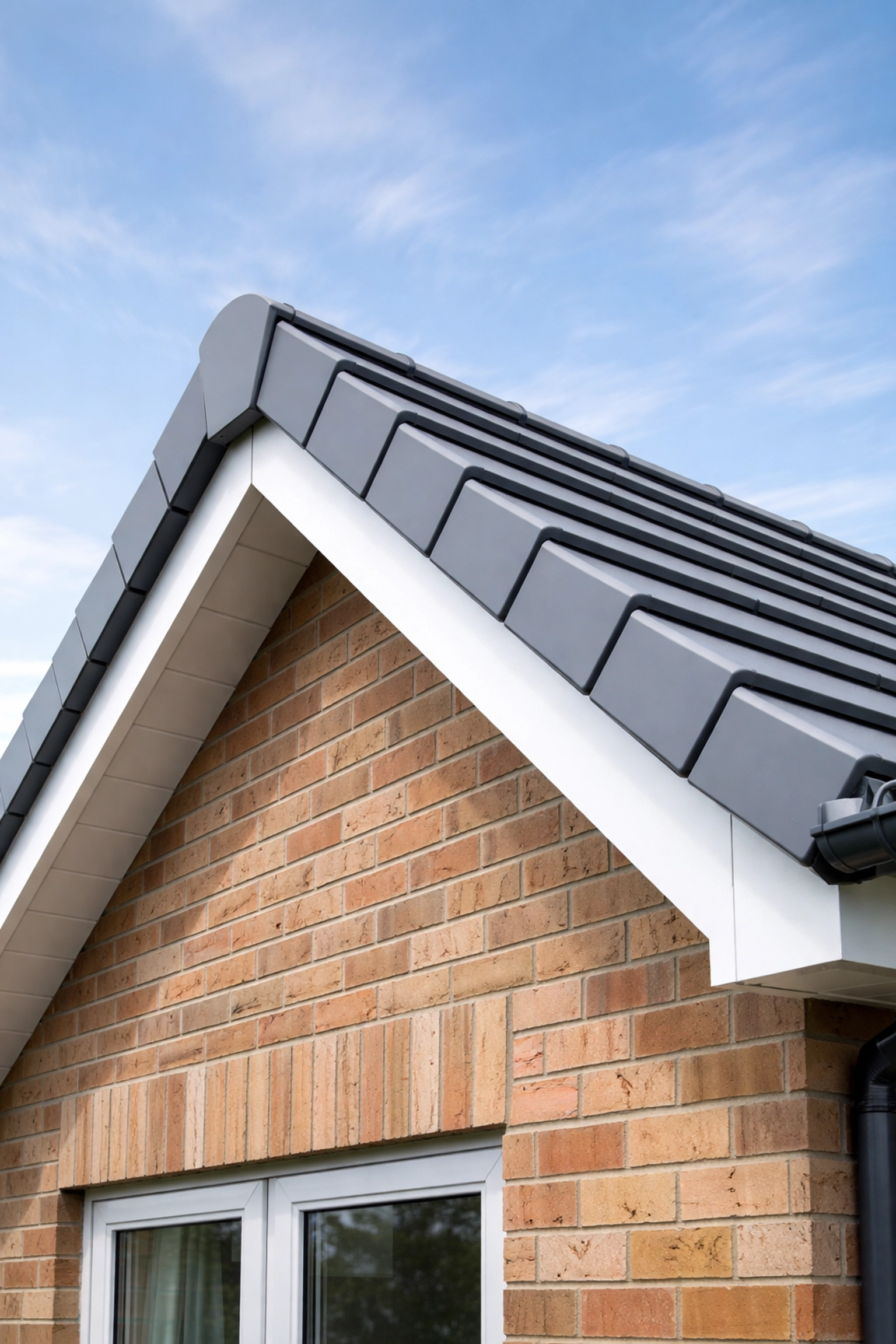
A dry verge system does exactly what the name suggests: it secures your roof edge without using mortar. Instead, it uses mechanically fixed plastic or composite units that interlock with your tiles and screw directly into your roof structure.

No mortar. No cement. No crumbling.

Each dry verge unit clips onto the edge of your roof tile and connects to the next unit, creating a continuous, weatherproof barrier along your entire gable edge. The system includes:

  • Interlocking verge caps that secure each tile mechanically
  • Weather bars that prevent wind-driven rain from penetrating
  • Drainage channels that direct water away from your gable wall
  • Secure fixings that anchor the system to your roof battens

The entire system is designed to withstand UV exposure, extreme temperatures, heavy rain, and: crucially for coastal properties: high winds and salt air.

Why Coastal Homeowners in Bangor and Newtownards Are Making the Switch

Walk down any residential street in Bangor or Newtownards and you'll notice something. More and more roofs sport the clean, uniform lines of dry verge systems. This isn't a coincidence: it's homeowners getting smart about coastal roof protection.

Roofer Roof Inspection in Rain A roofer conducts a detailed inspection of a leaking and damaged roof during heavy rain, identifying broken tiles, exposed timber, and visible moss. The technician is equipped with tools and assesses the extent of emergency repairs needed to prevent further water ingress.

Superior Wind Resistance

This is the big one for coastal properties. Dry verge systems mechanically lock your tiles in place. Unlike mortar, which relies on adhesion that weakens over time, dry verge units physically grip each tile and secure it to your roof structure.

When those winter storms roll in off the Irish Sea, your tiles stay exactly where they should be. No uplift. No displacement. No emergency calls to roofers.

Want to understand more about why wind resistance matters for Northern Ireland properties? Check out our detailed guide on roof wind resistance.

Complete Weather Sealing

Traditional mortar verges develop gaps and cracks that allow water penetration. Even small openings let moisture into your roof space, leading to damp, timber rot, and eventually structural damage.

Dry verge systems are engineered with integrated weather bars and drainage channels that actively manage water. Rain hits the verge, runs down the drainage channel, and exits away from your gable wall. No penetration. No damp patches appearing on your bedroom ceiling.

Zero Maintenance Required

Here's a number that gets coastal homeowners' attention: zero.

That's how much maintenance a properly installed dry verge system requires. No repointing every few years. No patching cracked mortar after every storm. No calling out roofers to fix what the winter weather has undone.

Once installed, dry verge systems simply work. Year after year. Storm after storm.

Compare that to traditional mortar verges on coastal properties, which typically need attention every 3-5 years. Over a 20-year period, you could spend thousands on mortar repairs: or nothing at all with dry verge.

Clean, Professional Appearance

Let's be honest: crumbling mortar verges look terrible. Those grey, patchy edges with visible cracks and missing sections don't do your property any favours.

Dry verge systems provide a clean, uniform finish that actually improves your home's kerb appeal. Available in colours to match your existing roof, they give your property that well-maintained look that buyers notice.

Modern dry verge system on a Northern Ireland home, highlighting durable, maintenance-free roof edge protection

The Hidden Costs of Sticking with Traditional Verges

Still thinking mortar is "good enough"? Consider what coastal homeowners in Northern Ireland are actually paying:

Regular repointing: £200-£500 every 3-5 years to repair crumbling mortar

Emergency storm repairs: £300-£800 when tiles become dislodged in high winds

Water damage remediation: £1,000+ when moisture penetration causes interior damage

Increased insurance premiums: Some insurers charge more for properties with known roof vulnerabilities

Reduced property value: Surveyors flag deteriorating verges, affecting sale prices

Add these up over a decade, and you're looking at potentially £3,000-£5,000 in avoidable costs: far more than the one-time investment in a dry verge system.

If you're unsure about your current roof condition, a professional roof survey can identify exactly what state your verges are in and whether you're at risk.

What to Expect from Dry Verge Installation

Installing a dry verge system on a typical semi-detached property in Bangor or Newtownards usually takes one day. Here's the process:

  1. Assessment – Your existing verge condition is evaluated
  2. Removal – Old mortar is carefully stripped away
  3. Preparation – Battens are checked and any damaged components replaced
  4. Installation – Dry verge units are fitted tile by tile, mechanically secured
  5. Finishing – Ridge connection is completed and entire system checked

The work can be carried out in most weather conditions: another advantage over mortar, which requires dry days to cure properly.

Advanced Construction & Roofing Roof Survey Service A professional roof inspector examines ceiling damage and insulation while taking notes. The image promotes Advanced Construction & Roofing's roof survey service, offering visual surveys, photo evidence, defect identification, and in-depth analysis for property owners. Contact details and a website link are included for booking a survey.

Is Your Coastal Property Ready for the Switch?

If you own a property in Bangor, Newtownards, Donaghadee, Holywood, or anywhere along the North Down and Ards coastline, dry verge installation should be on your radar.

Ask yourself these questions:

  • Have you had mortar repairs done in the last five years?
  • Do you notice cracking or gaps in your current verge?
  • Have tiles shifted or lifted during recent storms?
  • Are there damp patches appearing on upper floor walls?

If you answered yes to any of these, your verges are telling you something. And the longer you wait, the more you'll spend on temporary fixes that don't address the underlying problem.

Take Action Today

Coastal living in Northern Ireland shouldn't mean constant roof repairs. Dry verge systems offer the permanent, maintenance-free solution that properties in Bangor, Newtownards, and across the Ards Peninsula deserve.

At Advanced Construction & Roofing, we've been installing dry verge systems on coastal properties throughout Northern Ireland for years. We understand the specific challenges that salt air, high winds, and our unpredictable climate present: and we know how to solve them.

Request a free roof assessment today. We'll inspect your current verges, provide an honest evaluation of their condition, and give you a clear quote for dry verge installation.

Contact Advanced Construction & Roofing now and join the growing number of coastal homeowners who've made the switch to dry verge protection. Your roof: and your wallet( will thank you.)

Dry Ridge vs Mortar Ridge: The Long-Term Savings Every Belfast Homeowner Needs to Know

You've seen it before. That crumbling line of cement running along the top of your neighbour's roof. The gaps where mortar has cracked and fallen away. The dark patches where water has started seeping in.

If you're a Belfast homeowner, this isn't just an eyesore, it's money draining from your bank account.

The choice between dry ridge and mortar ridge isn't just about aesthetics or following the latest roofing trends. It's a financial decision that will impact your household budget for the next 20 to 30 years. And in Belfast's notoriously damp climate, that decision matters more than you might think.

Let's break down the real numbers and show you exactly why dry ridge systems are saving Belfast homeowners hundreds of pounds over the long term.

Why Does Mortar Fail in Belfast's Climate?

Here's the uncomfortable truth about mortar ridges: they were never designed for Belfast weather.

Belfast experiences an average of 157 rainy days per year. That's nearly half the calendar spent with moisture attacking your roof. Add in our freeze-thaw cycles during winter months, and you've got a recipe for mortar destruction.

Here's what happens to mortar in our climate:

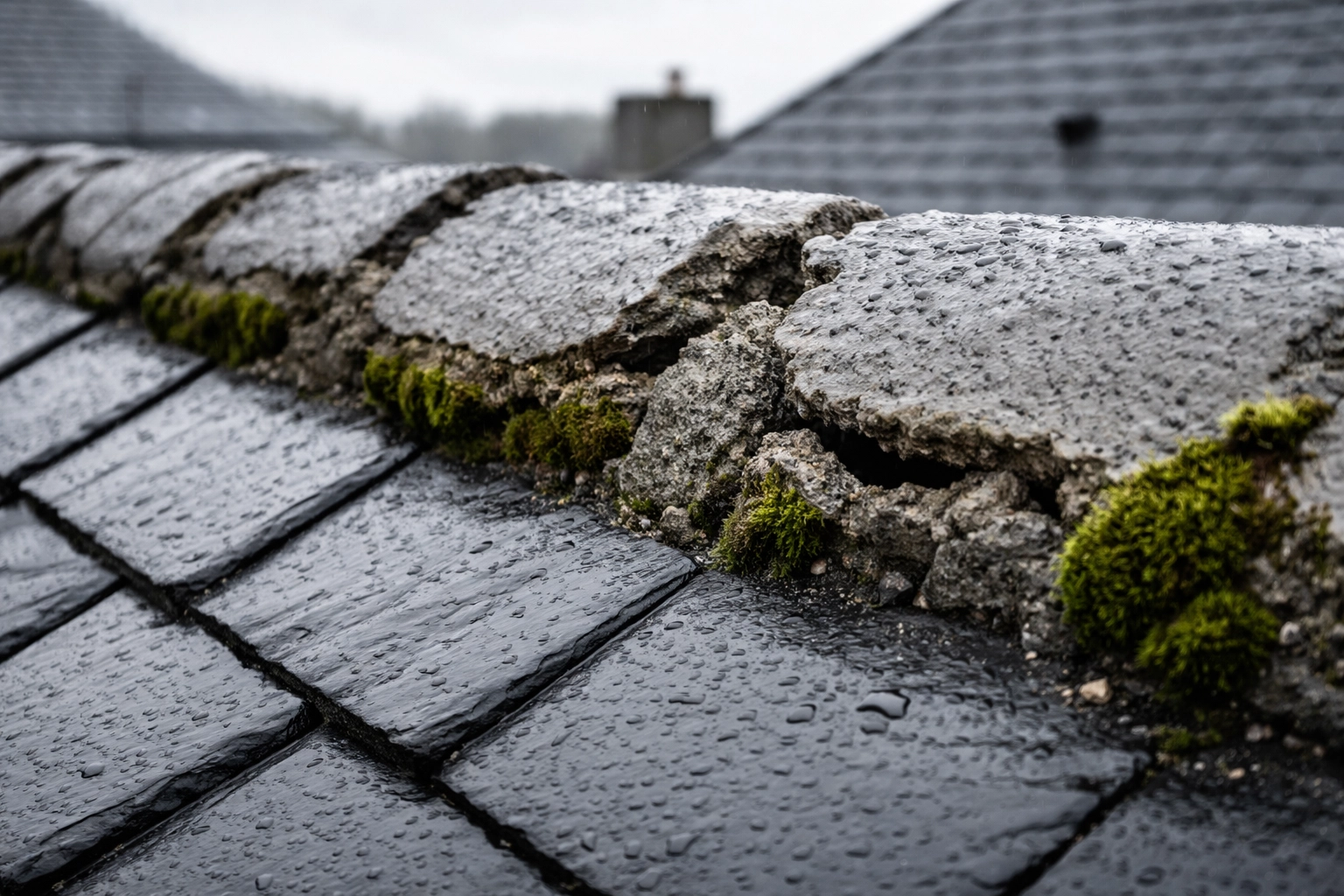
  • Water penetration: Rain seeps into tiny cracks in the mortar
  • Freezing expansion: When temperatures drop, that water freezes and expands
  • Cracking and crumbling: The expansion forces the cracks wider
  • Repeat cycle: Every freeze-thaw cycle makes the damage worse

This isn't a question of if your mortar ridge will fail, it's a question of when.

Most mortar ridges in Belfast start showing significant deterioration within 10 to 15 years. Some fail even sooner, especially on exposed properties or those facing the prevailing westerly winds.

Close-up of a cracked and mossy mortar ridge on a Belfast slate roof showing signs of water damage and weathering.

The Hidden Costs of Mortar Ridge Maintenance

When you chose a mortar ridge (or inherited one when you bought your property), you didn't just pay for the initial installation. You signed up for ongoing maintenance costs that compound year after year.

Consider what mortar ridge ownership actually costs:

Mortar ridges require waterproofing recoating every other year to maintain their integrity. Skip this maintenance, and you're looking at cracked cement, loose tiles, and eventually water ingress into your roof space.

The installation time alone tells a story. Mortar bedding takes approximately 6 hours per 10 metres of ridge to install properly. That's labour-intensive work that you'll need to pay for again and again when repairs become necessary.

And repairs will become necessary.

Common mortar ridge repair scenarios Belfast homeowners face:

  • Repointing cracked sections (typically needed every 5-7 years)
  • Replacing fallen ridge tiles after storms
  • Emergency repairs when water starts coming through
  • Full ridge replacement when damage becomes too extensive

Each of these repairs means scaffolding costs, labour costs, and material costs. Each repair means time off work to let contractors in. Each repair means stress and inconvenience.

Dry Ridge: The Smarter Financial Investment

Now let's talk about the alternative that's transforming how Belfast homeowners think about their roofs.

Dry ridge systems use mechanical fixings instead of mortar. Stainless steel or aluminium clips secure your ridge tiles to the roof structure, creating a weatherproof seal without any cement involved.

The key word here? Maintenance-free.

Once a dry ridge system is installed, it requires no check-ups, no recoating, and no regular repairs. The mechanical fixings are designed to last the lifetime of your roof, typically 30 years or more.

Installation is also significantly faster. A dry ridge takes approximately 2.5 hours per 10 metres of ridge compared to 6 hours for mortar bedding. That's a substantial reduction in labour costs right from day one.

Advanced Construction & Roofing Roof Survey Service A professional roof inspector examines ceiling damage and insulation while taking notes. The image promotes Advanced Construction & Roofing's roof survey service, offering visual surveys, photo evidence, defect identification, and in-depth analysis for property owners. Contact details and a website link are included for booking a survey.

Breaking Down the Numbers: What Will You Actually Save?

Let's get specific about the financial benefits. Because when it comes to your household budget, vague promises don't pay the bills.

Over a 20-year period, dry ridge systems can save Belfast homeowners between £400 and £700 compared to mortar ridges.

Here's how that breaks down:

Cost Factor Mortar Ridge Dry Ridge
Initial installation Lower Higher
Biennial waterproofing Required Not needed
Repair frequency Every 5-7 years Rarely/never
Emergency storm repairs Common Uncommon
Total 20-year cost Higher Lower

Yes, the upfront cost of a dry ridge system is higher than traditional mortar. But that's where mortar's advantage ends.

Think of dry ridge as paying once, while mortar means paying forever.

The savings become even more significant when you factor in the indirect costs: time spent arranging repairs, potential damage to belongings if leaks occur, and the stress of dealing with roofing emergencies.

How Does Weather Durability Protect Your Wallet?

Belfast's weather doesn't just affect your morning commute: it actively attacks mortar ridges throughout the year.

Dry ridge systems are specifically engineered to handle what our climate throws at them:

The mechanical fixings are designed to flex with natural roof movement caused by temperature changes. Unlike rigid mortar, which cracks under stress, dry ridge components move with your roof structure.

High winds? Dry ridge fixings resist wind uplift far better than mortar, which can loosen over time. After major storms, mortar ridge homeowners often find themselves calling roofers for emergency repairs. Dry ridge homeowners typically don't.

Heavy rain? The design of dry ridge systems channels water away from vulnerable areas, preventing the pooling and penetration that damages mortar installations.

For more information about how wind resistance affects your roof, check out our guide on roof wind resistance in 2026.

Low-angle photo of a dry ridge system being installed on a Belfast home, highlighting secure mechanical fixings and modern roof durability.

When Might Mortar Still Make Sense?

We believe in giving you the complete picture, even when it doesn't favour the more modern solution.

Mortar ridges may still be appropriate in specific situations:

If your property is located in a conservation area with strict planning requirements, traditional mortar might be required to maintain the heritage appearance of your roof. Mortar offers a seamless, traditional aesthetic that some period properties demand.

If you're selling your property within the next few years and the current mortar ridge is in good condition, the cost of switching to dry ridge might not pay back before you sell.

However, for the vast majority of Belfast homeowners planning to stay in their properties long-term, dry ridge represents the smarter financial choice.

What Should You Do Next?

If you're concerned about your current ridge condition or you're planning a roof replacement, now is the time to consider your options carefully.

Request a professional roof survey to assess your current ridge condition and get an honest assessment of whether upgrading to dry ridge makes financial sense for your specific situation.

At Advanced Construction & Roofing, we've helped hundreds of Belfast homeowners make informed decisions about their roofing investments. We'll give you a straightforward assessment: no pressure, no obligation.

Contact us today for a comprehensive roof survey and find out exactly what state your ridge is in. We'll show you the evidence with detailed photos and explain your options in plain English.

Don't wait until water starts coming through your ceiling. Don't wait until emergency repairs cost you twice what planned maintenance would have. Take control of your roofing costs now.

Call Advanced Construction & Roofing today. Your future self; and your bank account: will thank you.