Should You Get a Roof Survey Before Buying a House in Belfast? Here’s the Truth

The Uncomfortable Truth About Standard Property Surveys

You're about to spend £200,000+ on a Belfast home. Your solicitor arranges a standard property survey. The surveyor walks around for 45 minutes, takes some notes, and declares everything "satisfactory." You feel confident. You exchange contracts.

Three months later, water streams through your bedroom ceiling during a storm. The roofer delivers the news: £8,500 to replace damaged sections, repair lead flashing, and address ventilation issues that have been deteriorating for years.

Here's what your standard surveyor missed: they never actually inspected your roof properly. They glanced up from the garden, made assumptions, and moved on. This scenario plays out across Belfast every month, leaving new homeowners with devastating repair bills they never saw coming.

The truth? A specialized roof survey before buying isn't just recommended: it's essential financial protection.

Why Standard Home Surveys Fail to Spot Roof Problems

Most property buyers in Belfast assume their Level 2 or Level 3 RICS survey covers everything. These surveys cost £350 to £1,000+ and seem comprehensive. But there's a problem: standard surveyors conduct visual inspections from ground level only.

Standing in the back garden looking up tells you almost nothing about roof condition. Your surveyor cannot see:

  • Cracked or slipped slates hidden by viewing angle
  • Deteriorating lead flashing around chimneys and valleys
  • Moss accumulation causing tile displacement
  • Ridge tile mortar that's crumbling away
  • Felt and batten condition beneath the outer covering
  • Ventilation deficiencies creating condensation damage
  • Internal timber rot in the attic space
  • Nail sickness in older slate roofs

These hidden defects cost Belfast homeowners thousands every year. A 2024 report found that roof repairs rank among the top three unexpected expenses for new homeowners across Northern Ireland, with average costs between £5,000 and £15,000.
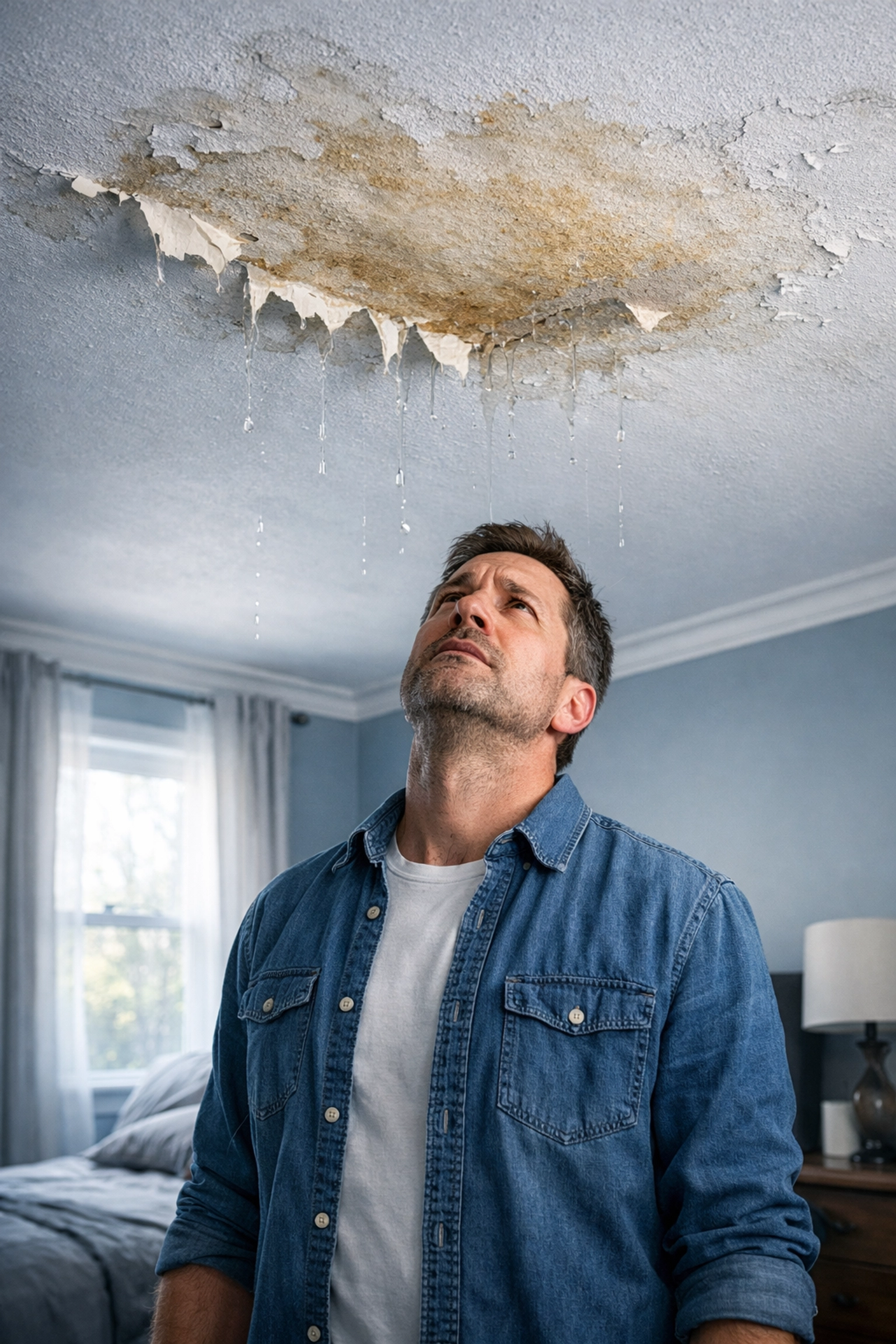
Homeowner discovering ceiling water damage from roof leak in Belfast property

Your standard surveyor isn't trying to deceive you: they're simply limited by their brief and liability constraints. They're generalists covering the entire property in limited time. They're not roof specialists, and that distinction matters enormously.

What a Specialist Roof Survey Actually Reveals

Advanced Construction & Roofing has conducted specialist roof surveys across Belfast for over 25 years. Our focused inspections reveal problems that standard surveys consistently miss.

A professional roof survey includes:

Physical roof access and close inspection – Our surveyors actually climb onto the roof when safe to do so, examining tiles, slates, flashings, and ridge systems up close. This hands-on approach identifies issues invisible from ground level.

Comprehensive attic examination – We enter the loft space to assess timber condition, ventilation adequacy, insulation quality, and signs of water ingress. Many serious problems only show symptoms internally.

Photographic evidence documentation – You receive detailed photographs showing every defect, its location, and severity. This visual evidence proves invaluable for price negotiations or planning repairs.

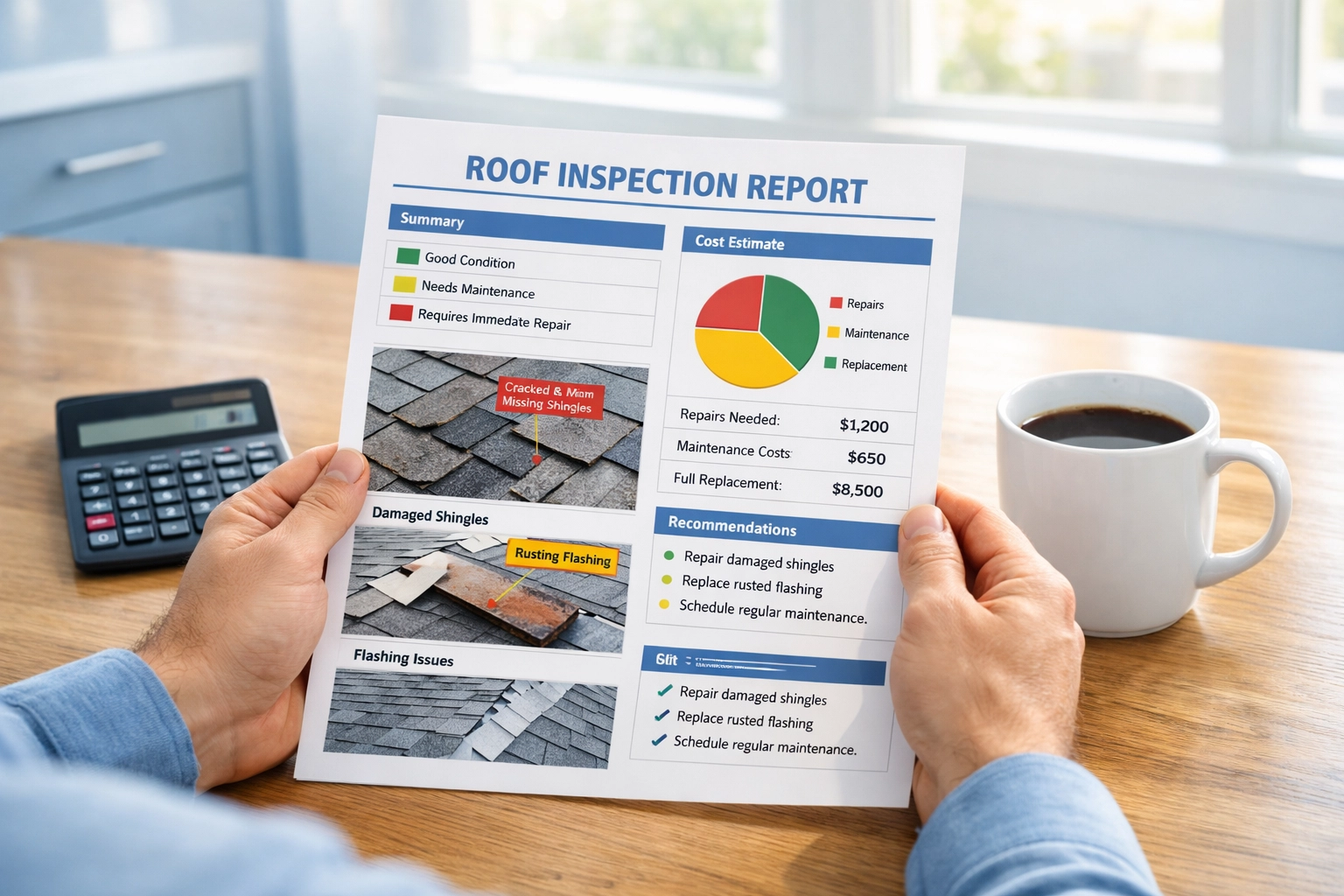
Detailed condition report – Our reports categorize findings by urgency: immediate repairs needed, medium-term maintenance required, and long-term considerations. You'll know exactly what you're facing.

Repair cost estimates – We provide realistic cost ranges for addressing identified issues, helping you negotiate the purchase price or budget for future work.

Expert recommendations – With 25+ years of Belfast roofing experience, we advise on repair priorities, suitable materials for your property type, and preventive maintenance strategies.

Advanced Construction & Roofing Roof Survey Service

The Hidden Costs of Skipping a Dedicated Roof Survey

Consider this real scenario from a 2025 Belfast house purchase:

Purchase price: £235,000 for a 1930s semi-detached home in East Belfast. Standard Level 2 survey cost: £450. Survey conclusion: "Roof appears in reasonable condition for age. Some tiles may require future attention."

Reality discovered three months post-purchase:

  • Complete felt failure causing widespread water damage: £4,200
  • Ridge tile system needed full replacement: £2,800
  • Lead valley deterioration requiring specialist work: £1,900
  • Ventilation installation to prevent future condensation: £850
  • Total unexpected cost: £9,750

A specialist roof survey would have cost £250 and revealed these issues before exchange. The buyers could have negotiated £10,000 off the purchase price or walked away entirely.

This pattern repeats constantly. Belfast's Victorian terraces, 1960s estates, and even newer properties frequently hide expensive roof problems. The £200-£300 investment in a specialist survey protects you from five-figure surprises.
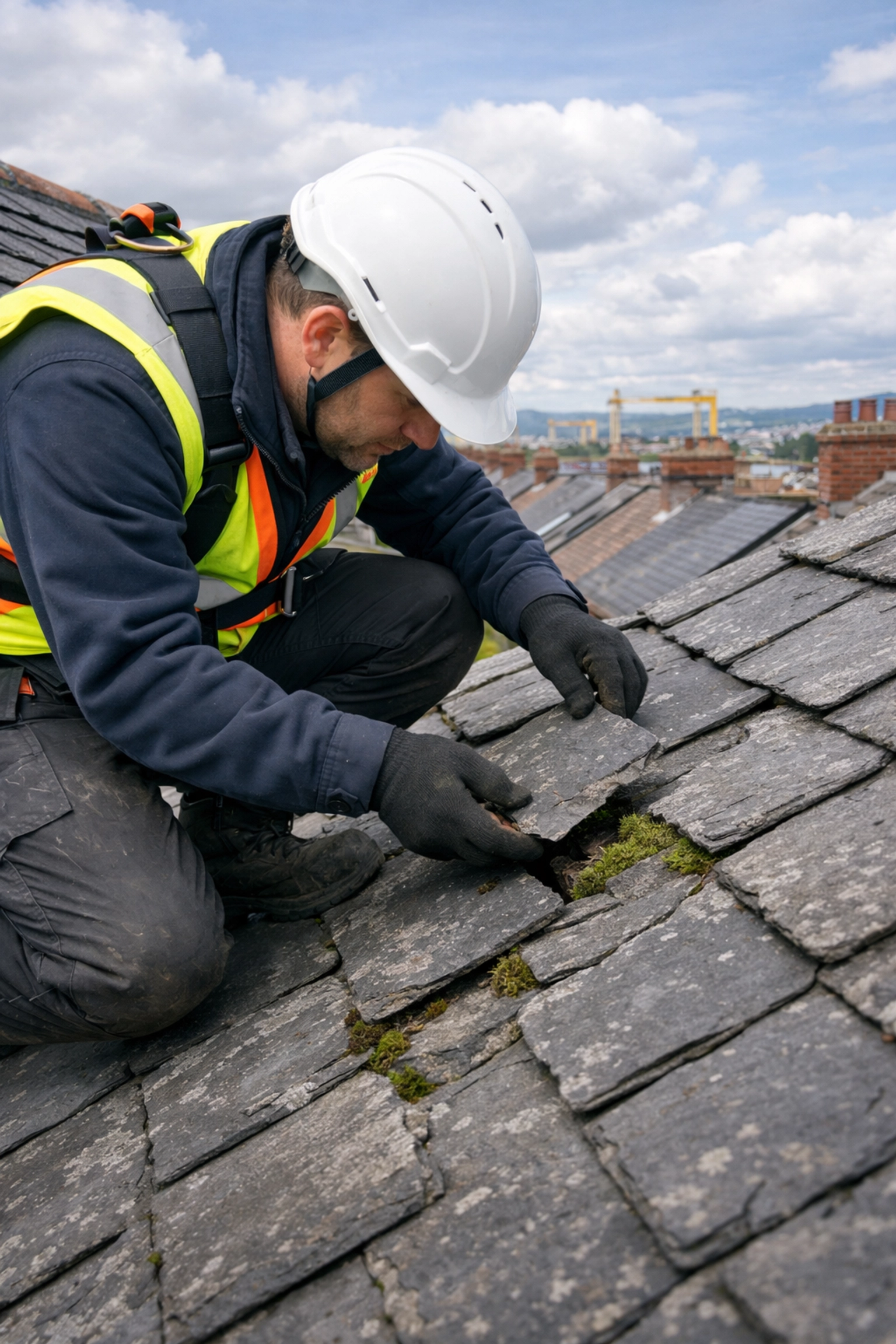
Professional roof inspector examining slate tiles during specialist roof survey in Belfast

How Belfast's Weather Makes Roof Surveys Even More Critical

Belfast's climate creates unique roofing challenges that make pre-purchase surveys particularly important for properties in Northern Ireland.

Our weather patterns accelerate roof deterioration:

Heavy rainfall exposure – Belfast receives 800-900mm of annual rainfall, with persistent damp conditions testing every roof weakness. Water ingress problems that might take years to develop in drier climates manifest much faster here.

Strong Atlantic winds – Coastal and elevated Belfast properties face persistent wind pressure that loosens fixings, lifts tiles, and exploits any vulnerable points in roof coverings.

Freeze-thaw cycles – Winter temperature fluctuations cause expansion and contraction in roofing materials. Water trapped in cracks freezes, expands, and creates progressive damage year after year.

Properties built before 1980 are particularly vulnerable. Construction standards and materials have improved significantly, but older Belfast homes often feature roofing systems approaching or exceeding their design lifespan. That charming Victorian terrace might need £12,000 of roof work within 12 months of purchase.

ACR's Belfast Roof Surveys: What Sets Our Service Apart

Advanced Construction & Roofing has specialized in Belfast roofing for over 25 years. We've surveyed thousands of properties across the city, from modern estates in Lisburn Road to historic terraces in the Cathedral Quarter.

Our survey process delivers unmatched detail:

Experienced roofing specialists conduct every survey – Our surveyors aren't general property assessors. They're trained roofing professionals who spend every working day diagnosing and repairing Belfast roofs. They know exactly what to look for and where problems hide.

We access areas others don't – Standard surveyors rarely enter loft spaces or access roofs. We do both as standard practice, providing comprehensive assessment of external and internal conditions.

Belfast-specific expertise – We understand local building styles, common construction methods used in different Belfast eras, and weather-related issues specific to Northern Ireland properties. This local knowledge identifies problems other surveyors miss.

Clear, actionable reporting – Our reports use plain language explaining what we found, why it matters, and what action you should take. No confusing technical jargon or vague disclaimers.

Honest cost guidance – With 25+ years of Belfast roofing experience, we provide realistic repair cost estimates. You'll enter negotiations with accurate information, not guesswork.

Fast turnaround – We understand property purchases move quickly. Request a survey today, and we'll typically complete your inspection within 5-7 working days, with reports delivered within 48 hours of survey completion.
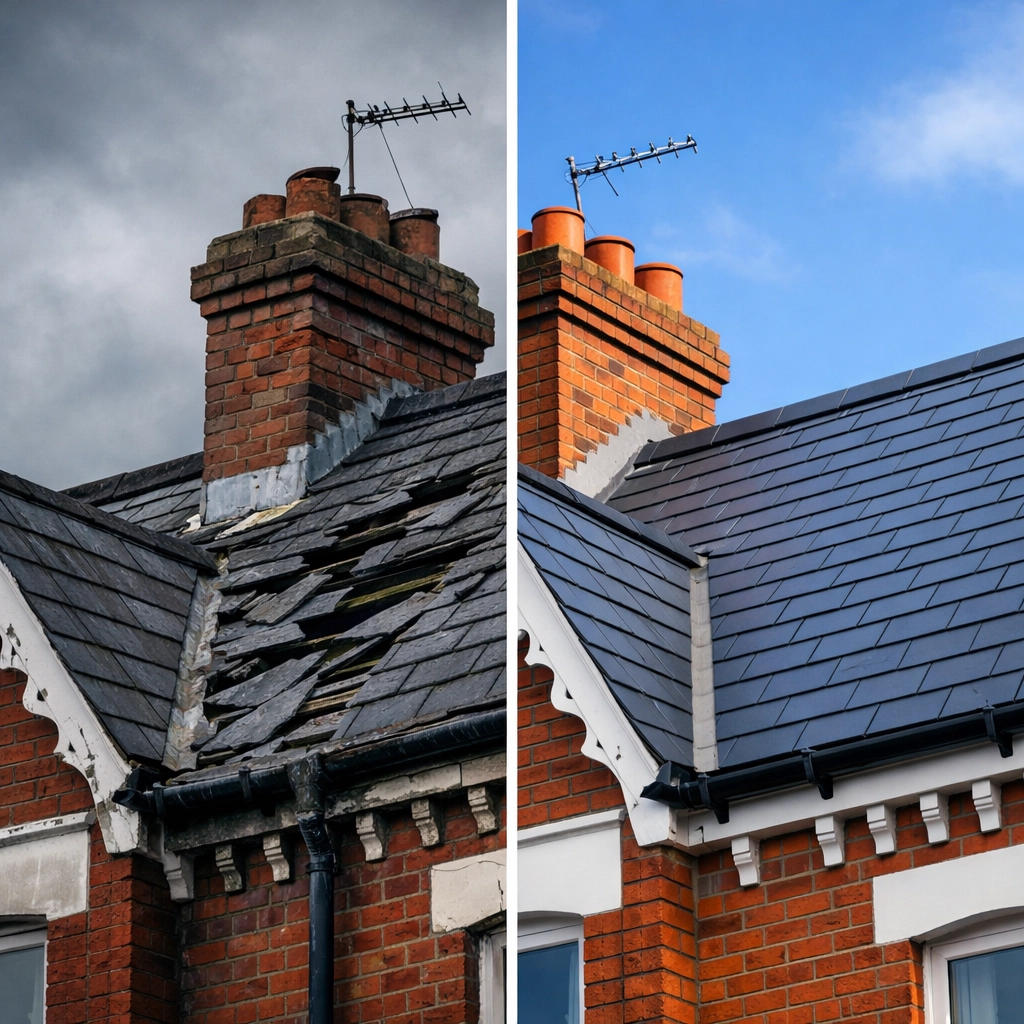
Before and after comparison of Belfast Victorian terrace roof showing deteriorated and restored condition

When Should You Book Your Roof Survey?

Timing matters crucially when commissioning a specialist roof survey for a Belfast property purchase.

The ideal timeline:

After your offer is accepted but before survey contingency expires – Most Belfast property sales include a survey contingency period. Book your specialist roof survey immediately after your offer acceptance, running it parallel to or immediately following your standard property survey.

Before you exchange contracts – Never commit legally to the purchase without knowing the roof's true condition. Once you exchange contracts, you own the problems.

For older properties, commission the roof survey first – If you're viewing Victorian, Edwardian, or pre-1960s properties, consider arranging a specialist roof survey before even making an offer. The findings might save you from committing to an unsound investment.

Request surveys during dry weather when possible – While we survey in all conditions, dry weather allows more thorough external inspection and safer roof access. Belfast's weather is unpredictable, but try to schedule during forecast dry spells.

What to Do With Your Roof Survey Results

Your specialist survey reveals £6,000 of necessary repairs. What happens next?

Request price reduction – Use the detailed report and cost estimates to negotiate a reduced purchase price. Sellers often agree to deduct repair costs rather than lose the sale. Present the professional report as objective evidence supporting your negotiation position.

Require repairs before completion – Alternatively, request that the seller completes essential repairs before you complete the purchase. Ensure any agreed work is done by qualified Belfast roofing contractors and properly documented.

Budget accordingly – If you proceed knowing about the issues, at least you're making an informed decision with accurate cost expectations. You can plan financially rather than facing unexpected emergencies.

Walk away if necessary – Sometimes a roof survey reveals problems so extensive that walking away is the smartest decision. Spending £250 on a survey that stops you buying a property needing £20,000 of immediate roof work is money exceptionally well spent.

Protect Your Belfast Property Investment

Buying a home represents the largest financial commitment most people make. Yet buyers routinely skip the £200-£300 cost of a specialist roof survey, leaving themselves exposed to five-figure repair bills.

Don't rely on standard property surveys to identify roof problems. They're simply not designed for that purpose. Ground-level visual inspections miss the hidden defects that create expensive emergencies.

Advanced Construction & Roofing has protected Belfast homebuyers for over 25 years through comprehensive specialist roof surveys. Our detailed inspections, photographic evidence, and honest reporting give you the information needed to make confident property decisions.

Request your roof survey before committing to your Belfast property purchase. Contact Advanced Construction & Roofing today for expert assessment from qualified roofing specialists who understand Belfast properties and local building conditions.

Visit adv-group.co.uk or call us directly to arrange your survey. Invest £250 now to protect yourself from £10,000+ surprises later.

Your roof survey isn't an optional extra; it's essential insurance for your biggest investment.

Stop Wasting Money on Emergency Repairs: Why Roof Surveys Save Belfast Homeowners Thousands

You're sitting at home on a Tuesday evening when you hear it, dripping. You look up and there's water running down your ceiling. By the time the emergency roofer arrives, you've got buckets on the floor, ruined plaster, and a repair bill that'll hit anywhere from £2,000 to £10,000+.

Here's the thing most Belfast homeowners don't realise: that emergency didn't start today. It started months ago with a worn flashing, a cracked tile, or timber rot that nobody spotted because nobody looked.

A roof survey could have caught it early, for a fraction of the cost.

This isn't about selling fear. It's about showing you the numbers. Because when you compare the low cost of a roof survey against the massive expense of emergency storm repairs, the maths is clear.

Why Standard Property Surveys Miss the Problems That Cost You Money

When you buy a house in Belfast, Bangor, or Newtownards, the surveyor will look at your roof, from the ground. They'll note if tiles are obviously missing or if the chimney's leaning. But they won't climb up. They won't inspect the leadwork. They won't check timber condition or flashing integrity.

That cursory glance misses the expensive stuff:

  • Worn lead valleys letting water track into the roof space
  • Early-stage timber rot in rafters or sarking boards
  • Failed pointing around chimneys
  • Blocked or damaged gutters causing overflow into walls
  • Cracked or slipped tiles that aren't visible from street level

A standard homebuyer survey might say "roof appears serviceable" while hidden defects are quietly building toward a four-figure repair bill.

Emergency Roofing Repair

What Actually Happens When a Small Problem Goes Unnoticed

Let's walk through a real scenario we see constantly across Belfast.

Stage 1: A small crack in the flashing (cost to fix early: £150–£300)

A bit of lead flashing around the chimney develops a hairline crack. Water starts getting in, not much, just a trickle during heavy rain.

Stage 2: Timber begins to rot (cost now: £800–£2,000)

That trickle soaks into the sarking boards and roof timbers. Over six months, rot sets in. The timber softens. Insulation gets damp.

Stage 3: Major structural damage (cost now: £5,000–£10,000+)

By the time you notice the damp patch on your bedroom ceiling, the damage has spread. You need:

  • Sarking board replacement
  • Rafter repairs or replacement
  • New insulation
  • Re-felting and re-tiling the affected area
  • Internal plastering and redecorating
  • Potential mould remediation

All because of a £150 flashing issue that nobody spotted.

The NFRC and RICS both recommend annual roof inspections for residential properties precisely to prevent this escalation. It's not over-caution, it's basic maintenance economics.

The Real Cost of Emergency Repairs vs. Proactive Roof Surveys

Let's put hard numbers on this.

A comprehensive roof survey in Belfast costs approximately £295 + VAT. For that, you get:

  • A hands-on inspection by a qualified roofer
  • Photo documentation of all defects
  • A written report with condition grades
  • Repair cost estimates for any issues found
  • Prioritised maintenance recommendations

Emergency roof repairs, by contrast, start at £500+ for call-out and temporary fixes, and that's before you address the actual problem. If structural damage has occurred, you're looking at:

  • Minor emergency repairs: £1,000–£3,000
  • Moderate structural work: £3,000–£7,000
  • Major roof section replacement: £7,000–£15,000+

One roof survey every 2–3 years = under £600 total cost over six years.

One missed defect leading to emergency repairs = £2,000 minimum, often £5,000+.

The maths isn't complicated.

Roofer Roof Inspection in Rain

What a Proper Roof Survey Actually Includes (And Why It Matters)

A professional roof survey isn't a quick look from the ground. It's a thorough inspection that covers everything that could go wrong, and everything that will go wrong if left unchecked.

Here's what we inspect during a roof survey:

External inspection:

  • Tiles, slates, and ridge condition
  • Lead valleys and flashing around chimneys and abutments
  • Pointing and mortar integrity
  • Gutter and downpipe condition
  • Soffit and fascia boards
  • Ventilation adequacy

Internal inspection (loft space):

  • Timber condition (rafters, purlins, sarking)
  • Signs of water ingress or historic leaks
  • Insulation condition and depth
  • Roof felt integrity
  • Evidence of condensation or rot

Documentation:

  • Detailed photo evidence of all defects
  • Condition grading (good/fair/poor)
  • Immediate, medium-term, and long-term repair recommendations
  • Cost estimates for all recommended work

This level of detail lets you plan maintenance, budget accurately, and fix problems before they become emergencies.

Belfast homeowner reviewing detailed roof survey report with repair costs and maintenance recommendations

How Roof Surveys Save Belfast Homeowners Thousands: Real Examples

Scenario 1: The Pre-Purchase Survey

A couple buying a 1930s semi in East Belfast commissioned a roof survey before completion. The survey found:

  • Lead valley showing early cracking (repair cost: £600)
  • Two cracked chimney pots (replacement: £400)
  • Sarking boards with minor damp patches (monitoring required, no immediate cost)

Total identified work: £1,000

They negotiated that amount off the purchase price. Without the survey, they'd have discovered those issues as emergency repairs within 12 months, at double the cost, with added stress and no negotiating power.

Survey cost: £295. Money saved: £1,000+

Scenario 2: The 5-Year Maintenance Check

A homeowner in Bangor booked a survey on a property they'd owned for five years. The survey identified:

  • Blocked valley gutter causing water backup (cleaning: £150)
  • Three slipped tiles exposing felt (repair: £200)
  • Minor flashing wear around skylight (re-seal: £180)

Total repair cost: £530

If left unnoticed for another year, that blocked valley would have caused timber rot (£2,000+ repair). The slipped tiles would have let wind lift more tiles during the next storm (£800+ emergency call-out and repairs).

Survey cost: £295. Repair cost caught early: £530. Emergency repair cost avoided: £2,800+

Scenario 3: The Storm Damage Assessment

After Storm Isha hit Belfast in 2024, a homeowner noticed a few loose ridge tiles. They booked an inspection. The survey found:

  • Ridge tiles needing re-bedding (cost: £800)
  • Wind had lifted felt at verge, exposing timbers (repair: £350)
  • Flashing pulled away from chimney stack (repair: £450)

Total: £1,600

Because they caught it immediately, no water ingress occurred. If they'd waited until the next heavy rain, water damage to timbers and internal ceilings could have added £3,000–£5,000 to that bill.

Survey cost: £295. Major damage avoided: £3,000–£5,000

When Should You Book a Roof Survey?

You don't need to wait for a problem. In fact, waiting for a problem defeats the entire purpose.

Book a roof survey if:

  • You're buying a property (always, regardless of age)
  • Your roof is over 15 years old and hasn't been inspected
  • You've had any storm damage or high winds
  • You've noticed any internal damp patches or staining
  • Your loft insulation is damp or compressed
  • You're planning a loft conversion or extension
  • You've had emergency repairs and want to know what else needs attention
  • It's been 3+ years since your last inspection

For properties in exposed coastal areas like Bangor or Newtownards, annual inspections make sense. Belfast city properties can often go 2–3 years between surveys, depending on age and condition.

Advanced Construction & Roofing Roof Survey Service

What Happens After a Roof Survey?

You'll receive a comprehensive written report, usually within 3–5 working days. The report will include:

  • Condition summary: Overall roof condition and lifespan estimate
  • Defect list: Every issue found, with photos
  • Priority ratings: Urgent, medium-term, and low-priority repairs
  • Cost estimates: What each repair will cost
  • Maintenance recommendations: What to watch and when to re-inspect

You're not obligated to use the surveying company for repairs (though most homeowners do, since they've already been up and assessed everything). You can take the report and get competitive quotes, or tackle repairs in stages as budget allows.

The key is you know what you're dealing with. No surprises. No panic. No emergency call-outs at £150/hour.

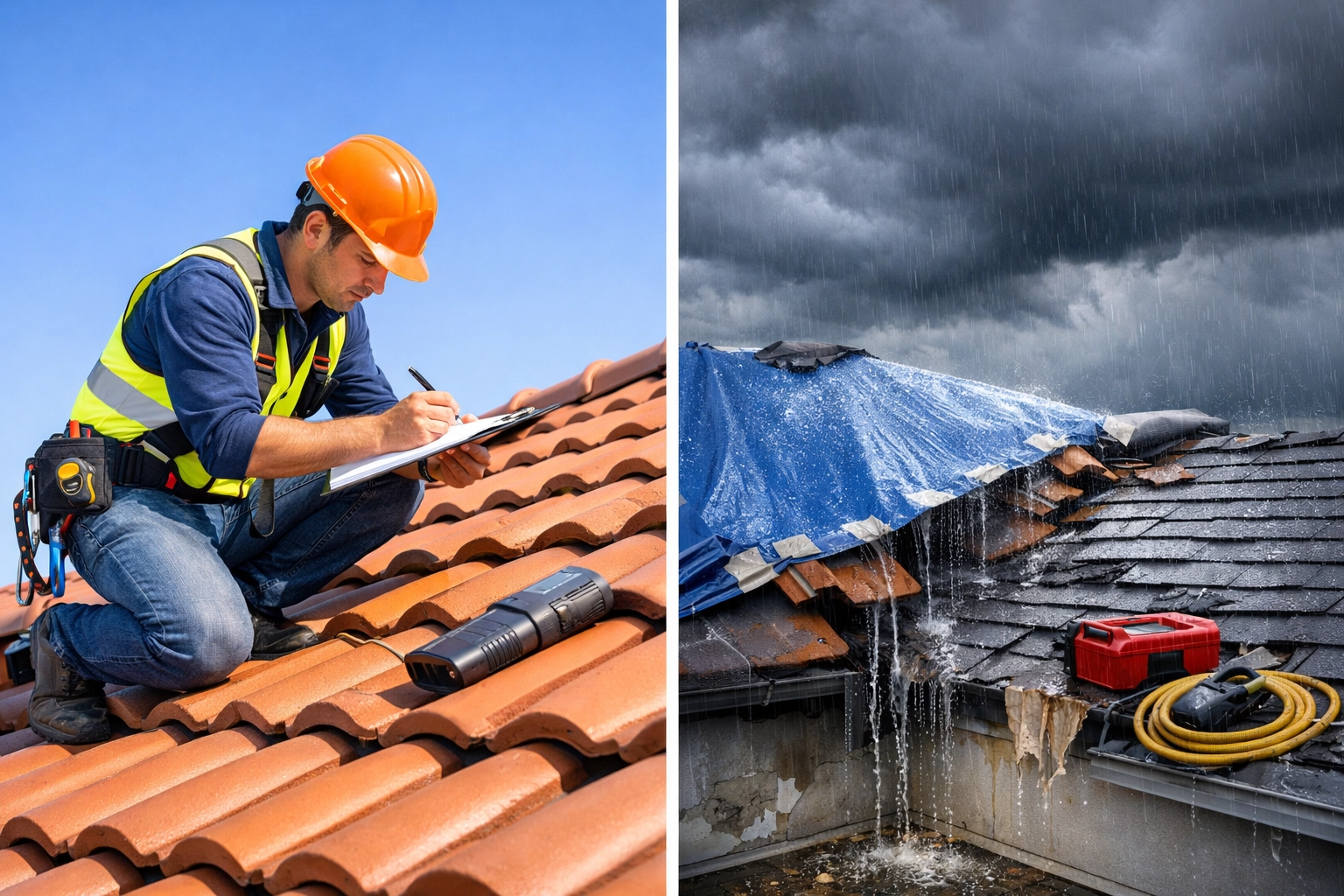
Comparison of proactive roof inspection versus emergency storm damage repair in Belfast

Stop Reacting, Start Protecting Your Investment

Your roof is the single most important weatherproofing element of your home. It keeps you dry, keeps your property structurally sound, and protects everything inside.

Yet most Belfast homeowners never think about their roof until something goes wrong, and by then, the damage is done and the bills have multiplied.

A roof survey costs less than one emergency call-out. It gives you control, lets you budget for maintenance, and prevents small problems from becoming financial disasters.

If you're still paying off an emergency repair from last winter's storms, ask yourself: could a £295 survey have prevented it?

The answer is almost always yes.

Request a Roof Survey Today

Want to know the real condition of your roof: before the next storm hits? Request a roof survey from Advanced Construction & Roofing.

We provide comprehensive inspections across Belfast, Bangor, and Newtownards, with full photo documentation and written reports. You'll know exactly what condition your roof is in, what needs attention, and what it'll cost to fix.

Contact us at adv-group.co.uk to book your roof survey.

Stop gambling with emergency repairs. Start protecting your home.

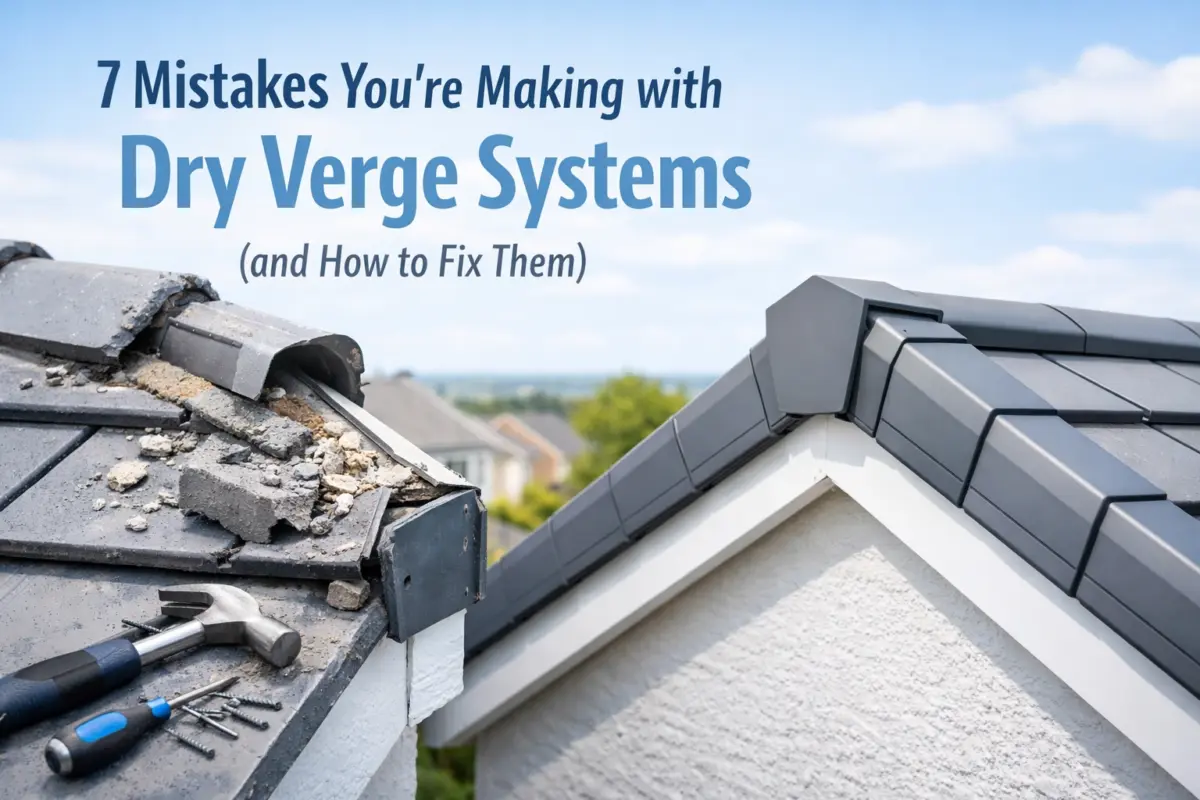
7 Mistakes You're Making with Dry Verge Systems (and How to Fix Them)

If you've had dry verge systems installed on your Belfast, Bangor, or Newtownards property in the last few years, there's a decent chance something wasn't done properly. We see it constantly: dry verge that's lifting, leaking, or letting wind damage your roof edges because the installation was rushed or bodged.

Dry verge systems are brilliant when they're fitted right. They replace old-fashioned mortar bedding with a mechanical system that protects your roof edge, keeps out water and pests, and looks clean. But when they're installed incorrectly, they fail fast: and that failure can cost you hundreds (or thousands) in repairs.

This guide walks you through the seven most common mistakes we see across Northern Ireland properties, why they matter for your home's protection and kerb appeal, and exactly how to fix them.

Mistake #1: Leaving Old Mortar Underneath

This is the classic "cowboy job." Some roofers will slap dry verge caps straight over the old mortar bedding without removing it first. It looks fine from the ground: until the first storm hits.

Why it matters: The dry verge caps can't sit flush when there's mortar in the way. They sit proud, catch the wind, and get ripped off. We've seen entire verge systems stripped off Belfast terraces after a single winter storm because they were never bedded properly.

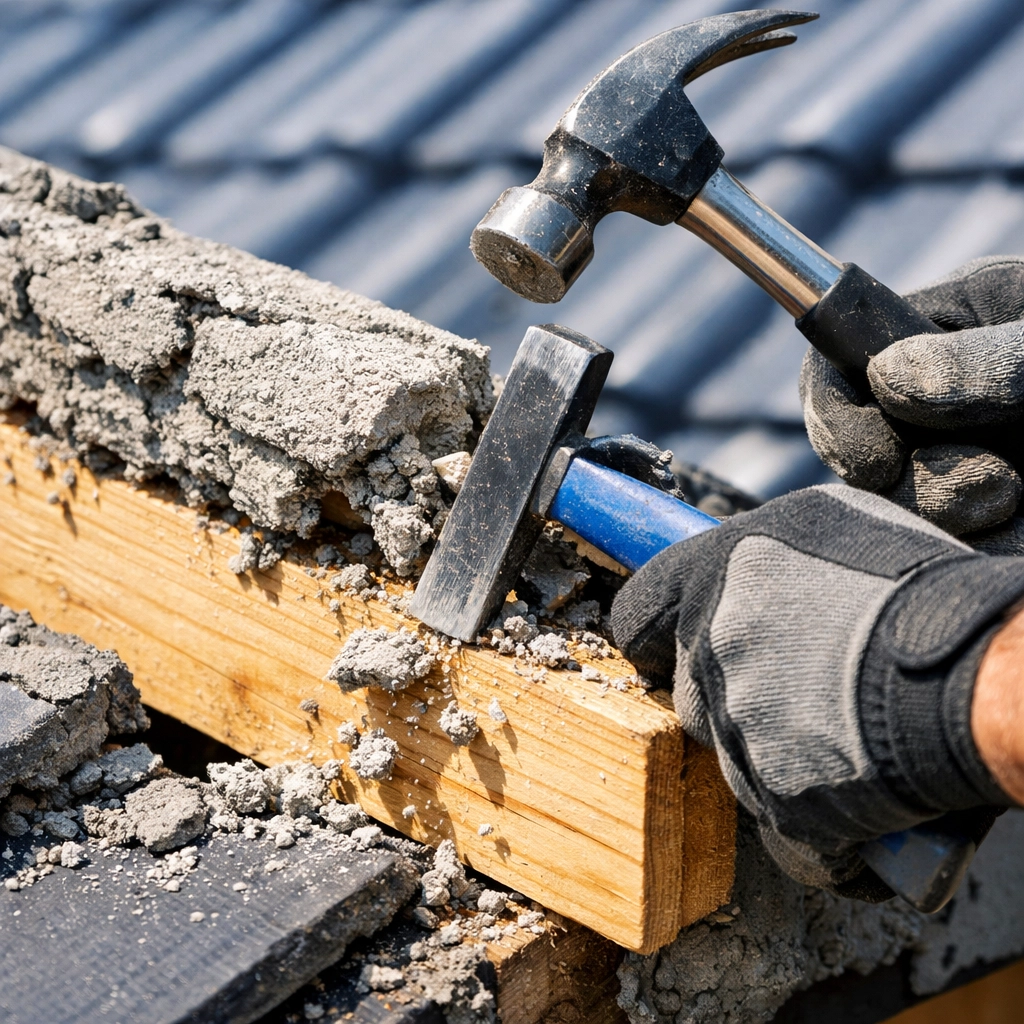
How to fix it: Remove all old mortar completely. Use a hammer and chisel to expose the tiling batten: typically around 20mm, depending on the manufacturer's spec. It takes longer, but it's the only way the dry verge will sit correctly and stay secure. If your system is already lifting, it needs to be stripped back and reinstalled from scratch.

Mistake #2: Poor Alignment and Gaps Along the Roof Edge

Removing old mortar from roof verge for proper dry verge installation

If the dry verge units aren't installed flush against the barge board, you're left with gaps along the roof edge. Even a small misalignment creates an opening for water to track behind the system: and once water gets in, you're looking at rot, damp, and potential structural damage.

Why it matters: Water penetration is one of the biggest threats to your property. If your dry verge isn't sitting flush, rainwater will run down the inside of your roof edge instead of draining away. In Bangor and Newtownards: where we get heavy coastal rain and wind-driven downpours: these gaps turn into leaks fast.

How to fix it: Check that every cap sits flush with the roofline. The overhang should be consistent across the whole run (typically 30mm, but check your manufacturer's spec). If you've got visible gaps or uneven spacing, the system needs to be realigned. Don't ignore it: gaps don't fix themselves, and they get worse over time.

Mistake #3: Inadequate Fastening and Missing Straps

Some roofers rush the fastening stage. Nails aren't fully driven home. Securing straps are skipped entirely. The dry verge looks fine: until the wind picks up.

Why it matters: Wind pressure at roof level is serious, especially on exposed properties in Belfast, Bangor, and Newtownards. If the dry verge isn't properly secured, it'll shift, rattle, or blow off completely. We've replaced entire systems that failed within six months because the fasteners weren't fitted correctly.

How to fix it: Every fastener needs to be fully secured. Install straps at the end of battens to prevent wood splitting and ensure firm attachment. If you can lift or move your dry verge caps by hand, they're not fixed properly. Call a professional to reinforce the system before you lose tiles or suffer wind damage.

Mistake #4: Botched End Caps and Starter Units

End caps and starter units are fiddly. They require precise installation to create a weathertight seal. When they're installed incorrectly: or worse, when they're skipped entirely: you're left with openings for water, wind, and pests.

Why it matters: An improperly sealed end cap is an invitation for problems. Water can track underneath, wasps and birds can nest inside, and the entire dry verge system can start to fail from the ends inward. This is a particular issue on older properties in Belfast where the roof edges are already vulnerable.

How to fix it: Follow the manufacturer's installation procedures exactly. End caps aren't optional: they're critical components. If your system doesn't have proper end caps, or if they're loose or damaged, get them reinstalled correctly. It's a small fix that prevents major headaches.

Mistake #5: Water Draining Onto Walls Instead of Gutters

Water damage on wall caused by misaligned dry verge system

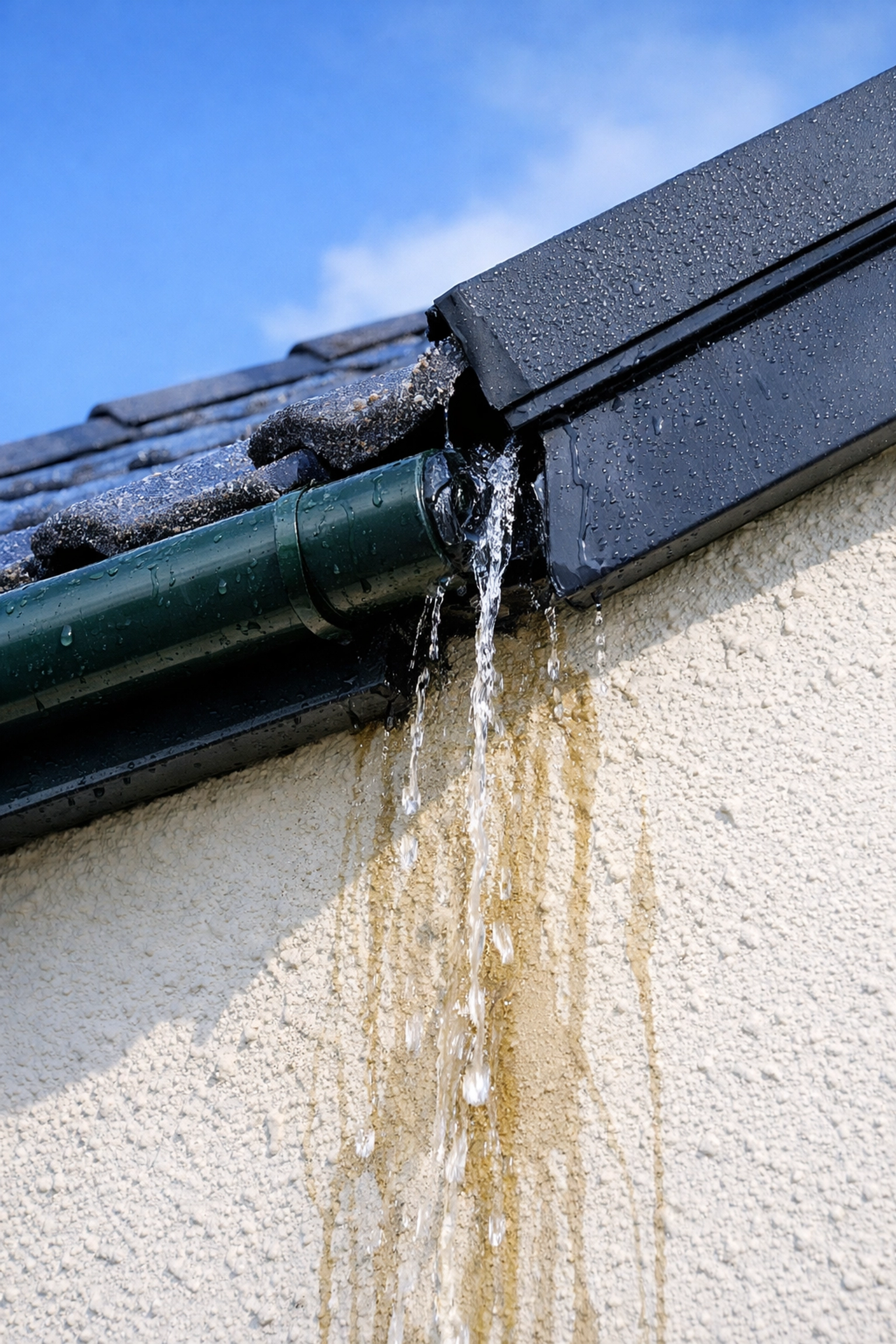
This mistake causes visible damage fast. If the dry verge isn't positioned to drain water directly into the gutter, rainwater spills down your external walls. You'll see staining, damp patches, and eventually moss or algae growth.

Why it matters: Water running down your walls damages render, brickwork, and paintwork. It also increases the risk of penetrating damp inside your property. In Newtownards and Bangor, where we get a lot of rain, improper drainage can cause thousands of pounds worth of damage in just a couple of years.

How to fix it: The dry verge must be positioned so water drains cleanly into the gutter system. If you've got a flat roof or extension below, the verge can be extended to drain onto that surface: but it needs to be done deliberately, not by accident. If water's currently running down your walls, reposition the dry verge or extend your guttering to catch the runoff.

Mistake #6: Using the Wrong Dry Verge for Your Roof Type

Not all dry verge systems are the same. Some are designed for concrete tiles, others for slate. Some are mechanically superior but don't match the aesthetic of your property. Installing the wrong type is a recipe for performance issues and poor kerb appeal.

Why it matters: A dry verge system that doesn't match your roof spec won't perform properly. It might not sit flush, might not handle wind load correctly, or might look completely out of place. Properties in conservation areas or period homes in Belfast need dry verge that matches the original style: otherwise you're damaging your property's value and appearance.

How to fix it: Select dry verge that's suited to your roof type: mechanically and aesthetically. Check the manufacturer's compatibility guide, and if you're in a conservation area or working on a listed building, confirm your choice complies with planning requirements. If the wrong system is already installed, it's worth replacing it with the correct one before you lose money on property value or failed inspections.

Mistake #7: Leaving Excess Materials That Trap Moisture

Loose felt dangling below the roof edge. Battens that haven't been trimmed properly. Offcuts left behind. These might seem like minor details, but they create moisture traps that rot your roof structure from the inside out.

Why it matters: Moisture is the enemy of timber. If your installation has left excess felt or improperly trimmed battens, water will collect against the wood instead of draining away. Over time, that leads to rot, weakened structure, and expensive repairs. This is especially common on rushed jobs where the roofer hasn't finished the detailing properly.

How to fix it: Trim excess felt and cut battens to the correct length before final installation. All materials should be neat, flush, and free from moisture traps. If your roof edge has visible loose materials, get them trimmed and tidied: it's a small job that protects your roof structure long-term.

Protect Your Property with Properly Installed Dry Verge Systems

Dry verge systems are one of the best upgrades you can make to your Belfast, Bangor, or Newtownards property: when they're installed correctly. They protect your roof edge, improve kerb appeal, and last for decades without the cracking and crumbling you get with old mortar bedding.

But poor installation undermines all those benefits. If you've spotted any of the mistakes listed above on your property, don't wait for the problem to get worse. Water damage, wind damage, and structural rot all escalate quickly once they start.

Request a roof inspection if you're unsure about your dry verge system. We'll check the installation, identify any issues, and give you honest advice on whether it needs repair or replacement.

Call Advanced Construction & Roofing for professional dry verge installation and repairs across Belfast, Bangor, and Newtownards. We remove old mortar properly, follow manufacturer specs exactly, and deliver installations that protect your property for the long term.

Contact us today: https://adv-group.co.uk

Your roof edge matters. Get it done right.

Is Your Loft Too Hot (Or Too Cold)? Here's the Truth About Roof Ventilation

If your loft feels like a sauna in summer or a damp cave in winter, you've got a ventilation problem. And in Northern Ireland's damp climate, poor roof ventilation doesn't just make your home uncomfortable, it actively damages your roof structure, feeds mould growth, and costs you money in wasted heating.

Here's what you need to know about roof ventilation, why it matters more in Belfast, Bangor, and Newtownards than almost anywhere else in the UK, and how to spot the warning signs before they turn into expensive repairs.

The Warning Signs: Is Your Roof Ventilation Failing?

Poor roof ventilation doesn't always announce itself with dramatic leaks. More often, it creeps in quietly through condensation, damp patches, and structural damage that builds over months and years.

Watch for these signs:

Condensation on windows and walls in upstairs rooms. If moisture is pooling on glass or running down walls near the roofline, warm air is hitting cold surfaces, and that means your loft isn't breathing properly.

Black mould spots on ceilings or in roof spaces. Mould needs three things: moisture, warmth, and poor airflow. A badly ventilated loft gives it all three. If you're seeing black spots in corners or along the eaves, your roof ventilation has likely failed.

Damp or musty smell in the loft. Walk into your loft space. If it smells damp, feels clammy, or has that distinctive "old attic" odour, trapped moisture is sitting in the timbers and insulation.

Water stains or wet insulation. Check your loft insulation. If it's damp to the touch, compressed, or showing water stains, condensation is forming inside the roof space, not from a leak, but from poor ventilation.

Extreme temperature swings. A loft that's scorching hot in summer and freezing in winter suggests airflow isn't regulating temperature properly. In Northern Ireland, where we rarely see extreme heat, the cold and damp side of this equation does most of the damage.

Frost on the underside of roof tiles in winter. If you see frost forming on the inside of your roof during cold snaps, warm moist air is condensing and freezing on cold surfaces. That's a textbook ventilation failure.

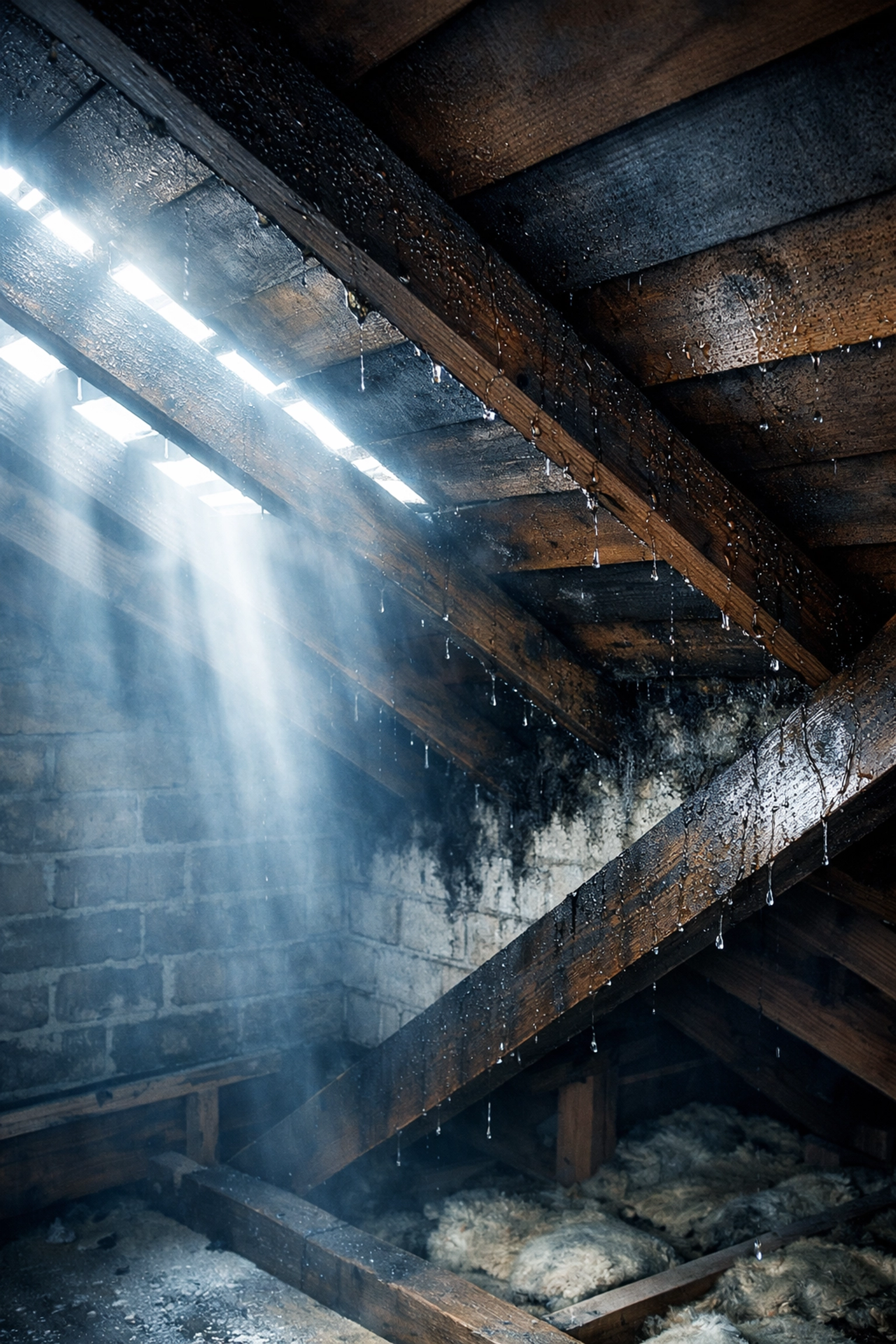
Condensation and black mould in loft rafters caused by poor roof ventilation

Why Northern Ireland's Climate Makes Roof Ventilation Critical

Northern Ireland's weather is mild, wet, and humid for much of the year. We don't get the baking summers that drive ventilation concerns in southern England or the deep freezes that cause ice dam problems in Scotland. But we do get something worse for roofs: constant dampness.

Average humidity in Belfast sits between 75% and 85% year-round. That moisture-laden air doesn't just sit outside, it moves into your home, rises into the loft, and condenses on cold surfaces when it meets your roof structure.

Without adequate roof ventilation, that moisture has nowhere to go. It sits in your roof timbers, soaks into insulation, and creates the perfect environment for:

  • Wood rot in roof joists and rafters
  • Mould and mildew growth
  • Insulation breakdown (wet insulation loses most of its thermal efficiency)
  • Rust and corrosion on metal fixings, brackets, and flashing

In drier climates, occasional moisture might evaporate naturally. In Northern Ireland, it just builds. Roof ventilation is your only reliable way to move that damp air out before it causes structural damage.

How Proper Roof Ventilation Actually Works

Roof ventilation isn't about "letting heat escape" or "making your home colder." It's about creating continuous airflow through the loft space to regulate temperature and remove moisture.

A properly designed ventilation system uses two types of vents working together:

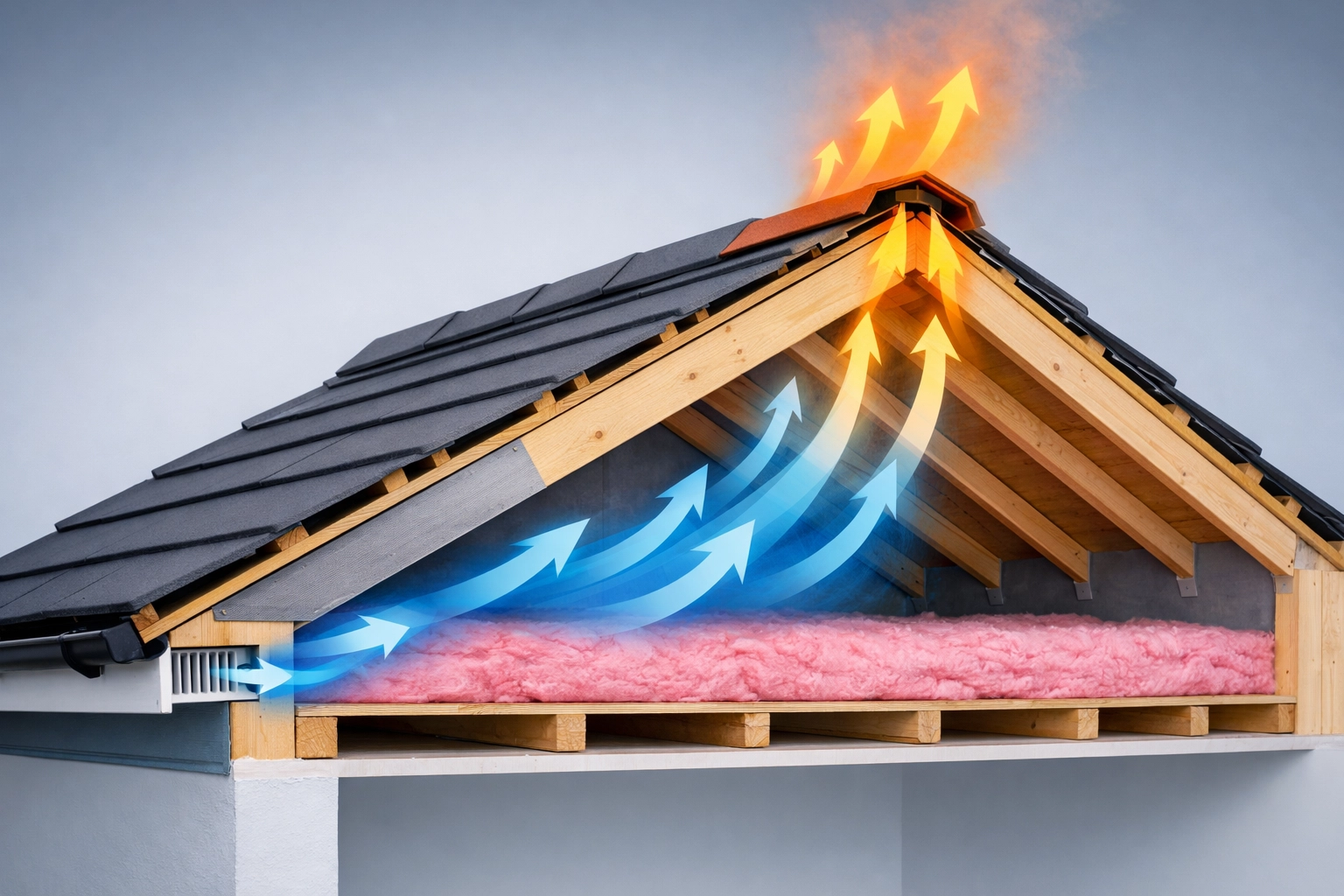
Intake vents (usually soffit vents along the eaves) pull fresh air into the loft space from outside. These sit at the lowest point of the roof, where cool air naturally enters.

Exhaust vents (ridge vents along the roof peak, or tile vents on the roof slope) allow warm, moist air to escape at the highest point. Hot air rises naturally, so exhaust vents positioned at the ridge let that air exit without needing mechanical help.

When these two work together in a balanced system, roughly equal intake and exhaust capacity, you get continuous airflow. Cool air enters at the eaves, warms as it picks up moisture, and exits at the ridge. The cycle repeats passively, 24 hours a day.

This process does two things:

  1. Removes moisture before it condenses. Instead of warm, damp air hitting cold roof surfaces and turning into water droplets, airflow moves it out before condensation forms.

  2. Regulates temperature. In summer, ventilation stops heat from building up to extreme levels (though in Northern Ireland, this is less of a concern). In winter, it keeps the loft cold and dry, which prevents condensation and protects insulation efficiency.

How Roof Ventilation Protects Your Roof Structure

Roof timbers are designed to carry load and shed water from the outside. They're not designed to sit in damp, stagnant air for years on end.

When roof ventilation fails, moisture accumulates in the loft space and creates conditions that actively damage the structure:

Wood rot and decay. Roof joists, rafters, and purlins need dry air to stay strong. Prolonged exposure to damp air encourages fungal growth, which breaks down the timber fibres and weakens the structure. Once rot takes hold, timbers lose their load-bearing capacity and need replacing, an expensive job that involves stripping sections of the roof.

Nail sickness. The metal fixings, brackets, and nails that hold your roof together corrode faster in damp environments. Rusted nails lose their grip, and over time, slates and tiles can work loose. This is a common problem in poorly ventilated roofs across Belfast and Bangor.

Insulation failure. Most loft insulation (fibreglass, mineral wool, cellulose) loses thermal performance when it gets damp. Wet insulation compresses, stops trapping air pockets, and can lose up to 50% of its R-value. That means you're paying more to heat your home while your roof structure sits in a damp, cold environment, exactly the conditions that accelerate decay.

Roof membrane damage. Many modern roofs use breathable membranes under the tiles to manage moisture. These membranes are designed to let water vapour escape outward while blocking liquid water from entering. But if your loft ventilation is blocked or inadequate, moisture can build up against the membrane and overwhelm its capacity. Over time, this leads to water tracking into the roof timbers and insulation.

Proper roof ventilation prevents all of this by keeping the loft environment dry, stable, and at a temperature close to the outside air. Your roof structure stays sound, your insulation works efficiently, and you avoid the kind of slow structural damage that's expensive to fix.

Advanced Construction & Roofing Roof Survey Service

What Good Roof Ventilation Looks Like

If you're checking your own roof ventilation or getting a professional assessment, here's what a properly designed system includes:

Balanced intake and exhaust. For every square foot of exhaust vent (ridge or tile vents), you need roughly equal intake area (soffit vents). Too much exhaust without enough intake means the system works inefficiently. Too much intake without enough exhaust traps moist air in the loft.

No blocked vents. Soffit vents get blocked by insulation, debris, or old paint. Tile vents get clogged with moss or nests. Check that all vents are clear and allowing airflow.

Continuous airflow path. Air needs to move freely from eaves to ridge without obstruction. If loft insulation is pushed tight against the eaves, it blocks the intake vents. If there's no gap between insulation and the roof deck, airflow can't move through the space.

Appropriate vent size for the loft area. Building regulations recommend a minimum of 10mm continuous ventilation gap at eaves level for roofs with a pitch over 15 degrees. For steeper roofs or larger loft spaces, you'll need more.

No competing ventilation systems. Mixing different vent types (e.g., powered attic fans with passive ridge vents) can disrupt airflow and create negative pressure zones. Stick with one properly balanced system.

If your roof was built or re-roofed in the last 20 years, it should have ventilation designed in. Older roofs, especially pre-1990s builds, often have inadequate or blocked ventilation that needs upgrading.

Roof ventilation system showing airflow from soffit vents to ridge vents

Roof Ventilation Myths (And What Actually Matters)

"Ventilation makes my house colder in winter." No. Proper ventilation keeps your loft cold, which is what you want. Your insulation sits on the floor of the loft, separating the cold loft space from the warm living space below. A cold, dry, ventilated loft is more thermally efficient than a warm, damp, poorly ventilated one.

"I don't need ventilation because I have breathable roofing felt." Breathable membranes help, but they're not a substitute for ventilation. They manage moisture vapour, but they don't remove the volume of damp air that builds up in Northern Ireland's humid climate. You still need airflow.

"More vents are always better." Not necessarily. Unbalanced ventilation (too many exhaust vents, not enough intake) creates turbulence and reduces efficiency. What matters is balance and proper placement.

What To Do If You Suspect Poor Roof Ventilation

If you're seeing condensation, mould, damp timbers, or musty smells in your loft, don't ignore it. These problems get worse over time, and the longer moisture sits in your roof structure, the more expensive the repairs become.

Request a roof survey. A professional inspection will identify whether your ventilation system is adequate, balanced, and clear of blockages. We'll check soffit vents, ridge vents, airflow paths, and the condition of your roof timbers and insulation.

Get a clear assessment and quote. If ventilation upgrades are needed: whether that's installing new ridge vents, clearing blocked soffits, or adding tile vents: we'll explain what's required and why. No jargon, no overselling.

Consider ventilation alongside other roof work. If you're already planning roof repairs, re-roofing, or loft insulation upgrades, that's the ideal time to improve ventilation. The roof is open, access is easier, and the work integrates seamlessly.

We work across Belfast, Bangor, Newtownards, and throughout Northern Ireland, and we've seen every type of ventilation failure that our damp climate can cause. If your loft's too hot, too cold, or showing signs of moisture damage, contact us for a roof survey and honest advice.

Get in touch: https://adv-group.co.uk

Your roof is designed to last decades: but only if it can breathe properly. Don't let poor ventilation shorten its life.