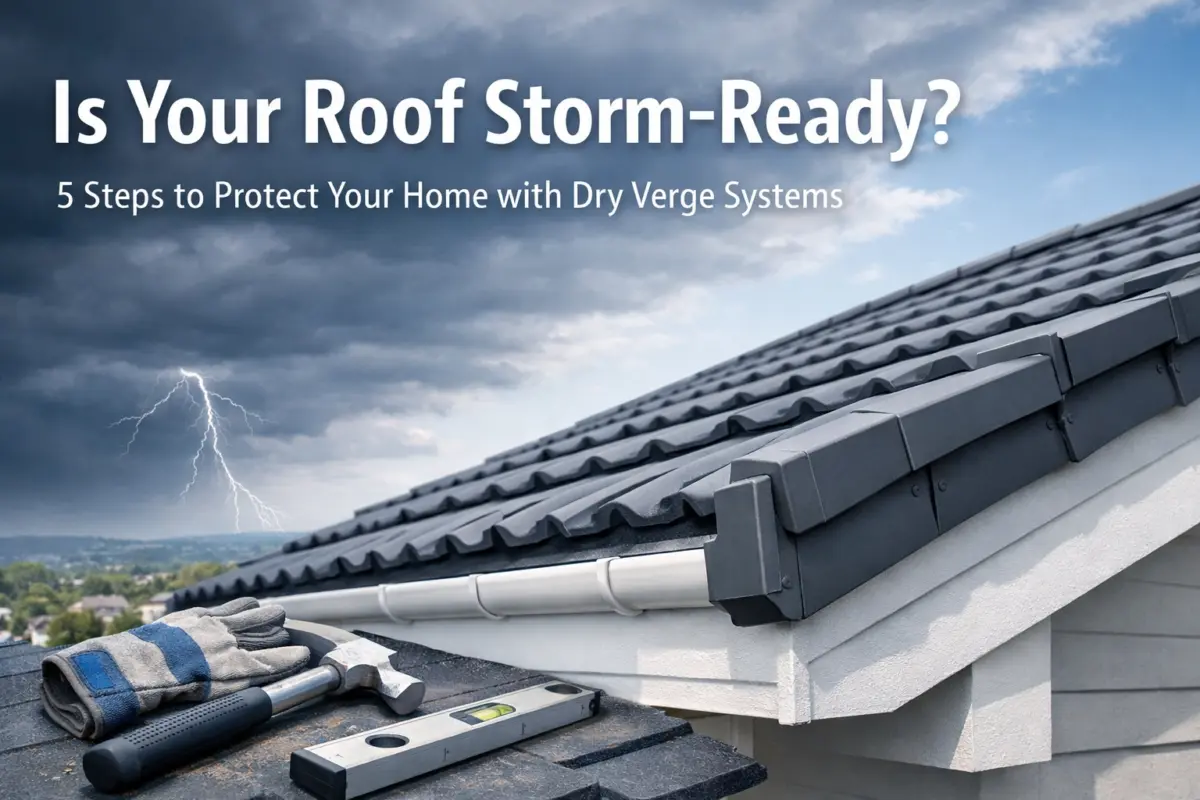
Is Your Roof Storm-Ready? 5 Steps to Protect Your Home with Dry Verge Systems

Strong winds and heavy rain can turn a minor roof weakness into a major disaster. When storms hit Northern Ireland, traditional mortar-bedded verges often fail first: cracking, crumbling, and leaving your tiles vulnerable to wind uplift. Dry verge systems offer a proven, mechanical solution that keeps your roof secure when weather turns severe.

If you're wondering whether your roof can handle the next big storm, the answer lies in how well your verges are protected. Here are five essential steps to storm-proof your home using dry verge systems.

What Are Dry Verge Systems and Why Do They Matter?

Before diving into the steps, let's get clear on what we're talking about. Dry verge systems are mechanical fixing units that replace traditional sand-and-cement mortar at the edges of your roof. Instead of relying on mortar that cracks and deteriorates over time, these systems use interlocking UPVC or plastic capping units that screw directly into your roof structure.

The mechanical fixing is what makes all the difference during storms. When wind speeds increase, traditional mortar simply can't hold tiles in place: but dry verge systems are specifically engineered to resist wind uplift and prevent tiles from blowing off. This is exactly why they've become a building control requirement for modern roofing projects.
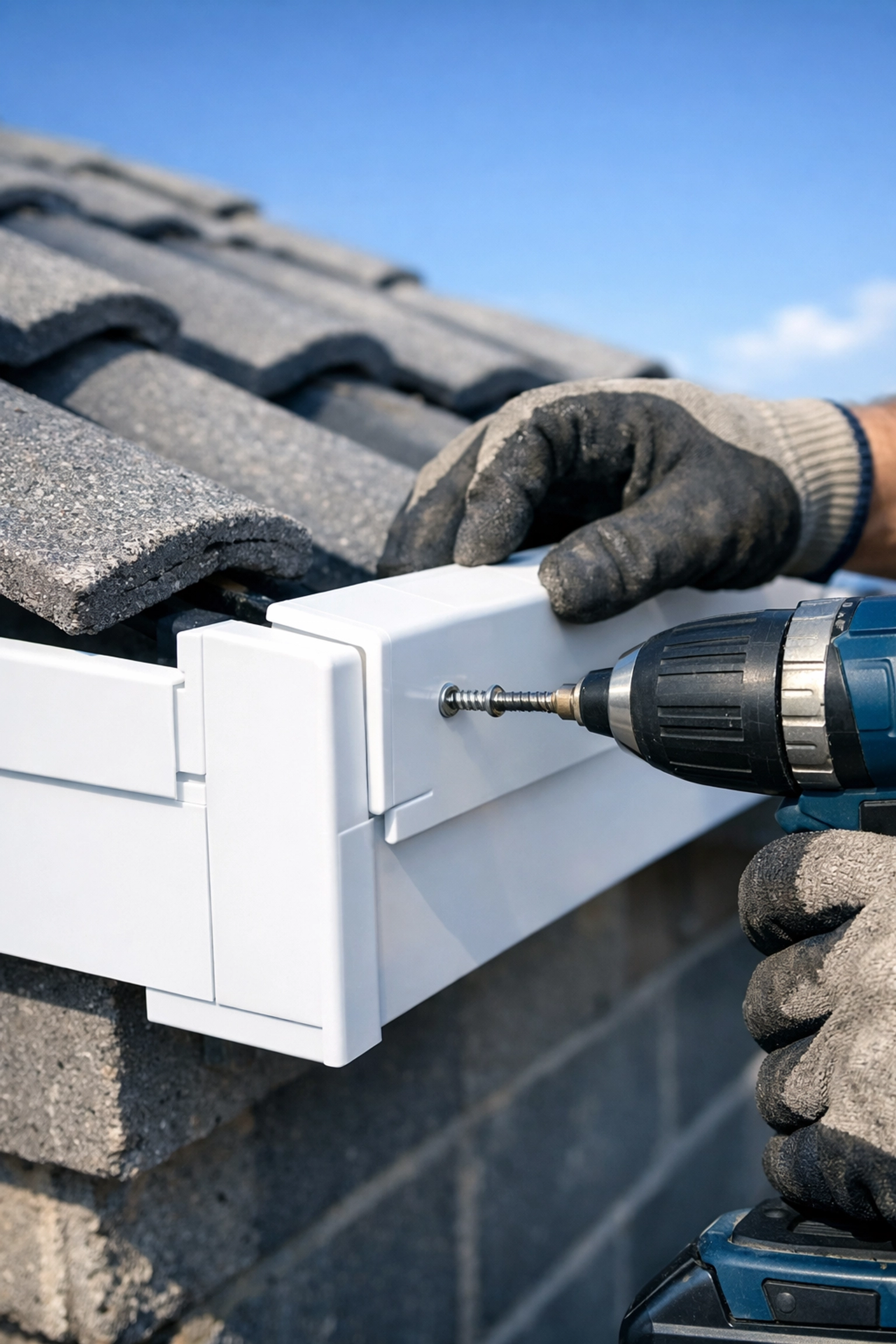
Professional roofer installing dry verge systems on roof with mechanical screw fixing

Step 1: Assess Your Current Verge Condition

Start by examining your roof's edges during dry weather. Look for these warning signs that your verges aren't storm-ready:

  • Cracked or crumbling mortar along the gable ends
  • Loose or missing tiles at the roof edges
  • Gaps where you can see daylight or the underlay
  • Evidence of water staining on interior walls near gable ends
  • Bird nests or pest entry points at the verges

If you spot any of these issues, your roof is vulnerable. Traditional mortar deteriorates naturally over time, especially under the freeze-thaw cycles and constant rain exposure we experience across Northern Ireland. The sooner you identify these weaknesses, the sooner you can prevent storm damage.

Don't wait until after a storm to discover problems. Request a professional roof survey to get a comprehensive assessment of your verge condition and overall roof integrity.

Advanced Construction & Roofing Roof Survey Service

Step 2: Understand How Dry Verge Systems Provide Storm Protection

Dry verge systems work through multiple layers of protection that traditional mortar simply cannot match:

Mechanical wind resistance: The interlocking capping units mechanically screw into your roof batten structure, creating a secure attachment that won't fail when wind speeds increase. This mechanical fixing is the critical difference: mortar relies on adhesion alone, which weakens over time, while dry verge systems maintain their strength indefinitely.

Weather bar technology: Strategically placed weather bars redirect water back onto your roof tiles, preventing water from being driven under tiles during wind-driven rain. This is crucial during storms when rain doesn't fall straight down: it comes at your roof horizontally.

Sealed interlocking design: The units interlock together to create a continuous weatherproof barrier along your entire gable edge. There are no weak points or gaps where wind can get underneath to lift tiles.

Ventilation without vulnerability: Quality dry verge systems provide discreet roof space ventilation while maintaining storm protection. This prevents condensation buildup that can weaken your roof structure over time, making it more vulnerable to storm damage.

Step 3: Choose the Right Dry Verge System for Your Roof

Not all dry verge systems are created equal, and choosing the right one matters for storm protection. Look for systems that meet British Standard BS8612 and are compatible with your specific roof tile type.

Key features to prioritize:

  • Universal compatibility with your existing tiles (concrete or clay)
  • Extended weather bars that push water away from gable walls
  • UV-stabilized materials that won't degrade under sun exposure
  • Interlocking design with no gaps between units
  • Secure fixing systems with adequate screw points into battens

The system should come with a minimum 10-year guarantee, though quality installations often last significantly longer. Cheap alternatives might save money upfront but won't provide reliable storm protection when you need it most.
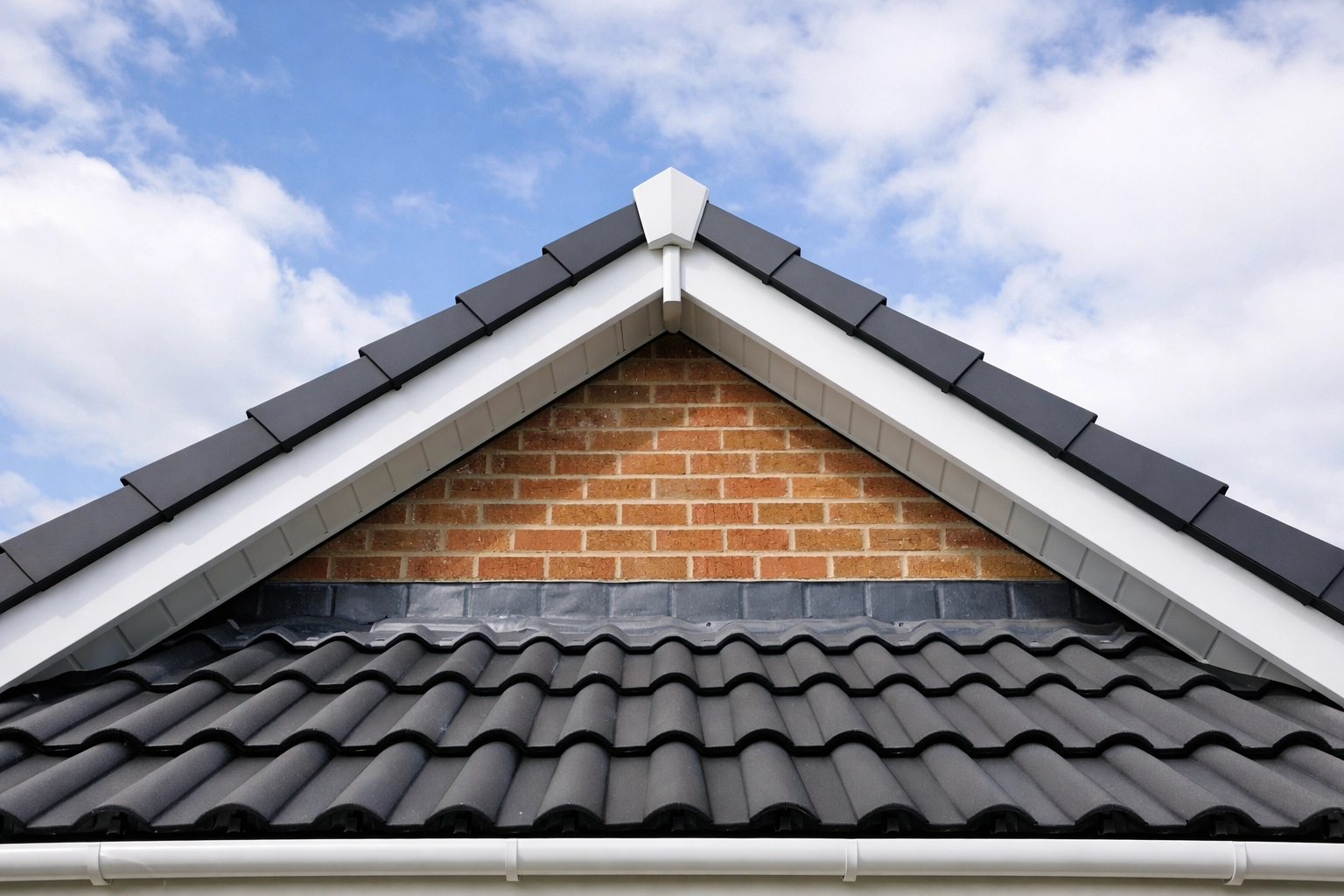
Residential roof gable end with white dry verge system protecting tile edges

Step 4: Ensure Professional Installation to Building Standards

Even the best dry verge system will fail if it's not installed correctly. Storm protection depends entirely on proper installation that follows manufacturer guidelines and building regulations.

Professional installation ensures:

  • Correct batten positioning and structural support
  • Proper screw fixing into sound timber
  • Accurate alignment and interlocking of all units
  • Appropriate overlap with roofing felt or membrane
  • Secure end caps that prevent water ingress at termination points

DIY installation is not recommended for dry verge systems. The verge edge is one of the most exposed and vulnerable areas of your roof: this isn't the place to cut corners. Professional roofers have the experience to identify potential issues and ensure your system will perform when storms hit.

Contact experienced roofing specialists who understand both the product specifications and the unique weather challenges we face across Northern Ireland.

Roofer Roof Inspection in Rain

Step 5: Implement a Preventive Maintenance Schedule

Your dry verge system should require minimal maintenance compared to mortar verges, but that doesn't mean you should ignore it completely. A simple annual inspection keeps your storm protection at peak performance.

Schedule these preventive checks:

Annual visual inspection: Walk around your property and examine the verge edges from ground level. Look for any obvious damage or displaced units.

Gutter clearance: Keep gutters clear of debris that could cause water overflow onto verge areas during heavy rain.

Post-storm assessment: After significant storms, do a quick visual check for any damage. Early detection prevents small issues from becoming major problems.

Professional survey every 3-5 years: Have a qualified roofer conduct a detailed inspection to check fixing integrity and identify any maintenance needs.

Unlike traditional mortar that requires regular repointing and eventual replacement, properly installed dry verge systems resist weathering and should provide reliable storm protection for decades.

Why Dry Verge Systems Are Essential for Storm-Ready Homes

The evidence is clear: dry verge systems significantly outperform traditional mortar in storm conditions. When properly installed, they won't blow off in normal storm conditions, they prevent water penetration through multiple defense layers, and they eliminate the maintenance cycle of cracking and deterioration.

Beyond storm protection, these systems offer additional benefits:

  • Pest prevention: The secure fit blocks birds, insects, and other pests from accessing roof gaps
  • Improved energy efficiency: Proper ventilation prevents moisture buildup that reduces insulation effectiveness
  • Long-term cost savings: Eliminate the need for regular repointing and mortar repairs
  • Increased property value: Modern, maintenance-free roofing systems are attractive to buyers

Take Action Before the Next Storm Hits

Waiting until after storm damage occurs is the most expensive approach. Protect your home now with professionally installed dry verge systems that provide reliable storm protection year after year.

If you're unsure about your roof's current condition or want to upgrade to dry verge systems, contact Advanced Construction & Roofing for a comprehensive roof assessment. Our experienced team can evaluate your verges, recommend the right system for your property, and ensure proper installation to building standards.

Don't let the next storm catch you unprepared. Call us today to schedule your roof survey and take the first step toward a truly storm-ready home.

Visit Advanced Construction & Roofing or request a consultation to discuss your roofing needs. We serve homeowners across Northern Ireland with professional roofing solutions backed by years of experience and commitment to quality workmanship.

Dry Ridge Vs Traditional Mortar: Which Is Better For Your NI Home?

If you've noticed crumbling mortar along your roof ridge, you're not alone. Traditional mortar bedding has been the go-to solution for securing ridge tiles for generations, but here's the reality: it simply doesn't hold up well in Northern Ireland's demanding climate. With constant rain, high winds, and temperature fluctuations, mortar-based ridges crack, crumble, and fail, often within just 5 to 10 years.

Dry ridge systems offer a modern alternative that's transforming how homeowners across Northern Ireland protect their roofs. But which option is actually better for your property? Let's break down the facts so you can make an informed decision.

What Are Dry Ridge Systems?

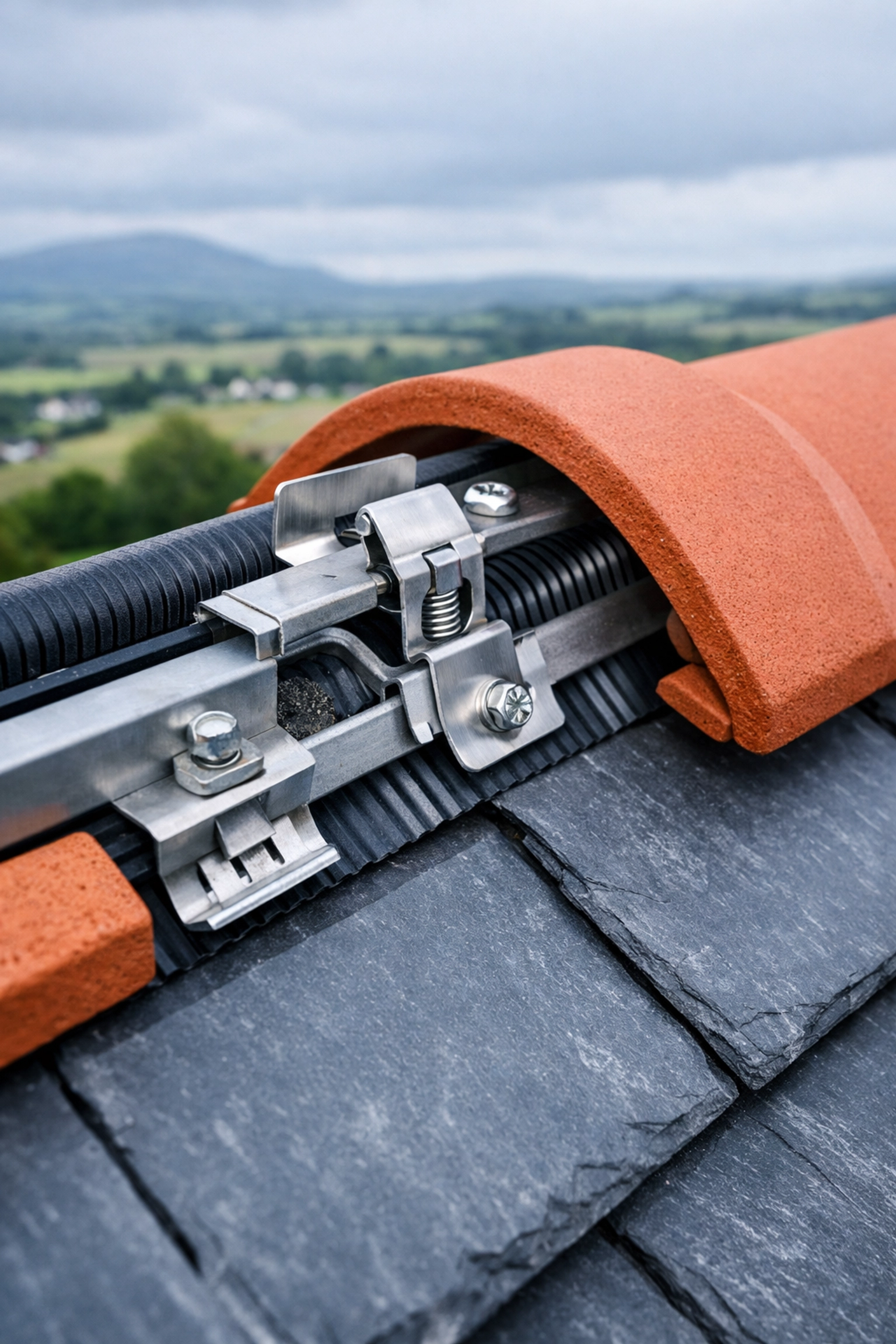
Dry ridge systems represent a mechanical fixing solution that eliminates the need for mortar entirely. Instead of relying on cement to hold ridge tiles in place, these systems use specialized brackets, clips, and screws that secure tiles directly to the roof structure.

The design incorporates interlocking components that create a weatherproof seal while allowing controlled ventilation beneath the ridge. Each tile is individually fastened, creating a robust system that withstands the elements far more effectively than traditional methods.

Current British standards (BS 5534) now mandate mechanical fixings on all new roofing projects, a clear industry recognition that this approach delivers superior long-term protection for your home.

Dry ridge system mechanical brackets securing roof tiles on Northern Ireland home

Why Northern Ireland Weather Demands Better Solutions

Northern Ireland's climate is notoriously tough on roofing systems. You know this firsthand if you've lived through our stormy winters and relentless rainfall. Traditional mortar simply wasn't designed to cope with the combination of:

  • High winds and storms that regularly batter our coastlines and exposed areas
  • Persistent moisture from frequent rainfall that seeps into porous mortar
  • Freeze-thaw cycles that expand and contract materials, accelerating deterioration
  • Temperature fluctuations that cause thermal expansion and cracking

Dry ridge systems feature mechanical fixings that provide exceptional resistance to these conditions. The screws and clamps don't degrade when exposed to moisture. They don't crack when temperatures drop. They maintain their structural integrity year after year, regardless of what our weather throws at them.

Durability: A Side-by-Side Comparison

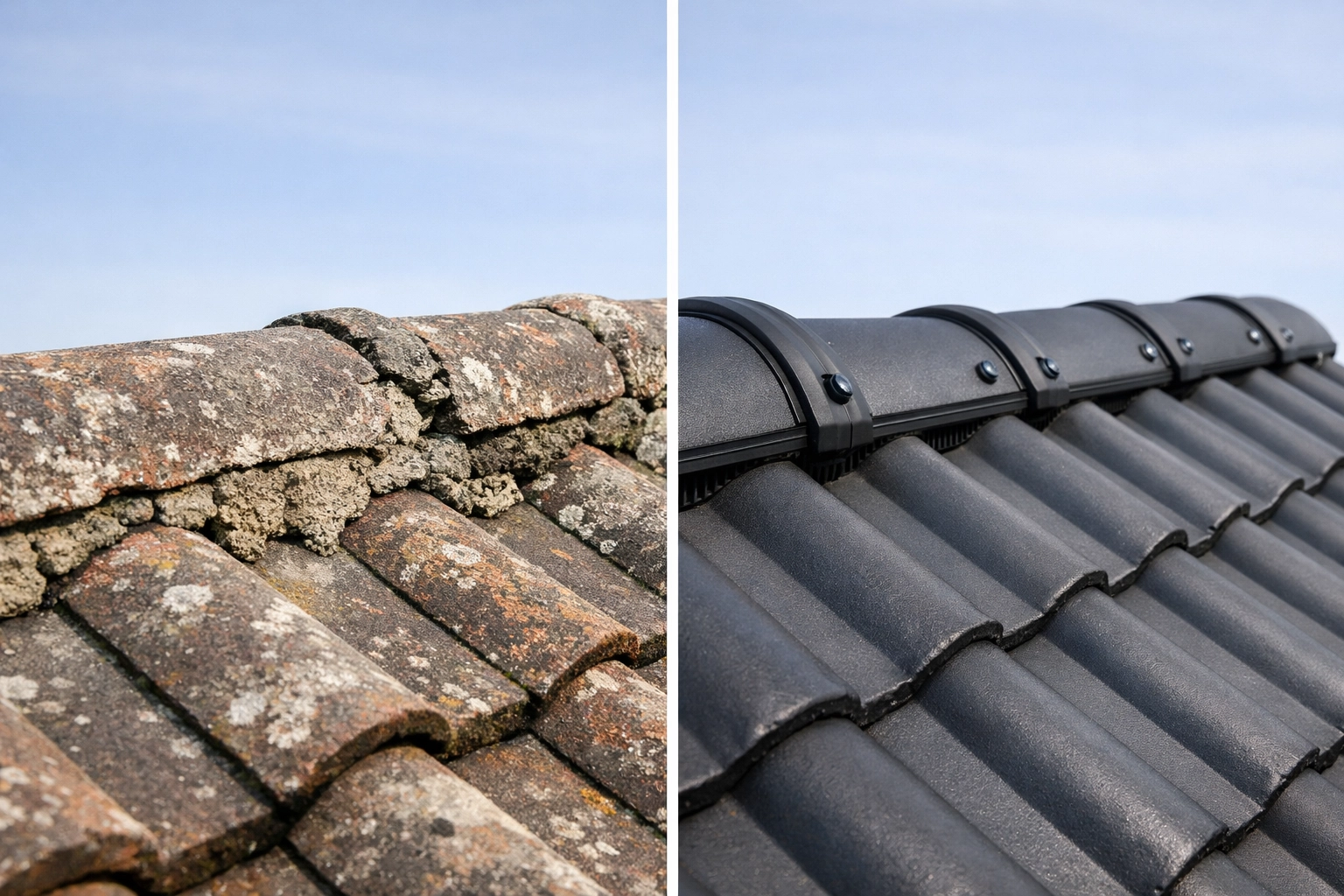
Traditional mortar ridges typically fail within 5 to 10 years in Northern Ireland conditions. You'll notice the telltale signs: cracks appearing along the ridge line, pieces of mortar crumbling away, and eventually tiles becoming loose or displaced.

This deterioration happens because mortar is fundamentally porous. Water penetrates the material, weakens the bonds, and when freezing temperatures arrive, the expansion causes catastrophic cracking. It's not a question of if traditional mortar will fail, it's when.

Dry ridge systems, by contrast, last for decades with minimal degradation. The mechanical components resist corrosion, the materials don't absorb water, and the entire system maintains its structural integrity throughout its lifespan. You're looking at protection that genuinely goes the distance.

Maintenance Requirements: The Hidden Cost Factor

Here's what maintaining a traditional mortar ridge actually involves:

  • Waterproofing treatments every other year to slow deterioration
  • Regular inspections to identify cracks before they become major problems
  • Repairs and repointing when sections fail
  • Complete replacement after 7-10 years in many cases

Dry ridge systems are virtually maintenance-free. Once properly installed, they require no waterproofing, no repointing, and no ongoing repairs. You simply leave them alone and they keep doing their job. This translates to significant savings over your roof's lifetime, not just in materials and labor, but in the peace of mind that comes from not worrying about your ridge line.

Comparison of cracked mortar ridge versus durable dry ridge system on roof

Installation Time and Cost Analysis

Installation speed matters more than you might think. Traditional mortar installation requires approximately 6 hours per 10 meters of ridge line. The process is labor-intensive: mixing mortar to the correct consistency, carefully bedding each tile, and waiting for proper curing.

Dry ridge systems cut that time to roughly 2.5 hours for the same length. Faster installation means lower labor costs and less disruption to your property. Your roof is weatherproof sooner, reducing the risk of damage from unexpected rain during the work.

Yes, dry ridge systems have higher upfront material costs. But when you factor in:

  • Reduced labor expenses from quicker installation
  • Elimination of ongoing maintenance costs
  • Avoidance of premature replacement expenses
  • No waterproofing treatments required

The total cost of ownership makes dry ridge systems significantly more economical over the roof's lifespan. You pay a bit more initially and save substantially in the years that follow.

The Ventilation Advantage

Here's a crucial benefit that often gets overlooked: dry ridge systems provide superior roof ventilation compared to traditional mortar, which creates a sealed ridge that doesn't allow airflow.

Properly designed dry ridge systems incorporate double ventilation channels that allow air circulation beneath the ridge line. This ventilation is critical for preventing:

  • Moisture accumulation in your roof space
  • Condensation problems that lead to rot and mold
  • Structural timber decay from trapped humidity
  • Reduced insulation effectiveness from dampness

In Northern Ireland's damp climate, where moisture management is essential for maintaining healthy homes, this ventilation benefit cannot be overstated. Proper airflow protects your entire roof structure, not just the ridge line itself.

When Does Traditional Mortar Make Sense?

Traditional mortar isn't always the wrong choice. If your property falls into specific categories, mortar bedding may be worth considering:

  • Listed buildings where maintaining historical accuracy is legally required
  • Properties in conservation areas with strict aesthetic guidelines
  • Heritage homes where authentic appearance is a priority

Even in these situations, current building standards require mechanical fixings to be incorporated alongside mortar. This hybrid approach addresses the longevity concerns while preserving the traditional appearance.

Contact our team to discuss your specific property requirements. We'll evaluate whether your home qualifies for heritage considerations and recommend the most appropriate solution that balances preservation requirements with practical performance.

Making the Right Choice for Your Home

For the vast majority of Northern Ireland homes, dry ridge systems represent the superior choice. They deliver:

  • Decades of reliable performance without deterioration
  • Exceptional resistance to our challenging weather conditions
  • Maintenance-free operation that saves time and money
  • Superior ventilation that protects your roof structure
  • Compliance with current building standards
  • Cost-effectiveness over the roof's lifespan

The decision becomes even clearer when you consider that mortar-based systems will eventually need replacement anyway. Why invest in a solution that's already proven inadequate for our climate when modern alternatives offer demonstrably better performance?

Get Expert Advice for Your Ridge Replacement

Not sure which system is right for your property? The answer depends on your home's age, architectural style, location, and specific requirements. Our experienced roofing specialists can assess your ridge line and recommend the optimal solution.

Request a professional roof survey to evaluate your current ridge condition and discuss your options. We'll provide honest advice about what your property actually needs: not what generates the highest invoice.

Call Advanced Construction & Roofing today to schedule your consultation. We serve homeowners throughout Northern Ireland with straightforward guidance and quality workmanship you can trust. Your roof deserves protection that actually lasts.

Contact us at Advanced Construction & Roofing to discuss dry ridge systems for your home. We'll explain your options clearly and deliver installations that stand the test of time: and our weather.

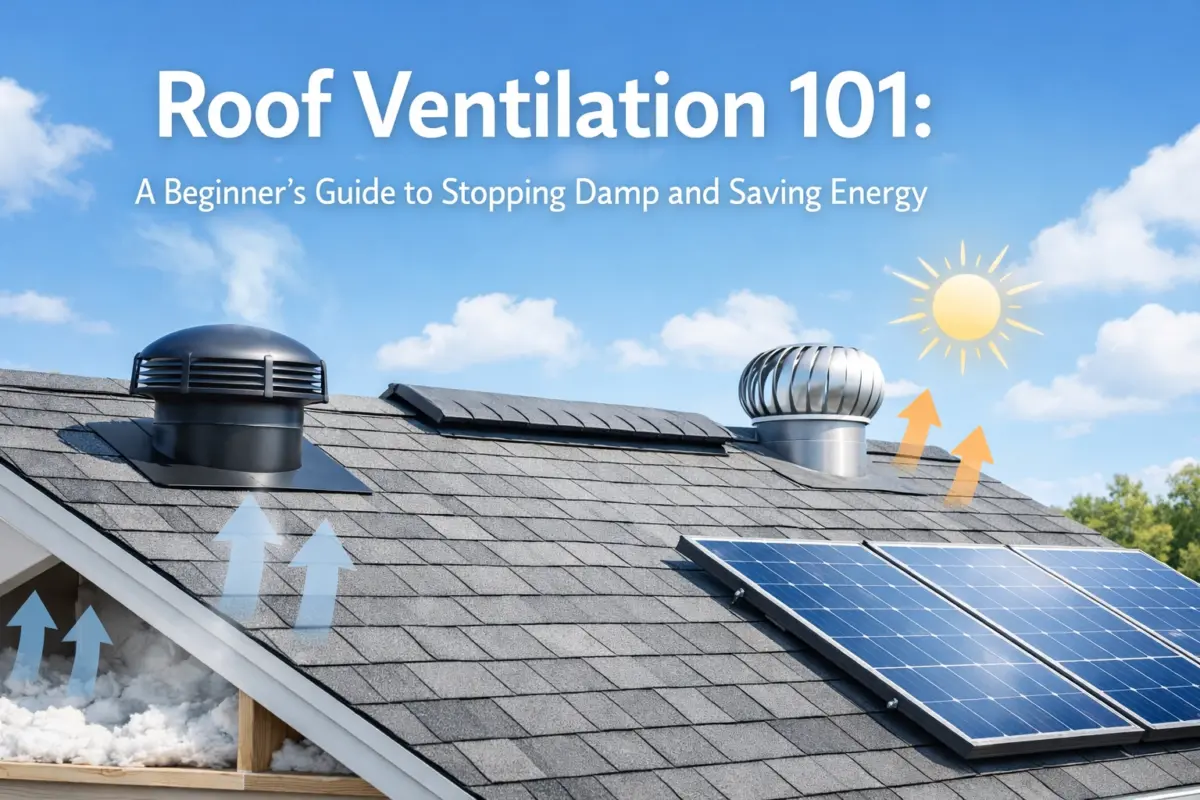
Roof Ventilation 101: A Beginner’s Guide to Stopping Damp and Saving Energy

Your roof is doing more than just keeping rain out. It's managing a complex system of airflow that directly impacts your energy bills, your home's structural integrity, and your family's health. Yet roof ventilation is one of the most misunderstood aspects of home maintenance.

Proper roof ventilation creates a balanced system where fresh air enters your attic while hot, stale air and moisture escape. Without this balance, you're looking at mold growth, wood rot, sky-high energy costs, and a roof that won't last as long as it should.

This guide breaks down everything you need to know about roof ventilation: from how it works to which system is right for your home.

What Exactly Is Roof Ventilation?

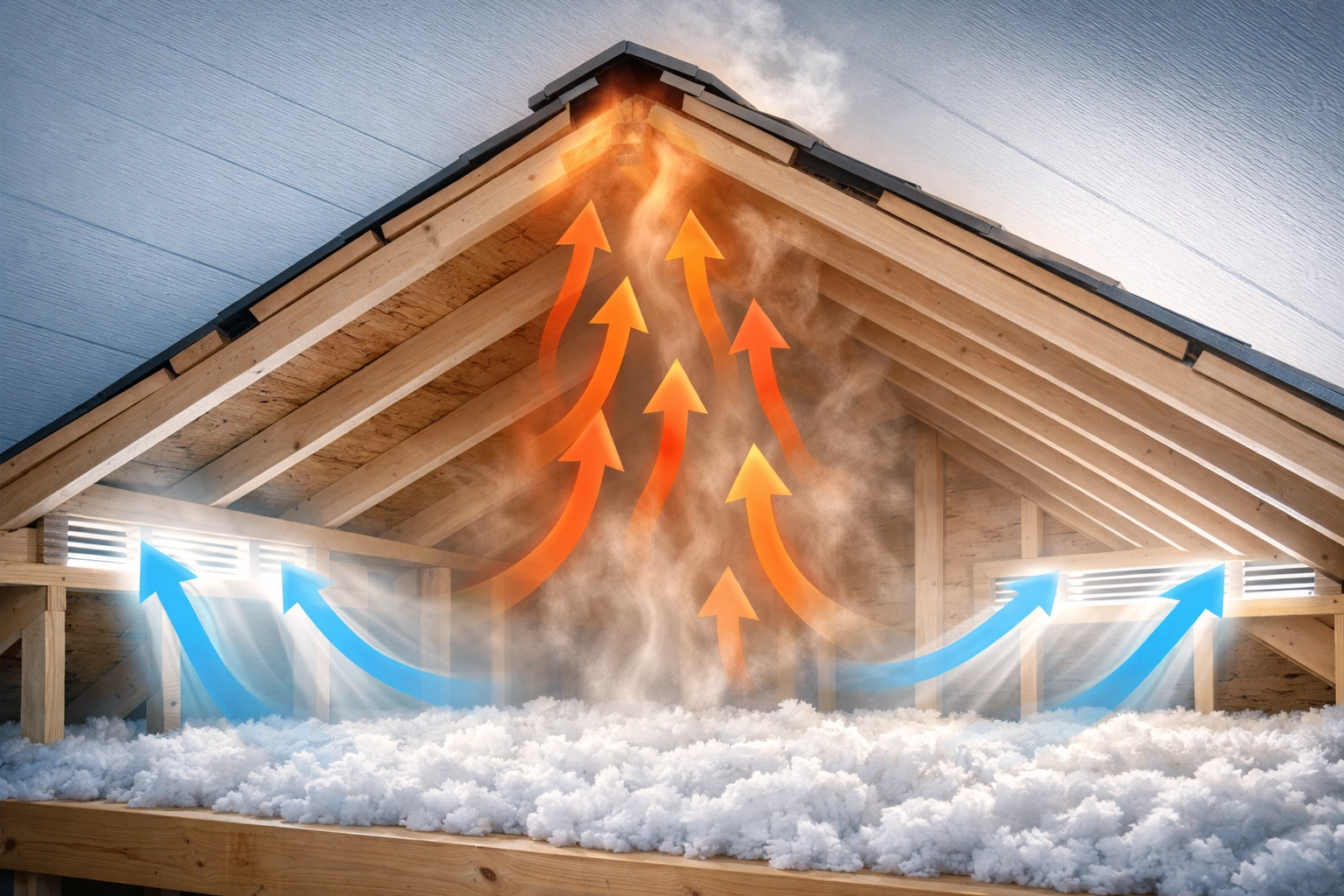
Roof ventilation is a continuous exchange of air in your attic space. Fresh air enters through intake vents at the lower sections of your roof, while hot, moisture-laden air exits through exhaust vents near the peak.

Think of it like your home breathing. When your attic can't breathe properly, problems accumulate fast:

  • Trapped moisture leads to mold and mildew
  • Heat buildup forces your air conditioning to work overtime
  • Condensation rots timber and damages insulation
  • Ice dams form in winter, causing leaks and structural damage
  • Your roof materials deteriorate faster than they should

The solution isn't just adding more vents: it's creating the right balance between intake and exhaust.

Attic roof ventilation system showing airflow from soffit intake vents to ridge exhaust vents

How Does Roof Ventilation Actually Work?

Effective roof ventilation relies on a simple principle: hot air rises, and cool air sinks.

Your ventilation system uses this natural convection to create continuous airflow:

Intake vents are positioned at the lowest points of your roof: typically in the soffits or fascia. These vents pull fresh, cooler air into the attic space from outside.

Exhaust vents sit at or near the roof's peak. As hot air naturally rises, these vents allow it to escape, pulling fresh air in through the intake vents below.

This creates a steady flow that keeps your attic temperature regulated and moisture levels controlled. But here's the critical part: you need roughly equal amounts of intake and exhaust ventilation.

Too many intake vents without enough exhaust? The hot air has nowhere to go. Too many exhaust vents without adequate intake? The system can't pull enough fresh air through to create proper circulation.

Balance is everything.

What Are the Main Types of Roof Vents?

Understanding your options helps you make informed decisions about what's best for your home.

Intake Vents: Where Fresh Air Enters

Soffit vents are the most common intake option. These vents run along the underside of your roof's overhang, providing consistent fresh air entry all along the eaves. They're effective, affordable, and work with most roof designs.

Drip edge vents offer an alternative when you have narrow or closed soffits. These vents install along the roof's edge, allowing air intake without requiring soffit modifications.

Fascia vents enable air intake for homes without traditional soffit overhangs. They install directly into the fascia board, creating intake points where soffits aren't available.

Exhaust Vents: Where Hot Air Escapes

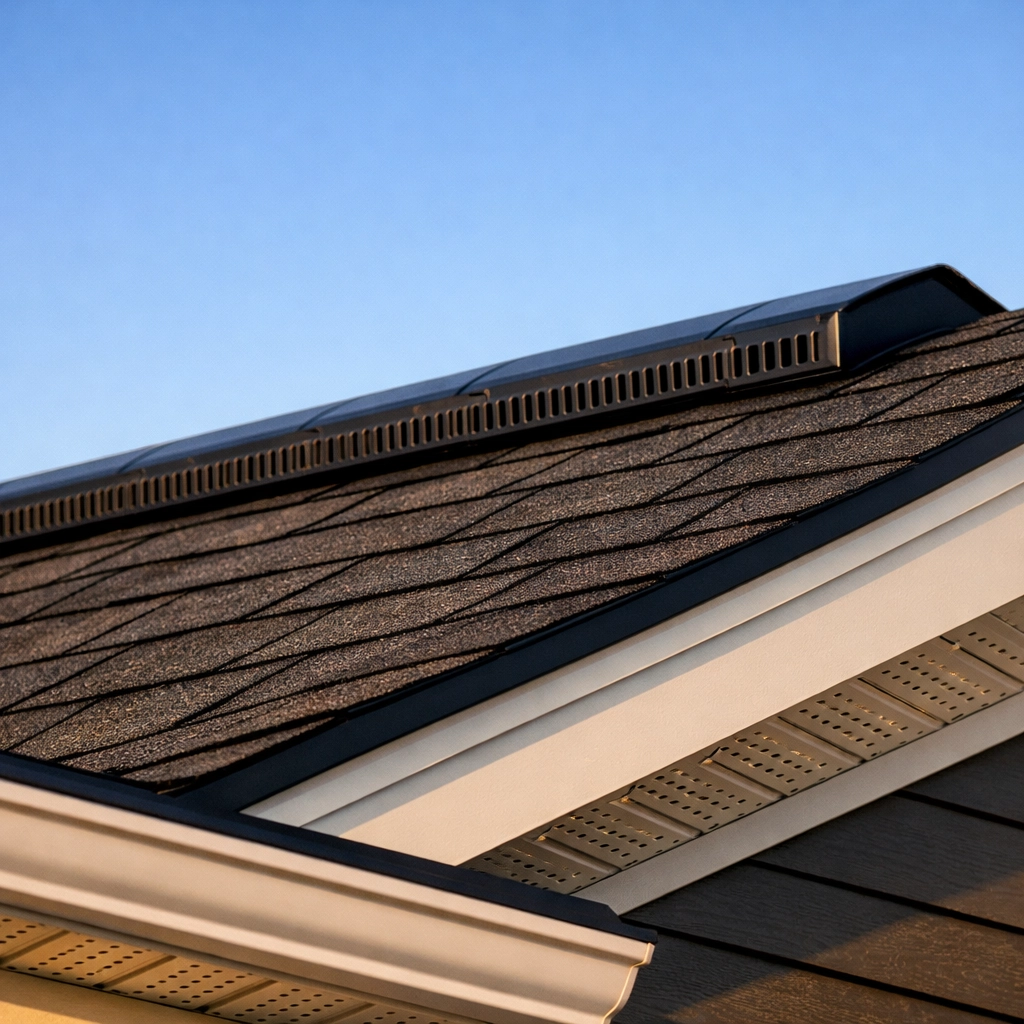
Ridge vents run along the entire peak of your roof. They're the most effective exhaust option for residential homes because they provide continuous ventilation along the hottest part of your attic. They blend seamlessly with your roofline and require minimal maintenance.

Box vents (also called static vents) are passive vents installed near the ridge. While effective, you typically need multiple units to match the coverage of a single ridge vent.

Turbine vents use wind power to spin and actively extract hot air. They're efficient when there's adequate wind but can be noisy and require occasional maintenance to prevent squeaking.

Powered attic fans actively remove hot air using electricity. They're useful for complex rooflines or homes with ventilation challenges, but they add to your energy costs.

Solar attic fans provide the benefits of powered fans without the electricity cost. They're environmentally friendly but depend on adequate sunlight to function properly.

Ridge vents and soffit vents installed on residential roof for proper ventilation

Why Does Roof Ventilation Matter for Stopping Damp?

Moisture is your roof's enemy. Every day, normal household activities: cooking, showering, laundry: generate water vapor that rises into your attic.

Without proper ventilation, this moisture gets trapped. The result? Condensation forms on cold surfaces, timber begins to rot, insulation loses effectiveness, and mold takes hold.

You might see the damage first in your ceiling: water stains, peeling paint, or that unmistakable musty smell. But by the time these signs appear, the problem has often been developing for months.

Proper roof ventilation prevents this by:

  • Allowing moisture-laden air to escape before condensation forms
  • Maintaining consistent temperatures that prevent condensation on cold surfaces
  • Keeping timber dry and structurally sound
  • Protecting your insulation's thermal performance
  • Creating an environment where mold and mildew can't thrive

Request a professional roof survey if you notice any signs of moisture damage. Early detection prevents costly repairs down the line.

How Does Roof Ventilation Save You Money on Energy?

Your attic temperature directly impacts your energy bills: especially during summer months.

Without adequate ventilation, your attic can reach temperatures of 150°F or higher on hot days. This superheated air radiates down through your ceiling, forcing your air conditioning system to work significantly harder to maintain comfortable temperatures.

Proper roof ventilation reduces this heat buildup dramatically. Fresh air entering through intake vents stays cooler than the trapped attic air, while exhaust vents allow the hottest air to escape. This continuous exchange keeps attic temperatures much closer to outdoor temperatures.

The benefits extend beyond summer:

  • Your air conditioning system runs less frequently
  • Your HVAC equipment lasts longer due to reduced strain
  • Your home maintains more consistent temperatures throughout
  • You use less energy overall, reducing monthly utility costs

In winter, ventilation helps prevent ice dams by maintaining consistent attic temperatures. This prevents the freeze-thaw cycle that causes ice to build up along your roof's edge, potentially causing leaks and damage.

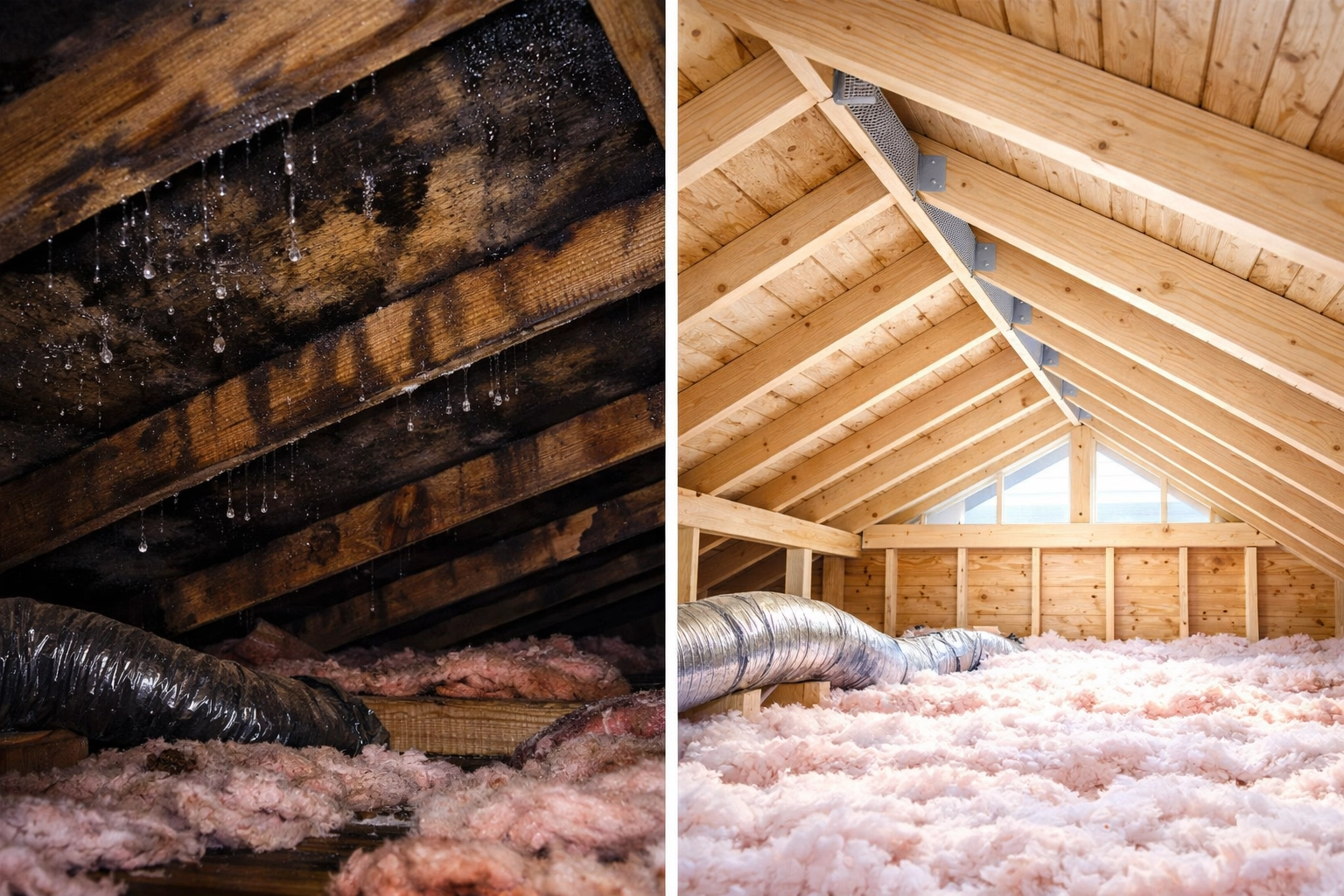
Comparison of poorly ventilated attic with moisture damage vs properly ventilated dry attic

What's the Best Ventilation System for Your Home?

For most residential homes, ridge vents paired with continuous soffit vents provide the most effective ventilation system.

This combination offers several advantages:

Natural airflow: The system works with physics, not against it, creating reliable ventilation without mechanical parts or electricity.

Comprehensive coverage: Ridge vents run the entire length of your roof peak, providing consistent exhaust along the hottest area of your attic.

Low maintenance: With no moving parts, this system requires minimal upkeep once properly installed.

Aesthetic appeal: Ridge vents blend seamlessly with your roofline, maintaining your home's appearance while providing superior ventilation.

Cost-effective: While installation requires professional expertise, the long-term benefits far outweigh the initial investment.

Other ventilation combinations work for specific situations: homes with complex rooflines might benefit from supplemental box vents, while properties with ventilation challenges might need powered fans: but the ridge-and-soffit combination remains the gold standard for reliable roof ventilation.

Is Your Current Ventilation System Working Properly?

Many homeowners don't realize their ventilation is inadequate until problems develop. Call Advanced Construction & Roofing to assess your current system if you're experiencing:

  • Excessive heat in upper-floor rooms during summer
  • Ice dams forming along your roof edge in winter
  • Musty odors in your attic or upper floors
  • Visible moisture, condensation, or frost in your attic
  • Higher-than-expected energy bills
  • Mold or mildew growth in attic spaces

Professional assessment identifies ventilation issues before they cause serious damage. Our experienced team can evaluate your current system, calculate proper ventilation requirements based on your attic size, and recommend solutions tailored to your specific home.

Contact us today for a comprehensive roof survey. We'll provide honest assessment, transparent pricing, and expert installation that protects your home for years to come.

Don't wait for damp damage or energy bills to force your hand. Proper roof ventilation is an investment that pays dividends in comfort, energy savings, and peace of mind.

Visit adv-group.co.uk or call us directly to schedule your roof ventilation assessment. Your roof: and your wallet( will thank you.)

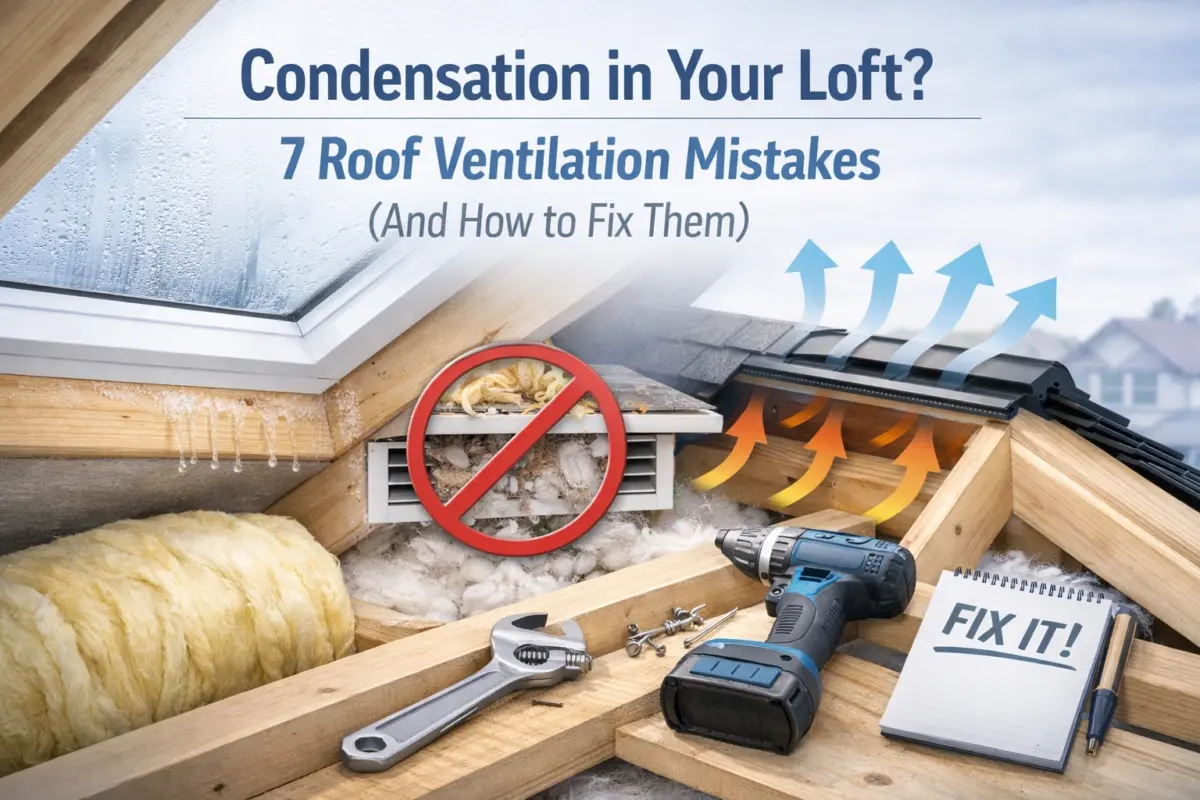
Condensation in Your Loft? 7 Roof Ventilation Mistakes (And How to Fix Them)

Noticed damp patches on your ceiling? Spotted water droplets forming on the underside of your roof? You're likely dealing with loft condensation: and poor roof ventilation is almost always the culprit.

In Northern Ireland's damp climate, condensation problems affect thousands of homes every year. The issue happens when warm, moist air from your living spaces rises into a cold loft space, hitting cold surfaces and turning into water. Left unchecked, this leads to rotting timbers, damaged insulation, mould growth, and expensive repair bills.

The good news? Most loft condensation issues stem from preventable roof ventilation mistakes. Here are the seven most common errors we see at Advanced Construction & Roofing: and exactly how to fix them.

Mistake #1: Insulation Blocking Your Vent Pathways

This is the number one ventilation mistake we encounter.

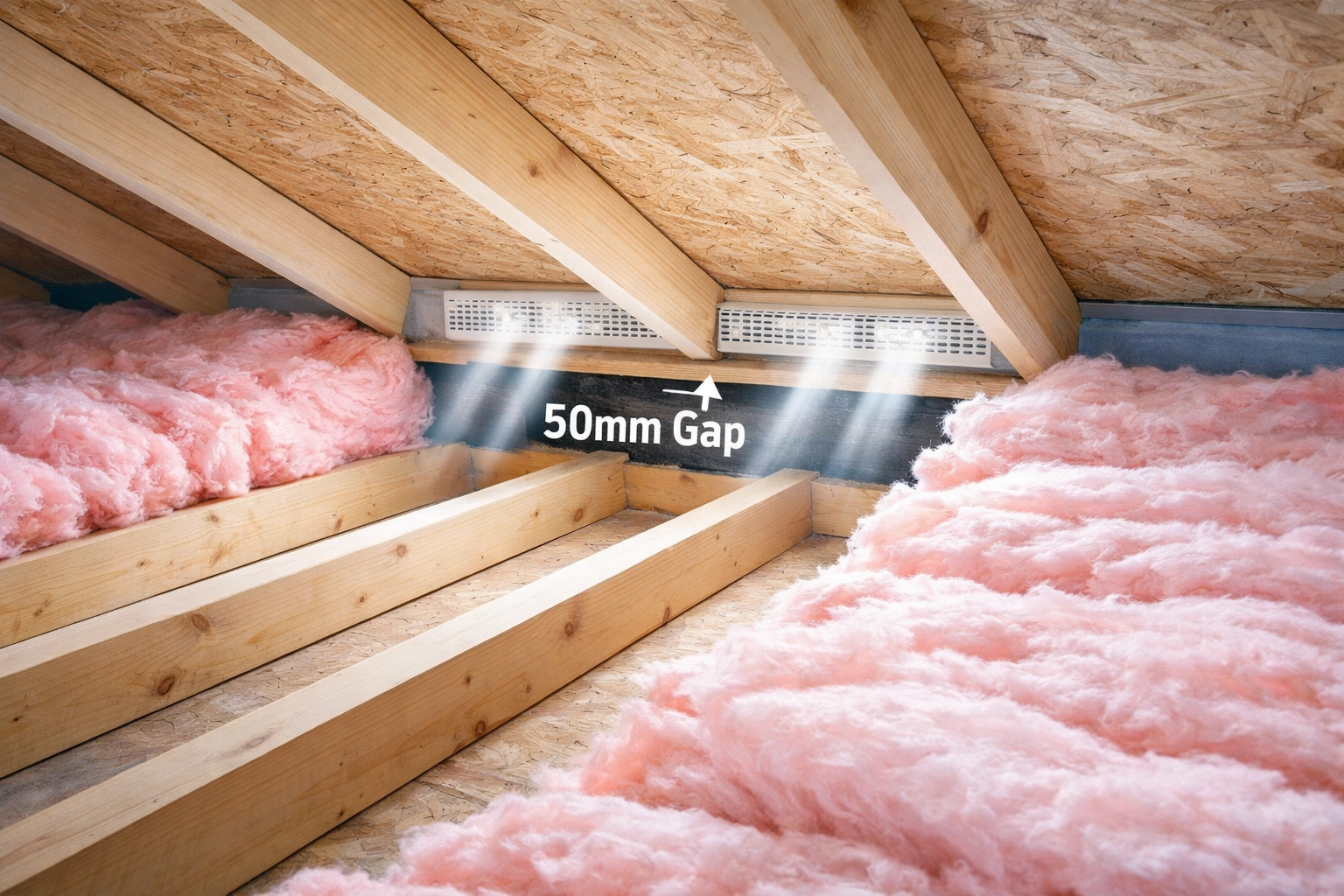
When homeowners add extra loft insulation to save energy (a smart move), they often push it right into the eaves: the corners where your roof meets the loft floor. This blocks the crucial airflow pathway that allows fresh air to enter through soffit vents and circulate through your loft space.

How to Fix It:

Pull back your insulation to create at least a 50mm gap at the eaves. You can install proprietary eaves ventilation trays or simply use cardboard baffles to hold insulation back while maintaining airflow. This simple adjustment restores the circulation your roof ventilation system needs to function properly.

Loft insulation pulled back from eaves creating proper ventilation gap to prevent condensation

Mistake #2: Debris and Items Obstructing Your Vents

Your loft might have perfectly good ventilation: you just can't see it anymore under years of dust, cobwebs, and stored belongings.

Roof vents, soffit vents, ridge vents, and corner vents all become blocked over time. Boxes stacked against walls, Christmas decorations piled in corners, and general dust accumulation prevent air from flowing where it needs to go.

How to Fix It:

Conduct a thorough loft inspection. Clear away stored items from around the perimeter. Use a vacuum to remove dust and debris from visible vents. Check that external soffit vents haven't been painted over or blocked by bird nests. This maintenance takes an hour but can solve years of condensation problems.

Can't access your loft safely? Contact Advanced Construction & Roofing for a professional roof survey. We'll assess your ventilation system and identify any blockages affecting your roof's performance.

Mistake #3: Inadequate Ventilation for Modern Homes

Here's what many homeowners don't realise: your home's ventilation needs have changed.

Older homes were built with ventilation levels suited to draughty windows, uninsulated walls, and naturally leaky building envelopes. When you upgrade to double glazing, add cavity wall insulation, and seal draughts: your home becomes airtight. That's excellent for energy efficiency, but terrible for loft ventilation.

Your once-warm loft space now stays much colder because less heat escapes through walls and windows. The original ventilation, adequate twenty years ago, can't handle the moisture load your household produces today.

How to Fix It:

Add supplementary roof ventilation. Options include:

  • Ridge vents running along your roof peak for continuous airflow
  • Tile vents integrated into your existing roof tiles
  • Gable end vents on properties with suitable wall space
  • Mechanical extraction for severe cases

Advanced Construction & Roofing specialises in assessing ventilation requirements for Northern Ireland homes. We calculate the precise ventilation your property needs based on loft size, insulation levels, and household moisture production.

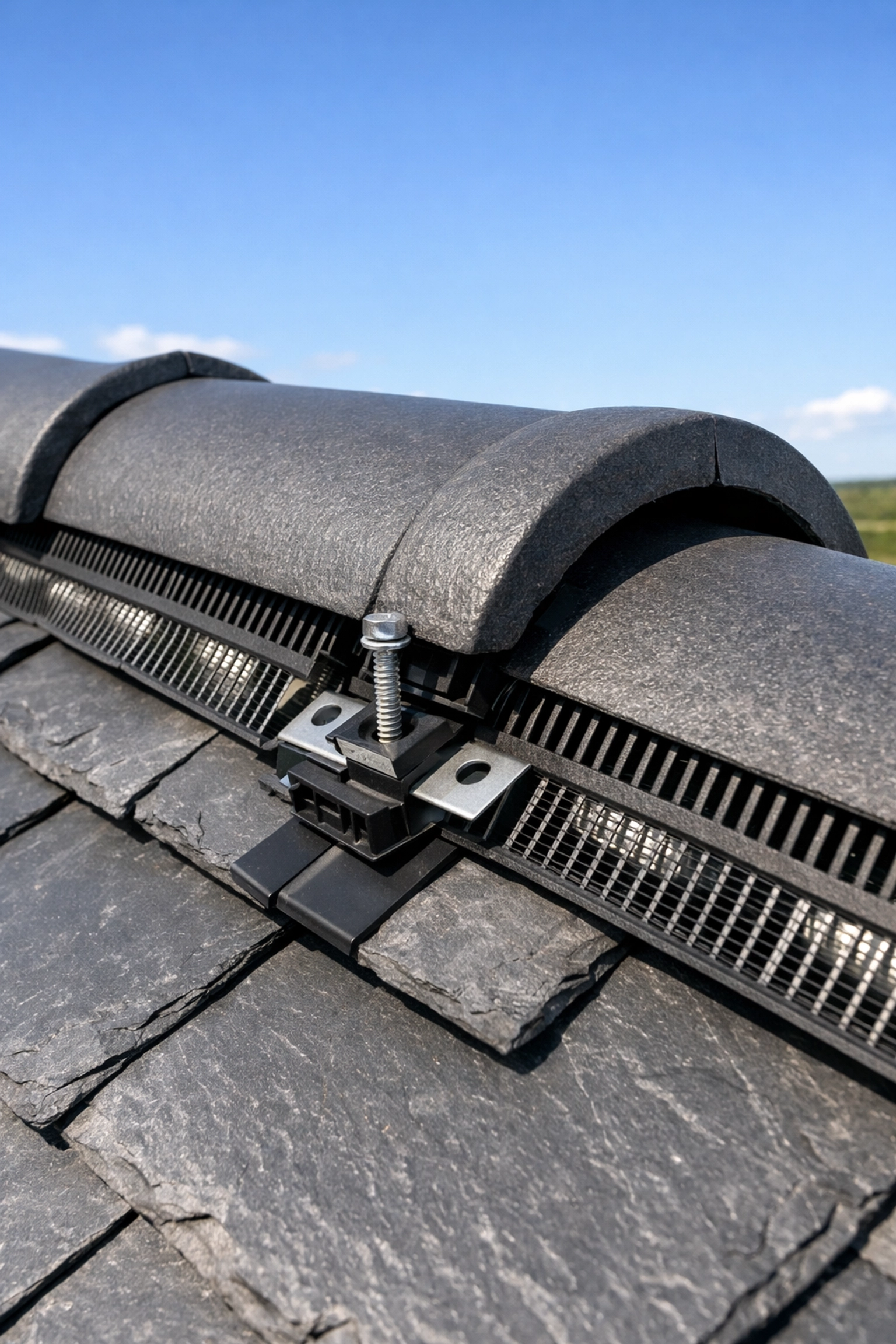
Dry ridge ventilation system installed on slate roof showing mechanical fixings and air channels

Mistake #4: Poor Loft Boarding Installation

Converting your loft into storage space makes practical sense: until it creates condensation problems.

When loft boarding sits directly on top of insulation, it compresses the material and traps warm air beneath it. This makes your loft space colder and more prone to condensation. The trapped moisture has nowhere to go, leading to damp boarding, rotting joists, and damaged stored items.

How to Fix It:

Ensure at least 50mm clearance between the underside of loft boarding and the insulation below. Use loft boarding legs or raised loft flooring systems that create an air gap. This allows air to circulate around and through the insulation while maintaining storage capacity.

If you've already boarded your loft without this clearance, you'll need to lift the boards and retrofit a raised system. It's extra work now, but prevents thousands in damage later.

Mistake #5: Missing or Insufficient Ridge Ventilation

The ridge of your roof: the highest point where two slopes meet: is where warm air naturally accumulates. Without proper ventilation here, that warm air has nowhere to escape.

Many older homes in Northern Ireland have no ridge ventilation whatsoever. Others have ridge tiles with inadequate ventilation gaps that don't provide sufficient airflow for modern insulation standards.

How to Fix It:

Install a continuous ridge ventilation system. Dry ridge systems, which we specialise in at Advanced Construction & Roofing, provide excellent ventilation while protecting against weather penetration. These systems replace traditional mortar ridge tiles with mechanically fixed units featuring built-in ventilation channels.

Dry ridge ventilation offers:

  • Continuous airflow along the entire roof ridge
  • Weather-tight protection against Northern Ireland's driving rain
  • Low maintenance compared to mortar ridge systems
  • Improved roof performance in all weather conditions

Request a roof survey to determine if your ridge ventilation meets current standards.

Mistake #6: Blocked or Absent Soffit Ventilation

Roof ventilation works on a simple principle: cool air enters at the lowest point (soffits), warms as it rises, and exits at the highest point (ridge). Without adequate soffit ventilation, this circulation never starts.

Common soffit problems include:

  • Painted over vents from exterior decorating work
  • Solid soffits with no ventilation installed
  • Undersized vents insufficient for loft volume
  • Bird nests blocking airflow from outside

How to Fix It:

Install continuous soffit vents or upgrade existing ones to larger sizes. For solid soffits, retrofit circular ventilation discs at regular intervals. Ensure you have equivalent ventilation areas at both soffit level (air intake) and ridge level (air exhaust) for balanced airflow.

Calculate 10,000mm² of ventilation per metre run of eaves as a general rule. Your specific requirements depend on roof pitch, loft size, and insulation levels.

Mistake #7: Ignoring Moisture Sources Below the Loft

Even perfect roof ventilation can't overcome excessive moisture generation within your home.

Condensation happens when you produce more moisture than your ventilation system can handle. Common culprits include:

  • Bathroom steam without proper extraction
  • Cooking without extractor fans or open windows
  • Drying laundry indoors without adequate ventilation
  • Gaps around loft hatches allowing moist air to escape upward
  • Recessed light fittings creating pathways for warm air

How to Fix It:

Address moisture at source. Install and actually use kitchen and bathroom extractor fans. Open windows after showering. Dry laundry outside or in a vented utility room. Seal gaps around loft hatches with draught-proofing strip. Fit sealed covers over recessed lights.

For homes with persistent moisture problems, consider a mechanical ventilation with heat recovery (MVHR) system. These systems continuously extract moist air while bringing in filtered, dry air: all while recovering heat energy to maintain comfort and efficiency.

Emergency Roofing Repair

When to Call the Professionals

Some roof ventilation problems require professional assessment and installation. Contact Advanced Construction & Roofing if you're experiencing:

  • Persistent condensation despite clearing blockages
  • Visible mould growth on timbers or insulation
  • Rotting roof timbers or structural concerns
  • Large-scale ventilation upgrades requiring multiple vent types
  • Complex roof configurations where ventilation pathways aren't clear

We provide comprehensive roof surveys across Northern Ireland, identifying ventilation deficiencies and recommending cost-effective solutions. Our team has extensive experience with condensation problems specific to Northern Ireland's climate and housing stock.

Take Action Before Condensation Causes Serious Damage

Loft condensation doesn't fix itself: it gets progressively worse until you address the underlying ventilation problems. Rotting timbers, collapsed insulation, and mould growth all develop silently above your ceiling until visible damage appears below.

The best time to fix ventilation problems was yesterday. The second best time is today.

Check your loft for the seven mistakes outlined above. Clear blockages, pull back insulation from eaves, and ensure air can flow freely from soffit to ridge. For problems beyond DIY solutions, professional help prevents expensive damage down the line.

Advanced Construction & Roofing brings decades of experience solving condensation and roof ventilation challenges across Northern Ireland. We understand the specific problems our climate creates and the solutions that work long-term.

Ready to solve your loft condensation problems? Visit Advanced Construction & Roofing or call us directly for a professional roof survey and ventilation assessment. We'll identify exactly what's causing your condensation and provide practical, cost-effective solutions that protect your home for years to come.

Don't wait until water damage forces emergency repairs. Contact us today and breathe easier knowing your roof ventilation is working exactly as it should.