
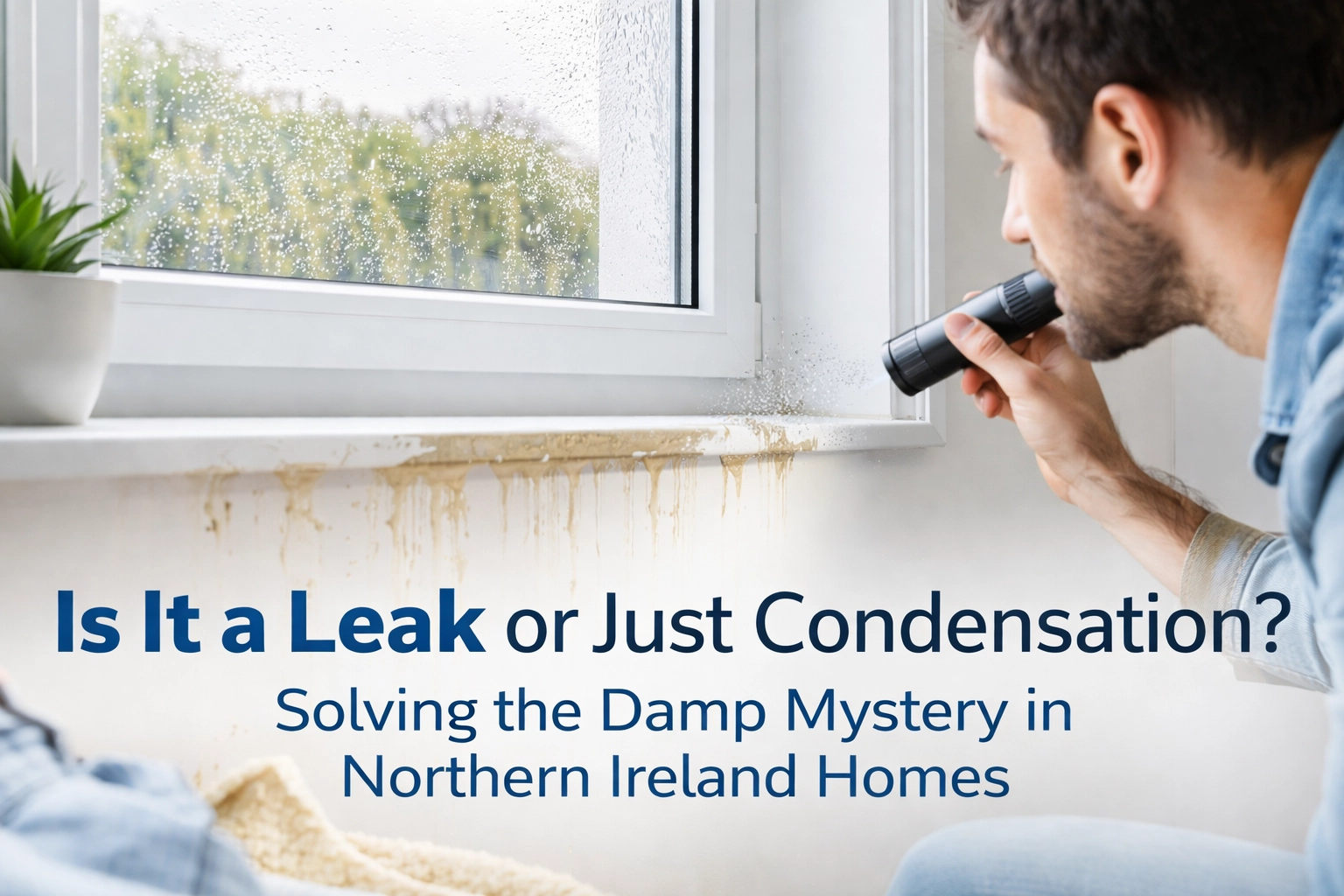

You've spotted it. That dreaded dark patch on your ceiling. Water droplets forming on your bedroom window. Maybe there's even a musty smell creeping into your home.
But here's the million-pound question: Is your roof actually leaking, or is condensation playing tricks on you?
In Northern Ireland, where our high rainfall and humidity create the perfect conditions for damp problems, this confusion costs homeowners thousands of pounds every year. People pay for roof repairs they don't need. Others ignore what they think is "just condensation" until serious water damage sets in.
Let's solve this mystery once and for all.
Why This Confusion Happens So Often in Belfast and Beyond
Northern Ireland's climate is uniquely challenging. We get an average of 150+ rainy days per year, and our coastal humidity levels stay consistently high. This combination means both leaks AND condensation are common problems: and they can look remarkably similar at first glance.
The key difference is simple but crucial:
- Leaks involve water entering from outside through structural defects
- Condensation results from interior moisture that can't escape due to poor ventilation
Getting this diagnosis wrong means wasting money on the wrong solution. Get it right, and you'll fix the problem properly the first time.

How to Identify a Genuine Roof Leak
Roof leaks have telltale signs that set them apart from condensation. Here's what to look for:
Timing matters. Does the damp patch appear or worsen during or immediately after rainfall? This is a strong indicator of a leak. Water entering from outside follows weather patterns.
Location is key. Leaks typically show up in specific, concentrated areas rather than spread evenly across surfaces. Common spots include:
- Directly below chimney stacks
- Around roof valleys where two slopes meet
- Near skylights or roof windows
- Along the edges where the roof meets walls
Check for these external culprits:
- Missing, cracked, or slipped roof tiles
- Damaged flashing around chimneys and vents
- Blocked or broken gutters causing overflow
- Cracked mortar on ridge tiles
- Deteriorating lead work
If you've experienced recent storm damage, the chances of having an actual leak increase significantly. Strong winds can dislodge tiles and create entry points for water that weren't there before. Learn more about handling storm damage properly.
How to Identify Condensation Problems
Condensation behaves very differently from leaks, and recognising these patterns will save you unnecessary repair costs.
It appears on cold surfaces. Condensation forms when warm, moist air meets a cold surface. You'll typically notice it on windows, external walls, and cold corners of rooms: not random spots on ceilings.
It's worse in specific rooms. Kitchens and bathrooms generate the most moisture through cooking and showering. If your damp problems are concentrated in these areas, condensation is likely the cause.
It doesn't follow the weather. Unlike leaks, condensation can occur on dry days. It's often worse during cold spells when the temperature difference between inside and outside is greatest.
Look for these warning signs:
- Water droplets streaming down windows every morning
- Black mould growing in corners and behind furniture
- Musty smells that won't go away
- Damp patches that appear regardless of rainfall
- Peeling wallpaper or bubbling paint on external walls
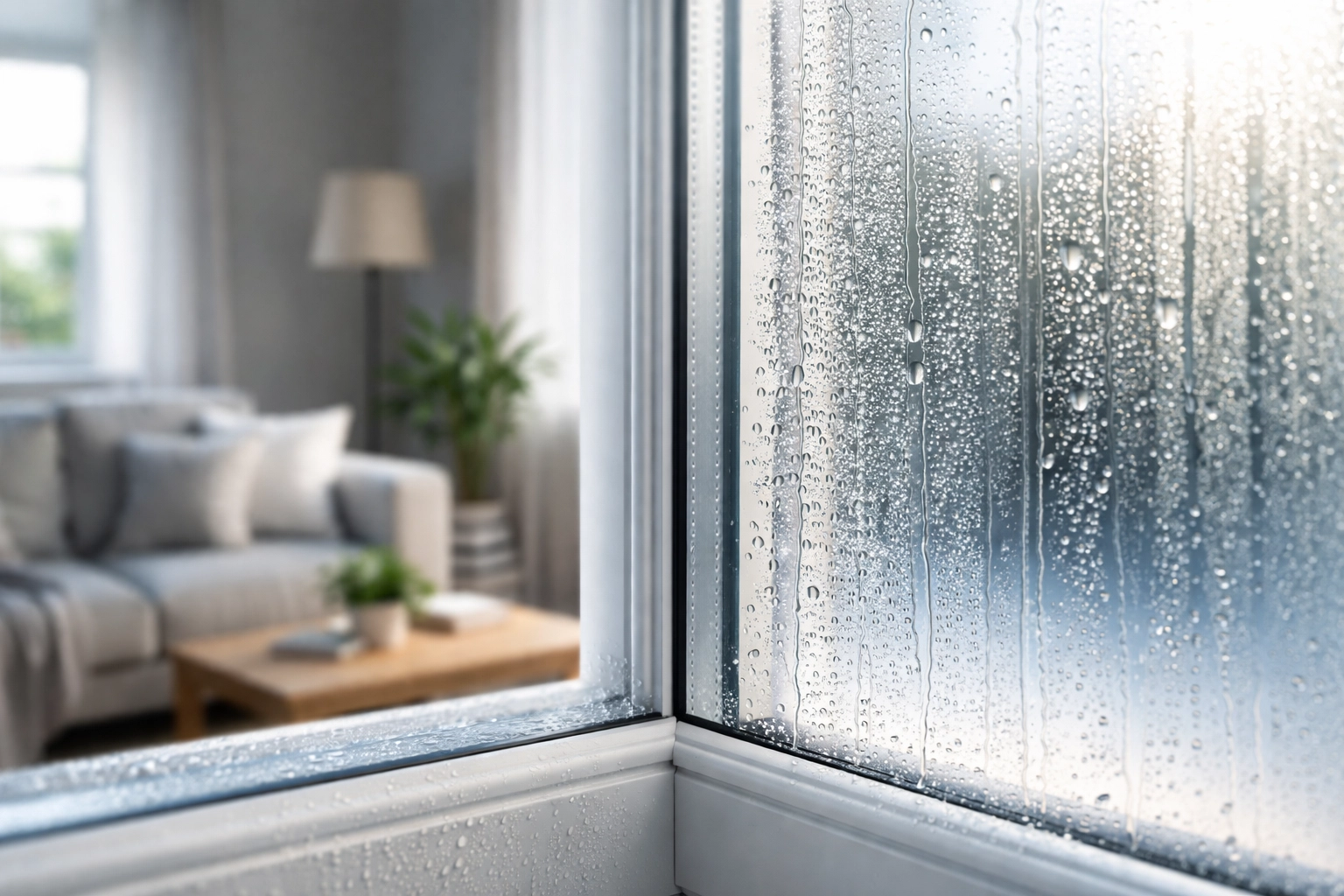
The Hidden Culprit: Modern PVC Windows
Here's something most Northern Ireland homeowners don't realise: your energy-efficient PVC windows might be causing your condensation problems.
Sounds backwards, doesn't it? But it's true.
Older homes were designed with natural ventilation in mind. Draughty windows, gaps around doors, and open fireplaces allowed air to circulate freely. Moisture escaped naturally.
Then we upgraded to double-glazed PVC windows. We blocked up fireplaces. We insulated our walls. Suddenly, our homes became sealed boxes where moisture has nowhere to go.
The result? All that moisture from cooking, showering, drying clothes, and even breathing gets trapped inside. It condenses on the coldest surfaces it can find.
This doesn't mean PVC windows are bad: they're excellent for energy efficiency. But they've changed how our homes need to be ventilated.
Solving Your Condensation Problem
If you've identified condensation as your culprit, here's your action plan:
Improve ventilation immediately:
- Open windows for at least 15 minutes daily, even in winter
- Use extractor fans in kitchens and bathrooms: and make sure they're actually working
- Don't block trickle vents on your windows
- Consider installing roof ventilation if your loft space is affected
Reduce moisture at the source:
- Dry clothes outside when possible, not on radiators
- Keep lids on pans when cooking
- Run the extractor fan during and after showers
- Avoid portable gas or paraffin heaters: they add significant moisture to the air
Address temperature differences:
- Improve insulation on external walls and in your loft
- Keep heating consistent rather than having extreme temperature swings
- Don't let rooms get too cold: aim for at least 15°C in unused rooms
Proper roof ventilation plays a massive role in preventing condensation damage in your loft space. Without adequate airflow, moisture accumulates and causes everything from mould growth to rotting timbers.

When You Actually Have a Leak: What to Do Next
Confirmed you've got a genuine roof leak? Act fast. Water damage cascades quickly, leading to:
- Rotting roof timbers
- Damaged insulation (which then causes condensation problems too)
- Electrical hazards
- Structural issues
Don't make these common mistakes:
Many homeowners try temporary fixes like sealants and patches. These rarely work long-term and can make the problem worse by trapping water in places you can't see. Discover why DIY roof repairs often fail.
Get a professional assessment. A proper roof survey identifies not just the obvious leak, but underlying issues that could cause problems down the line. At Advanced Construction & Roofing, we provide detailed surveys with photo evidence so you know exactly what you're dealing with. Book your roof survey here.
Still Not Sure? Here's Your Next Step
Sometimes the line between leak and condensation isn't clear-cut. You might even have both problems occurring simultaneously: which is more common than you'd think in Northern Ireland's climate.
The safest approach? Get a professional opinion before spending money on solutions that might not address your actual problem.
Our team at Advanced Construction & Roofing has over 30 years of experience diagnosing damp issues in Belfast homes. We'll tell you honestly whether you need roof repairs, ventilation improvements, or both.
Request your roof survey today. Call us or visit our survey page to book an assessment. We'll give you a clear diagnosis, photo evidence of any issues, and straightforward advice on the most cost-effective solution.
Don't let the damp mystery damage your home: or your wallet. Get answers from the experts who know Northern Ireland roofs inside and out.