
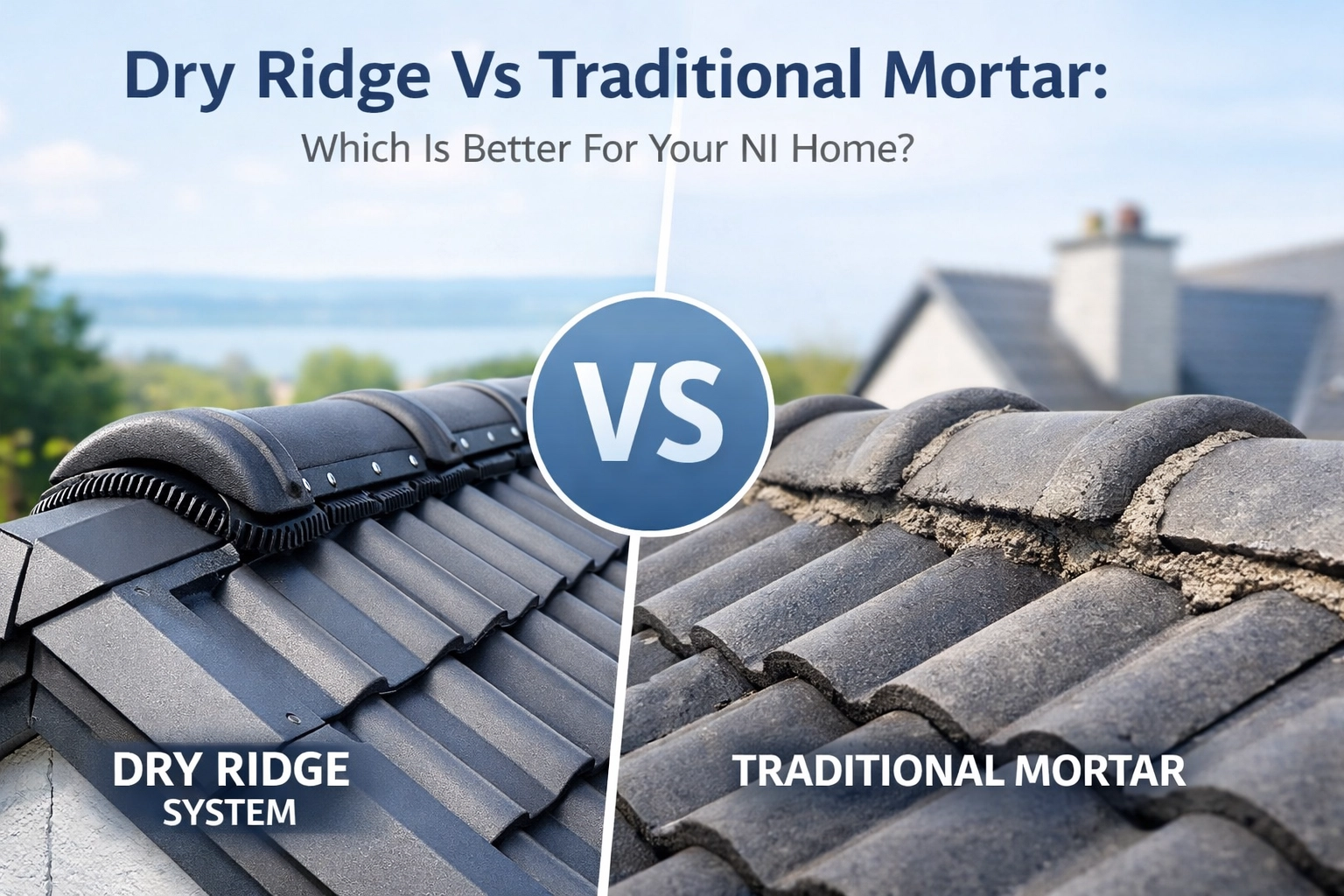

If you've noticed crumbling mortar along your roof ridge, you're not alone. Traditional mortar bedding has been the go-to solution for securing ridge tiles for generations, but here's the reality: it simply doesn't hold up well in Northern Ireland's demanding climate. With constant rain, high winds, and temperature fluctuations, mortar-based ridges crack, crumble, and fail, often within just 5 to 10 years.
Dry ridge systems offer a modern alternative that's transforming how homeowners across Northern Ireland protect their roofs. But which option is actually better for your property? Let's break down the facts so you can make an informed decision.
What Are Dry Ridge Systems?
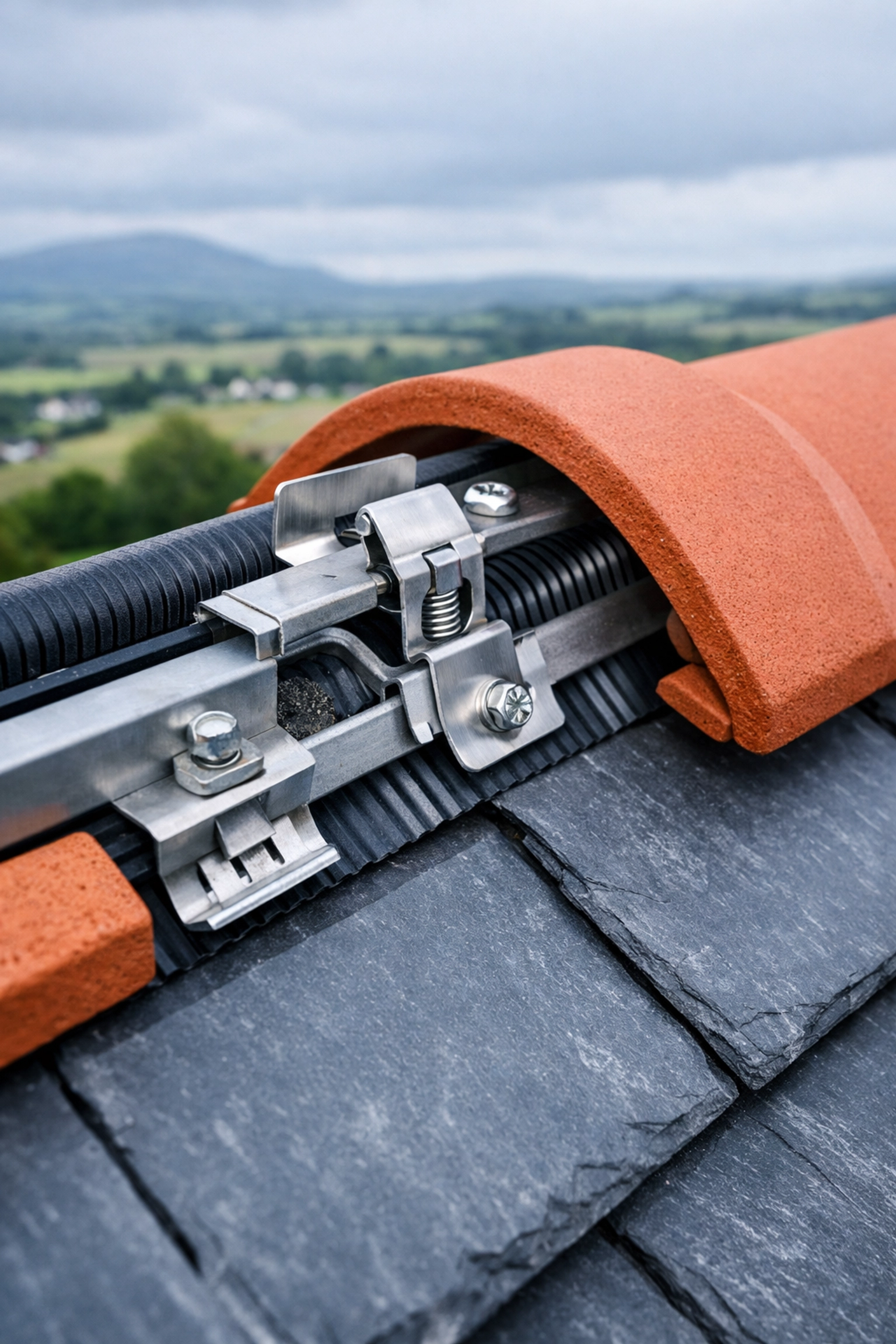
Dry ridge systems represent a mechanical fixing solution that eliminates the need for mortar entirely. Instead of relying on cement to hold ridge tiles in place, these systems use specialized brackets, clips, and screws that secure tiles directly to the roof structure.
The design incorporates interlocking components that create a weatherproof seal while allowing controlled ventilation beneath the ridge. Each tile is individually fastened, creating a robust system that withstands the elements far more effectively than traditional methods.
Current British standards (BS 5534) now mandate mechanical fixings on all new roofing projects, a clear industry recognition that this approach delivers superior long-term protection for your home.
Why Northern Ireland Weather Demands Better Solutions
Northern Ireland's climate is notoriously tough on roofing systems. You know this firsthand if you've lived through our stormy winters and relentless rainfall. Traditional mortar simply wasn't designed to cope with the combination of:
- High winds and storms that regularly batter our coastlines and exposed areas
- Persistent moisture from frequent rainfall that seeps into porous mortar
- Freeze-thaw cycles that expand and contract materials, accelerating deterioration
- Temperature fluctuations that cause thermal expansion and cracking
Dry ridge systems feature mechanical fixings that provide exceptional resistance to these conditions. The screws and clamps don't degrade when exposed to moisture. They don't crack when temperatures drop. They maintain their structural integrity year after year, regardless of what our weather throws at them.
Durability: A Side-by-Side Comparison
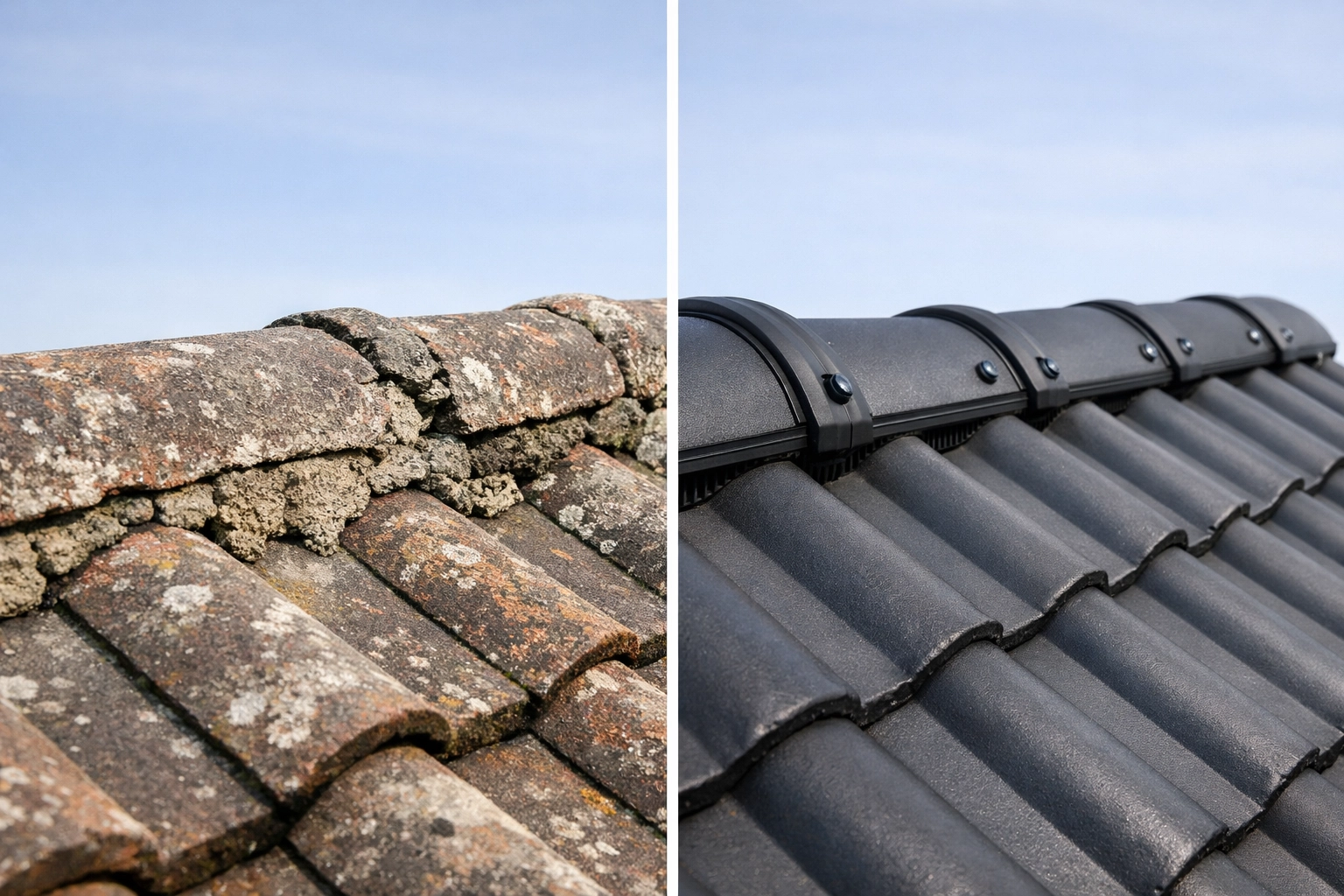
Traditional mortar ridges typically fail within 5 to 10 years in Northern Ireland conditions. You'll notice the telltale signs: cracks appearing along the ridge line, pieces of mortar crumbling away, and eventually tiles becoming loose or displaced.
This deterioration happens because mortar is fundamentally porous. Water penetrates the material, weakens the bonds, and when freezing temperatures arrive, the expansion causes catastrophic cracking. It's not a question of if traditional mortar will fail, it's when.
Dry ridge systems, by contrast, last for decades with minimal degradation. The mechanical components resist corrosion, the materials don't absorb water, and the entire system maintains its structural integrity throughout its lifespan. You're looking at protection that genuinely goes the distance.
Maintenance Requirements: The Hidden Cost Factor
Here's what maintaining a traditional mortar ridge actually involves:
- Waterproofing treatments every other year to slow deterioration
- Regular inspections to identify cracks before they become major problems
- Repairs and repointing when sections fail
- Complete replacement after 7-10 years in many cases
Dry ridge systems are virtually maintenance-free. Once properly installed, they require no waterproofing, no repointing, and no ongoing repairs. You simply leave them alone and they keep doing their job. This translates to significant savings over your roof's lifetime, not just in materials and labor, but in the peace of mind that comes from not worrying about your ridge line.
Installation Time and Cost Analysis
Installation speed matters more than you might think. Traditional mortar installation requires approximately 6 hours per 10 meters of ridge line. The process is labor-intensive: mixing mortar to the correct consistency, carefully bedding each tile, and waiting for proper curing.
Dry ridge systems cut that time to roughly 2.5 hours for the same length. Faster installation means lower labor costs and less disruption to your property. Your roof is weatherproof sooner, reducing the risk of damage from unexpected rain during the work.
Yes, dry ridge systems have higher upfront material costs. But when you factor in:
- Reduced labor expenses from quicker installation
- Elimination of ongoing maintenance costs
- Avoidance of premature replacement expenses
- No waterproofing treatments required
The total cost of ownership makes dry ridge systems significantly more economical over the roof's lifespan. You pay a bit more initially and save substantially in the years that follow.
The Ventilation Advantage
Here's a crucial benefit that often gets overlooked: dry ridge systems provide superior roof ventilation compared to traditional mortar, which creates a sealed ridge that doesn't allow airflow.
Properly designed dry ridge systems incorporate double ventilation channels that allow air circulation beneath the ridge line. This ventilation is critical for preventing:
- Moisture accumulation in your roof space
- Condensation problems that lead to rot and mold
- Structural timber decay from trapped humidity
- Reduced insulation effectiveness from dampness
In Northern Ireland's damp climate, where moisture management is essential for maintaining healthy homes, this ventilation benefit cannot be overstated. Proper airflow protects your entire roof structure, not just the ridge line itself.
When Does Traditional Mortar Make Sense?
Traditional mortar isn't always the wrong choice. If your property falls into specific categories, mortar bedding may be worth considering:
- Listed buildings where maintaining historical accuracy is legally required
- Properties in conservation areas with strict aesthetic guidelines
- Heritage homes where authentic appearance is a priority
Even in these situations, current building standards require mechanical fixings to be incorporated alongside mortar. This hybrid approach addresses the longevity concerns while preserving the traditional appearance.
Contact our team to discuss your specific property requirements. We'll evaluate whether your home qualifies for heritage considerations and recommend the most appropriate solution that balances preservation requirements with practical performance.
Making the Right Choice for Your Home
For the vast majority of Northern Ireland homes, dry ridge systems represent the superior choice. They deliver:
- Decades of reliable performance without deterioration
- Exceptional resistance to our challenging weather conditions
- Maintenance-free operation that saves time and money
- Superior ventilation that protects your roof structure
- Compliance with current building standards
- Cost-effectiveness over the roof's lifespan
The decision becomes even clearer when you consider that mortar-based systems will eventually need replacement anyway. Why invest in a solution that's already proven inadequate for our climate when modern alternatives offer demonstrably better performance?
Get Expert Advice for Your Ridge Replacement
Not sure which system is right for your property? The answer depends on your home's age, architectural style, location, and specific requirements. Our experienced roofing specialists can assess your ridge line and recommend the optimal solution.
Request a professional roof survey to evaluate your current ridge condition and discuss your options. We'll provide honest advice about what your property actually needs: not what generates the highest invoice.
Call Advanced Construction & Roofing today to schedule your consultation. We serve homeowners throughout Northern Ireland with straightforward guidance and quality workmanship you can trust. Your roof deserves protection that actually lasts.
Contact us at Advanced Construction & Roofing to discuss dry ridge systems for your home. We'll explain your options clearly and deliver installations that stand the test of time: and our weather.