
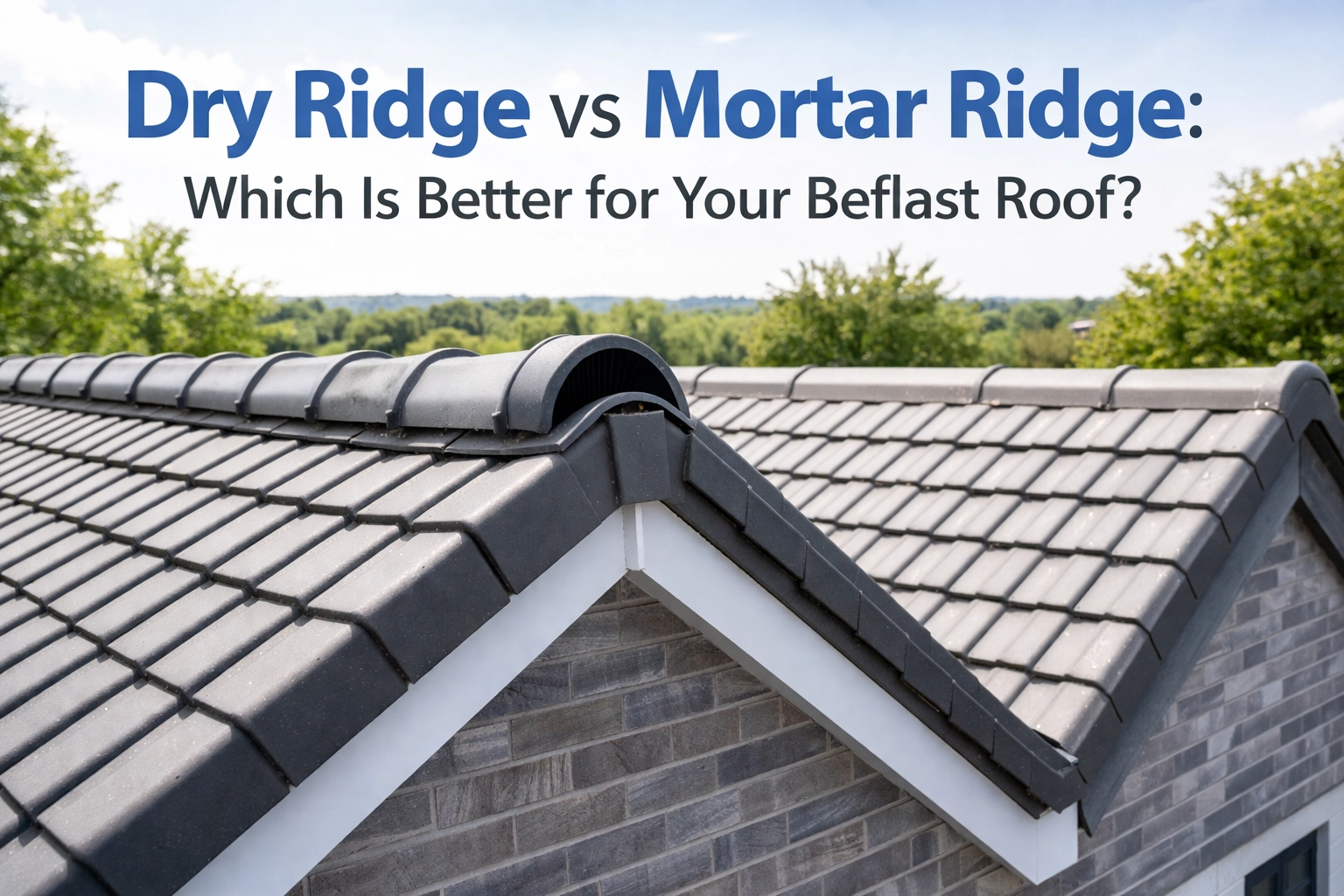

If you've noticed cracked mortar along the top of your roof, loose ridge tiles rattling in the wind, or damp patches appearing in your attic, you're not alone. Thousands of homeowners across Belfast and Northern Ireland face the same problem every year , and the solution often comes down to one critical decision: dry ridge or mortar ridge?
The ridge line is one of the most exposed parts of your entire roof. It takes the full force of Belfast's notorious winds, driving rain, and temperature swings. Get it wrong, and you'll be dealing with water ingress, heat loss, and expensive repairs for years to come.
So which system actually delivers for Northern Ireland homes? Let's break it down.
What Exactly Is a Ridge System?
Before diving into the comparison, let's get clear on what we're talking about. The ridge is the horizontal line running along the peak of your roof where two sloping sides meet. Ridge tiles sit on top of this line, protecting the vulnerable gap underneath from water penetration.
How those tiles are secured makes all the difference. That's where the mortar vs dry ridge debate comes in.
What Is a Mortar Ridge System?
The traditional approach uses a cement-based mortar mixture (sand and cement) to bed and secure ridge tiles in place. This method has been used on Belfast roofs for generations.
How it works: A roofer applies wet mortar along the ridge, then presses each tile into place. Once cured, the mortar creates a solid seal.
The appeal: Mortar ridges offer that classic, sculpted appearance many homeowners associate with traditional properties. The initial material cost is also lower than dry ridge components.
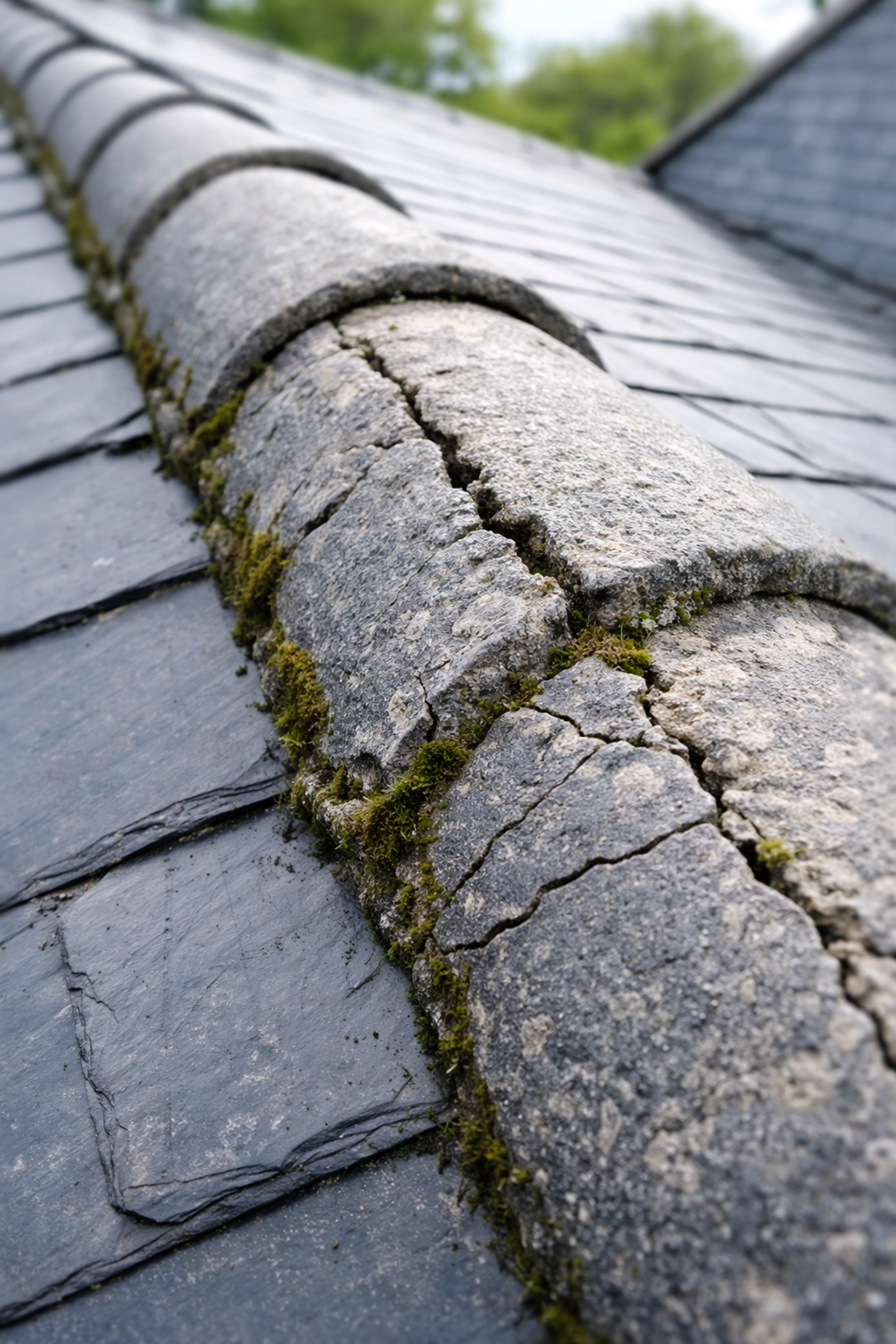
The problem: Mortar doesn't last forever. In fact, in Northern Ireland's climate, it often fails faster than homeowners expect.
What Is a Dry Ridge System?
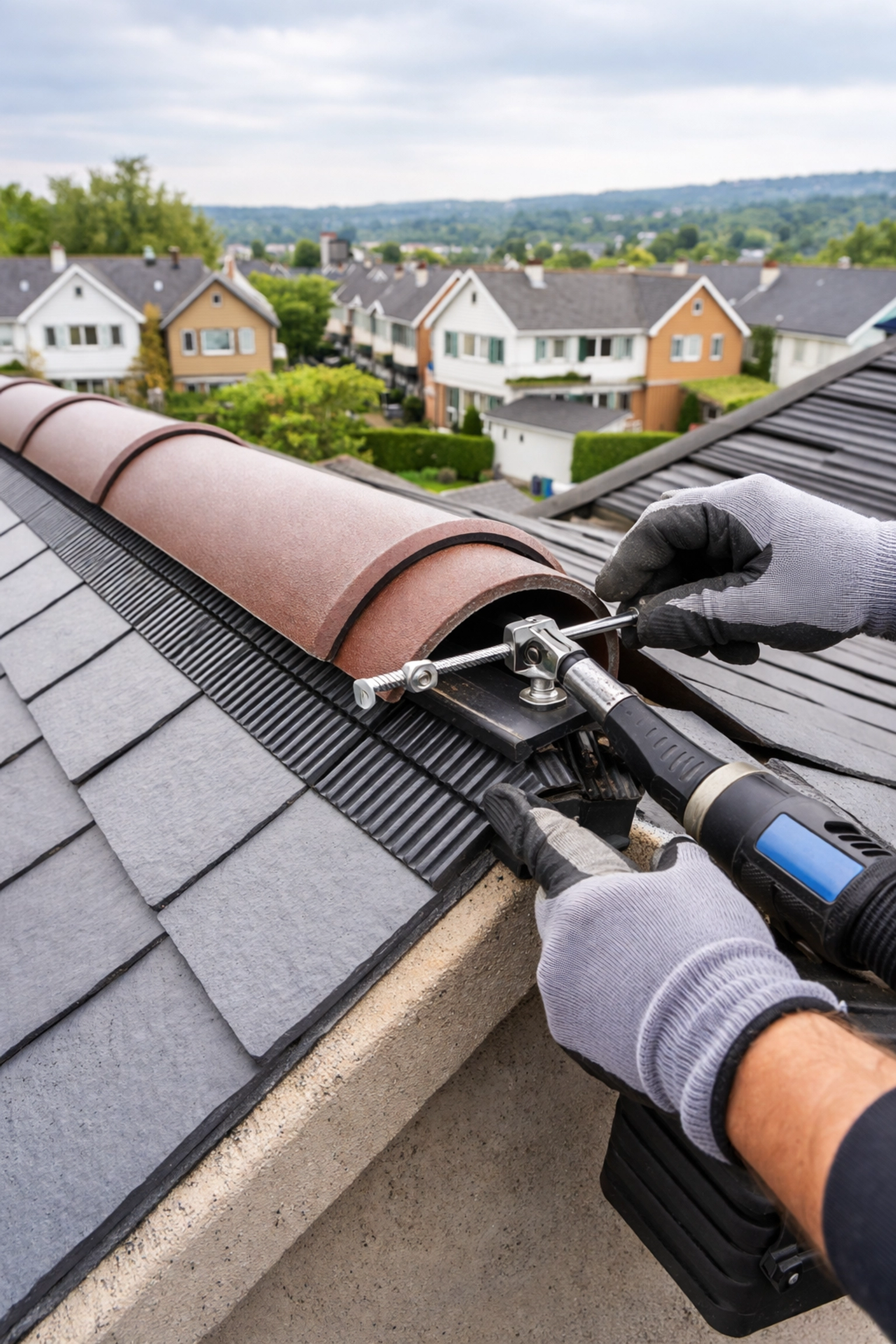
Dry ridge systems take a completely different approach. Instead of mortar, they use mechanical fixings , screws, clamps, and brackets , to secure ridge tiles to the roof structure.
How it works: Each ridge tile is fixed to a ridge batten using stainless steel or aluminium fixings. Waterproof unions sit underneath to channel rainwater away. No mortar required.
The result: A secure, ventilated, low-maintenance ridge line that's built to handle whatever Belfast weather throws at it.
Why Does This Matter for Belfast Roofs?
Here's the reality: Northern Ireland's climate is brutal on traditional mortar ridges.
Our combination of high rainfall, strong coastal winds, and frequent temperature fluctuations creates the perfect conditions for mortar failure. The cement expands and contracts with temperature changes, absorbs moisture, and gradually cracks and crumbles.
Once mortar starts to fail, problems escalate quickly:
- Ridge tiles loosen and shift in high winds
- Water penetrates through cracks and gaps
- Damp and mould develop in your roof space
- Heat escapes through compromised ridge lines
- Repair costs multiply as damage spreads
Sound familiar? If you've been dealing with recurring roof repair issues, a failing mortar ridge could be the root cause.
7 Reasons Dry Ridge Systems Win for Northern Ireland Weather
1. Superior Wind Resistance
This is the big one. Mechanical fixings don't fail in high winds like mortar does. Each tile is physically clamped to the roof structure, making it virtually impossible for wind to dislodge them.
For properties in exposed Belfast locations or along the Northern Ireland coast, this matters enormously. Learn more about why roof wind resistance matters in 2026.
2. Zero Maintenance Required
Once installed, dry ridge systems require no regular upkeep. No repointing. No patching. No annual inspections to check for mortar cracks.
Compare that to mortar ridges, which need monitoring and repairs every few years , especially after harsh winters or storms.
3. Built-In Ventilation
Dry ridge systems are designed to allow air circulation along the ridge line. This prevents moisture accumulation in your roof space, reducing condensation, damp, and mould risks.
Mortar ridges seal the gap completely, trapping moisture inside. Over time, this leads to timber rot and insulation damage.

4. Accommodates Roof Movement
Your roof isn't static. It expands in summer heat, contracts in winter cold, and vibrates during storms. Rigid mortar can't handle this movement , it cracks and separates from the tiles.
Dry ridge fixings are designed to flex slightly, accommodating natural roof movement without compromising the seal.
5. Faster Installation
Dry ridge installation is quicker and less labour-intensive than mortar bedding. There's no waiting for mortar to cure, no weather delays for wet conditions, and no messy clean-up.
For Belfast homeowners, this means less disruption and lower labour costs.
6. Lower Long-Term Costs
Yes, dry ridge materials cost more upfront. But when you factor in reduced labour time, zero maintenance, and decades of reliable performance, dry ridge systems deliver better value over the life of your roof.
Mortar ridges might seem cheaper initially, but ongoing repairs and eventual replacement add up fast.
7. Current British Standards Compliance
Here's something many Belfast homeowners don't realise: current British standards now mandate mechanical fixings on ridges, hips, and verges for new installations. The industry has officially moved toward dry ridge systems because the evidence is clear : they perform better.
When Might Mortar Ridge Still Make Sense?
We believe in giving you honest advice. There are limited situations where mortar ridges might still be appropriate:
- Listed buildings or conservation areas where planning requirements demand traditional materials and methods
- Heritage properties where aesthetic authenticity is the top priority
- Budget-constrained repairs where a short-term fix is genuinely all that's needed
Even in these cases, understand that you're accepting higher maintenance demands and a shorter lifespan. If your mortar ridge fails after storm damage, consider upgrading to dry ridge during repairs.
Dealing with storm damage now? Read our guide on what to know when looking for a roofer after storm damage.
How Do You Know If Your Ridge Needs Attention?
Not sure what state your ridge line is in? Look for these warning signs:
- Visible cracks or gaps in mortar between ridge tiles
- Loose or wobbling tiles along the ridge
- Mortar debris in gutters or around your property
- Damp patches on ceilings or in the attic
- Daylight visible through ridge gaps from inside the roof space
- Increased heating bills suggesting heat loss through the roof
If you spot any of these issues, don't wait for the next storm to cause serious damage. Request a professional roof survey to assess the situation properly.
Why Choose Advanced Construction & Roofing for Your Dry Ridge Installation?
At Advanced Construction & Roofing, we've been installing dry ridge systems across Belfast and Northern Ireland for years. Our team understands exactly how to protect local properties against our challenging climate.
What you get when you work with us:
- Experienced, qualified roofers who specialise in modern ridge systems
- High-quality materials from trusted manufacturers
- Clean, professional installation with minimal disruption
- Transparent pricing with no hidden costs
- Genuine advice : we'll tell you honestly whether dry ridge is right for your property
We've helped homeowners across Belfast, Lisburn, Bangor, Newtownabbey, and throughout Northern Ireland upgrade their ridge lines for lasting protection.

Ready to Upgrade Your Ridge Line?
If your mortar ridge is cracking, crumbling, or causing problems, now is the time to act. Don't wait for water damage to spread or tiles to blow off in the next storm.
Contact Advanced Construction & Roofing today to discuss dry ridge installation for your Belfast property. We'll assess your roof, explain your options clearly, and provide a straightforward quote with no obligation.
Call us or visit adv-group.co.uk to request your free consultation. Protect your roof. Protect your home. Get it done right the first time.