


You've spotted damp patches in your loft. Water stains are spreading across the ceiling. Something's clearly wrong: but what exactly?
Here's the problem: misdiagnosing your loft issue can cost you hundreds of pounds in unnecessary repairs. Treating condensation like a leak means paying for roof work you don't need. Dismissing a leak as "just condensation" allows water damage to destroy your timbers, insulation, and eventually your ceilings.
The good news? There's a simple trick Northern Ireland homeowners can use to diagnose the problem right now: without calling anyone or climbing onto the roof.
The Simple Trick: Check the Weather, Then Check Your Loft
The most reliable way to diagnose your loft problem is timing. Grab your phone, check the weather forecast, and observe your loft on two different types of days.
Day One: During or After Rainfall
Head into your loft during or immediately after heavy rain. Look for:
- Active dripping or water streaming down rafters
- Wet patches that appear suddenly
- Water trails leading from a specific point on the roof
If dampness appears during rain, you likely have a leak.
Day Two: A Cold, Dry Morning
Check your loft on a cold winter morning when there's been no rain for at least 24 hours. Look for:
- Widespread dampness across multiple surfaces
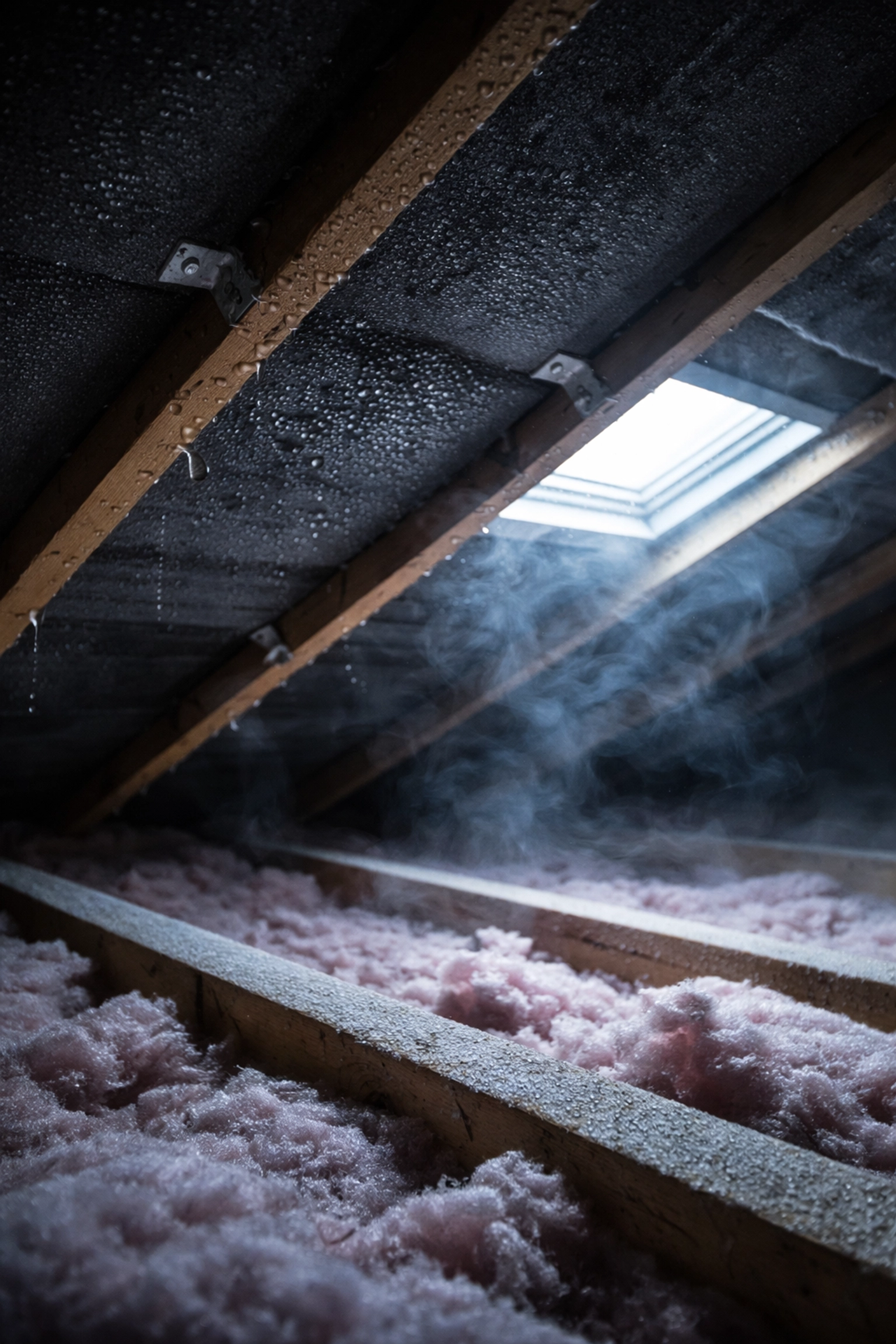
- Water droplets forming on cold surfaces like roof felt or metal fixings
- A general clammy, humid feeling throughout the space
If dampness appears without rain: especially during cold weather: you're dealing with condensation.
This timing trick works because leaks and condensation behave completely differently. Leaks need water to enter from outside. Condensation forms when warm, moist air from your home meets cold surfaces in your loft space.

How to Spot a Roof Leak: The Telltale Signs
Roof leaks leave distinctive evidence. Here's what to look for:
Localised water damage. Leaks create concentrated wet patches rather than widespread dampness. You'll often see water staining in one specific area, not across your entire loft.
Water trails down rafters. Look closely at your roof timbers. Water from a leak typically runs down the underside of rafters, leaving visible streaks or tide marks.
A traceable source. Most leaks originate from damaged slates, cracked flashing, deteriorated vent boots, or failed pointing around chimneys. You can often trace the water back to a specific entry point.
Wet insulation in patches. If your loft insulation is soaking wet in one area but bone dry elsewhere, a leak is almost certainly the culprit.
Timing linked to rainfall. The dampness gets worse during storms and improves during dry spells. This weather correlation is the strongest indicator of a leak.
How to Spot Condensation: The Warning Signs
Condensation problems look and behave differently:
Widespread dampness. Rather than concentrated patches, condensation affects larger areas. You might notice dampness across multiple rafters, on the underside of roof felt, or throughout your insulation.
No obvious entry point. You won't find a hole, crack, or damaged tile causing the problem. The moisture simply accumulates from within.
Worst during cold weather. Condensation issues peak in winter when the temperature difference between your warm home and cold loft is greatest: regardless of rainfall.
Mould growth. Black mould spots appearing on timber, felt, or stored items suggest ongoing condensation problems. Leaks don't typically cause the same pattern of mould growth.
Poor ventilation clues. Check for blocked soffit vents, missing tile vents, or inadequate airflow. If your loft feels stuffy and humid, ventilation is likely the issue.
The Touch Test: A Quick Confirmation
Still unsure? Try the touch test.
Carefully touch the damp area with your hand:
- Truly wet and dripping = likely a leak
- Cold and clammy but not actively wet = likely condensation
This simple test takes seconds and provides immediate feedback about what you're dealing with.
Why Correct Diagnosis Matters: The Cost Difference
Here's where getting this right really pays off. The repair costs for leaks and condensation problems differ dramatically.
Typical Leak Repair Costs
- Replacing a few slipped or broken slates: £80–£200
- Re-pointing ridge tiles: £150–£400
- Flashing repairs around chimneys: £150–£350
- More extensive roof repairs: £500–£2,000+
Leak repairs involve fixing a specific problem: finding the entry point and sealing it. Once done properly, the issue is resolved.
Typical Condensation Solution Costs
- Improving loft ventilation (tile vents, soffit vents): £200–£600
- Installing or upgrading extractor fans: £150–£400
- Adding vapour barriers: £300–£800
- Addressing insulation issues: £200–£1,000+
Condensation problems require improving airflow and reducing moisture entering your loft space. It's about changing conditions rather than fixing a single fault.
The Real Cost of Misdiagnosis
Treat condensation as a leak, and you'll pay a roofer to inspect and potentially repair something that isn't broken. Meanwhile, the condensation continues damaging your timbers.
Treat a leak as condensation, and water keeps entering your roof space. Timber rot sets in. Insulation becomes waterlogged and useless. Eventually, you're facing repairs ten times more expensive than catching the leak early.

What To Do Once You've Diagnosed the Problem
If You Have a Leak
Act quickly. Roof leaks don't fix themselves, and water damage accelerates over time.
- Place containers under active drips to protect your ceiling below
- Move stored items away from wet areas
- Take photos of the damage and any visible entry points
- Call a professional roofer for inspection and repair
Don't attempt roof repairs yourself unless you have proper training and equipment. Working at height is dangerous, and DIY fixes often create bigger problems. If you're unsure about the extent of damage, request a professional roof survey to get a clear picture before committing to repairs.
If You Have Condensation
Improve ventilation and reduce moisture. Start with these steps:
- Check that soffit vents and tile vents aren't blocked
- Ensure bathroom and kitchen extractor fans vent outside: not into the loft
- Keep the loft hatch properly sealed to prevent warm air rising
- Consider adding more ventilation if your loft has inadequate airflow
For persistent condensation problems, a detailed roof survey can identify exactly where ventilation improvements are needed.

When You Need Professional Help
Some situations require expert diagnosis:
- You've done the timing test but results are unclear
- You suspect both a leak AND condensation
- Damage is extensive or affecting structural timbers
- You're buying a property and need certainty
Advanced Construction & Roofing provides comprehensive roof surveys across Belfast and Northern Ireland. We'll identify exactly what's causing your loft problems, provide photographic evidence, and recommend the most cost-effective solution.
Don't guess. Don't pay for repairs you don't need. Get a proper diagnosis first.
Take Action Today
Grab your phone. Check tomorrow's weather forecast. Then check your loft on the right day.
Rainy day = check for leak signs. Cold dry morning = check for condensation.
This simple trick could save you hundreds of pounds and months of unnecessary worry. And if you need professional confirmation or expert repairs, contact Advanced Construction & Roofing for honest advice and transparent pricing.