Storm Damage in Northern Ireland: A Guide to Roof Repairs and Insurance Claims

Northern Ireland weather doesn't mess about. One minute it's calm, the next you've got 60mph winds ripping tiles off roofs across Belfast and beyond. When storm damage hits your home, knowing exactly what to do: and what not to do: can save you thousands of pounds and prevent serious structural problems.

This guide walks you through everything: spotting genuine roofing emergencies, protecting your property immediately, understanding repair costs, and navigating insurance claims without the headaches.

What Actually Counts as a Roofing Emergency?

Not every missing tile means you need to panic, but some situations demand immediate professional attention. Here's what constitutes a genuine emergency:

Major leaks or water ingress top the list. If water is actively pouring into your home during heavy rain, you've got a serious problem. Water soaking through ceilings damages insulation, shorts electrical wiring, and creates the perfect environment for mould growth and structural decay. Act fast.

Storm damage from high winds can rip entire sections of tiles off, dislodge flashing around chimneys, or damage the roof surface itself. Falling branches during storms can puncture straight through your roof covering, leaving your home exposed to the elements.

Collapsed roof sections are rare but represent major emergencies requiring immediate evacuation and professional assessment. Never enter a property with visible roof collapse: the structural integrity is compromised.

Chimney or flashing failure might not sound dramatic, but failed flashing around chimneys or skylights allows significant water penetration. In high winds, loose chimney components become dangerous projectiles.

Here's the key distinction: if tiles blow off but there's no water getting inside, you've got time. The roofing felt underneath should prevent water ingress temporarily. It needs fixing, but it's not a middle-of-the-night emergency.
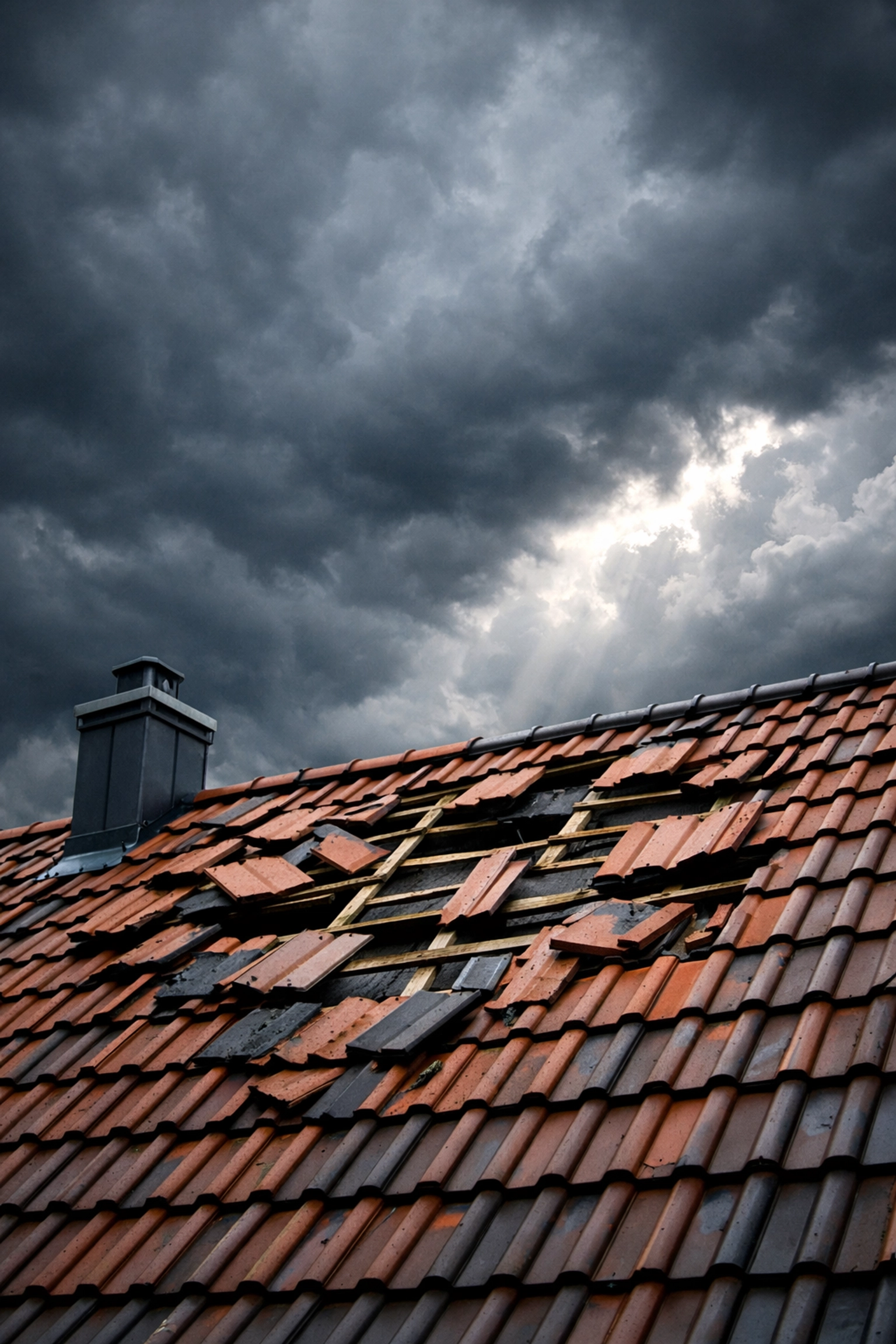
Storm damaged roof with missing tiles and dark clouds in Northern Ireland

What Should You Do Immediately After Storm Damage?

Speed matters when storm damage strikes. Follow these steps to protect your property and stay safe:

Protect your interior first. Place buckets under active leaks, lay down towels to absorb water, and move furniture and valuables away from affected areas. If you have tarpaulin and it's safe to use indoors, cover exposed areas to minimize damage.

Never climb onto your roof. This cannot be stressed enough. Storm-damaged roofs are unstable and dangerous. You're not a professional roofer, you don't have the safety equipment, and one wrong step could mean a serious fall. Leave all inspections to qualified professionals.

While waiting for emergency roofing services, turn off electricity in affected areas: water and electrics don't mix. Avoid entering your attic if there's visible damage to the roof structure above. If you suspect your roof might collapse, evacuate the property immediately and call emergency services.

Some homeowners consider temporary tarping as a stopgap measure. If you're going down this route, you'll need proper tarp, measuring tape, a utility knife, heavy boards, a saw, staple gun, and nails. But here's the critical point: never attempt to tarp your roof during wind, lightning, or rain. These conditions add massive danger. If conditions are that bad, it's already too dangerous for DIY work: call professionals with proper safety equipment.

Emergency Roofing Repair

How Quickly Can Emergency Roofers Respond?

Most established Northern Ireland roofing companies offer 24/7 emergency response services with no callout fees. Response times are typically same-day, depending on your location and current weather conditions. During major storms affecting multiple properties, prioritization goes to the most severe damage.

Emergency repairs can take anywhere from a few hours to a couple of days. Severity and weather conditions dictate the timeline: no reputable roofer will attempt permanent repairs in active rain. That's asking for poor workmanship and further problems.

Some damage requires initial temporary repairs while roofers wait for proper materials or better weather conditions. Designer tiles, slate roofing, or specialist materials may not be immediately available. Fire-damaged roofs, particularly thatched properties, take longer to assess due to safety concerns around structural stability.

Professional emergency roofers will provide a full assessment of visible damage, implement temporary waterproofing where needed, and create a follow-up plan for permanent repairs once conditions allow.

What Do Emergency Roof Repairs Actually Cost?

Repair costs vary based on damage severity, materials needed, and accessibility. Here's what you're realistically looking at in Northern Ireland:

Minor repairs covering single tiles or slates typically run £80–£200. This includes straightforward replacements where the underlying structure remains sound.

Moderate repairs involving several tiles, ridge repairs, or minor flashing work fall in the £200–£600 range. These jobs require more materials and time but don't involve major structural work.

Extensive storm damage requiring significant tile replacement, structural timber repairs, or complete ridge systems can run into thousands. Every property and situation is unique: comprehensive quotes following proper assessment are essential.

Remember that designer tiles or natural slate cost more than standard concrete tiles. Matching existing materials matters for both aesthetics and property value, but it affects pricing.

Most reputable roofing contractors provide transparent, itemized quotes. No hidden fees, no surprise charges. Professional companies stand by their pricing and explain exactly what you're paying for.

Roofer Roof Inspection in Rain

Does Insurance Cover Storm Damage to Roofs?

Most home insurance policies cover storm damage, including fallen trees, wind damage, and emergency roof repairs. Coverage typically includes the cost of repairs and sometimes temporary accommodation if your home becomes uninhabitable.

Here's the catch: policies require you to act quickly to minimize damage. If you spot storm damage and do nothing, allowing rain to pour in for days or weeks, your insurer might argue you didn't take reasonable steps to prevent further damage. Document everything, take photos, and arrange emergency repairs promptly.

Always check your specific policy terms. Some policies have storm damage excess fees, wind speed thresholds, or specific exclusions. Know what you're covered for before you need to make a claim.

Professional roofers experienced in insurance work make the claims process smoother. They provide detailed damage assessments, comprehensive photo evidence, and accurate quotes that insurance companies trust. Many established roofing companies liaise directly with insurers, providing exactly the documentation needed without back-and-forth delays.

When selecting an emergency roofing contractor, ask about their experience with insurance claims. Contractors who regularly work with insurers understand what evidence is required and how to present information for quick approval.

Advanced Construction & Roofing Roof Survey Service

Why Never Attempt Emergency Roof Repairs Yourself

DIY enthusiasm is admirable. Emergency roof repairs are not the time for it.

Climbing onto storm-damaged roofs is extremely dangerous. Structural instability you can't see from ground level can result in catastrophic falls and serious injury. Wet tiles are slippery. Damaged timber underneath may not support your weight. Professional roofers have safety harnesses, proper footwear, and training specifically for working at height.

Bad weather compounds the danger. Attempting repairs during continued storms, high winds, or lightning strikes is asking for tragedy. If conditions are bad enough to cause damage, they're bad enough to make DIY repairs deadly.

Fire-damaged roofs present additional hazards. Hidden structural weakness from heat damage isn't visible until you're on the roof: and by then it's too late.

Professional roofing contractors carry liability insurance, employer's liability coverage, and public liability protection. If something goes wrong during professional repairs, you're protected. If something goes wrong during DIY repairs, you're facing medical bills, property damage, and potential insurance complications.

Choose Experienced Local Roofing Contractors for Storm Damage

When storm damage strikes, choose established local contractors with proven emergency response capabilities. Look for companies offering rapid-response services, transparent pricing, and experience working with insurance companies.

Reputable contractors provide comprehensive damage assessments, implement emergency waterproofing where needed, and create clear plans for permanent repairs. They communicate throughout the process, provide detailed quotes before starting work, and stand behind their workmanship with proper guarantees.

Request references from previous emergency repair work. Ask about response times, professionalism, and quality of completed repairs. Established local companies build reputations on reliability: they can't afford to provide poor service when homeowners need help most.

Storm damage is stressful enough without worrying about whether your roofer will show up or do quality work. Partner with professionals who've proven themselves during Northern Ireland's worst weather, and you'll have one less thing to worry about when the next storm hits.

Contact Advanced Construction & Roofing for emergency storm damage repairs. Our team responds quickly, works professionally, and delivers lasting solutions that protect your home and your investment. Visit our website or call us directly( we're here when you need us most.)
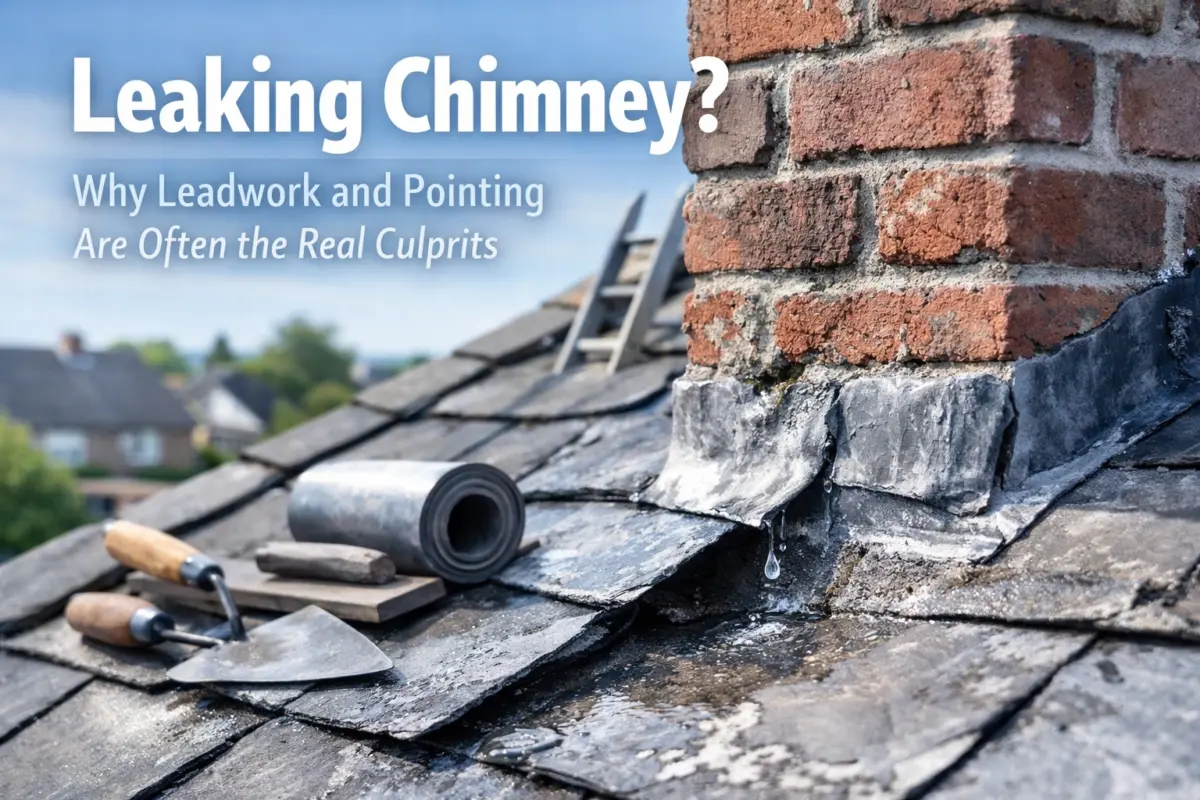
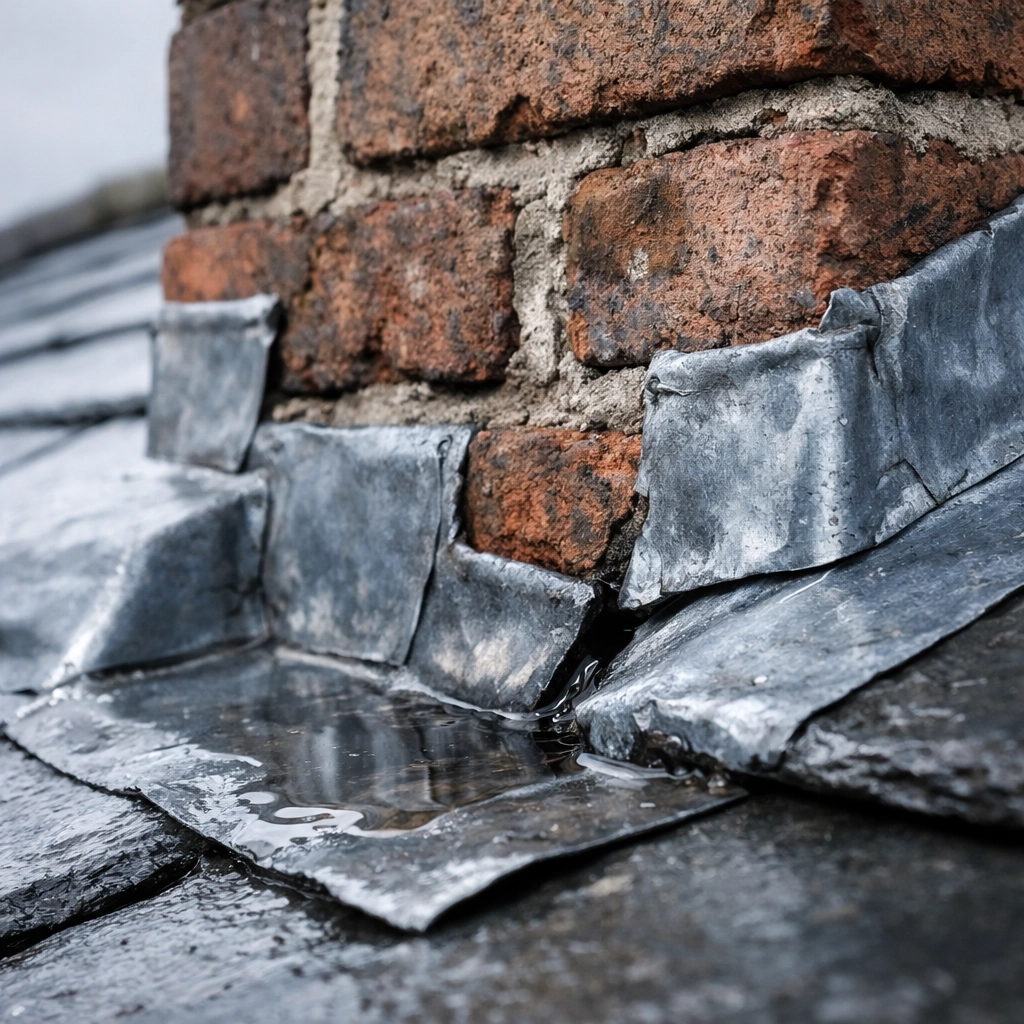
Leaking Chimney? Why Leadwork and Pointing Are Often the Real Culprits

You've noticed the damp patch on your ceiling. Maybe it's a water stain creeping down your bedroom wall, or worse, actual drips coming through during heavy Belfast rain. Your first thought? "The roof must be leaking."

But here's the thing: when water appears near your chimney, the roof tiles are rarely the problem. Nine times out of ten, it's your chimney's leadwork or pointing that's letting water in. And if you don't address these issues properly, that small damp patch will turn into a major headache involving structural damage, mould, and a repair bill that keeps climbing.

Let's break down exactly why your chimney is leaking and what needs fixing.

Why Your Chimney Is the Weak Point in Your Roof

Your chimney penetrates through your roof, creating a natural vulnerability. Think about it, this solid brick structure needs to connect seamlessly with your roof tiles, and that junction needs to be completely watertight despite constant exposure to Northern Ireland's wind and rain.

Two components keep water out at this critical junction:

  • Lead flashing (the metal sheets that bridge the gap between chimney and roof)
  • Mortar pointing (the cement between the chimney bricks)

When either of these fails, water finds its way in. And trust us, water always finds a way.

Damaged lead flashing around brick chimney showing gaps where water enters the roof

The Leadwork Problem: Why Your Flashing Is Failing

Lead flashing has been used around chimneys for centuries because it's durable and flexible. But "durable" doesn't mean "permanent."

Here's what happens to lead flashing over time:

The lead sheets around your chimney are constantly expanding and contracting with temperature changes. In Belfast, we see dramatic temperature swings, scorching summer days followed by freezing winter nights. This thermal movement gradually works the lead loose from where it's embedded in the chimney mortar.

Add in wind uplift during storms, and you've got lead flashing that's slowly pulling away from the chimney face. Once there's even a tiny gap, rainwater drives in behind the flashing and runs straight down into your roof structure.

Poor installation makes it worse. We regularly see DIY jobs or rushed repairs where:

  • Lead flashing isn't dressed properly against the chimney contours
  • Step flashing isn't installed correctly on the chimney sides
  • The lead isn't tucked deep enough into the mortar joints
  • No soakers were installed under the lead (yes, these are still necessary)

You won't see these problems from ground level. The flashing might look fine. But up close, we find gaps, splits, and sections that have completely come loose.

Pointing: The Mortar Problem Everyone Ignores

While you're looking at the flashing, don't forget to look at the chimney bricks themselves.

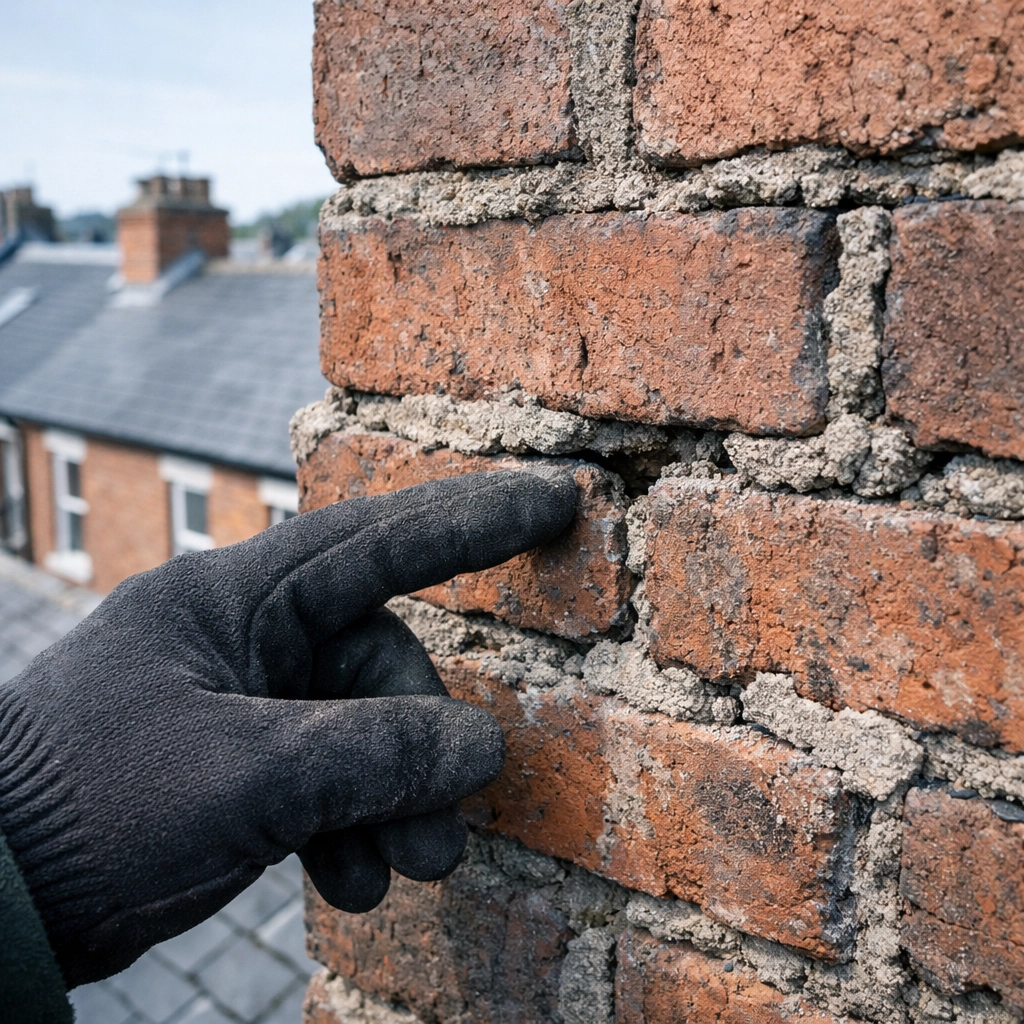
Mortar deteriorates. That's just reality. The cement between your chimney bricks takes a beating from weather exposure, and eventually it starts to crumble. When that happens, you've got cracks and gaps where water can penetrate.

Advanced Construction & Roofing Roof Survey Service

The freeze-thaw cycle accelerates the damage. Water seeps into tiny cracks in the mortar, then temperatures drop below freezing (which happens regularly in Northern Ireland winters), the water expands as it freezes, and the crack gets bigger. Rinse and repeat all winter, and you've got mortar that's literally falling out of the joints.

We see this constantly on older Belfast properties. The original pointing might have lasted 40-50 years, but once it starts failing, the deterioration accelerates quickly.

The worst part? Most homeowners don't realize pointing is failing until water is already coming through. By that point, the damage isn't just in the mortar: it's in the brickwork behind it and possibly in your roof timbers too.

How to Spot the Warning Signs Before Major Damage Occurs

Don't wait for water stains to appear. Here's what to watch for:

Inside your home:

  • Damp patches on walls or ceilings near the chimney
  • Musty smells in rooms adjacent to the chimney breast
  • Wallpaper or paint peeling near the chimney
  • White staining (efflorescence) on interior chimney brickwork

Outside (visible from ground level):

  • Crumbling or missing mortar between chimney bricks
  • White staining or discoloration on exterior chimney brickwork
  • Vegetation growing from mortar joints
  • Bricks that look loose or out of alignment

What you can't see without getting up there:

  • Lead flashing that's pulled away from mortar joints
  • Cracks or splits in the lead itself
  • Missing or damaged soakers under the flashing
  • Deteriorated mortar where the lead is tucked in

This is exactly why professional roof surveys are essential. We get up on the roof, inspect everything up close, and document problems before they become emergencies.

Professional roofer inspecting deteriorating chimney pointing with crumbling mortar joints

Why This Isn't a DIY Job (and Why Quick Fixes Fail)

We get it: you're handy, and you want to save money. But chimney leadwork and repointing require specific skills and knowledge.

Here's what proper leadwork involves:

  • Code 4 or Code 5 lead (the correct thickness for the application)
  • Proper dressing techniques to shape the lead to the chimney profile
  • Correct overlap measurements on step flashings
  • Lead wedges and mortar fillets installed to Code 3 standards
  • Back gutters behind the chimney dressed and installed correctly

And proper repointing isn't just slapping mortar in the gaps:

  • Old mortar must be raked out to the correct depth (usually 15-20mm)
  • The correct mortar mix for the existing brick type
  • Proper technique to ensure good bonding and weatherproofing
  • Finishing that sheds water rather than absorbing it

Get any of this wrong, and you've wasted your time and money. The leak continues, or worse: improper repairs create new problems.

We've seen countless "repairs" that made things worse. Silicone sealant slathered around flashing (it doesn't last and prevents proper drainage). Incorrect mortar mixes that are too hard and crack the bricks. Lead that's too thin and splits within a year.

Professional work comes with guarantees. Our repairs are done right the first time, and we stand behind them.

The Professional Solution: What Proper Repairs Look Like

When we tackle a chimney leak caused by leadwork or pointing issues, here's our process:

Assessment First: We conduct a thorough inspection to identify all problems: not just the obvious ones. Often there are multiple issues that need addressing.

Complete Leadwork Renewal: If your lead flashing is failing, we don't patch it. We remove the old lead, install new Code 4 or Code 5 lead properly dressed and tucked into the chimney, and ensure all step flashings and soakers are correctly positioned.

Professional Repointing: We rake out deteriorated mortar to the proper depth, use the correct mortar mix for your chimney's brick type, and repoint using techniques that ensure weatherproofing and longevity.

Additional Repairs: While we're up there, we check your chimney cap, flaunching (the mortar around the chimney pots), and the overall condition of the chimney stack. It makes no sense to fix the flashing but leave a cracked chimney cap that will cause leaks next winter.

Roofer Roof Inspection in Rain

Documentation: You receive photos of the problems we found and the repairs we completed. This is essential for your records and invaluable if you're dealing with insurance claims.

Don't Wait Until the Damage Spreads

Here's the reality: chimney leaks don't fix themselves, and they always get worse.

That small damp patch you're noticing? It represents water that's already penetrated your roof structure. Every time it rains, more water gets in. Your roof timbers are getting wet. Insulation is becoming saturated. Mould is growing in places you can't see.

The longer you wait, the more extensive (and expensive) the repairs become. What starts as straightforward leadwork replacement and repointing can turn into structural timber repairs, rafter replacement, and interior plastering work.

Get Your Chimney Properly Assessed

If you're seeing any signs of chimney-related water ingress: or if your chimney hasn't been inspected in years: contact Advanced Construction & Roofing for a professional roof survey.

We'll get up on your roof, conduct a thorough inspection of your chimney leadwork and pointing, document any issues with photos, and provide you with a clear explanation of what needs fixing and why.

Our surveys are honest and transparent. We tell you what needs doing now and what can wait. We provide detailed quotes before starting any work. And our repairs are carried out by experienced tradespeople who know Belfast roofs inside and out.

Don't let a leaking chimney damage your home. Call us today on 028 9099 8837 or visit adv-group.co.uk to book your roof survey.

Your chimney leak has a cause: and it has a solution. Let's identify the problem and get it fixed properly, before the next storm hits.

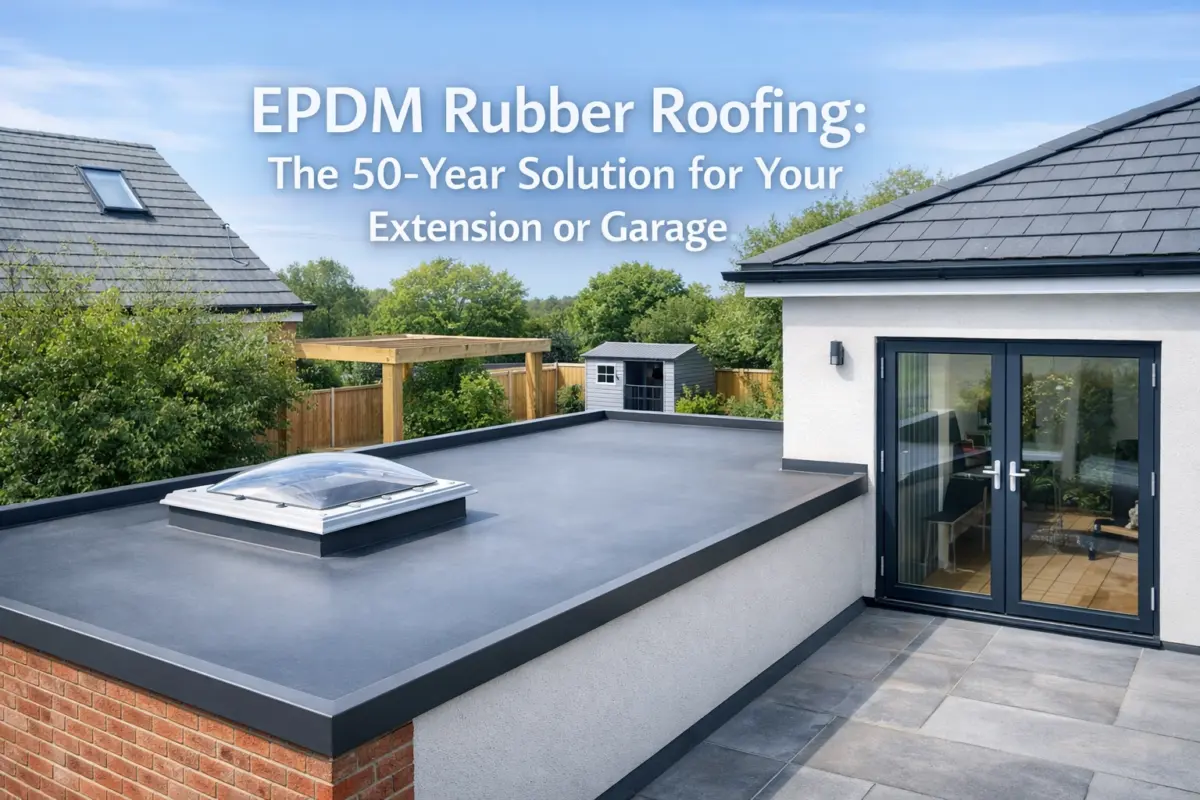
EPDM Rubber Roofing: The 50-Year Solution for Your Extension or Garage

You've invested thousands into that new extension or garage. The walls are up, the windows are fitted, and everything's looking perfect. Then you face the big question: what goes on top?

Your flat roof choice will determine whether you're calling roofers back in 5 years or forgetting about it for the next five decades. That's where EPDM rubber roofing comes in, and why it's become the go-to solution for homeowners across Belfast and Northern Ireland who want a roof that genuinely lasts.

What Exactly Is EPDM Rubber Roofing?

EPDM stands for Ethylene Propylene Diene Monomer (don't worry, there's no test later). What matters is this: it's a synthetic rubber membrane that's been protecting buildings since the 1960s. Some of those original installations are still functioning today, that's 60+ years and counting.

The material is a cross-linked thermoset rubber that can stretch over 300% without permanent deformation. Translation? It moves with your building through Belfast's notorious temperature swings without cracking, splitting, or failing. When properly installed on your extension or garage, it creates a seamless, waterproof barrier that shrugs off everything our weather throws at it.

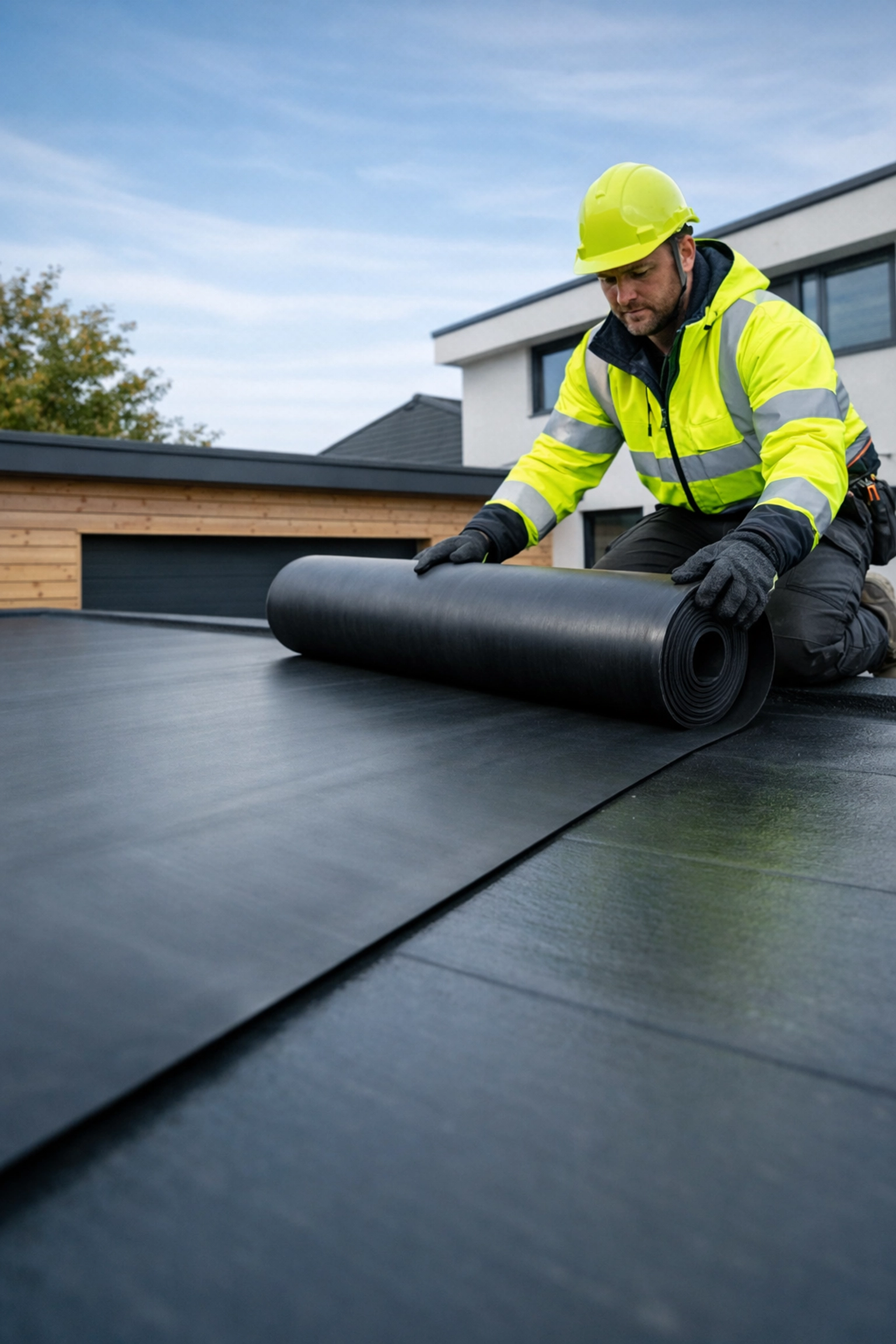
EPDM comes in large sheets, meaning fewer seams and fewer potential weak points. For a typical garage or extension, your entire roof might be covered with just one or two pieces of material.

Why EPDM Realistically Lasts 50+ Years

Let's be honest, not every roofing material lives up to its marketing claims. But EPDM's 50-year lifespan isn't a sales pitch. It's backed by real-world performance and decades of field data.

The material itself is extraordinarily durable. Unlike traditional felt or cheaper alternatives that deteriorate under UV radiation, EPDM rubber is specifically formulated to resist sun damage. The rubber compounds don't break down when exposed to Belfast's mix of rain, occasional sunshine, and everything in between.

Thickness matters significantly. Quality EPDM membranes come in 60 mil thickness or higher (that's about 1.5mm). This isn't just marketing, thicker membranes withstand physical damage, temperature fluctuations, and UV radiation far better than thinner alternatives. When you're looking at quotes, ask about membrane thickness. It's the difference between a roof that lasts 25 years and one that reaches 50.

The installation method determines longevity. A fully-adhered EPDM roof, where the membrane is bonded completely to the substrate, can realistically achieve 40+ years with proper maintenance. Some manufacturers are now offering 50-year warranties on their EPDM systems when installed by certified contractors.

Professional roofer installing EPDM rubber membrane on flat garage roof

Perfect for Extensions and Garages: Here's Why

Low Maintenance Requirements

Your extension or garage roof probably isn't something you want to think about every year. EPDM is ideal for exactly this reason, it requires minimal ongoing attention compared to other flat roofing materials. No annual treatments, no constant patching, no deteriorating felt that needs replacing every decade.

Cost-Effective Performance

The initial investment in EPDM is higher than basic felt roofing, yes. But divide that cost over 50 years instead of replacing cheaper materials every 10-15 years. The mathematics are straightforward: EPDM delivers better value over the roof's lifetime.

Weather Resistance for Northern Ireland

Belfast weather doesn't mess around. Heavy rain, strong winds, temperature swings from -5°C to 25°C throughout the year: your garage or extension roof needs to handle it all. EPDM's flexibility means it expands and contracts without damage. Its seamless installation means there are fewer opportunities for wind-driven rain to find a way through.

Simple, Clean Appearance

Extensions and garages are often visible from your property. EPDM provides a clean, professional finish that doesn't detract from your home's appearance. The material lies flat, doesn't bubble or ripple like some alternatives, and maintains its appearance for decades.

Installation Quality: The Critical Factor

Here's the uncomfortable truth: even the best EPDM membrane won't last 50 years if it's installed poorly.

Proper installation requires:

  • Correct substrate preparation – The deck must be smooth, dry, and properly insulated
  • Fully-adhered application – The membrane bonded completely to the substrate, not just mechanically fastened
  • Professional seam welding – Where multiple sheets join, proper welding creates watertight bonds
  • Appropriate edge detailing – Properly sealed perimeters prevent wind uplift and water ingress
  • Quality flashings and trims – All penetrations and edges sealed with compatible materials

Request a manufacturer-certified installer. These contractors have been trained on proper installation techniques and use approved materials. It's the difference between a roof warranty you can actually claim on and one that's void before you finish reading it.

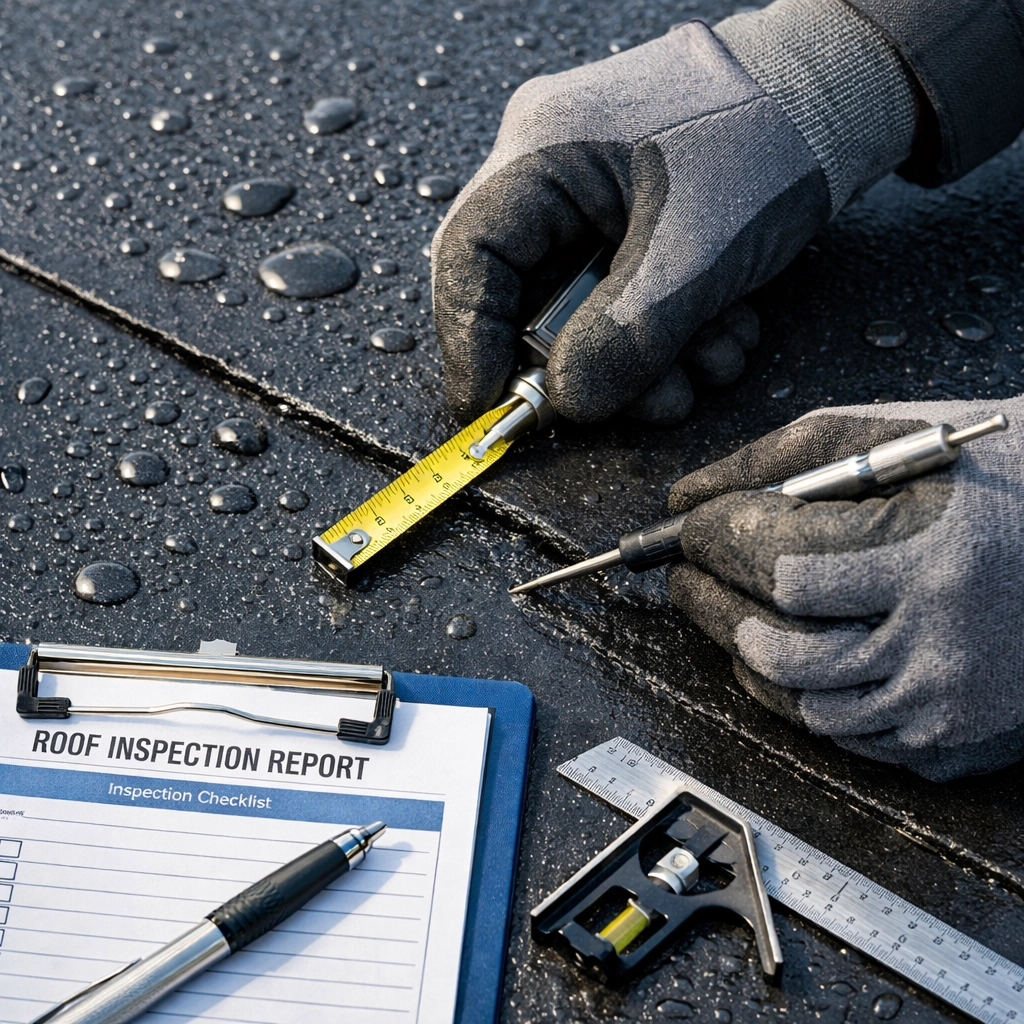
Professional EPDM roof inspection with tools showing waterproof rubber membrane

Maintenance: What Actually Keeps EPDM Going for 50 Years

EPDM is low maintenance, not no maintenance. To reach that 50-year milestone, your roof needs occasional attention:

Annual Inspections

Walk your roof once a year (or have a professional do it). Look for:

  • Debris accumulation around drains
  • Standing water that isn't draining within 48 hours
  • Any physical damage from falling branches or storms
  • Seam integrity, particularly around edges

Clear Drainage Points

Blocked drains create ponding water. While EPDM handles standing water better than most materials, clearing leaves and debris from drainage points takes five minutes and prevents long-term issues.

Prompt Repairs

Spot a puncture or tear? Get it repaired immediately. EPDM repairs are straightforward when caught early but become more complicated when water has penetrated beneath the membrane.

Re-coating Every 10-15 Years

Applying a protective coating every decade extends your EPDM's service life and maintains its UV resistance. This isn't essential, but it's an inexpensive way to add years to an already long-lasting roof.

Use Walkway Pads

If you need to access your garage or extension roof regularly, install walkway pads. These prevent punctures from foot traffic and protect the membrane surface.

When Should You Choose EPDM for Your Project?

EPDM is ideal when:

  • You're building a new extension or garage with a flat or low-pitch roof
  • You're replacing an existing flat roof that's failed
  • You want minimal maintenance requirements
  • You need a roof that handles Northern Ireland's weather extremes
  • You're looking for long-term value rather than the cheapest upfront option
  • Your roof area is relatively straightforward (EPDM excels on simple shapes)

Consider alternatives when:

  • Your roof has numerous complex penetrations or unusual shapes
  • You specifically want a different aesthetic (green roofs, etc.)
  • Your existing structure can't support even EPDM's lightweight profile

The Investment That Protects Your Investment

Your extension or garage represents a significant investment in your property. The roof protecting that investment deserves serious consideration: not just whatever's cheapest or quickest to install.

EPDM rubber roofing delivers proven, long-term performance. It's been protecting buildings for over 60 years, requires minimal ongoing maintenance, and genuinely achieves the 50-year lifespan when properly installed and maintained.

Request quotes from certified EPDM installers. Ask about membrane thickness, installation methods, and warranty coverage. Compare not just the initial cost but the cost-per-year over the roof's expected lifespan.

Your extension or garage deserves a roof that lasts as long as the building beneath it. EPDM rubber roofing provides exactly that: a 50-year solution that actually lives up to the claim.

Ready to Discuss Your Flat Roof Project?

Contact Advanced Construction & Roofing to discuss EPDM rubber roofing for your extension or garage. We provide honest assessments, transparent pricing, and quality installations backed by proper warranties.

Call us today or visit our website to request your free consultation. Let's get your project protected with a roof that's built to last half a century.

Flat Roof Problems? Why Liquid Roofing is the Ultimate Solution for Belfast Homes

If you've got a flat roof on your Belfast home, garage, or extension, you probably already know the headaches that come with it. Pooling water after every rainstorm. Mysterious leaks that appear from nowhere. Cracks that seem to multiply overnight. And that nagging feeling that your roof is on borrowed time.

Here's the truth: traditional flat roofing materials weren't designed for Belfast's brutal weather. But there's a solution that's changing the game for homeowners across Northern Ireland: liquid roofing.

At Advanced Construction & Roofing, we've installed liquid roofing systems on hundreds of Belfast properties, and the results speak for themselves. Let's dive into why your flat roof keeps failing and how liquid roofing fixes these problems for good.

The Flat Roof Problem: Why Belfast Homes Struggle

Flat roofs in Belfast face a perfect storm of challenges. Our climate is relentless: constant rain, high humidity, temperature swings, and those infamous winter freeze-thaw cycles that tear roofing materials apart.

Most flat roofs only last 10 to 15 years before they need replacing. That's significantly shorter than pitched roofs, which can last 30 years or more. Why the difference? Because flat roofs work harder and take more punishment.

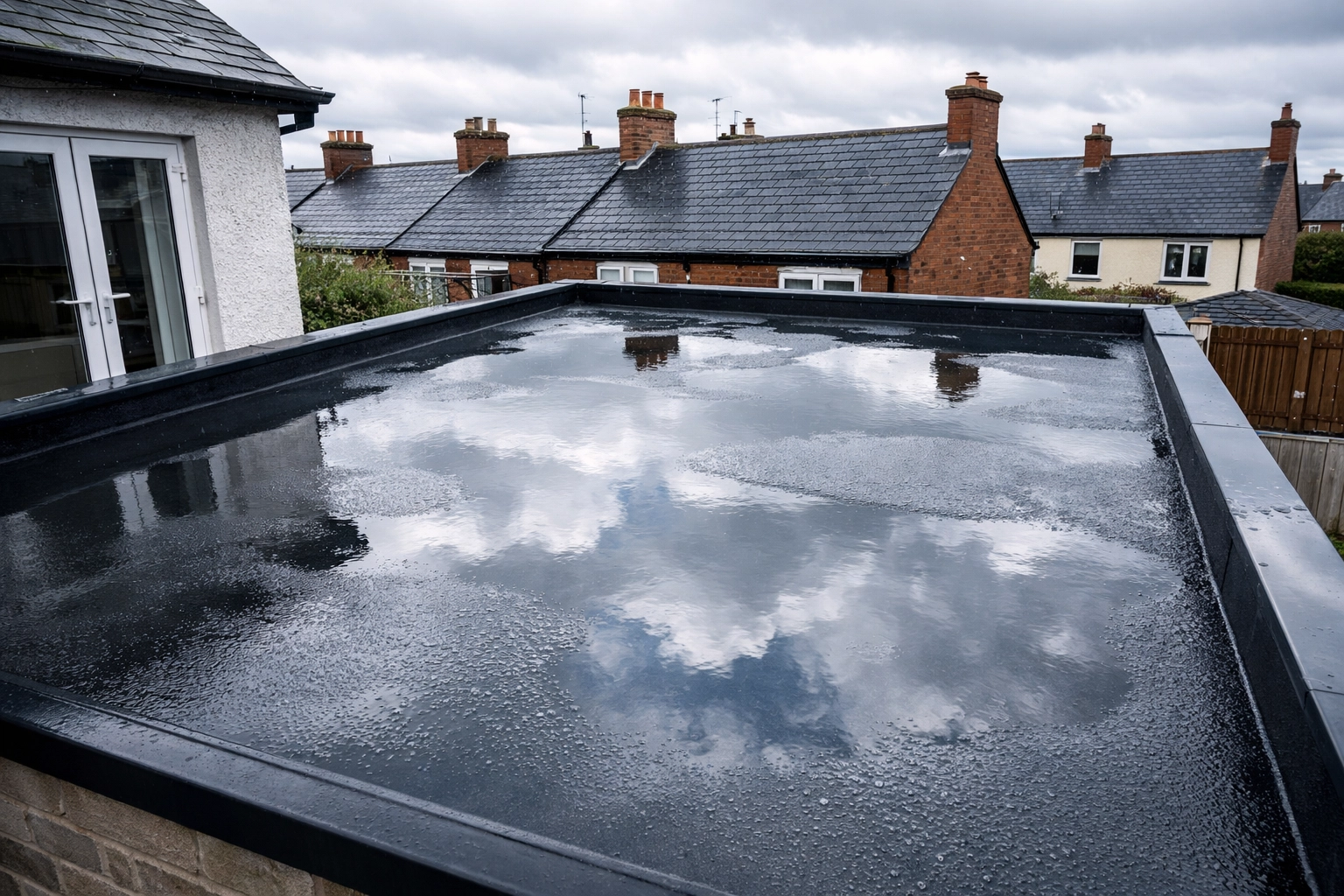
Ponding water pooling on flat roof in Belfast showing common drainage problems

The main culprits behind flat roof failure include:

Ponding Water: Unlike pitched roofs, flat roofs can't shed water quickly. Even slight depressions in the surface create pools that sit for days after rainfall. This constant exposure breaks down roofing materials and finds its way through even the smallest weakness.

Membrane Damage: Traditional felt and bitumen roofs develop cracks and splits over time. UV exposure, temperature changes, and physical stress all contribute to deterioration. Once the membrane is compromised, water infiltration is inevitable.

Seam Failures: Most flat roofing systems rely on seams: joints where different sheets meet. These are always the weakest points. Over time, adhesives fail, seams separate, and water finds these gaps like a homing beacon.

Poor Drainage: If water can't drain properly, it accelerates every other problem. Blocked outlets, insufficient falls, and sagging areas all contribute to drainage issues that doom even new roofs.

What Actually Is Liquid Roofing?

Liquid roofing (also called liquid applied waterproofing) is exactly what it sounds like: a roofing system applied as a liquid that cures into a seamless, flexible, waterproof membrane.

Think of it like creating a second skin over your existing roof. The liquid material is rolled or sprayed onto the surface, flows into every corner and detail, and transforms into a fully bonded, elastic coating that moves with your roof structure.

The key difference from traditional roofing? No seams. No joints. No weak points.

Modern liquid roofing systems use advanced polymers and resins that create a chemical bond with the substrate. Once cured, you have a single, continuous waterproof layer that's incredibly tough yet flexible enough to handle building movement and temperature changes.

Why Liquid Roofing Works Brilliantly for Belfast Homes

Belfast's weather demands roofing solutions that can handle constant moisture, temperature fluctuations, and years of exposure without failing. Liquid roofing meets these demands in ways traditional materials simply can't match.

Emergency Roofing Repair

Seamless Protection Against Belfast Rain

The biggest advantage of liquid roofing is its seamless application. There are no joins, no overlaps, and no vulnerable points where water can penetrate. This is crucial in Belfast where horizontal rain and persistent drizzle can find every weakness in traditional roofing systems.

The liquid conforms perfectly to your roof's surface, creating a complete waterproof barrier across every detail: upstands, outlets, vents, and pipes. Areas that would normally require complex flashing work are simply coated as part of the continuous membrane.

Handles Temperature Swings Without Cracking

Belfast temperatures can swing from below freezing in winter to surprisingly warm summer days. Traditional felt and bitumen roofs expand and contract with these changes, leading to cracking and splitting over time.

Liquid roofing systems remain flexible across a huge temperature range. The elastic properties of modern liquid membranes allow them to move with the building without tearing or cracking. This flexibility is especially important for extensions and garages that may not have the same structural stability as your main house.

Quick Installation With Minimal Disruption

Most liquid roofing installations can be completed in one to three days, depending on size and complexity. The system can often be applied directly over existing roofing materials, which means no messy tear-off, no skip hire, and significantly less disruption to your daily life.

For Belfast homeowners, this speed is valuable. Weather windows can be short, and you need a roofing solution that can be installed quickly and reliably between rain showers.

Proven Longevity and Durability

Quality liquid roofing systems come with guarantees of 20 to 25 years or more: nearly double the lifespan of traditional felt roofing. The UV-stable formulations resist degradation from sunlight, while their chemical resistance handles everything Belfast's atmosphere can throw at them.

The seamless nature means there are no seams to fail, no torch-on joints to separate, and no adhesive bonds to weaken over time. What you're left with is a roof that genuinely lasts.

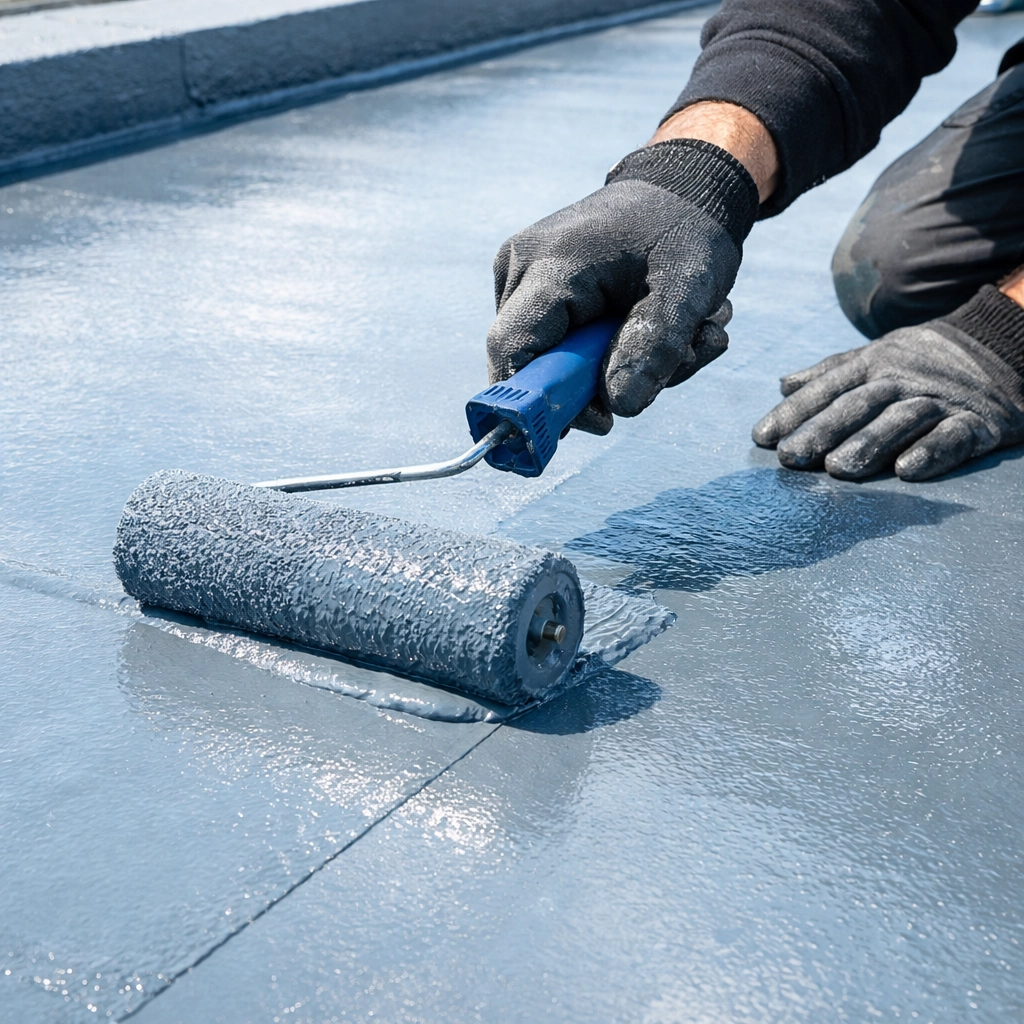
Professional application of liquid roofing membrane onto flat roof surface

The Real-World Benefits for Your Property

Beyond solving immediate leak problems, liquid roofing delivers tangible benefits that affect your property value and peace of mind.

Stop Repeat Repairs: How many times have you patched your flat roof only to have new leaks appear elsewhere? Liquid roofing eliminates the patch-and-pray cycle. Once installed, you have complete protection that doesn't develop new weak points.

Protect Your Interior: Water damage doesn't just affect your roof: it ruins ceilings, damages insulation, promotes mould growth, and can even affect structural timbers. A proper liquid roofing system stops these problems before they start, protecting your investment and your family's health.

Improve Energy Efficiency: Modern liquid roofing systems reflect heat rather than absorbing it, which can reduce summer cooling costs. The seamless application also eliminates air gaps that compromise insulation performance.

Increase Property Value: A professionally installed liquid roofing system with a long guarantee is a genuine selling point. Potential buyers recognize the value of a roof that won't need attention for decades.

Reduce Maintenance Hassles: Unlike traditional flat roofs that need regular inspection and maintenance, liquid roofing systems are essentially maintenance-free. The smooth, seamless surface doesn't trap debris and doesn't develop the typical weak points that require attention.

Is Liquid Roofing Right for Your Belfast Property?

Liquid roofing works exceptionally well for:

  • Flat roof extensions and conservatories
  • Garage roofs showing signs of deterioration
  • Commercial flat roofs requiring minimal disruption
  • Dormer windows and complex roof details
  • Any flat or low-pitch roof experiencing recurring problems

The system works on most existing substrates including felt, asphalt, concrete, timber, and metal. If you're facing replacement costs for a traditional roof, liquid roofing often provides a superior solution at a comparable or even lower price.

Roofer Roof Inspection in Rain

Get Expert Liquid Roofing Installation in Belfast

At Advanced Construction & Roofing, we've seen firsthand how liquid roofing transforms problem flat roofs into reliable, long-lasting protection. We use only premium liquid roofing systems backed by manufacturer guarantees, and our installation team is fully trained and certified.

Don't wait for your flat roof problems to escalate into serious water damage. If you're dealing with leaks, ponding water, or a roof that's reaching the end of its lifespan, liquid roofing could be the permanent solution you need.

Contact Advanced Construction & Roofing today for a free assessment of your flat roof. We'll evaluate your specific situation, explain your options clearly, and provide an honest quote with no pressure or hidden costs. Call us or visit our website to request your consultation.

Your flat roof problems deserve a solution that actually works. Let's make sure you never have to worry about leaks again.