
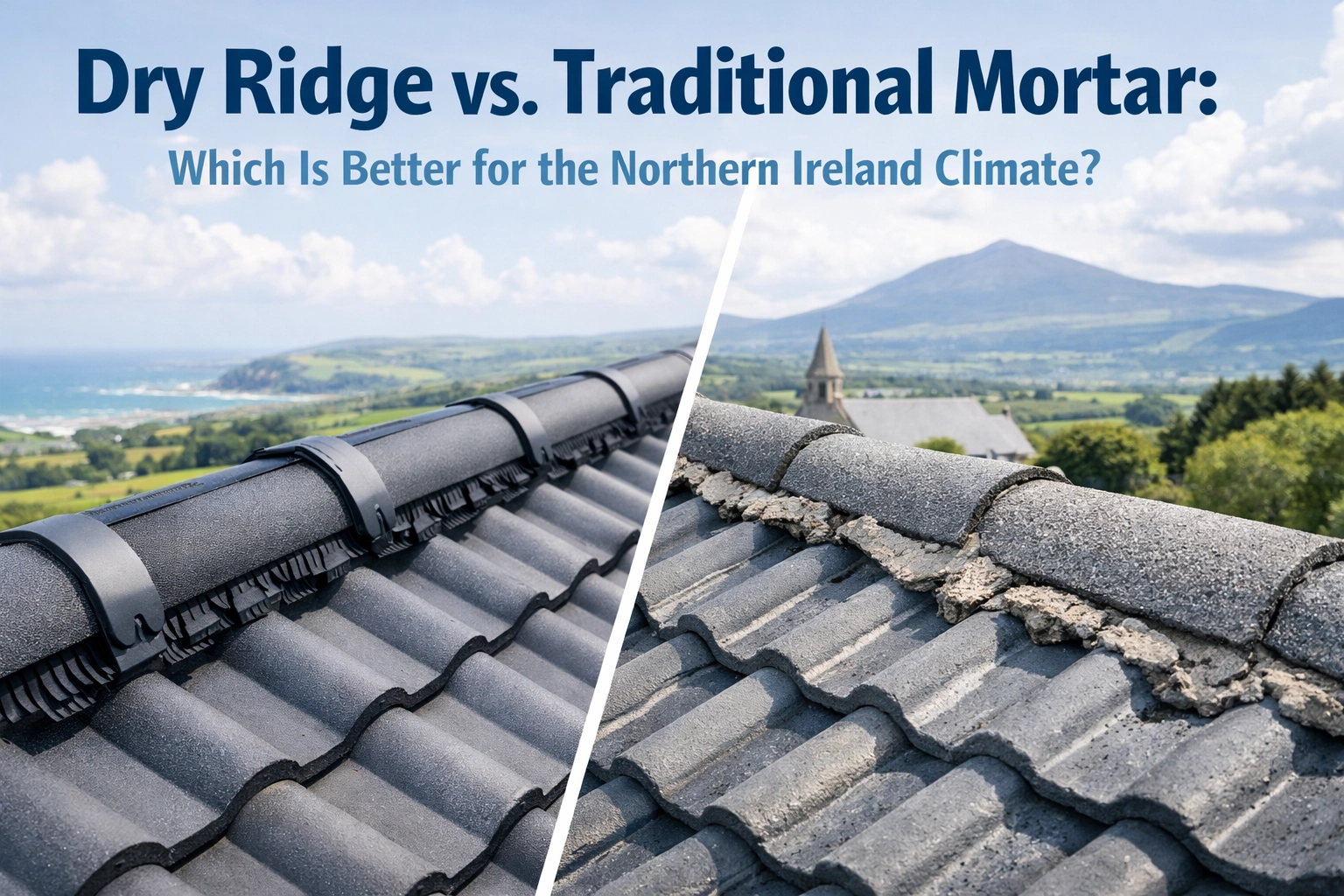

When you live in Northern Ireland, your roof is your first line of defense against some of the most unpredictable weather in the UK. From the horizontal rain of a Belfast winter to the gale-force winds whipping off the Atlantic, your home takes a beating. Historically, we relied on traditional mortar: a mix of sand and cement: to hold our ridge tiles in place. But times have changed, and so has the technology protecting our homes.
At Advanced Construction & Roofing, we have spent over 20 years repairing, replacing, and surveying roofs across Northern Ireland. We have seen firsthand how different materials stand up to the local climate. If you are wondering whether to stick with traditional mortar or upgrade to dry ridge systems, this guide will break down exactly why one is far superior for the modern NI homeowner.
Why Traditional Mortar Struggles in Northern Ireland
For decades, mortar was the industry standard. It was cheap, accessible, and did the job: until it didn’t. In the specific context of the Northern Ireland climate, mortar has several fatal flaws that lead to premature failure.
The issue is fundamentally about moisture and temperature. Mortar is a porous material. In a region where it rains significantly more often than it doesn't, that mortar is constantly damp. When the temperature drops: as it frequently does in Belfast, Lisburn, and Derry: the water trapped inside the mortar freezes and expands. This "freeze-thaw" cycle creates micro-cracks. Over time, these cracks grow until the bond between the tile and the roof is broken.
Typical failure occurs within 5 to 10 years. It is not a matter of if traditional mortar will fail on a Northern Ireland roof; it is a matter of when. Once the mortar cracks, it begins to fall out in chunks, often landing in gutters or on driveways. This leaves your ridge tiles loose, making them prime targets for the next big storm.

What are Dry Ridge Systems?
A dry ridge system is a modern, mortar-free method of securing ridge tiles to a roof. Instead of relying on a wet sand-and-cement mix that can crack and degrade, these systems use mechanical fixings. This involves high-quality screws and clamps that physically bolt the ridge tiles to the roof structure.
Request a professional assessment from Advanced Construction & Roofing today to see if your current ridge is still secure.
The Benefits of Dry Ridge Systems for NI Homeowners
Switching to a dry ridge system isn't just a trend; it's a structural upgrade that addresses the specific weaknesses of NI housing. Here is why we recommend them to our clients in every project we undertake.
1. Incredible Weather Resistance
Unlike mortar, the mechanical fixings used in dry ridge systems do not degrade when exposed to constant moisture. They do not crack in the frost, and they do not wash away in heavy rain. Whether you are facing a coastal breeze in Bangor or a heavy downpour in Newry, your ridge tiles remain firmly anchored.
2. Superior Ventilation and Condensation Control
One of the hidden killers of Northern Ireland roofs is attic condensation. When we heat our homes, warm air rises into the roof space. Without proper ventilation, this air hits the cold underside of the roof tiles, turns into water, and causes mold and rot.
Traditional mortar creates a completely sealed ridge, trapping that air inside. Dry ridge systems incorporate built-in ventilation channels. These allow your roof to "breathe," letting damp air escape and preventing the structural timbers of your home from rotting.
3. Resistance to High Winds and Storms
Northern Ireland is no stranger to high winds. During a storm, traditional mortar ridges are prone to "lifting" as the wind creates pressure differences. If the mortar is already cracked, a single gust can blow a ridge tile clean off your roof.
The mechanical screws of a dry ridge system provide exceptional resistance to wind lift. Even in severe weather, the tiles stay exactly where they were installed. This drastically reduces the risk of emergency repairs and potential injury from falling masonry.
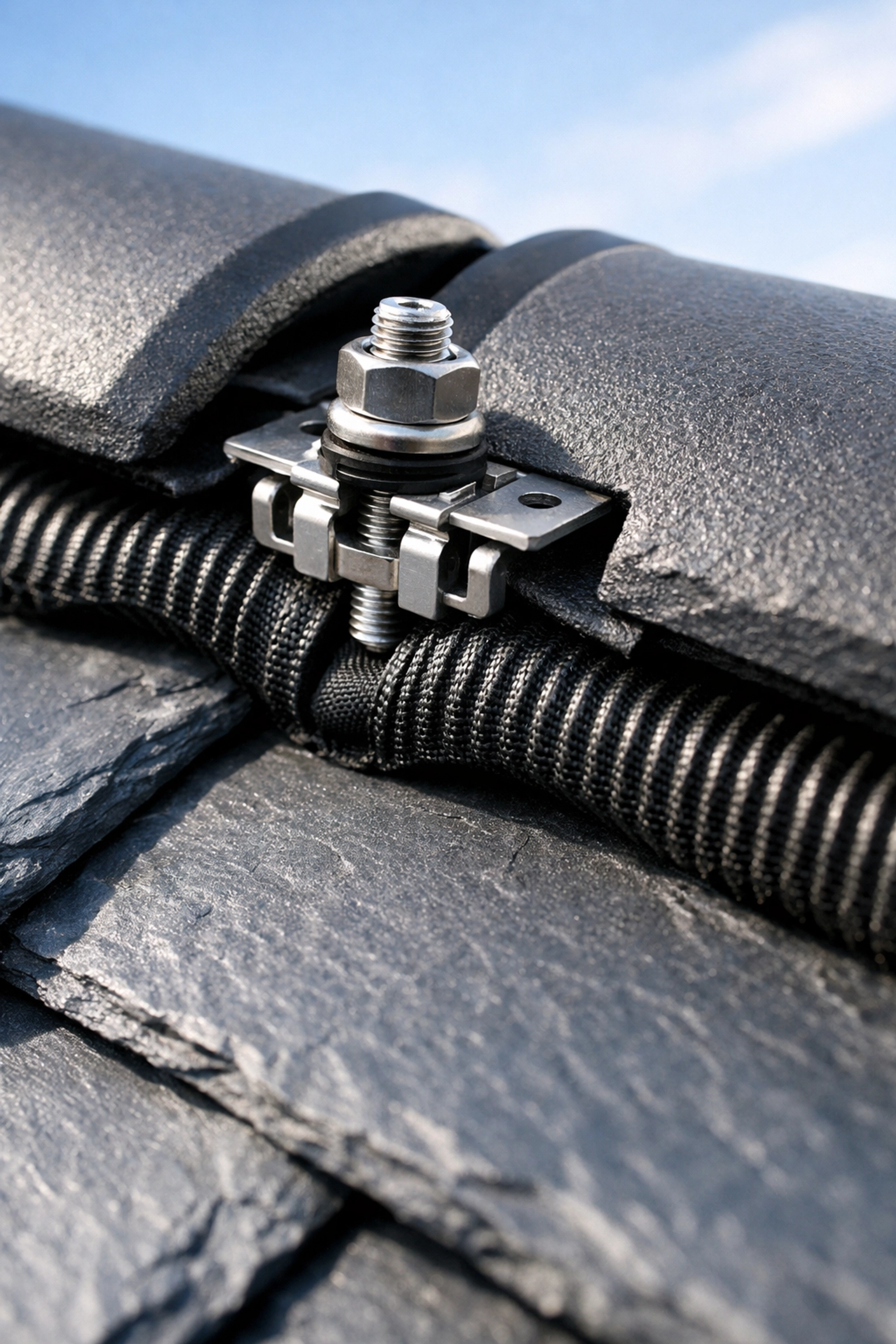
(Suggested: A close-up detail of a dry ridge mechanical fixing and ventilation strip installed on a slate roof)
The Cost-Benefit Reality: Saving You Money Long-Term
As a professional roofing company, we believe in transparency. Dry ridge systems do have a higher upfront material cost than a bag of sand and cement. However, the long-term economics tell a different story.
- Faster Installation: A professional team can install 10 meters of dry ridge in about 2.5 hours, whereas a traditional mortar ridge can take up to 6 hours. This lowers your labor costs significantly.
- Zero Maintenance: Traditional mortar requires waterproofing and repointing every few years to stay functional. Dry ridge is a "set it and forget it" solution.
- Preventing Damage: By preventing ridge tile failure and attic mold, you avoid the massive costs associated with interior water damage and structural timber replacement.
Contact Advanced Construction & Roofing for an honest, transparent quote on upgrading your roof.
Does Your Home Meet Modern Building Standards?
If you are looking to sell your property or are currently in the process of buying one, the state of the roof is a major factor. Current British Standards (BS 5534) now dictate that all new roofs must have mechanically fixed ridge tiles. Even if mortar is used for aesthetic reasons, it must be supplemented with mechanical fixings.
Many older homes in Northern Ireland still rely on outdated "wet" ridges. During a professional survey, these are often flagged as potential risks.

Call us today to book a comprehensive roof survey. We provide visual evidence, photo identification of defects, and in-depth analysis to ensure your home is up to code. You can find more details about our roof survey services here.
What Our Customers Say
Don't just take our word for it. We have helped hundreds of homeowners across Northern Ireland secure their properties.
"After every big storm, I used to find bits of mortar on my driveway. I was constantly worried a tile would fall. Advanced Construction & Roofing installed a dry ridge system last year, and I haven't had a single issue since. It looks much cleaner, too!"
: David M., Belfast
"The team was professional, fast, and left the site spotless. They explained exactly why my old mortar was failing and showed me the new system in action. Highly recommend their expertise."
: Kelly R., Newtownards
Why Choose Advanced Construction & Roofing?
When it comes to your home, you shouldn't settle for "good enough." You need a solution that is built to last in the unique Northern Ireland environment.
- 20+ Years of Local Experience: We understand the specific challenges of NI architecture and weather.
- Professional Credentials: We are fully insured and highly qualified roofers who take pride in every joint and fixing.
- No-Nonsense Advice: We won't sell you something you don't need. If your mortar is in great shape, we’ll tell you. If it’s a disaster waiting to happen, we’ll show you why.
- Complete Exterior Solutions: Beyond roofing, we handle everything from garden design in Belfast to walls and screens.
Conclusion: Protect Your Home Today
The debate between dry ridge and traditional mortar is over. For durability, ventilation, wind resistance, and long-term value, dry ridge systems are the undisputed winner for Northern Ireland homes. Don't wait for the next winter storm to find out your mortar has failed.
Take the first step toward a safer, drier home.
- Call us now to speak with a roofing expert.
- Request a quote via our website at https://adv-group.co.uk.
- Schedule a roof survey to identify potential issues before they become expensive emergencies.
Protect your investment. Secure your roof. Choose Advanced Construction & Roofing.