
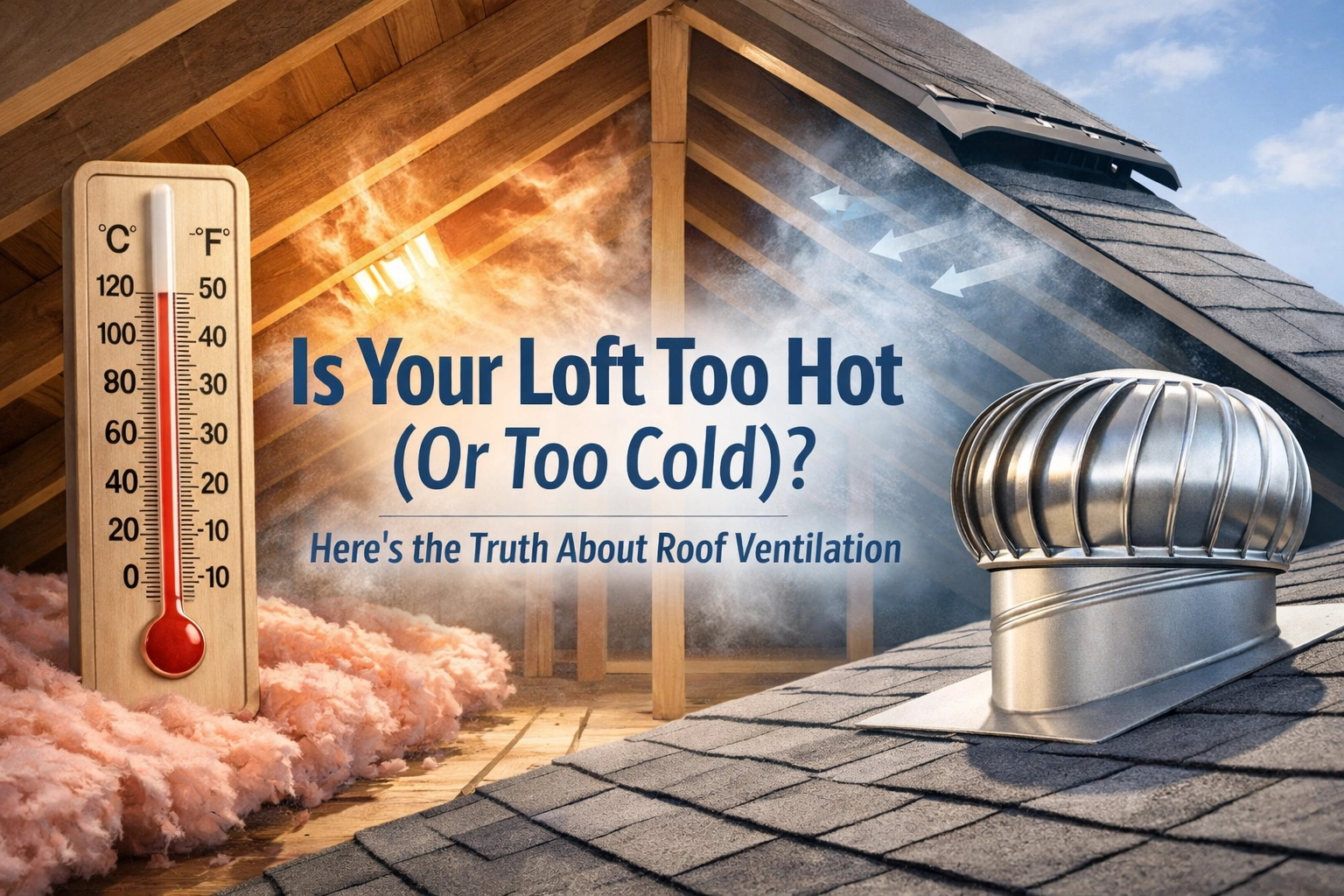

If your loft feels like a sauna in summer or a damp cave in winter, you've got a ventilation problem. And in Northern Ireland's damp climate, poor roof ventilation doesn't just make your home uncomfortable, it actively damages your roof structure, feeds mould growth, and costs you money in wasted heating.
Here's what you need to know about roof ventilation, why it matters more in Belfast, Bangor, and Newtownards than almost anywhere else in the UK, and how to spot the warning signs before they turn into expensive repairs.
The Warning Signs: Is Your Roof Ventilation Failing?
Poor roof ventilation doesn't always announce itself with dramatic leaks. More often, it creeps in quietly through condensation, damp patches, and structural damage that builds over months and years.
Watch for these signs:
Condensation on windows and walls in upstairs rooms. If moisture is pooling on glass or running down walls near the roofline, warm air is hitting cold surfaces, and that means your loft isn't breathing properly.
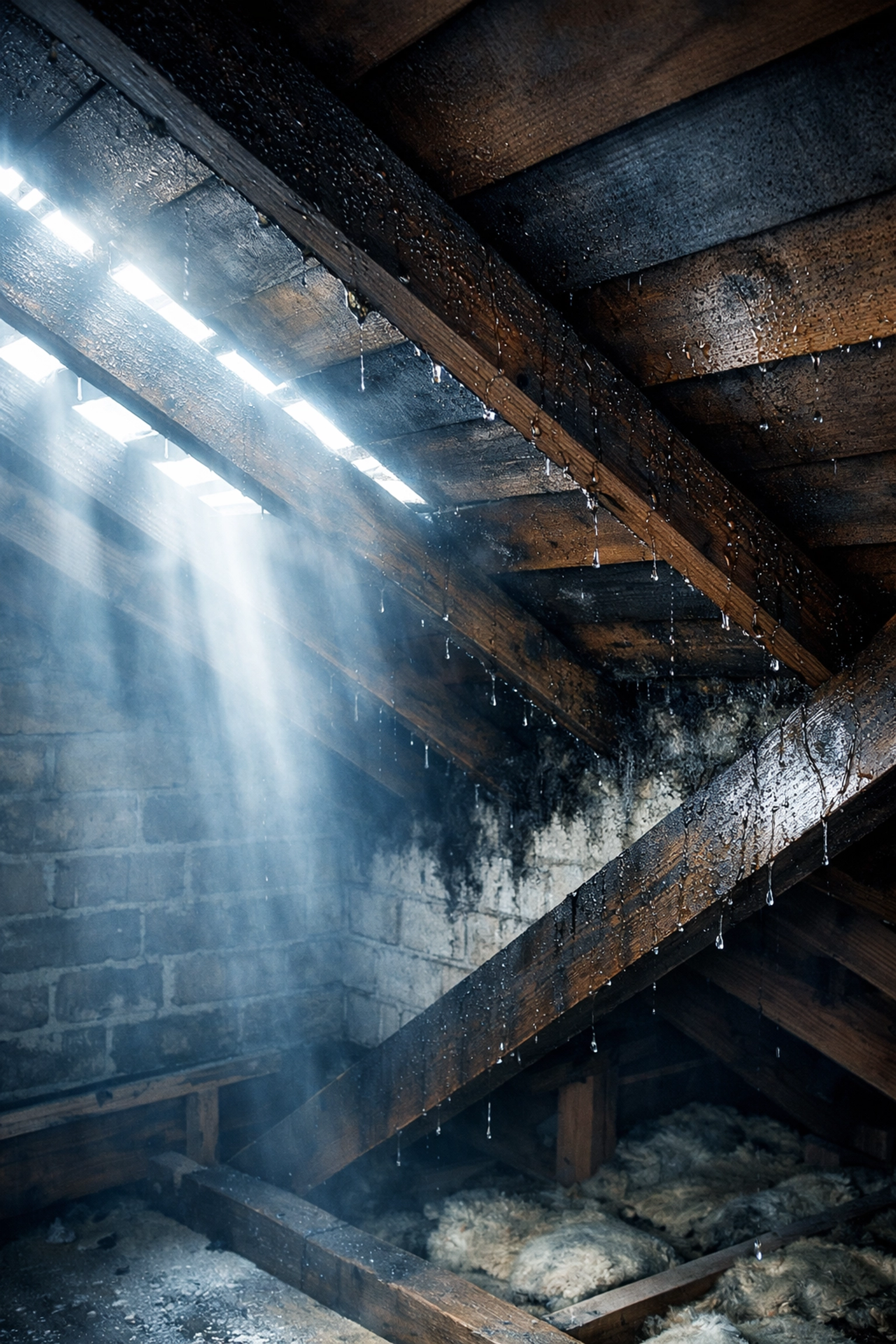
Black mould spots on ceilings or in roof spaces. Mould needs three things: moisture, warmth, and poor airflow. A badly ventilated loft gives it all three. If you're seeing black spots in corners or along the eaves, your roof ventilation has likely failed.
Damp or musty smell in the loft. Walk into your loft space. If it smells damp, feels clammy, or has that distinctive "old attic" odour, trapped moisture is sitting in the timbers and insulation.
Water stains or wet insulation. Check your loft insulation. If it's damp to the touch, compressed, or showing water stains, condensation is forming inside the roof space, not from a leak, but from poor ventilation.
Extreme temperature swings. A loft that's scorching hot in summer and freezing in winter suggests airflow isn't regulating temperature properly. In Northern Ireland, where we rarely see extreme heat, the cold and damp side of this equation does most of the damage.
Frost on the underside of roof tiles in winter. If you see frost forming on the inside of your roof during cold snaps, warm moist air is condensing and freezing on cold surfaces. That's a textbook ventilation failure.
Why Northern Ireland's Climate Makes Roof Ventilation Critical
Northern Ireland's weather is mild, wet, and humid for much of the year. We don't get the baking summers that drive ventilation concerns in southern England or the deep freezes that cause ice dam problems in Scotland. But we do get something worse for roofs: constant dampness.
Average humidity in Belfast sits between 75% and 85% year-round. That moisture-laden air doesn't just sit outside, it moves into your home, rises into the loft, and condenses on cold surfaces when it meets your roof structure.
Without adequate roof ventilation, that moisture has nowhere to go. It sits in your roof timbers, soaks into insulation, and creates the perfect environment for:
- Wood rot in roof joists and rafters
- Mould and mildew growth
- Insulation breakdown (wet insulation loses most of its thermal efficiency)
- Rust and corrosion on metal fixings, brackets, and flashing
In drier climates, occasional moisture might evaporate naturally. In Northern Ireland, it just builds. Roof ventilation is your only reliable way to move that damp air out before it causes structural damage.
How Proper Roof Ventilation Actually Works
Roof ventilation isn't about "letting heat escape" or "making your home colder." It's about creating continuous airflow through the loft space to regulate temperature and remove moisture.
A properly designed ventilation system uses two types of vents working together:
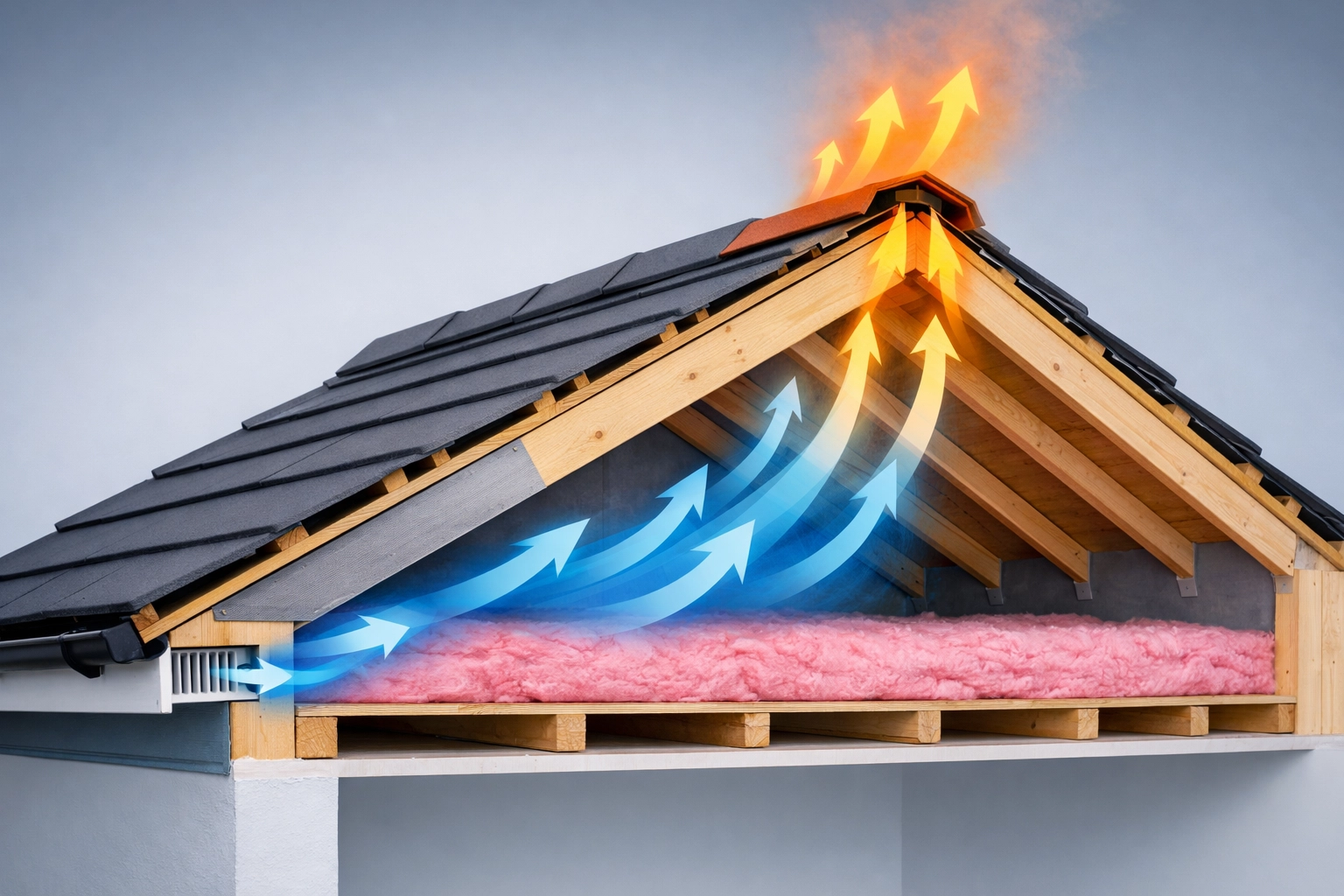
Intake vents (usually soffit vents along the eaves) pull fresh air into the loft space from outside. These sit at the lowest point of the roof, where cool air naturally enters.
Exhaust vents (ridge vents along the roof peak, or tile vents on the roof slope) allow warm, moist air to escape at the highest point. Hot air rises naturally, so exhaust vents positioned at the ridge let that air exit without needing mechanical help.
When these two work together in a balanced system, roughly equal intake and exhaust capacity, you get continuous airflow. Cool air enters at the eaves, warms as it picks up moisture, and exits at the ridge. The cycle repeats passively, 24 hours a day.
This process does two things:
-
Removes moisture before it condenses. Instead of warm, damp air hitting cold roof surfaces and turning into water droplets, airflow moves it out before condensation forms.
-
Regulates temperature. In summer, ventilation stops heat from building up to extreme levels (though in Northern Ireland, this is less of a concern). In winter, it keeps the loft cold and dry, which prevents condensation and protects insulation efficiency.
How Roof Ventilation Protects Your Roof Structure
Roof timbers are designed to carry load and shed water from the outside. They're not designed to sit in damp, stagnant air for years on end.
When roof ventilation fails, moisture accumulates in the loft space and creates conditions that actively damage the structure:
Wood rot and decay. Roof joists, rafters, and purlins need dry air to stay strong. Prolonged exposure to damp air encourages fungal growth, which breaks down the timber fibres and weakens the structure. Once rot takes hold, timbers lose their load-bearing capacity and need replacing, an expensive job that involves stripping sections of the roof.
Nail sickness. The metal fixings, brackets, and nails that hold your roof together corrode faster in damp environments. Rusted nails lose their grip, and over time, slates and tiles can work loose. This is a common problem in poorly ventilated roofs across Belfast and Bangor.
Insulation failure. Most loft insulation (fibreglass, mineral wool, cellulose) loses thermal performance when it gets damp. Wet insulation compresses, stops trapping air pockets, and can lose up to 50% of its R-value. That means you're paying more to heat your home while your roof structure sits in a damp, cold environment, exactly the conditions that accelerate decay.
Roof membrane damage. Many modern roofs use breathable membranes under the tiles to manage moisture. These membranes are designed to let water vapour escape outward while blocking liquid water from entering. But if your loft ventilation is blocked or inadequate, moisture can build up against the membrane and overwhelm its capacity. Over time, this leads to water tracking into the roof timbers and insulation.
Proper roof ventilation prevents all of this by keeping the loft environment dry, stable, and at a temperature close to the outside air. Your roof structure stays sound, your insulation works efficiently, and you avoid the kind of slow structural damage that's expensive to fix.

What Good Roof Ventilation Looks Like
If you're checking your own roof ventilation or getting a professional assessment, here's what a properly designed system includes:
Balanced intake and exhaust. For every square foot of exhaust vent (ridge or tile vents), you need roughly equal intake area (soffit vents). Too much exhaust without enough intake means the system works inefficiently. Too much intake without enough exhaust traps moist air in the loft.
No blocked vents. Soffit vents get blocked by insulation, debris, or old paint. Tile vents get clogged with moss or nests. Check that all vents are clear and allowing airflow.
Continuous airflow path. Air needs to move freely from eaves to ridge without obstruction. If loft insulation is pushed tight against the eaves, it blocks the intake vents. If there's no gap between insulation and the roof deck, airflow can't move through the space.
Appropriate vent size for the loft area. Building regulations recommend a minimum of 10mm continuous ventilation gap at eaves level for roofs with a pitch over 15 degrees. For steeper roofs or larger loft spaces, you'll need more.
No competing ventilation systems. Mixing different vent types (e.g., powered attic fans with passive ridge vents) can disrupt airflow and create negative pressure zones. Stick with one properly balanced system.
If your roof was built or re-roofed in the last 20 years, it should have ventilation designed in. Older roofs, especially pre-1990s builds, often have inadequate or blocked ventilation that needs upgrading.
Roof Ventilation Myths (And What Actually Matters)
"Ventilation makes my house colder in winter." No. Proper ventilation keeps your loft cold, which is what you want. Your insulation sits on the floor of the loft, separating the cold loft space from the warm living space below. A cold, dry, ventilated loft is more thermally efficient than a warm, damp, poorly ventilated one.
"I don't need ventilation because I have breathable roofing felt." Breathable membranes help, but they're not a substitute for ventilation. They manage moisture vapour, but they don't remove the volume of damp air that builds up in Northern Ireland's humid climate. You still need airflow.
"More vents are always better." Not necessarily. Unbalanced ventilation (too many exhaust vents, not enough intake) creates turbulence and reduces efficiency. What matters is balance and proper placement.
What To Do If You Suspect Poor Roof Ventilation
If you're seeing condensation, mould, damp timbers, or musty smells in your loft, don't ignore it. These problems get worse over time, and the longer moisture sits in your roof structure, the more expensive the repairs become.
Request a roof survey. A professional inspection will identify whether your ventilation system is adequate, balanced, and clear of blockages. We'll check soffit vents, ridge vents, airflow paths, and the condition of your roof timbers and insulation.
Get a clear assessment and quote. If ventilation upgrades are needed: whether that's installing new ridge vents, clearing blocked soffits, or adding tile vents: we'll explain what's required and why. No jargon, no overselling.
Consider ventilation alongside other roof work. If you're already planning roof repairs, re-roofing, or loft insulation upgrades, that's the ideal time to improve ventilation. The roof is open, access is easier, and the work integrates seamlessly.
We work across Belfast, Bangor, Newtownards, and throughout Northern Ireland, and we've seen every type of ventilation failure that our damp climate can cause. If your loft's too hot, too cold, or showing signs of moisture damage, contact us for a roof survey and honest advice.
Get in touch: https://adv-group.co.uk
Your roof is designed to last decades: but only if it can breathe properly. Don't let poor ventilation shorten its life.