
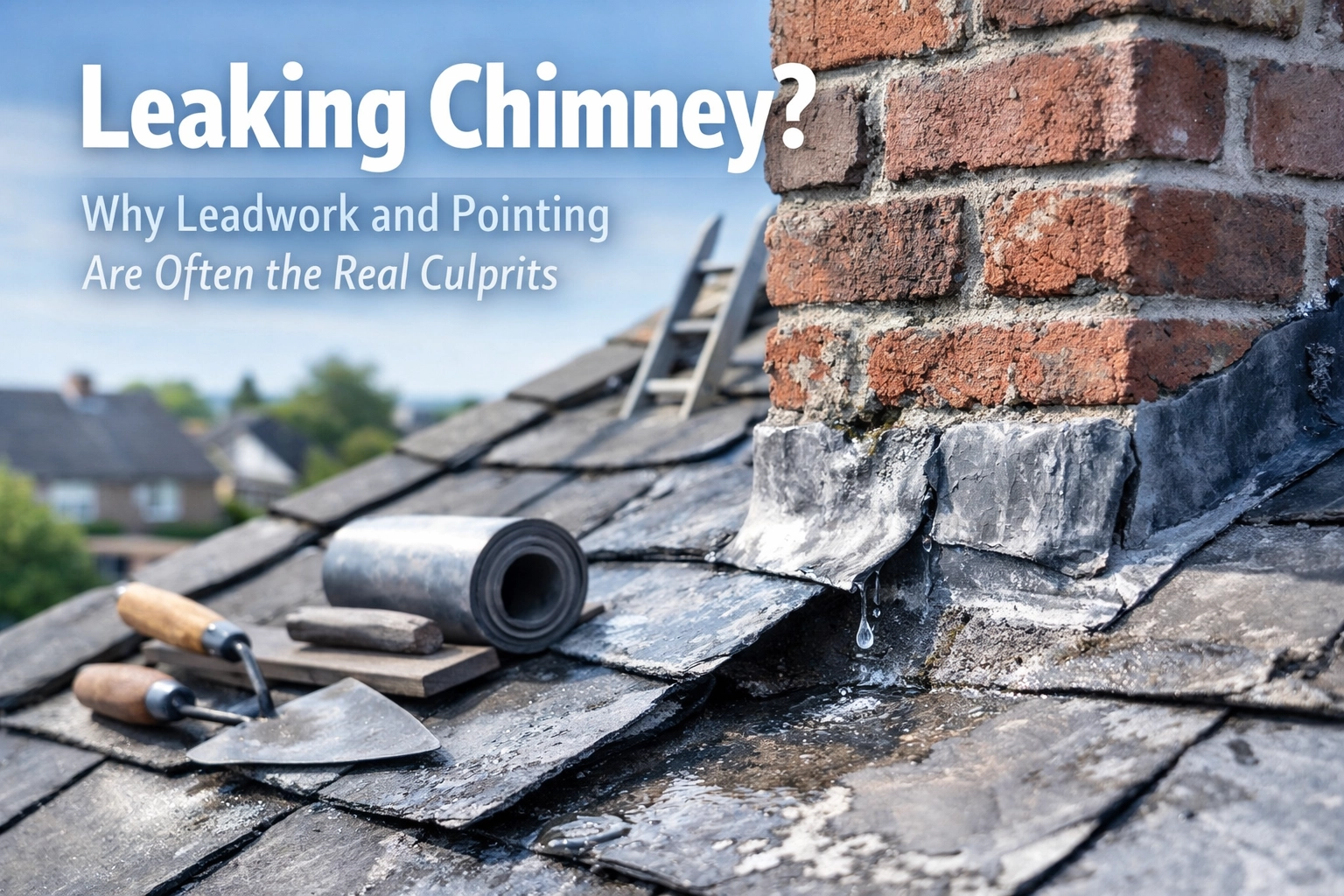

You've noticed the damp patch on your ceiling. Maybe it's a water stain creeping down your bedroom wall, or worse, actual drips coming through during heavy Belfast rain. Your first thought? "The roof must be leaking."
But here's the thing: when water appears near your chimney, the roof tiles are rarely the problem. Nine times out of ten, it's your chimney's leadwork or pointing that's letting water in. And if you don't address these issues properly, that small damp patch will turn into a major headache involving structural damage, mould, and a repair bill that keeps climbing.
Let's break down exactly why your chimney is leaking and what needs fixing.
Why Your Chimney Is the Weak Point in Your Roof
Your chimney penetrates through your roof, creating a natural vulnerability. Think about it, this solid brick structure needs to connect seamlessly with your roof tiles, and that junction needs to be completely watertight despite constant exposure to Northern Ireland's wind and rain.
Two components keep water out at this critical junction:
- Lead flashing (the metal sheets that bridge the gap between chimney and roof)
- Mortar pointing (the cement between the chimney bricks)
When either of these fails, water finds its way in. And trust us, water always finds a way.
The Leadwork Problem: Why Your Flashing Is Failing
Lead flashing has been used around chimneys for centuries because it's durable and flexible. But "durable" doesn't mean "permanent."
Here's what happens to lead flashing over time:
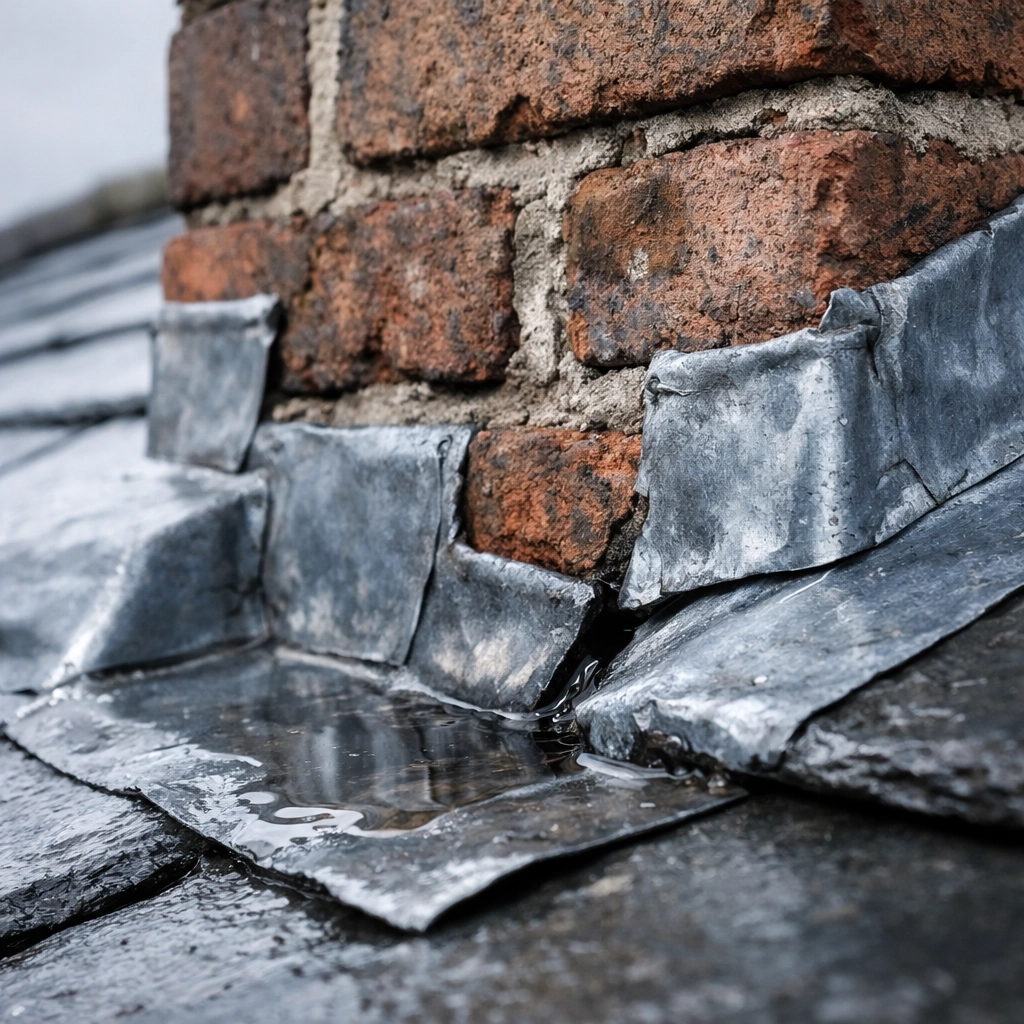
The lead sheets around your chimney are constantly expanding and contracting with temperature changes. In Belfast, we see dramatic temperature swings, scorching summer days followed by freezing winter nights. This thermal movement gradually works the lead loose from where it's embedded in the chimney mortar.
Add in wind uplift during storms, and you've got lead flashing that's slowly pulling away from the chimney face. Once there's even a tiny gap, rainwater drives in behind the flashing and runs straight down into your roof structure.
Poor installation makes it worse. We regularly see DIY jobs or rushed repairs where:
- Lead flashing isn't dressed properly against the chimney contours
- Step flashing isn't installed correctly on the chimney sides
- The lead isn't tucked deep enough into the mortar joints
- No soakers were installed under the lead (yes, these are still necessary)
You won't see these problems from ground level. The flashing might look fine. But up close, we find gaps, splits, and sections that have completely come loose.
Pointing: The Mortar Problem Everyone Ignores
While you're looking at the flashing, don't forget to look at the chimney bricks themselves.
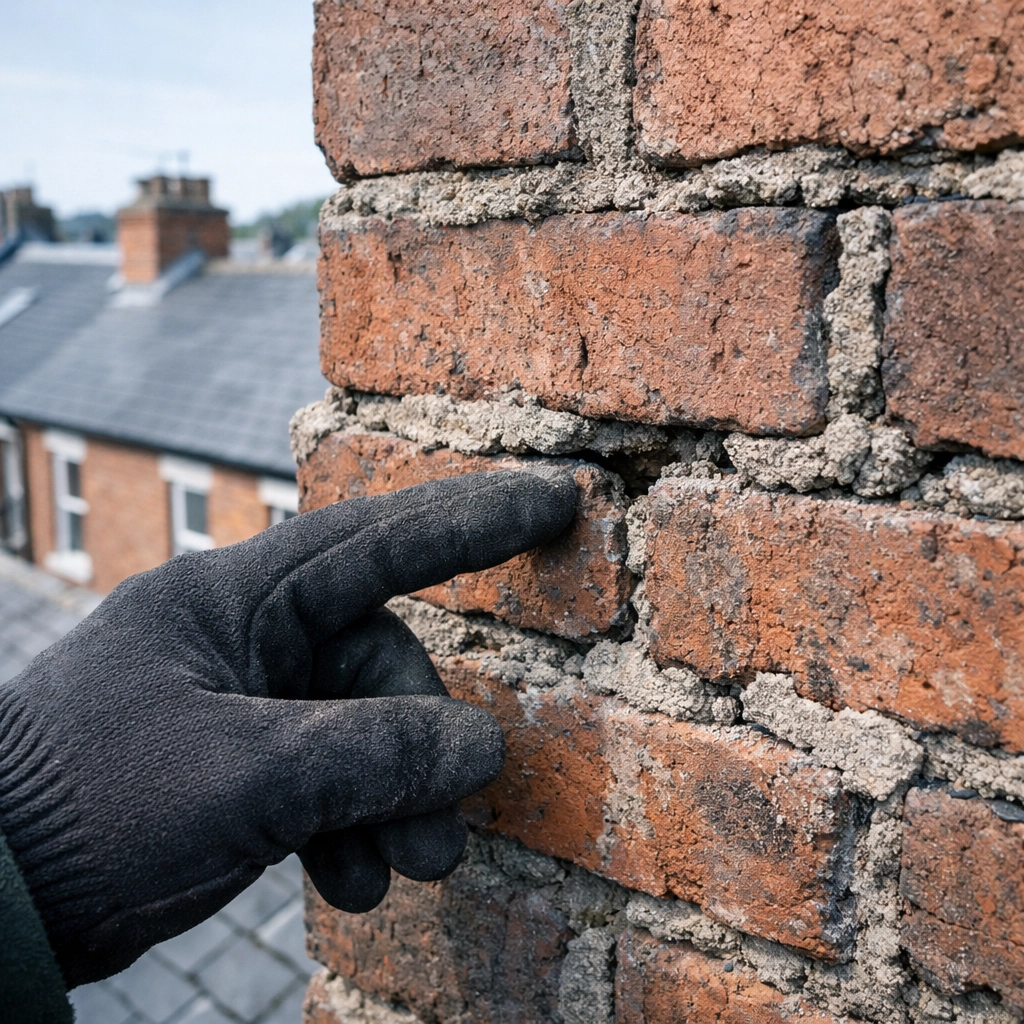
Mortar deteriorates. That's just reality. The cement between your chimney bricks takes a beating from weather exposure, and eventually it starts to crumble. When that happens, you've got cracks and gaps where water can penetrate.

The freeze-thaw cycle accelerates the damage. Water seeps into tiny cracks in the mortar, then temperatures drop below freezing (which happens regularly in Northern Ireland winters), the water expands as it freezes, and the crack gets bigger. Rinse and repeat all winter, and you've got mortar that's literally falling out of the joints.
We see this constantly on older Belfast properties. The original pointing might have lasted 40-50 years, but once it starts failing, the deterioration accelerates quickly.
The worst part? Most homeowners don't realize pointing is failing until water is already coming through. By that point, the damage isn't just in the mortar: it's in the brickwork behind it and possibly in your roof timbers too.
How to Spot the Warning Signs Before Major Damage Occurs
Don't wait for water stains to appear. Here's what to watch for:
Inside your home:
- Damp patches on walls or ceilings near the chimney
- Musty smells in rooms adjacent to the chimney breast
- Wallpaper or paint peeling near the chimney
- White staining (efflorescence) on interior chimney brickwork
Outside (visible from ground level):
- Crumbling or missing mortar between chimney bricks
- White staining or discoloration on exterior chimney brickwork
- Vegetation growing from mortar joints
- Bricks that look loose or out of alignment
What you can't see without getting up there:
- Lead flashing that's pulled away from mortar joints
- Cracks or splits in the lead itself
- Missing or damaged soakers under the flashing
- Deteriorated mortar where the lead is tucked in
This is exactly why professional roof surveys are essential. We get up on the roof, inspect everything up close, and document problems before they become emergencies.
Why This Isn't a DIY Job (and Why Quick Fixes Fail)
We get it: you're handy, and you want to save money. But chimney leadwork and repointing require specific skills and knowledge.
Here's what proper leadwork involves:
- Code 4 or Code 5 lead (the correct thickness for the application)
- Proper dressing techniques to shape the lead to the chimney profile
- Correct overlap measurements on step flashings
- Lead wedges and mortar fillets installed to Code 3 standards
- Back gutters behind the chimney dressed and installed correctly
And proper repointing isn't just slapping mortar in the gaps:
- Old mortar must be raked out to the correct depth (usually 15-20mm)
- The correct mortar mix for the existing brick type
- Proper technique to ensure good bonding and weatherproofing
- Finishing that sheds water rather than absorbing it
Get any of this wrong, and you've wasted your time and money. The leak continues, or worse: improper repairs create new problems.
We've seen countless "repairs" that made things worse. Silicone sealant slathered around flashing (it doesn't last and prevents proper drainage). Incorrect mortar mixes that are too hard and crack the bricks. Lead that's too thin and splits within a year.
Professional work comes with guarantees. Our repairs are done right the first time, and we stand behind them.
The Professional Solution: What Proper Repairs Look Like
When we tackle a chimney leak caused by leadwork or pointing issues, here's our process:
Assessment First: We conduct a thorough inspection to identify all problems: not just the obvious ones. Often there are multiple issues that need addressing.
Complete Leadwork Renewal: If your lead flashing is failing, we don't patch it. We remove the old lead, install new Code 4 or Code 5 lead properly dressed and tucked into the chimney, and ensure all step flashings and soakers are correctly positioned.
Professional Repointing: We rake out deteriorated mortar to the proper depth, use the correct mortar mix for your chimney's brick type, and repoint using techniques that ensure weatherproofing and longevity.
Additional Repairs: While we're up there, we check your chimney cap, flaunching (the mortar around the chimney pots), and the overall condition of the chimney stack. It makes no sense to fix the flashing but leave a cracked chimney cap that will cause leaks next winter.

Documentation: You receive photos of the problems we found and the repairs we completed. This is essential for your records and invaluable if you're dealing with insurance claims.
Don't Wait Until the Damage Spreads
Here's the reality: chimney leaks don't fix themselves, and they always get worse.
That small damp patch you're noticing? It represents water that's already penetrated your roof structure. Every time it rains, more water gets in. Your roof timbers are getting wet. Insulation is becoming saturated. Mould is growing in places you can't see.
The longer you wait, the more extensive (and expensive) the repairs become. What starts as straightforward leadwork replacement and repointing can turn into structural timber repairs, rafter replacement, and interior plastering work.
Get Your Chimney Properly Assessed
If you're seeing any signs of chimney-related water ingress: or if your chimney hasn't been inspected in years: contact Advanced Construction & Roofing for a professional roof survey.
We'll get up on your roof, conduct a thorough inspection of your chimney leadwork and pointing, document any issues with photos, and provide you with a clear explanation of what needs fixing and why.
Our surveys are honest and transparent. We tell you what needs doing now and what can wait. We provide detailed quotes before starting any work. And our repairs are carried out by experienced tradespeople who know Belfast roofs inside and out.
Don't let a leaking chimney damage your home. Call us today on 028 9099 8837 or visit adv-group.co.uk to book your roof survey.
Your chimney leak has a cause: and it has a solution. Let's identify the problem and get it fixed properly, before the next storm hits.