
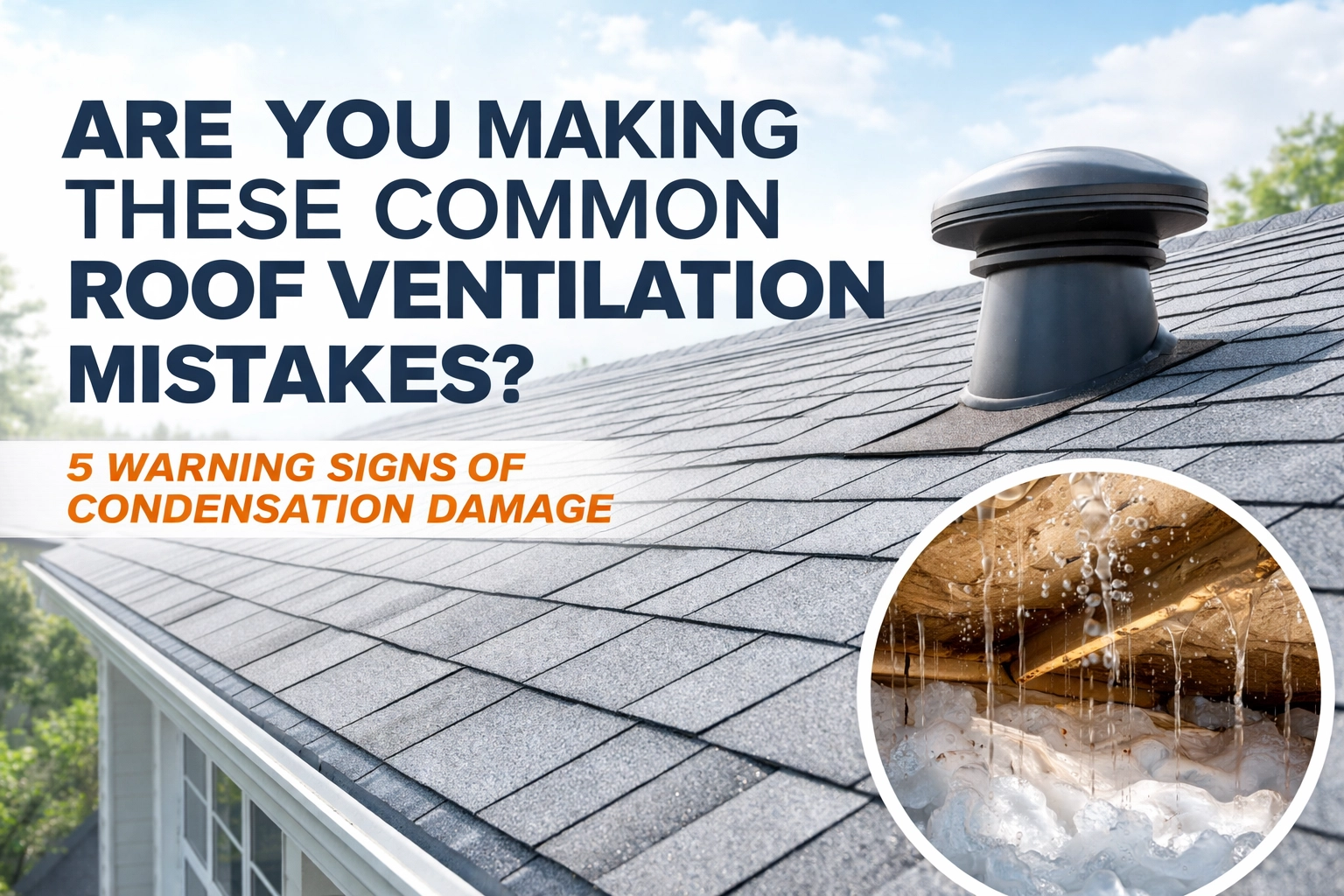

Let's be honest: when was the last time you thought about your roof ventilation? If you're like most Northern Ireland homeowners, the answer is probably "never." But here's the thing: poor roof ventilation is one of the leading causes of dampness, mould, and timber rot in homes across Belfast, Lisburn, and beyond.
Our wet climate means moisture is constantly battling to get into your home. Without proper ventilation, your roof space becomes a breeding ground for condensation problems that can cost thousands to repair. The good news? Most ventilation issues are preventable: if you know what to look for.
Why Does Roof Ventilation Matter So Much in Northern Ireland?
Think of your roof space like a set of lungs. It needs to breathe. Fresh air enters through intake vents (usually at the eaves or soffits), circulates through the loft, and exits through exhaust vents at the ridge or near the top of the roof.
When this system works properly, it:
- Removes excess moisture before it condenses
- Regulates temperature extremes
- Prevents ice dams in winter
- Extends the life of your roof timbers and insulation
Modern ventilation standards recommend one square foot of venting for every 300 square feet of attic floor space. Fall short of this, and you're inviting trouble.
In Northern Ireland, where we see an average of 157 rainy days per year, getting ventilation right isn't optional: it's essential.
The Most Common Roof Ventilation Mistakes We See
After years of inspecting roofs across Northern Ireland, our team has seen the same mistakes crop up again and again. Are you making any of these?
Blocked Intake Vents
This is the number one problem we encounter. Homeowners: or well-meaning insulation installers: accidentally cover soffit vents with loft insulation. The result? Air can't enter your roof space, and the entire ventilation system fails.
Check your soffit vents today. If you can't see daylight through them from inside your loft, they're probably blocked.

Mixing Different Types of Exhaust Vents
Here's a mistake even some roofers make: installing both ridge vents and box vents (or tile vents) on the same roof. This seems like more ventilation would be better, right? Wrong.
Mixing vent types "short circuits" your system. Air takes the path of least resistance, so instead of flowing from intake to exhaust as designed, it simply circulates between the two exhaust points. Your soffit vents become useless.
Bathroom Fans Venting Into the Loft
This one causes serious damage. If your bathroom extractor fan vents directly into your roof space instead of outside, you're pumping warm, moisture-laden air straight into your loft every time someone showers.
We've seen roof timbers completely rotted through because of this single mistake. Always ensure extractor fans vent through the roof or wall to the outside.
Relying on Gable Vents Alone
Gable vents: those triangular or rectangular vents on the end walls of your roof: look the part but rarely provide adequate ventilation on their own. They force air through the path of greatest resistance, leaving the centre of your loft poorly ventilated.
For proper airflow, you need continuous ventilation from eaves to ridge, not just end-to-end.
Assuming Power Vents Are Working
Got a powered attic fan? When did you last check it's actually running? Faulty thermostats, motor failures, and bad wiring are common issues. Many homeowners assume their ventilation is fine because they have a fan installed: meanwhile, it hasn't worked in years.
5 Warning Signs of Condensation Damage You Can't Ignore
Condensation damage doesn't announce itself with a dramatic leak. It creeps in slowly, often going unnoticed until serious structural damage has occurred. Know these warning signs and act fast if you spot them.
1. Mould and Mildew Growth
Open your loft hatch and take a deep breath. Do you notice a musty, damp smell? That's your first clue.
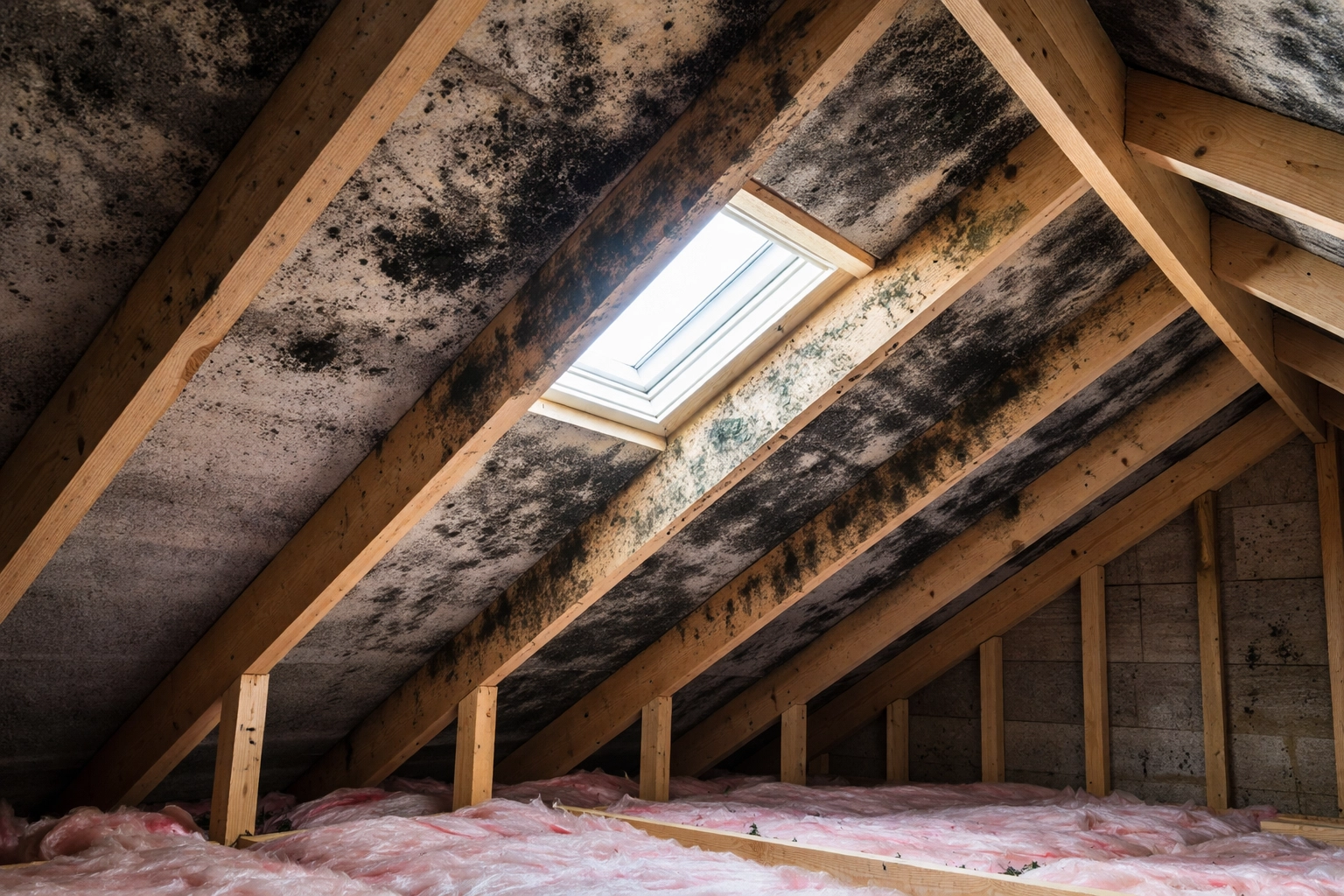
Look at the underside of your roof felt, along the rafters, and on any stored items. Black spots, green patches, or fuzzy white growth are all signs of mould caused by excess moisture. Left unchecked, mould spreads rapidly and can affect your indoor air quality.
2. Wet or Dripping Roof Timbers
Climb into your loft on a cold morning. Are the rafters or roof timbers wet to the touch? Can you see water droplets forming on the underside of the roof felt?
This is condensation in action. The warm, moist air from your home rises into the cold loft space and condenses on cold surfaces. If this happens regularly, your timbers will eventually rot.
3. Sagging or Spongy Roof Decking
Press firmly on the boards or decking in your loft. Do they feel soft, spongy, or flex more than they should?
This is a serious warning sign. Prolonged moisture exposure weakens timber, compromising your roof's structural integrity. If you notice sagging boards, contact a professional immediately: this isn't a DIY fix.
4. Peeling Paint or Lifting Wallpaper on Upstairs Ceilings
Condensation damage doesn't stay in the loft. When moisture levels are high, it migrates downward into your living spaces.
Look for:
- Paint bubbling or peeling on upstairs ceilings
- Wallpaper lifting at the edges
- Damp patches that come and go
- Yellow or brown staining
These signs often indicate a ventilation problem, not a leak. Many homeowners waste money chasing phantom leaks when the real culprit is condensation. If you're unsure, book a professional roof survey to identify the true cause.
5. Ice Dams in Winter
During cold snaps, check your roof from outside. Do you see thick ridges of ice forming at the eaves while the rest of the roof is clear?
Ice dams form when heat escapes through a poorly ventilated roof, melting snow that then refreezes at the colder eaves. This trapped ice can force water back under your tiles or slates, causing leaks and damage to fascias and soffits.

How to Fix Roof Ventilation Problems
Spotted some warning signs? Here's what to do next.
Quick Fixes You Can Do Today
- Clear blocked soffit vents by carefully pulling back insulation and installing vent guards
- Check extractor fans are venting outside, not into the loft
- Improve loft insulation (but keep it away from the eaves)
- Open the loft hatch on dry days to improve air circulation temporarily
When to Call a Professional
Some ventilation issues require expert assessment and repair:
- Installing additional ventilation (tile vents, ridge vents, or over-fascia vents)
- Replacing failed mechanical ventilation systems
- Repairing timber damage caused by condensation
- Investigating recurring damp problems
Don't guess when it comes to structural issues. A professional roof survey gives you a clear picture of what's happening and what needs fixing. At Advanced Construction & Roofing, we provide detailed roof surveys across Belfast and Northern Ireland with photo evidence and honest recommendations.
Take Action Before Small Problems Become Big Bills
Roof ventilation problems don't fix themselves. Every day you ignore the warning signs, moisture continues its slow assault on your roof timbers, insulation, and home.
The average cost to repair timber rot caused by condensation damage? Between £2,000 and £8,000, depending on the extent. The cost of proper ventilation installation? A fraction of that.
Request a roof ventilation assessment today. Our experienced team will identify any issues, explain your options in plain English, and provide a transparent quote with no hidden surprises.
Contact Advanced Construction & Roofing to book your survey or call us directly. We've helped hundreds of Northern Ireland homeowners protect their properties from condensation damage( let us help you too.)