
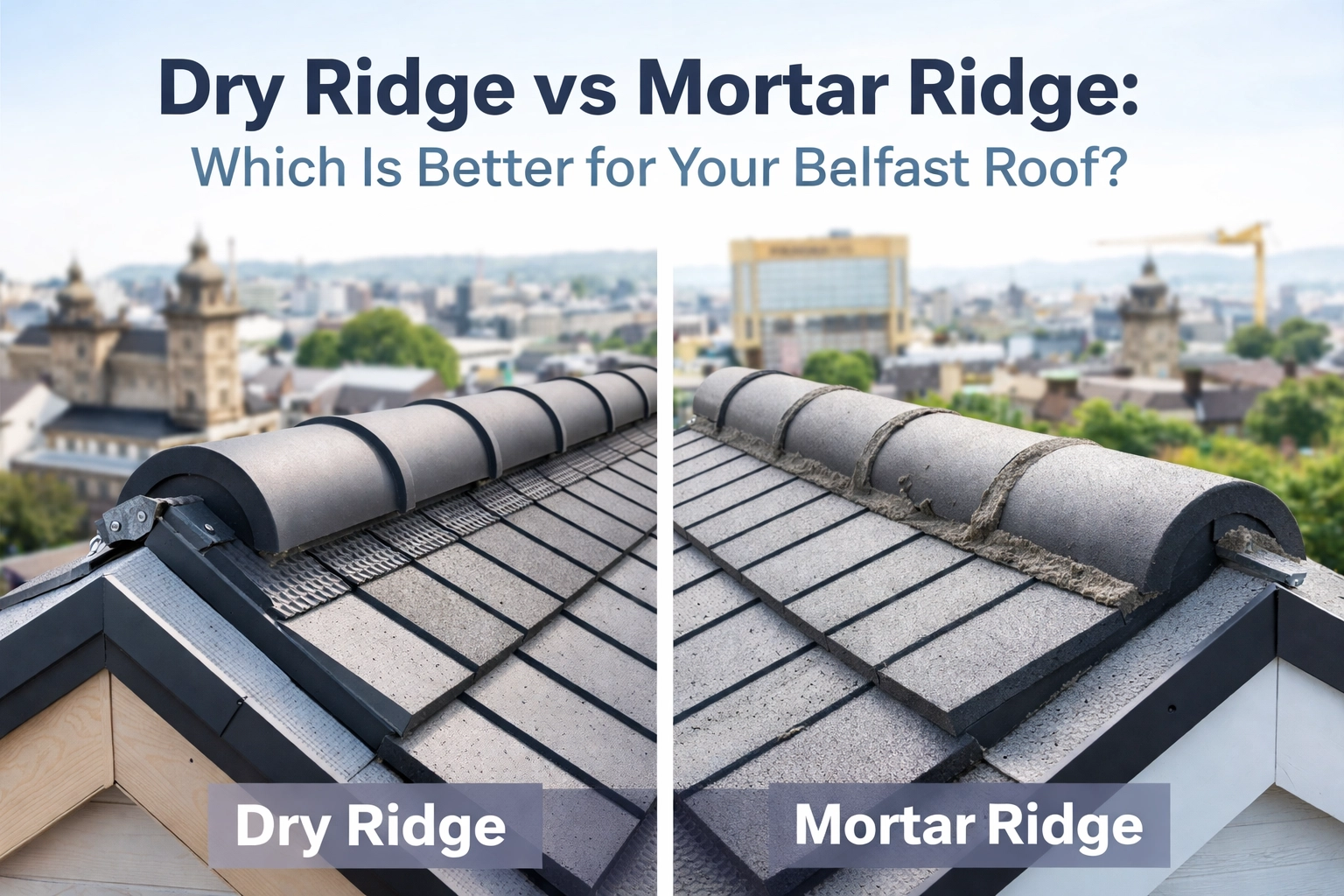

If you've ever looked up at your roof and noticed crumbling cement along the ridge line, you're not alone. Thousands of homeowners across Belfast and Northern Ireland are facing the same question: should I repair with mortar again, or is it time to switch to a dry ridge system?
It's a fair question. And honestly, the answer could save you hundreds of pounds in maintenance costs over the coming years: or it could preserve the character of your period home. Let's break down exactly what each system offers and help you decide which one makes sense for your property.
What's the Difference Between Dry Ridge and Mortar Ridge?
Before we get into the nitty-gritty, let's clarify what we're actually comparing here.
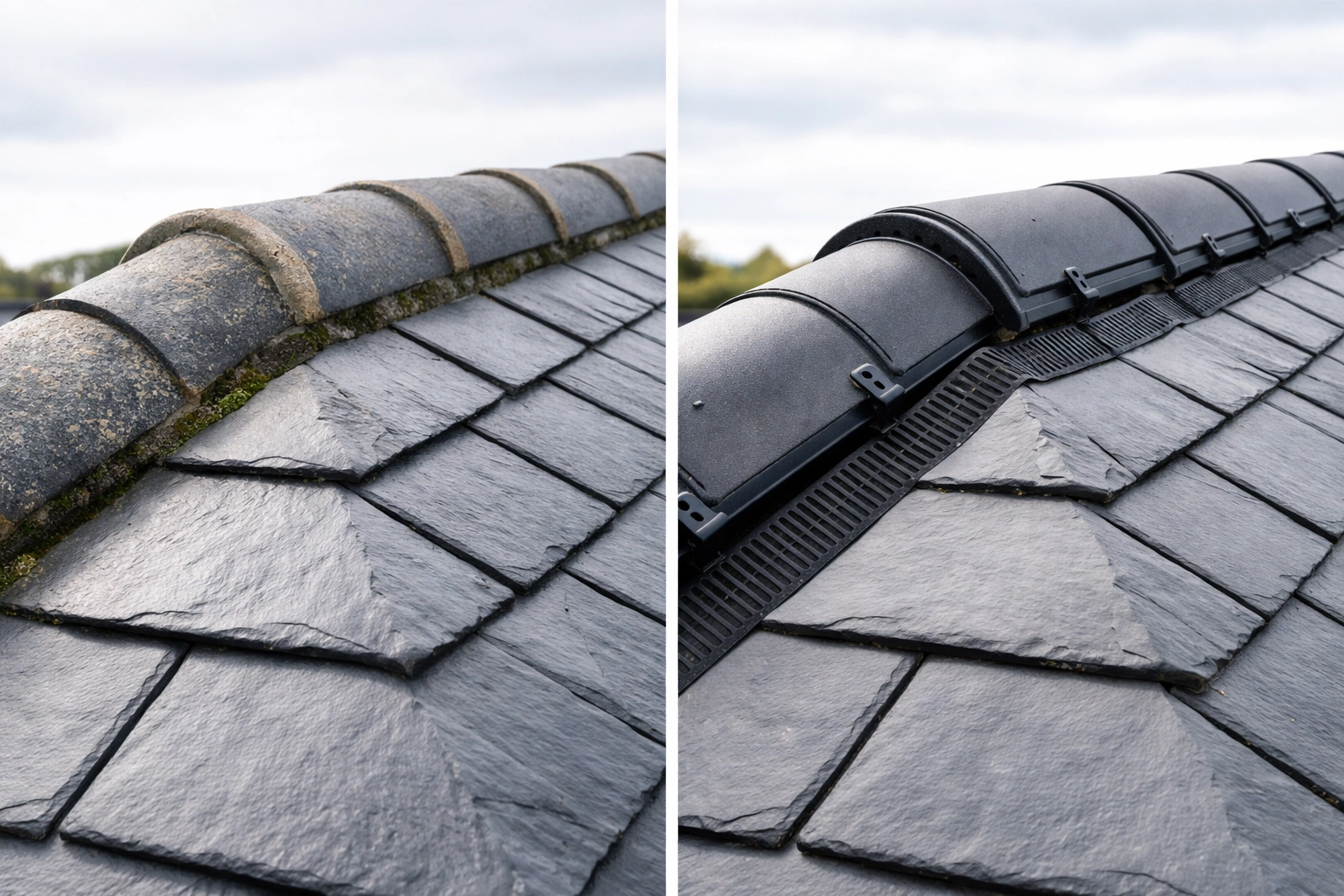
Mortar ridge is the traditional method. Your ridge tiles (the ones running along the peak of your roof) are bedded onto a sand and cement mixture. This mortar fills the gaps, holds everything in place, and creates that classic finished look you'll see on most older Belfast homes.
Dry ridge systems take a completely different approach. Instead of mortar, they use mechanical fixings: screws, clips, and specially designed roll-out systems: to secure ridge tiles to the roof structure. No cement involved.
Both methods have been used successfully for decades. But here's the thing: Belfast's weather doesn't play nice with every roofing solution. And that's where the real differences start to matter.
Why Belfast Weather Makes This Decision Important
Let's be honest about our climate. Belfast sees an average of 157 rainy days per year. We get coastal winds whipping in from the Irish Sea. Our winters bring frost, ice, and the occasional storm that makes national headlines.
This weather takes a toll on traditional mortar ridges. The constant cycle of wet and dry, freeze and thaw, causes mortar to crack, crumble, and eventually fail. You've probably seen it yourself: chunks of cement lying in gutters or scattered across driveways after a rough night of wind.
When mortar fails, water gets in. Water leads to timber rot, insulation damage, and the kind of problems that turn a simple ridge repair into a major roofing project.
The Case for Dry Ridge Systems in Northern Ireland
Here's why more and more Belfast homeowners are making the switch to dry ridge:
Superior Wind Resistance
Dry ridge systems can withstand wind speeds up to 100mph. That's not marketing fluff: it's a genuine engineering advantage. The mechanical fixings grip the roof structure directly, meaning your ridge tiles stay put even when Storm Éowyn decides to pay a visit.
Compare that to mortar, which relies on a cement bond that weakens over time. Once cracks appear, wind can work its way underneath and lift tiles clean off.
Better Ventilation (And Why That Matters)
One of the biggest hidden benefits of dry ridge is improved airflow. The system allows air to circulate beneath the ridge, which prevents moisture from building up in your roof space.
In Belfast's damp climate, this is crucial. Poor ventilation leads to:
- Condensation buildup in the loft
- Mould growth on timber and insulation
- Structural decay that's expensive to repair
Dry ridge systems actively combat these problems. If you've ever noticed damp patches on your ceiling or a musty smell in your loft, poor ridge ventilation could be the culprit.

Dramatically Lower Maintenance
Here's a number that gets homeowners' attention: dry ridge systems are maintenance-free for an estimated 50 years.
Fifty years. Compare that to mortar ridges, which typically need repointing every 10-15 years: sometimes sooner in exposed locations. Over the lifetime of your roof, that's potentially three or four rounds of scaffolding, labour costs, and materials saved.
Flexibility That Prevents Damage
Your roof isn't static. It expands in summer heat. It contracts in winter cold. Traffic vibrations, settling foundations, and even heavy rainfall cause subtle movements.
Mortar is rigid. It doesn't flex. So when your roof moves, the mortar cracks.
Dry ridge systems accommodate this natural movement. The mechanical fixings allow slight adjustments without compromising the seal. No cracks. No gaps. No water ingress.
Faster Installation
Because dry ridge doesn't require mixing mortar, waiting for it to cure, or returning for touch-ups, installation is significantly quicker. For homeowners, that means less disruption, lower labour costs, and a faster return to normal life.
When Mortar Ridge Still Makes Sense
Now, I'm not going to tell you that dry ridge is perfect for every situation. It isn't.
If you own a period property or live in a conservation area, mortar ridge might be the better choice. Here's why:
Aesthetic Authenticity
There's no getting around it: mortar ridge has a traditional, sculpted appearance that suits Victorian terraces, Edwardian villas, and heritage buildings. Dry ridge systems look clean and modern, which isn't always what you want on a 120-year-old Belfast home.
For properties where character matters, mortar can be the right call. A skilled roofer can create beautiful, durable mortar work that complements your home's original features.
Conservation Area Requirements
Some conservation areas have strict guidelines about maintaining original building materials and methods. If your property falls under these regulations, you may need to stick with traditional mortar: or at least get approval before switching to a dry system.

Proven Track Record
When applied correctly by an experienced roofer, mortar ridges can last for decades. The key phrase there is "applied correctly." Poor workmanship or cheap materials will fail quickly. Quality mortar work from a reputable contractor still has its place.
What Do Current Building Standards Say?
Here's something many homeowners don't realise: British standards now mandate mechanical fixings for roof ridges, verges, and hips.
This isn't just a recommendation. It's a requirement for new builds and major roof renovations. The construction industry has recognised that dry systems offer superior performance, particularly in exposed and windy locations like much of Northern Ireland.
If you're having significant roof work done, your contractor should be using dry ridge as standard. If they're not, ask them why.
Cost Comparison: What Will You Actually Pay?
Let's talk money, because that's often what tips the decision.
Dry ridge systems typically cost more upfront. The materials are pricier than sand and cement, and while installation is faster, the components themselves add to the bill.
However, when you factor in long-term maintenance, the picture changes:
| Factor | Dry Ridge | Mortar Ridge |
|---|---|---|
| Initial installation | Higher | Lower |
| Maintenance frequency | Minimal (50+ years) | Every 10-15 years |
| Repair costs over 30 years | Lower | Significantly higher |
| Risk of water damage | Reduced | Higher |
For most Belfast homeowners, dry ridge is the more economical choice over the life of the roof. You pay more today but save considerably over the next few decades.
Which Should You Choose for Your Belfast Home?
Here's the straight answer:
Choose dry ridge if:
- You want minimal maintenance and long-term savings
- Your property is exposed to wind and driving rain
- You're having new roof work done anyway
- You've experienced mortar failures in the past
Choose mortar ridge if:
- You own a period property where aesthetics matter
- You live in a conservation area with restrictions
- Your existing mortar is in good condition and just needs minor repairs

Not Sure What Your Roof Needs? Get a Professional Assessment
The best way to know what's right for your property is to have a qualified roofer inspect your current ridge line. They can assess the condition of existing mortar, check for signs of water ingress, and recommend the most appropriate solution.
At Advanced Construction & Roofing, we've helped hundreds of Belfast homeowners make this exact decision. We'll give you honest advice based on what your roof actually needs: not what makes us the most money.
Request a roof survey today and get clarity on whether dry ridge or mortar is the right choice for your home. We'll provide a detailed report, clear photos of any issues, and a straightforward quote for the work involved.
Your roof protects everything underneath it. Make sure the ridge is doing its job properly. Contact Advanced Construction & Roofing to discuss your options with a local expert who understands Belfast's unique roofing challenges.