
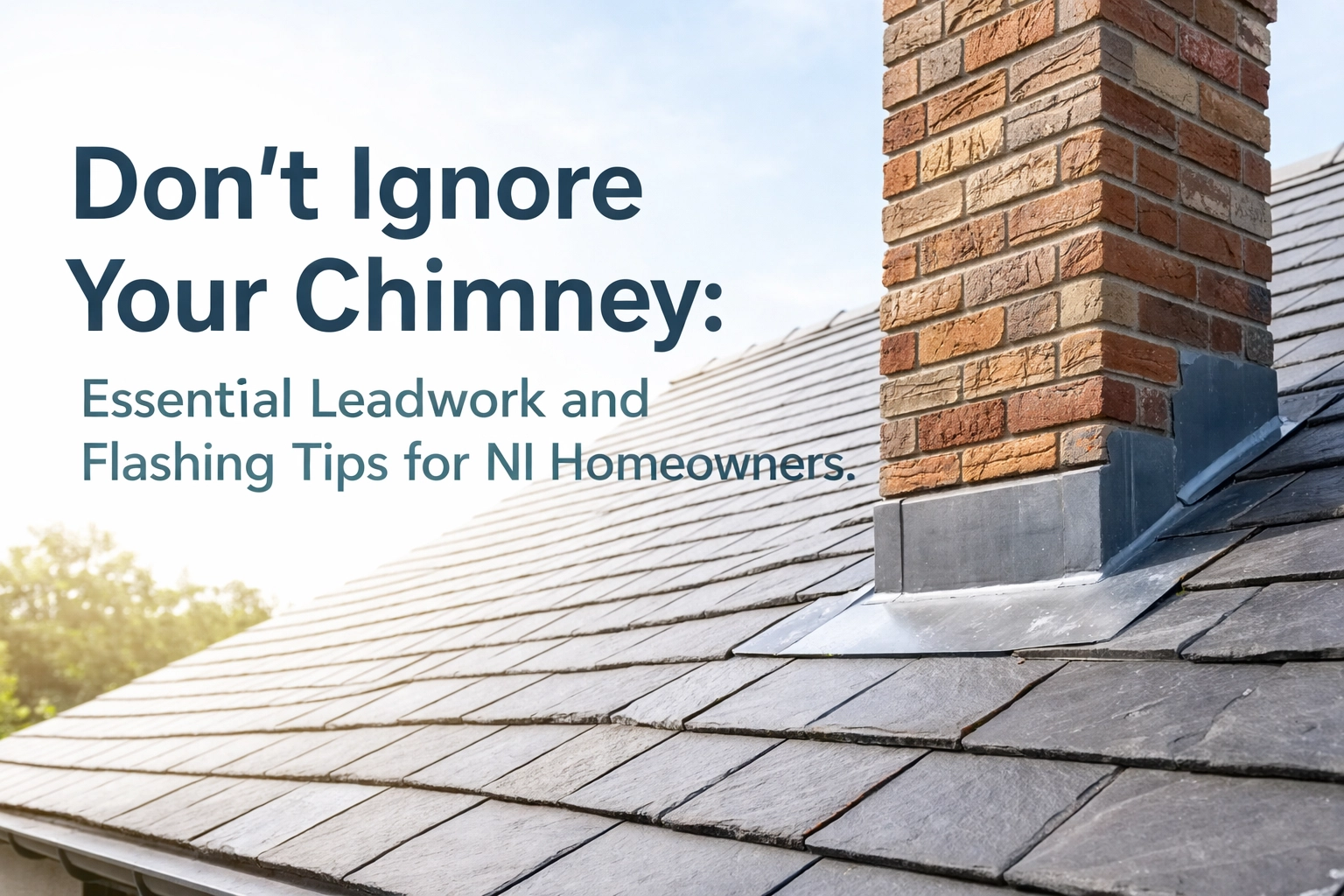

Your chimney is one of the most exposed parts of your home. It sits there, day after day, taking the full brunt of Northern Ireland's unpredictable weather. Heavy rain, driving winds, and those bitter frost cycles we know all too well: your chimney deals with it all.
And yet, most homeowners barely give it a second glance until water starts dripping through the ceiling.
Here's the truth: chimneys are one of the most common sources of roof leaks in Belfast and across Northern Ireland. The culprits? Failing lead flashing, deteriorating mortar joints, and neglected chimney pots. These aren't glamorous topics, but understanding them could save you thousands in repair bills.
Let's break down what every NI homeowner needs to know about chimney maintenance: and why leadwork expertise matters more than you might think.
Why Is Your Chimney So Vulnerable?
Think about it. Your chimney penetrates your roof, creating a junction where two different materials meet. That junction is a natural weak point. Water is relentless: it will find any gap, any crack, any tiny opening to work its way into your home.
In Northern Ireland, we get an average of 157 rainy days per year. That's a lot of water attacking your chimney. Add in freeze-thaw cycles that expand and contract materials, and you've got a recipe for deterioration.
The three main failure points are:
- Lead flashing around the chimney base
- Mortar joints between bricks (repointing)
- Chimney pots and caps at the top
Ignore any of these, and you're inviting water damage, damp patches, and potentially serious structural issues.
What Is Lead Flashing and Why Does It Fail?
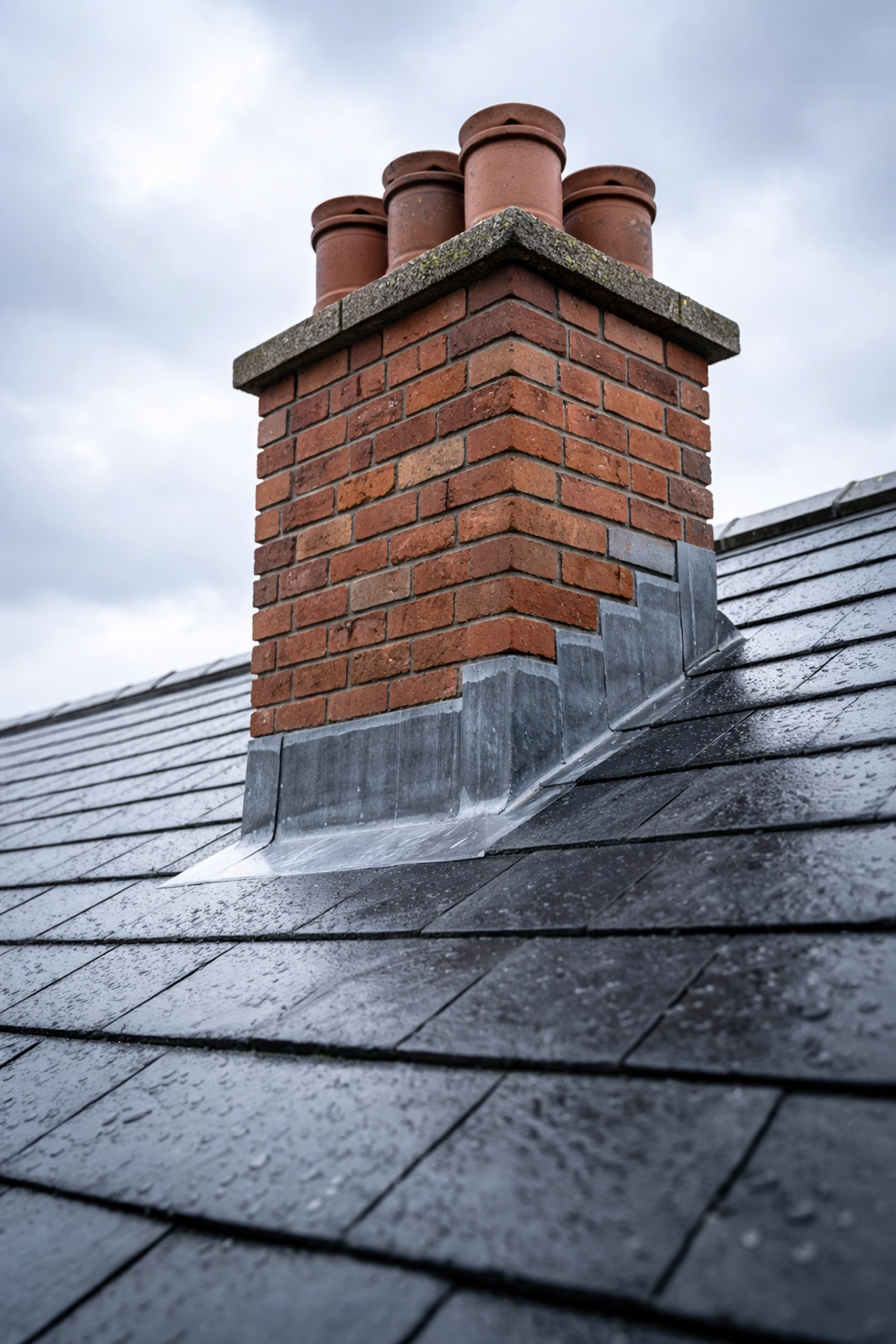
Lead flashing is the waterproof seal between your chimney stack and your roof tiles. It's typically made from lead sheet that's dressed into the mortar joints of your chimney and overlaps onto your roof covering. When installed correctly, it creates a watertight barrier that directs rainwater away from the vulnerable junction.
Lead is the gold standard for flashing because:
- It's incredibly durable (lasting 50+ years when properly installed)
- It's malleable and can be shaped to fit complex angles
- It expands and contracts with temperature changes without cracking
So why does it fail? Several reasons:
Poor original installation. Not all roofers have genuine leadwork expertise. Improperly dressed lead, insufficient overlaps, or incorrect fixings can cause problems within just a few years.
Age and fatigue. Even quality lead eventually fatigues. Repeated thermal cycling causes the metal to become brittle over time, leading to cracks and splits.
Storm damage. High winds can lift poorly secured flashing, and debris can puncture or dislodge lead sheets.
Mortar failure. If the mortar holding your flashing in place deteriorates, water can seep behind the lead: making the flashing useless even if the lead itself is fine.
If you're noticing recurring roof problems, failed flashing is often the hidden cause that keeps getting overlooked.
How Do You Spot Flashing Problems?
You don't need to climb onto your roof to identify potential flashing issues. Here's what to look for:
From inside your home:
- Damp patches on walls or ceilings near the chimney breast
- Water stains that appear after heavy rain
- Peeling paint or wallpaper in upstairs rooms adjacent to the chimney
- Musty smells indicating hidden moisture
From ground level outside:
- Visible gaps between flashing and chimney bricks
- Lead that appears lifted, curled, or displaced
- Missing mortar above the flashing line
- Staining or discolouration on chimney bricks (indicating water running down)
Don't wait for a full-blown leak. Damp areas on chimney breasts often signify problems that are already advanced. The sooner you act, the less extensive (and expensive) repairs will be.

Chimney Repointing: The Overlooked Essential
Repointing is the process of renewing the external mortar joints between your chimney bricks. Over time, mortar erodes due to weather exposure, leaving gaps that allow water to penetrate the chimney structure.
Why does repointing matter so much?
Cracked and crumbling mortar doesn't just look unsightly: it compromises your chimney's structural integrity. Water entering through failed joints can:
- Cause internal damp and mould issues
- Lead to spalling bricks (where the face of the brick flakes off)
- Result in chimney instability in severe cases
- Allow water to freeze inside the structure, expanding and causing further damage
In Northern Ireland's climate, this freeze-thaw cycle is particularly destructive. Water enters hairline cracks, freezes, expands, and widens those cracks. The following thaw allows more water in, and the cycle repeats until you've got significant deterioration.
Signs your chimney needs repointing:
- Visible gaps or missing mortar between bricks
- Mortar that crumbles when touched
- White salt deposits on brickwork (efflorescence)
- Loose or wobbling bricks
- Increased damp inside the property
Request a professional roof survey if you're unsure about your chimney's condition. It's far better to identify problems early than deal with emergency repairs later.
Don't Forget Your Chimney Pots and Caps
At the very top of your chimney stack sit your chimney pots: and they're exposed to absolutely everything the Northern Irish weather throws at them.
Common chimney pot problems include:
- Cracked pots that allow water ingress
- Loose pots that can become dislodged in storms
- Failed mortar bedding around the pot base
- Missing or damaged cowls and caps
Chimney caps serve a vital function: they prevent rainwater from falling directly into your flue while still allowing proper ventilation. A missing or damaged cap means water has a direct route into your chimney structure.
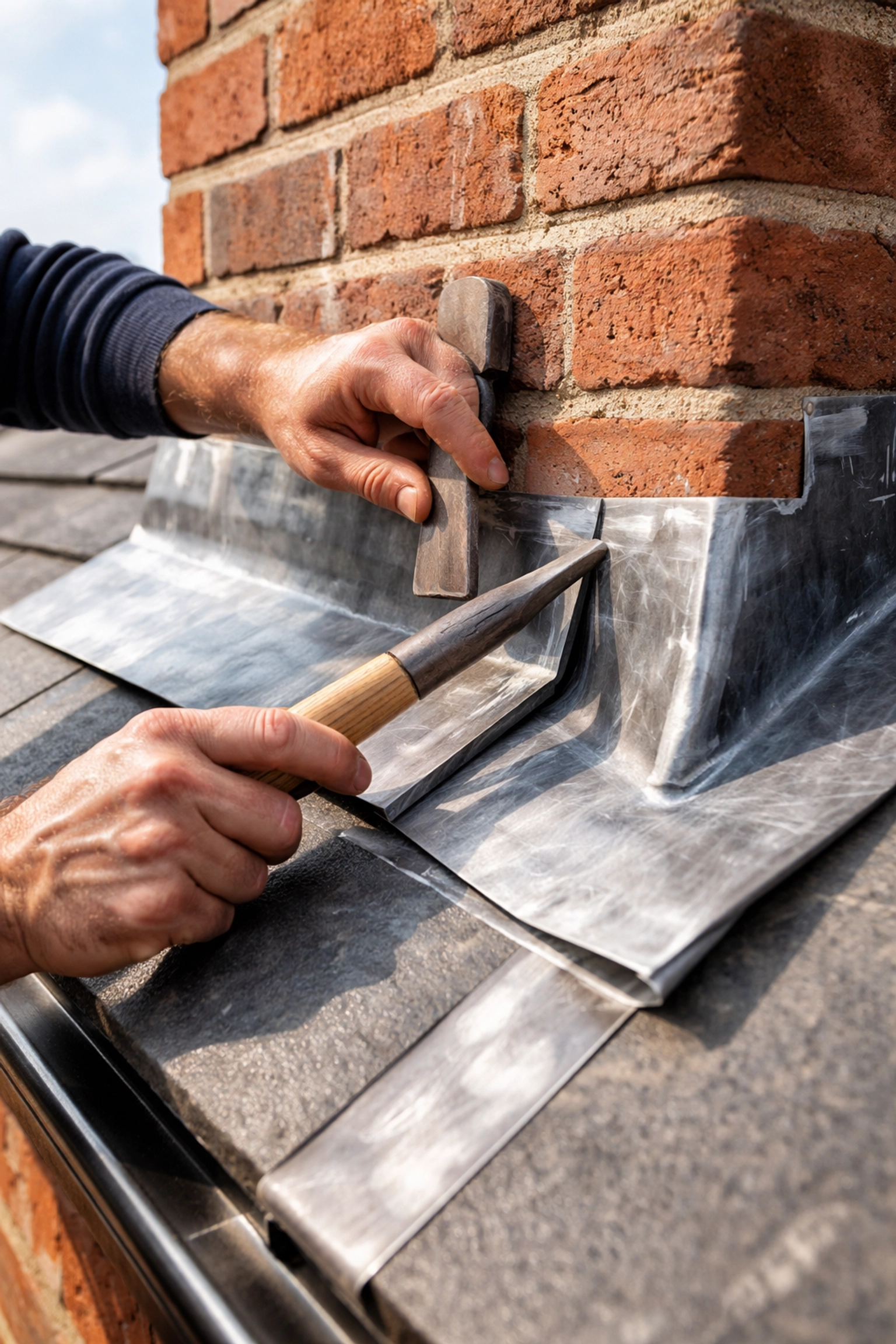
Cracked chimney crowns are particularly problematic. The crown is the cement top that surrounds your chimney pot, designed to shed water away from the flue. When cracked, water enters the chimney body, causing internal damage that's invisible until it manifests as damp inside your home.
Why Leadwork Expertise Matters
Here's something many homeowners don't realise: not every roofer is skilled in leadwork.
Lead is a specialist material that requires specific training and experience to work with properly. Cutting corners on lead flashing installation: using inadequate materials, improper techniques, or insufficient overlaps: leads to premature failure and recurring leaks.
At Advanced Construction & Roofing, we take leadwork seriously. Our team has extensive experience in traditional lead flashing techniques, ensuring your chimney junctions are properly waterproofed to withstand decades of Northern Ireland weather.
What proper leadwork installation involves:
- Using the correct code (thickness) of lead for the application
- Properly dressing lead into raked-out mortar joints
- Ensuring adequate overlaps and step heights
- Securing with appropriate fixings
- Pointing in with suitable mortar that allows for thermal movement
Cheap repairs using inferior materials or techniques might seem like a saving initially: but you'll pay more in the long run when problems recur. If you've experienced repairs that keep failing, poor-quality leadwork is often to blame.

What Should You Do Next?
If you've noticed any warning signs: damp patches, visible deterioration, or simply haven't had your chimney checked in years: it's time to take action.
Here's what we recommend:
-
Book a professional survey. A thorough inspection will identify current problems and potential issues before they become serious. Our Belfast roof survey service includes detailed chimney assessment.
-
Address problems promptly. Small repairs now prevent major expenses later. A bit of repointing or minor flashing repair is far cheaper than dealing with extensive water damage.
-
Choose contractors with proven leadwork expertise. Ask about their experience with lead flashing specifically: it's a specialist skill that makes all the difference.
-
Consider a maintenance schedule. Regular inspections every few years can catch deterioration early, extending the life of your chimney and preventing unexpected failures.
Protect Your Home Before Winter Hits
Northern Ireland winters are hard on chimneys. The combination of heavy rainfall, frost, and wind puts enormous stress on flashing, mortar, and chimney pots. Getting repairs done before the worst weather arrives means you'll stay dry and comfortable when it matters most.
Don't wait for water to come through your ceiling. Contact Advanced Construction & Roofing today to discuss your chimney concerns. Our team serves homeowners across Belfast and Northern Ireland, delivering professional leadwork and chimney repairs that last.
Call us now to arrange your chimney inspection: and keep your home protected for years to come.