
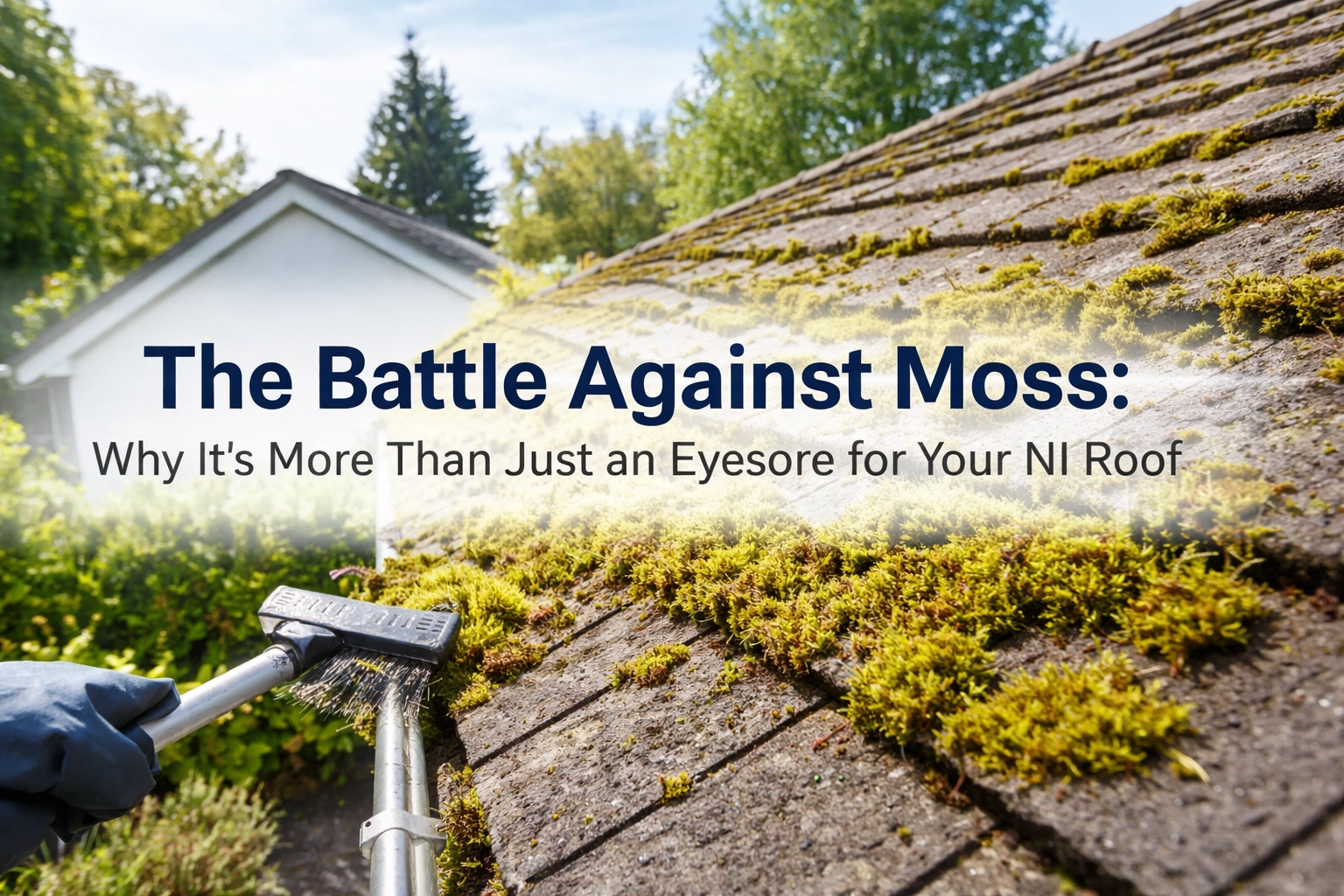

You've probably noticed it. That fuzzy green carpet creeping across your roof tiles. Maybe you've thought, "Ah, it's just a bit of moss: adds character, doesn't it?"
Here's the truth: moss on your Northern Ireland roof is quietly causing damage every single day. And in our famously damp climate, it's working overtime.
Let's break down exactly what's happening up there, why it matters, and what you can do about it before a minor nuisance becomes a major repair bill.
What's Moss Actually Doing to Your Roof?
Think of moss as a tiny, relentless sponge permanently attached to your tiles. Unlike dirt or debris that washes away, moss clings on and gets to work.
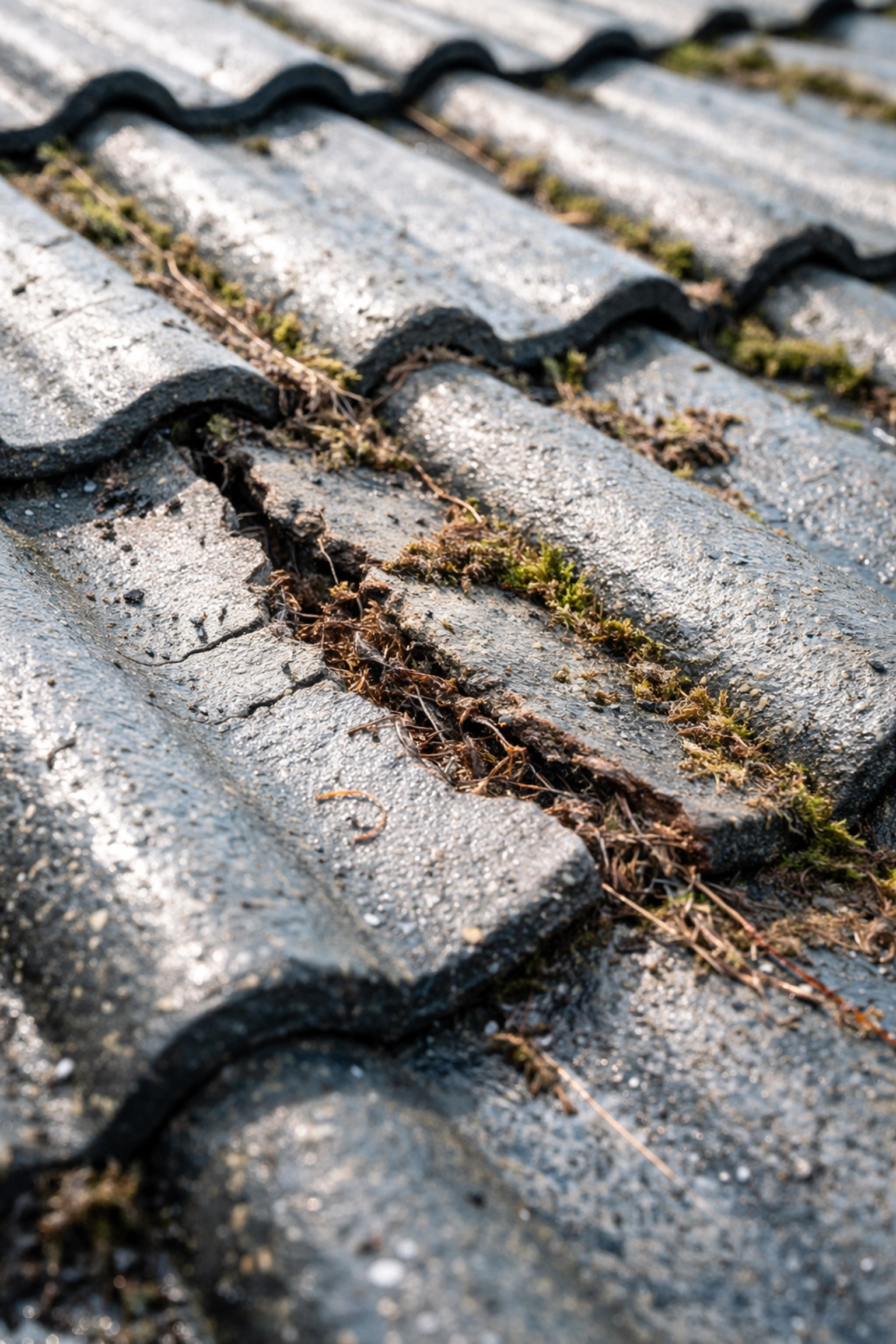
Moss roots penetrate the surface of your tiles, causing them to crack and crumble over time. It doesn't happen overnight: but it does happen. Those roots work their way into every tiny crack and imperfection, gradually breaking down the material that's supposed to protect your home.
But that's just the beginning.
As moss grows thicker, it starts to lift tiles from their seating and push underneath them. This creates gaps. And gaps mean one thing: rainwater getting where it shouldn't be.
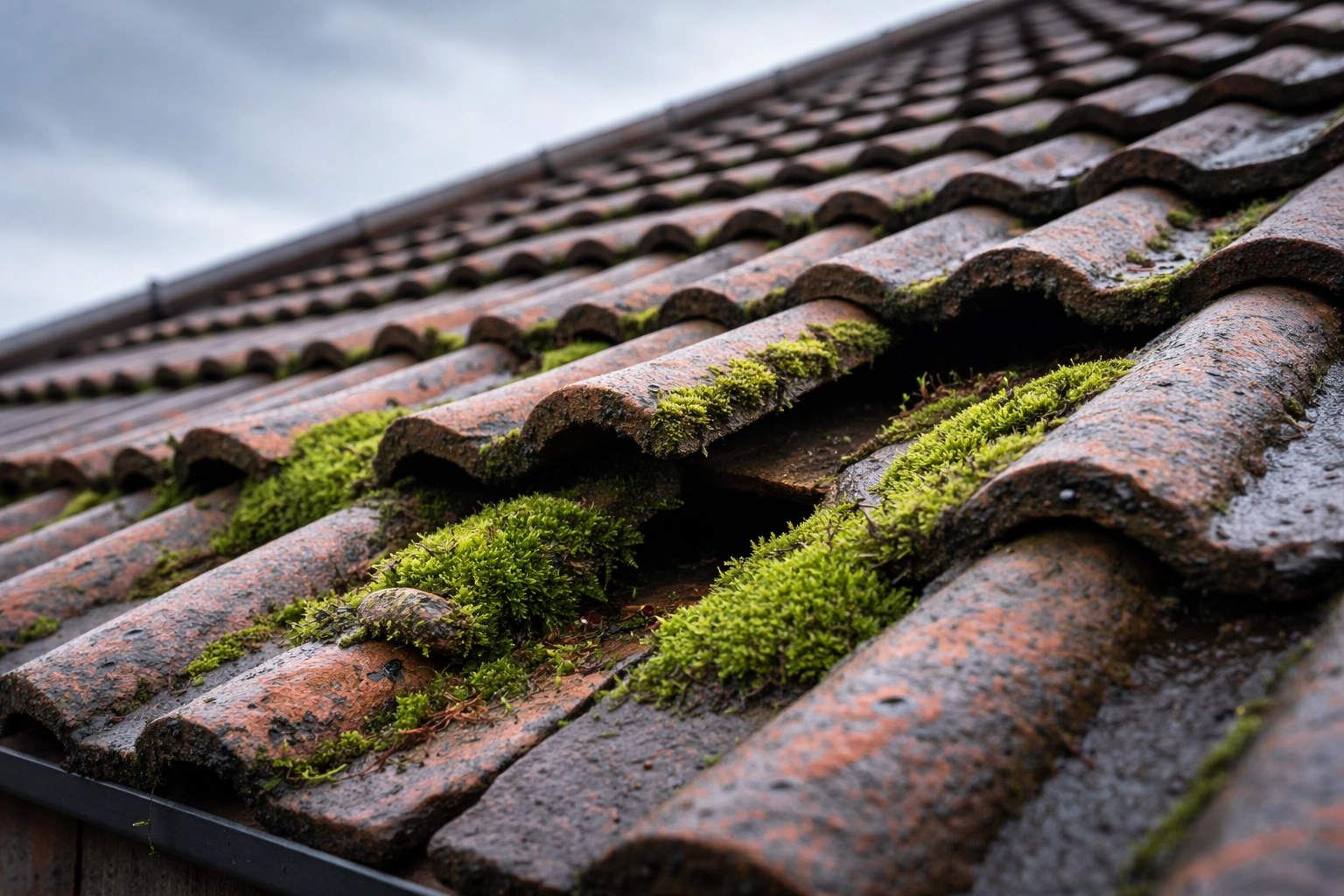
Once water starts finding its way under your tiles, you're looking at:
- Damaged roof timbers that can rot and weaken
- Compromised insulation that stops doing its job
- Interior water damage to ceilings, walls, and belongings
- Mould growth that poses health risks to your family
The moisture retained by moss seeps into every small gap it can find. Over time, this constant dampness leads to weakened tiles, rot, and genuine structural damage that costs thousands to put right.
Why Northern Ireland's Climate Makes It Worse
Let's be honest: we're not exactly short on rain here. Belfast averages around 846mm of rainfall annually, spread across roughly 157 rainy days. That's a lot of moisture for moss to work with.
Our damp, mild climate is essentially a moss paradise. While homeowners in drier regions might go years before moss becomes a real problem, here in NI, it can establish itself and spread remarkably quickly.
The combination of regular rainfall, overcast skies, and moderate temperatures creates ideal growing conditions. North-facing roof slopes and areas shaded by trees are particularly vulnerable: they stay damp longer and give moss exactly what it needs to thrive.
And here's what many homeowners don't realise: moss doesn't just cause problems when it's alive.
When moss dies and washes off, it clogs your gutters and downpipes. Blocked gutters overflow, sending water cascading down your walls instead of safely away from your property. This creates damp problems that can affect your entire home: not just your roof.
The Freeze-Thaw Factor: Winter's Hidden Damage
Northern Ireland winters bring another threat that makes moss particularly dangerous.
When temperatures drop, the water held by moss freezes and expands. This expansion can crack tiles or make existing cracks significantly bigger. Then, when things warm up again, the ice melts: and the whole cycle repeats.
This freeze-thaw cycle accelerates tile deterioration dramatically. A small crack in autumn can become a serious split by spring. Tiles that seemed fine can suddenly start letting water through.

If you've ever wondered why roof problems seem to appear "out of nowhere" after winter, this is often the culprit. The damage was happening slowly all along: the freeze-thaw cycle just brought it to a head.
Hidden Dangers You Might Not Have Considered
Beyond the obvious tile damage, moss creates problems that aren't immediately visible.
Extra Weight on Your Roof Structure
Heavy moss growth adds significant extra weight to your roof. A thick layer of waterlogged moss across an entire roof surface weighs far more than you'd expect. This can stress the roof structure, especially on older buildings with timbers that may already be weakened by age.
In extreme cases, this additional weight can cause parts of the roof to sag. It's rare, but it happens: and it's completely preventable.
Safety Hazards
Moss makes roofs incredibly slippery and unsafe. If anyone needs to access your roof: for aerial repairs, chimney work, or any other reason: moss creates a genuine fall risk. Professional roofers know how to handle it, but it's another reason to keep moss under control.
Mould and Health Concerns
The persistent moisture created by moss doesn't just damage your roof. It creates an environment where mould can flourish. Mould spores can find their way into your home, affecting air quality and potentially causing respiratory issues for your family.
Addressing moss isn't just about protecting your property: it's about protecting your health.
The DIY Trap: Why "Just Scraping It Off" Is Risky
We understand the temptation. You see moss, you want it gone, and a stiff brush seems like an obvious solution.
Here's why that approach often backfires:
Aggressive scrubbing can damage tiles more than the moss itself. Roof tiles: especially older slate and concrete tiles common across Northern Ireland: have a protective surface layer. Scrape too hard and you remove that protection, leaving tiles more vulnerable to water penetration than before.
Then there's the safety issue. Climbing onto a moss-covered roof without proper equipment and training is genuinely dangerous. Falls from height are one of the most common causes of serious DIY injuries in the UK. Your roof isn't worth risking your health.
Pressure washers? They can force water under tiles and into your roof space, causing the exact water damage you're trying to prevent. They can also dislodge tiles and strip away protective coatings.
And even if you manage to remove the moss safely, without proper treatment, it simply grows back. Often within months. You've taken the risk, done the work, and achieved nothing lasting.
Prevention and Professional Solutions
The good news? Moss damage is entirely preventable with the right approach.
Regular Roof Inspections
The single best thing you can do is catch moss early, before it becomes established. A professional roof survey identifies problem areas and gives you a clear picture of your roof's condition.
At Advanced Construction & Roofing, we recommend Belfast homeowners have their roofs inspected at least every two to three years: more frequently if you have trees overhanging your property or north-facing slopes that stay damp.
Professional Moss Removal
When moss has taken hold, professional removal is the safest and most effective option. This involves:
- Careful manual removal that doesn't damage tiles
- Biocide treatment that kills remaining moss and spores
- Protective treatments that discourage regrowth
Professional treatment typically lasts several years, giving you genuine peace of mind rather than a temporary fix.
Improving Roof Conditions
Sometimes simple changes make a big difference. Trimming back overhanging branches improves airflow and reduces shade. Ensuring gutters drain properly prevents water pooling. These small steps create an environment where moss struggles to establish itself.
Take Action Before Small Problems Become Big Bills
Moss removal is important for protecting your roof investment. What starts as a cosmetic issue can become serious structural damage if left unchecked: and in Northern Ireland's damp climate, that progression happens faster than most homeowners expect.
Don't wait until you're dealing with leaks, damaged timbers, or compromised insulation. A professional roof inspection gives you the information you need to make smart decisions about your property.
Request a roof survey today. Call Advanced Construction & Roofing to arrange an inspection and find out exactly what's happening on your roof: before that innocent-looking moss causes damage you can't ignore.