
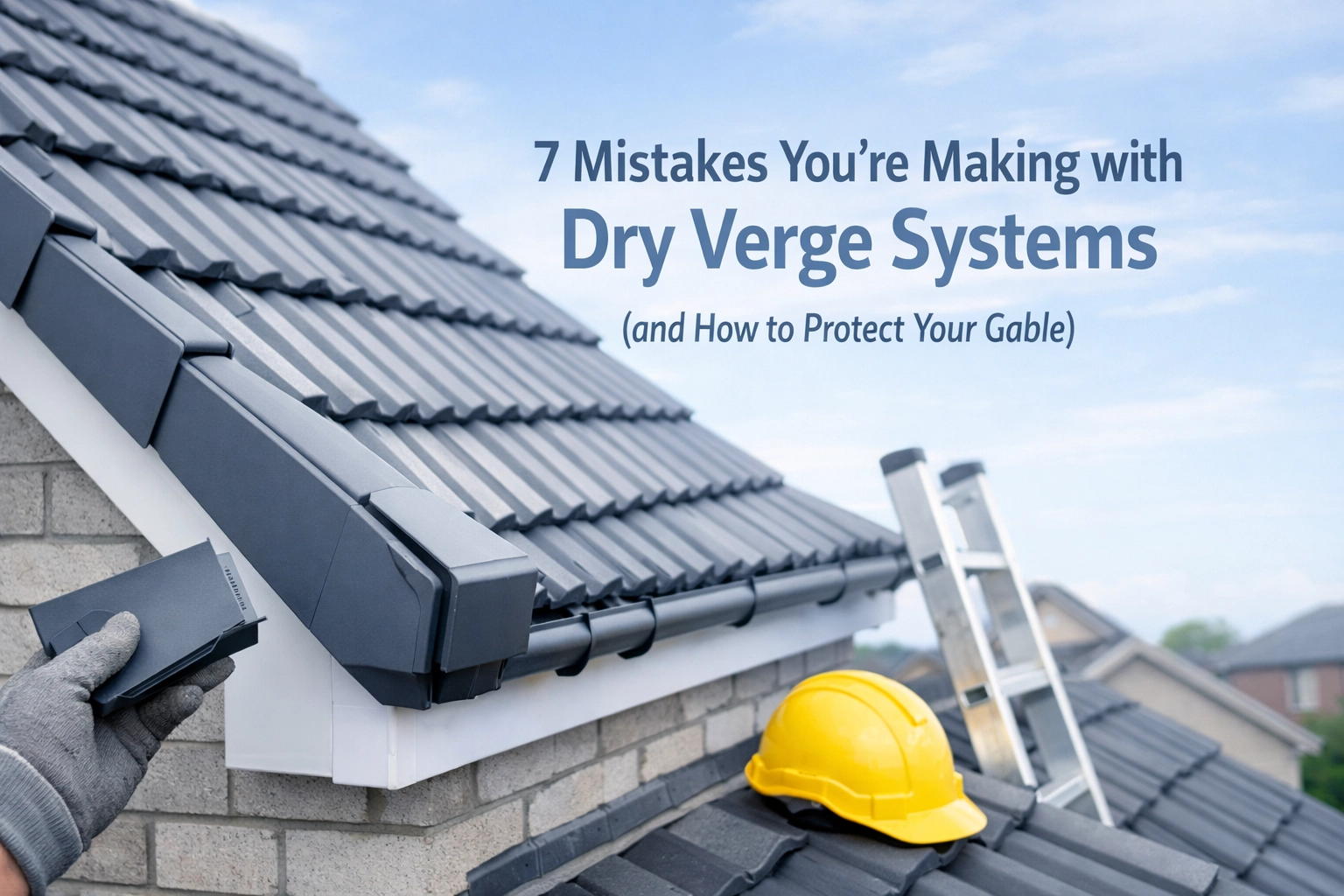

For homeowners across Belfast and Northern Ireland, the traditional mortar gable: often called a "wet verge": is a constant source of stress. Between the relentless driving rain and the biting Irish winds, mortar eventually cracks, crumbles, and falls away, leaving your roof timbers exposed to rot.
Advanced Construction & Roofing has over 20 years of experience upgrading homes to modern dry verge systems. We have seen it all, from DIY disasters to "professional" shortcuts that end in expensive repairs. A dry verge system is designed to provide a mechanically fixed, mortar-free finish to the edge of your roof. When done right, it is maintenance-free and aesthetically stunning. When done wrong, it can lead to dampness, mould, and even structural damage to your gable wall.
If you are looking to protect your home, you need to know the pitfalls. Here are the 7 most common mistakes we see with dry verge systems and how you can ensure your gable edge remains watertight for decades.
Why is Dry Verge Replacing Traditional Mortar in Northern Ireland?
Before we dive into the mistakes, let’s talk about why we recommend this upgrade to almost every client we meet in the Greater Belfast area. Traditional mortar is simply not built for modern weather cycles. The constant expansion and contraction caused by temperature shifts in NI lead to hairline fractures in the cement. Once water gets in and freezes, the mortar pops out.
Dry verge systems offer a mechanical fix. They don’t rely on adhesives or cement. They clip over the edge of your tiles and are screwed directly into the roof battens.
Protect your home.
Protect your investment.
Protect your peace of mind.
"Advanced Construction & Roofing replaced our crumbling cement verge last year. The dry verge looks much cleaner, and we haven’t seen a single drop of damp since. Highly recommend their professional approach." : David M., Lisburn.
Mistake #1: Failing to Remove Every Scrap of Old Mortar
This is the number one error made by "cowboy" contractors looking to finish a job in record time. They simply slap the new plastic dry verge units over the existing crumbling mortar.
Why this is a disaster:
If you don't remove the old cement, the dry verge unit cannot sit flush against the roof tiles or the gable wall. This creates a gap where wind can whistle through, and more importantly, it prevents the unit from being securely fastened to the batten ends. Over time, the vibration from the wind will loosen the fixings, and your expensive new system could literally blow away during a storm.
The Professional Solution:
At Advanced Construction & Roofing, we take the time to chip away every last bit of old mortar with a hammer and chisel. We ensure the batten ends are completely exposed and clear of debris. Only then do we begin the installation.
Mistake #2: Skipping the Eaves Closure or End Cap
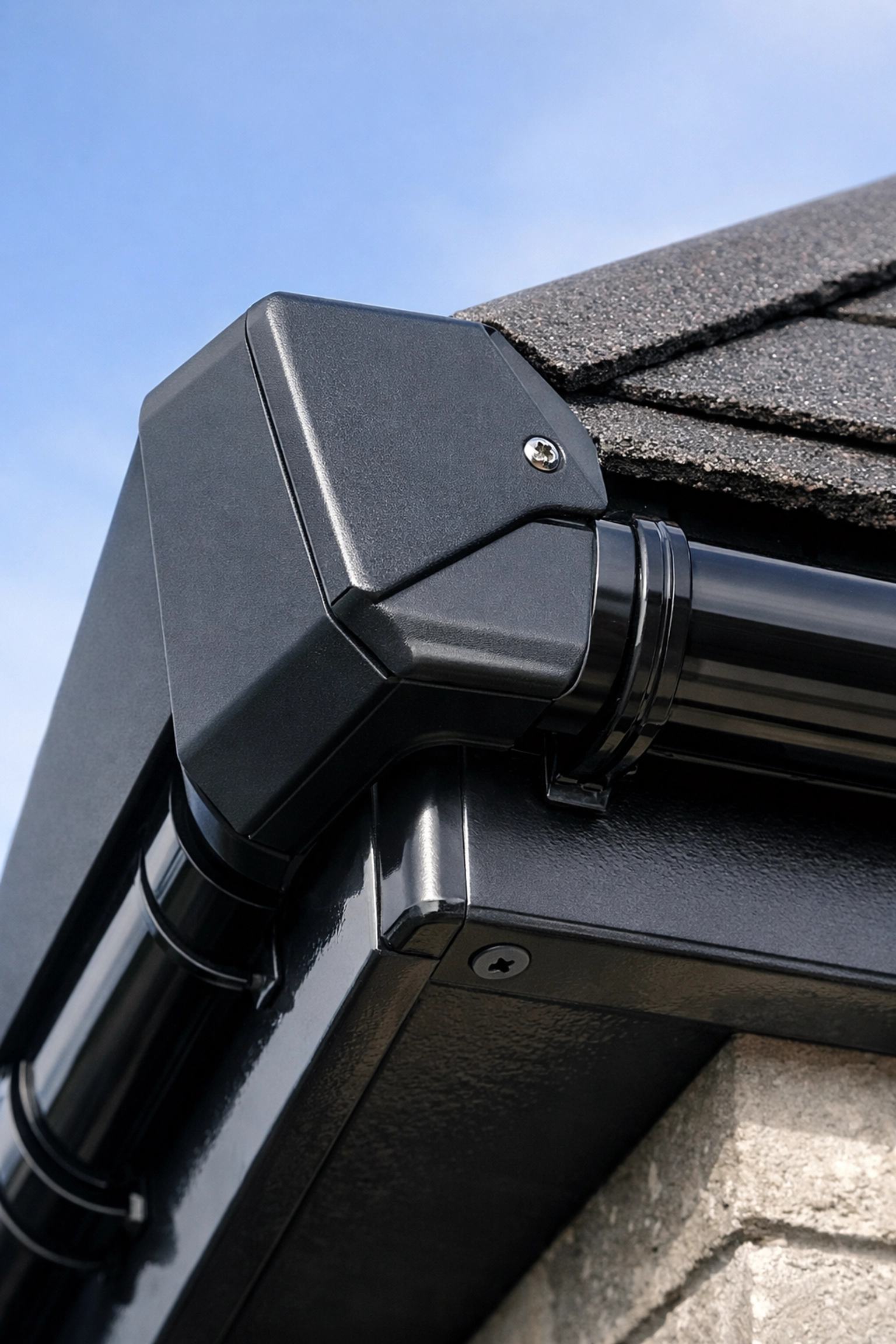
The bottom of your roof: where the tiles meet the gutter: is the most vulnerable point for water ingress. Many installers fail to use a dedicated eaves closure unit or an end cap to seal the start of the dry verge run.
The Risk of Water Infiltration:
Without a proper eaves closure, water running down the verge can bypass the gutter entirely. Instead, it drips down the face of your gable wall. This leads to unsightly green algae, moss growth, and eventually, penetrating damp inside your home.
Request a professional installation that includes high-quality adapting couplers. These ensure that every drop of water is directed exactly where it belongs: into your guttering system.
Mistake #3: Cutting Your Battens Too Short
The secret to a secure dry verge system lies in the "fix." The units are designed to screw into the ends of your wooden roof battens. However, if your original roof was built for a mortar finish, the battens often stop several inches short of the gable edge.
The Failure Point:
If an installer tries to screw a dry verge unit into a batten that doesn't reach the edge, the screw won't have anything to "bite" into. We often see installers using long, angled screws to try and catch the wood: this is a recipe for failure.
Our Standard Procedure:
We verify that every batten extends at least 20mm to 30mm beyond the gable wall. If they are too short, we don't take shortcuts. We extend the battens using treated timber and galvanised fixings to ensure a rock-solid foundation for your new roof edge.
Mistake #4: Ignoring Inconsistent Batten Overhang
Even if the battens are long enough, they must be cut to a perfectly straight line. If one batten sticks out 30mm and the next one sticks out 20mm, your dry verge will look like a "zigzag" going up the side of your house.
Protecting Your Curb Appeal:
A professional finish is about precision. If the line isn't straight, the units won't interlock properly. This leaves gaps that allow wasps, birds, and rodents to enter your attic space.
Check your roof.
Check your contractor.
Check the results.

Mistake #5: Positioning the System Too Flush Against the Wall
It might seem logical to pull the dry verge units as tight to the wall as possible, but this is a common misconception. Most high-quality dry verge systems are designed with a small "nib" or "lip" that keeps the plastic unit slightly away from the masonry.
Why the gap matters:
If the unit is pressed tight against the bricks or render, surface tension can cause water to "wick" behind the plastic and run directly down the wall. By maintaining a tiny, intentional gap, the water is forced to drip off the edge of the plastic and fall clear of the building. This simple detail protects your gable render from staining and frost damage.
Mistake #6: Neglecting Gutter Alignment and Drainage
A dry verge system is only one part of your roof’s drainage ecosystem. If your gutters are blocked or incorrectly pitched, the water collected by your new verge units will have nowhere to go.
The Resulting Damage:
We often visit homes in Newtownabbey and Bangor where the homeowner is complaining about a "leaky" dry verge, only to find that their gutters are overflowing. When water backs up, it forces its way behind the verge units and into the soffits and fascia boards.
Call Advanced Construction & Roofing for a full assessment. We don't just look at the tiles; we look at the whole system. If your gutters need cleaning or your garden drainage is being affected by roof runoff, we provide comprehensive solutions.

Mistake #7: Installing the Wrong "Universal" System for Your Tiles
Many manufacturers claim their dry verge units are "universal," meaning they fit any tile. In reality, Northern Ireland has a massive variety of tile profiles: from flat Marley Moderns to high-profile Double Romans.
The Performance Issue:
A "one-size-fits-all" approach often leaves huge gaps under the units where the tile profile dips. This not only looks messy but also fails to provide the wind-uplift protection that dry verges are famous for. In high-wind areas like the Antrim coast or the Belfast hills, an ill-fitting system can be ripped off the roof entirely.
Expert Advice:
We match the specific dry verge brand and model to your exact tile type. We use industry leaders like Klober or Manthorpe to ensure the mechanical fit is perfect.
How Can You Protect Your Gable Edge Today?
Your roof is the most important structural element of your home. Don't let a poorly installed verge system lead to internal damp and rot. Whether you are dealing with falling mortar or an existing dry verge that looks "wonky," you need an expert opinion.
Advanced Construction & Roofing offers:
- 20+ Years of Experience: We know the Northern Ireland climate and what it takes to beat it.
- Qualified Technicians: Our team is trained in the latest mechanical fixing techniques.
- Transparent Pricing: No hidden costs, just honest, professional advice.
- Full Site Clean-up: We don't leave old mortar or plastic clippings in your garden.
Request a professional roof survey.
Contact our Belfast office for a free quote.
Call us today to secure your gable.
"I was worried about the cost of a full roof repair, but the team at Advanced Construction & Roofing showed me exactly what was wrong and fixed just the gable edge. They were honest, fast, and very professional." : Thomas R., Belfast.

Don't wait for the next big storm to find out if your roof edge is secure. If you see cracks in your mortar or gaps in your current plastic verge, it’s time to act. Visit adv-group.co.uk to book your consultation and ensure your home stays dry, safe, and beautiful for years to come.