
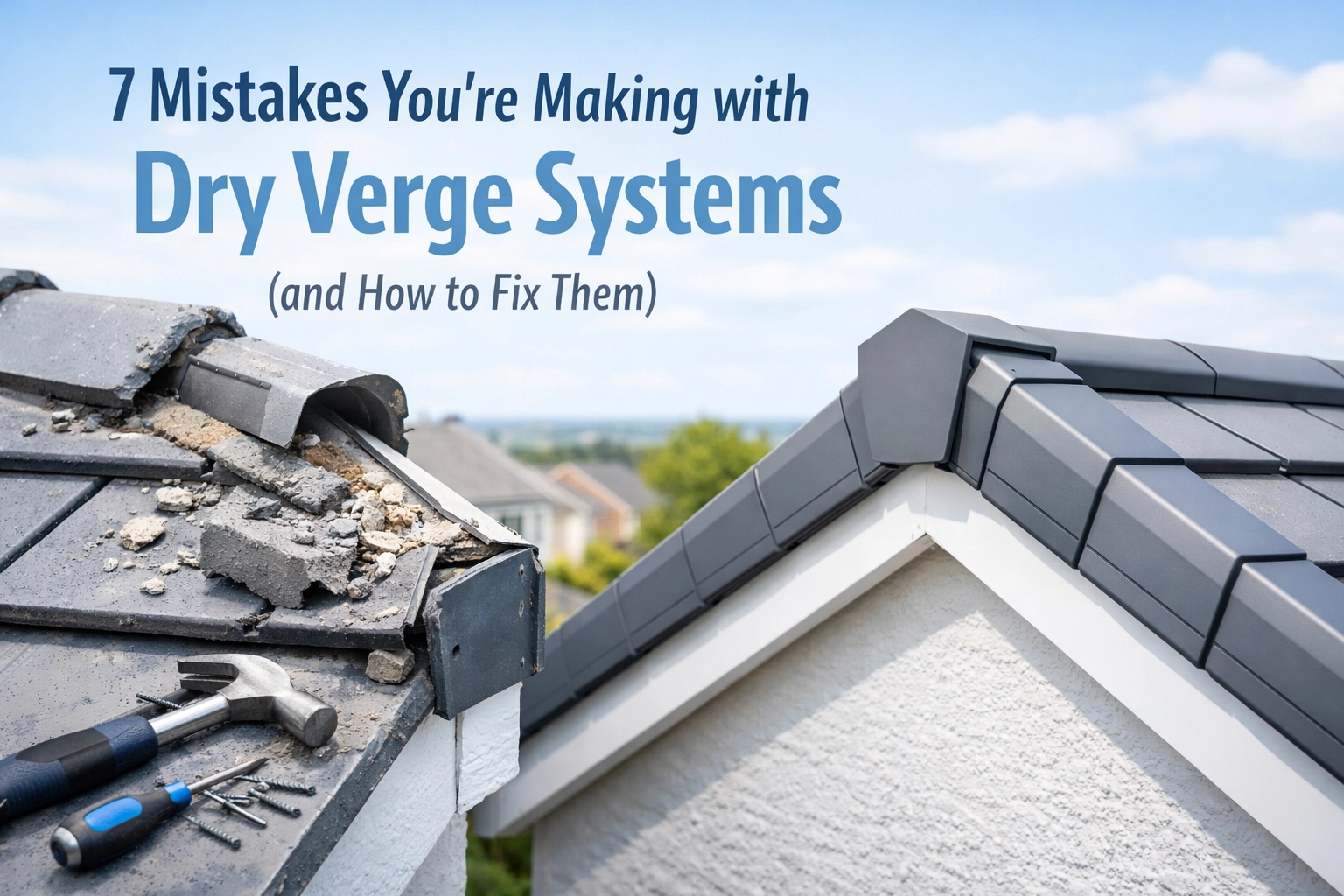

If you've had dry verge systems installed on your Belfast, Bangor, or Newtownards property in the last few years, there's a decent chance something wasn't done properly. We see it constantly: dry verge that's lifting, leaking, or letting wind damage your roof edges because the installation was rushed or bodged.
Dry verge systems are brilliant when they're fitted right. They replace old-fashioned mortar bedding with a mechanical system that protects your roof edge, keeps out water and pests, and looks clean. But when they're installed incorrectly, they fail fast: and that failure can cost you hundreds (or thousands) in repairs.
This guide walks you through the seven most common mistakes we see across Northern Ireland properties, why they matter for your home's protection and kerb appeal, and exactly how to fix them.
Mistake #1: Leaving Old Mortar Underneath
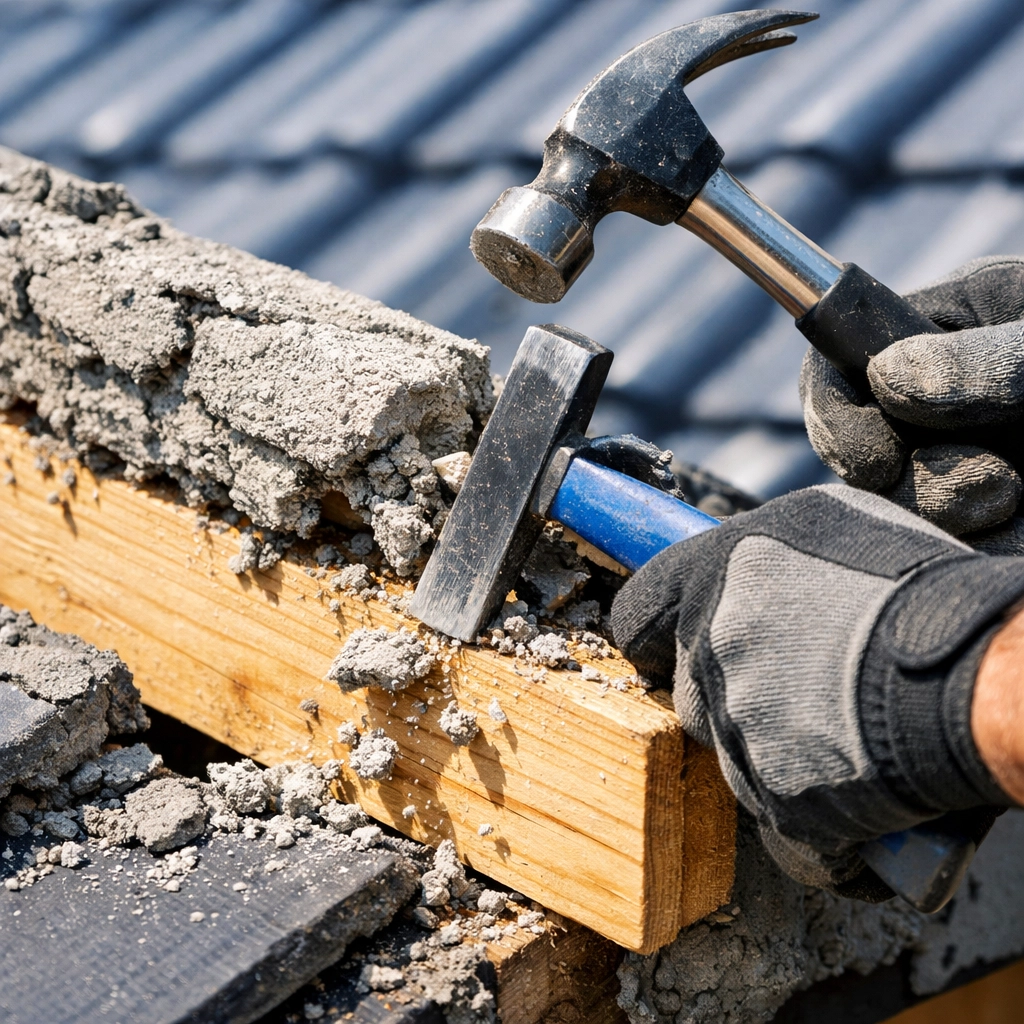
This is the classic "cowboy job." Some roofers will slap dry verge caps straight over the old mortar bedding without removing it first. It looks fine from the ground: until the first storm hits.
Why it matters: The dry verge caps can't sit flush when there's mortar in the way. They sit proud, catch the wind, and get ripped off. We've seen entire verge systems stripped off Belfast terraces after a single winter storm because they were never bedded properly.
How to fix it: Remove all old mortar completely. Use a hammer and chisel to expose the tiling batten: typically around 20mm, depending on the manufacturer's spec. It takes longer, but it's the only way the dry verge will sit correctly and stay secure. If your system is already lifting, it needs to be stripped back and reinstalled from scratch.
Mistake #2: Poor Alignment and Gaps Along the Roof Edge
If the dry verge units aren't installed flush against the barge board, you're left with gaps along the roof edge. Even a small misalignment creates an opening for water to track behind the system: and once water gets in, you're looking at rot, damp, and potential structural damage.
Why it matters: Water penetration is one of the biggest threats to your property. If your dry verge isn't sitting flush, rainwater will run down the inside of your roof edge instead of draining away. In Bangor and Newtownards: where we get heavy coastal rain and wind-driven downpours: these gaps turn into leaks fast.
How to fix it: Check that every cap sits flush with the roofline. The overhang should be consistent across the whole run (typically 30mm, but check your manufacturer's spec). If you've got visible gaps or uneven spacing, the system needs to be realigned. Don't ignore it: gaps don't fix themselves, and they get worse over time.
Mistake #3: Inadequate Fastening and Missing Straps
Some roofers rush the fastening stage. Nails aren't fully driven home. Securing straps are skipped entirely. The dry verge looks fine: until the wind picks up.
Why it matters: Wind pressure at roof level is serious, especially on exposed properties in Belfast, Bangor, and Newtownards. If the dry verge isn't properly secured, it'll shift, rattle, or blow off completely. We've replaced entire systems that failed within six months because the fasteners weren't fitted correctly.
How to fix it: Every fastener needs to be fully secured. Install straps at the end of battens to prevent wood splitting and ensure firm attachment. If you can lift or move your dry verge caps by hand, they're not fixed properly. Call a professional to reinforce the system before you lose tiles or suffer wind damage.
Mistake #4: Botched End Caps and Starter Units
End caps and starter units are fiddly. They require precise installation to create a weathertight seal. When they're installed incorrectly: or worse, when they're skipped entirely: you're left with openings for water, wind, and pests.
Why it matters: An improperly sealed end cap is an invitation for problems. Water can track underneath, wasps and birds can nest inside, and the entire dry verge system can start to fail from the ends inward. This is a particular issue on older properties in Belfast where the roof edges are already vulnerable.
How to fix it: Follow the manufacturer's installation procedures exactly. End caps aren't optional: they're critical components. If your system doesn't have proper end caps, or if they're loose or damaged, get them reinstalled correctly. It's a small fix that prevents major headaches.
Mistake #5: Water Draining Onto Walls Instead of Gutters
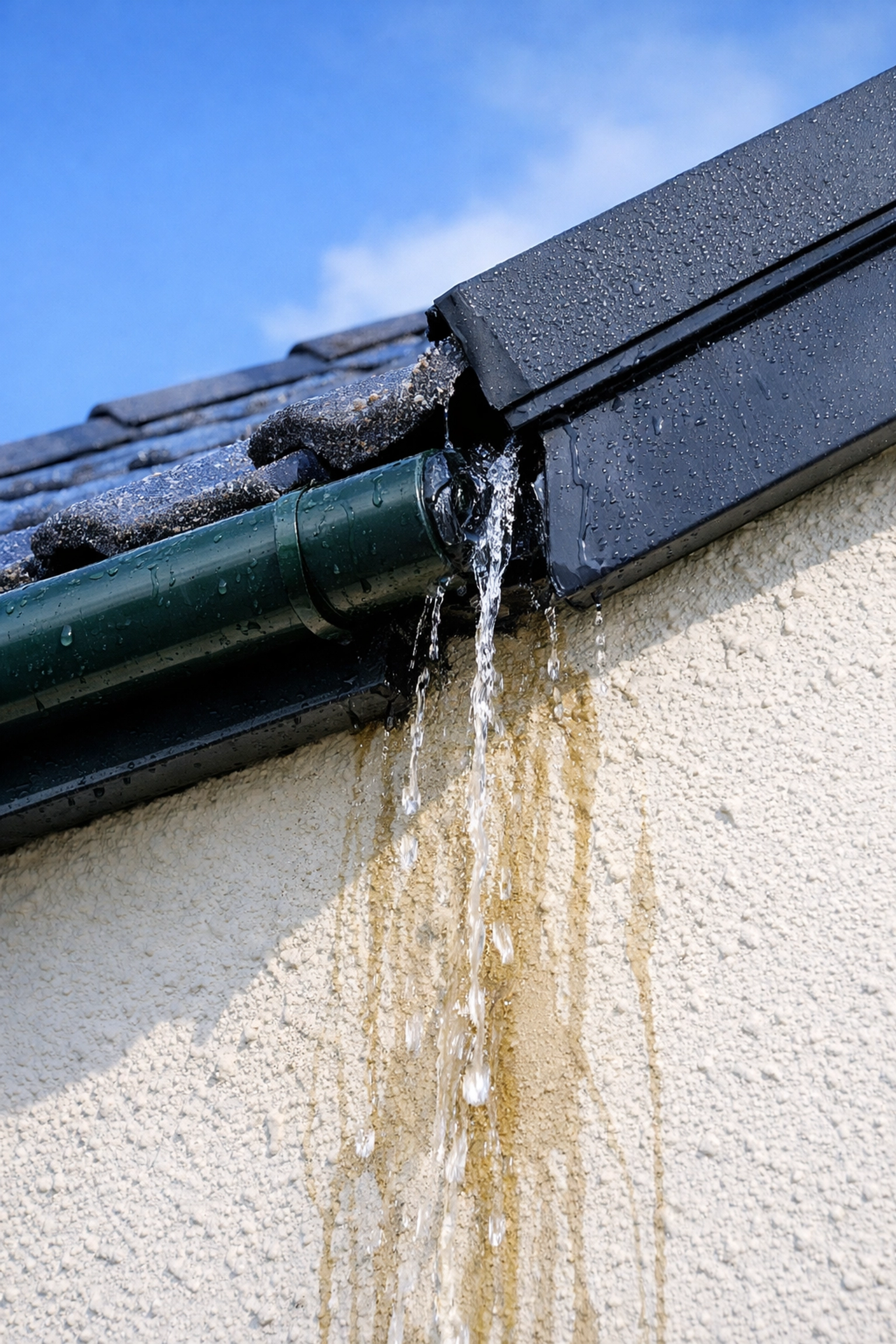
This mistake causes visible damage fast. If the dry verge isn't positioned to drain water directly into the gutter, rainwater spills down your external walls. You'll see staining, damp patches, and eventually moss or algae growth.
Why it matters: Water running down your walls damages render, brickwork, and paintwork. It also increases the risk of penetrating damp inside your property. In Newtownards and Bangor, where we get a lot of rain, improper drainage can cause thousands of pounds worth of damage in just a couple of years.
How to fix it: The dry verge must be positioned so water drains cleanly into the gutter system. If you've got a flat roof or extension below, the verge can be extended to drain onto that surface: but it needs to be done deliberately, not by accident. If water's currently running down your walls, reposition the dry verge or extend your guttering to catch the runoff.
Mistake #6: Using the Wrong Dry Verge for Your Roof Type
Not all dry verge systems are the same. Some are designed for concrete tiles, others for slate. Some are mechanically superior but don't match the aesthetic of your property. Installing the wrong type is a recipe for performance issues and poor kerb appeal.
Why it matters: A dry verge system that doesn't match your roof spec won't perform properly. It might not sit flush, might not handle wind load correctly, or might look completely out of place. Properties in conservation areas or period homes in Belfast need dry verge that matches the original style: otherwise you're damaging your property's value and appearance.
How to fix it: Select dry verge that's suited to your roof type: mechanically and aesthetically. Check the manufacturer's compatibility guide, and if you're in a conservation area or working on a listed building, confirm your choice complies with planning requirements. If the wrong system is already installed, it's worth replacing it with the correct one before you lose money on property value or failed inspections.
Mistake #7: Leaving Excess Materials That Trap Moisture
Loose felt dangling below the roof edge. Battens that haven't been trimmed properly. Offcuts left behind. These might seem like minor details, but they create moisture traps that rot your roof structure from the inside out.
Why it matters: Moisture is the enemy of timber. If your installation has left excess felt or improperly trimmed battens, water will collect against the wood instead of draining away. Over time, that leads to rot, weakened structure, and expensive repairs. This is especially common on rushed jobs where the roofer hasn't finished the detailing properly.
How to fix it: Trim excess felt and cut battens to the correct length before final installation. All materials should be neat, flush, and free from moisture traps. If your roof edge has visible loose materials, get them trimmed and tidied: it's a small job that protects your roof structure long-term.
Protect Your Property with Properly Installed Dry Verge Systems
Dry verge systems are one of the best upgrades you can make to your Belfast, Bangor, or Newtownards property: when they're installed correctly. They protect your roof edge, improve kerb appeal, and last for decades without the cracking and crumbling you get with old mortar bedding.
But poor installation undermines all those benefits. If you've spotted any of the mistakes listed above on your property, don't wait for the problem to get worse. Water damage, wind damage, and structural rot all escalate quickly once they start.
Request a roof inspection if you're unsure about your dry verge system. We'll check the installation, identify any issues, and give you honest advice on whether it needs repair or replacement.
Call Advanced Construction & Roofing for professional dry verge installation and repairs across Belfast, Bangor, and Newtownards. We remove old mortar properly, follow manufacturer specs exactly, and deliver installations that protect your property for the long term.
Contact us today: https://adv-group.co.uk
Your roof edge matters. Get it done right.